
基于3,6-二肼基-1,2,4,5-四嗪的兩種高氮含能離子鹽
2013-08-20 01:18:12張建國吳金婷馮金玲張同來周遵寧
無機化學學報 2013年12期
張建國 殷 昕 吳金婷 孫 謀 馮金玲 張同來 周遵寧
(北京理工大學爆炸科學與技術國家重點實驗室,北京 100081)
1, 2, 3, 4-tetrazine (s-tetrazine) is a typical nitrogen-containing heterocyclic compound which has attracted a widespread concern all over the world. The 3, 6-site of s-tetrazine may be substituted by many groups to generate various fascinating energetic derivatives,such as amino[1-4],hydrazino[5-7], azido[4,8-9],and guanidino[10-12]. 3,6-dihydrazino-1,2,4,5-tetrazine(DHT) is one of the most attractive derivatives with a high nitrogen content of 78.8%. The N atoms on the ends of DHT molecule have certain alkaline property,which makes DHT able to react with acid to generate potential energetic salts, such as hydrochlorate[4,13-14],sulphate[15],nitrate[13-14,16-18]and perchlorate[13-14,17].
Use of heavy metal-containing primary explosives,propellant and pyrotechnic compositions year by year has caused serious heavy metal pollution all over the world. The replacement of the heavy metal-containing energetic materials has become a worldwide practical problem. And the nitrate and perchlorate of DHT may be promising candidates of metal-free energetic material.
In order to take a deep investigation of DHT nitrate (1) and DHT perchlorate (2), the preparation,crystal structure, thermal composition behavior, nonisothermal kinetic characteristics, thermal explosion properties and sensitivity of the titled compounds have been investigated in this paper. And the results have shown that the two salts have potential application in metal-free energetic material area.
1 Experimental
General Caution: DHT a nd the title ionic salts are energetic compounds and tend to kindle or even explode under certain conditions. Appropriate safety precautions (safety glasses, face shields, leather coat and ear plugs) should be taken, especially when these compounds are prepared on a large scale.
1.1 Materials and instruments
All chemical reagents and solvents of analytical grade were bought from the reagents company and used as supplied. DHT was prepared according to the literature method[5].
Elemental analyses were performed on a Flash EA 1112 full-automatic trace element analyzer.Differential scanning calorimeter (DSC) and thermogravimetric analysis (TGA) were carried out on a model Pyris-1 differential scanning calorimeter and a model Pyris-1 thermogravimetric analyzer with a dry oxygen-free nitrogen atmosphere in a flowing rate of 20 mL ·min-1. Single crystal diffractions were conducted by Rigaku Saturn 724+CCD detector with graphite monochromatic diffractometer.
1.2 Synthesis

Scheme 1 Synthesis route of the two salts
The target compounds were synthesized by the following procedure which was shown in scheme 1.
(DHT)(NO3)2(1): 3.5 mL (0.05 mol) concentrated nitric acid was added to 20 mL distilled water to get a dilute nitric acid solution. Then 2.84 g (0.02 mol)DHT was graded into the solution gradually and stirred at room temperature for 1 h. Afterwards, the reaction system was put in water bath heating device to heat to 55 ℃, continuing with a evaporation of the solvent under stirring conditions for 1 h to obtain yellow crystals 3.5 g, yield 85.7%. Elemental Analysis Calcd.(%): C 8.96; H 2.98; N 52.24; Found (%): C 8.89; H 3.04; N 52.29.
(DHT)(ClO4)2(2): 4.3 mL (0.05 mol) perchloric acid was added into 20 mL distilled water to get a dilute solution. 2.84 g (0.02 mol) DHT was graded into the solution gradually and stirred at room temperature for 1 h. The reaction solution was distilled with reduced-pressure condition to get a yellow powder 6.08 g, yield 89.2% . Elemental Analysis Calcd. (%): C 7.00; H 2.338; N 32.65; Found(%): C 6.97; H 2.38; N 32.69.
1.3 X-ray crystallography
Selected single crystals with 0.20 mm×0.17 mm×0.10 mm size for (DHT)(NO3)2and 0.54 mm×0.30 mm×0.07 mm for (DHT)(ClO4)2have been employed for structure determination. The X-ray diffraction data collection was performed on a Rigaku AFC-10/Saturn 724 +CCD detector diffractometer with graphite monochromated Mo Kα radiation (λ=0.071 073 nm)with φ-ω scan modes. The structure was solved by direct methods using SHELXS-97[19]and refined by means of the full-matrix least-squares procedures on F2with SHELXL-97 program[20]. All non-hydrogen atoms were obtained from the difference Fourier map and refined anisotropically. All hydrogen atoms were located from difference Fourier electron-density maps and refined isotropically. Crystallographic data collection and structure refinement are summarized in Table 1.
CCDC: 884111, 1; 884112, 2.
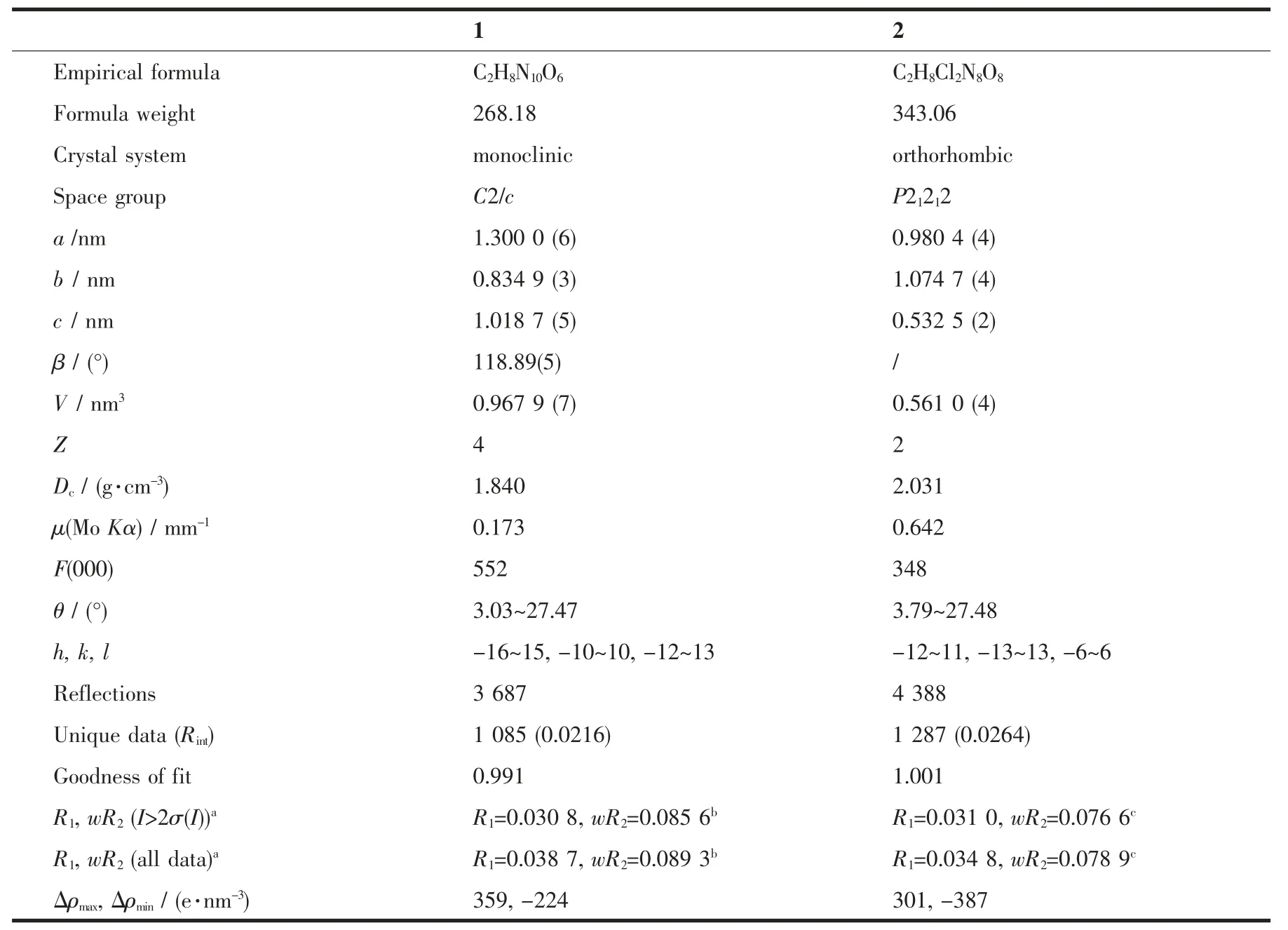
Table 1 Crystal data and structure refinement for DHT(NO3)2(1) and DHT(ClO4)2(2)
2 Results and discussion
2.1 Description of structure
Selected bond length and angle data of (DHT)(NO3)2and (DHT)(ClO4)2molecule were summarized in Table 2. And their molecular units were just as shown in Fig.1.
It could be seen from Fig.1 (a) that the molecule of (DHT)(NO3)2was built with a (DHT)2+ion and two counter anions NO3ˉions under electrostatic force. The formation of DHT divalent ion salt came from the acceptance of H+by N(4) and N(4)A. The four atoms of NO3ˉwere basically coplanar with the equation of-0.792 8x-0.218 5y+0.569 0z=-10.223, the three corresponding bond angle made a total of 360°. The bond lengths and angles of (DHT)2+group have been affected by the electron attraction of H+differently.Comparing with DHT molecule, N (1)-N (2) reduced from 0.132 6 to 0.132 1 nm; N(2)-C(1) and N(1)-C(1)reduced to 0.134 3 and 0.134 8 nm; N(3)-N(4) and N(3)-C (1) were 0.142 8 and 0.137 2 nm, 0.001 3 and 0.002 1 nm longer than the original ones respectively.Bond angles of the tetrazine ring also changed when comparing with DHT molecule. The C (1)-N (3)-N(4)bond angle reduced from original 121.95° to 115.17°.The introduction of H+have increased the distance of N(4) and the tetrazine ring, the corresponding dihedral angle of N(1)-N(2)-C(1)-N(1)#1 and N(4)-N(3)-C(1)-N(2) have changed to 5.93° and 22.08° from the original -0.1° and -170.85° of DHT. This arrangement contributes the stability of the entire molecule from the whole view.
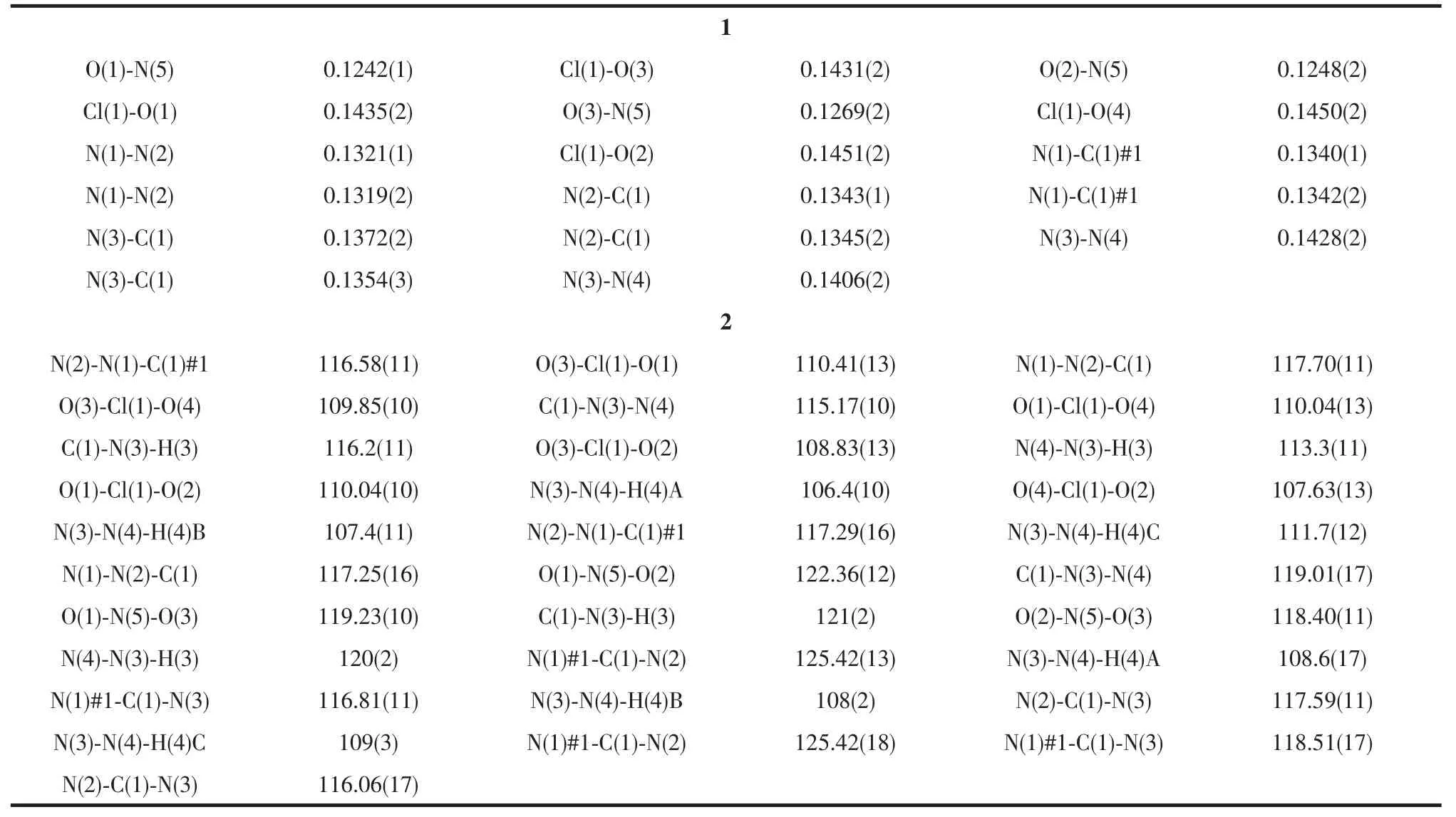
Table 2 Selected bond lengths (nm) and bond angles (°) of DHT(NO3)2(1) and DHT(ClO4)2(2)
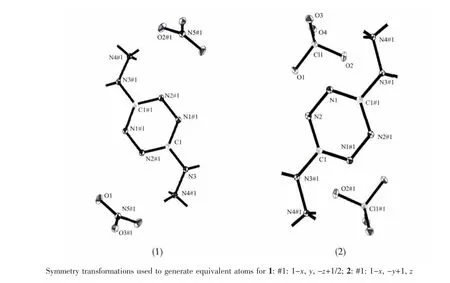
Fig.1 Molecule units of the high-nitrogen energetic salts
It could be aslo observed from Fig.1 (b) that(DHT)(ClO4)2molecule was formed by DHT2+ions and two counter anions ClO4ˉwith electrostatic forces.N (3), N (3)#1 and the tetrazine ring were basically coplanar (plane P1), and N(1)-N(2)-C(1)-N(3) has a dihedral angle of 177.7°. the introduction of H+to the Orthorhombic have increased the diverge of N(4) from the tetrazine ring, and the dihedral angle of N(4)-N(3)-C(1)-N(1) #1 has reduced to 9.1° from the original 10.9° correspondingly. The distance between N(4) and P1 is small as 0.006 nm. Two ClO4ˉgroups are in the same side of plane P1, and the two H-Cl bond locate in the cross position. This arrangement may explain the co-planarity increase of the atoms which helps to enhance the stability of the whole molecule. As the molecule is orthorhombic, the introduction of H protons has little influence on the (DHT)2+groups. All these features recommend the groups remained original in the orthorhombic crystal system.
Furthermore, there were a lot mount of intermolecular and intramolecular hydrogen bonds in these two molecules, and the two kinds of hydrogen bonds built the whole molecules into huge 3D networks in a larger scale.
2.2 Thermal decomposition
The DSC and TG-DTG curves of (DHT)(NO3)2and (DHT)(ClO4)2under a heating rate of 10 ℃·min-1were shown in Fig.2 and Fig.3.
It can be observed from Fig.2, (DHT) (NO3)2decomposed tempestuously and directly without melt.The decomposition has only one violent exothermic process occurred in a range of 94.7~151.1 ℃with an exothermic peak temperature of 156.5 ℃ and an exothermic enthalpy change of 2537.5 J·g-1. And it could be seen from the corresponding TG-DTG curves that (DHT)(NO3)2showed a rapid weight loss process with 94.7% and the maximum weight loss rate locates at 133.7 ℃.
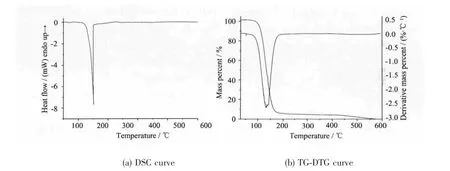
Fig.2 Curves of (DHT)(NO3)2 in static air at a heating rate of 10 ℃·min-1(a) DSC curve(b) TG-DTG curve
Fig.3 has shown that the thermal decomposition of (DHT)(ClO4)2consisted three processes. The first process located in 168.1 ~186.8 ℃and induced the second violent exothermic decomposition process. The second process located in 186.8 ~229.1 ℃with the exothermic peak temperature of 211.5 ℃. and the total exothermic enthalpy change of the two consecutive exothermic processes was 1 219.5 J·g-1.The third exothermic process which located between 292.9 and 337.8 ℃ was relatively mild, and the exothermic peak temperature was 311.7 ℃. The corresponding TG-DTG curve showed a slow weight loss in 50 ~148.7 ℃ range with a weight loss of 27.87% in the first. The second weight loss which located in 148.7~221.6 ℃was in total of 56.9%. And(DHT)(ClO4)2continued to loss weight after 221.6 ℃,and decomposed completely with no remaining residue until 600 ℃.

Table 3 Peak temperature (Tp) of DHT and its nitrate and perchlorate
2.3 Non-isothermal kinetics analysis
In present works, Kissingers method[21], Ozawas method[22]and Starink[23]methods were widely employed to determine the Arrhenius Equation, just as shown below:
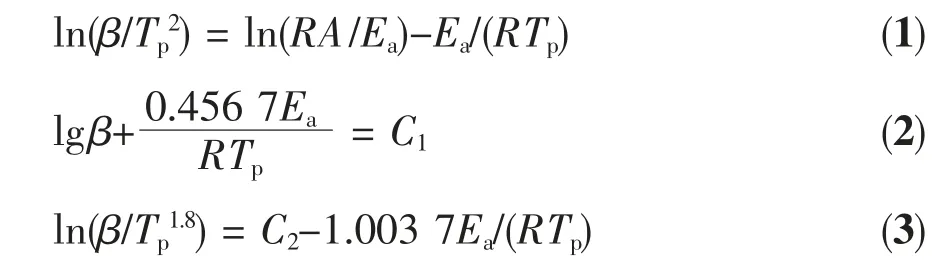
Where Tpis the peak temperature, K; R is the gas constant, 8.314 J·K-1·mol-1; β is the linear heating rate, K·min-1; A is pre-exponential factor; C1, C2are constants.
The kinetic parameters of DHT nitrate and perchlorate were studied by the three methods mentioned above basing on the first exothermic peak temperatures measured with four different heating rates of 5, 10, 15 and 20 K·min1.
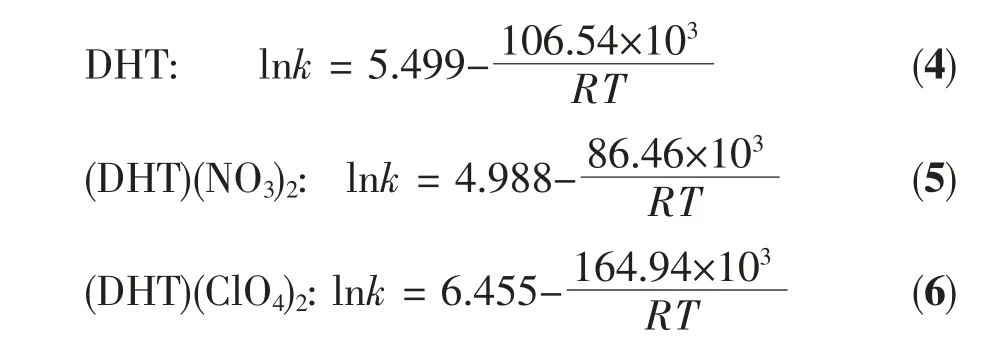
The peak temperatures (Tp) of DHT nitrate and perchlorate under the four heating rates were summarized in Table 3. The activation energy (E),preexponential factor (A), linear correlation coefficient(Ro& Rk) were calculated and listed in Table 4. The results of the three methods correspond well with each other and they were all in the normal range of kinetic parameters for the thermal decomposition reaction of solid materials[24].
Take the average of the calculated activation energy as the final one, and then the Arrhenius Equations could be expressed as follows:

Table 4 Chemical kinetics parameters of DHT and its nitrate and perchlorate
2.4 Calculation of thermal explosion parameters
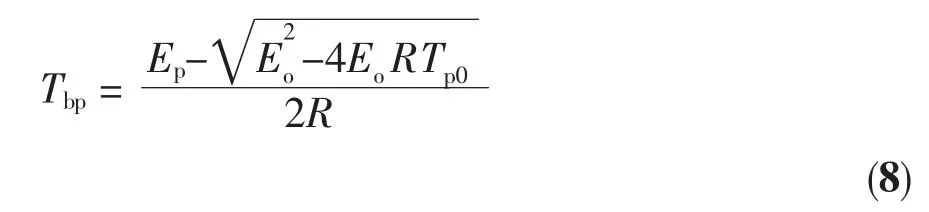
The peak temperature corresponding to β→0 can be obtained according to the equation (7), where a, b and c are coefficients[25].

And the corresponding critical temperature of thermal explosion (Tbp) can be calculated by the following equation (8), where R is gas constant, 8.314 J·K-1·mol-1, Eais the activation energy obtained by Ozawas method.
Moreover, the parameters of the decomposition reaction corresponding to Tp0, Ek, Ak(results of Kissingers calculation ) can be obtained by the equations[26]below, where kBis Boltzmann constant,1.3807×10-23J·K-1and h is Plank constant, 6.626 1×10-34J·s.
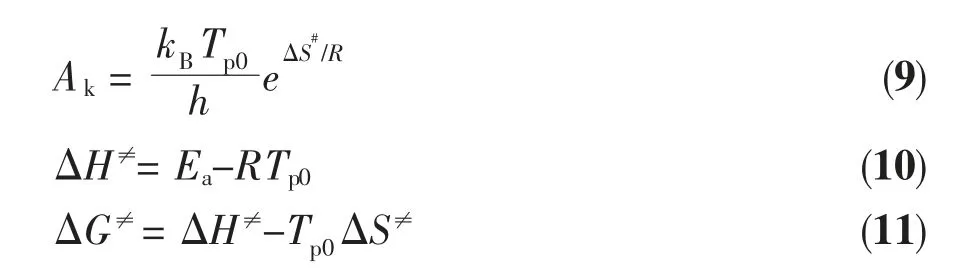
All the calculated thermal explosion parameters of DHT and its energetic salts were listed in Table 5.And we can observed that the reaction of nitric acid and DHT have reduced the critical temperature,whereas, the reaction of perchloric acid and DHT have increased the critical temperature.

Table 5 Thermal explosion parameters of DHT and its nitrate and perchlorate
2.5 Calculation of formation enthalpy and combustion heat
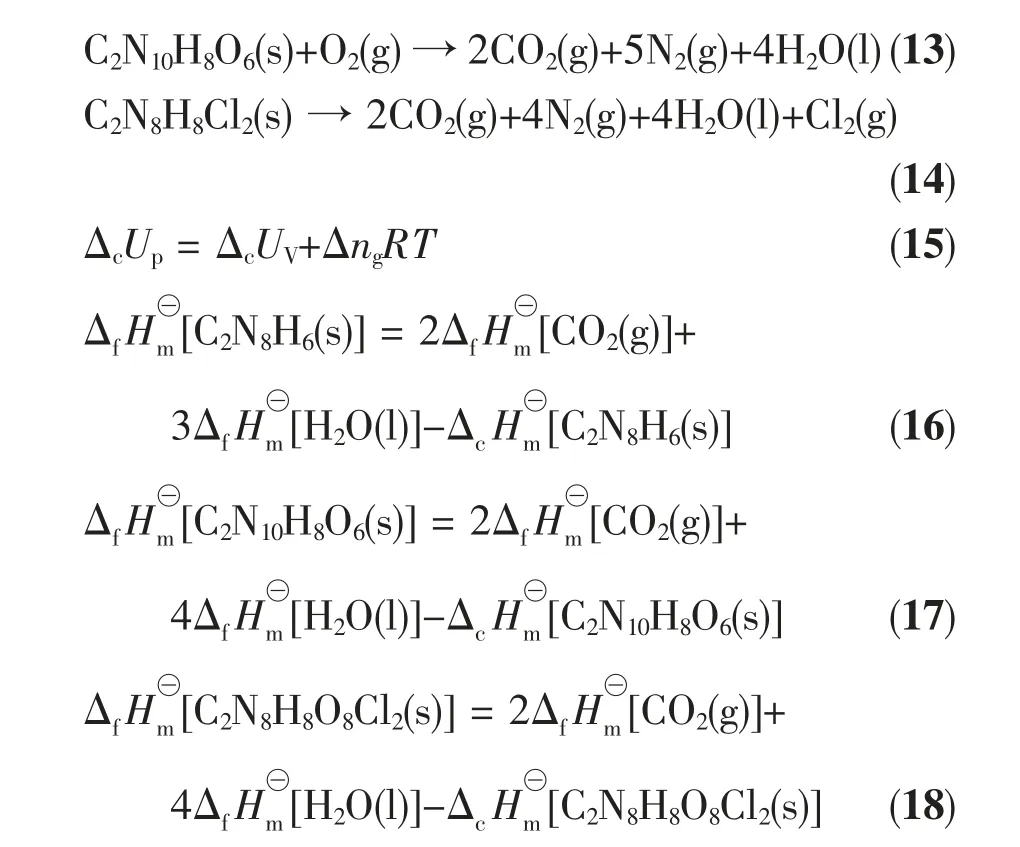
Enthalpy of formation and combustion heat are significant characteristics of EMs (Energetic Materials). The Oxygen-bomb calorimeter has been employed to determine the constant volume combustion heat (Qv) of DHT and its salts. The Equation (12) to (14) have shown the combustion reaction of DHT and its salts. And equation (14)indicated that DHT perchlorate was zero oxygen balanced. Furthermore, the constant pressure combustion heat (ΔcUp) can be calculated from the equations (15). According to Hesss Law, the standard formation enthalpy of DHT and its energetic salts can be calculated by the equation (16) to (18).

Combustion heat and standard formation enthalpy of DHT and its energetic salts were summarized in Table 6. The obtained standard formation enthalpy of DHT was slightly different with the calculated 535.3 kJ·mol-1[27].
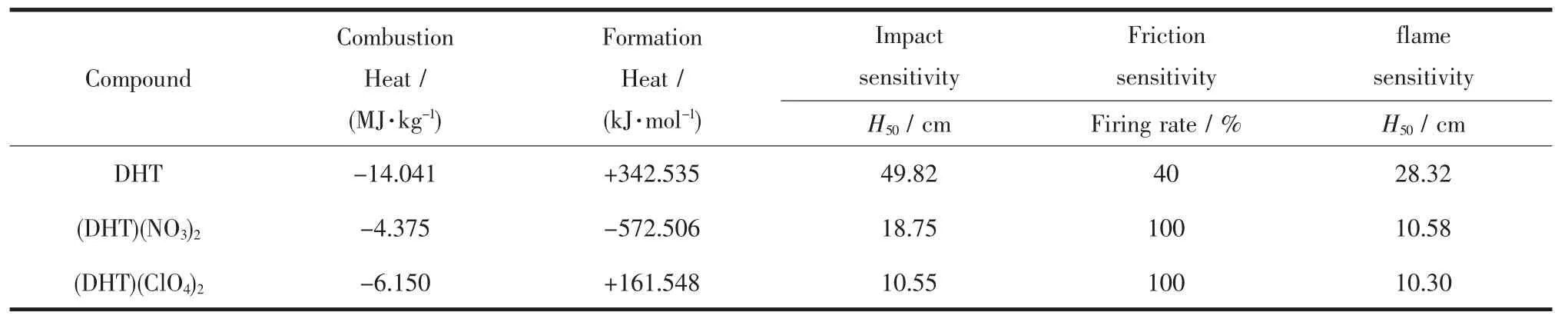
Table 6 Combustion heat and sensitivity of DHT and its nitrate and perchlorate
2.6 Sensitivity determination
Furthermore, the sensitivity of DHT and its salts have also been measured according to the literature[28],and the results were summarized in Table 6. The sensitivity results indicated the nitrate and perchlorate of DHT have a closer sensitivity to impact, friction and flame. Comparing to DHT, the two salts have much higher impact and friction sensitivity, but lower flame sensitivity. DHT and its nitrate and perchlorate have potential applications in energetic material field as metal-free gas generating agent and smoke-free pyrotechnic.
3 Conclusions
We have deeply investigated DHT and its nitrate and perchlorate by various means. Such as element analysis to study the consist, X-ray diffraction to determine the crystal structure, DSC and TG-DTG measurement to investigate the thermal behavior,Sensitivity test to shown the stability to impact,fraction and flame, and also caculate the nonisothermal kinetics and thermal explosion parameters.The results have shown that DHT nitrate and perchlorate have potential applications in metal-free gas generator and smoke-free pyrotechnic.
[1] Liang X, Pu X, Tian A. Chin. J. Org. Chem., 2011,31:328-335
[2] HU Yin(胡銀), MA Hai-Xia(馬海霞), ZHANG Jiao-Qiang(張 教 強), et al. Chemistry (Huaxue Tongbao), 2010,73:263-268
[3] XU Song-Lin(徐松林), LEI Yong-Peng(雷永鵬), YANG Shi-Qing(陽 世 清), et al. Chin. J. Energ. Mater. (Hanneng Cailiao) 2006,14:340-342
[4] Marcus H J,Remanick A.J.Org.Chem.,1963,28:2372-2375
[5] FENG Jin-Ling(馮金玲), ZHANG Jian-Guo(張建國), WANG Kun(王 昆), et al. Chem. J. Chinese Universities (Gaodeng Xuexiao Huaxue Xuebao), 2011,32:1519-1525
[6] Zhang J G, Liang Y H, Feng J L, et al. Z. Anorg. Allg.Chem., 2012,638,1212-1218
[7] Sinditskii V P, Egorshev V Y, Rudakov G F, et al.Thermochim. Acta, 2012,535,48-57
[8] Huynh M H V, Hiskey M A, Archuleta J G, et al. Angew.Chem. Int. Ed., 2004,43:5658-5661
[9] Zhou Y, Long X, Shu Y. Chin. J. Chem., 2010,28:2123-2129
[10]Zeng Z, Hyer W S, Twamley B, et al. Synthesis-Stuttgart,2008,11:1775-1782
[11]Wang B Z, Lian P, Liu Q, et al. J. Energ. Mater., 2006,14:352-354
[12]Chavez D E, Hiskey M A, Naud D L. Propell. Explos.Pyrot., 2004,29:209-215
[13]Oxley J C, Smith J L, Chen H. Thermochim. Acta, 2002,384,91-99
[14]Oxley J C, Smith J L, Zhang J, et al. Proceedings of the 28th NATAS Annual Conference on Thermal Analysis and Applications. Florida: Orlando, FLa, 2000:287-293
[15]Gao H, Zeng Z, Twamley B, et al. Chem. Eur. J., 2008,14:1282-1290
[16]Trohalaki S, Zellmer R J, Pachter R, et al. Toxicol. Sci.,2002,68:498-507
[17]Hussain S, Mattie D R, Frazier J M. CPIA Publication,2002,709:141-153
[18]Chavez D E,Hiskey M A.J.Energ.Mater.,1999,17:357-377
[19]Sheldrick G M. SHELXS-97, Program for the Solution of CrystalStructure,UniversityofG?ttingen,Germany,1997.
[20]Sheldrick G M. SHELXL-97, Program for the Refining of Crystal Structure, University of G?ttingen, Germany, 1997.
[21]Kissinger H E. Anal. Chem., 1957,29:1702-1706
[22]Ozawa T. Bull. Chem. Soc. Jpn., 1965,38:1881-1886
[23]Starink M J. Thermochim. Acta, 1996,288:97-104
[24]Hu Z Q, Liang Y J. Thermochim. Acta, 1988,123:135-151
[25]Zhang T L, Hu R Z, Xie Y, et al. Thermochim. Acta,1994,244:171-176
[26]HU Rong-Zu(胡榮祖), GAO Sheng-Li(高勝利), ZHAO Feng-Qi(趙鳳起), et al. Thermal Analysis Kinetics. 2nd Ed.(熱分析動力學,2 版), Beijing: Science Press, 2008.
[27]Jaidann M, Roy S, Lussier L S. J. Hazard. Mater., 2010,176:165-173
[28]LIU Zi-Tang(劉自鐋), LAO Yun-Liang(勞允亮). Initiating Explosive Experimental(起 爆 藥 實 驗). Beijing: Press of Beijing Institute of Technology, 1995.

- 無機化學學報的其它文章
- Synthesis,Crystal Structure and Antibacterial Activity of 2D Hydrogen-bonds Layered Magnesium(Ⅱ)Complex
- The Uptake and Membrane Transport of Cesium in Human Erythrocytes
- Preparation of Functionalized Graphene Sheets via Microwave-Assisted Solid-State Process and Their Electrochemical Capacitive Behaviors
- A New 2D Layer Manganese(Ⅱ)Complex Assembled by Flexible 1,4-Benzenebis(thioacetic acid)Ligand:Synthesis,Crystal Structure and Magnetic Property
- Synthesis of a New Cu(Ⅱ)Complex with in situ Generated 3-Hydroxy-2,4,6-pyridinetricarboxylate Ligand and Analysis of the Reaction Mechanism
- A New Nickel(Ⅱ)Complex Based on Novel Pyridyl-carboxylate Schiff-Base Ligand:Synthesis and Crystal Structure