
基于迭代二階錐的唯相位波束形成
2014-05-29 10:00:36路成軍盛衛星韓玉兵馬曉峰
電子與信息學報 2014年2期
關鍵詞:方法
路成軍 盛衛星 韓玉兵 馬曉峰
?
基于迭代二階錐的唯相位波束形成
路成軍 盛衛星*韓玉兵 馬曉峰
(南京理工大學電子工程與光電技術學院 南京 210094)
唯相位自適應波束形成技術對普通相控陣雷達自適應干擾抑制是非常重要的,在數字陣列雷達中,唯相位技術則可以充分利用各陣元發射模塊微波功率從而提高雷達的威力。該文提出了一種新的唯相位波束形成方法,假定初始唯相位權重矢量有個較小的相位擾動,將唯相位模型的目標函數和約束函數在該相位擾動區域內分別用泰勒一階展開式來近似,則可以將原來的非凸問題轉化為凸優化問題,通過二階錐規劃方法(SOCP)求得使當前目標函數最小的擾動矢量,然后更新得到新的權重矢量并代替原來的權重矢量,重復上述迭代過程直到滿足停止條件,可以得到滿足要求的唯相位權重。計算機仿真結果驗證了該方法的正確性和有效性。
陣列信號處理;數字波束形成;唯相位;泰勒展開;凸優化;二階錐規劃
1 引言

本文提出了一種新的唯相位波束形成方法,在相位擾動量比較小的情況下,目標函數和約束函數可以用相位矢量的泰勒一階展開式來近似,此時原來的非凸問題可以轉化為凸優化問題,并通過二階錐規劃方法求得使當前目標函數最小的擾動矢量,然后更新得到新的權重矢量并代替原來的權重矢量,重復上述過程直至滿足終止條件,最后可以得到滿足要求的唯相位權重。
本文其余部分結構安排如下:第2節介紹信號模型;第3節提出本文的唯相位方法;第4節進行計算機仿真;第5節對本文方法進行總結。
2 信號模型

圖1 均勻線性陣列


式中H表示共軛轉置。
在實際應用中,陣列協方差矩陣是通過有限次快拍數據估計得到,即

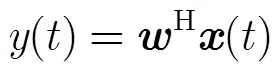
陣列加權輸出為
3 迭代二階錐唯相位算法
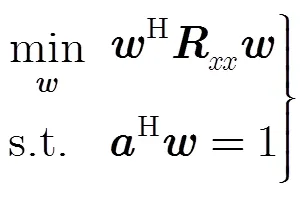
線性約束最小方差準則(LCMV)是通過最小化陣列輸出的功率來降低干擾和噪聲的增益,但保持對期望信號增益不變,從而提高信號干擾噪聲比,即


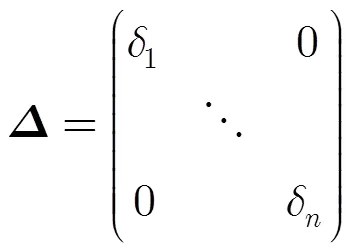
其中
將式(5)的優化問題變換為如式(10)形式:




因為

于是,得到


(5)判斷是否滿足終止條件,若不滿足則重復步驟(2)到步驟(5),若滿足則停止算法迭代,輸出唯相位權重。
4 計算機仿真

圖4所示是輸出信號干擾噪聲比SINR隨輸入信噪比SNR變化的曲線,圖中結果由50次Monte Carlo實驗得到。由圖4可知,本文方法與傳統LCMV算法性能基本接近,而文獻[17]中方法在小信噪比情況下輸出SINR比本文方法和傳統LCMV算法要低一些。
圖5所示是輸出SINR隨輸入數據樣本長度變化的曲線,輸入信噪比0 dB,其它參數保持不變。圓圈線表示本文的相位自適應算法,星號線表示傳統LCMV算法,圖中結果由50次Monte Carlo實驗得到。可以看出本文的唯相位算法在數據樣本較少的情況下性能優于傳統LCMV算法,隨著數據樣本變大,輸出SINR趨于最優值。
圖6所示為陣列輸出功率隨迭代次數變化的曲線。隨著迭代次數增加,輸出功率值逐漸收斂到1,此時輸出信號中只有期望信號。圖中可以看出,迭代到40次后算法就已經基本收斂。

圖2 4種算法波束圖比較
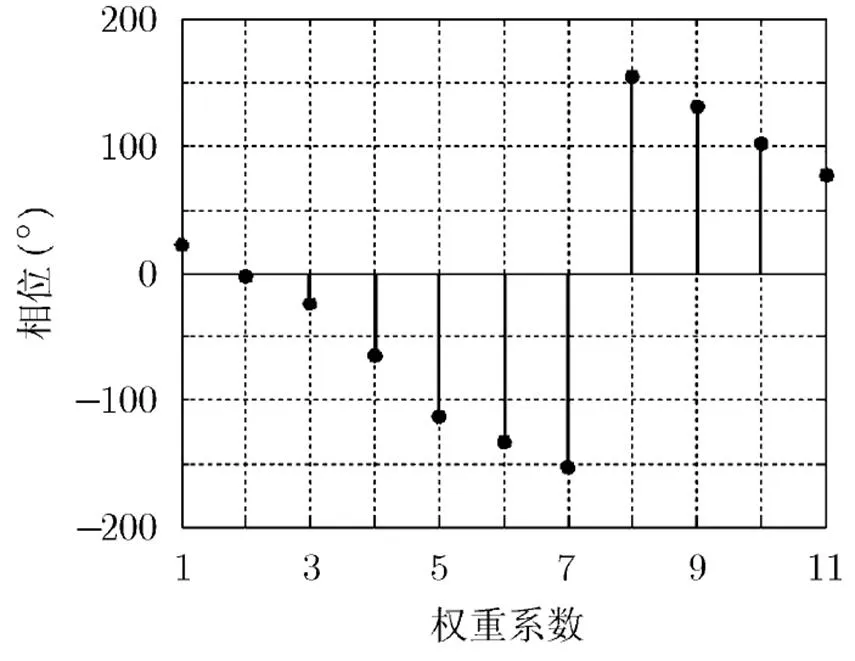
圖3 本文唯相位算法權重系數相位

圖4 輸出SINR隨輸入SNR的變化曲線
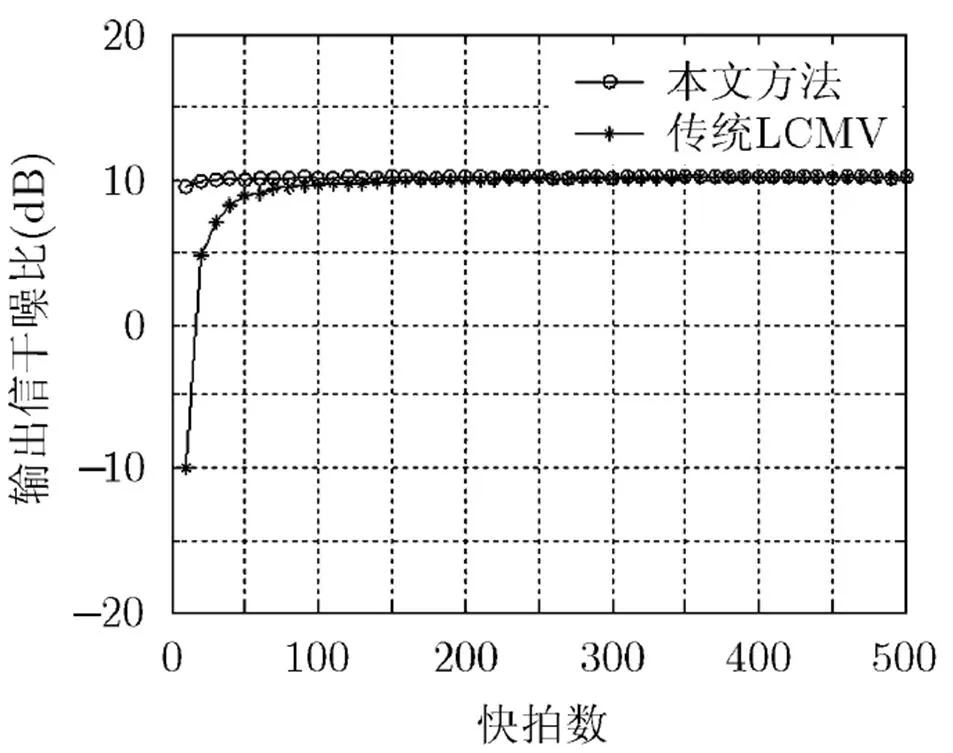
圖5 輸出SINR隨數據樣本長度變化曲線
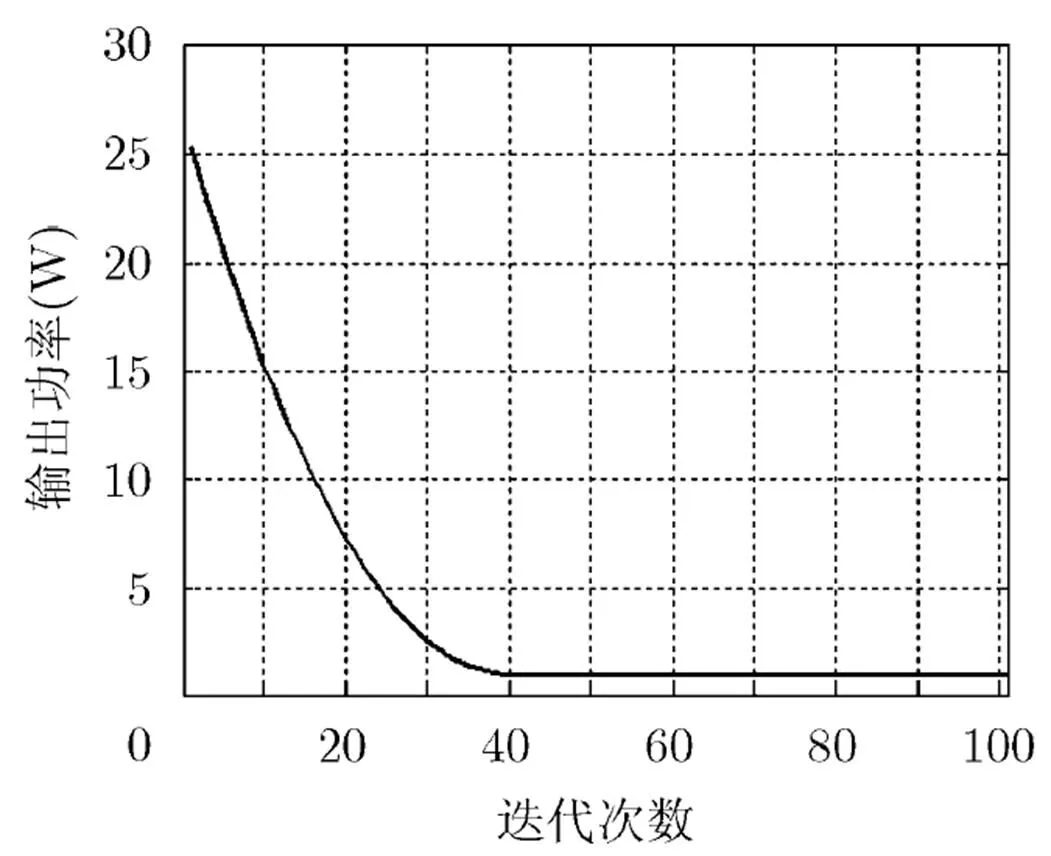
圖6 輸出功率隨迭代次數變化曲線

圖7 輸出SINR隨變化曲線
表1運行時間比較(s)
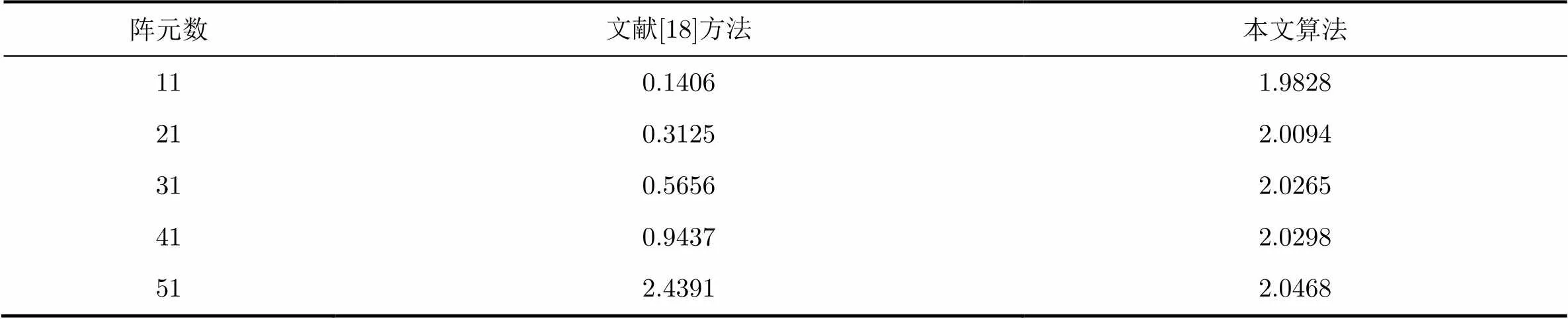
陣元數文獻[18]方法本文算法 110.14061.9828 210.31252.0094 310.56562.0265 410.94372.0298 512.43912.0468
5 結論
本文提出了一種新的唯相位波束形成算法,在相位擾動量比較小的情況下,目標函數和約束函數可以用相位矢量的泰勒一階展開式來近似,此時原來的非凸問題可以轉化為凸優化問題,并通過二階錐規劃方法求得使當前目標函數最小的擾動矢量,然后更新得到新的權重矢量并代替原來的權重矢量,重復迭代上述過程直到滿足終止條件。計算機仿真表明,本文提出的唯相位算法可以有效地在干擾方向形成零陷,輸出SINR接近傳統LCMV波束形成器。
[1] 易鋒, 孫超. 總體最小二乘算法模波束形成方法研究[J]. 聲學學報, 2013, 38(1): 35-41.
Yi Feng and Sun Chao. Matched-mode beamforming based on total least square algorithm[J].,2013, 38(1): 35-41.
[2] 楊杰, 李春曉, 馬永陽. 基于Bayesian準則的魯棒自適應波束形成算法[J]. 杭州電子科技大學學報, 2012, 32(4): 17-20.
Yang Jie, Li Chun-xiao, and Ma Yong-yang. Robust adaptive beamforming algorithm based on Bayesian criteria[J]., 2012, 32(4): 17-20.
[3] Gu Yujie and Amir Leshem. Robust adaptive beamforming based on interference covariance matrix reconstruction and steering vector estimation[J]., 2012, 60(7): 3881-3885.
[4] 李洪濤, 賀亞鵬, 肖瑤, 等. 基于壓縮感知的單通道魯棒自適應波束形成算法[J]. 電子與信息學報, 2012, 34(10): 2421-2426.
Li Hong-tao, He Ya-peng, Xiao Yao,.. Compressive sensing based single-channel robust adaptive beamforming algorithm[J].&, 2012, 34(10): 2421-2426.
[5] 鄭東衛, 白亞莉. 陣列雷達接收通道校正技術分析[J]. 火控雷達技術, 2012, 41(3): 44-48.
Zheng Wei-dong and Bai Ya-li. Receiving channel calibration technology for array radar[J].,2012, 41(3): 44-48.
[6] Leavitt M K. A phase adaptation algorithm[J].,1976, 24(5): 754-756.
[7] Shore R A. The use of nonlinear programming techniques for phase-only null synthesis[C]. Antennas and Propagation Society International Symposium, USA, 1983: 207-210.
[8] Steyskal H. Simple method for pattern nulling by phase perturbation[J].,1983, 31(1): 163-166.
[9] Baird C A and Rassweiler G G. Adaptive sidelobe nulling using digital controlled phase-shifters[J]., 1976, 24(5): 638-649.
[10] Shore R A. Nulling at symmetric pattern location with phase- only weight control[J]., 1984, 32(5): 530-533.
[11] Giusto R and Vincenti P D. Phase-only optimization for the generation of wide deterministic nulls in the radiation pattern of phased arrays[J]., 1983, 31(5): 814-817.
[12] Khzmalyan A D and Kondrat’yev A S. Fast iterative methods for phase-only synthesis of antenna array pattern nulls[J]., 1995, 31(8): 601-602.
[13] Haupt R L. Phase-only adaptive nulling with a genetic algorithm[J]., 1997, 45(6): 1009-1015.
[14] Mismar M J, Ismail T H, and Abu-Al-Nadi D I. Analytical array polynomial method for linear antenna arrays with phase-only control[J].,2007, 61(7): 485-492.
[15] Kajenski P J. Phase only antenna pattern notching via a semidefinite programming relaxation[J].2012, 60(5): 2562-2565.
[16] Khzmalyan A D and Kondratiev A S. The phase-only shaping and adaptive nulling of an amplitude pattern[J]., 2003, 51(2): 264-272.
[17] Smith S T. Optimum phase-only adaptive nulling[J].1999, 47(7): 1835-1843.
[18] Choi W S and Sarkar T K. Phase-only adaptive processing based on a direct data domain least squares approach using the conjugate gradient method[J]., 2004, 52(12): 3265-3272.
路成軍: 男,1984年生,博士生,研究方向為陣列信號處理、自適應波束形成技術.
盛衛星: 男,1966年生,教授,博士生導師,主要研究方向為數字波束形成、智能天線、電磁散射模型以及圖像處理.
韓玉兵: 男,1971年生,副教授,碩士生導師,主要研究方向為陣列信號處理、視頻圖像處理.
馬曉峰: 男,1981年生,講師,主要研究方向為雷達信號處理、MIMO以及高速數字信號處理.
Phase-only Beamforming Based on Iterative Second-order Cone
Lu Cheng-jun Sheng Wei-xing Han Yu-bing Ma Xiao-feng
(,,210094,)
The adaptive phase-only beamforming technique is very important for conventional phased array radar to suppress interference. For the digital array radar, the phase-only technique can be used to enhance the radar power by making full use of transmitting module microwave power of each array element. In this paper, a novel phase-only algorithm is proposed. Assuming that the initial phase weight vector has a small phase perturbation, the objective function and constraint function can be replaced by the first-order Taylor expansion, thus the original non-convex problem becomes the convex optimization problem, which can be solved using Second-Order Cone Programming (SOCP). The new weight vector is obtained through updating the current weight vector using the solved perturbation vector. The current weight vector is replaced by the new weight vector and the above procedure is repeated until the array pattern meets the termination condition. The computer simulation results demonstrate the correctness and effectiveness of the proposed approach.
Array signal processing; Digital beamforming; Phase-only weighting; Taylor expansion; Convex optimization; Second-Order Cone Programming (SOCP)
TN911.7
A
1009-5896(2014)02-0266-05
10.3724/SP.J.1146.2013.00593
盛衛星 shengwx@njust.edu.cn
2013-04-27收到,2013-08-23改回
國家自然科學基金(11273017)資助課題
猜你喜歡
中老年保健(2021年9期)2021-08-24 03:52:04
河北畫報(2021年2期)2021-05-25 02:07:46
中學生數理化(高中版.高考理化)(2020年2期)2020-04-21 05:33:04
兒童繪本(2020年5期)2020-04-07 17:46:30
兒童故事畫報(2019年5期)2019-05-26 14:26:14
Coco薇(2016年2期)2016-03-22 02:42:52
山東青年(2016年1期)2016-02-28 14:25:23
Coco薇(2015年1期)2015-08-13 02:47:34
小雪花·成長指南(2015年7期)2015-08-11 15:03:12
小雪花·成長指南(2015年4期)2015-05-19 14:47:56
