
LASEK for the correction of hyperopia with mitomycin C using SCHWIND AMARIS excimer laser:one-year follow-up
2015-01-10 08:00:56KhosrowJadidiSeyedAliasgharMosaviFarhadNejatMostafaNaderiSaraSerahatiLeilaJanani
國際眼科雜志 2015年11期
Khosrow Jadidi,Seyed Aliasghar Mosavi,Farhad Nejat,Mostafa Naderi,Sara Serahati,Leila Janani
1Department of Ophthalmology,Bina Eye Hospital Research Center,Tehran 1914853185,Iran
2Department of Bio-statistics,University of Social Welfare and Rehabilitation Sciences,Tehran 1985713834,Iran
3Department of Bio-statistics,School of Public Health,Iran University of Medical Sciences,Tehran 1419733141,Iran
·Original article·
LASEK for the correction of hyperopia with mitomycin C using SCHWIND AMARIS excimer laser:one-year follow-up
Khosrow Jadidi1,Seyed Aliasghar Mosavi1,Farhad Nejat1,Mostafa Naderi1,Sara Serahati2,Leila Janani3
1Department of Ophthalmology,Bina Eye Hospital Research Center,Tehran 1914853185,Iran
2Department of Bio-statistics,University of Social Welfare and Rehabilitation Sciences,Tehran 1985713834,Iran
3Department of Bio-statistics,School of Public Health,Iran University of Medical Sciences,Tehran 1419733141,Iran
Received:2014-05-28 Accepted:2015-03-21
·AIM:To evaluate the efficacy, safety and predictabilityof laser-assisted sub-epithelial keratectomy (LASEK) forthe correction of hyperopia using the SCHWIND AMARISplatform.
·METHODS:This retrospective single - surgeon studyincludes 66 eyes of 33 patients with hyperopia whounderwent LASEK with mitomycin C (MMC). The medianage of patients was 35. 42 ± 1. 12y (ranging 18 to 56y). Ineach patient LASEK was performed using SCHWINDAMARIS excimer laser. Postoperatively clinical outcomeswere evaluated in terms of predictability, safety, efficacy,subjective and objective refractions, uncorrected visualacuity ( UCVA), best spectacle - corrected visual acuity(BSCVA) and adverse events.
·RESULTS:The mean baseline refraction was 3.2±1.6 diopters(D)(ranging 0 to 7 D).The mean p re-operative and postoperative spherical equivalent(SE)w ere 2.34± 1.76(ranging-1.25 to 7 D)and 0.30±0.84(ranging-0.2 to 0.8 D)respectively(P=0.001).The mean hyperopia was 0.63±0.84 D(ranging-1.75 to 2.76 D)6 to 12m o postoperatively.Likewise,the mean astigmatism was 0.68±0.43 D(range 0 to 2 D)with 51(77.3%)and 15 (22.7%)eyes with in±1 and±0.50 D respectively.The safety index and efficacy index were 1.08 and 1.6 respectively.
·CONCLUSION:LASEK using SCHW IND AMARIS with MMC yields good visual and refractive results for hyperopia.Moreover,there were no serious complications.
·CONCLUSION:
LASEK;SCHW IND AMARIS;mitomycin C; hyperopia
INTRODUCTION
The development of excimer laser technology over the past 2 decades has portended a new phase in refractive surgery.Since 1983,when the modern period of refractive surgery began with the experimental introduction of the 193nm argon fluoride excimer laser by Trokel et al[1],refractive surgery has been widely used because of its precise predictability and safety in treating low to moderate myopia[2]. Photorefractive keratectomy(PRK)first used in human corneas in 1987 by McDonald et al[3].In the early 1990s, The automated micro-keratome was modified and incorporated into laser in situ keratomileusis(LASIK)[4,5].Since then, LASIK has become the most popular refractive procedure in the world and was considered by many experts to be the refractive procedure of choice.In 1999,laser-assisted subepithelial keratomileusis(LASEK)was introduced by Camellin[6].This technique has become popular for correcting refractive errors(RE),particularly in cases with moderate degrees of myopia,suggesting that the refractive and visual outcomes in LASEK patients were better than conventional PRK[7,8].
Epithelial flap in Camellin's LASEK technique is detached after application of an alcohol solution and repositioned as in the LASIK procedure following laser ablation.The epithelium regenerates in a few days;during this time the flap protects the ablated stromal surface.Mitomycin C(MMC)is an alkylating agent with cytotoxic and anti-proliferative effects.It is used as prophylactic to keep away from haze after primary surface ablation and for modulation of corneal wound healing[9].
Although results for hyperopic corrections have been encouraging,the surgical correction of hyperopia remains a challenge in spite of the development of numerous technologies.Surface ablation for the correction of hyperopia is documented with poor predictability,slower visual recovery and refractive stability compared to myopic treatments[10-13]. To our knowledge there are few investigations related to hyperopic LASEK using MMC[13].To address this issue and evaluate the safety and efficacy of LASEK for hyperopia using MMC,we conducted this retrospective study.
SUBJECTS AND METHODS
Patients' Number and AssessmentThis retrospective study comprised 66 eyes of 33 patients who had LASEK for hyperopia,performed with the AMARIS excimer laser (SCHWIND eye-tech-solutions,Kleinostheim,Germany). The Institutional Review Board of the Eye Research Center, Bina Eye Hospital approved this study and followed the tenets of the Declaration of Helsinki.Exclusion criteria were: corneal or retinal disease,previous eye surgery,collagen vascular disease,keratoconus,glaucoma,cataract,pregnancy and current systematic corticosteroid therapy.Hard contact lenses were discontinued 3wk and soft contact lenses 2wk before the final measurement and surgery.The preoperative examination included measurement of uncorrected visual acuity(UCVA),best spectacle-corrected visual acuity (BSCVA),manifest and cycloplegic refractions;slit-lamp biomicroscopy;fundus evaluation;and corneal topography.The goal of all surgeries was emmetropia.Patients were followed for 6 to 12mo postoperatively.The nature of the procedures and its related benefits and risks were explained precisely to all patients.
Operative ProcedureThe procedures were performed by the same surgeon(Jadidi K)under sterile conditions and topical anesthesia(proparacain hydrochloride 0.5%). Twenty percent alcohol was applied to the center of the cornea for 15s using a corneal well.It was then thoroughly rinsed with a balanced salt solution.A 9 mm epithelial trephine (Shahinian LASEK trephine;Katena Products Inc.,Denville, NJ,USA)was used to create a 270°epithelial hinge.The epithelial flap was reflected back from the cornea with an epithelial peeler(hack knife and vok cell Sloane LASEK Micro Hoe;Katena Products Inc.).Excimer laser treatment was performed using the nomogram.The optical zone varied between 6 mm and 7 mm,and transition zone was calculated based on the patient's age,RE,and K readings by means of the nomogram.Following ablation,with regard to the refraction number of each patient,a cellulose surgical spear soaked in 0.02%MMC was applied to the ablated area.The duration of MMC application was 30s.The epithelial flap was rinsed with a balanced salt solution before being repositioned with the edges overlapping the original intact epithelium.A new bandage contact lens(BCL)was placed after laser ablation on the cornea and one drop each of a topical antibiotic agent and steroidal agent was given.Postoperatively patients were given bethamethasone drops 4 times a day, chloramphenicole drops 4 times a day,and preservative-free artificial tears every 2h.Chloramphenicol drops was discontinued 1wk postoperatively but betamethasone drops tapered off during 4-6wk.Moreover,there were no serious complications except low grade corneal haze.
Safety,Efficacy and PredictabilityThe safety of the procedure was defined as the percentage of eyes losing more than 2 lines of Snellen BSCVA.Safety index is equal to the ratio(mean postoperative BSCVA/mean preoperative BSCVA).The efficacy was defined as the percentage of the eyes,achieving a UCVA of 0.5(20/40)or better postoperatively.The efficacy index is equal to the ratio(mean postoperative UCVA/mean preoperative BSCVA)[14,15].The predictability of refractive SE was the percentage of eyes with ±1 D and±0.50 D of emmetropia at 6 to 12mo postoperatively[16].
Statistical AnalysisAll visual acuity measurements were converted from Snellen to logarithm of the minimum angel of resolution(logMAR).All continuous variables were expressed as mean(SD),correspondingly for non-normal data were expressed as median(IQ).Paired student t-test and colmogrov-smirnov test were used to compare ophthalmologic changes pre and post operatively for normal and non-normal continuous variables,respectively.P<0.05 were considered statistically significant.All analyzes wereperformed using SPSS version 18 software(SPSS Inc., Chicago,IL,USA)
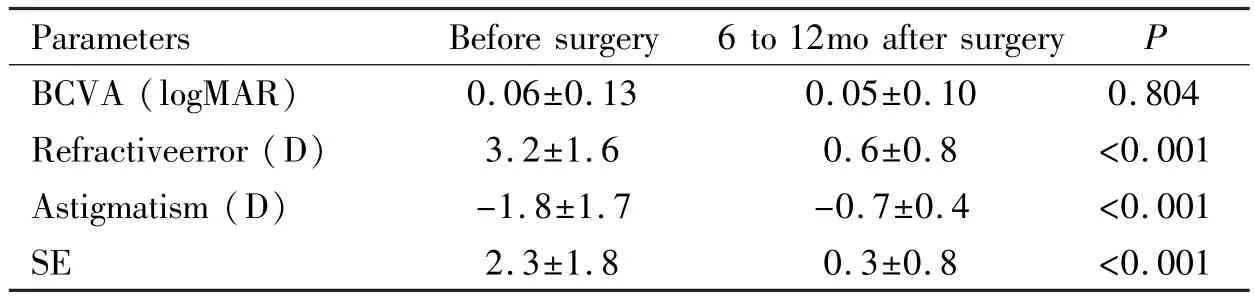
Table 1 Mean preoperative and postoperative visual and refractive outcomes during 6-12mo follow-up period
RESULTS
In this study of 33 patients,15(45.5%)were males and 18 (54.5)%were females.The mean age at the time of the surgical intervention was 35.9±10.7y(from 18 to 56). Preoperative mean RE was 3.2±1.6 diopters(D)(range:0 to+7.00 D),whereas 6 to 12mo postoperatively the mean RE was 0.6±0.8 D(range:-1.75 to 2.76 D).A significant reduction was reported between the preoperative and 1-year postoperative mean RE(P<0.001)(Table 1).The mean preoperative and postoperative spherical equivalent(SE)were 2.34±1.76(range-1.25 to 7 D)and 0.30±0.84(range-0.2 to 0.8 D)respectively(P=0.001).At 6 to 12mo,43 (65.2%)eyes were within±1.00 D of the intended correction RE and 23(34.8%)eyes were within±0.50 D. Preoperative and 6 to 12mo postoperative mean astigmatism were-1.8±1.7(range:0 to 5.50)and-0.7±0.4(range: 0 to 2),respectively.These results indicated a significant reduction(P<0.001).At 6 to 12mo,51(77.3%)eyes were within±1.00 D of the intended correction astigmatism and 15(22.7%)eyes were within±0.50 D.Mean preoperative BSCVA was 0.06±0.13 logMAR(range:0 to 0.70 logMAR)and mean 6 to 12mo postoperative BSCVA was 0.05±0.1 logMAR(range:0 to 0.39 logMAR).There was no significant difference between mean preoperative and 6 to 12mo postoperative BSCVA(P<0.804).The safety index and efficacy index were 1.08 and 1.6 respectively.
Additionally,at the six-month follow-up and thereafter,two eyes gained four lines of BSCVA,13 gained one line and 44 eyes showed no change.Three eyes lost one line of Snellen decimal equivalent BSCVA and four eyes lost more than one line(Figure 1).Corneal haze was detected in just about 5% of our study cases that was not so serious to affect visual acuity (data not shown).
DISCUSSION
LASIK for correcting hyperopia proved to be more challenging than correcting myopia primarily because the excimer lasers have to be capable of delivering peripheral laser pulses to flatten the peripheral cornea for steepening the central cornea. Secondarily,larger diameter flaps should be produced by a new generation of microkeratomes.Moreover,studies of hyperopic PRK and hyperopic LASIK have demonstrated acceptable efficacy for corrections up to 4.00 D,but with limited predictability for higher-order corrections[10-12].
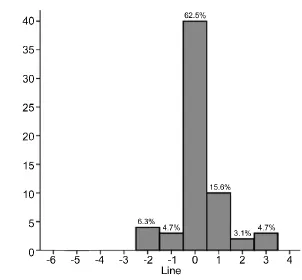
Figure 1 Percentages of eyes with BSCVA gain and loss 6-12mo after surgery.
Alternatively,nowadays there are several laser systems capable of hyperopic ablations and various microkeratomes competent of creating large-diameter flaps.The AMARIS excimer laser technology is based on a new ablation patterns incorporating a six-dimensional eye-tracking subsystem which tracks not only pupil movements,but also rolling movements of the eye,as well as torsional movements and movements along the propagation axis of the laser.This pattern minimizes the induction of aberrations that will allow us to perform LASEK more predictably and safely[17,18].Additionally, recent studies proposed LASEK to be superior refractive procedure compared with PRK and LASIK due to the possibility of larger diameter optical zone,a reduction in pain,faster visual rehabilitation,better visual acuity, decreased corneal haze,ability to treat thinner corneas and absence of stromal flap problems in LASEK-treated patients[19-27].
In this retrospective study,we assessed efficacy,safety and stability of hyperopic LASEK with MMC.The safety of the procedure was defined as the percentage of eyes losing more than 2 lines of Snellen BSCVA.We found that 6%of eyes lost 2 or more lines of BSCVA,indicating a reasonable level of safety.In addition,the efficacy and safety index were more than 1.00 at 6 to 12mo postoperatively that showed the visual outcomes were satisfactory.
In a prospective pilot study by O'Brart et al[28](2007) comprised 45 patients(68 eyes),treated with LASEK,preoperative mean SE was+2.19 D,ranging from 0 to+4.25 D, while mean preoperative cylinder was-0.79 D,ranging from 0 to-5.0 D.Patients underwent LASEK with a SCHWIND ESIRIS excimer laser with a large optical zone of 7.0 mm and a 1.0 mm transition zone in every case.At the 6 to 12mo follow-up visits,98%of eyes were within one dioptre of the intended correction,while 88%were within 0.5D.At the six-month follow-up and thereafter,two eyes gained two lines of BSCVA,11 gained one line and 28 eyes showed no change.Two eyes lost one line of Snellen decimal equivalent BSCVA.No eyes lost more than one line.Analysis of complications showed no axial corneal haze in any eyes, with a peripheral ring of faint haze 7.0 mm in diameter in seven percent of eyes after between six and 12mo follow-up. In our study,patients underwent LASEK with a SCHWIND AMARIS excimer laser.The optical zone and transition zone were 6.6 mm and 1.6 mm respectively.When comparing our results with those of O'Brart et al[28](2007),they were similar regarding the mean reduction of the K average value. However,when we further analyzed this amount of reduction in relation to the initial preoperative values,we observed a positive significant correlation;that is,the higher the optical zone,the better outcome achieved after surgery.Moreover,in our study that were categorized based on ages and transition zone on outcome(data not shown),we revealed statistically significant difference between two groups in term of transition zone(P=0.004),but no significant difference in term of ages was found(P=0.576).Interestingly in O'Brart et al[28]study,transitional zone was lower than our study(1mm versus 1.6 mm).We speculate that transitional zone may have a prominent role in outcome that should not be overlooked in future studies.
O'Brart et al[29]theorized that improved outcomes with the SCHWIND ESIRIS laser might be due to the large diameter optical zone and the smoother ablation profile achievable with scanning spot technology.He showed that hyperopic LASEK with the ESIRIS laser results appear to be very favorable compared to published outcomes with LASIK and PRK. LASEK with large diameter optical zone treatments(7.0 mm or greater)achieves very favorable outcomes for the correction of hyperopia up to+4.5 D hyperopia[30].
In this study,we demonstrated the reason of rather discouraging excimer laser hyperopic treatments in the past were due to too small optical zones;the optical zone was 6.6 mm and it was slightly smaller than O'Brart et al[28]study, whereas the transitional zone was larger(1.6 mm).Actually, the use of small optical zones will have a greater propensity to the induction of higher-order aberrations,especially as many hyperopes have a large angle kappa often requiring the treatment to be de-centered from the entrance pupil centre, which can result in a significant loss of postoperative visual performance,especially as(unlike myopic treatments)there are no benefits from postoperative retinal magnification.In addition,in myopic treatments we know that the large optical zone corrections(6.0 mm or greater)are more predictable, safer and more stable than smaller diameter(5.0 mm or less) treatments.Therefore,knowing the facts mentioned above,to some extend may explain our results.
Also,de Ortueta et al[31]found a good predictability after HLASIK with the ESIRIS system,with 92%of the eyes having a postoperative refraction within±0.50 D of the attempted correction.We demonstrated a refractive outcome within±1.00 D of emmetropia in 78.2%of eyes in the present study with AMARIS system.Thus in comparison to previous studies[28-31],there is slightly difference in terms of intended correction which could be explained by differences in optical zone and transitional zone.Likewise,we agree with O'Brart et al[28]theory,better outcomes in terms of predictability and visual performances are closely related to larger optical zone. Furthermore,we found that regression of initial effect was more stable than previous studies and no re-treatments were performed in the 6 to 12mo of follow-up due to undercorrection or hyperopic regression,possibly because there was less stimulation of sub-epithelial connective tissue with LASEK.
In conclusion,we have shown-LASEK using SCHWIND AMARIS yields very satisfactory visual outcomes for hyperopia and hyperopic astigmatism.In addition,there were no sightthreatening complications.Further studies with a longer follow-up period and a larger number of patients are recommended to draw final conclusions about the efficiency and safety of LASEK using SCHWIND AMARIS.Ths study is underway,and the results will be reported soon.
REFERENCES
1 Trokel SL,Srinivasan R,Braren B.Excimer laser surgery of the cornea.Am J Ophthalmol1983;96(6):710-715
2 Kyprianou G,Machácková M,Feuermannová A,Rozsíval P,Langrová H.Subjective visual perception after laser treatment of myopia on two types of lasers.Cesk Slov Oftalmol 2010;66(5):213-219
3 McDonald MB,Liu JC,Byrd TJ,Abdelmegeed M,Andrade HA, Klyce SD,Varnell R,Munn erlyn CR,Clapham TN,Kaufman HE. Central photorefractive keratectomy for myopia;partially sighted and normally sighted eyes.Ophthalmology1991;98(9):1327-1337
4 Sandoval HP,de Castro LE,Vroman DT,Solomon KD.Refractive surgery survey 2004.J Cataract Refract Surg2005;31(1):221-233
5 Buratto L,Ferrari M.Indications,techniques,results,limits,and complications of laser in situ keratomileusis.Curr Opin Ophthalmology1997;8(4):59-66
6 Shahinian L.Laser-assisted subepithelial keratectomy for low to high myopia and astigmatism.J Cataract Refract Surg2002;28(8):1334-1342
7 Dastjerdi MH,Soong HK.LASEK(laser sub-epithelial keratomileusis).Curr Opin Ophthalmol 2002;13(4):261-263
8 Lee JB,Seong GJ,Lee JH,Seo KY,Lee YG,Kim EK.Comparison of laser epithelial keratomileusis and photorefractive keratectomy for low to moderate myopia.J Cataract Refract Surg 2001;27(4):565-570
9 Talamo JH,Gollamudi S,Green WR,De La Cruz Z,Filatov V,Stark WJ.Modulation of corneal wound healing after excimer laser keratomileusis using topical mitomycin C and steroids.Arch Ophthalmol1991;109(8):1141-1146
10 Luger MH,Ewering T,Arba-Mosquera S.One-year experience in presbyopia correction with biaspheric multifocal central presbyopia laser in situ keratomileusis.Cornea2013;32(5):644-652
11 O'Brart DP,Stephenson CG,Oliver K,Marshall J.Excimer laser photorefractive keratectomy for the correction of hyper-opia using an erodible mask and Axicon system.Ophthalmology 1997;104(1):1959-1970
12 O'Brart DP.The status of hyperopic laser-assisted in situ keratomileusis.Curr Opin Ophthalmol 1999;10(4):247-252
13 McAlinden C,Skiadaresi E,Moore JE.Hyperopic LASEK treatments with mitomycin C using the SCHWIND AMARIS.J Refract Surg2011;27 (5):380-383
14 Koch D,Kohnen T,Obstbaum S,Rosen ES.Format for reporting refractive surgical data.J Cataract Refract Surg1998;24(3):285-287 15 Shetty R,Kurian M,Anand D,Mhaske P,Narayana KM,Shetty BK.Intacs in advance keratoconus.Cornea 2008;27(9):1022-1029
16 Güell JL,Morral M,Salinas C,Elies D,Gris O,Manero F. Intrastromal corneal ring segments to correct low myopia in eyes with irregular or abnormal topography including form frusta keratoconus:4-year follow-up.J Cataract Refract Surg 2010;36(7):1149-1155
17 Arbelaez MC,Vidal C,Arba Mosquera S.Excimer laser correction of moderate to high astigmatism with a non-wave-front-guided aberrationfree ablation profile:Six-month results.J Cataract Refract Surg2009;35 (10):1789-1798
18 Feng Y,Yu J,Wang Q.Meta-analysis of wave-front-guided vs. wave-front-optimized LASIK for myopia.Optom Vis Sci2011;88(12): 1463-1469
19 Gil-Cazorla R,Teus MA,Hernández-Verdejo JL,De Benito-Llopis L,García-González M.Comparative study of two silicone hydrogel contact lenses used as bandage contact lenses after LASEK.Optom VisSci 2008:85(9):884-888
20 Carones F,Fiore T,Brancato R.Mechanical vs.alcohol epithelial removal during photorefractive keratectomy.J Refract Surg1999;15(5): 556-562
21 Maldonado MJ,Arnau V,Navea A,Martinez-Costa R,Mico FM, Cisneros AL,Menezo JL.Direct objective quantification of corneal haze, after excimer laser photo-refractive keratectomy for high myopia.Ophthalmology1996;103(11):1970-1978
22 Jeng BH,William J.Dupps Jr.Autologous serum 50%eye-drops in the treatment of persistent corneal epithelial defects.Cornea 2009;28 (10):1104-1108
23 de Benito-Llopis L,Teus MA,Sánchez-Pina JM,Hernández-Verdejo JL.Comparison between LASEK and LASIK for the correction of low myopia.J Refract Surg2007;23(2):139-145
24 de Benito-Llopis L,Alió JL,Ortiz D,Teus MA,Artola A.Ten-year follow-up of excimer laser surface ablation for myopia in thin corneas. Am J Ophthalmol 2009;147(5):768-73,773.e1-2
25 O'Keefe M,Kirwan C.Laser epithelial keratomileusis in 2010-a review.Clin Experiment Ophthalmol2010;38(2):183-191
26 Zhao LQ,Wei RL,Cheng JW,Li Y,Cai JP,Ma XY.Metaanalysis:clinical outcomes of laser-assisted subepithelial keratectomy and photo-refractive keratectomy inmyopia.Ophthalmology2010;117 (10):1912-1922
27 Chen SH,Feng YF,Stojanovic A,Wang QM.Meta-analysis of clinical outcomes comparing surface ablation for correction of myopia with and without 0.02%mitomycin C.J Refract Surg2011;27(7):530-541
28 O'Brart DP,Mellington F,Jones S,Marshall J.Laser epithelial keratomileusis for the correction of hyperopia using a 7.0-mm optical zone with the Schwind ESIRIS laser.J Refract Surg2007;23(4):343-354
29 O'Brart DP,Corbett MC,Verma S,Heacock G,Oliver KM, Lohmann CP,Kerr Muir MG,Marshall J.Effects of ablation diameter, depth,and edge contour on the outcome of photorefractive keratectomy.J Refract Surg1996;12(1):50-60
30 O'Brart DP,Stephenson CG,Baldwin H,Ilari L,Marshall J. Hyperopic laser photorefractive keratectomy with the erodible mask and Axicon system:two year follow-up.J Cataract Refract Surg2000;26 (4):524-535
31 de Ortueta D,Arba-Mosquera S,Baatz H.Topographic changes after hyperopic LASIK with the SCHWIND ESIRIS laser platform.J Refract Surg2008;24(2):137-144
SCHWIND AMARIS準分子激光聯合絲裂霉素C行LASEK術矯治遠視的研究
Khosrow Jadidi1,Seyed Aliasghar Mosavi1,Farhad Nejat1, Mostafa Naderi1,Sara Serahati2,Leila Janani3
(作者單位:1伊朗,德黑蘭1914853185,Bina眼科醫院研究中心,眼科;2伊朗,德黑蘭1914853185,社會福利與康復醫科大學,生物統計科;3伊朗,德黑蘭,德黑蘭醫科大學,公共衛生學院,流行病學和生物統計學科)
Khosrow Jadidi.khosrow.jadidi@yahoo.com
目的:評估SCHWIND AMARIS準分子激光在LASEK術中矯治遠視手術中的有效性,安全性和可預測性。方法:回顧性研究LASEK術聯合使用絲裂霉素C矯治遠視患者33例66眼,平均年齡35.42±1.12歲(范圍18~56a)。每位患者予SCHWIND AMARIS準分子激光行LASEK術。術后對其可預測性、安全性、有效性及主觀驗光情況進行評估,并分析客觀驗光、裸眼視力、最佳矯正視力及不良反應。結果:平均屈光度為3.2±1.6D(0~7D),術前及術后平均等效球鏡分別為2.34±1.76D(-1.25~7D)及0.30± 0.84D(-0.2~0.8D)(P=0.001)。術后6~12mo,平均遠視為0.63±0.84D(-1.75~2.76D)。平均散光度為0.68 ±0.43D(0~2D),61眼(78.2%)和31眼(39.7%)散光度分別在±1D和±0.50D范圍內。安全指數和有效性指數分別為1.08和1.6。結論:應用SCHWIND AMARIS準分子激光聯合絲裂霉素C行LASEK術矯治遠視具有良好的視覺和屈光結果,而且無嚴重并發癥。
LASEK;SCHWIND AMARIS;絲裂霉素C;遠視
Khosrow Jadidi.Department of Ophthalmology,Bina Eye Hospital Research Center,Tehran 1914853185,Iran.khosrow.jadidi@yahoo.com
10.3980/j.issn.1672-5123.2015.11.01
:Jadidi K,Mosavi SA,Nejat F,Naderi M,Serahati S, Janani L.LASEK for the correction of hyperopia with mitomycin C using SCHWIND AMARIS excimer laser:one-year follow-up.Guoji Yanke Zazhi(Int Eye Sci)2015;15(11):1837-1841
引用:Jadidi K,Mosavi SA,Nejat F,Naderi M,Serahati S,Janani
L.SCHWIND AMARIS準分子激光聯合絲裂霉素C行LASEK術矯治遠視的研究.國際眼科雜志2015;15(11):1837-1841
猜你喜歡
體育科技文獻通報(2022年3期)2022-05-23 13:46:54
天津外國語大學學報(2021年3期)2021-08-13 08:32:18
遼金歷史與考古(2021年0期)2021-07-29 01:06:54
甘肅教育(2020年6期)2020-09-11 07:45:28
大眾投資指南(2020年10期)2020-07-24 08:03:48
甘肅教育(2020年12期)2020-04-13 06:24:56
科技傳播(2019年22期)2020-01-14 03:06:54
民用飛機設計與研究(2019年4期)2019-05-21 07:21:24
數學大世界(2017年31期)2017-12-19 12:29:35
汽車工程學報(2017年2期)2017-07-05 08:13:02
