生態流的構成和分析方法研究綜述
2015-03-11 03:04:55郭貝貝楊緒紅金曉斌周寅康
生態學報 2015年5期
郭貝貝, 楊緒紅, 金曉斌, 周寅康
南京大學地理與海洋科學學院, 南京 210023
生態流的構成和分析方法研究綜述
郭貝貝, 楊緒紅, 金曉斌*, 周寅康
南京大學地理與海洋科學學院, 南京 210023
人類活動帶來的生態環境和土地利用變化是全球變化研究的重點內容之一。在復雜的自然生態系統中,各組分之間的物質循環、能量流動和信息傳遞通常以流態形式來表達,其路徑、方向、強度、速率等對生態系統產生重要影響。系統分析了生態流的起源與發展,從能流、物質流和信息流三方面對生態流進行了解構,并對相關原理和分析方法進行了總結和述評。在現有研究基礎上,以典型半人工半自然的農田生態系統為例,通過生態網絡連接度等指標與純自然生態系統對比分析生態流的流向、路徑和強度等,人類活動增強了生態系統的靈活度,但擾亂了原有的穩定性。生態學家一直專注于研究適用于統一計算生態流的方法,其量化已具有一定的研究基礎,但仍存在許多問題,在以后的研究中仍需系統地深入探索。
生態流; 能值; 擴展火用分析; 生態系統
隨著全球生態環境問題凸顯,采用生態學方法從不同時間和空間尺度對地球、大氣、地表水和生物系統之間的相互作用以及人類活動對地球的影響進行分析,揭示生態系統的演變規律,研究全球變化對其影響和反饋得到學術界的廣泛關注。IPCC第四次評估報告[1]中指出,全球化的能量、物質和信息流動跨越邊界、國家,研究全球變化最大的挑戰是整合全球環境變化、生態系統的水文和生物地球化學循環,生物多樣性、生態干擾制度等,須了解全球環境變化對生態系統結構和功能的結合和互動效果的影響。
1 生態流的內涵、特征與結構
1864年Marsh[2- 3]的第一部關于生態環境的作品描述人與自然關系時記錄人類活動對環境影響,推動了生態學研究進展[4]。生態系統由Tansley[5]于1935年首次提出,指在一定時間和空間內、由生物群落及其環境組成的統一整體,各組成要素間借助能量流動、物質循環、信息傳遞而相互聯系并相互制約,形成了具有自調節功能的復合體。在生態系統中,通常以“流”的形式定量表述各組分之間及其與環境之間不斷地進行著物質的、能量的和信息的交換強度[6]。自然生態系統一般被看作是相對恒定的,任何新的系統組成都有可能打破原平衡系統的穩態,系統通過“流”(包括路徑、方向、強度和速率等)去影響其他組分并進行自我修復[7]。
生態流是反映生態系統中生態關系的物質代謝、能量轉換、信息交流、價值增減以及生物遷徙等的功能流,是種群(出生與死亡)、物種(傳播)、群落(演替)、物質(循環)、能量(流動)、信息(傳遞)、干擾(擴散)等在生態系統內空間和時間的變化。生態系統中的生態流可以聚集和穿越生態系統進行水平擴散,但需要通過克服空間阻力來影響并實現與之相聯系的斑塊之間的相互作用及動態[8],物質運動過程同時也伴隨著一系列能量轉化和信息傳遞過程,物質流可視為在不同能級上的有序運動,它們是生態過程的具體體現[9]。目前,生態系統的退化現象較為普遍,生態流的研究方法可實現對國家到斑塊等不同空間尺度下生態系統可持續性的衡量[10]。
目前,生態流的研究已被應用于農田生態系統和城市生態系統等領域,但從進展來看,相關研究尚處在“概念引入”階段,相應的分析范式、技術方法和典型分析尚不多見。本文擬在系統回顧與歸納具有自然特性的生態流結構組成和計算方法的基礎上,對比各種生態流量化模型,并討論生態流的統一計算方法,這在生態學和地理學的范式研究中均具有重要意義。
2 生態流的分析方法
在生態系統中,能量流動、物質循環和信息傳遞是其基本功能,也是地球上生命賴以生存和發展的基礎,三者相互影響,缺一不可。生態流(物質流、能量流、信息流)和價值流是生態經濟系統的四大要素,并通過多種形式、多種渠道進行著物質循環和能量轉化,構成生態經濟系統的網絡系統。價值流是社會經濟活動的產物,它僅僅在經濟系統內部流動,并與生態流成相反的方向流動[11]。因此,能流、物質流和信息流可以看作是自然生態系統的主要功能流。
2.1 能流和能值
根據熱力學第一定律和第二定律,生態系統的能量在流動時,總有一部分能量轉化為不能利用的熱能而被耗散,但能的質量是逐步提高和濃集的。自Tansley以后,Lindeman R.研究了生態系統營養物質流的規律[12],根據計算第n種植物固定的能量An、吸收量In和凈初級生產力NPP(Net Primary Productivity)出了著名的“百分之十”定律:
In+1/In=An/In×NPPn/An×In+1/NPPn
各級之間的能量轉化率In+1/In約為10%,成為生態系統能流動態研究的奠基者,開啟了生態學從定性向定量發展的新階段[6]。
1971年Odum E.P.提出生態系統一定的空間內生物成分和非生物成分的能量和物質關系會產生不同特征的功能,建立了包括能量金字塔、數量金字塔和生物量金字塔三種類型的生態金字塔[13]。20世紀70年代,學者們開始使用實測數據和經驗回歸模型對生態系統能量流動過程中的初級生產力進行研究,其中具有代表性氣候生產力模型[14- 18]見表1。
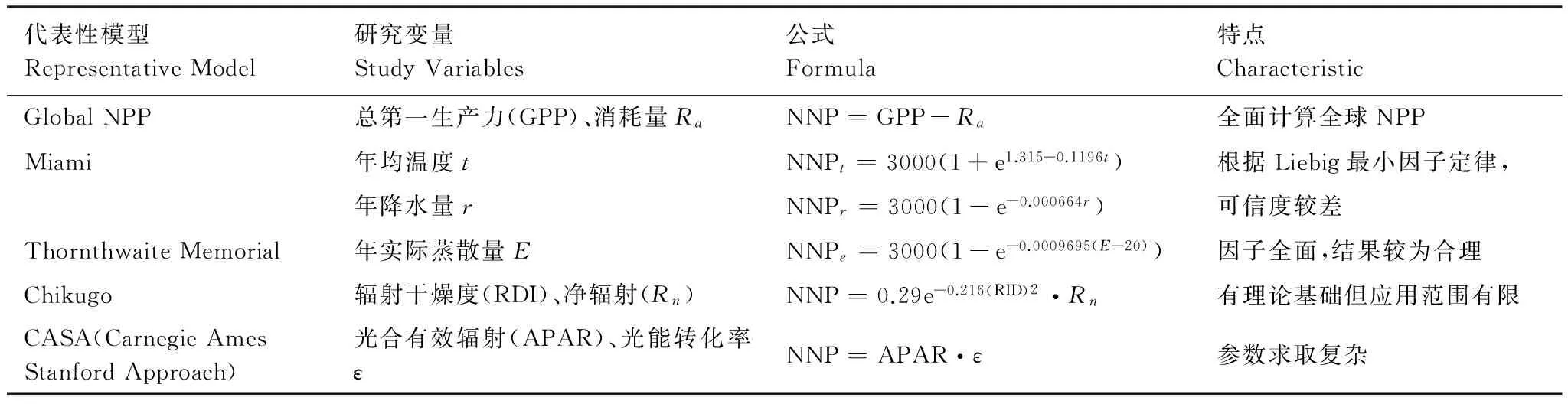
表1 典型NPP模型列表Table1 1 A list of typical Net Primary Productivity Models
1983年Odum H.T.創造了能值(emergy)[19]的概念,創建了能量符號語言(energy symbol language),其中箭頭指向代表能量流動的方向,并逐漸用于能流定量計算模型研究。Lotka[20]所建立的生物群落進化最大功率原理被Odum擴展為擴散系統進化的一般原理[21],后來多用于建立生態網絡模型。20世紀90年代,聞大中[22]對近年來農業生態系統能流和能量分析方法研究進行了介紹和評述,有很多學者[23]提出了能流和物質流計算模型設計方案。后來,Tilley等[24- 25]利用能流(energy flow)密度和能值密度(emergy flow)密度計算北卡羅萊納州、德克薩斯州和佛羅里達州生態經濟系統中能流。
在計算機技術高速發展之后,Cathy[26]等使用多智能體系統與人工智能技術建模,信道模擬系統的能量和系統信息流理論提供了一種機制。研究表明:它是可能的將這些組件集成到一個連貫的理論框架,為其實施和測試奠定了基礎。Zhang J.[27]使用最大功率原則建立進化生態網絡計算能流。李中才[28]提出了生態網絡能量傳遞的兩類路徑,運用輸入-輸出流方法推導了兩種模式下的能流計算公式,以Pilette[29]提出的生態網絡系統為例,計算兩種模式能流大小。生態網絡能量傳遞動力學方程:
式中,fij代表節點j輸入節點i的能量流;zi代表網絡系統外環境輸入節點i的能,yi代表節點i的能量損失流[30]。Matis和Patten[31- 32]提出的生態網絡能量動力學方程:
dx/dt=F×l+z=-Ft×l-y
式中,x、z、y是n×l維的矩陣,分別代表某節點的能量存量、外界能量輸入和能量消耗,l是n維單位列向量,FT代表能量流矩陣F的轉置矩陣。當生態系統能量傳遞達到穩定狀態時,有dx/dt=0,由此可知,能量流矩陣F的對角元素fii=-Ti。如果將生態網絡能量傳遞過程看作一個離散過程,其動力學方程:
x(t+Δt)=x(t)+Δx(t)
式中,Δx=FΔt×1+zΔt。S.Thiede等[33]通過吞吐量、能源效率、驅動因子、成本和對環境影響等指數建立模型對制造系統的能流數值模擬,可見,國內外學者對能流分析[34]已具有較豐碩的研究成果。
2.2 物質流
從生命周期(從搖籃到墳墓)的角度來看,各個階段生命周期的物質(商品或服務)所有相關的物質流和能流是可持續的[35- 36]。物質流又稱資源流,“物質流分析”的概念由Ayres[37]引入,早期建立在物質能量平衡的基礎上。自20世紀80年代以來,世界上開始建立國家和全球尺度的觀測網絡來研究生態系統的物質通量變化[38]。C、N、P、S的循環等的研究在全球范圍內已有很多成果,特別是碳循環與全球變暖的關系[39- 40]研究等。生態系統的物質循環一般指的是營養物質,可通過自然或人為的過程不斷地在土壤、植物和動物間輸入輸出,因此物質的流動是選擇性的。物質循環一般多是研究單一元素的循環過程,實際上,各元素在循環過程中會產生耦合作用,對整個生態系統會產生直接影響[41]。例如,Schlesinger[42]在海洋生態系統研究中發現一種元素的循環或過程可影響另一種元素的循環和過程。
對物質流的計算[43- 45]是從20世紀90年代開始的,主要根據原材料、土地等輸入輸出計算物質流。Grampietro[46]等根據生態系統內植物有效水流量和水循環的能量耗散,使用總初級生產力與植物有效水流量的和對生態系統的生物物理資本進行估算,拓展了能流的單一計算,在能流計算的基礎上加入了物質流。PiletteR[29]對一個構造的小尺度生態系統進行碳的“流量—通量”轉移分析,但這種非循環的程序是基于窮舉搜索而不是矩陣操作和數據管理。
物質流分析 (MFA)[47- 50]的目的是分析在特定的環境內和一定的時間范圍內的物質流動,可為生態可持續發展和規劃管理自然資源提供依據。JohnBarrett[51]分析了所有物質進入和離開紐約的過程。MEFA方法到現在為止沒有被充分利用,因為在進行物質流與能流研究時空間尺度不同,迄今為止只有對不同區域物質流動進行研究,還沒有上升到國家尺度[52]。Haberla[53- 54]建立物質能量流核算(MEFA)框架,這個框架綜合了生態和社會經濟特別為土地可持續發展提供了一種非常有價值的工具,物質流和能流會隨著時間推移和尺度改變而改變,因此它無法定義可持續發展閾值的精度。ZygmuntKowalski[55]運用生命周期理論計算Na2CrO4在生產系統中的循環物質流,以降低原材料生產成本。還有一些文獻中指出物質流分析方法是一種程序方法[56- 57]。
2.3 信息流
信息傳遞是生態系統的重要功能之一,“信息”一次來源于拉丁文“informatio”,原意指解釋、陳述。Hartley[58]最早提出一種度量信息的方法,認為信息量與字母的選擇次數成正比例關系,Shannon[59]繼承了Hartley關于排除主觀因素的思想,提出了著名的Shannon-Wiener指數公式:
式中,H為N個樣本信息量,S為物種數,Pi為樣本屬于第i種個體的比例,對于第i個個體數ni,則Pi=ni/N這個公式用來度量信息量,而這個信息量是一種概率信息(熱力學熵和信息熵的公式是一樣的,信息熵用的是以2為底的對數,單位是bits,或是以10為底的對數,單位是Bell;生物多樣性用的是以10為底的對數;熱力學熵(波爾茲曼熵)S用的是以e為底的自然對數,S=kblnW,單位是Nat)。之后Shannon等[60]在《通訊的數學理論》中指出:“信息是不肯定程度減小的量”,即信息這個概念具有不確定的含意。Wiener[61]認為:信息就是信息,不是物質,也不是能量,信息來源于物質,與能量密切關系,信息的實質就是“負熵”。信息熵與熱熵正從不同方面揭示了事物的不確定性或無規則性的數值關系。物種的信息存儲量很大,人們發現每個物種遺傳密碼中大概有100萬到100億比特的信息,都是幾百萬年進化過程中形成的[62]。
韓博平根據貝利斯等[63]的效用信息理論和熵值理論初步提出信息流的計算方法并分析了信息流與能流、物質流的關系[64- 66]。Md. Jamal Uddin[67]建立孟加拉國農村綜合信息系統(BD-IRIS),側重于研究孟加拉國農村地區的訪問信息流,特別是信息來源和渠道、系統和服務。目前信息流更多地應用于IT領域[68],如Shih-Chien Chou[69- 71]使用OORBAC(object-oriented role-based access control)模型進行信息流控制。在農業生態系統中,當系統能量產投比大于1時,產出能高于投入能,農業系統的信息熵為負值,產投比大,負熵大。農業系統熵的負值(或絕對值)越大,農業系統的能量轉換效率就越高,可以說農業輔助能的投入增加了農業生態系統中的信息熵,促進了信息流的變化。
3 生態流的應用進展
3.1 生態流模型研究
目前,對能流的研究已經漸趨成熟,而物質流和信息流的研究還處于探索階段。以前生態流的計算都是以單一的介質對其量化[72],例如物質流(C×g)或能流(KJ),而一個復雜的系統不止存在一種流,學者們一直在尋找統一計算生態流的方法,其中具有代表的是Odum的能值(emergy)理論[73- 76]和火用(exergy)[77- 79]分析方法,列表對比各種模型的特點(表2)。
1987年Odum以美國德克薩斯州大型農場構成的農業生態系統為例,繪制了農業生態系統的能流、物質流與資金流圖,標明了資金流與能流、物質流和信息流的流向相反,他認為,以貨幣方式表示的勞務及一些零碎的雜物投入也包含一定的太陽能值,亦可通過能值/貨幣比換算成太陽能值[80]。以能值為量綱,可把系統的各種能量與物質轉換成同一標準能值加以分析,這樣就可以將能流物質流乃至信息流都以某種形式的能值流來表示,通過能值分析,還可以探討能流和物質流相互之間的關系。能值理論和分析方法為各種生態系統的定量分析提供了共同的度量標準,在理論上開拓了生態流綜合分析研究途徑。
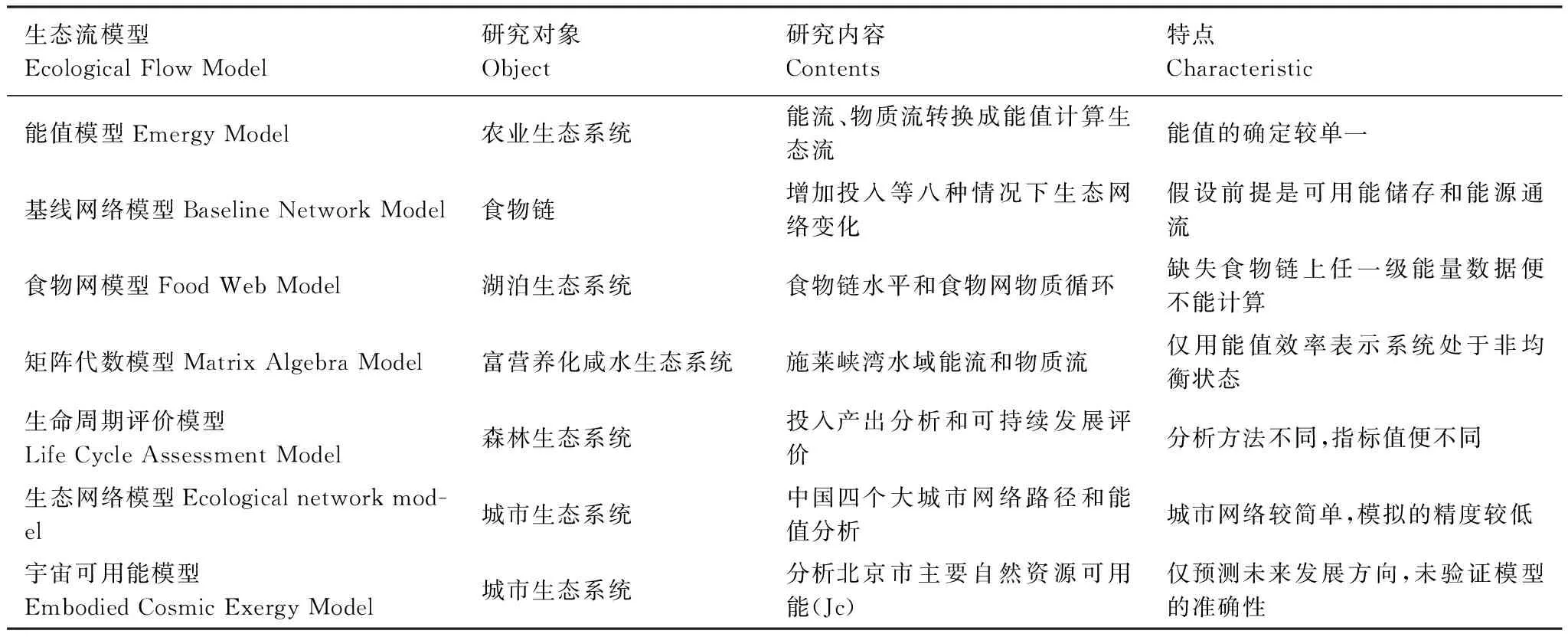
表2 生態流模型研究Table 2 Research of ecological flow models

3.2 生態流整合研究
運用生態流方法將研究對象作為一個有機整體開展研究,近年來取得一系列進展[74-76,86],這些方法被廣泛應用于農業[87-89]、工業[90-91]、城市[92-95]、生態經濟流的綜合模擬與應用[96-101]。
以農田生態系統為例,它是一種典型的半人工半自然的生態系統,假設存在人類缺少參與的自然農田生態系統,對比分析兩種情況下生態流的方向、路徑和強度等,可定量研究人類活動對生態系統帶來的影響,還可優化農田生態系統的生態功能。面對日益退化的生態系統,管理欠佳可能增加洪澇、干旱、農作物歉收,從而進一步加劇風險與脆弱性。

系統中能流(Ee)、物質流(Em)和信息流(Ei)的流動如圖1所示。在Pilette和Kincaid提出的生態網絡能量傳遞動力學方程基礎上設立生態流計算方程[113- 117]:
式中,Ef為生態流矩陣;Ee-in為能量輸入流;Ee-out為能量輸出流;Em-in為物質輸入流;Em-out為物質輸出流;Ei-in為信息輸入流;Ei-out為信息輸出流。當生態系統達到平衡時,Ef達到最大值[118- 119]。
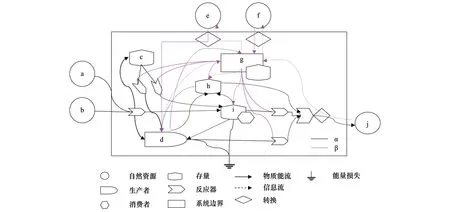
圖1 農田生態系統生態流框圖[75]Fig.1 System diagram of farmland ecosystem in terms of ecological flows
4 生態流研究展望
4.1 存在的問題
流動是復雜生態系統的普遍現象之一,流的形式有很多種,是否存在統一的可以描述復雜系統中流動現象的通用規律一直是生態學和非平衡態統計物理學研究的難題之一。用流的形式來反映三者之間的交換方向、強度、速率;用網絡的形式來反映三者之間聯系的路徑,可以描述復雜生態系統中物質、能量和信息的流動規律。人類活動對生態系統和生物多樣性的影響都可用生態流的計算方法來定量描述。目前生態流的研究成果較多,研究方法多樣,涉及到的領域也很多,但是還存在著一些需要解決的問題:(1)確定研究時間。不同時期生態系統穩定性不同,生態流計算結果也不同,因此,在計算時要注意生態系統變化的時期一致性;(2)確定研究范圍。目前的生態流研究主要還是在中宏觀階段,應加強區域范圍的微觀尺度研究,更能精確地描述系統中生態流;(3)確定假設條件。自然生態系統和半自然半人工系統的生態流計算有區別,需要假設在人類對自然進行改造后的環境與純自然生態系統相比,既具有優越性又有不足。(4)明確研究目的。生態流計算的結果可能因時間、空間范圍變化而改變,研究一定時期一定范圍內兩種生態環境下的生態流較具有可行性,同時對相關的地理時空變化研究具有一定意義。
4.2 展望
研究人類活動對生態環境影響的重要模型和方法有很多,例如:生態足跡是一種測算人類對自然利用程度的綜合指標,該方法通過將區域的資源和能源消費轉化為提供這種物質流所必需的各種生物生產土地的面積[120- 121];生態系統服務是指人類直接或間接從生態系統得到物質資本,其主要研究向經濟社會系統輸入有用物質和能量、接受和轉化來自經濟社會系統的廢棄物,以及直接向人類社會成員提供服務[122];而生態流著重于研究生態系統中各種自然流動的路徑和通量。
生態流的研究在我國尚在探索階段,仍需要更系統地對其原理和研究方法進行深入探索。未來的重點可能在時空條件下物質、能量和信息的流動規律研究、生態流模型計算方面。生態系統是一個復雜的系統,生態流的定量計算方法并未統一,而生態流是生態系統中的重要組成部分。在農田生態系統中,由于人類活動引起的生態流變化仍會逐漸引起農作物及周圍環境的變化,而改善生態系統網絡連通度和生態流來優化生態功能是提高農田效益和穩定性的重要方法之一。目前,國內外學者的研究成果已具有一定基礎,但是生態流的研究方法還存在一些問題,仍需要深入研究。
[1] GLP. Science Plan and Implementation Strategy. IGBP Report No. 53/IHDP Report No. 19. IGBP Secretariat, Stockholm. 2005: 64- 64.
[2] Botkin D B. Discordant Harmonies: A New Ecology for the Twenty-First Century. New York: Oxford University Press, 1990.
[3] Marsh G P. Man and Nature: Or, Physical Geography as Modified by Human Action. Cambridge, Massachusetts: Belknap Press, 1864.
[4] Clements F E. Research Methods in Ecology. Lincoln, Nebraska: University Publishing Company, 1905.
[5] Tansley A G. The use and abuse of vegetational concepts and terms. Ecology, 1935, 16(3): 284- 307.
[6] 戈峰. 現代生態學 (第二版). 北京: 科學出版社, 2008: 352- 433.
[7] 劉盛林, 華朝陽. 生態系統的信息流. 中學生物學, 2007, 23(8): 4- 6.
[8] O′Neill R V. Theory in landscape ecology // Wiens J A, Moss M R, eds. Issues in Landscape Ecology. Snowmass Village, Colorado: International Association for Landscape Ecology, 1999: 1- 5.
[9] 肖篤寧, 李秀珍. 景觀生態學的學科前沿與發展戰略. 生態學報, 2003, 23(8): 1615- 1621.
[10] Levine R S, Hughes M T, Mather C R. Sustainable city regions: Mega-projects in balance with the Earth′s carrying capacity // Engineering Earth. Netherlands: Springer, 2011: 1057- 1070.
[11] 海江波. 農業生態經濟系統生態流與價值流耦合機制 [D]. 楊凌: 西北農林科技大學, 2009.
[12] Lindeman R L. The trophic-dynamic aspect of ecology. Ecology, 1942, 23(4): 399- 418.
[13] Odum E P. Fundamentals of Ecology. 3rd ed. Philadelphia: Saunders Co., 1971: 574- 574.
[14] Whittaker R H, Likens G E. World productivity estimate, Brussels Symp. 1969, published in Whittaker (1970) and Whittaker and Woodwell (1971), 1971.
[15] Lieth H. “Modelling the primary productivity of the earth. Nature and resources”, UNESCO, 1972, VIII, 2: 5- 10.
[16] Lieth H. Introduction to phenology and the modeling of seasonality // Lieth H, ed. Phenology and seasonality modeling. Berlin: Springer-Verlag, Ecological Studies, 1974, 8: 3- 19.
[17] Uchijima Z, Seino H. Agroclimatic evaluation of net primary productivity of natural vegetation. (1) Chikugo model for evaluating net primary productivity. Journal of Agricultural Meteorology, 1985, 40(4): 343- 352.
[18] Donmeza C, Berberoglua S, Curranb Paul J. Modelling the current and future spatial distribution of NPP in a Mediterranean watershed. International Journal of Applied Earth Observation and Geoinformation, 2011, 13(3): 336- 345.
[19] Odum H T. Systems Ecology: An introduction. New York: John Wiley and Sons, 1983: 644- 644.
[20] Lotka A J. The stability of the normal age distribution. Proceedings of the National Academy of Sciences of the United States of America, 1922, 8(11): 339- 345.
[21] Odum E P. The strategy of ecosystem development. Science, 1969, 164(3877): 262- 270.
[22] 聞大中. 農業生態系統能流和能量分析研究的某些新進展. 農村生態環境, 1995, 11(2): 43- 48.
[23] Levine R S, Yanarella E, Radmard T, Dumreicher H. Sustainable cities: A strategy for a post-terrorized world. Terrain. org: A Journal of the built and natural environments. 2003: 13 (Summer/Fall). Retrieved from www.terrain.org/articles/13/strategy.htm.
[24] Tilley D R, Brown M T. The hierarchical pattern of energy flow in ecological-economic systems representing three geographic scales// Brown M T,Brandt-Williams S, Tilley D R, Ulgiati S, eds. Emergy Synthesis: Theory and Applications of the Emergy Methodology. Proceedings from the First Biennial Emergy Analysis Research Conference, Gainesville, Florida, September, 1999.
[25] Tilley D R. Emergy Basis of Forest Systems [D]. Gainesville: University of Florida, 1999: 1- 296.
[26] Hawes C, Reed C. Theoretical Steps Towards Modelling Resilience in Complex Systems // Gavrilova M, et al, eds. Proceedings of ICCSA (1): 2006, LNCS 3980. Berlin: Springer-Verlag, 2006: 644- 653.
[27] Zhang J. Energy flows and maximum power on an evolutionary ecological network model// Advances in Artificial Life: 9th European Conference. Heidelberg: Springer-Verlag, 2007: 113- 122.
[28] 李中才, 徐俊艷, 吳昌友, 張漪. 生態網絡分析方法研究綜述. 生態學報, 2011, 31(18): 5396- 5405.
[29] Pilette R, Kincaid D T. First flow-thru analysis in ecosystem studies. Ecological Modelling, 1992, 64(1): 1- 10.
[30] 李中才, 席旭東, 高琴,李莉鴻. 基于輸入-輸出流分析的生態網絡φ模式能流、ρ模式能流測度方法. 生態學報, 2011, 31(19): 5860- 5864.
[31] Matis J H, Patten B C. Environ analysis of linear compartmental systems: the static, time invariant case. Ecological Modelling, 1981, 48: 527- 565.
[32] Bernard C. Patten. Network integration of ecological extremal principles: exergy, emergy, power, ascendency, and indirect effects. Ecological Modelling, 1995, 79: 75-84.
[33] Thiede S, Herrmann C. Energy flow simulation for manufacturing systems // Seliger G, et al, eds. Advances in Sustainable Manufacturing: Proceedings of the 8th Global Conference on Sustainable Manufacturing. Berlin: Springer-Verlag, 2011: 275- 280.
[34] Chareodrat P. Energy Analysis Methods in Agricultural Production with Applications to Chiang Mai Valley, Thailand [D]. East Lansing: Michigan State University, 1977.
[35] Schaubroeck T, Staelens J, Verheyen K, Muys B, Dewulf J. Improved ecological network analysis for environmental sustainability assessment; a case study on a forest ecosystem. Ecological Modelling, 2012, 247: 144- 156.
[36] M. Federici, S. Ulgiati, R. Basosi. A thermodynamic, environmental and material flow analysis of the Italian highway and railway transport systems. Energy, 2008, 33(5): 760- 775.
[37] Ayres R U. Resources, Environment and Economics: Applications of the Materials/Energy Balance Principle. New York: Wiley, 1978.
[38] 傅伯杰, 牛棟, 于貴瑞. 生態系統觀測研究網絡在地球系統科學中的作用. 地理科學進展, 2007, 26(1): 1- 16.
[39] Feng Y Y, Chen S Q, Zhang L X. System dynamics modeling for urban energy consumption and CO2emissions: A case study of Beijing, China. Ecological Modelling, 2013, 252: 44- 52.
[40] Robinson D T, Brown D G, Currie W S. Modelling carbon storage in highly fragmented and human-dominated landscapes: Linking land-cover patterns and ecosystem models. Ecological Modelling, 2009, 220(9/10): 1325- 1338.
[41] Wollast R, Mackenzie F T, Chou L. Interactions of C, N, P and S Biogeochemical Cycles and Global Change. 2nd ed. New York: Springer-Verlag, 1993.
[42] Schlesinger W H. Biogeochemistry: An Analysis of Global Change. San Diego, California: Academic Press, 1997.
[43] Steure A. Stoffstrombilanz ?sterreich, 1988. Schriftenreihe Soziale ?kologie. No. Band 26[R]. Wien: IFF/Abteilung Soziale ?kologie, 1992.
[44] Lange C, Kuchenbuch A. Integrated controlling based on material and energy flow analysis: A case study in foundry industries // Wagner B, Enzler S, eds. Material Flow Management. Improving Cost Efficiency and Environmental Performance. Heidelberg, New York: Physica-Verlag HD, 2006: 91- 129.
[45] Environment Agency Japan. Quality of the environment in Japan 1992. Tokyo. European Environment, 1992.
[46] Giampietro M, Cerretelli G, Pimentel D. Energy analysis of agricultural ecosystem management: human return and sustainability. Agriculture, Ecosystems & Environment, 1992, 38(3): 219- 244.
[47] Bringezu S, Fischer-Kowalski M, Klein R, Palm V. Regional and National Material Flow Accounting: From Paradigm to Practice of Sustainability. Wuppertal: Institute for Climate, Environment and Energy, 1997.
[48] Bringezu S, Schütz H. Material use indicators for the European Union, 1980- 1997. Economy-wide Material Flow Accounts and Balances and Derived Indicators of Resource Use. EUROSTAT Working Paper. No. 2/2001/B/2. Wuppertal: Wuppertal Institute, 2002.
[49] Amann C, Bruckner W, Fischer-Kowalski M, Grünbühel C. Material Flow Accounting in Amazonia. A Tool for Sustainable Development; Amazonia 21. Social Ecology Working Paper. No. 63. Vienna: IFF, Abt. Soziale ?kologie, 2002.
[50] Chen X Q, Qiao L J. A preliminary material input analysis of China. Population and Environment, 2001, 23(1): 117- 126.
[51] Barrett J, Vallack H, Jones A, Haq G. A Material Flow Analysis and Ecological Footprint of York. Technical Report. York: Stockholm Environment Institute, 2002.
[52] Muradian R, Martinez-Alier J. South-north materials flow: history and environmental repercussions. Innovation-The European Journal of Social Science Research, 2001, 14(2): 171- 187.
[53] Fischer-Kowalski M, Amann C. Beyond IPAT and Kuznets curves: globalization as a vital factor in analysing the environmental impact of socio-economic metabolism. Population and Environment, 2001, 23(1): 7- 47.
[54] Haberl H, Fischer-Kowalski M, Krausmann F, Weisz H, Winiwarter V. Progress towards sustainability? What the conceptual framework of material and energy flow accounting (MEFA) can offer. Land Use Policy, 2004, 21(3):199- 213.
[55] Kowalski Z, Mazanek C. Sodium chromate-material flow analysis and technology assessment. Journal of Cleaner Production, 1998, 6(2): 135- 142.
[56] Sala S, Farioli F, Zamagni A. Progress in sustainability science: lessons learnt from current methodologies for sustainability assessment: Part 1, life cycle sustainability assessment: from lca to lcsa // The International Journal of Life Cycle Assessment. Berlin: Springer-Verlag, 2012.
[57] Rattanapana C, Suksaroj T T, Ounsaneha W. Development of Eco-efficiency indicators for rubber glove product by material flow analysis. Procedia-Social and Behavioral Sciences, 2012, 40: 99- 106.
[58] Hartley R V L. Transmission of Information. Bell System Technical Journal, 1928, 7(3): 535- 563.
[59] Shannon C E. A mathematical theory of communication. The Bell System Technical Journal, 1948, 27: 379- 423, 623- 656.
[60] Shannon C E. Communication Theory of Secrecy Systems. Bell System Technical Journal, 1949, 28(4): 656- 715.
[61] Wiener N. The Human Use of Human Beings: Cybernetics and Society. New York: Houghton Mifflin, 1950.
[62] Wilson E O. The Diversity of Life . Cambridge: Harvard University Press, 1992: 464- 464.
[63] Belis M, Guiasu S. A quantitative-qualitative measure of information in cybernetic systems. (Corresp.). IEEE Transactions on Information Theory, 1968, 14(4): 593- 594.
[64] 韓博平. 生態網絡中物質、能量流動的信息指標及其靈敏度分析. 系統工程理論方法應用, 1995, 4(1): 24- 29.
[65] 韓博平. 生態網絡中物質、能量流動的時間鏈分析. 生態學報, 1995, 15(2): 163- 168.
[66] 韓博平, 林鵬. 生態網絡中信息分析的方法與應用. 廈門大學學報: 自然科學版, 1996, 35(4): 648- 651.
[67] Uddin M J, Mezbah-ul-Islam M. The flow of, and access to, information in Bangladesh: A village level case study. The International Information & Library Review, 2012, 44(4): 224- 232.
[68] Santen T. Preservation of probabilistic information flow under refinement. Information and Computation, 2008, 206(2/4): 213- 249.
[69] Chou S C. Dynamic adaptation to object state change in an information flow control model. Information and Software Technology, 2004, 46(11): 729- 737.
[70] Chou S C. Managing user associations and the factors of laws and cultures in an information flow control model for object-oriented systems. Journal of Information Science and Engineering-JISE, 2007, 23(3): 949- 961.
[71] Masri W, Podgurski A. Algorithms and tool support for dynamic information flow analysis. Information and Software Technology, 2009, 51(2): 385- 404.
[72] Chen S Q, Fath B D, Chen B. Information indices from ecological network analysis for urban metabolic system. Procedia Environmental Sciences, 2010, 2: 720- 724.
[73] Odum H T, Odum E C, Brown M T. Environment and Society in Florida. Boca Raton, Florida: St. Lucie Press, 1997.
[74] Odum H T. Emergy in ecosystems//Poluin N ed. Ecosystem Theory and Application. Now York: John Wiley & Sons, 1986: 337- 369.
[75] Odum H T. Environmental Accounting: Emergy and Environmental Decision Making. New York: John Wiley & Sons, 1996: 370- 370.
[76] Forman R T T, Godron M. Landscape Ecology. New York: John Wiley, 1986.
[77] J?rgensen S E, Ladegaard N, Debeljak M, Marques J C. Calculations of exergy for organisms. Ecological Modelling, 2005, 185(2/4): 165- 175.
[78] J?rgensen S E, Mejer H F. Ecological Buffer Capacity. Ecological Modelling, 1977, 3(1): 39- 45, 47- 47, 49- 49, 51- 51, 53- 61.
[79] J?rgensen S. Exergy of an isolated living system may increase // Advances in Energy Studies. 2° International Workshop, edited by Sergio Ulgiati. SGEditoriali Padova. Italy: Porto Venere, 2000.
[80] Odum T, Odum E C. Ecology and Economy: Emergy Analysis and Public Policy in Texas. LBJ School of Public Affairs and Texas Dept. of Agriculture (Policy Research Publication No. 78). Austin: University of Texas, 1987: 178- 178.
[81] Rant Z. Exergie, ein neues Wort für “technische Arbeitsf?higkeit”. Forschung im Ingenieurwesen, 1956, 22: 36- 37.
[82] Gibbs J W. A method of geometrical representation of the thermodynamic properties of substances by means of surfaces // Transactions of the Connecticut Academy of Arts and Sciences. Yale: Yale University Press, 1873, 2: 382- 404.
[83] Wall G. Exergy-a useful concept within resource accounting. G?teborg: Institute of Theoretical Physics, Institute of Theoretical Physics, 1977.
[84] Szargut J, Morris D R, Steward F R. Exergy Analysis of Thermal, Chemical, and Metallurgical Processes. New York: Hemisphere, 1988.
[85] Shieh J H, Fan L T. Estimation of energy (enthalpy) and exergy (availability) contents in structurally complicated materials. Energy Sources, 1982, 6(1/2): 1- 46.
[86] Brown M T, McClanahan T R. Emergy analysis perspectives of Thailand and Mekong river dam proposals. Ecological Modelling, 1996, 91(1/3): 105- 130.
[87] 藍盛芳, 陳飛鵬, 劉新茂. 農業生態經濟系統的能值分析. 生態科學, 1995, (2): 172- 172.
[88] 藍盛芳, 欽佩. 生態系統的能值分析. 應用生態學報, 2001, 12(1): 129- 131.
[89] 陸宏芳, 藍盛芳, 陳飛鵬, 彭少麟. 農業生態系統能量分析. 應用生態學報, 2004, 15(1): 159- 162.
[90] 袁婕, 樊鴻濤, 張炳, 畢軍, 王仕, 袁增偉. 基于能值理論的工業生態系統分析——以龍盛科技工業園為例. 環境保護科學, 2008, 34(2): 74- 77.
[91] 劉子芳, 李敏, 張小洪, 鄧仕槐. 基于能值的工業生產系統可持續性分析. 四川環境, 2013, 32(1): 129- 133.
[92] Huang S L, Odum H T. Ecology and economy: Emergy synthesis and public policy in Taiwan. Journal of Environmental Management, 1991, 32(4): 313- 333.
[93] 胡聃, 文秋霞, 李鋒, 王震, 馮強, 張艷萍. 北京城市生態系統的能值動態分析. 城市環境與城市生態, 2006, 19(6): 1- 4.
[94] 吳玉琴, 嚴茂超, 許力峰. 城市生態系統代謝的能值研究進展. 生態環境學報, 2009, 18(3): 1139- 1145.
[95] 吳玉琴, 嚴茂超. 廣州城市代謝效率的模擬分析. 資源科學, 2011, 33(8): 1555- 1562.
[96] Yan M C, Odum H T. An eMergy evaluation of the seven year′s development of Qianyanzhou ecological experimental station. The Journal of Chinese Geography, 1998, 8(3): 221- 236.
[97] Yan M C, Odum H T. Eco-economic evolution, emergy evaluation and policy options for the sustainable development of Tibet. The Journal of Chinese Geography, 2000, 10(1): 1- 27.
[98] 嚴茂超. 生態經濟學新論——理論、方法與應用. 北京: 中國致公出版社, 2001.
[99] Dong X B, Ulgiati S, Yan M C, Gao W S. Progress, influence and perspectives of emergy theories in China, in support of environmentally sound economic development and equitable trade. Energy Policy, 2008, 36(3): 1019- 1028.
[100] Dong X B. Ulgiati S, Yan M C, Zhang X S, Gao W S. Energy and eMergy evaluation of bioethanol production from wheat in Henan Province, China. Energy Policy, 2008, 36(10): 3882- 3892.
[101] Ulgiati S, Ascione M, Bargigli S, Cherubini F, Franzese P P, Raugei M, Viglia S, Zucaro A. Material, energy and environmental performance of technological and social systems under a Life Cycle Assessment perspective. Ecological Modelling, 2011, 222(1): 176- 189.
[102] J?gensena S E, Fath B D. Examination of ecological networks. Ecological Modelling, 2006, 196(3/4): 283- 288.
[103] Jiang M M, Chen B. Integrated urban ecosystem evaluation and modeling based on embodied cosmic exergy. Ecological Modelling, 2011, 222(13): 2149- 2165.
[104] Zhang Y, Yang Z F, Yu X Y. Ecological network and emergy analysis of urban metabolic systems: Model development, and a case study of four Chinese cities. Ecological Modelling, 2009: 220(11): 1431- 1442.
[105] Zhang Y, Yang Z F, Fath B D, Li S S. Ecological network analysis of an urban energy metabolic system: Model development, and a case study of four Chinese cities. Ecological Modelling, 2010, 221: 1865- 1879.
[106] Thébault E, Fontaine C. Stability of ecological communities and the architecture of mutualistic and trophic networks. Science, 2010, 329(5993): 853-856.
[107] Cohen J E, Briand F, Newman C M. Community Food Webs: Data and Theory. Berlin, New York: Springer-Verlag, 1990.
[108] Martinez N D. Scale-dependent constraints on food-web structure. The American Naturalist, 1994, 144(6): 935- 953.
[109] Bersier L F, Dixon P, Sugihara G. Scale-invariant or scale-dependent behavior of the link density property in food webs: A matter of sampling effort? The American Naturalist, 1999, 153(6): 676- 682.
[110] Hannon B. The structure of ecosystems. Journal of Theoretical Biology, 1973, 41(3): 535- 566.
[111] Patten B C. Network ecology: Indirect determination of the life-environment relationship in ecosystems // Higashi M, Burns T P, eds. Theoretical Studies of Ecosystems: The Network Perspective. Cambridge: Cambridge University Press, 1991: 288- 351.
[112] Kauffman S A, Institute S F. Investigations. Oxford: Oxford University Press, 2000: 1- 302.
[113] Zhang J J, Gurkan Z R, J?rgensen S E. Application of eco-exergy for assessment of ecosystem health and development of structurally dynamic models. Ecological Modelling, 2010, 221(4): 693- 702.
[114] Forman R T T, Some general principles of landscape and regional ecology. Landscape Ecology, 1995, 10(3): 133- 142.
[115] Forman R T T, Moore P N. Theoretical foundations for understanding boundaries in landscape mosaics // Hansen A J, di Castri F, eds. Landscape Boundaries: Consequences for Biotic Diversity and Ecological Flows. New York: Springer-Verlag, 1992: 236- 258.
[116] Myers N, Simon J L. Scarcity or Abundance?: A Debate on the Environment. New York: W W Norton Incorporated, 1994.
[117] Bourne R. Some ecological conceptions. Empire Forestry Journal, 1934, 13(1): 15- 30.
[118] Chen H, Chen G Q, Ji X. Cosmic emergy based ecological systems modelling. Communications in Nonlinear Science and Numerical Simulation, 2010, 15(9): 2672- 2700.
[119] Chen Z M, Chen B, Chen G Q. Cosmic exergy based ecological assessment for a wetland in Beijing. Ecological Modelling, 2011, 222(2): 322- 329.
[120] 徐中民, 程國棟, 張志強. 生態足跡方法: 可持續性定量研究的新方法——以張掖地區1995年的生態足跡計算為例. 生態學報, 2001, 21(9): 1484- 1493.
[121] He Y Q, Che T, Wang Y. Ecological footprint and endogenous economic growth in the Poyang lake area in China based on empirical analysis of panel data model. Journal of Resources and Ecology, 2012, 3(4): 367- 372.
[122] 呂一河, 馬志敏, 傅伯杰, 高光耀. 生態系統服務多樣性與景觀多功能性——從科學理念到綜合評估. 生態學報, 2013, 33(4): 1153- 1159.
A review on the composition and analysis of ecological flow
GUO Beibei, YANG Xuhong, JIN Xiaobin*, ZHOU Yinkang
SchoolofGeographicandOceanographicSciences,NanjingUniversity,Nanjing210023,China
Ecological environment and land-use changes brought about by human activity are one of the highlights of the global change research. In complex natural ecosystems, among the various components of material cycles, energy flow and information delivery is usually expressed as a flowing form. Its path, direction, intensity, speed have an important impact on the ecosystem. This article analyzes the origin and development of ecological flow. The energy flow, material flow and information flow from the three areas to understand the ecological flow structure. And it gives a summary and review of relevant theory and analysis methods. On the basis of the existing studies, it analyzes the ecological flow in a typical half-sown semi-natural farmland ecological system. For example, through ecological indicators, such as network connections and the pure comparative analysis of natural ecosystems and ecological stream flows, paths and intensities of human activity enhances the flexibility of ecological systems, but disrupting the stability of the original. Conventionally, a single conservative medium is allowed as to the quantification of ecological flows, for example materials (e.g., grams of carbon) or energy (e.g., kilojoules), which is the major constraint during network construction. However, more than one kind of flow operates in ecosystem. Ecologists have been focused on applicable methods for a unification of all the eco-flows. Of which, emergy analysis and extended exergy analysis were invented respectively. Emergy analysis was to integrate the value of free environment investment, goods, services and information in a common unit of measurement via solar transformity, which makes it possible to evaluate all of the eco-flows (materials, energy, and information) with ecosystem. On the other hand, extended exergy analysis also provides a unified way to measure various flows with solid scientific basis, and provides a wide and clear vision of the use and degradation of resources and energy. Research foundation of ecological flow quantification have attained, but there are still many problems in future studies, which still need to be systematically explored.
ecological flow; emergy; extended exergy analyze; ecosystem
教育部博士點基金資助項目(20120091110014); 國家自然科學基金資助項目(41201386); 江蘇省普通高校研究生科研創新計劃資助項目(CXZZ13_0046)
2013- 05- 07;
日期:2014- 04- 17
10.5846/stxb201305070969
*通訊作者Corresponding author.E-mail: jinxb@nju.edu.cn
郭貝貝, 楊緒紅, 金曉斌, 周寅康.生態流的構成和分析方法研究綜述.生態學報,2015,35(5):1630- 1639.
Guo B B, Yang X H, Jin X B, Zhou Y K.A review on the composition and analysis of ecological flow.Acta Ecologica Sinica,2015,35(5):1630- 1639.
猜你喜歡
工業設計(2022年8期)2022-09-09 07:43:20
體育科技文獻通報(2022年3期)2022-05-23 13:46:54
保健醫苑(2021年7期)2021-08-13 08:48:02
遼金歷史與考古(2021年0期)2021-07-29 01:06:54
軍民兩用技術與產品(2021年10期)2021-03-16 06:05:30
北京測繪(2020年12期)2020-12-29 01:33:58
學生天地(2020年36期)2020-06-09 03:12:30
小學科學(學生版)(2020年5期)2020-05-25 07:11:32
科技傳播(2019年22期)2020-01-14 03:06:54
民用飛機設計與研究(2019年4期)2019-05-21 07:21:24