高速列車過隧道時的底板壓力分析
2015-09-16 17:45:53徐世南張繼業李田張亮
計算機輔助工程 2015年4期
關鍵詞:高速列車
徐世南+張繼業+李田+張亮
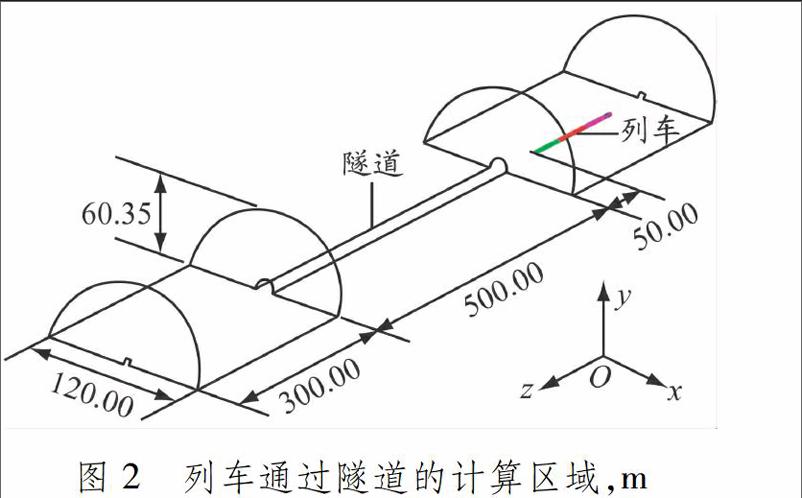
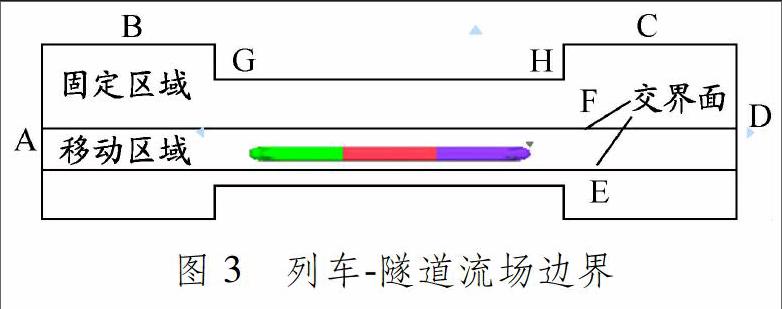
摘要: 基于空氣動力學理論,建立列車通過隧道的模型,分析高速列車通過隧道時底板的壓力.采用FLUENT進行數值模擬,得到列車底板各個監測面的壓力時程曲線,提取底板的最大正壓、最大負壓和壓力幅值,研究其變化規律.結果表明:底板壓力沿橫向變化較小;底板壓力梯度和壓力幅值較大區域均位于底板靠近一位端轉向架位置;在相同速度下頭車底板最前端的壓力幅值最大;列車頭車、中間車與尾車底板壓力最大幅值近似與列車速度的平方成正比.
關鍵詞: 高速列車; 底板; 隧道; 空氣動力學; 壓力時程曲線; 壓力幅值
中圖分類號: U266文獻標志碼: B
Abstract: Based on the theory of aerodynamics, the model of a highspeed train passing through tunnel is built and the pressure of bottom panel of the high speedtrain passing through tunnel is analyzed. The numerical simulation is performed by FLUENT and the pressure time history curves of the bottom panel on every monitoring surface are obtained, by which the maximum positive pressure, maximum negative pressure and pressure amplitude are extracted and the change law is studied. The results show that, the change of bottom panel pressure at transverse position is small; the area with larger pressure gradient and amplitude locates at the position of bottom panel which is close to the “A” end bogie; the maximum pressure amplitude is located at the forefront of head train bottom panel at the same velocity of the train; the maximum pressure amplitude on the bottom panels of head, middle and tail trains is approximately proportional to the square of train velocity.
Key words: highspeed train; bottom panel; tunnel; aerodynamics; pressure time history curve; pressure amplitude
收稿日期: 2014[KG*9〗03[KG*9〗05修回日期: 2014[KG*9〗04[KG*9〗12
基金項目: 高速鐵路基礎研究聯合基金(U1234208)
作者簡介: 徐世南(1988—),男,浙江寧波人,碩士研究生,研究方向為空氣動力學,(Email)892092166@qq.com;
張繼業(1965—),男,四川夾江人,教授,博士,研究方向為高速列車流固耦合動力學,(Email)jyzhang@home.swjtu.edu.cn0引言
列車運行速度已成為衡量一個國家鐵路現代化程度的重要標志.隨著列車運行速度的不斷提高,一系列的列車空氣動力學問題迎面而來:列車高速交會時產生的瞬態壓力沖擊對行車安全、旅客乘坐舒適性和列車結構安全等均產生嚴重影響;列車高速通過隧道時產生的壓力對隧道襯砌結構、隧道工作人員和乘客產生不利影響.因此,對高速列車氣動壓力的研究尤為重要.[1]
田紅旗等[2]研究列車壓力波與速度的關系,認為列車壓力幅值與列車運行速度平方成正比;王一偉等[3]和王建宇等[4]通過理論分析研究隧道壓力波的形成和峰值的影響因素,分析壓力波傳播、反射和疊加規律;李人憲[5]研究列車會車時產生的壓力波對列車側窗的影響,得出車窗在隧道內受到的沖擊明顯大于明線的結論.
在列車氣動壓力研究領域中,對列車受電弓、風擋和裙板等也有較多的研究[69];但是,對列車通過隧道時車底板氣動性能的研究還未見文獻報道.當列車高速運行時,特別是在高速通過隧道時,列車運行環境急劇惡化,列車底板因此會發生開裂、損壞等事故,危及列車的行駛安全.因此,對高速列車通過隧道時的車底板進行氣動性能研究具有重要意義.以國產某高速列車為研究對象,對列車通過隧道時車底板的壓力進行研究,分析底板壓力沿列車橫向和縱向的變化以及壓力幅值與列車速度的關系.
1計算模型和網格劃分
1.1數學模型
高速列車通過隧道時引起周圍空氣的流動是黏性、可壓縮、非定常的三維湍流流動,其遵循質量守恒定律、動量守恒定律和能量守恒定律這三大定律.[10]通過求解三維瞬態可壓縮的雷諾時均NS方程和kε兩方程湍流模型獲得列車通過隧道時底板的氣動壓力,其控制方程的運輸方程[11]為(ρφ)t+div(ρ(u-ut)φ)=div(Γgrad φ)+S式中:t為時間;ρ為空氣密度;φ為流場通量;u為流場速度矢量;ut為列車運動速度矢量;S為擴散系數;Γ為源項.
1.2幾何模型
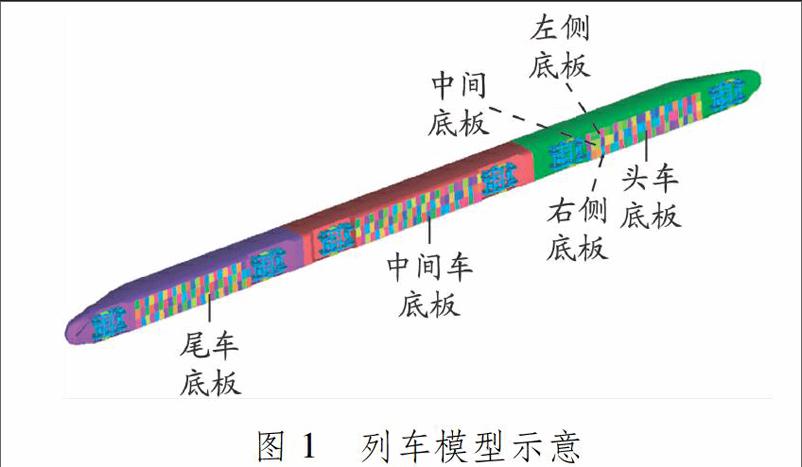
列車編組形式為頭車、1節中間車和尾車3車編組,其中頭車和尾車的長度均為25.3 m,中間車長度為25 m,列車總長為75.6 m.忽略車體外部復雜結構細節,如受電弓和門把手等,保留轉向架結構.列車頭車和尾車底板長12.5 m,中間車底板長13.7 m,底板寬均為2.8 m.對列車的底板進行分塊,其中:頭車和尾車底板各沿列車長度方向3等分,寬度方向25等分,共計各分成75塊;中間車底板沿列車長度方向3等分,寬度方向27等分,共計分成81塊.列車模型示意見圖1.
猜你喜歡
電子技術與軟件工程(2017年3期)2017-03-22 23:26:37
科技創新與應用(2017年5期)2017-03-16 22:04:54
科技創新導報(2016年29期)2017-03-15 09:27:22
科技資訊(2016年29期)2017-02-28 14:36:58
物聯網技術(2016年9期)2016-11-09 19:09:44
計算機輔助工程(2016年3期)2016-08-01 07:45:56
科技傳播(2016年7期)2016-04-28 00:00:02
中國科技博覽(2016年7期)2016-04-25 10:15:44
中國科技博覽(2016年14期)2016-04-25 09:55:10
計算機輔助工程(2016年1期)2016-03-15 12:38:24