西岸藝術中心,上海,中國
2016-10-18 05:31:32建筑設計大舍建筑設計事務所
世界建筑 2016年4期
建筑設計:大舍建筑設計事務所
Architects: Atelier Deshaus
西岸藝術中心,上海,中國
建筑設計:大舍建筑設計事務所
Architects: Atelier Deshaus
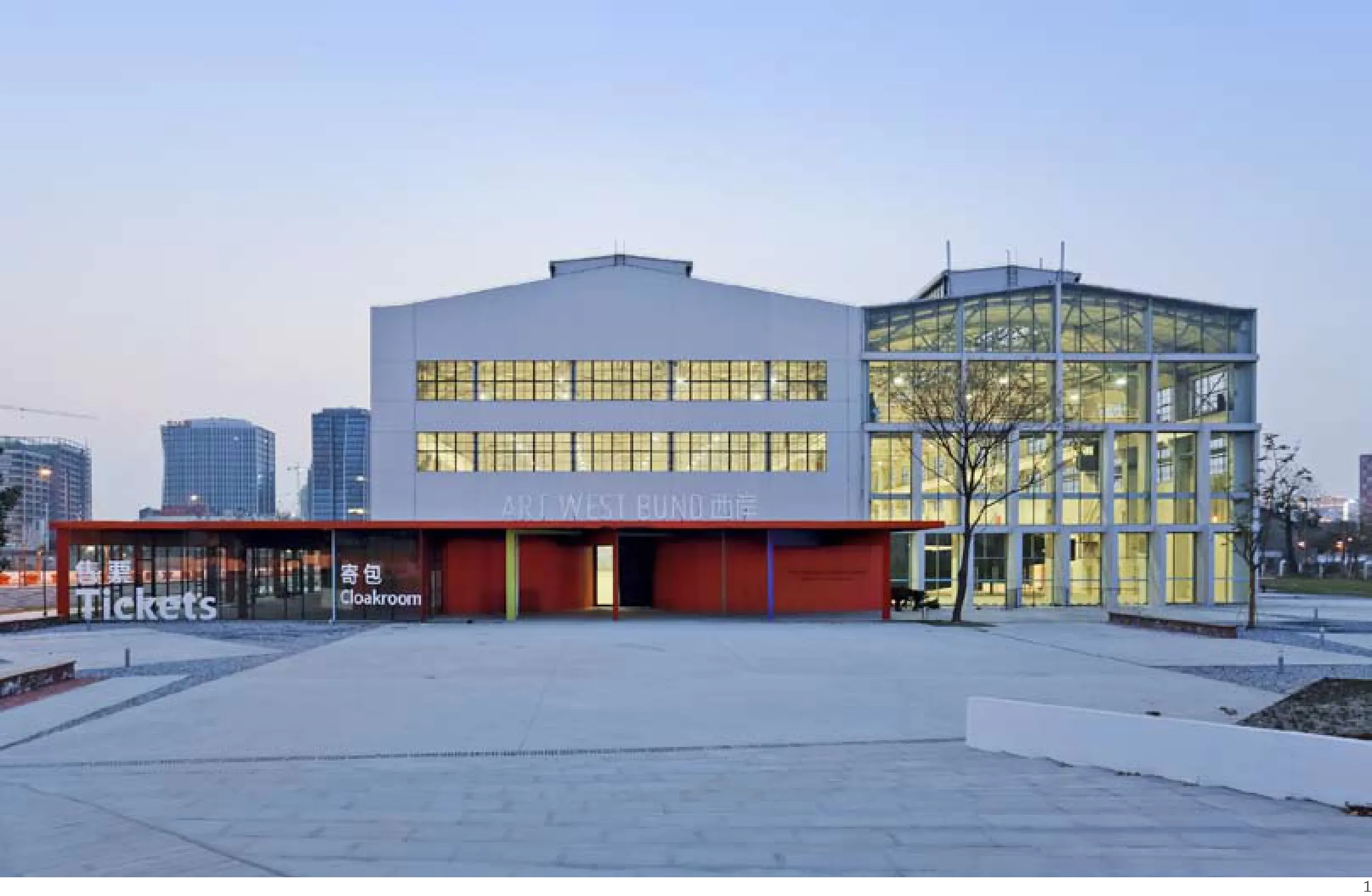
1外景/Exterior view
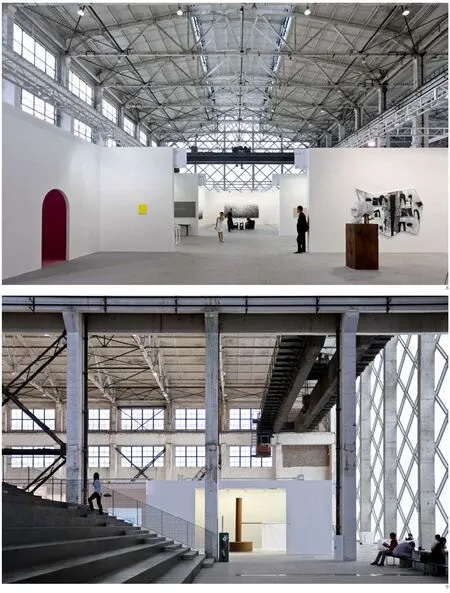
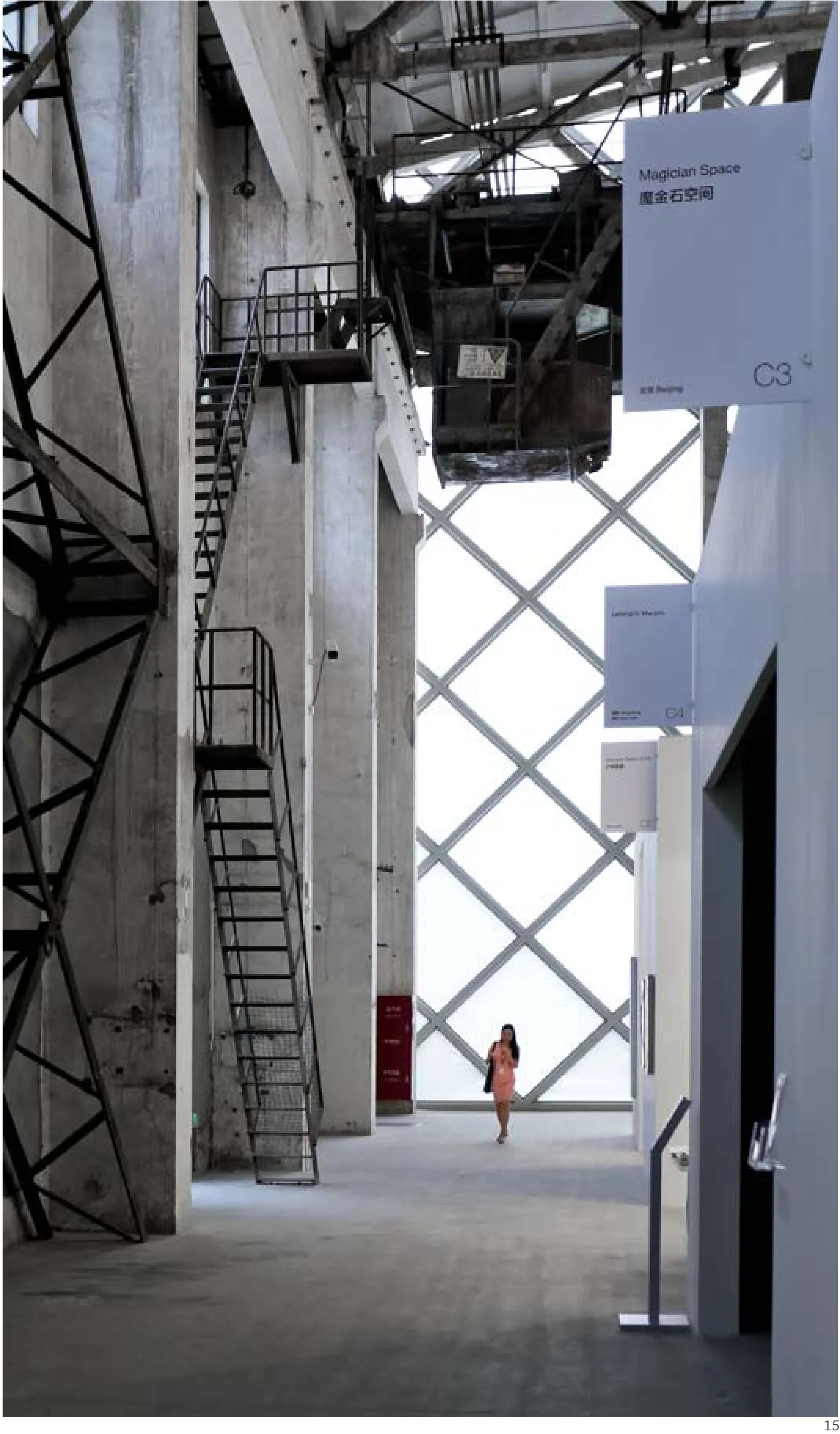
西岸藝術中心是由上海飛機制造廠沖壓車間的廠房改造而成,是個長達120m、兩跨寬度分別為24m和30m、高度15m的巨大廠房,這個巨大的單個空間,給人強烈的安全感和自由感,這在通常的民用建筑尺度下是非常少見的,所以維持這個空間的完整性與尺度感有著特殊的意義。
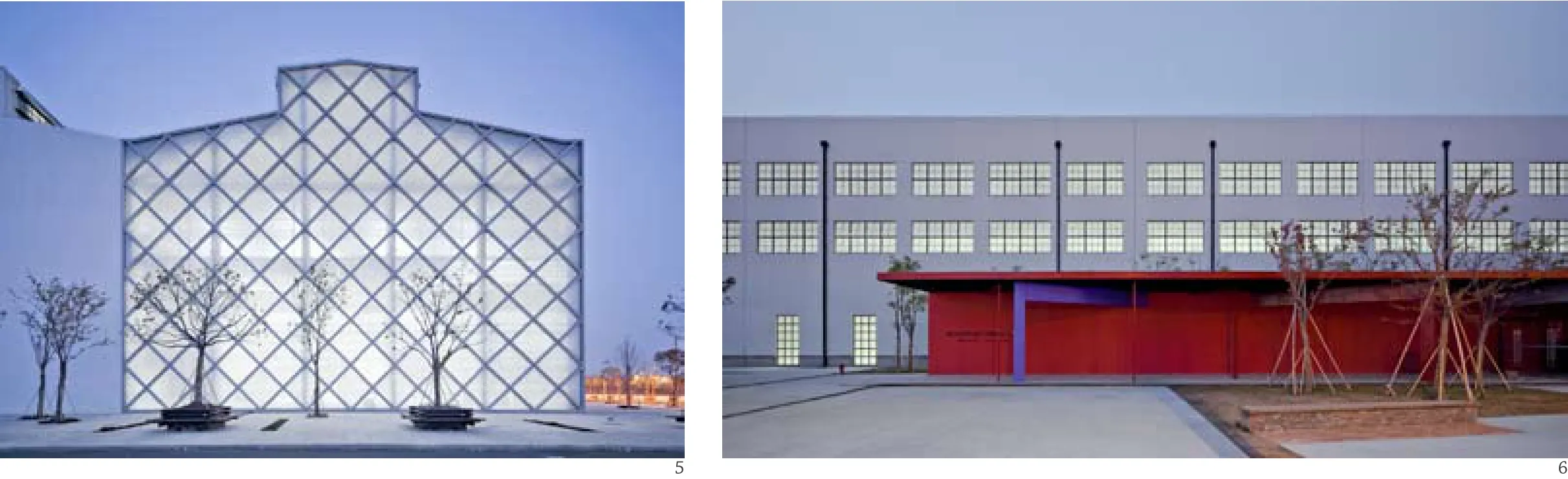
因為西側城市道路的原因,廠房西段有4跨被拆除,在恢復抗震柱的同時,設計采用的菱形網狀的鋼結構網格加強了建筑的側向穩(wěn)定性,建筑也借機向城市呈現一定的開放性,西側是從地鐵方向人流到達的方向,一個新的立面,特別是傍晚燈光亮起時如燈籠般的空透,使這個舊有的廠房建立了和周邊正在更新重建的城市間的關聯(lián)。
出于功能的考慮,24m跨這一部分的廠房內設置了夾層,分別通過階梯看臺和一個折行坡道與30m跨的廠房空間形成了閉合的觀展流線,于是,一個從夾層高處望向東側黃浦江的視線需求出現了。廠房東側的山墻被部分打開,并采用了新的混凝土構架和舊有的抗震柱以及圈梁連結為新的格構,彎折的坡道配合著不同高度、不同方向的視線,聯(lián)系著龍騰大道和黃浦江的方向,這里,是太陽升起的方向。而完整保留了原有尺度的30m跨的大空間,在朝向城市這一側,菱形的網格后,每每有紅日西沉,這一空間因為落日的風景而強化了與場所的關系。
建筑的東側和南側,新增加了鋼結構的門廊,為西岸藝術博覽會以及其他展覽活動提供了必要的輔助設施,并兼顧了來自東西兩個方向人流的入口引導。
項目信息/Credits and Data
設計團隊/Design Team: 柳亦春,陳屹峰,王龍海,伍正輝,王偉實/LIU Yichun, CHEN Yifeng, WANG Longhai,WU Zhenghui, WANG Weishi
結構與機電工程師/Structural & Electrical Engineers:同濟大學建筑設計研究院(集團)有限公司/Tongji Architectural Design (Group) Co., Ltd.
建筑面積/Floor Area: 10,800m2
基地面積/Site Area: 18,000m2
主要材料/Materials: 混凝土,鋼材,玻璃/concrete, steel,glass
造價/Cost: ¥58,000,000
設計時間/Design period: 2014.03-2014.07
建成時間/Completion: 2014.09
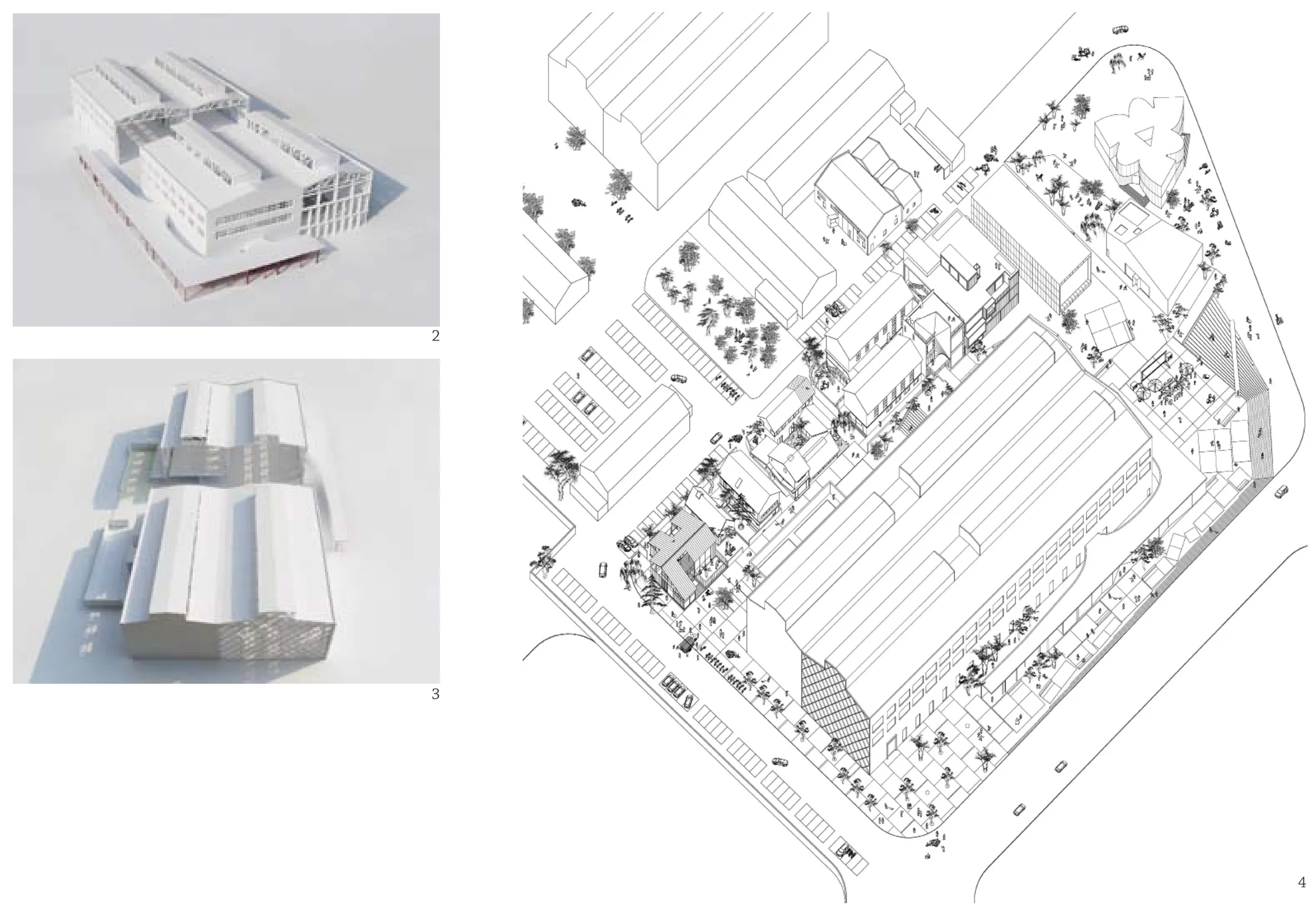
2.3模型/Models
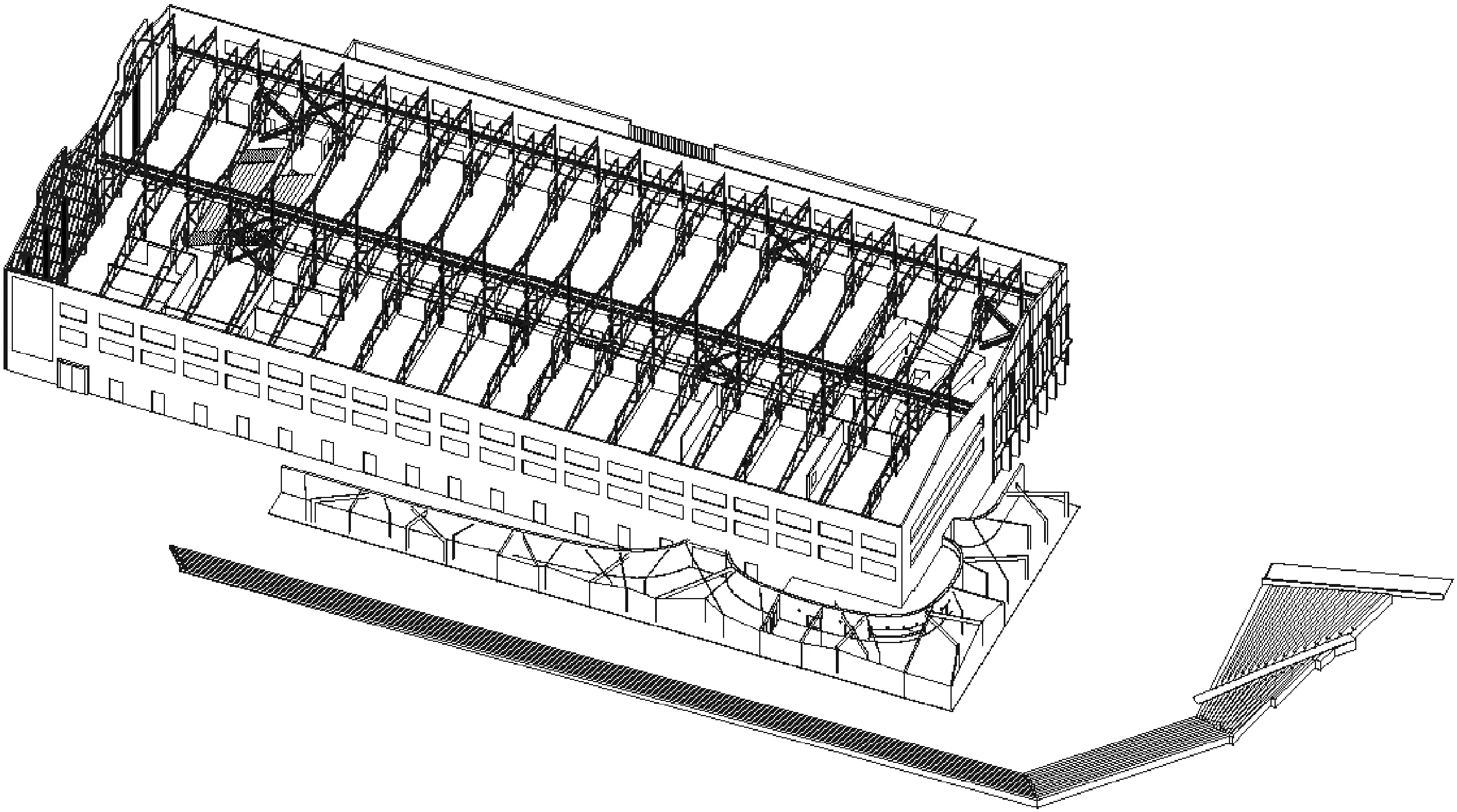
4軸測/Axonometric(圖紙制作:致正建筑工作室)
1 該項目及周邊區(qū)域此前面臨的突出問題是什么?
該項目周邊均為城市發(fā)展中的政府存量土地,除了邊上西岸集團的辦公樓之外,都是待開發(fā)的空地,沿著黃浦江,城市的更新由北向南逐漸延展到這個地方。而這個上海飛機制造廠的大廠房一直被閑置在那里,到未來這個地塊拍賣開發(fā),期間尚有5~10年的時間,而這個廠房是拆是留也頗有爭議。周邊道路已經造好,但是環(huán)境荒涼,沒有人氣。
2 采用了哪些方法解決或改善這些問題?
建筑師在與西岸集團進行項目合作時注意到這個空置的大廠房,建議不如想辦法先用起來,在一次聊天中,萌發(fā)了配合剛剛造好的西岸保稅品倉庫改造為國際性的藝術博覽會的場地,第一屆西岸藝博會在10個月內開幕,隨后的各種展覽、演藝活動不斷,與附近的龍美術館、余德耀美術館共同構建了西岸的藝術走廊。
3 在設計與實施過程中最大的困難是什么?如何應對?
最大的困難是時間短,從設計到改造建成啟用,總共5個月的時間。在有限的時間內,采用切實可行的設計思路,巧用既有的空間,以最小的改動獲取使用上的便利與空間上的效果。
4 通過此項設計,該地區(qū)的空間品質獲得了怎樣的提升?
通過此項設計,原本閑置的資源被有效利用,城市荒廢的空間重新具有了活力,隨著展覽活動的不斷增加,邊上又增建了臨時性的西岸藝術與設計示范區(qū),更多的倉庫廠房被整理利用,城市環(huán)境得到極大的改善,去年以“城市更新”為主題的上海城市空間藝術季的主展場就設在了這里。
5 使用者的反饋是怎樣的?
第一次西岸藝術博覽會開幕后不久,上海市政府就將這座大廠房列為上海市優(yōu)秀歷史建筑。工業(yè)建筑的價值被公眾進一步認識。
The West Bund Art Center is housed in the press shop of the former Shanghai Aircraft Manufacturing Factory. The single enormous space, measuring 120m in length and 15m in height, with two spans of 24m and 30m respectively, conveys a strong sense of security and liberty that is rarely seen in the common scale of civil buildings. Therefore, it is of special interest to maintain its spatial integrity and sense of scale.
Four spans in the west part of the original factory building were demolished to make way for the construction of city roads. While restoring anti-seismic columns, the design adopted a steel framework of diamond-shaped mesh to strengthen lateral stability, by means of which the building also presents certain openness towards the city. people arriving by subway enter the building from its west side, making it necessary to provide a new facade. At nightfall when the lights come on, the old factory is illuminated like a huge lantern, its transparency creating a close contact with surrounding urban areas in regeneration.
Out of functional consideration, a mezzanine is added in the 24m-span part of the factory, which,through a terrace and a ramp respectively, forms an enclosed circulation with the 30m-span space.This results in the need for an eastward view from the height of the mezzanine onto the Huangpu River. The east gable wall of the factory is partially opened to fulfill this requirement, and new concrete framework conjoins existing anti-seismic columns and ring beams to form a new grid structure. As it bends and ascends, the ramp creates various visual connections to Longteng Avenue and Huangpu River, where the sun rises. On the other side in the vast 30m-span space that faces towards the city,the sun sets behind the diamond-shaped mesh, a breathtaking scene that contributes to the enhanced relation between the space and the site.
New steelwork vestibules are added to the east and south sides of the building, providing auxiliary facilities necessary for art fairs and other exhibition activities as well as offering guidance for people entering the building from either side. (Translated by LIU Chen)
5.6外立面/Facades
7軸側圖/Axonometric
8.9內景/Interior views
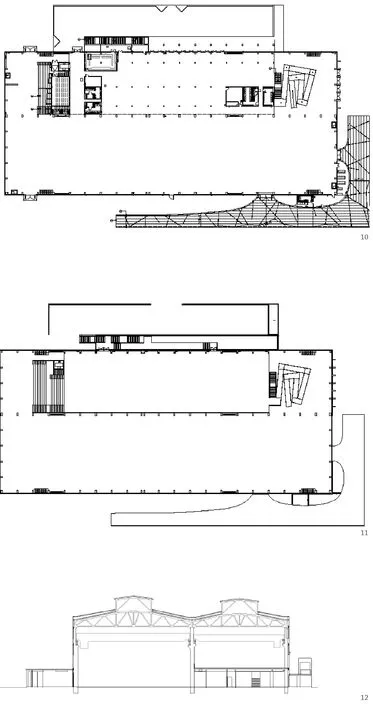
10首層平面/Floor 0 plan
11二層平面/Floor 1 plan
12剖面/Section
評論
林霄:“求人不如求自己”——當周邊的城市還不能提供更新的借力點和現成的資源時,建筑自己就要有成為域內主人的魄力。
廢棄廠房的大跨度空間作為博展空間,幾乎已經成了一種通行的做法,因其通行,故而可行性和經濟效益無需多辨,重要的差別在于采取這一做法時的立場和態(tài)度——出于無奈的聊勝于無的廢物利用?還是讓人眼前一亮的如獲至寶的創(chuàng)作激情?
人有精氣神,由人營造的場所亦如是一脈相承,充滿自信的改造本身,就是新的活力源泉。
范路:“虛實雙聯(lián)”及其反轉是西岸藝術中心的重要設計策略。藝術中心由兩跨車間廠房改造而成,因此建筑兩端山墻的雙聯(lián)形象自然出現。在朝東的雙聯(lián)山墻面上,北側一聯(lián)以玻璃為主,而南側則以實墻為主,形成一種“虛實雙聯(lián)”。但在朝西雙聯(lián)山墻面上,虛實關系反轉了過來——北側一聯(lián)為整面實墻,南側全是半透明玻璃。這種反轉操作帶來了形體認知的錯覺,并引發(fā)了旋轉的空間感。這不僅激活了原本僵硬的形體與空間,更讓新增的外部門廊和內部劃分輕松自然地融入整體。此外,除了虛實關系的反轉,兩端山墻的氣質也不盡相同。東立面上橫平豎直的構件和開窗方式強調了結構和空間的確定性,而西立面上“完整白壁與燈籠表皮”的處理則更注重激發(fā)觀者的想象世界。
Comments
LIN Xiao: "Relying upon oneself is better than upon others" - when the surrounding environment could hardly provide the pivot for renewal or ready-to-use resources, architecture itself should have the boldness to be the owner of the territory.
It has been a common choice for abandoned factories with large-span space to be used for exhibition. particularly for this reason, there is no need to discuss the feasibility and economic benefit,and what really matters is the standpoint and attitude when making this choice - whether it is a perfunctory waste recycling out of frustration, or a burst of creative passion which is bound to shine as a treasure?
Just as people have spirit, space created by people inherits this trait as well, hence a confident reform could present itself as the source of new vigor.
FAN Lu: "The solid-void diptych" with its inversion is the main design strategy in the West Bund ArtCenter project. Since the art center is a renovation of a factory workshop with spans, the two gables of the building share an image of diptych logically. For the east gable wall, the northern part is mainly formed by glass and the southern part is based on solid wall. But in the design of the west fa?ade, the solidvoid relationship is inversed - the northern part is presented as an entirely solid wall and the southern part is fully covered by translucent glass. Thus the inversion of the material arrangement in two gables brings us a delusion when recognizing the building volumes and a sense of rotation when experiencing the space in or around the building. Furthermore,those two fa?ades are of distinct characters. The rigid orthogonal form of elements and openings on the east fa?ade emphasizes the determinate sense of space and structure, while the "white panel and lantern envelope" on the west fa?ade inspire our imagination of the building.
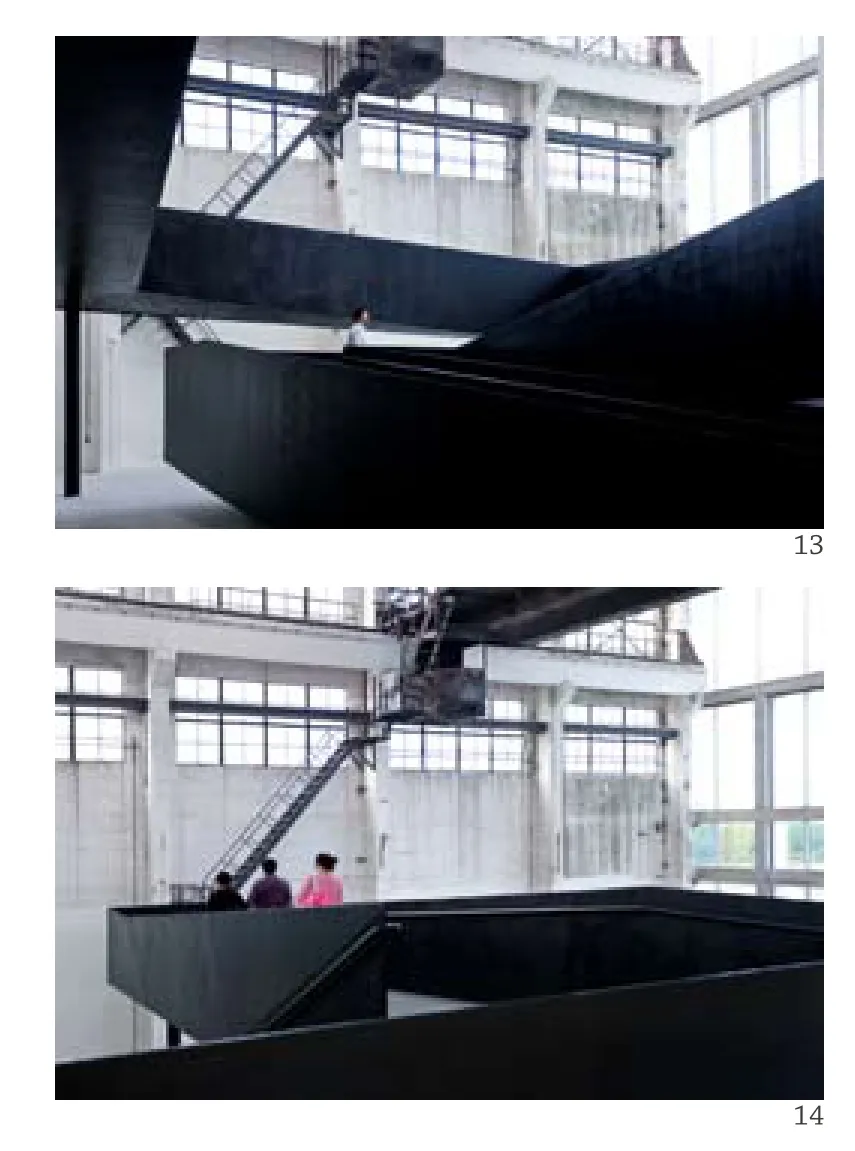
13.14入口加建樓梯/Newly-built stair near the entrance
15內景/Interior view
West Bund Art Center, Shanghai, China, 2014
猜你喜歡
北方建筑(2021年6期)2021-12-31 03:03:54
文苑(2020年10期)2020-11-07 03:15:36
現代裝飾(2020年6期)2020-06-22 08:43:12
建材發(fā)展導向(2019年10期)2019-08-24 06:25:04
讀者·校園版(2018年13期)2018-06-19 06:20:12
現代裝飾(2017年9期)2017-05-25 01:59:43
Coco薇(2016年2期)2016-03-22 16:58:59
讀者(2016年7期)2016-03-11 12:14:36
中國房地產業(yè)(2016年2期)2016-03-01 01:25:34
少兒科學周刊·兒童版(2015年6期)2015-11-24 03:49:38