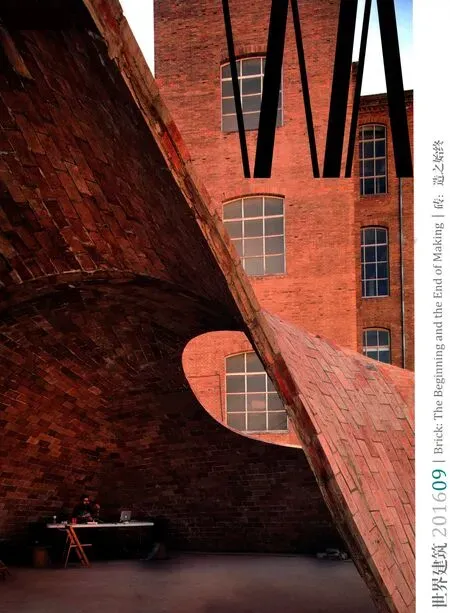
婦女發展促進中心,卡永扎,盧旺達
2016-10-19 08:54:48建筑設計莎倫戴維斯設計事務所
世界建筑 2016年9期
建筑設計:莎倫·戴維斯設計事務所
婦女發展促進中心,卡永扎,盧旺達
建筑設計:莎倫·戴維斯設計事務所
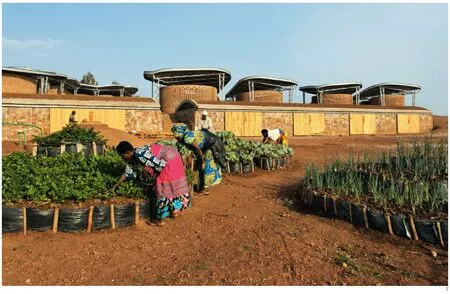
1 外景/Exterior view
婦女發展促進中心是與國際婦女互助組織合作設計的。地段占地10,000m2,距離盧旺達首都大約一小時車程。在設計過程中,我們遵循了以下原則:為社群爭取權益、創造經濟機會、重建社會基礎結構。
我們將一座盧旺達村落作為建筑布局的參考原則,把一簇人體尺度的小房間圍合布置,以營造安全感,增強社區凝聚力。建筑中的功能包括教室、客房、一座展示性農場(由綠色屋頂遮陽,并由夯土墻支撐),以及一座市場,婦女可在此售賣她們在現場中制作的商品。
建筑所需的大約500,000塊粘土磚都是由當地婦女在此制造的,并且結合了對當地燒磚工藝的部分改進,例如:采用鋼模具、較干的粘土配比、燃燒替代材料(非木材)。因此,這些婦女學會了可市場化的、帶來收入的技能,如今她們生產的手工磚是該地區質量最高的。
在很多方面,婦女發展促進中心的設計概念來源于磚。項目的主要贊助人向我們提議,應該讓社區的女性成員共同制作磚塊,并用它來建造屬于自己的學校。這個簡單的概念逐步發展,對這個設計以及社區產生了深遠影響。我們首先調研了當地的制磚工藝。這些磚塊的審美及結構質量都欠佳,原因是在制作過程中所使用的一系列落后的技術。在投資一小部分資金用于培訓、工具及資源改良后,我們為婦女發展促進中心生產建筑材料而成立的婦女制磚公司很快成為了一家自給自足的制磚企業。
我們從盧旺達傳統空間營造技術中吸取的另一靈感,是用相互咬合的圓弧來創造空間,就像在辦公及工作室空間的平面中那樣。我們將多個彎曲的磚墻組合起來,創造出大小及形狀都不同的空間。磚的尺度很小,使我們得以輕松地建造出半徑很小的圓弧,從而實現編織空間的概念。
教室所采用的輕盈而開放的螺旋平面也源自盧旺達傳統建筑中介于“室內”和“室外”之間的模糊性概念。螺旋線形取消了通常用來展現入口界限的門,讓住戶能在不打斷課堂的情況下悄悄進出,同時墻體旋轉開啟的形式也讓室外空間融入室內。(黃華青 譯)
項目信息/Credits and Data
客戶/Client: 國際婦女互助組織/Women for Women International
建筑用途/Building's Purpose: 社區中心,教育及公共空間/ Community Center, education & public space
建筑面積/Usable Floor Area: 2200m2
磚材類型/Brick Type:手工磚/Handmade bricks
建造周期/Construction Period : 2011.09 – 2013.07
攝影/Photos: Elizabeth Felicella (fig.1, 3-5, 7), Bruce Engel(fig.8-10)
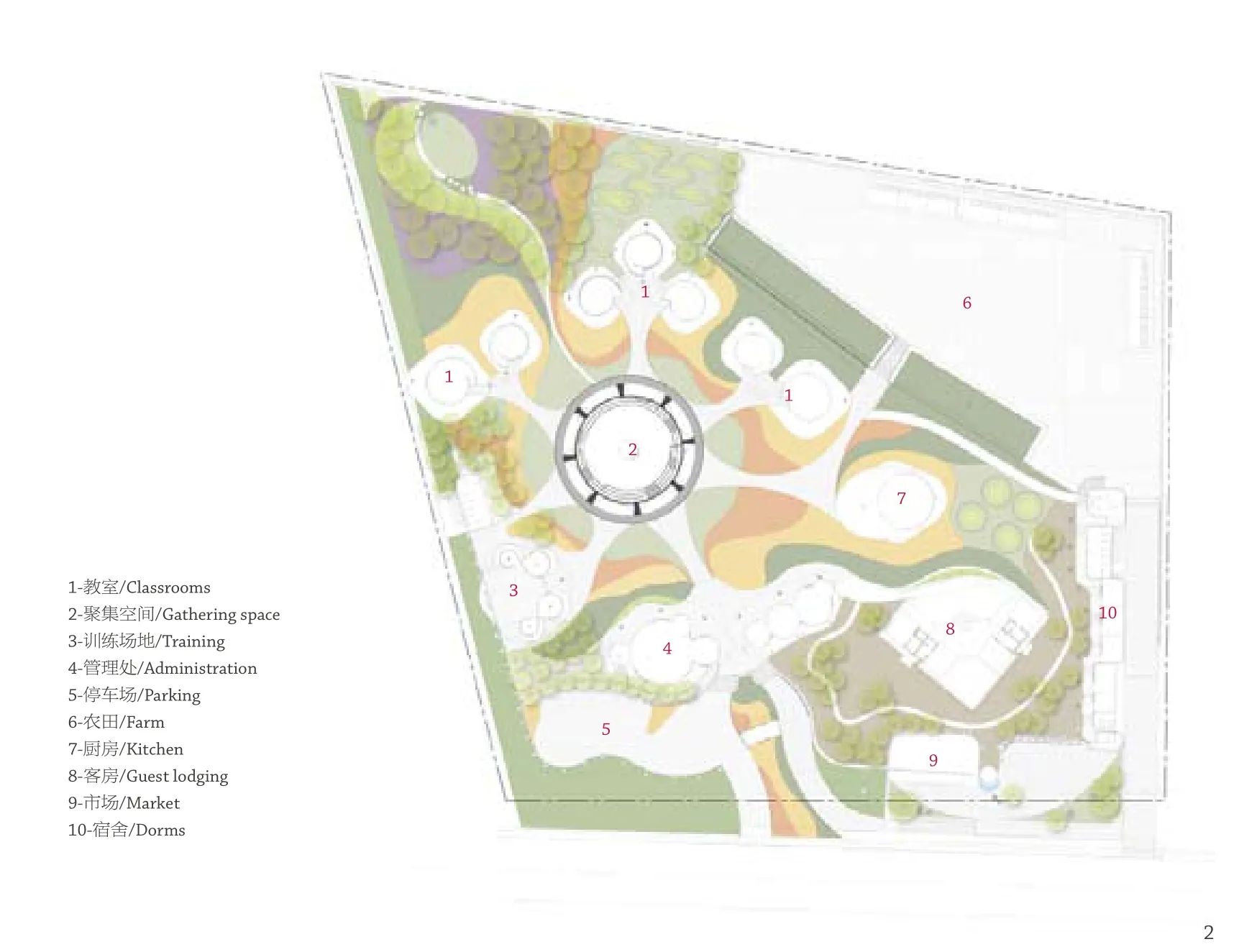
2 總平面/Site plan
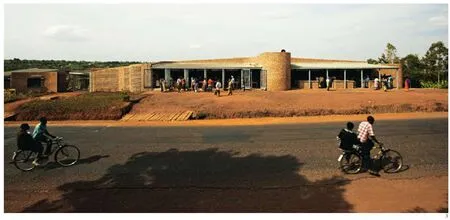
The Women's Opportunity Center (WOC),designed in collaboration with Women for Women International, occupies a one-hectare site one hour from the Rwandan capital and has been developed with the following objectives in mind: to empower its community, create economic opportunity, and rebuild social infrastructure.
Referencing to a Rwandan village as our organizing principle, we clustered human-scaled pavilions to create security and cultivate the sense of community. Facilities include class rooms, guest lodgings, a demonstration farm–cooled by a green roof and retained earth walls–and a marketplace,where women sell products they have made on site.
The approximately 500,000 clay bricks needed for the construction were made at the center by local women, incorporating some improvements on the local method of brick making. Improvements such as: steel molds, drier clay mixtures and firing with alternative (non-wood) materials. As a result,women have learned marketable, income-generating skills and are now creating some of the highest quality handmade bricks in the region.
In many ways the whole concept of the Women's Opportunity Center emerged from thebrick.The primary client donor came to us with the proposition that women members of the community could come together to create the bricks that would be used to build their own school.This was a simple idea that grew to have a profound impact on the design and community. We started by researching the common local practices being employed in brickmaking.The aesthetic and structural qualities of these bricks were sub-par due to an array of poor techniques being employed throughout the fabrication process. By investing just a little in training, tools, and resources, the women's brickmaking cooperative that was formed to create the building material for the Women's Opportunity Center soon became a self-sufficient brick making cooperative.
Creating spaces through interlocking adjoining circles as illustrated in the administrative and workshop spaces was another technique of Rwandan space making that inspired us. Here,multiple curved brick walls came together to create varied sizes and shapes of spaces.The small module of the brick allowed us to easily create very tight radii and achieve the concept of woven together spaces.
The light and open spiral shape of the classrooms was inspired by the ambiguity created by traditional Rwandan architecture of what is "interior" vs. "exterior".The spiral eliminates the clear threshold created most typically by a doorway,and allows inhabitants to slip in and out of the space without interrupting a class in session, while the woven open feel of the walls brings the outside in.
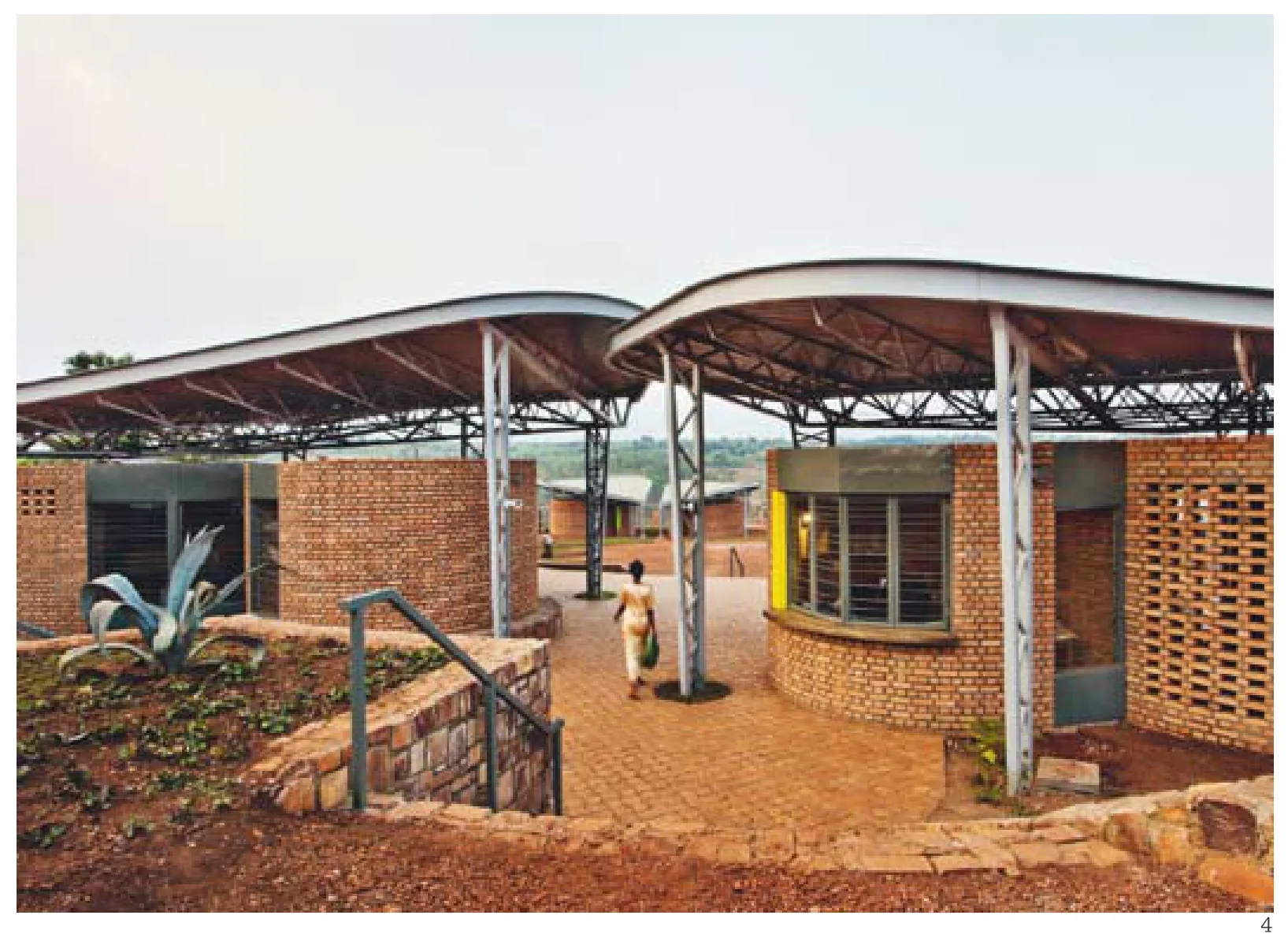
4 相對獨立的屋頂結構/Free-standing roof construction
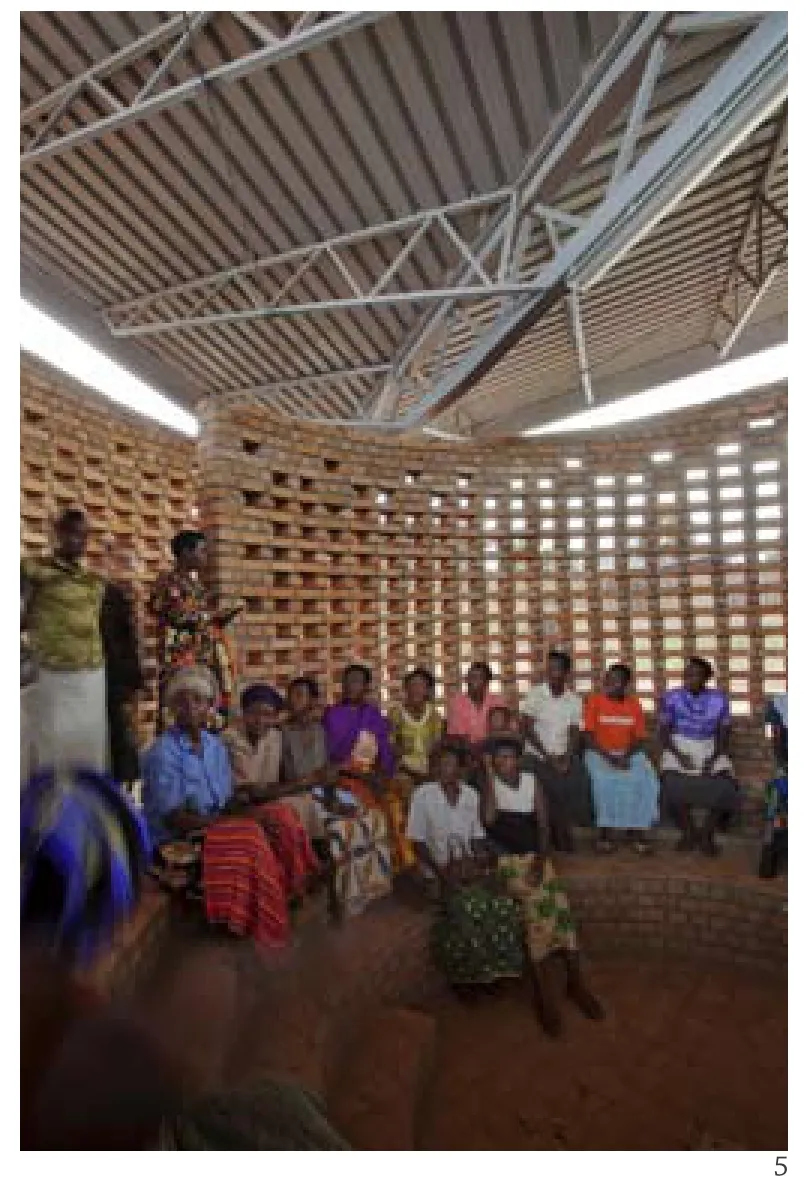
5 內景/Interior view
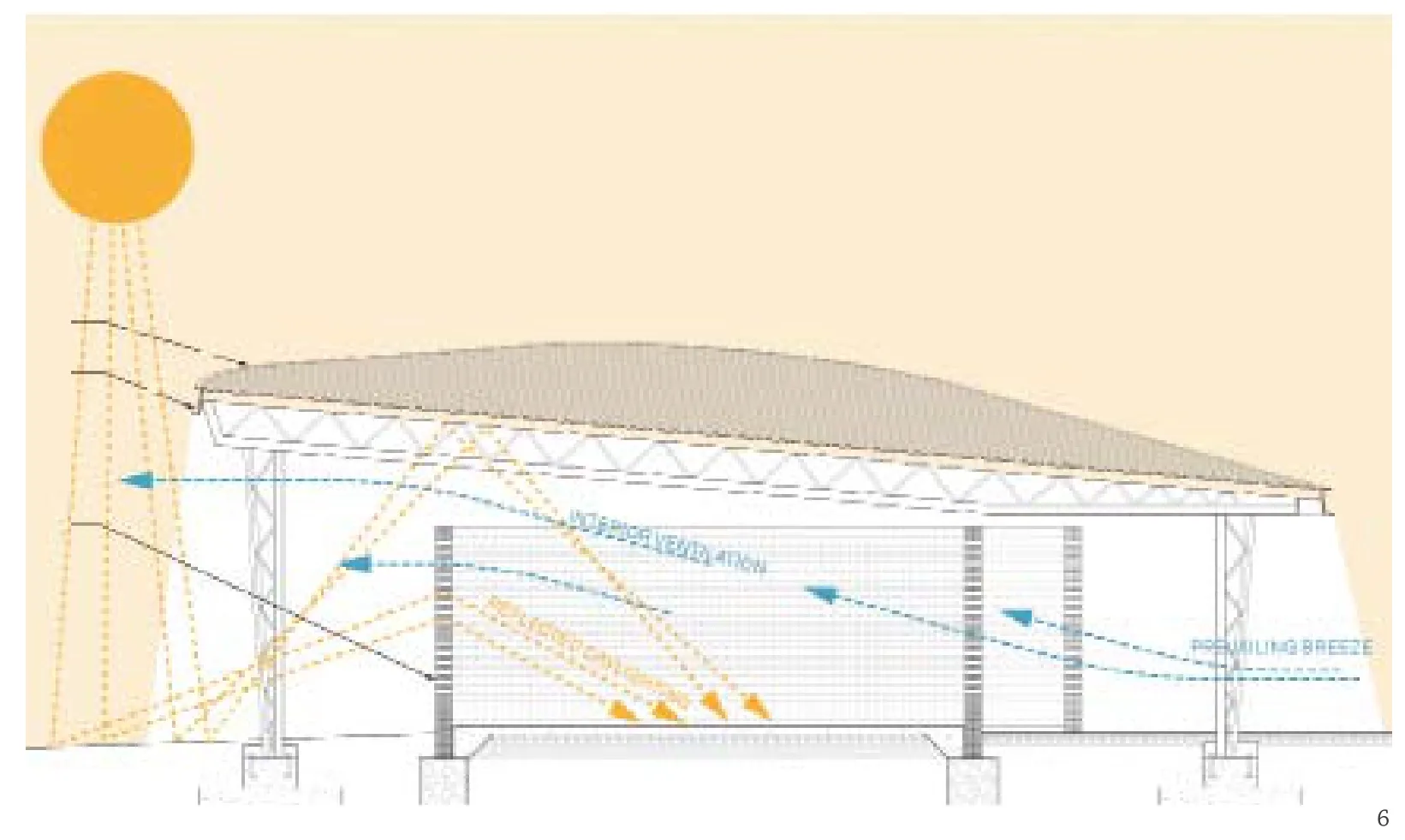
6 氣候概念示意圖/Schematic diagram of the climate concept showing cross-ventilation and lighting
評論
王麗方:項目主要的工作在婦女勞作、制磚技術、市場運營等方面。那無疑是具有價值的。磚建筑在這里基本是產品展銷。當然也是項目的形象。
圓柱的形體選得聰明,正可以用到磚砌的優勢。花格墻需要仔仔細細地砌,不能馬虎。鋼結構屋頂實現起來顯然是最困難的,但也都成功了。這樣的做法很接地氣,卻又顯得超拔。當地人看,這是一群非常新穎不同凡響的建筑,廣告效果不一般。學建筑的人看,這樣土土的、接了地氣的設計,顯得聰明而且用心,很有別致的情趣。
磚,從早期文明傳來的材料,如今在非洲的土地上,由非洲的婦女使用著,外來的建筑師綜合了這一切,給當地塑造了一小片地域的標志。
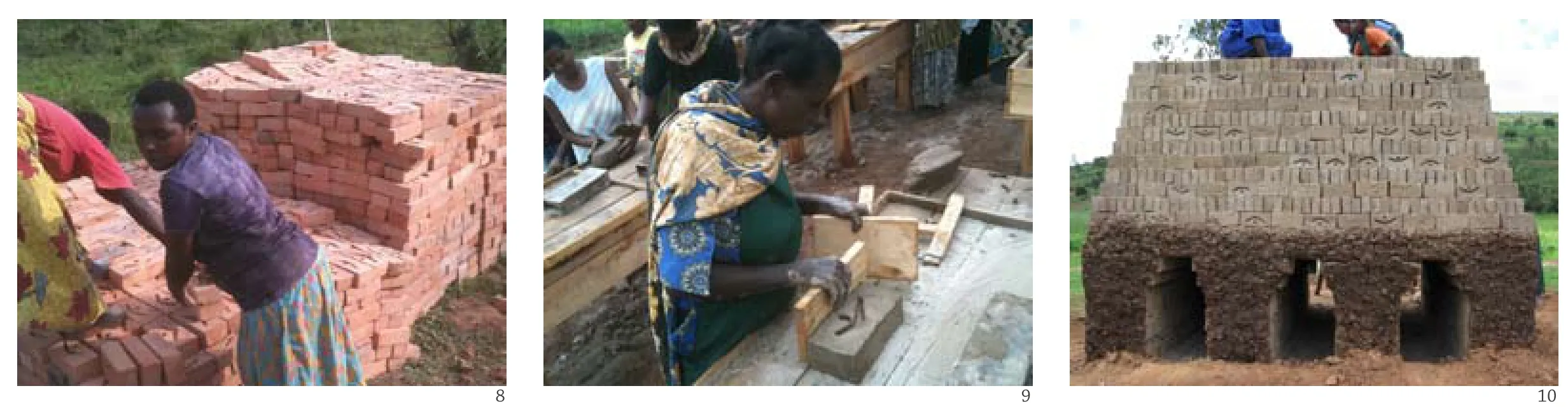
8-10 手工磚的制作/Making of bricks
朵寧:婦女發展促進中心的平面,讓人一下子想起列維·施特勞斯在《憂郁的熱帶》一書中所描繪的巴西土著部落的典型布局平面:中心是公共活動廣場和祭祀空間,四周圍繞著部落成員的土屋和其他功能空間。本項目的建設過程,也利用了當地婦女自制的磚塊,并幫助她們發展出有競爭力的生產技能。在這種充分尊重本地傳統和居民的設計前提下,脫離的鋼結構屋架和螺旋形的磚砌花墻,用結構和構造語匯進一步呼應了社區結構,提高了設計的整體性和完成度。
Comments
WANG Lifang: The main task of the project lie in the expression of labor, brick-making technology and market operation by women, which are valuable. Brick building here is basically an exhibition of production,which is also the image of the project.
The selection of a cylinder shape is smart for it can display the advantage of masonry. The lattice wall needs careful brickwork instead of sloppy one. It is valuable to realize the most difficult part, the steelstructured house roof, which is down to earth and transcendent. In the eyes of local people, these are original and unique buildings with extraordinary effect of advertisement. According to people who study architecture, such rustic and reliable design shows ingenuity with unique taste.
Bricks, the material dating back to early civilizations, are now used by women in Africa. Foreign architects have taken the material into consideration and made it a landmark patch.
DUO Ning: The plan of the Center immediately reminds us of the typical layout of Brazilian indigenous tribes depicted in Tropical Depression by Levi Strauss.The center of it is the public square and religious space,surrounded by the earth houses of tribal members and other functional spaces. The construction of the project also used the bricks made by local women and helped them develop competitive skills for production. In the premise of fully respecting local tradition and residents, the isolated steel-structured roof truss and spiral-shaped brick lattice wall further echoed the organization of the community in terms of structure and construction vocabulary, and improved the entirety and completion of the design.
Women's Opportunity Center, Kayonza, Rwanda, 2013
Architects: Sharon Davis Design
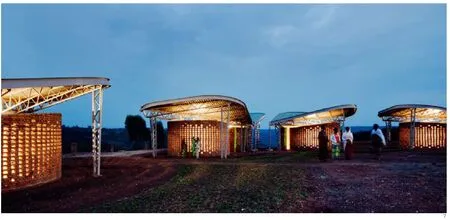
7 夜景/Night view
猜你喜歡
北方建筑(2021年6期)2021-12-31 03:03:54
文苑(2020年10期)2020-11-07 03:15:36
現代裝飾(2020年7期)2020-07-27 01:27:42
現代裝飾(2020年6期)2020-06-22 08:43:12
現代裝飾(2020年4期)2020-05-20 08:55:08
流行色(2020年1期)2020-04-28 11:16:38
藝術啟蒙(2018年7期)2018-08-23 09:14:18
海峽姐妹(2017年7期)2017-07-31 19:08:17
Coco薇(2017年5期)2017-06-05 08:53:16
福建農業科技(2016年10期)2016-03-07 09:46:49