
升級一下!
2016-12-21 05:31:51馬里烏斯·羅通艾格,張弦
世界建筑 2016年12期
升級一下!
Just Upgrade It!
在加拉加斯的Proyectos Arqui 5所做的項目中,3位建筑師不僅給圣拉斐爾聯合區的居民帶來了嶄新的便于公共交流的街道、公共臺階和廣場,雖然他們的社區很貧窮,犯罪率也偏高,但仍然是值得保留的。
命運眷顧著委內瑞拉。由于氣候宜人,位于安第斯山脈和加勒比海之間的委內瑞拉是非常肥沃多產的。這個國家擁有的石油儲量在世界上位居前列。委內瑞拉的首都加拉加斯也擁有絕佳的條件。它位于一條綿延秀美的山谷之中,兩側的山坡植被茂密。這里一片欣欣向榮,常年的微風還能帶來天然的涼意。
一座美麗的城市——從遠處看
然而,委內瑞拉并不是一個高度發達的國家——加拉加斯也不是伊甸園。相反地,這座城市是世界上最危險的城市之一。訪客很少目睹犯罪,但會感覺到暴力無處不在。當地人會經常建議不要去某條街道或某個公園,因為街道上適用的是叢林法則。相對好的社區其實就是比較安全的區域。加拉加斯的許多區域在視覺上也顯得很荒涼——從遠處看,城市置身大片綠地之中,顯得很迷人,但一旦置身其中,城市便失去了它的魅力。城市天際線由巨大的住宅筒倉、丑陋的辦公大樓和建筑遺址構成。汽車四處排放著煙霧,垃圾也是隨處可見。
山坡上的棚戶區
盡管如此,加拉加斯仍然像一個磁鐵一樣,數十年如一日地吸引著委內瑞拉的人民。到2006年,它已經成為了拉丁美洲人口最稠密的城市。大約有400萬~500萬居民聚集在此,其中約有一半生活在所謂的貧民區。窮人們為了省錢一戶挨著一戶地建造著小屋和棚屋,這種棚戶區也隨之蔓延到城市范圍以外。貧民區沒有花園、公共廣場,也沒有基礎設施。居民們沒有錢建造街道、照明設施或游樂場,政府也幾乎沒有給這些社區投資。由于地勢平坦的山谷早已被正式的城市占據,這些貧民區只能沿著加拉加斯周圍的陡峭山坡蔓延。到了晚上,棚戶區的燈光會創建出一個華麗的背景。這時候,加拉加斯看起來有點像一個被圣誕燈光環繞的花園。但在山坡上的情況卻是令人不快的,因為通往貧民區的路都極其陡峭,很多斜坡也都有滑坡現象。
花箱和砌體廢墟
貧民區建造的時間越長,里面的房子看起來越好。在貧民區,每一個人都知道要如何蓋房子。如果還剩下一點錢,他們都會投資在砌體墻、門、油漆、窗戶或烤架上。這里人雖然比較窮,但他們并不是一無所有。許多人穿得不錯,還擁有手機。每戶人家都還有一臺電視機。這里的建筑也存在著巨大的個體差異。這邊有個房子將能供人居住,而那邊確是一座設有花箱窗口的精致小屋。房屋的質量不僅與年代有關,也和位置有關。離街道越遠的房子質量越差。最窮的人的房子只能通過狹窄的小路或破舊的樓梯到達。他們也沒有基礎設施,只能通過步行來運輸他們的氣瓶和所有購買的貨物。為了省事,他們到處亂扔垃圾廢物。救護車和消防車也無法覆蓋到這些房屋。
“這就是我的世界!”

2 平面、軸測、立面及剖面/Plan, axonometric, facade and sections
由于貧民區建筑密度太高,幾乎很難進行大規模的改造,除非是在全部拆除以后。在拉丁美洲,有多次提議將這些非正式的棚戶區拆除,把居民遷入新的居住區。由于貧民區的規模,這種做法在加拉加斯是不切實際的幻想。此外,更多的人逐漸意識到,人們更應該接受非正規住區作為一種類型的城市形態,更有意義的做法是接受它、改造它而不是拆除它。當然,改造通常比重建更加昂貴。但是全部拆除會破壞社會聯系,毀滅人們已居住了幾十年的環境。即使大多數貧民區的犯罪率都偏高,人們還是覺得這是自己的家,他們的根在這里。“當我回到家,第一件事就是和鄰居打招呼,”一位居民說道,“也許與一個鄰居玩多米諾骨牌,與另一個聊天,這里就是我的世界;來到這里,我就回家了!”
一個10萬人的貧民區
1998 年前委內瑞拉政府啟動了一個項目來改善貧民區。加拉加斯的拉維加區被選為試點項目。這里的貧民區已經發展的比較成熟,土地也歸屬公共機構所有。拉維加區共占地400hm2,是加拉加斯最大和最古老的無規劃住區之一。自 20 世紀初以來,就有人居住在這里。大約 40 年前,人口開始爆炸式增長。如今拉維加區已有約 10萬人。改善項目開始后,政府為拉維加區各區組織了設計方案征集。Proyectos Arqui 5贏得了圣拉斐爾聯合區的設計競賽。這個工作室的3位建筑師伊莎貝爾和瑪利亞·伊內斯·波卡泰拉姐妹以及西爾維婭·蘇恩奈茲從一起讀書到現在一起工作已經有20 年了。她們一起為政府和私人客戶設計房屋、居住區、商業建筑和城市項目等。由于工作室非常成功,她們又雇傭了3個人。

3 步道設計/Stairs design

4 鳥瞰/Aerial views

5 總平面/Site plan

6 不同分段配置/Assembly plan

7 步道設計/Stairs design
陡峭,陡峭,陡峭
Proyectos Arqui 5 要改造的圣拉斐爾聯合區是拉維加地區中最小的一個片區。26hm2的用地包含 1000座房屋,居住人口約5000人。由于地形復雜,這一區域實際上從未獲開發批準。圣拉斐爾聯合區有一條主要街道和兩條次要街道,都極其狹窄且異常險峻。下雨的時候道路非常滑,基本無法使用。人們從街邊的樓梯到達各自的房子。而樓梯的建造卻沒有一個統一的規劃,每家人都僅僅建造通向自家房屋所必需的樓梯。所以這些樓梯寬度有限,臺階高度不一,沒有扶手,坡度也很陡。而最高的那些社區完全沒有樓梯,只能通過一些條件很差的泥濘小路到達。
路太少
Proyectos Arqui 5從2000年開始對圣拉斐爾聯合區進行現狀分析,明確貧民區的改造意向并制訂初期建設的工作計劃。3位建筑師開始對房屋進行分類。由于貧民區完全沒有規劃,一切都是從零開始。研究表明,圣拉斐爾聯合區片區主要存在 4個問題:地形復雜、 可達性很差、服務缺乏(例如垃圾收集)以及公共空間缺乏。建筑師們認為最緊迫的是要改造街道和人行系統,這也給高處的房屋增加了可達性。她們設計了一個新的交通系統,包含一條新的從貧民區上山的主路和居民部落中大量的臺階。給貧民區設計臺階說易行難,因為大多數建筑物之間可用的空間極其有限,而坡度有時卻超過60%。
公共廣場和城市立面
圣拉斐爾聯合區的改造項目當然不只是關于新的樓梯。由于沒有可供人們聚會和兒童玩耍的公共空間,3位建筑師盡可能地將各種規模的開放空間納入行人系統,同時采用溫和的手段將他們設計成公共場所。因為圣拉斐爾聯合區區和其他貧民區看起來沒什么差別,建筑師們試圖給它創建一個獨立的個性——也就是本項目的一個子項目“城市立面”。主要道路兩旁的建筑物被整合成一種新穎的構筑物,旨在成為區域的門臉并界定區域的邊界。此外,建筑師還打算借由這個城市立面減緩坡度并容納各種公共服務。子項目為商店、多功能用房、 幼兒園、新的公寓都預留了空間。建筑師還設計了一個社區中心作為集會的地方。
社區參與是成功的關鍵
將圣拉斐爾聯合區的居民納入到項目設計過程中來是本次項目最重要的因素。這是為了確保設計能真正滿足居民的需求,同時也能使他們支持下一步的計劃。社區參與是拉維加區可持續發展的關鍵。規劃方案和項目經理在2000年的會議上被介紹給了當地居民。居民們不僅僅是被告知,更實實在在地掌握著決策權。每當一個設計完成時,都會被呈交給受到影響的人。至少需要75%的人簽字同意此項目才能繼續。每個施工現場、每個樓梯、每個新規劃的公共廣場都會有代表所在社區的一位督察員監督。每個項目有自己單獨的預算和組織——這可以避免浪費時間并確保有限的資金得到最有效的使用。
更多的公共廣場——更多的毒品?
因此改造項目已成為圣拉斐爾聯合區居民的一個項目。他們提出了他們的需求,同時也提出了他們的擔心。這種擔心有時讓3位建筑師感到有些驚訝。“我們覺得不可思議,例如,一開始有人反對公共廣場,”西爾維婭·蘇恩奈茲談道,“直到我們了解到居民們擔心這些地方會被毒品販子占領。所以我們提出了各種各樣的控制機制。”設計師們設法減輕人們的憂慮,并設計了一些小規模的廣場。在樓梯盡頭的一個露臺上,3個男孩正在踢足球;一個微醺的人正驕傲地展示著廣場邊盛開的鮮花。與鄰區相比,這個小廣場非常干凈,狀況良好。人們不僅使用它,也打理得很好。人們從這里不僅能一覽圣拉斐爾聯合區的全景,還能看到坐落在對面山坡上相鄰的貧民區。那個貧民區卻都是破舊的波紋金屬棚屋。“他們說需要 18 年那樣的貧民區才能達到圣拉斐爾聯合區的樣子。”西爾維婭·蘇恩奈茲說道。
建筑師的民族精神
2001年起,各分項工程的重建策略開始在圣拉斐爾聯合區組織實施。新的街道仍然僅存于圖紙之上,改造是慢慢進行的,但是也有看得到的成果。Proyectos Arqui 5 的設計工作在很大程度上得到落實。建筑師的規劃已經完成,只待實施。然而這些女建筑師們還繼續在拉維加區努力推動工作進展。為什么這些建筑師——這些在委內瑞拉極少數的富裕的人——在這個項目中投入了這么多?大多數她們階層的人根本不愿意與這些貧民區的人扯上關系的情況下,她們幾個為什么一直在為貧民區尋找可持續的解決辦法?伊莎貝爾·波卡泰拉堅定地說道:“加拉加斯超過一半的人住在巴里奧斯。如果我不能幫助這群人解決問題——那為什么我要做建筑師?”
拖延和空頭承諾
3個女人的奉獻精神是讓人尊敬的。她們不會讓自己氣餒;她們不斷推動項目向前,即使圣拉斐爾聯合區的工作已經停滯。政府起初比較支持,后來卻一直拖延并許下空頭承諾。“如今一切都慢得難以置信。”瑪利亞·伊內斯·波卡泰拉指著僅完成了部分框架的社區中心說。這里停工了,建筑的第一道墻樹立起來了,但現在建筑外殼卻在被腐蝕。
石油是一個詛咒
政府似乎很難對拉維加區這種長期項目感興趣,他們更喜歡快速的解決方案,盡管這些方案是不可持續,也與城市肌理不協調。在加拉加斯不僅有太多不合標準的住宅空間,同時住宅空間也太少。“政府被批評為現有的貧民區做得太多,” 西爾維婭·蘇恩奈茲說道,“所以現在它喜歡建立新的社區,而不是處理舊的。”圣拉斐爾聯合區的工程停滯甚至不是一個資金籌措問題。伊莎貝拉說:“即使我們從私人資源拿到錢來完成我們的項目,我們也做不了什么!圣拉斐爾的土地歸政府所有。我們無能為力。”連貧民區的居民也幾乎不再從下而上地推動項目,因為政府不斷推出了其他所謂的“新任務”,比如給窮人錢的社會援助計劃。如今幾乎每個家庭都有兩三人得到這種直接付款。政府可以負擔得起這些“任務”,因為高價的石油給這個國家帶來了巨額資金。通過這些任務還能獲得窮人選民的廣泛支持。而建筑師們認為,長遠來看這種形式的福利支持是非常不利于貧民區發展的。西爾維婭·蘇恩奈茲說:“這筆錢讓人們麻痹!”對改造項目的興趣隨著時間的推移逐漸減少。“石油是對委內瑞拉的一種詛咒,”瑪利亞·伊內斯·波卡泰拉回應道,“因為它傳遞出的信息是我們國家非常富有,人們可以不用上班。”
The three architects of Proyectos Arqui 5 in Caracas are giving the residents of San Rafael-Unido not only new streets, public stairs, and squares for social interchange – but also the reassurance that their neighborhoods are worth preserving in spite of the poverty and crime.
Fate smiled upon Venezuela. With a favorable climate, the country between the Andes and Caribbean coast is exceptionally fertile. The land has oil reserves that rank among the largest in the world. And the capital of Venezuela, Caracas, is also blessed with outstanding conditions; it lies in a beautiful, elongated valley flanked by densely wooded hillsides. Nature flourishes here, and a constant breeze provides natural cooling.
A beautiful city – from a distance
However, Venezuela is not a highly developed country – and Caracas is no Garden of Eden. On the contrary, the city is among the most dangerous in the world. Visitors seldom witness a crime, but will feel the omnipresence of the violence here. Locals constantly advise against using this street or visiting that park; on the streets the law of the jungle rules. Te "better neighborhoods" are actually high-security zones. Visually, many parts of Caracas also give a desolate impression – from a distance the city looks appealing, set amidst large green areas, but once you are in the city it loses its charm. Te skyline is marked by huge residential silos, ugly office buildings, and construction ruins. Rattling cars spew coal-black exhaust; trash lies around everywhere.
Informal settlements on the hillsides
Nevertheless Caracas is a magnet that has been attracting the people of Venezuela for decades. Today – in 2006 – it is the most densely populated city in Latin America. Of the estimated 4 to 5 million inhabitants about half live in so-called barrios. Tese informal districts grow outside the city limits as poor people build huts and shacks as cheaply as possible, wall to wall. There are no gardens or public squares in a barrio – and no infrastructure. The residents have no money for streets, lighting, or playgrounds, and the government hardly invests anything in these neighborhoods. Because the flat terrain of the valley has been long since occupied by the formal city, the barrios spread up the steep slopes surrounding Caracas. At night their lights create a gorgeous backdrop – Caracas then looks a bit like a garden with beautiful Christmas lights – but the situation on the slopes is more than unpleasant, because the paths through the barrios are extremely steep, and many slopes are sliding.
Flower boxes and masonry ruins
Te older a barrio is, the better the houses in it look. In the barrios every-one knows how you build; you invest in masonry walls, doors, paint, good windows or grills if you have a few bolivares left over. Poverty in the barrios is great indeed, but the people who live here are not without possession. Many of them are well dressed and carry a cell phone. Tere is a television set in every house. There are great differences between the individual buildings – here is a brick ruin in which one can hardly live; there a skillfully built house that even has window boxes for flowers. Building quality is influenced not only by age but by location. The further the house is from one of the few streets in a barrio, the poorer the substance of the building. The poorest of the poor live in houses reached only via narrow paths or dilapidated stairs. Tey have no infrastructure. Tey must transport their gas cylinders and all purchased goods by foot – and waste disposal is such a chore that they often spare the effort and just drop trash any-where. Ambulances and fire trucks cannot reach any of the houses.
"This here is my world!"
The barrios are so densely built that they can hardly be significantly changed – or only when they are demolished. In Latin America, projects have been pro-posed again and again to tear down informal settlements and move the people into new developments. Because of the size of the barrios, doing such in Caracas would be an illusion. Furthermore, people are gradually realizing that it makes more sense to accept informal settlements as a type of urban morphology – to accept and upgrade instead of demolishing. Of course improvement is often more expensive than new construction; but demolition destroys the social network and eliminates the environment in which the people have lived for decades. Even if crime rates are high in most barrios, the people feel at home there; their roots are in the barrio. "When I come home, first I greet all my neighbors," tells one resident, "perhaps play a game of dominoes with one, chat with another. Tis here is my world; here I am home!"
A barrio with 100,000 inhabitants
In 1998 the former Venezuelan government initiated a program to improve the barrios. The quarter La Vega in Caracas was chosen for pilot projects. Here the barrios have already reached a high level of development and the land is owned by public institutions. La Vega is 400 hectares large –one of the largest and oldest unplanned settlements in Caracas. People have been living here since the start of the 20th century. About 40 years ago the population began to explode. Today La Vega is home to about 100,000 people. To launch the improvement program, the government held design competitions for the various districts of La Vega. The competition for the district San Rafael-Unido was won by Proyectos Arqui 5. Behind this name stand 3 architects who have been working together since they studied together 20 years ago: the sisters Isabel and Maria Ines Pocaterra as well as Silvia Soonets. Together they work for the government and private clients, designing houses and residential developments, commercial buildings, urban development projects – with such success that they now employ 3 people.
Steep, steep, steep ...
The district of San Rafael and Unido that Proyectos Arqui 5 CA was commissioned to upgrade is the smallest district of La Vega. Its 26 hectares contain 1,000 houses in which 5,000 people live. Because of the difficult topography this area should in fact have never been allowed to be developed. In San Rafael-Unido there is one main street and 2 secondary streets that are extremely narrow and treacherously steep. When it rains they become so slick that they are barely useable. From the side streets stairs lead to the individual houses. Te stairs were built without any consistent plan; each resident just built what he needed to reach his house. Thus there are stairs with restricted width, irregular pitch, without handrails, and with excessive steepness. In the highest neighborhoods no stairs are built at all; dirt paths lead to the houses, which are in correspondingly poor condition.
... and too few paths
Proyectos Arqui 5 was commissioned in 2000 to analyze the situation in San Rafael-Unido, develop a concept for upgrading the barrios, and draw up plans for the initial construction work. Te 3 architects began by classifying each house. Tere were no plans of the barrios; work began literally from scratch. Te research showed that the situation in San Rafael-Unido was characterized by 4 main problems: difficult topography, poor accessibility, a lack of services (for example trash collection) and the lack of public spaces. Te architects considered the most urgent requirement to be the street and walkway system, which also provides access to the buildings situated further uphill. They designed a new circulation system with a new main road uphill from the barrios and with numerous stairways within the settlement. Designing stair-ways for the barrio is easier said than done – because very little space is avail-able between most buildings, and slopes sometimes exceed 60 percent.
Public squares and an urban facade
The project to upgrade San Rafael-Unido of course involves more than new stairways. Because there are no public spaces where people can meet or children can play, the 3 architects integrated every open space, regardless of size, into the walkway system, and using modest means developed these into public places. Because the district San Rafael-Unido looks like every other barrio, the architects tried to give it an independent identity – with the sub-project "Urban Facade." The buildings along the main road were integrated into an innovative structure. Tis is intended to become the face of the district and to define the boundary of the district.With this urban face the architects furthermore intend to stabilize the slope and accommodate a range of public services. The sub-project envisions spaces for shops, multipurpose rooms, preschools and new apartments. A community center is planned as a place of assembly.

8.9 建筑設計/Architectural design
這里時間幾乎停止
Proyectos Arqui 5 的計劃很難實現,不僅是因為政府興趣不大以及福利金澆滅了窮人長期改善生活的熱情。另一個原因是因為在貧民區生活雖不平靜,但卻了無生氣。人們有的是時間,卻沒有任何娛樂。人們很熱衷于任何有關注點的東西。這里的人們對項目的每一個細節和私人事務都津津樂道。當Proyectos Arqui 5的女建筑師們從這里走過時,總有一堆人跟在她們后面。建筑師表現出令人敬佩的耐心,傾聽所有的聲音,并一直保持專注和兼聽。“我有 30 多年生活在這里,”一位婦女對3位建筑師抱怨道,“但那個樓梯建成后,我的房子被水淹了 !”西爾維婭·蘇恩奈茲安撫她,并承諾解決問題。“當然有些人很生氣是因為他們不同意某個分項工程,”西爾維婭·蘇恩奈茲說。但總體來說,圣拉斐爾聯合區的人們還是支持我們的工作的。

10 步道設計/Stairs design
居民們也是伙伴們
盡管項目并沒有按之前計劃的速度向前推進,但在這么多的不利情況下能達到現在的程度已無疑是巨大的成功。人們并沒有感覺到 Proyectos Arqui 5制定的戰略是強加給他們的。是不是因為女性建筑師提出的方案更容易讓人接受?建筑師身后人群中有人搖頭大笑道:“不是,不是!”瑪利亞·伊內斯·波卡泰拉說,實際上這些類型的項目在委內瑞拉往往由婦女完成。“在這里設計界更活躍的就是女性。男人則多為工程師——也許是因為這里的建設項目都由工程師主導,而不是建筑師。”但這個項目的高接受度和Proyectos Arqui 5的女建筑師認真對待居民是分不開的,居民覺得他們是項目真正的參與者,而不只是政府項目的受益者。
家就是家——無論如何
“我們不想要改變這個貧民區——我們想改造它!”伊莎貝爾·波卡泰拉強調,“這里的人形成了一個正在運作的社區。他們互相照看對方的孩子,互相幫助。這種社會構架必須保留!但我們也希望這里的人們能夠享有與正規城市類似的基礎設施。即使有這樣的貧困和犯罪,如果人們或多或少還是生活地很開心,那為什么還要對這里進行改造呢?”她回答道:“這樣的貧民區當然是不可持續的。如果我們現在不采取一些措施,建立更完善的街道和排水系統,居民點遲早會崩潰瓦解,也將不再是居民們居住了40多年的家。”(馬里烏斯·羅通艾格 文,張弦 譯)
Community participation as the key to success
More important than any architectural subproject in the upgrading strategy is the integration of the residents of San Rafael-Unido into the process. This is to ensure that the design really does meet the needs of the residents, and to encourage the people to support further initiatives. Community participation is considered the key to sustainable development in La Vega. In 2000 a meeting was held to introduce the plans and the project managers to the residents. The residents were not just informed, however; decision making power was placed in their hands. When a project is designed, it is submitted to the people it affects. At least 75 percent of them must approve the project in writing. Every construction site, every stairway, every newly planned public square is represented by an inspector from the neighborhood. Every project has its own budget and is separately organized –this prevents idle time and ensures the effective application of the limited finances.
More public squares – more drugs?
Tus the upgrading project has become a project of the residents of San Rafael-Unido. Tey formulated their needs, but also their fears – which were for the 3 architects sometimes surprising. "We were amazed for example that at first there was resistance to public spaces," says Silvia Soonets, "until we learned that the residents feared that these places would be taken over by drug dealers. So we worked out models with various control mechanisms." They managedto scatter the apprehensions – and build some small squares. On one such terrace at the end of a stairway 3 boys now play soccer; a tipsy man proudly shows the flowers growing next to the square. Compared with its neighborhood, the little square is remarkably clean and in good condition. The people use it and take care of it. From here one not only overlooks all of San Rafael-Unido, but also looks across to the next barrio, situated on the opposite hillside. In that barrios are only the shabbiest corrugated metal shacks. "Tey say it takes 18 years for such a barrio to reach the level of San Rafael- Unido," tells Silvia Soonets.
Ethos of the architects
Te sub-projects of the renewal strategy began being implemented in San Rafael-Unido in 2001. Te new streets still exist only on paper; improvement comes slowly. But there is visible success. Te design work of Proyectos Arqui 5 is largely finished. The plans of the architects are ready for execution – yet the women continue their engagement in La Vega, striving to push the work forward. Why do these architects, who are among the very small minority of better-off people in Venezuela, in vest themselves so much in this project? Why do they search for sustainable solutions in a barrio, a neighborhood most people of their class prefer to have nothing to do with? Isabella Pocaterra answers promptly: "Over half the people of Caracas live in barrios. If I can't help solve the problems of this multitude – then why am I an architect?"
Delays and empty promises
The dedication of the 3 women is admirable. They won't let themselves be discouraged; they continuously push the project forward, even though the work in San Rafael-Unido has stopped in the meantime. After being supportive in the beginning, the current government practically blocked the programs through constant delays and empty promises. "Today everything creeps forward unbelievably slowly," says Maria Ines Pocaterra, pointing to the partially built frame of the community center. Te work here was stopped just as the very first walls of the structures were being erected; the building shell is now deteriorating.
"Oil is a curse!"
The government hardly seems interested in long-term projects such as at La Vega; it prefers fast solutions, which are poorly sustainable, and stamps new neighborhoods out of the ground. In Caracas there is not only too much sub-standard residential space, but generally too little residential space. "The government got blamed for doing too much for the existing barrios," tells Silvia Soonets. "So now it prefers to build new neighborhoods rather than deal with the old ones." Tat the up-grading of San Rafael-Unido is currently not progressing as it should is not even a matter of financing. Isabella says: "Even if we got the money from private sources to finish our project – we could do nothing! San Rafael is on government land. Our hands are tied." Even the residents of the barrios hardly push any more from the bottom since the government has been constantly launching its new so-called "missions." These are social aid programs that give poor people money. These days 2 or 3 people in almost every family receive such direct payments. Te government can afford these "missions," through which it secures broad support among poor voters, because the high price of oil has brought huge amounts of money into the country. In the long term, this form of welfare support is poison for the development of the barrios, believe the architects. Silvia Soonets: "The money paralyzes people!" Interest has clearly dwindled in projects that noticeably change conditions only over time. "Oil is a curse for Venezuela" agrees Maria Ines Pocaterra, "because it gives the message that our country is rich and you don't have to work to get somewhere."
Where time almost stands still
The plans of Proyectos Arqui 5 are slow to be realized not only because the government shows little interest and the welfare payments kill the motivation of many poor people to work to-ward long-term improvement of their living conditions. Another reason is that in the barrios, although life is anything but calm, it is without the least trace of dynamic. One has time. Tere is no entertainment; every opportunity for diversion is gratefully accepted. The people here are glad to talk about every detail of the project – and of course about private things also. When the women of Proyectos Arqui 5 walk through the sector, a whole train of people always grows behind them and follows along. The architects show admirable patience, listen to all concerns, and remain attentive and open. "I have lived here for 30 years," complains a woman at a house Silvia Soonets, Isabel and Maria Ines Pocaterra pass, "but only since that stairway was built does my house get flooded!" Silvia Soonets calms her and promises to take care of the problem. "Of course some people are angry because they don't agree with a certain sub-project," tells Silvia Soonets. "But in general, the people of San Rafael-Unido do support our work."
Residents are partners
Even though the project is not progressing at the pace that had been previously planned, it is unquestionably a great success that it has already thrived so far in the face of so many adverse circumstances. The people do not have the feeling that the strategy developed by Proyectos Arqui 5 was forced on them. Does the fact that the people behind the project are women add to the high acceptance rate? One of the people in the group following the architects as they walk through the neighborhood laughs aloud and shakes his head: "No, no!" In fact, these types of projects in Venezuela are often implemented by women, tells Maria Ines Pocaterra. "Here more women than men are active in the design profession. Men work rather as engineers – probably because here construction projects are headed by engineers, not architects." But the high acceptance of the project is certainly due to the fact that the women of Proyectos Arqui 5 take the residents seriously and give them the feeling of being genuine partners – and not just beneficiaries of government programs.
Home – in spite of everything
"We don't want to change this barrio – we want to upgrade it!" stresses Isabella Pocaterra. "The people here form a functioning community. They help each other; watch out for each other's children, they are there for each other. These structures must be main-tained! But we also want the people here to get an infrastructure similar to that of the formal city." If the people are more or less happy in spite of all the poverty and crime – why start an up-grading project here anyway? Isabella Pocaterra: "These barrios are of course not sustainable. If we don't do some-thing now, build better streets and drainage systems, the settlement will collapse at some point" – and would cease to be to the residents what it has been for 40 years: Home.(Text: Marius Leutenegger )
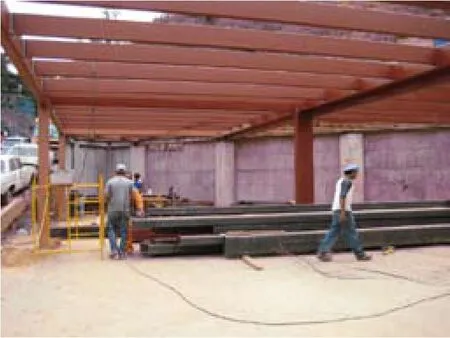
11 新一輪城市基礎設施項目中的社區中心建設工作/Work recommences on construction of the community center within the urban infrastructure project

12 改造后的El Muro廣場/After: "El Muro" Square
