
Targeting cell surface receptors for axon regeneration in the central nervous system
2017-01-21 03:33:02MenghonCheahMelissaAndrews
中國(guó)神經(jīng)再生研究(英文版) 2016年12期
Menghon Cheah, Melissa R. Andrews
1 John van Geest Centre for Brain Repair, University of Cambridge, Cambridge, United Kingdom
2 School of Medicine, University of St. Andrews, St. Andrews, United Kingdom
Targeting cell surface receptors for axon regeneration in the central nervous system
Menghon Cheah1, Melissa R. Andrews2,*
1 John van Geest Centre for Brain Repair, University of Cambridge, Cambridge, United Kingdom
2 School of Medicine, University of St. Andrews, St. Andrews, United Kingdom
How to cite this article:Cheah M, Andrews MR (2016) Targeting cell surface receptors for axon regeneration in the central nervous system. Neural Regen Res 11(12):1884-1887.
Open access statement:This is an open access article distributed under the terms of the Creative Commons Attribution-NonCommercial-ShareAlike 3.0 License, which allows others to remix, tweak, and build upon the work non-commercially, as long as the author is credited and the new creations are licensed under the identical terms.
Axon regeneration in the CNS is largely unsuccessful due to excess inhibitory extrinsic factors within lesion sites together with an intrinsic inability of neurons to regrow following injury. Recent work demonstrates that forced expression of certain neuronal transmembrane receptors can recapitulate neuronal growth resulting in successful growth within and through inhibitory lesion environments. More specifcally, neuronal expression of integrin receptors such as alpha9beta1 integrin which binds the extracellular matrix glycoprotein tenascin-C, trk receptors such as trkB which binds the neurotrophic factor BDNF, and receptor PTPσ which binds chondroitin sulphate proteoglycans, have all been show to signifcantly enhance regeneration of injured axons. We discuss how reintroduction of these receptors in damaged neurons facilitates signalling from the internal environment of the cell with the external environment of the lesion milieu, efectively resulting in growth and repair following injury. In summary, we suggest an appropriate balance of intrinsic and extrinsic factors are required to obtain substantial axon regeneration.
axon regeneration; dorsal root ganglion; extracellular matrix; integrin; tenascin-c; trk receptors
Introduction
ATher injury, axon regeneration in the adult central nervous system (CNS) is a challenging task. In addition to facing a plethora of growth inhibitory molecules such as chondroitin sulfate proteoglycans (CSPG), myelin-associated glycoprotein (MAG) and Nogo in the environment, injured neurons also lack intrinsic regenerative ability. As evident in neural development, the appropriate response to guidance cues in the environment is crucial for axonal growth. With the correct cell surface receptors, growing axons can respond to these guidance cues by regulating their intracellular signalling pathways and in turn modifying growth cone behaviours. By translating this concept, we propose that cell surface receptors can be a target for CNS axon regeneration after injury. In this review, we highlight a few receptors which have been demonstrated to be successful for axon regeneration (Figure 1).
Integrins in Axon Regeneration
The first promising receptor type we discuss here are integrins. Structurally, an integrin is a heterodimeric transmembrane cell adhesion receptor consisting of an α and β subunit which dimerise to form interactions with neighbouring cells or extracellular matrix (ECM) molecules. Integrins are bidirectional signalling molecules. The activation of integrin from a bent low-afnity conformation into a stable extended high-afnity conformation intracellularly by an activator such as kindlin or talin is termed as ‘inside-out’ signalling. For example, kindlin contains an FERM (4.1/ezrin/radixin/moesin) domain containing a phosphotyrosine binding site serving as the integrin binding site of the membrane-distal NxxY motif on the β subunit cytoplasmic tail. This results in a higher affnity binding of extracellular ligands to integrin and triggers a series of intracellular signalling cascades termed as ‘outside-in’signalling. The recruitment of various intracellular pathways results in a variety of cellular responses, ranging from shortterm responses such as adhesion and motility, to long-term responses such as proliferation, differentiation and neurite outgrowth which include gene regulation.

Figure 1 Schematic of transmembrane receptors related to axon regeneration found on CNS neurons.

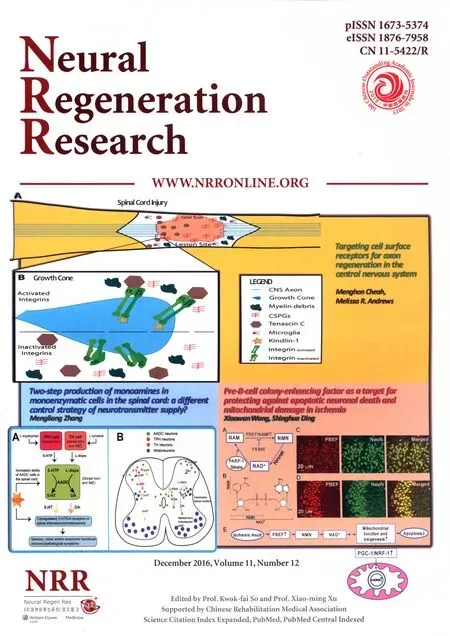
Figure 2 Schematic of spinal cord injury along with activated/ inactivated integrin receptors found on neuronal growth cones in response to injury.
Recently, we published a study that shows the potential of an activated integrin to be a treatment strategy for functional long-distance sensory axon regeneration in the spinal cord (Cheah et al., 2016). In both developing and adult nervous systems, integrins are required for neuronal migration and axonal outgrowth or extension. Due to spatial-temporal regulation, many integrin subunits are downregulated aTher development, afecting the ability of adult neurons to form specific cell-matrix interactions and reducing their ability to respond to certain extracellular ligands. More than a decade ago it was demonstrated that forced expression of a specifc integrin subunit in adult dorsal root ganglion (DRG) neurons increases their neurite outgrowth on substrates containing the ligand for the overexpressed receptor; for example α1 integrin was required for growth on laminin and α5integrin on fibronectin (Condic, 2001). Conversely, in the same study, embryonic DRG neurons grew robustly on these substrates due to their endogenous expression of integrins (Condic, 2001). In addition to showing the importance of the presence of a specifc integrin subunit for correct ligand binding, the study was also one of the frst to show that integrin manipulation in adult neurons can promote successful neurite outgrowth. Although successful peripheral nerve regeneration aTher injury is correlated with an upregulation of some integrin subunits, such as α4, α5, α6, α7 and β1, other subunits such as α9 integrin remains downregulated aTher CNS injury (Andrews et al., 2009). Alpha9 integrin is a receptor for the extracellular matrix glycoprotein tenascin-C. In the injured CNS, tenascin-C is upregulated at the lesion site by astrocytes, however its receptor α9 integrin is not re-expressed aTher injury. The lack of α9 integrin-tenascin-C interaction in the injured CNS is likely to contribute to the inability of axons to regenerate through tenascin-C rich regions. In verifying this hypothesis, we showed that overexpression of α9 integrin in DRG neurons can indeed promote a modest amount of sensory axon regeneration through the tenascin-C rich dorsal root entry zone (DREZ) following a dorsal root crush injury and through the lesion cavity aTher spinal cord injury (Andrews et al., 2009). Despite these positive results, the amount of axon regeneration observed in vivo was not as robust as the amount of neurite outgrowth observed in cell culture assays, questioning whether the ectopically-expressed α9 integrin had been inactivated in the injured spinal cord by inhibitory molecules such as CSPGs in the lesion milieu (Tan et al., 2012).
In addition to tenascin-C, CSPGs are also upregulated and widely known for their role in inhibiting axon growth aTher spinal cord injury. CSPGs afect several signalling pathways such as Rho/ROCK activation, protein kinase C (PKC) activation and epidermal growth factor receptor (EGFR) signalling. In a study using a similar experimental paradigm as the previous α9 integrin study, we demonstrated that overexpression of an integrin activator, kindlin-1, promotes axon regeneration in the presence of CSPGs and CSPGs have a direct efect on integrin inactivation (Tan et al., 2012). In other words, the presence of kindlin-1 in DRG neurons allows injured axons to overcome inhibition by CSPG resulting in axon regeneration due to the integrin receptors being less susceptible to CSPG-mediated inactivation. The fndings from the kindlin-1 study provided possible explanations for the less than expected amount of axon regeneration when α9 integrin was expressed on its own (Andrews et al., 2009). Only tenascin-C was present in cell culture for the α9 integrin study and therefore CSPG-mediated inactivation of α9 integrin was not initially considered. However, both CSPGs and tenascin-C are upregulated after spinal cord injury, thus it is reasonable to suggest that the ectopically-expressed α9 integrin receptors could have been inactivated by CSPGs and also myelin debris, resulting in less than optimal growth-promotion. By combining the fndings of these two separate α9 integrin and kindlin-1 studies, we hypothesised that overexpression of both α9 integrin and kindlin-1 would overcome the inhibition of CSPGs and subsequent inactivation of α9 integrin to promote better axon regeneration in the presence of tenascin-C and CSPGs which are highly upregulated in the injured spinal cord (Cheah et al., 2016) (Figure 2). We have successfully verifed this hypothesis in our recent study demonstrating that overexpression of both α9 integrin and kindlin-1 resulted in much better recovery as well as more signifcant axon regeneration in comparison of expression of either molecule alone. By overexpressing both α9 integrin and its activator kindlin-1 in adult rat DRG neurons, axon regeneration of up to 25 mm from the injury site up to the medulla was observed following lower cervical dorsal root (C5-8) crush injury. Although we did not observe direct connections to one of the terminal targets, the cuneate nucleus within the medulla, the regeneration was coupled with topographically accurate axonal reconnections of NF200-, CGRP-, IB4-positive fibres in the dorsal horn, behavioural recovery and electrophysiological improvement. In addition, the observed regeneration was time-dependent with regenerating axons not reaching the DREZ until 3 weeks post-injury, entering the spinal cord at 6 weeks and growing along the spinal cord of up 12 weeks post-injury.
Given the prolifc amount of sensory axon regeneration observed in the α9 integrin-kindlin-1 combination study (Cheah et al., 2016), the question remains as to whether the α9 integrin-kindlin-1 treatment strategy can be applied to cortical neurons to promote motor axon regeneration within the corticospinal tract (CST). Unfortunately, cortical neurons have a very diferent integrin trafcking mechanism as compared to DRG neurons. Based on our observation, integrins transport down corticospinal axons readily during development but as the neurons mature, integrins become restricted to the somatodendritic compartment and are excluded from the axon (Andrews et al., 2016). One suggestion for this trafcking defect may be due to the formation or maturation of the axon initial segment acting to restrict the transport of certain molecules down the axon, potentially resulting in the lack of intrinsic regenerative ability of CNS axons. An extension of the α9 integrin-kindlin-1 approach to cortical neurons would frst require a solution to this restrictive trafcking problem. Nevertheless, the use of integrin to promote sensory recovery alone is already extremely useful for spinal cord injured patients in restoring lost sensation and avoiding burns and bedsores.
Neurotrophic Factor Receptors in CNS Repair
Although integrin may not yet be a possible treatment strategy for CST regeneration at present, another class of cell surface receptors, Trk receptors, has been shown to be a promising target. Trk receptors are a family of tyrosine kinases whichbind neurotrophic factors required for the development, survival, and functioning of neurons. Upon ligand binding at the axonal terminal, the Trk receptor-ligand complex becomes internalized and is transported retrogradely to the soma. Of the three main family members (trkA, trkB and trkC), trkB which is the receptor for brain-derived neurotrophic factor (BDNF), is the most promising candidate for CST regeneration (Hollis et al., 2009). When trkB receptors were overexpressed in corticospinal neurons after a subcortical lesion, regenerating axons were observed growing into a BDNF-secreting graft. Phosphorylation of trkB receptor upon ligand binding activates the intracellular Erk pathway to induce neurite outgrowth, an event which also occurs during development. In fact, neurotrophic factors are crucial guidance cues for directing growing axons to the correct targets and strengthening newly formed synapses during development of the CNS. Many studies have trialled a variety of neurotrophic factors such as nerve growth factor (NGF), neurotrophic factor-3 (NT-3) and BDNF to mimic development in order to promote axon regeneration. Although the inherent lack of neurotrophic factors at the lesion site may be a contributing factor in the failure of CNS axon regeneration, it is worth considering whether the corresponding neurotrophin receptor is expressed on injured axons as both receptor and ligand expression are required to promote axon growth.
The CSPG Receptor, PTPsigma, Mediates Inhibition of Axonal Regrowth
As mentioned above, inhibitory CSPGs are highly upregulated at the lesion site predominantly by reactive astrocytes aTher CNS injury. Treatments targeting CSPGs such as chondroitinase ABC which digests the CSPG glycan side chains have been demonstrated to reduce the growth inhibitory efect of CSPGs and hence promote axonal outgrowth. The molecular mechanisms whereby CSPGs mediate their inhibitory effect have only recently begun to be defined and remain poorly understood. The transmembrane protein tyrosine phosphatase σ (PTPσ) has been proposed to be a receptor for CSPGs and it has a direct role in mediating growth inhibition (Shen et al., 2009). By modulating PTPσ to reduce the inhibitory efect of CSPGs, axon regeneration in the spinal cord may be achievable (Lang et al., 2015). In that study, although sprouting of serotonergic fbres together with variable behavioural recovery was observed as opposed to lengthy regeneration of CST fbres (Lang et al., 2015), the discovery of receptor PTPσ and its potential modulation nevertheless highlights our proposal that targeting cell surface receptors can promote axon regeneration in the CNS.
Conclusion
In summary, we have reviewed three types of cell surface receptors: integrins, trk receptors and PTPσ for their potential as targets for enhancing axon regeneration (Figure 1). The feld of axon regeneration is separated into two main groups: the extrinsic advocates who study the limiting factors found in the lesion environment, while the intrinsic advocates who focus on factors found within the neurons. Perhaps cell surface receptors can serve as a link between these two groups as the presence of a correct receptor on the cell surface is required to relay an extracellular signal intracellularly. An important note in recent literature, although beyond the scope of this review, suggests that matrix metalloproteinases (MMPs) play a key role in enhancing intracellular and extracellular interactions after CNS injury. They assist in many of the processes that lead to enhanced regeneration such as proteolysis and/or activation of both ECM and certain cell surface receptors including integrins and TrkB (reviewed by Andries et al., 2016). Therefore, the appropriate balance and response to cues in the extracellular matrix can determine the regenerative ability of neurons and their axons whereas manipulation of these cell surface receptors could bring upon successful axon regeneration in the CNS. Although manipulation of receptors by transgene expression is therapeutically challenging in human patients based on our current knowledge, this potential strategy can be part of a combinatorial therapeutic approach in achieving CNS axon regeneration in the future.
Author contributions:MC framed the concept and structure of the review, performed literature review, edited, fnalized and approved the fnal manuscript. MRA framed the concept and structure of the review, edited, fnalized, and approved of fnal manuscript.
Conficts of interest:None declared.
Andrews MR, Czvitkovich S, Dassie E, Vogelaar CF, Faissner A, Blits B, Gage FH, french-Constant C, Fawcett JW (2009) Alpha9 integrin promotes neurite outgrowth on tenascin-C and enhances sensory axon regeneration. J Neurosci 29:5546-5557.
Andrews MR, Soleman S, Cheah M, Tumbarello DA, Mason MR, Moloney E, Verhaagen J, Bensadoun JC, Schneider B, Aebischer P, Fawcett JW (2016) Axonal localization of integrins in the CNS is neuronal type and age dependent. eNeuro 3:0029-0016.2016.
Andries L, Van Hove I, Moons L, De Groef L (2016) Matrix metalloproteinases during axonal regeneration, a multifactorial role from start to fnish. Mol Neurobiol doi: 10.1007/s12035-016-9801-x.
Cheah M, Andrews MR, Chew DJ, Moloney EB, Verhaagen J, Fassler R, Fawcett JW (2016) Expression of an activated integrin promotes long-distance sensory axon regeneration in the spinal cord. J Neurosci 36:7283-7297.
Condic ML (2001) Adult neuronal regeneration induced by transgenic integrin expression. J Neurosci 21:4782-4788.
Hollis ER, 2nd, Jamshidi P, Low K, Blesch A, Tuszynski MH (2009) Induction of corticospinal regeneration by lentiviral trkB-induced Erk activation. Proc Natl Acad Sci U S A 106:7215-7220.
Lang BT, Cregg JM, DePaul MA, Tran AP, Xu K, Dyck SM, Madalena KM, Brown BP, Weng YL, Li S, Karimi-Abdolrezaee S, Busch SA, Shen Y, Silver J (2015) Modulation of the proteoglycan receptor PTPsigma promotes recovery aTher spinal cord injury. Nature 518:404-408.
Shen Y, Tenney AP, Busch SA, Horn KP, Cuascut FX, Liu K, He Z, Silver J, Flanagan JG (2009) PTPsigma is a receptor for chondroitin sulfate proteoglycan, an inhibitor of neural regeneration. Science 326:592-596.
Tan CL, Andrews MR, Kwok JC, Heintz TG, Gumy LF, Fassler R, Fawcett JW (2012) Kindlin-1 enhances axon growth on inhibitory chondroitin sulfate proteoglycans and promotes sensory axon regeneration. J Neurosci 32:7325-7335.
*Correspondence to: Melissa R. Andrews, Ph.D., mra5@st-andrews.ac.uk.
orcid: 0000-0003-1659-3771 (Menghon Cheah) 0000-0001-5960-5619 (Melissa R. Andrews)
10.4103/1673-5374.197079
Accepted: 2016-12-07
 中國(guó)神經(jīng)再生研究(英文版)2016年12期
- 中國(guó)神經(jīng)再生研究(英文版)的其它文章
- Expression changes of nerve cell adhesion molecules L1 and semaphorin 3A aTher peripheral nerve injury
- Injury of the arcuate fasciculus in a patient with progressive bulbar palsy
- “Three Methods and Three Points” regulates p38 mitogen-activated protein kinase in the dorsal horn of the spinal cord in a rat model of sciatic nerve injury
- Biodegradable magnesium wire promotes regeneration of compressed sciatic nerves
- Electroacupuncture at Dazhui (GV14) and Mingmen (GV4) protects against spinal cord injury: the role of the Wnt/β-catenin signaling pathway
- Application of a paraplegic gait orthosis in thoracolumbar spinal cord injury