巖溶洞穴現代沉積間斷的影響因素研究
——以河南雞冠洞為例
2017-02-09 06:20:44孫喆楊琰施強張萍梁沙張娜劉肖聶旭東彭濤梁勝利張志欽
沉積學報 2017年1期
關鍵詞:研究
孫喆,楊琰,施強,張萍,梁沙,張娜,劉肖,聶旭東,彭濤,梁勝利,張志欽
1.西南大學地理科學學院/三峽庫區生態環境教育部重點實驗室,重慶 400715 2.國土資源部巖溶生態環境—重慶南川野外基地,重慶 408435 3.西南大學地球化學與同位素實驗室,重慶 400715 4.河南省地質礦產勘查開發局第一地質礦產調查院,河南洛陽 471023 5.中國氣象局武漢暴雨研究所/暴雨監測預警湖北省重點實驗室,武漢 430074 6.河南省欒川縣氣象局,河南欒川 471500 7.雞冠洞風景名勝區管理處,河南欒川 471500
巖溶洞穴現代沉積間斷的影響因素研究
——以河南雞冠洞為例
孫喆1,2,3,楊琰1,2,3,施強4,張萍1,2,3,梁沙1,2,3,張娜1,2,3,劉肖1,2,3,聶旭東1,2,3,彭濤5,梁勝利6,張志欽7
1.西南大學地理科學學院/三峽庫區生態環境教育部重點實驗室,重慶 400715 2.國土資源部巖溶生態環境—重慶南川野外基地,重慶 408435 3.西南大學地球化學與同位素實驗室,重慶 400715 4.河南省地質礦產勘查開發局第一地質礦產調查院,河南洛陽 471023 5.中國氣象局武漢暴雨研究所/暴雨監測預警湖北省重點實驗室,武漢 430074 6.河南省欒川縣氣象局,河南欒川 471500 7.雞冠洞風景名勝區管理處,河南欒川 471500

巖溶洞穴次生沉積物—石筍因其獨有的高精度測年[1-2]、高分辨率記錄[3]的優勢和豐富的氣候替代指標[4-8],在第四紀全球變化研究中的作用愈發重要。洞穴碳酸鹽沉積機理研究作為理解石筍沉積速率,結晶形態和準確解譯氣候替代指標以及現代洞穴合理保護的理論基礎,一直以來是巖溶洞穴研究的熱點[9-15]。當前國內外研究成果主要來自于洞穴監測[10,13-14,16]和模擬計算[17-18],不過由于洞穴次生沉積受到不同區域氣候條件的影響[12-13],碳酸鹽沉積形成的時間及環境影響因素存在較大的差異,其記錄的環境氣候信息亦可能不同。例如,張美良[19]在廣西盤龍洞的研究認為該洞對氣候環境響應敏感,氣溫、降水和土壤CO2影響滴水飽和度,是導致沉積速率雨季大于旱季的原因。甘肅萬象洞[20]的研究證明,滴水飽和度是沉積發生的必要前提,但沉積速率受洞穴CO2的制約,呈現旱季大于雨季。Casteel[21]在研究美國德州一處洞穴時發現,與同地區其他洞穴夏季受洞內CO2抑制相反,該洞由于通風條件好,洞內CO2濃度與外界接近,不存在對方解石沉積的抑制,其沉積速率與滴水微量元素受溫度驅動,夏季沉積最快。即便在相似的氣候背景下,南京葫蘆洞卻沒有像安徽蓬萊仙洞一樣表現出活躍的現代沉積特征[22]。沉積間斷是石筍記錄中經常遇到的現象,導致石筍間斷的原因有很多[23],當前對沉積機理的研究多為討論沉積的季節、年際特征的影響因素[10,19-20],對沉積間斷原因的分析較少,選擇一個出現沉積—間斷—再次沉積的洞穴進行分析,對于深入理解巖溶洞穴沉積過程是大有裨益的。
雞冠洞位于河南省洛陽市欒川縣,處在我國南北交匯帶季風敏感區,其特殊的地理位置暗示著對環境響應的敏感性,趙景耀[24]通過對洞內不同類型水的穩定氫氧同位素分析驗證了“環流效應”[25-26],劉肖[27]對滴水、地下河和池水的水化學指標研究認為該洞對外界環境響應敏感,可以記錄極端氣候事件。筆者自2009年開始對其進行監測工作,發現在2013—2014年存在超過一年的沉積間斷,并于2014年11月重新開始沉積,這為洞穴沉積機理研究提供了很好的素材,本文通過對雞冠洞滴水和碳酸鹽沉積物的觀測與分析,探究影響洞穴沉積的因素,為石筍沉積間斷的形成、石筍年層計數和環境信息解譯提供理論依據,對現代洞穴保護具有現實意義。
1 研究區概況
雞冠洞(33°46′N,111°34′E)位于黃土高原東南緣,河南省洛陽市欒川縣城西4 km處的雞冠山上(圖1),洞口海拔約900 m,洞內長約5 600 m,分上下5層,落差約138 m。已開發洞長1 800 m,觀賞面積達23 000 m2。洞內實測均溫16.4℃。據欒川氣象資料統計,雞冠洞所在地區年均溫約13.09℃,年降水量844.85 mm,7—9月為降水集中期,約占全年降水的52%。上覆基巖較薄,約30~40 m;土壤層為棕壤,厚度不大,10~30 cm左右[28];基巖裸露達10%~30%。植被主要是次生殼斗科、松柏科喬木和低矮灌木。區內地質條件較為復雜,碳酸鹽巖巖溶作用強烈,研究區屬華北及昆侖秦嶺地層區,碳酸巖鹽類主要出露薊縣系大理巖、青白系硅質白云石大理巖、震旦系大理巖(雞冠洞巖性為震旦系綠泥大理巖)、二疊系變質大理巖。構造以三川—欒川復向斜為主體,次級褶皺發育,因構造應力比較集中,各種性質的裂隙以及低次級構造面發育,在次級褶皺構造的軸部,特別是垂直于軸部走向的張裂往往呈羽毛狀排列[29]。雞冠洞地處秦嶺—淮河北側,位于長江、黃河兩大流域分水嶺,又是中國地理南北濕潤區與半干旱區過渡地帶,特殊的地理位置決定了該區對亞洲夏季風變化響應的敏感性[30]。
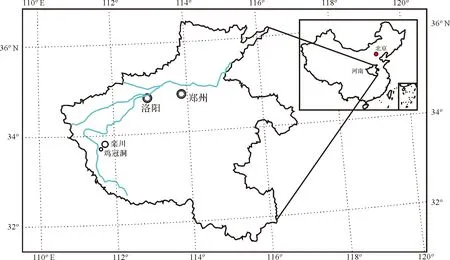
圖1 雞冠洞地理位置Fig.1 Location of Jiguan Cave
2 材料與方法
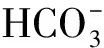
式中,Kc為方解石溶解于水的平衡常數。
3 結果與討論
3.1 滴水水文與水化學特征
洞內兩處滴水類型不同,LYXS監測期間未曾斷流,受強降水和持續降雨影響在2010年10月,2011年8—12月,2014年9月和2015年5月出現滴水變流水的情況;受欒川地區百年一遇大旱影響,2014年6月和7月滴速最小:4滴/min;正常降雨情況下LYXS滴水較穩定。TGBD雨季滴水穩定,滴速:24~118滴/min,對干旱事件響應敏感,易出現斷流。區內2012—2013年降雨量顯著下降,自2012年10月出現長達2年的干旱事件,滴水斷流,兩處滴水均很好地響應降雨量的變化。
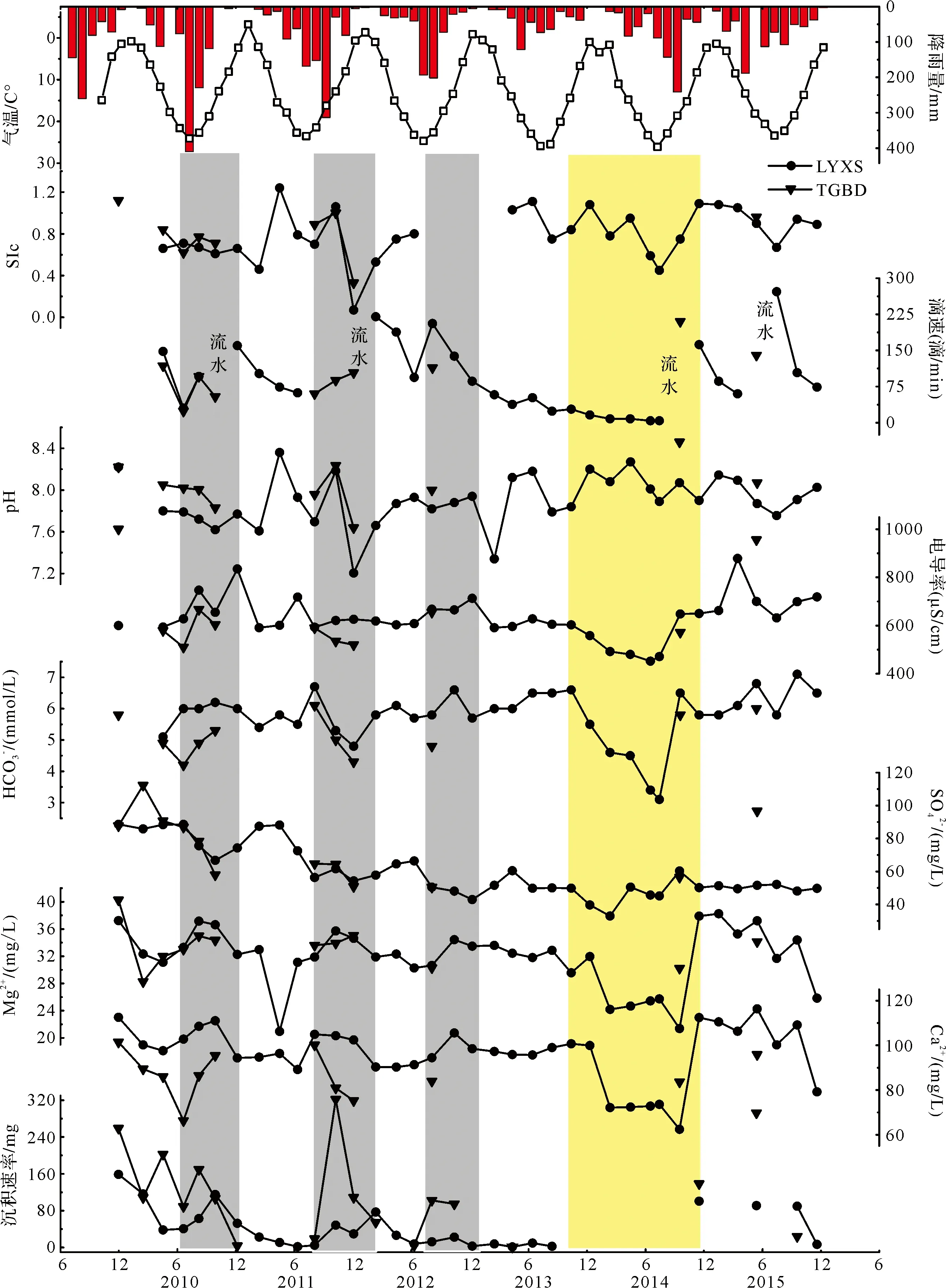
圖2 滴水物化指標和沉積速率變化注:流水代表滴速太快,已成線狀,無法測滴速Fig.2 Variations of physicochemical indices and deposition rate at drip site
監測期間滴水pH波動較大:7.21~8.46,表現為在雨季出現低值,旱季升高,在2010年7月和2011年9月降水較同期顯著偏多的月份(滴水變流水)之后并未表現出稀釋作用[32-33],這與甘肅萬象洞[20]及貴州石將軍洞[34]的觀測結果相同。受降雨量逐年減少的影響,pH值在2014年均值達到最大,指示滴水飽和度達到最低。

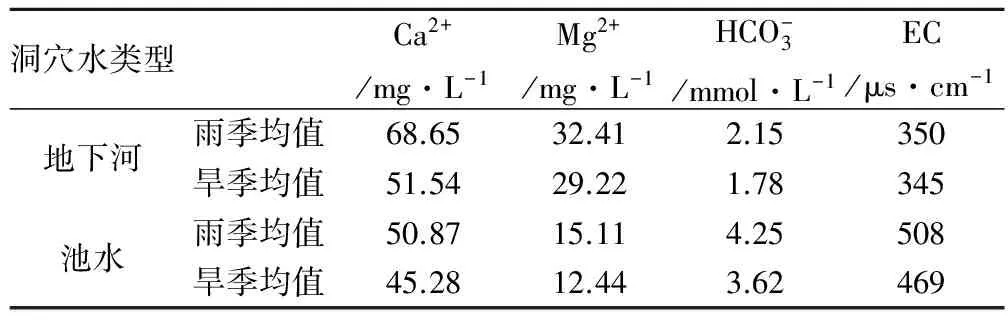
表1 池水、地下河旱、雨季水化學特征(修改自文獻[27])
3.2 現代沉積速率
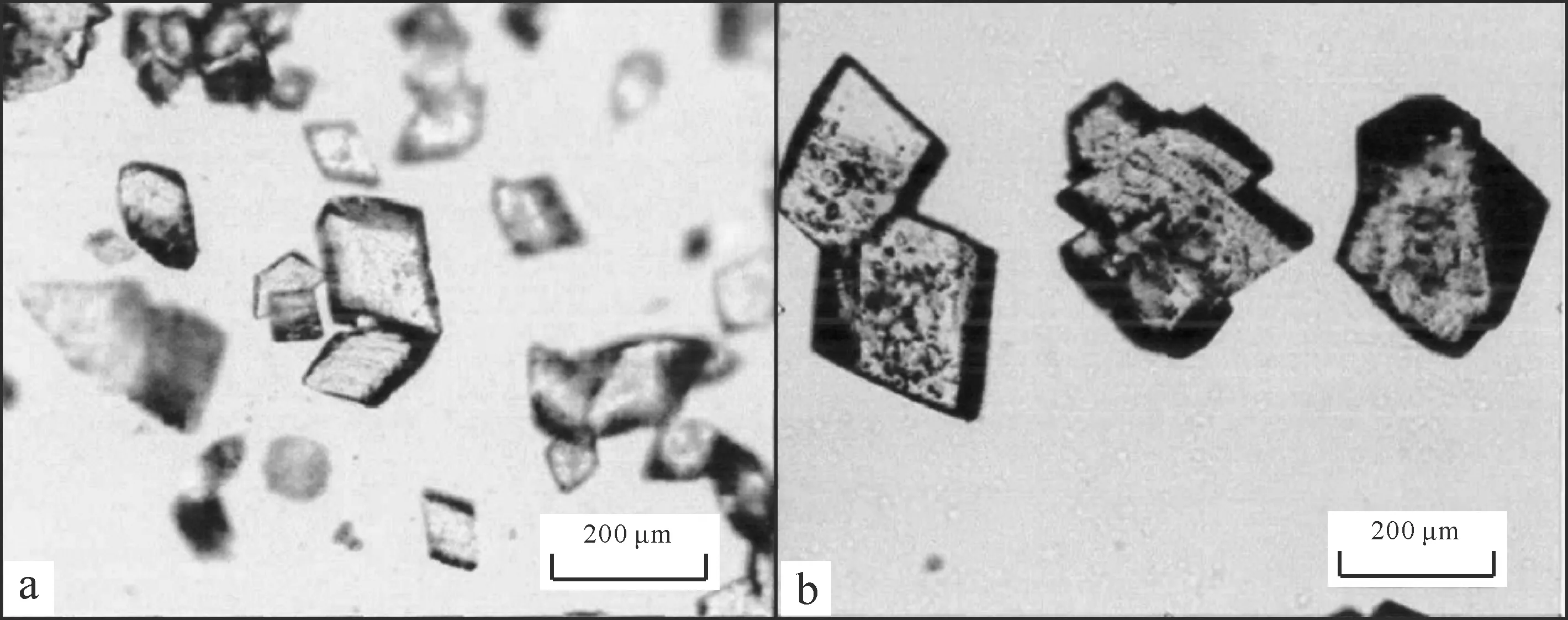
圖3 雞冠洞現代沉積物結晶晶體(修改自文獻[35])a.LYXS現代沉積物晶體; b.TGBD現代沉積物晶體Fig.3 Crystal of modern speleothem in Jiguan Cave(modified from literature [35])
雞冠洞的沉積特征與我國北方洞穴沉積過程主要發生在冬季不同,該洞受蒸發、空氣交換有一定的影響,將強烈影響洞內二氧化碳分壓(pCO2)的變化。巖溶洞穴沉積物主要源于滴水中CO2脫氣作用使得水體過飽和析出碳酸鈣(CaCO3),滴水與洞內pCO2差異推動該反應發生[10,36]。統計滴水處的洞內pCO2,雨季較旱季高14%,這是由于雨季植物呼吸作用和微生物活動加強,土壤CO2濃度升高,經巖溶管道和裂隙進入洞內的CO2增加,滴水脫氣也會促進洞內CO2濃度的升高,但與封閉洞穴相比[11-12],雞冠洞洞內雨旱兩季pCO2差別不大,雨季洞穴CO2對沉積的抑制作用被滴水飽和度“掩蓋”。
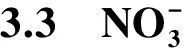
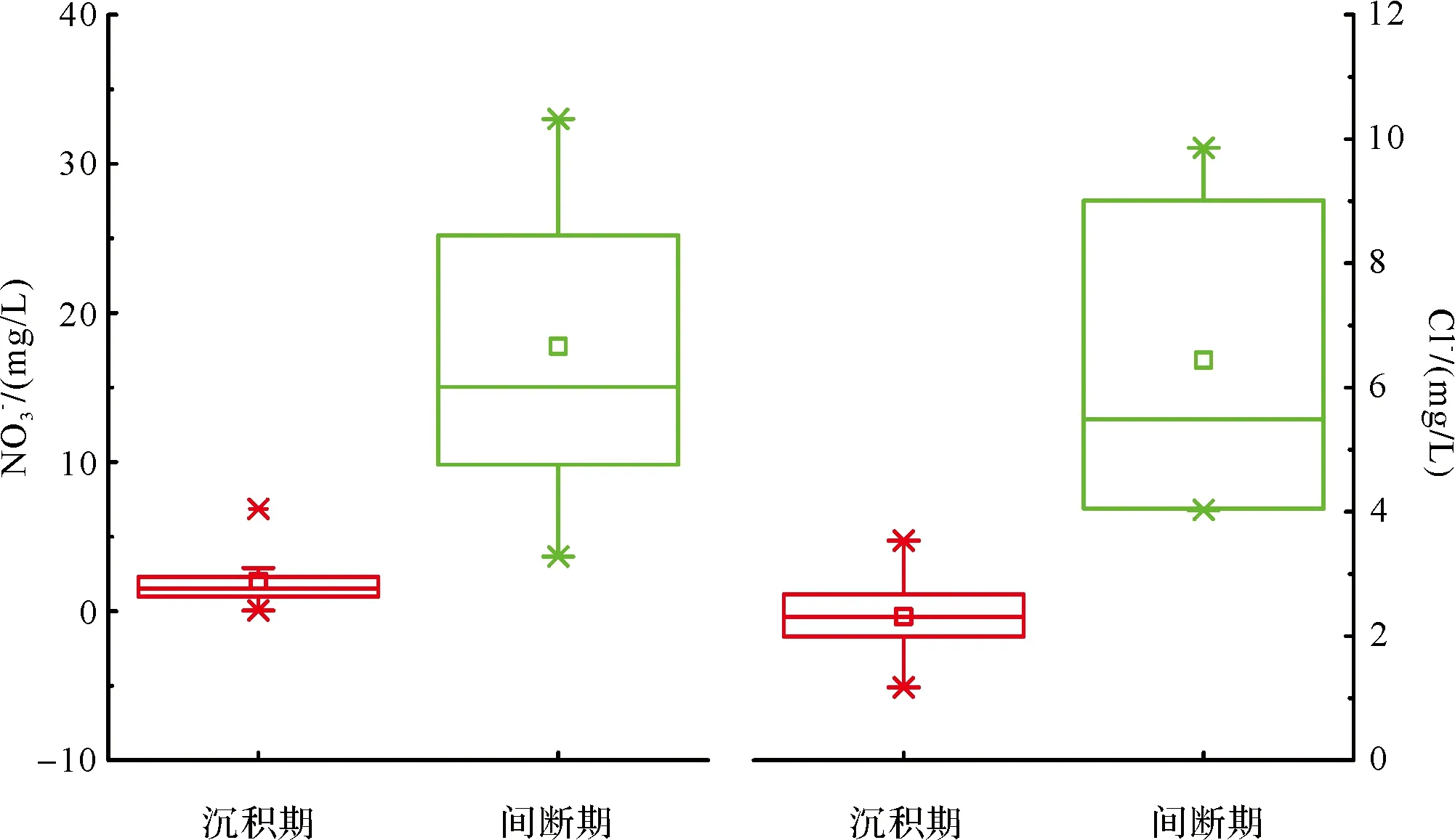
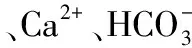
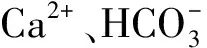
圖4 沉積期與間斷期滴水Cl-和對比Fig.4 Comparisons of Cl- and in drip water between sedimentary and hiatus period

綜合上述分析可以發現雞冠洞現代沉積對水熱條件響應敏感,能夠反映季節、年際間的大氣降水量、滴水滴速、滴水飽和度以及沉積速率,是一種良好的氣候替代指標。但影響洞穴沉積間斷不單是氣候的變化,洞穴自身條件和人為因素也會產生不可忽視的作用。對于石筍沉積間斷的形成、石筍年層計數和環境信息解譯要考慮沉積學的特征,同時對現代洞穴保護尤其進行旱季補水的時候要考慮水質對巖溶作用的影響。
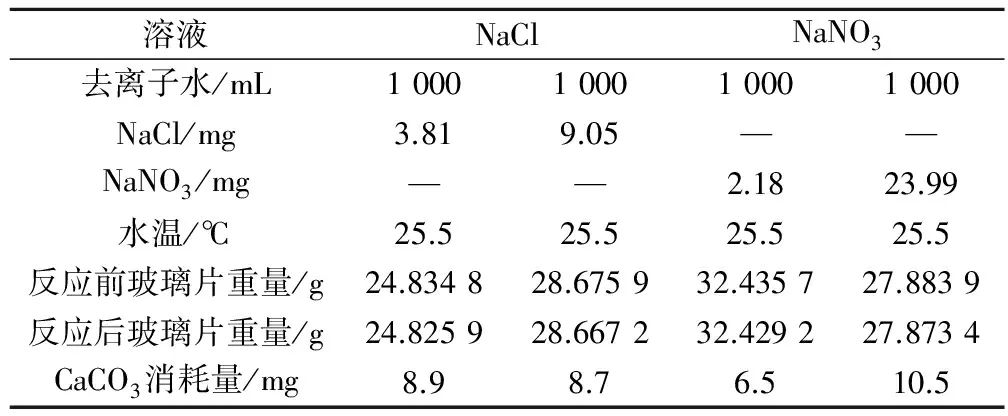
表2 模擬實驗結果
4 結論
基于對雞冠洞洞穴滴水和現代沉積物6個水文年的監測工作,發現洞穴沉積物對氣候變化響應較敏感,是一種良好的氣候替代指標。
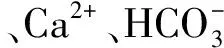
(2) 受2010—2013年年降雨量持續減少的影響,水巖作用減弱,滴水飽和度持續下降,在2014年達到最低,出現為期一年的沉積間斷,直至2014年下半年降水增加,于11月重新接收到方解石沉積。
致謝 感謝西南大學地理科學學院李廷勇副研究員在論文完成過程中給予的有益討論,感謝審稿專家提供的寶貴意見,這對完成本文有很大幫助。
References)
[1] Yuan Daoxian, Cheng Hai, Edwards R L, et al. Timing, duration, and transitions of the last interglacial Asian monsoon[J]. Science, 2004, 304(5670): 575-578.
[2] 楊琰,袁道先,程海,等. 末次冰消期亞洲季風突變事件的精確定年:以貴州衙門洞石筍為例[J]. 中國科學(D輯):地球科學,2010,40(2):199-210. [Yang Yan, Yuan Daoxian, Cheng Hai, et al. Precise dating of abrupt shifts in the Asian Monsoon during the last deglaciation based on stalagmite data from Yamen Cave, Guizhou province, China[J]. Science China(Seri.D): Earth Sciences, 2010, 40(2): 199-210.]
[3] Wang Y J, Cheng H, Edwards R L, et al. A high-resolution absolute-dated Late Pleistocene monsoon record from Hulu Cave, China[J]. Science, 2001, 294(5550): 2345-2348.
[4] Maher B A, Thompson R. Oxygen isotopes from Chinese caves: records not of monsoon rainfall but of circulation regime[J]. Journal of Quaternary Science, 2012, 27(6): 615-624.
[5] Huang Yiming, Fairchild I J. Partitioning of Sr2+and Mg2+into calcite under karst-analogue experimental conditions[J]. Geochimica et Cosmochimica Acta, 2001, 65(1): 47-62.
[6] Dreybrodt W, Scholz D. Climatic dependence of stable carbon and oxygen isotope signals recorded in speleothems: from soil water to speleothem calcite[J]. Geochimica et Cosmochimica Acta, 2011, 75(3): 734-752.
[7] 劉東生,譚明,秦小光,等. 洞穴碳酸鈣微層理在中國的首次發現及其對全球變化研究的意義[J]. 第四紀研究,1997,17(1):41-51. [Liu Dongsheng, Tan Ming, Qin Xiaoguang, et al. Discovery of microbedding in speleothems in China and its significance in the study of global change[J]. Quaternary Sciences, 1997, 17(1): 41-51.]
[8] 周厚云,王悅,黃柳苑,等. 氧同位素階段5c~d時期川東北石筍Mg,Sr和Ba記錄及其意義[J]. 科學通報,2011,56(33):2791-2796. [Zhou Houyun, Wang Yue, Huang Liuyuan, et al. Speleothem Mg, Sr and Ba records during the MIS 5c-d, and implications for paleoclimate change in NE Sichuan, Central China[J]. Chinese Science Bulletin, 2011, 56(33): 2791-2796.]
[9] 邵曉華,汪永進,孔興功,等. 南京葫蘆洞石筍生長速率及其氣候意義討論[J]. 地理科學,2003,23(3):304-309. [Shao Xiaohua, Wang Yongjin, Kong Xinggong, et al. Approach to the growth rate and the climatic significance of stalagmites in Hulu Cave, Nanjing[J]. Scientia Geographica Sinica, 2003, 23(3): 304-309.]
[10] Banner J L, Guilfoyle A, James E W, et al. Seasonal variations in modern speleothem calcite growth in central Texas, U.S.A.[J]. Journal of Sedimentary Research, 2007, 77(8): 615-622.
[11] Duan Wuhui, Cai Binggui, Tan Ming, et al. The growth mechanism of the aragonitic stalagmite laminae from Yunnan Xianren Cave, SW China revealed by cave monitoring[J]. Boreas, 2012, 41(1): 113-123.
[12] Cai Binggui, Zhu Jian, Ban Fengmei, et al. Intra-annual variation of the calcite deposition rate of drip water in Shihua Cave, Beijing, China and its implications for palaeoclimatic reconstructions[J]. Boreas, 2011, 40(3): 525-535.
[13] Hu Chaoyong, Henderson G M, Huang Junhua, et al. Report of a three-year monitoring programme at Heshang Cave, Central China[J]. International Journal of Speleology, 2008, 37(3): 143-151.
[14] Kaufmann G, Dreybrodt W. Stalagmite growth and palaeo-climate: an inverse approach[J]. Earth and Planetary Science Letters, 2004, 224(3/4): 529-545.
[15] 周厚云,王慶,蔡炳貴. 山東開元洞發現典型“北方型”石筍微生長層[J]. 第四紀研究,2010,30(2):441-442. [Zhou Houyun, Wang Qing, Cai Binggui. Typical northern type speleothem micro-layers found in stalagmite ky1 collected from Kaiyuan Cave in Shandong province, North China[J]. Quaternary Sciences, 2010, 30(2): 441-442.]
[16] 張美良,朱曉燕,林玉石,等. 桂林盤龍洞滴水的物理化學指標變化研究及其意義[J]. 地球與環境,2009,37(1):1-10. [Zhang Meiliang, Zhu Xiaoyan, Lin Yushi, et al. Study on the variation of physical-chemical properties of dripping water in the Panlong Cave in Guilin and its significance[J]. Earth and Environment, 2009, 37(1): 1-10.]
[17] Baker A, Genty D, Dreybrodt W, et al. Testing theoretically predicted stalagmite growth rate with recent annually laminated samples: implications for past stalagmite deposition[J]. Geochimica et Cosmochimica Acta, 1998, 62(3): 393-404.
[18] Dreybrodt W, Buhmann D. A mass transfer model for dissolution and precipitation of calcite from solutions in turbulent motion[J]. Chemical Geology, 1991, 90(1/2): 107-122.
[19] 張美良,朱曉燕,李濤,等. 桂林現代洞穴碳酸鹽——石筍的沉積速率及其環境意義[J]. 海洋地質與第四紀地質,2011,31(1):125-132. [Zhang Meiliang, Zhu Xiaoyan, Li Tao, et al. Study on sedimentation rate of modern cave stalagmite carbonate(CaCO3) deposits and its environmental significance: A case from Panlong Cave, Guilin, China[J]. Marine Geology & Quaternary Geology, 2011, 31(1): 125-132.]
[20] 桑文翠,張德忠,王曉鋒,等. 甘肅武都萬象洞方解石現代沉積控制因素分析[J]. 第四紀研究,2013,33(5):936-944. [Sang Wencui, Zhang Dezhong, Wang Xiaofeng, et al. Analysis of modern calcite deposition controlling factors in Wanxiang Cave from Wudu, Gansu[J]. Quaternary Sciences, 2013, 33(5): 936-944.]
[21] Casteel R C, Banner J L. Temperature-driven seasonal calcite growth and drip water trace element variations in a well-ventilated Texas cave: implications for speleothem paleoclimate studies[J]. Chemical Geology, 2015, 392: 43-58.
[22] 張偉,段武輝,吳江瀅,等. 南京葫蘆洞缺失現代沉積的一個重要原因:鹽效應?——與同一氣候條件下安徽蓬萊仙洞的對比觀測研究[J]. 第四紀研究,2012,32(2):361-368. [Zhang Wei, Duan Wuhui, Wu Jiangying, et al. One of the important causes of lack of active speleothem in Nanjing Hulu Cave: salting-in effect?——A comparative study with Penglaixian Cave, Anhui under the same climate conditions[J]. Quaternary Sciences, 2012, 32(2): 361-368.]
[23] 林玉石,張美良,覃嘉銘. 洞穴石筍沉積間斷類型研究[J]. 地質學報,2002,76(1):138-144. [Lin Yushi, Zhang Meiliang, Qin Jiaming. Study on the sedimentary interruption types of stalagmite in cave[J]. Acta Geologica Sinica, 2002, 76(1): 138-144.]
[24] 趙景耀,楊琰,彭濤,等. 河南雞冠洞降水、滴水和現生碳酸鈣的δ18O變化特征及其環流意義[J]. 第四紀研究,2014,34(5):1106-1116. [Zhao Jingyao, Yang Yan, Peng Tao, et al. Variation of δ18O values in the precipitation, cave drip water and modern calcite deposition in Jiguan Cave, Henan province and its atmospheric circulation effect[J]. Quaternary Sciences, 2014, 34(5): 1106-1116.]
[25] 譚明. 環流效應:中國季風區石筍氧同位素短尺度變化的氣候意義——古氣候記錄與現代氣候研究的一次對話[J]. 第四紀研究,2009,29(5):851-862. [Tan Ming. Circulation effect: climatic significance of the short term variability of the oxygen isotopes in stalagmites from monsoonal China——Dialogue between paleoclimate records and modern climate research[J]. Quaternary Sciences, 2009, 29(5): 851-862.]
[26] 譚明. 信風驅動的中國季風區石筍δ18O與大尺度溫度場負耦合——從年代際變率到歲差周期的環流效應(紀念GNIP建網50周年暨葫蘆洞石筍末次冰期記錄發表10周年)[J]. 第四紀研究,2011,31(6):1086-1097. [Tan Ming. Trade-wind driven inverse coupling between stalagmite δ18O from monsoon region of China and large scale temperature——Circulation effect on decadal to precessional timescales[J]. Quaternary Sciences, 2011, 31(6): 1086-1097.]
[27] 劉肖,楊琰,彭濤,等. 河南雞冠洞洞穴水對極端氣候的響應及其控制因素研究[J]. 環境科學,2015,36(5):1582-1589. [Liu Xiao, Yang Yan, Peng Tao, et al. Response and control factors of groundwater to extreme weather, Jiguan Cave, Henan province, China[J]. Environmental Science, 2015, 36(5): 1582-1589.]
[28] 周亮. 河南省欒川縣生態林業可持續發展研究[D]. 長沙:中南林業科技大學,2012. [Zhou Liang. Studies on eco-forestry sustainable development of Luanchuan county in Henan province[D]. Changsha: Central South University of Forestry and Technology, 2012.]
[29] 中華人民共和國區域水文地質普查報告(1:200000)欒川幅I-49-(22)[R]. 鄭州:河南省地質局水文地質管理處,1981. [The Regional Hydrogeological Survey Report in the People’s Republic of China (1:200000) Luanchuan Width I-49-(22)[R]. Zhengzhou: The Hydrogeological Management Department of Geological Bureau in Henan Province, 1981.]
[30] 李珊英,楊琰,李廷勇,等. MIS8—MIS9階段亞洲季風的軌道尺度氣候變率:欒川老母洞石筍記錄[J]. 地質論評,2011,57(5):754-760. [Li Shanying, Yang Yan, Li Tingyong, et al. Asian monsoonal climate variability at orbital scales during the MIS8-MIS 9: based on stalagmite data from Laomu Cave, Henan province, China[J]. Geological Review, 2011, 57(5): 754-760.]
[31] Wigley T M L. WATSPEC: A Computer Program for Determining the Equilibrium Speciation of Aqueous Solutions[M]. London: British Geomorphological Research Group, 1997: 1-48.
[32] 周運超,王世杰,謝興能,等. 貴州4個洞穴滴水對大氣降雨響應的動力學及其意義[J]. 科學通報,2004,49(21):2220-2227. [Zhou Yunchao, Wang Shijie, Xie Xingneng, et al. Significance and dynamics of drip water responding to rainfall in four caves of Guizhou, China[J]. Chinese Science Bulletin, 2004, 49(21): 2220-2227.]
[33] Tooth A F, Fairchild I J. Soil and karst aquifer hydrological controls on the geochemical evolution of speleothem-forming drip waters, Crag Cave, Southwest Ireland[J]. Journal of Hydrology, 2003, 273(1/2/3/4): 51-68.
[34] 張乾柱,熊康寧,劉子琦,等. 洞穴滴水水文化學特征及石漠化效應——以貴州石將軍洞為例[J]. 熱帶地理,20[13,33(3):256-263. [Zhang Qianzhu, Xiong Kangning, Liu Ziqi, et al. Hydro-chemical characteristics of cave drips and rocky desertification effect: A case study of Shi Jiangjun Cave in Guizhou[J]. Tropical Geography, 2013, 33(3): 256-263.]
[35] 郭延偉. 河南雞冠洞巖溶記錄的氧同位素現代過程監測及機理研究[D]. 重慶:西南大學,2013. [Guo Yanwei. Mechanism study of oxygen isotope in karst records based on modern process monitoring of Jiguan Cave, Henan province, China[D]. Chongqing: Southwest University, 2013.]
[37] Dreybrodt W. Deposition of calcite from thin films of natural calcareous solutions and the growth of speleothems[J]. Chemical Geology, 1980, 29(1/2/3/4): 89-105.
[38] Dreybrodt W. The kinetics of calcite precipitation from thin films of calcareous solutions and the growth of speleothems: revisited[J]. Chemical Geology, 1981, 32(1/2/3/4): 237-245.
[39] 張會領,姜光輝,林玉石,等. 洞穴石筍形成過程中的溶蝕作用研究[J]. 地質論評,2012,58(6):1091-1100. [Zhang Huiling, Jiang Guanghui, Lin Yushi, et al. Research on dissolution in the process of stalgmite forming[J]. Geological Review, 2012, 58(6): 1091-1100.]
[40] Genty D, Baker A, Vokal B. Intra-and inter-annual growth rate of modern stalagmites[J]. Chemical Geology, 2001, 176(1/2/3/4): 191-212.
[41] 于昇松,Green W J. 南極洲萬達鹽湖水中方解石飽和指數的垂直變化及其控制因素[J]. 湖泊科學,1992,4(1):79-84. [Yu Shengsong, Green W J. Vertical variation and controlled mechanism of the saturation indices for calcite in Vanda salt lake water, Antarctica[J]. Journal of Lake Sciences, 1992, 4(1): 79-84.]
[42] 劉再華,Dreybrodt W,韓軍,等. CaCO3-CO2-H2O巖溶系統的平衡化學及其分析[J]. 中國巖溶,2005,24(1):1-14. [Liu Zaihua, Dreybrodt W, Han Jun, et al. Equilibrium chemistry of the CaCO3-CO2-H2O system and discussions[J]. Carsologica Sinica, 2005, 24(1): 1-14.]

[44] 閆志為,張志衛. 氯化物對方解石和白云石礦物溶解度的影響[J]. 水文地質工程地質,2009,36(1):113-118. [Yan Zhiwei, Zhang Zhiwei. The effect of chloride on the solubility of calcite and dolomite[J]. Hydrogeology and Engineering Geology, 2009, 36(1): 113-118.]
[45] Amankonah J O, Somasundaran P, Ananthapadmabhan K P. Effects of dissolved mineral species on the dissolution/precipitation characteristics of calcite and apatite[J]. Colloids and Surfaces, 1985, 15: 295-307.
[46] 張興波,蔣勇軍,邱述蘭,等. 農業活動對巖溶作用碳匯的影響:以重慶青木關地下河流域為例[J]. 地球科學進展,2012,27(4):466-476. [Zhang Xingbo, Jiang Yongjun, Qiu Shulan, et al. Agricultural activities and carbon cycling in karst areas in southwest China: dissolving carbonate rocks and CO2sink[J]. Advances in Earth Sciences, 2012, 27(4): 466-476.]
Study on the Influence Factors of Modern Speleothem Hiatus: A case from Jiguan Cave, Henan
SUN Zhe1,2,3,YANG Yan1,2,3,SHI Qiang4,ZHANG Ping1,2,3,LIANG Sha1,2,3,ZHANG Na1,2,3, LIU Xiao1,2,3,NIE XuDong1,2,3,PENG Tao5,LIANG ShengLi6,ZHANG ZhiQin7
1. Key Laboratory of Eco-Environments in Three Gorges Reservoir Region, Ministry of Education, School of Geographical Sciences, Southwest University, Chongqing 400715, China 2. Field Scientific Observation & Research Base of Karst Eco-environments at Nanchuan in Chongqing, Ministry of Land and Resources, Chongqing 408435, China 3. Laboratory of Geochemistry and Isotope, Southwest University, Chongqing 400715, China 4. No.1 Institute of Geological Mineral Resources Survey, Henan Bureau of Geo-exploration and Mineral Development, Luoyang,Henan 471023, China 5. Hubei Key Laboratory for Heavy Rain Monitoring and Warning Research, Institute of Heavy Rain, China Meteorological Administration, Wuhan 430074, China; 6. Luanchuan Meteorological Bureau, Luanchuan,Henan 471500, China; 7. Administrative Office of Jiguan Cave Scenic Spot, Luanchuan,Henan 471500, China
1000-0550(2017)01-0093-09
10.14027/j.cnki.cjxb.2017.01.010
2016-02-14;收修改稿日期: 2016-03-30
國家自然科學基金項目(41372177,40902053);高等學校博士學科點專項科研基金項目(20090182120005);中央高校基本科研業務費專項(XDJK2011B004)[Foundation: National Natural Science Foundation of China, No.41372177, 40902053; Specialized Research Fund for the Doctoral Program of Higher Education, No.20090182120005; Fundamental Research Funds for the Central Universities, No.XDJK2011B004]
孫喆,男,1992年出生,碩士研究生,全球變化研究,E-mail: michael2482004@126.com
楊琰,男,博士,副教授,E-mail: yy2954@gmail.com
P642.25
A
猜你喜歡
體育科技文獻通報(2022年3期)2022-05-23 13:46:54
天津外國語大學學報(2021年3期)2021-08-13 08:32:18
遼金歷史與考古(2021年0期)2021-07-29 01:06:54
科技傳播(2019年22期)2020-01-14 03:06:54
遼金歷史與考古(2019年0期)2020-01-06 07:45:20
民用飛機設計與研究(2019年4期)2019-05-21 07:21:24
電子制作(2018年11期)2018-08-04 03:26:04
汽車工程學報(2017年2期)2017-07-05 08:13:02
國際商務財會(2017年8期)2017-06-21 06:14:14
電子制作(2017年23期)2017-02-02 07:17:19