基于統(tǒng)一矢量模型的無刷雙饋電機(jī)的轉(zhuǎn)速控制
2017-06-23 13:27:14段琦瑋盧偉甫
自動化儀表 2017年6期
段琦瑋,劉 石,龍 騰,盧偉甫,李 冰
(1.華北電力大學(xué)能源動力與機(jī)械工程學(xué)院,北京 102206;2.劍橋大學(xué)工程系,劍橋 CB21TN;3.華北電力大學(xué)電氣與電子工程學(xué)院,北京 102206)
基于統(tǒng)一矢量模型的無刷雙饋電機(jī)的轉(zhuǎn)速控制
段琦瑋1,劉 石1,龍 騰2,盧偉甫3,李 冰1
(1.華北電力大學(xué)能源動力與機(jī)械工程學(xué)院,北京 102206;2.劍橋大學(xué)工程系,劍橋 CB21TN;3.華北電力大學(xué)電氣與電子工程學(xué)院,北京 102206)
在風(fēng)力發(fā)電領(lǐng)域,無刷雙饋電機(jī)(BDFM)因其具有代替?zhèn)鹘y(tǒng)雙饋感應(yīng)電機(jī)(DFIM)的潛力而受到廣泛關(guān)注。目前,對BDFM的模型改進(jìn)和控制方法的研究是國內(nèi)外專家學(xué)者的研究熱點(diǎn)。針對BDFM缺少一個(gè)有利于進(jìn)行控制分析的轉(zhuǎn)矩方程這一問題,通過對統(tǒng)一矢量模型的研究,給出了兩種簡便的BDFM轉(zhuǎn)矩方程表達(dá)式,即兩定子繞組電流矢量的乘積、兩定子繞組磁鏈?zhǔn)噶康某朔e。應(yīng)用轉(zhuǎn)矩方程進(jìn)行轉(zhuǎn)速控制系統(tǒng)分析,提出了轉(zhuǎn)速的電流滯環(huán)控制,并搭建了雙PWM變頻調(diào)速平臺進(jìn)行試驗(yàn)研究。通過將理論計(jì)算轉(zhuǎn)矩值與實(shí)測電磁轉(zhuǎn)矩值進(jìn)行對比,證明了轉(zhuǎn)矩方程推導(dǎo)結(jié)果的準(zhǔn)確性,驗(yàn)證了電流滯環(huán)控制的良好控制效果及解耦性。基于統(tǒng)一矢量模型的BDFM轉(zhuǎn)矩方程,將給控制策略的研究帶來很大便利,同時(shí)有利于電機(jī)機(jī)電特性的分析。
風(fēng)力發(fā)電; 控制器; 雙PWM變流器; 轉(zhuǎn)速控制; 感應(yīng)電機(jī); 轉(zhuǎn)矩方程; 解耦效果
0 引言
無刷雙饋電機(jī)(brushless doubly fed machine,BDFM)由于不存在電刷和滑環(huán)結(jié)構(gòu),維護(hù)成本低于普通雙饋感應(yīng)電機(jī)(doubly fed induction machine,DFIM),在大型風(fēng)力發(fā)電和海上風(fēng)電項(xiàng)目中具有良好應(yīng)用前景。目前,國內(nèi)外學(xué)者已經(jīng)對BDFM進(jìn)行了大量的研究工作[1-5]。 Wallace等提出了考慮籠型結(jié)構(gòu)的詳細(xì)數(shù)學(xué)模型[6],并基于此模型提出了雙軸模型[7]。Poza等提出了一種新型的矢量控制方法[8],將轉(zhuǎn)子籠型等效為一個(gè)環(huán)路[9]。Shao等提出了功率繞組磁鏈定向矢量控制方法[10-11],同樣可以控制轉(zhuǎn)速與無功功率。Farhad提出了無刷雙饋電機(jī)的統(tǒng)一矢量模型[12],該模型考慮了轉(zhuǎn)子籠型結(jié)構(gòu)中所有回路的影響;基于統(tǒng)一矢量模型,其又提出了轉(zhuǎn)子磁鏈定向模型[13]和統(tǒng)一矢量模型控制[14]。
本文通過BDFM的統(tǒng)一矢量模型,得出新型的轉(zhuǎn)矩方程表達(dá)式。在功率繞組磁鏈定向模型中,基于所提出的簡便轉(zhuǎn)矩方程,推導(dǎo)出BDFM的電磁轉(zhuǎn)矩與控制繞組q軸電流成正比關(guān)系,并提出了轉(zhuǎn)速控制策略。
1 BDFM的統(tǒng)一矢量模型
1.1 統(tǒng)一矢量模型方程
無刷雙饋電機(jī)由兩個(gè)獨(dú)立的定子繞組和一個(gè)特殊結(jié)構(gòu)的轉(zhuǎn)子組成。一個(gè)定子繞組直接與電網(wǎng)相連接,稱為功率繞組(power windings,PW);另一定子繞組由功率變換器供電,稱為控制繞組(control windings,CW)。本文研究所用樣機(jī)為籠型BDFM。BDFM的統(tǒng)一矢量模型方程如下[15]:
(1)
(2)
(3)
(4)
(5)
(6)

(7)
η=p1φr-θs1-p1θr
(8)
γ=p1φr+θs2+p2(θr-ζ)
(9)
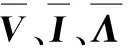
統(tǒng)一矢量模型坐標(biāo)系考慮了轉(zhuǎn)子每個(gè)籠型中所有回路的影響,對電機(jī)的動靜態(tài)性能預(yù)測比傳統(tǒng)的轉(zhuǎn)子速d-q模型更加準(zhǔn)確[15]。同時(shí),通過對φr、θs1、θs2取不同的值,可以得到不同的坐標(biāo)系模型,給控制方法的研究帶來很大便利。本文中統(tǒng)一矢量模型坐標(biāo)系取定子功率繞組磁鏈定向坐標(biāo)。
1.2 選取坐標(biāo)變換角
(10)
式中:ω1為功率繞組電壓頻率;ωr為電機(jī)角速度。
同時(shí),由于φr的值可確定,故由此給出功率繞組磁鏈定向的統(tǒng)一矢量模型方程如下:
(11)
(12)
(13)
(14)
(15)
(16)
(17)
在功率繞組磁鏈定向坐標(biāo)系中[10],有:
(18)
(19)
因此功率繞組變量的旋轉(zhuǎn)變換角可給定:
(20)

根據(jù)式(8),有:
(21)
將式(21)代入式(9),得:
(22)
根據(jù)式(20)~式(22),可確定自由變量φr、θs1、θs2的值。本文試驗(yàn)所用樣機(jī)ζ的值為π/4。下一節(jié)將基于式(11)~式(17),推導(dǎo)轉(zhuǎn)子電流矢量、轉(zhuǎn)子磁鏈?zhǔn)噶俊⒖刂评@組磁鏈?zhǔn)噶客β世@組磁鏈的關(guān)系。
1.3 轉(zhuǎn)子電流和磁鏈?zhǔn)噶糠匠?/p>
根據(jù)式(14)~式(16),可得:
(23)

(24)
(25)

(26)

根據(jù)式(23)~式(25),可得轉(zhuǎn)子電流矢量方程:
(27)
根據(jù)式(14)、式(16)、式(24)~式(26),可得轉(zhuǎn)子磁鏈?zhǔn)噶糠匠?
(28)
根據(jù)式(27)和式(28),可得轉(zhuǎn)子電流矢量和磁鏈?zhǔn)噶康谋磉_(dá)式:
(29)
(30)
2 簡化轉(zhuǎn)矩表達(dá)式的推導(dǎo)
將式(14)、式(15)、式(29)和式(30)代入轉(zhuǎn)矩方程式(17),可得到轉(zhuǎn)矩表達(dá)式:
(31)
對式(31)進(jìn)行變換,可得:
(32)
式(31)和式(32)中,Im{}為取變量的虛部。
由式(31)、式(32)可知,BDFM的簡化轉(zhuǎn)矩方程同DFIM的轉(zhuǎn)矩方程具有相同的形式[16]。由于對雙饋感應(yīng)電機(jī)控制方法的研究已經(jīng)較為成熟,因此可以借鑒DFIM中的方法來控制BDFM。式(31)和式(32)的轉(zhuǎn)矩值預(yù)測準(zhǔn)確性將在試驗(yàn)中進(jìn)行驗(yàn)證。
3 電流滯環(huán)轉(zhuǎn)速控制
將式(14)和式(29)代入式(32),可得:
(33)
(34)


圖1 電流滯環(huán)轉(zhuǎn)速控制系統(tǒng)框圖

4 試驗(yàn)驗(yàn)證

4.1 轉(zhuǎn)速梯形變化響應(yīng)
轉(zhuǎn)速梯形變化時(shí)的響應(yīng)曲線如圖2所示。

圖2 轉(zhuǎn)速梯形變化響應(yīng)曲線
樣機(jī)負(fù)載轉(zhuǎn)矩約為3 N·m,可以認(rèn)為空載狀態(tài)。由圖2 (b)可知,式(31)和式(32)的轉(zhuǎn)矩計(jì)算結(jié)果同實(shí)測樣機(jī)轉(zhuǎn)矩基本吻合,誤差主要由參數(shù)計(jì)算誤差造成。同時(shí),統(tǒng)一矢量模型沒有考慮鐵芯損耗和飽和的影響,也會與實(shí)際測量值有偏差[15]。
4.2 負(fù)載轉(zhuǎn)矩階躍變化響應(yīng)
電機(jī)負(fù)載轉(zhuǎn)矩階躍變化時(shí)的響應(yīng)曲線如圖3所示。

圖3 負(fù)載轉(zhuǎn)矩變化響應(yīng)曲線
電機(jī)空載啟動后加負(fù)載至大約150 N·m,經(jīng)過約1 s后變?yōu)榭蛰d狀態(tài)。期間轉(zhuǎn)速最大波動大約為8 r/min。功率繞組電流和控制繞組電流的幅值都增大,以輸出負(fù)載轉(zhuǎn)矩所需功率。式(31)和式(32)的測量計(jì)算結(jié)果同實(shí)測轉(zhuǎn)矩基本吻合。
轉(zhuǎn)速環(huán)解耦效果試驗(yàn)結(jié)果如圖4所示。

圖4 轉(zhuǎn)速環(huán)解耦效果試驗(yàn)結(jié)果示意圖

5 結(jié)束語

[1] GHAFFARPOUR A,BARATI F,ORAEE H.Implementation of drirect torque control method on brushless doubly fed induction machines in unbalenced situations[C]//Power Electronics and Drive System Technologies Conference,2016:70-75.
[2] STROUS T,WANG X,POLINDER H.Brushless doubly-fed induction machines:magnetic-field analysis[J].IEEE Transactions on Magnetics,2016,52(11):1.
[3] STROUS T D,WANG X,POLINDER H.Saturation in brushless doubly-fed induction machines[C]//Let Power Electronics,Machines and Drives Conference,2016.
[4] LIU Y,AI W,CHEN B.Control design and experimental verification of the brushless doubly-fed machine for stand-alone power generation applications[J].Electric Power Applications Iet,2015,10(1):25-35.
[5] WANG X,LIN H.DC-link current estimation for load-side converter of brushless doubly-fed generator in the current feed-forward control[J].IET Power Electronics,2016,9(8):1703-1710.[6] WALLACE A K,SPEE R,LAUW H K.Dynamic modeling of brushless doubly-fed machines[C]//Industry Applications Society Meeting,1989.
[7] LI R,WALLACE A,SPEE R.Two-axis model development of cage-rotor brushless doubly-fed machines[J].IEEE Transactions on Energy Conversion,1991,6(3):453-460.[8] POZA J,OYARBIDE E,ROYE D.New vector control algorithm for brushless doubly-fed machines[C]//IECON,2002.
[9] POZA J,OYARBIDE E,ROYE D.Unified reference frame dq model of the brushless doubly fed machine[J].Electric Power Applications Iee Proceedings,2006,153(5):726-734.
[10]SHAO S,ABDI E,MCMAHON R.Vector control of the brushless doubly-fed machine for wind power generation[C]//IEEE International Conference on Sustainable Energy Technologies,2008:322-327.
[11]SHAO S,ABDI E,BARATI F.Stator-flux-oriented vector control for brushless doubly fed induction generator[J].IEEE Transactions on Industrial Electronics,2009,56(10):4220-4228.
[12]BARATI F,ORAEE H,ABDI E.Derivation of a vector model for a brushless doubly-fed machine with multiple loops per nest[C]//2008 IEEE International Symposiu on Industry Electronics,2008:606-611.
[13]BARATI F,ORAEE H,ABDI E.The brushless doubly-fed machine vector model in the rotor flux oriented reference frame[C]//2008 34th Annual Conference on IEEE Industry Electrowics,2008:1415-1420.
[14]BARATI F,MCMAHON R,SHAO S.Generalized vector control for brushless doubly fed machines with nested-loop rotor[J].IEEE Transactions on Industrial Electronics,2013,60(6):2477-2485.
[15]BARATI F,SHAO S,ABDI E.Generalized vector model for the brushless doubly-fed machine with a nested-loop rotor[J].IEEE Transactions on Industrial Electronics,2011,58(6):2313-2321.
[16]PENA R,CARDENAS R,ASHER G.Overview of control systems for the operation of dfigs in wind energy applications[J].IEEE Transactions on Industrial Electronics,2013,60(7):2776- 2798.
Speed Control Based on Generalized Vector Model for Brushless Doubly Fed Machine
DUAN Qiwei1,LIU Shi1,LONG Teng2,LU Weifu3,LI Bing1
(1.School of Energy,Power and Mechanical Engineering,North China Electric Power University,Beijing 102206,China;2.Department of Engineering,University of Cambridge,Cambridge CB21TN,UK;3.School of Electrical & Electronic Engineering,North China Electric Power University,Beijing 102206,China)
In wind power generation field,the brushless doubly fed machine (BDFM) has
wide attention because of the possibility to substitute the traditional doubly fed induction machine (DFIM).At present,the research on model improvement and control method of BDFM has become the hotspot for domestic and foreign experts.Aiming at the problem that BDFM lacks of a torque equation that is useful for control analysis,through researching the generalized vector model,two types of simplified expressions of BDFM are given,which are the product of the two stator current vectors,and the product of the tow stator flux vectors.The speed control system is analyzed using torque equation,and the current hysteresis control is proposed,and the dual PWM variable frequency speed control platform is built for conducting experimental research.Through comparing the theoretical calculated torque and the torque measured,the correctness of theoretical deduction for torque is proved,and the good control performance and decoupling performance of the current hysteresis control strategy has also been verified.The torque equation BDFM based on generalized vector model facilitates the research on the control strategy and is useful for analysis of the electromechanical characteristic of the machines.
Wind power generation; Controller; Dual PWM converter; Speed control; Induction machine; Torque equation;Decoupling effcet
國家自然科學(xué)基金資助項(xiàng)目(61571189)、高等學(xué)校學(xué)科創(chuàng)新引智計(jì)劃基金資助項(xiàng)目(“111”計(jì)劃)(B13009)
段琦瑋(1988—),男,在讀博士研究生,主要從事電機(jī)控制方向的研究。E-mail:dqwforfly@163.com。 劉石(通信作者),男,博士,教授,主要從事可再生能源系統(tǒng)的燃燒與檢測方法、分布式能源的研究。 E-mail:liushidr@yahoo.com。
TH-39;TP2
A
10.16086/j.cnki.issn1000-0380.201706001
修改稿收到日期:2017-01-10