China Cup Sailing Club Restaurant 中國杯帆船會所餐廳
2017-11-03 19:13:12
世界建筑導報 2017年5期
China Cup Sailing Club Restaurant 中國杯帆船會所餐廳
項目地址:中國深圳
項目時間:2017年3月
項目面積:室內148平米 庭院115平米
設計公司:水平線空間設計有限公司
主案設計:琚賓
設計:潘琴超 胡曜 胡凱 劉小琳 雷星月 趙宇夢
撰文:琚賓
攝影:井旭峰
撰文:琚賓
Location: Shenzhen, China
Completion year: 2017.03
Site Area: interior 148m2courtyard 115m2
Design Company: Horizontal Space Design
Lead Designer: Ju. Bin
Design group: Pan Qinchao, Hu Yao, Hu Kai, Liu Xiaolin, Lei
Xingyue, Zhao Yumeng
Article: Ju. Bin
Photography: Jing. Xufeng
Text: Ju. Bin
東 西
“東”“西” 是個好詞,含方位代五行,囊括空間概念、文化屬性,還泛指各種具體或抽象的人、事、物……這次剛巧也是兩個字的餐廳名是好友曉昱起的,而這地方,也就按照這名字生長了出來。
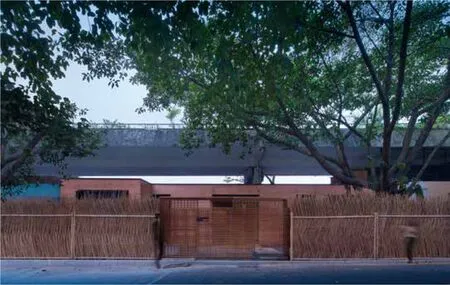
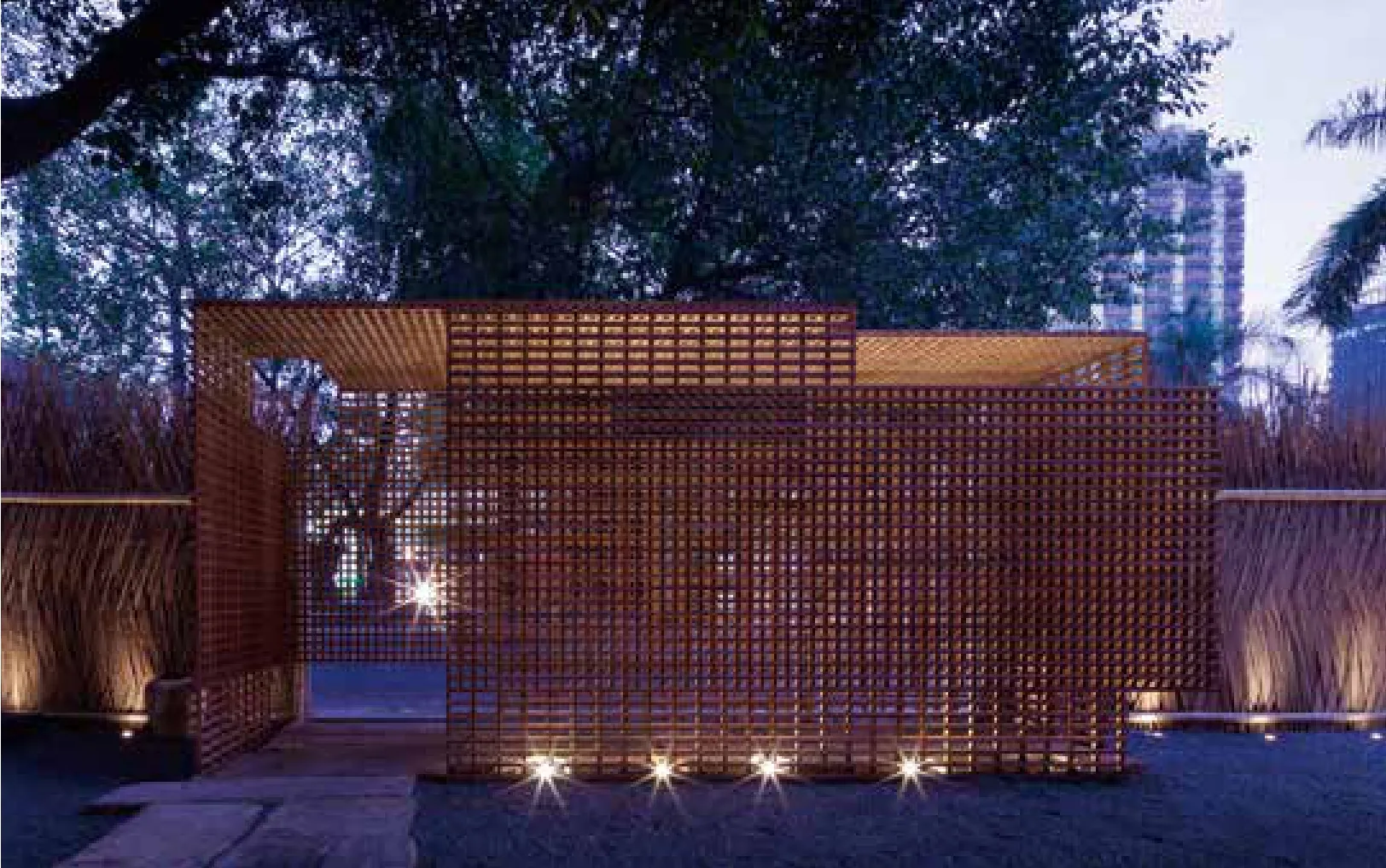
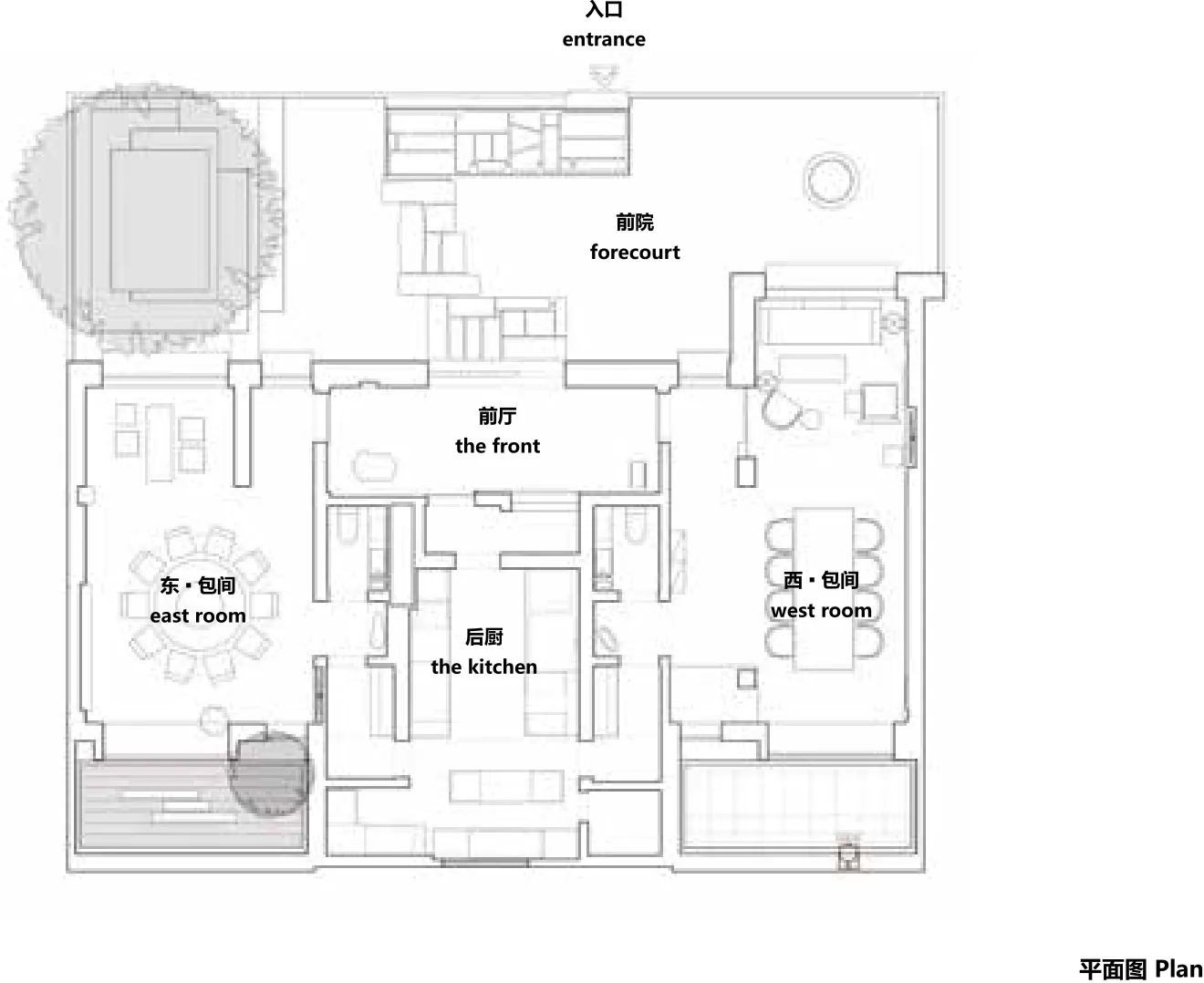
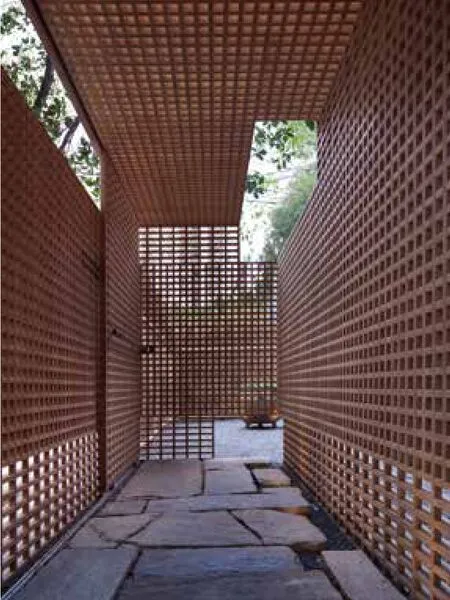
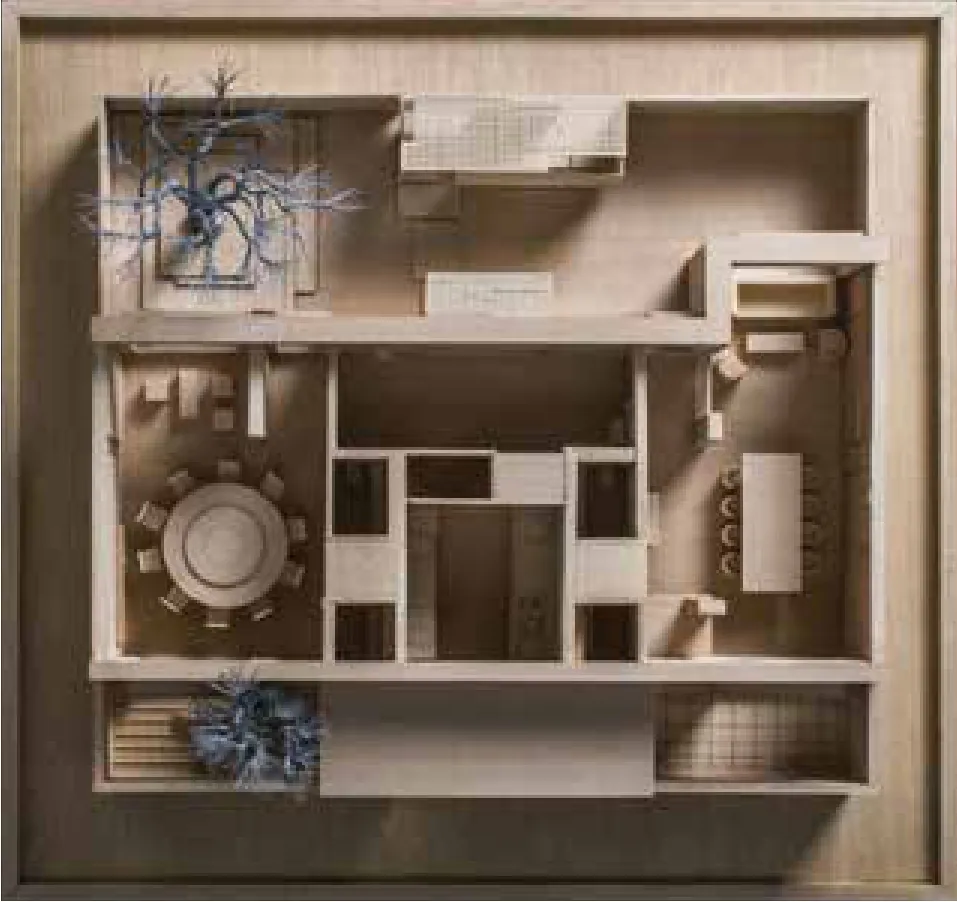
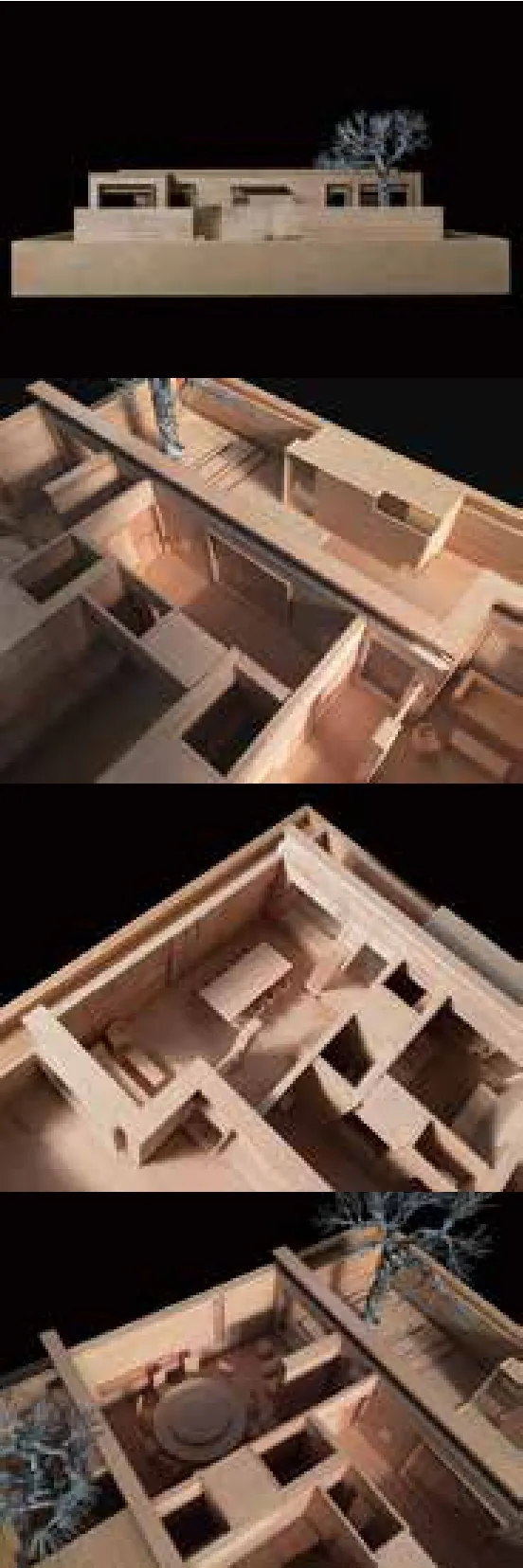
素竹欄桿,暗沙庭院,五人合抱粗的大榕樹佇立眼前。這是進入后的確切模樣,當然這景象站在做舊的「東西」鋼質門牌外也能隱約瞧得見。無論進來多少次,我仍然喜歡這竹鋼做的入戶裝置的很,鏤空、曲折,不強硬不生分,不刻意制造距離感,于是廣納各種氣息,于是更能通幽。上臺階的老石頭是別地里尋來的,當然鋪路的也是,間中會有那么幾塊因為有著礦物的關系還會有著細碎的安靜的反光。榕樹很適宜在赤紅壤上生長,但長的剛剛好還和院子配搭的剛剛巧的這一棵,的確是更應該贏得更多喜愛的,而事實上,整個空間的平面布局、動線都是源于此樹。鋼板包邊的臺階圍著樹一級一級地漫下來,內里盛滿著黑沙,像緩慢流動著的水,將「東西」里的風景蕩漾的很好看。
The East & West
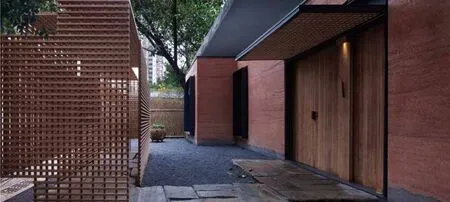
"Dong Xi" is a fantastic Chinese word, East & West in English, which stands for both the positions and the Taoistic theory of the Five Elements, including the spatial concept, cultural attributes, and generally refers to a variety of speci fi c or abstract people, things, objects... and so this place “grew”.
A huge banyan tree stands ahead. The plane layout and the circulation of the entire space are derived from this tree. Banyan trees are always found in the red earth. This one grows as well as it just matches the courtyard. The fl ight edged with the steel plates comes down step by step, full of black sand like the water running slowly, setting o ff the scenery in "Dong Xi".
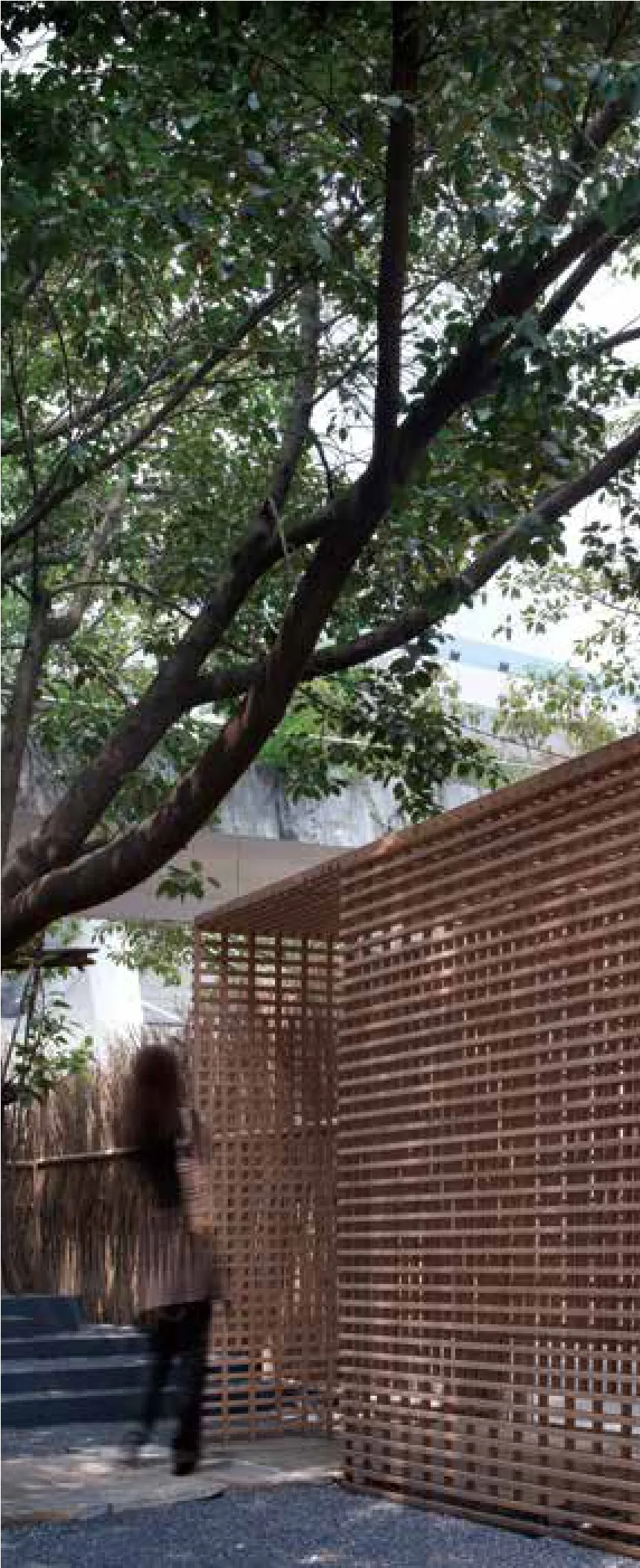
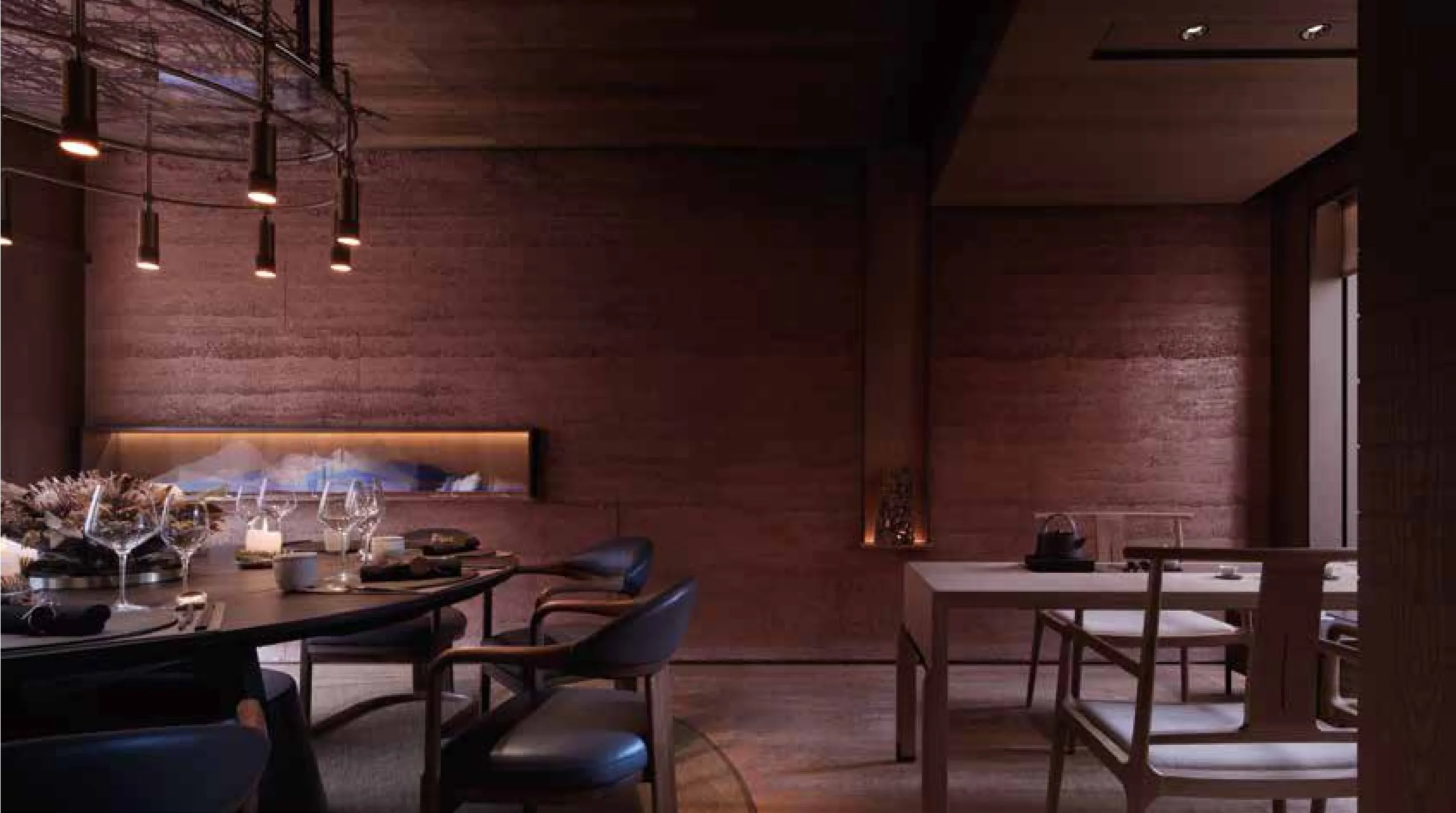
我對夯土墻一直有感情,除卻暗含文化底蘊、歷史悠久、生態環保、防水抗震、耐久等等外,主要,還好看。這是能與空氣同呼吸與時光共韻律的材料,摸著「東西」的外墻壁,我能感受到來自大自然的力量。
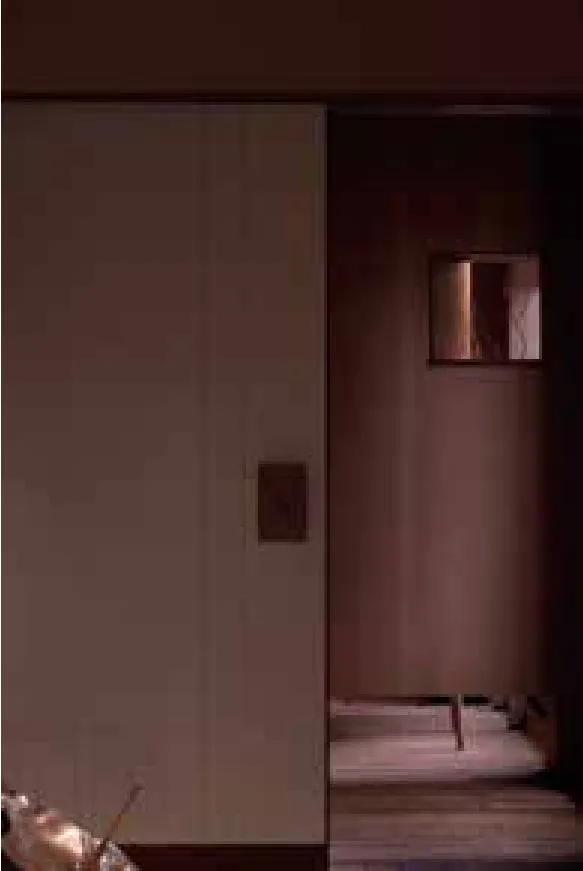
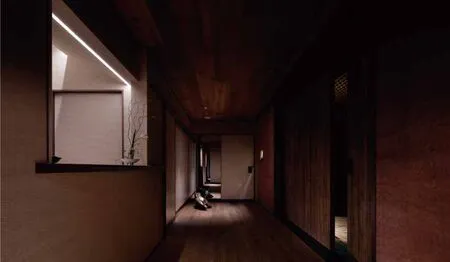
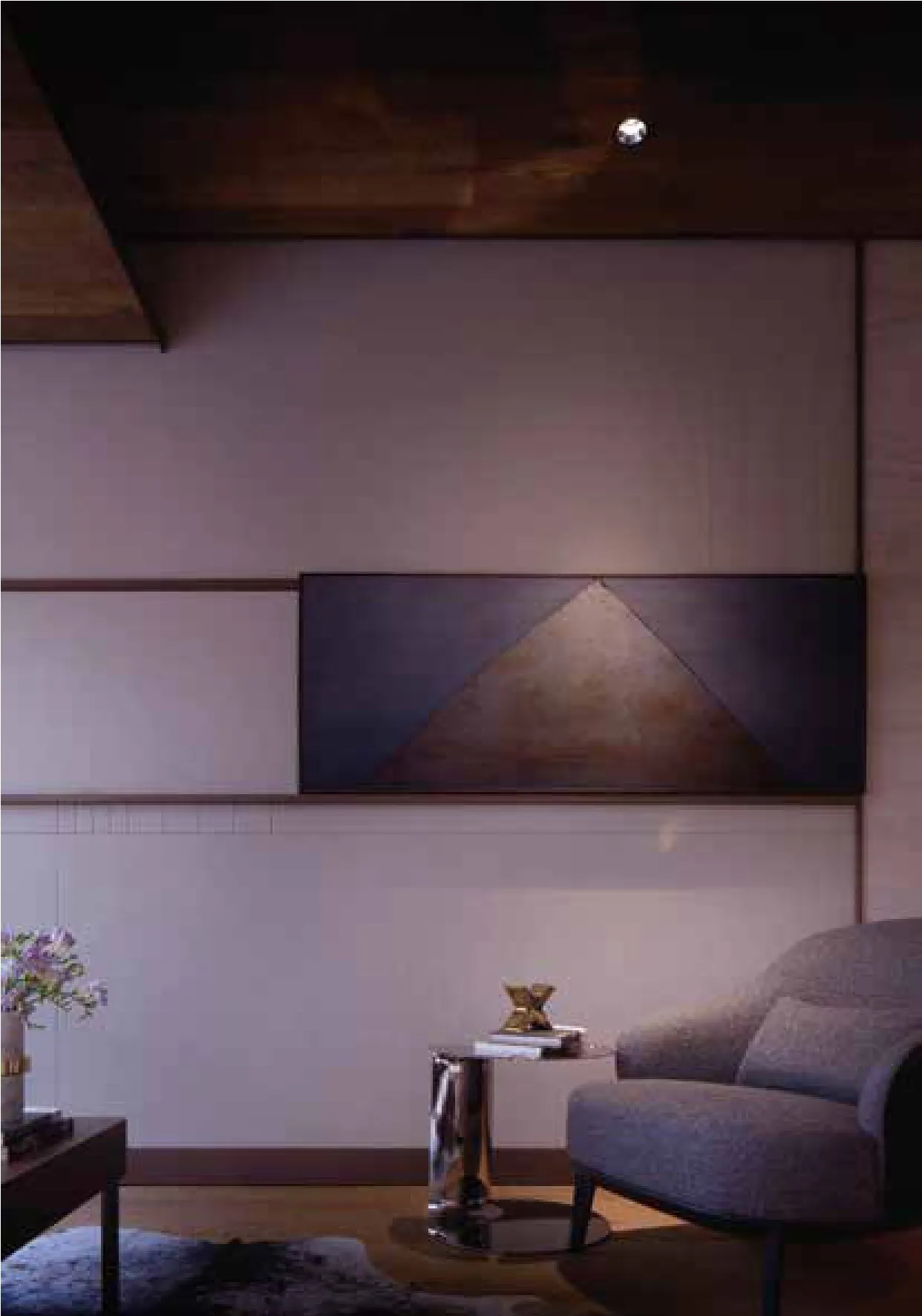
「東西」不僅僅是字面意思,其就是分為東和西兩邊。除了東學西漸,還能在東西對景里將東邊的透漏玄機和西邊的建構方式來東張西望。手工門把手是特意定制的,墻體內鑲嵌的光條是體現與打破常規韻律的關鍵,內里或外部的各種裝置是根據空間關系所需,轉化成為藝術視覺的動因。還有看著隨意實則根據美學拼貼的墻面模式、裸露了單肩沒收口的柱子、燈的形狀和燈上面緣于基弗展覽的樹枝……我很喜歡這些小細節,所有的感受都是源于對設計對生活的熱愛。體會這從東到西的豐富和小中見大的視覺經驗感受,或許會驚訝此處僅僅只有一百平米的面積。
鑿石板為屏山造境,風斜雨細嶺南。勒杜鵑怯怯地只開了幾朵,在一旁靜靜默候,爬藤初到,還沒放開了生長。倒是山下方老瓦空隙間的雜草很開心地隨意伸展著,像一畦畦微縮的田地。樹脂做的透明半透明的山在延綿在一邊各種遠近地起伏著,呼應著前后。智能化設計后的燈光打下來,圍了個圈,將柴窯燒的粗杯子、各式素胚或描金的大碟小碗的都收攏了進去,燃久了的燭芯歡跳著,映得那些簡單式樣的器物很是精致。桌上的臉也都被這些光柔了膚美了顏,不論性別或關系的親近疏遠,都覺得特別的順心、養眼。我很喜歡這些對末節的照顧和人文關懷,覺得這是好設計成立的前提。
The bamboo steel installation at the entrance, hollow and twisty;you can even see the scene vaguely standing outside, through the doorplate with old-made steel; the power from the nature can be felt, when touching the exterior wall of "Dong Xi".
Door handles are handmade and specially tailored; the light bars built in the wall are the key to embodying and breaking the conventional rhythm. The various installations inside or outside are the motive of converting into art vision, required by the spatialrelationship. In addition, there are seemingly causal wall patterns which are actually tiled according to the aesthetics, pillar with one unfinished side, and the shape of the lamps on which there are branches derived from the Anselm Kiefer’s exhibition... All these feelings come from the love of design and life. Experiencing the richness from the east to the west and the visual feelings of “much in little”, you might surprise about the area of only 100 square meters here.
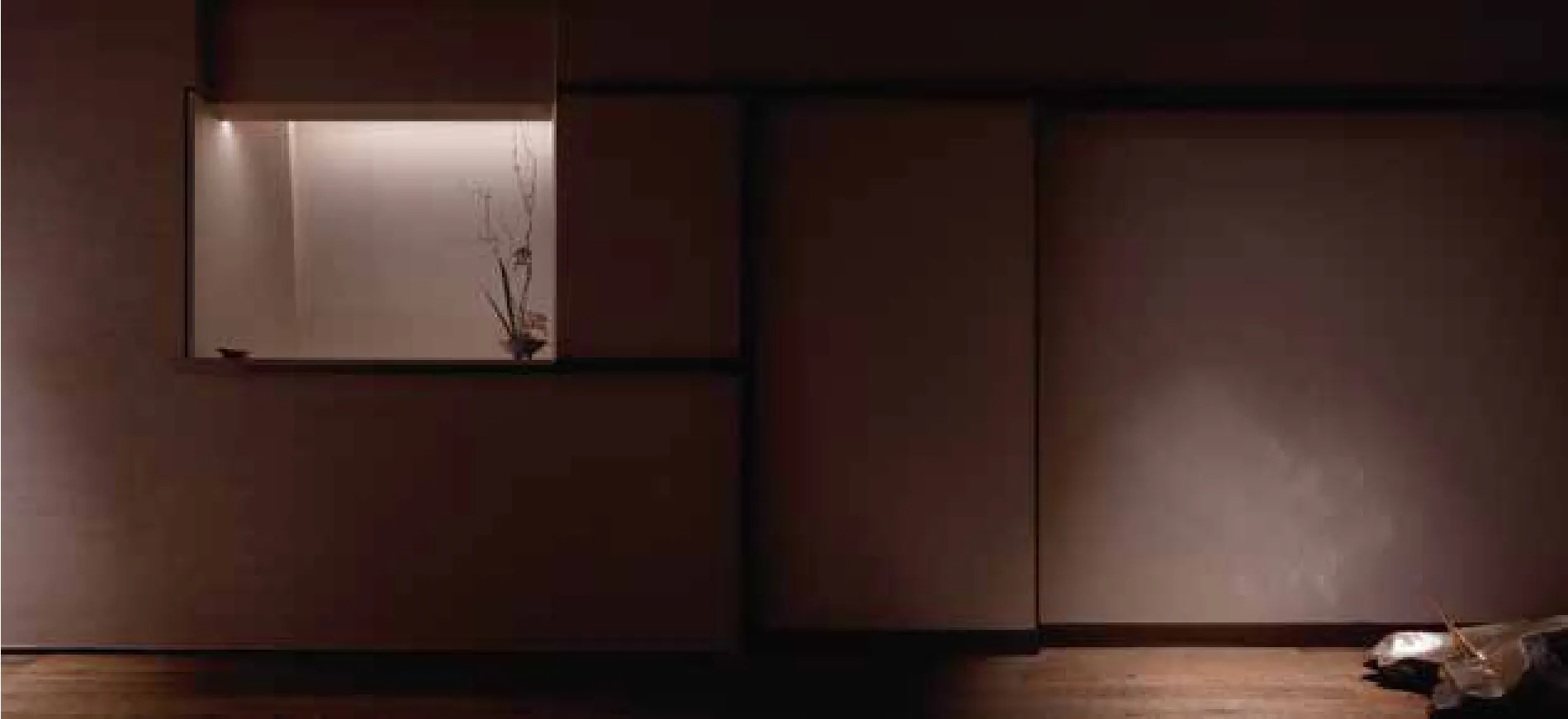
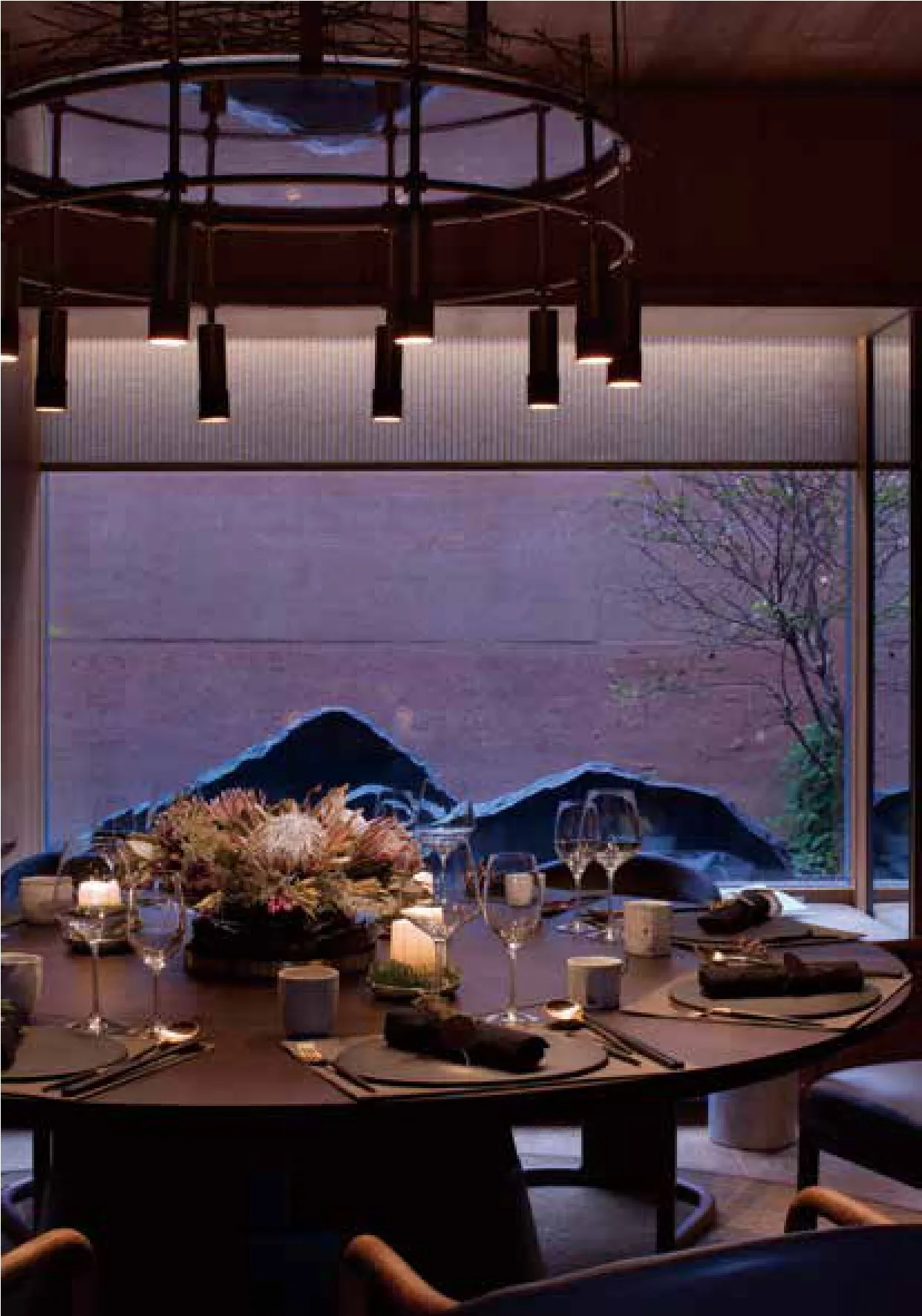
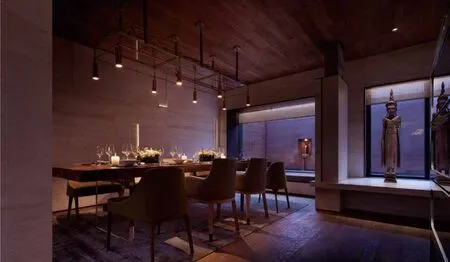
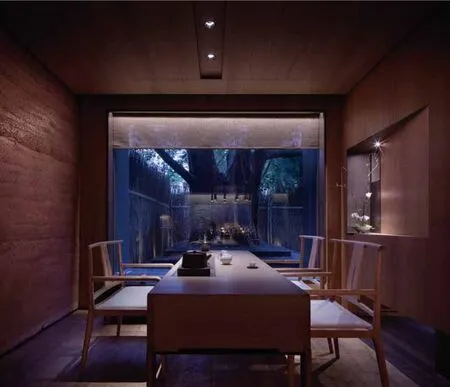
直徑一米二的木頭是有點難得,尤其還有著四米的長度。但既然已經是木頭,讓其繼續生長在空間里,也算是對生命的另一種致敬。賓客伴著這大樹干兩兩相對,將自身融進風景去溫潤了空間,繼而形成能量場。我喜歡這個空間可能更多一些,因為那循環的水景是一層一層遞進的,水是一疊一疊落下去的,水波套著水波晃著燈光和夜色,像停止了的時空又像無所住的心。茶色的有機玻璃和燈一起懸在桌子上方,映出那池那水,聊的久了一時恍惚,有些分不清上下。皮革和大理石借用銅去來搭接軟硬之間的關系,是種很和諧的組合。入口處繃著雙層紗的隔斷將人影配出了舊畫卷的觀感,超以象外,得其環中,面孔隱去,萬物興現。
「東西」兩處呼應中又各不相同,近庭院的兩處茶臺各有風格,情境的營造也是各有定義,但想表達并體現的是同一種人與境的共處藝術,一種在世間“順人而不失己”的心境,一種富足且有積極倡導意味的價值取向。體現在沖到恰好的茶中、服務人員特別訂制的香云紗衣角中、食材品質的把控中、藝術擺件的選取中……
從燕禮到雅聚或微醺,興盡人散,各自東西。
It’s infrequent, which a wood is 1.2 meters thick and 4 meters long, guests sit in pairs nearby the trunk, merging into the scene and creating a pleasant atmosphere in the space, the energy field is formed. Circulating water scene is multi-layered, falls down stack by stack, waves cover the waves. Brown Plexiglas and lights hang over the table, reflecting the pool water. The relationship of soft and hard is expressed by Leather and marble with copper.The partition made of double-layer screen at the entrance gives fi gures a view of the old picture.
“East” area and “West” area coordinates each other but differ to each other.Two tea tables near the courtyard have respective styles and create di ff erent atmosphere. A coexistence art is expressed between human and environment, a state of mind “keep pace with others without losing yourself”, a value orientation of richness and active advocating. They can be found in the decent made tea,the attendants’ specially tailored clothing made of cambered Guangdong gauze,the control of food material quality, the choice of art decorations...
From dining to chatting to being slightly drunk, after the enthusiasm, everyone parts to the east or the west.

猜你喜歡
小讀者(2021年2期)2021-03-29 05:03:48
現代裝飾(2020年7期)2020-07-27 01:27:42
流行色(2020年1期)2020-04-28 11:16:38
瘋狂英語·新悅讀(2019年11期)2019-12-18 05:14:16
華人時刊(2019年13期)2019-11-17 14:59:54
NBA特刊(2018年21期)2018-11-24 02:48:04
文苑(2018年22期)2018-11-19 02:54:14
藝術啟蒙(2018年7期)2018-08-23 09:14:18
海峽姐妹(2017年7期)2017-07-31 19:08:17
Coco薇(2017年5期)2017-06-05 08:53:16