世界經濟主要指標
2017-11-16 02:30:29國家統計局國際統計信息中心
全球化 2017年10期
關鍵詞:經濟
國家統計局國際統計信息中心
·國際統計數據·
世界經濟主要指標
國家統計局國際統計信息中心
一、世界經濟
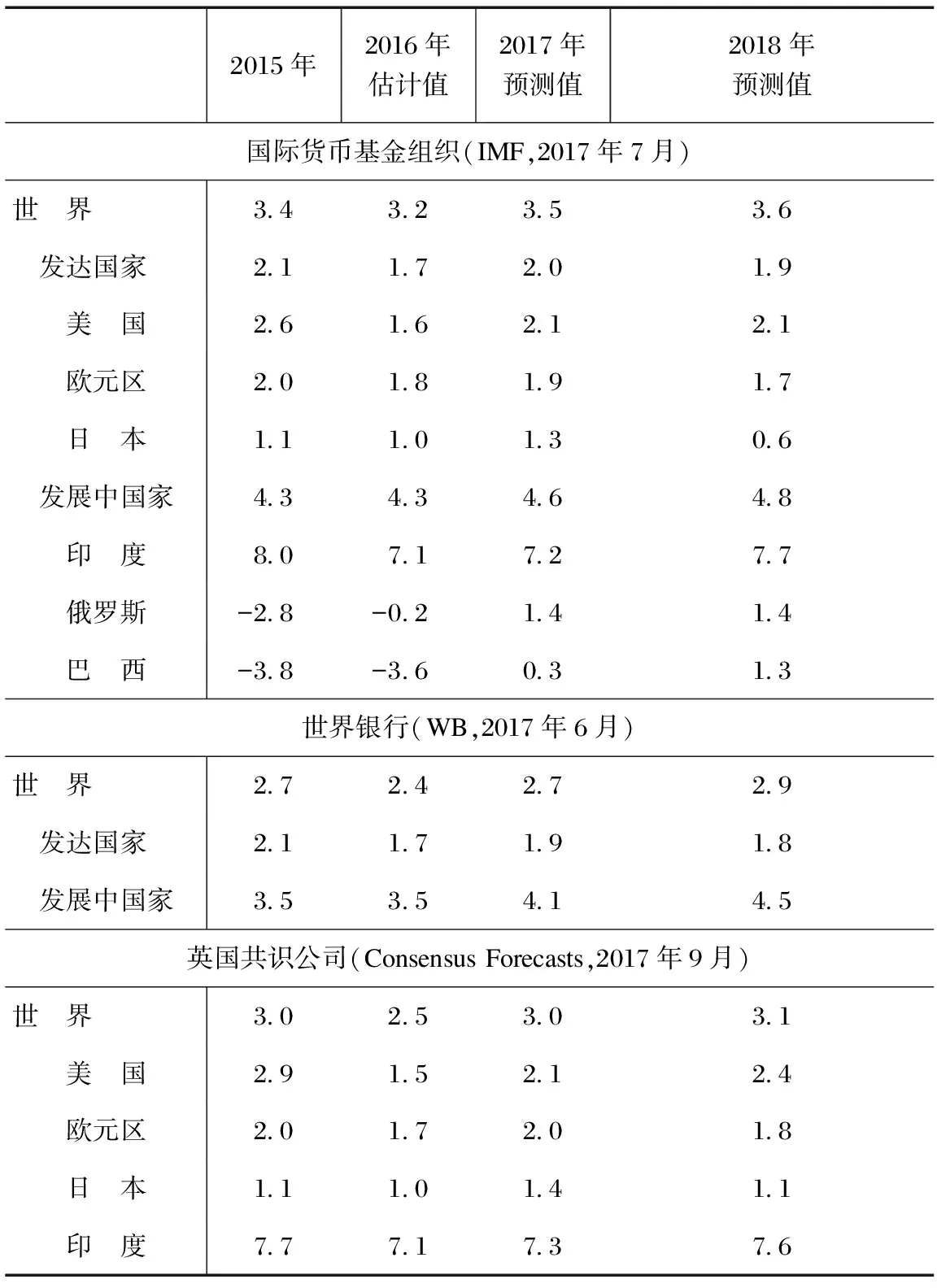
表1 世界經濟增長率(上年=100) 單位:%
注:(1)國際貨幣基金組織公布的世界及分類數據按照購買力平價方法進行匯總,世界銀行和英國共識公司按匯率法進行匯總。 (2)印度數據指財政年度。(3)各經濟體2015年數據已據其官方發布結果做了調整。
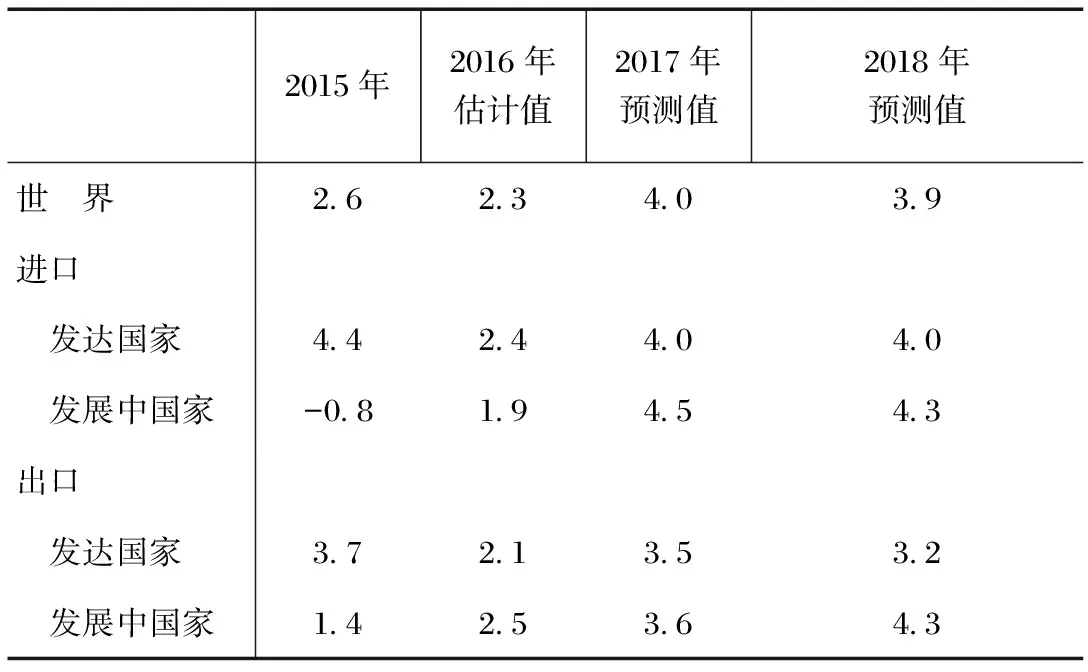
表2 世界貿易量增長率(上年=100) 單位:%
注: 包括貨物貿易和服務貿易,進、出口為2017年4月預測。
資料來源:國際貨幣基金組織2017年7月預測。
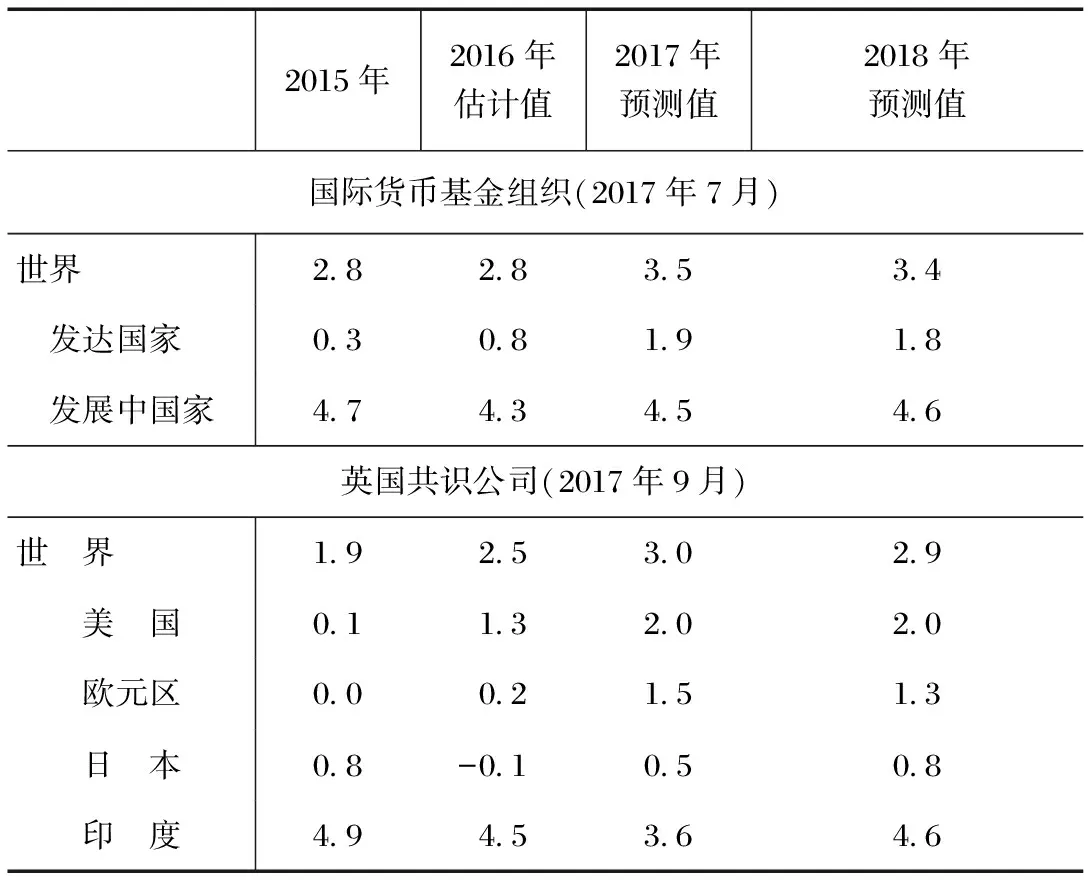
表3 消費者價格漲跌率(上年=100) 單位:%
注: (1)印度來源于英國共識公司的數據指財政年度。(2)各經濟體2015年數據已據其官方發布結果做了調整。
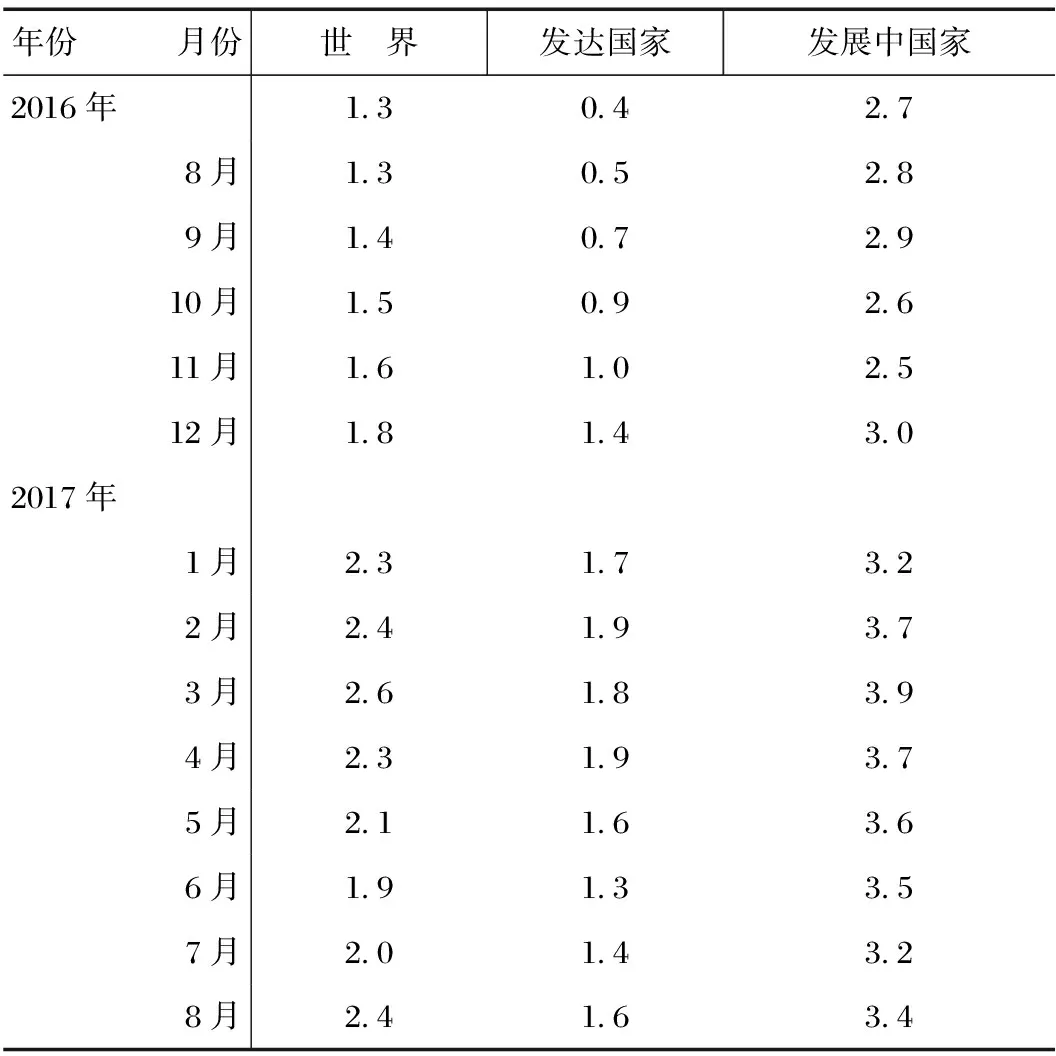
表4 消費者價格同比上漲率 單位:%
資料來源:世界銀行數據庫。

表5 工業生產
注:(1)工業生產指數同比增長率為經季節調整的數據。(2)采購經理人指數超過50預示著經濟擴張期。
資料來源:世界銀行數據庫、美國供應管理協會。
二、美國經濟
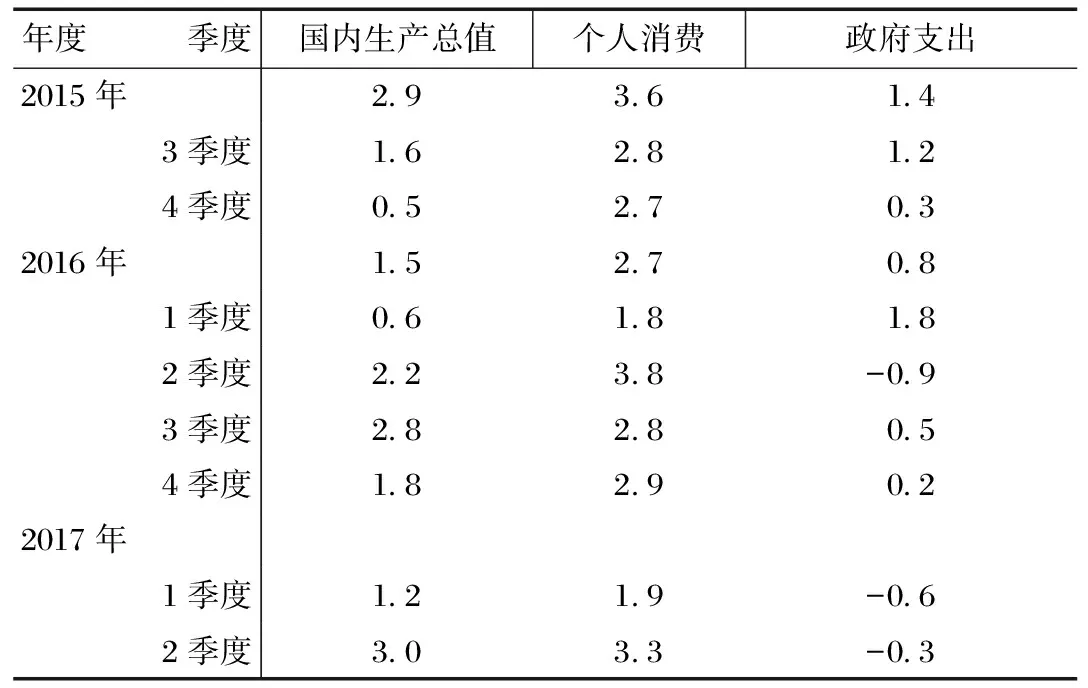
表6 國內生產總值及其構成增長率(環比) 單位:%
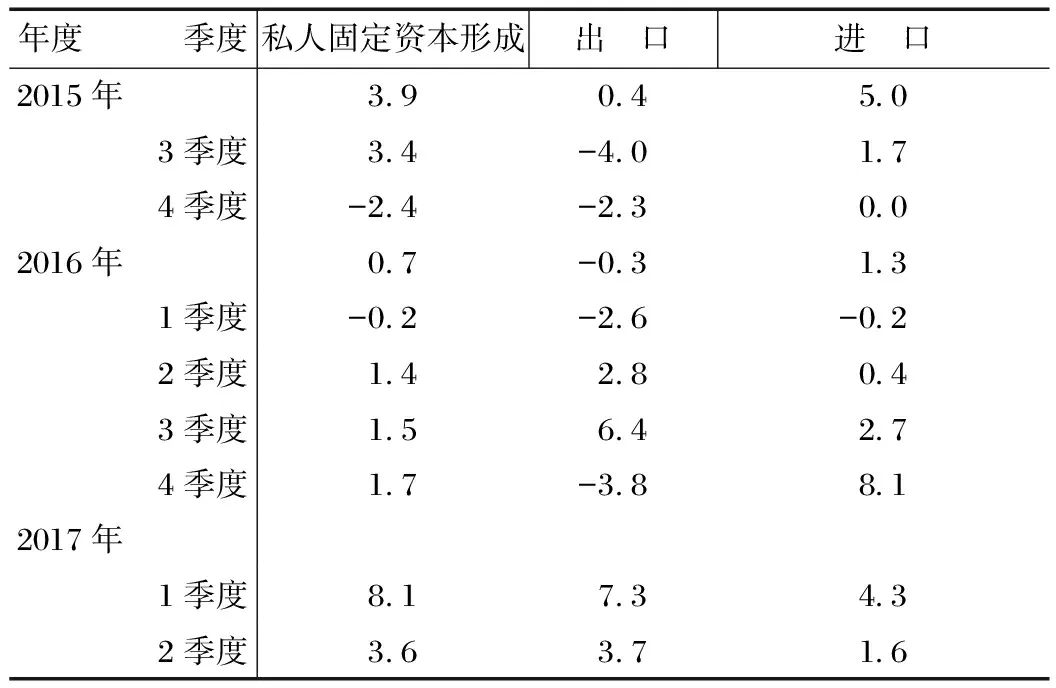
表7 國內生產總值及其構成增長率(環比) 單位:%
注:季度數據按季節因素調整、折年率計算(表6、表7)。
資料來源:美國商務部經濟分析局(表6、表7)。
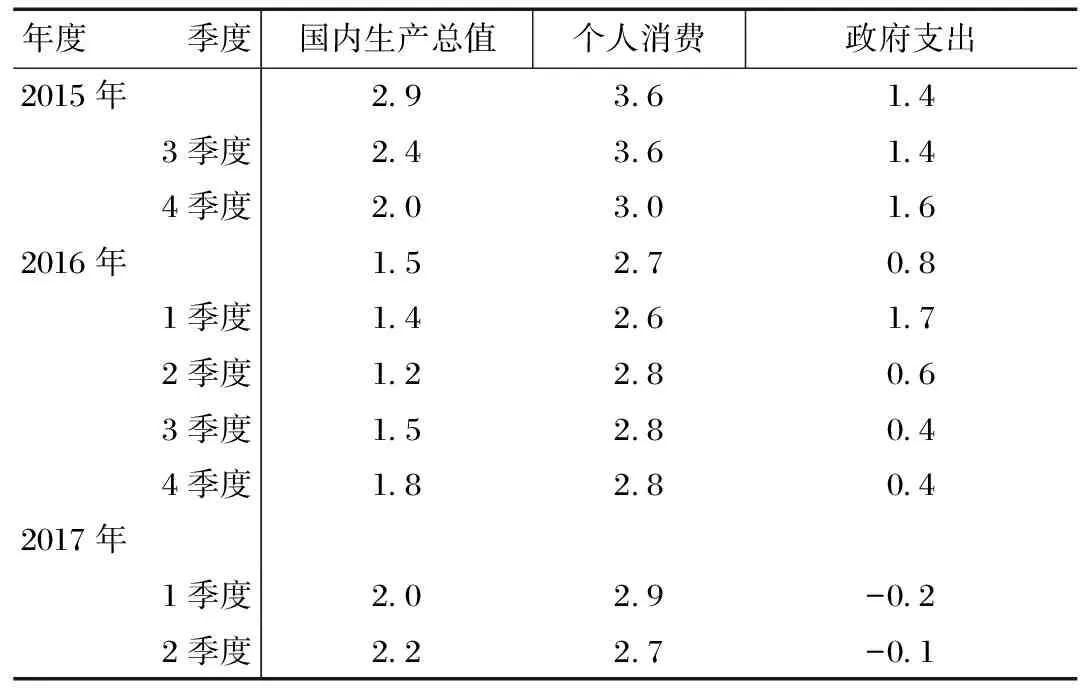
表8 國內生產總值及其構成增長率(同比) 單位:%
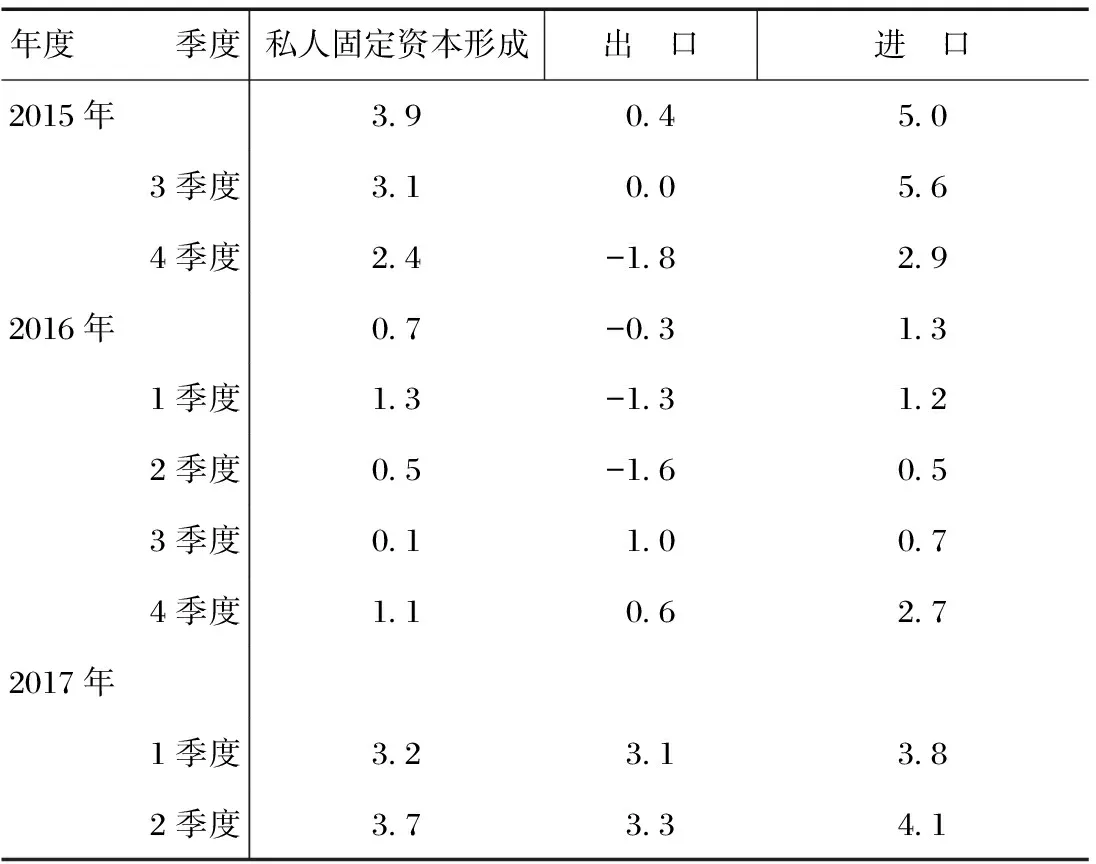
表9 國內生產總值及其構成增長率(同比) 單位:%
注:季度數據按季節因素調整(表8、表9)。
資料來源:美國商務部經濟分析局(表8、表9)。
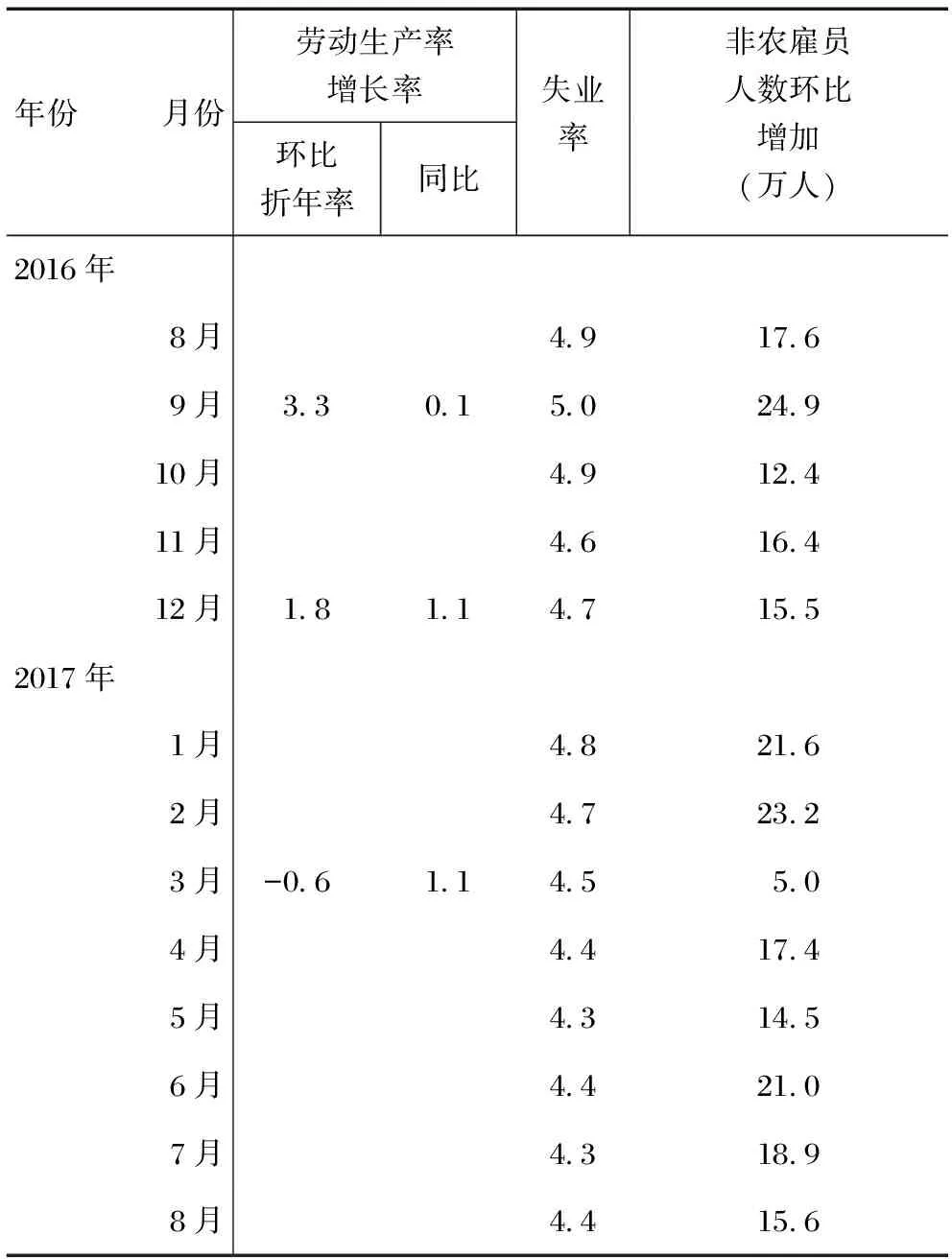
表10 勞動力市場 單位:%
注:除年度數據以外,勞動生產率增長率為該月份所在季度的增長率。
資料來源:美國勞工統計局。
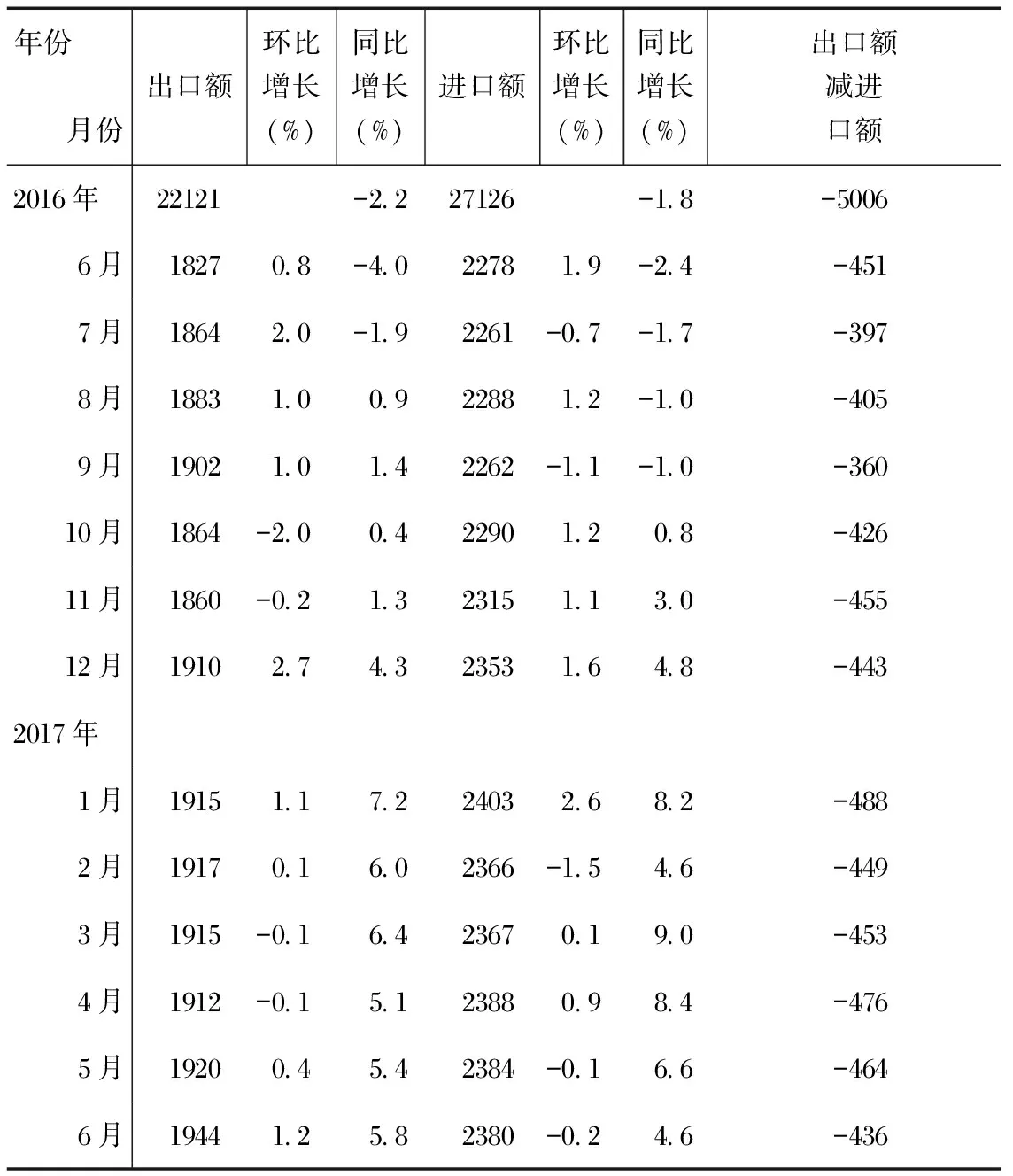
表11 進出口貿易 單位:億美元
注:包括貨物和服務貿易。因季節調整,各月合計數據不等于全年總計數據。
資料來源:美國商務部普查局。
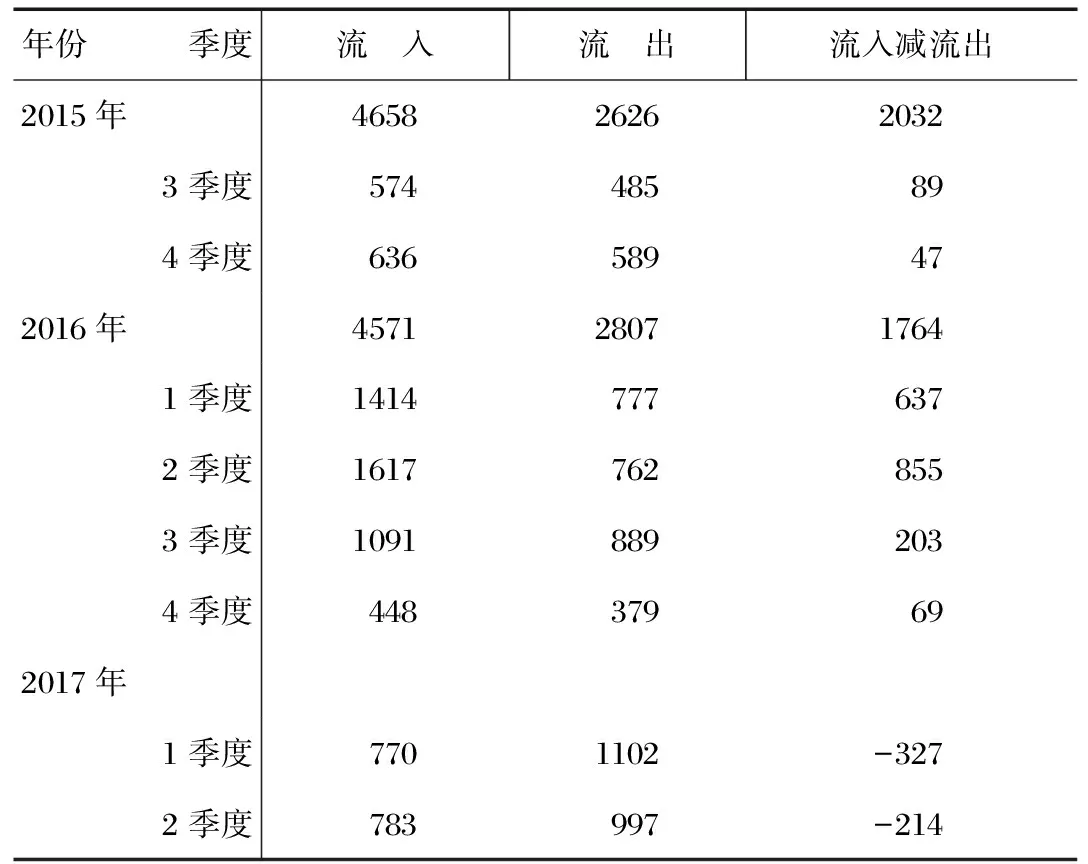
表12 外國直接投資 單位:億美元
資料來源:美國商務部經濟分析局。
三、歐元區經濟
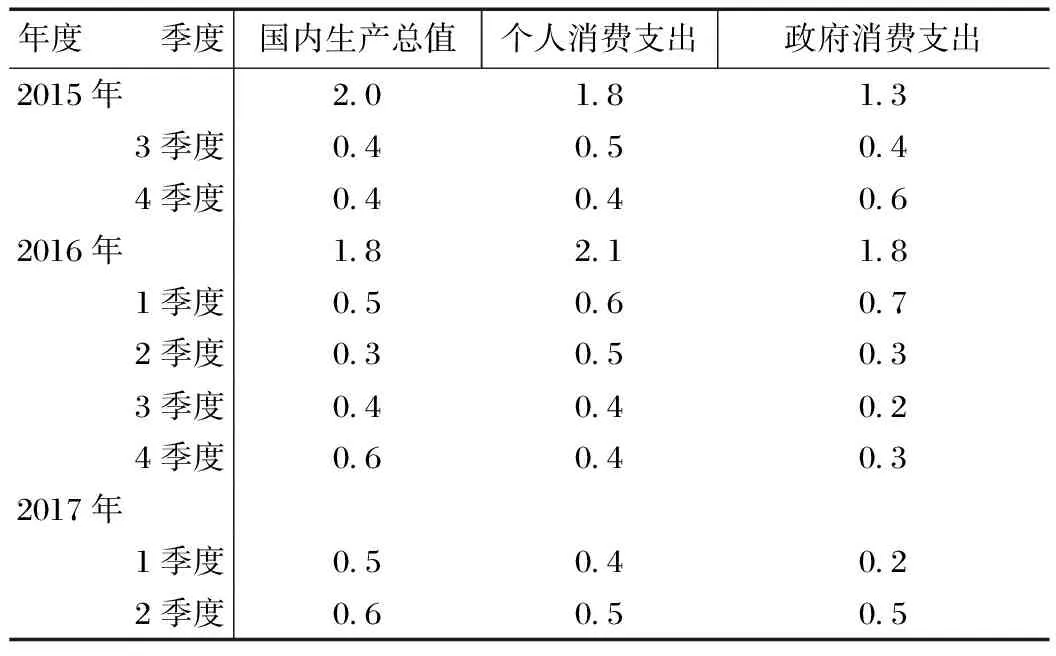
表13 國內生產總值及其構成增長率(環比) 單位:%
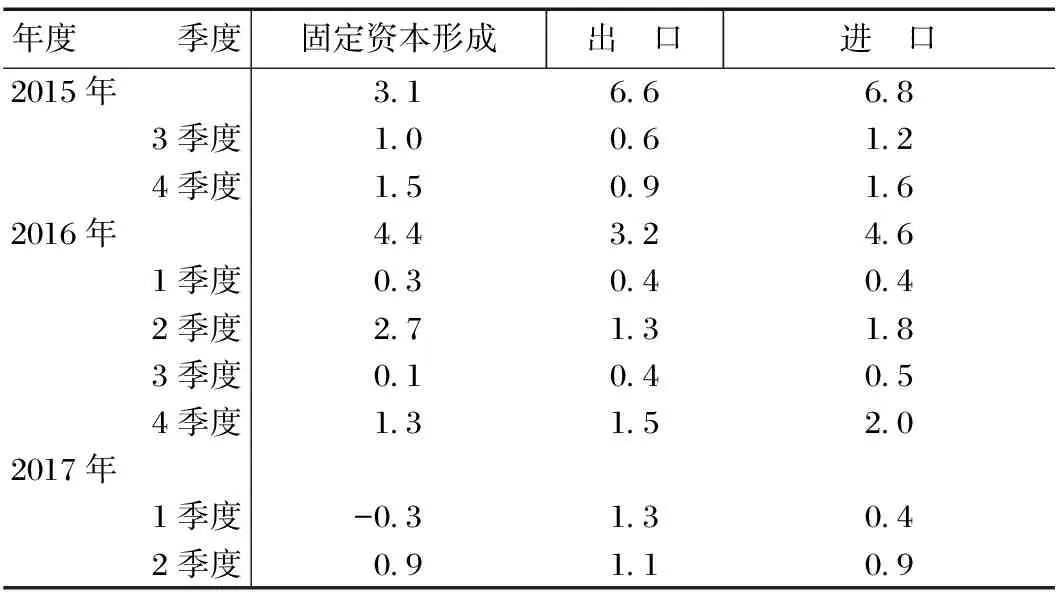
表14 國內生產總值及其構成增長率(環比) 單位:%
資料來源:歐盟統計局數據庫(表13、表14)。
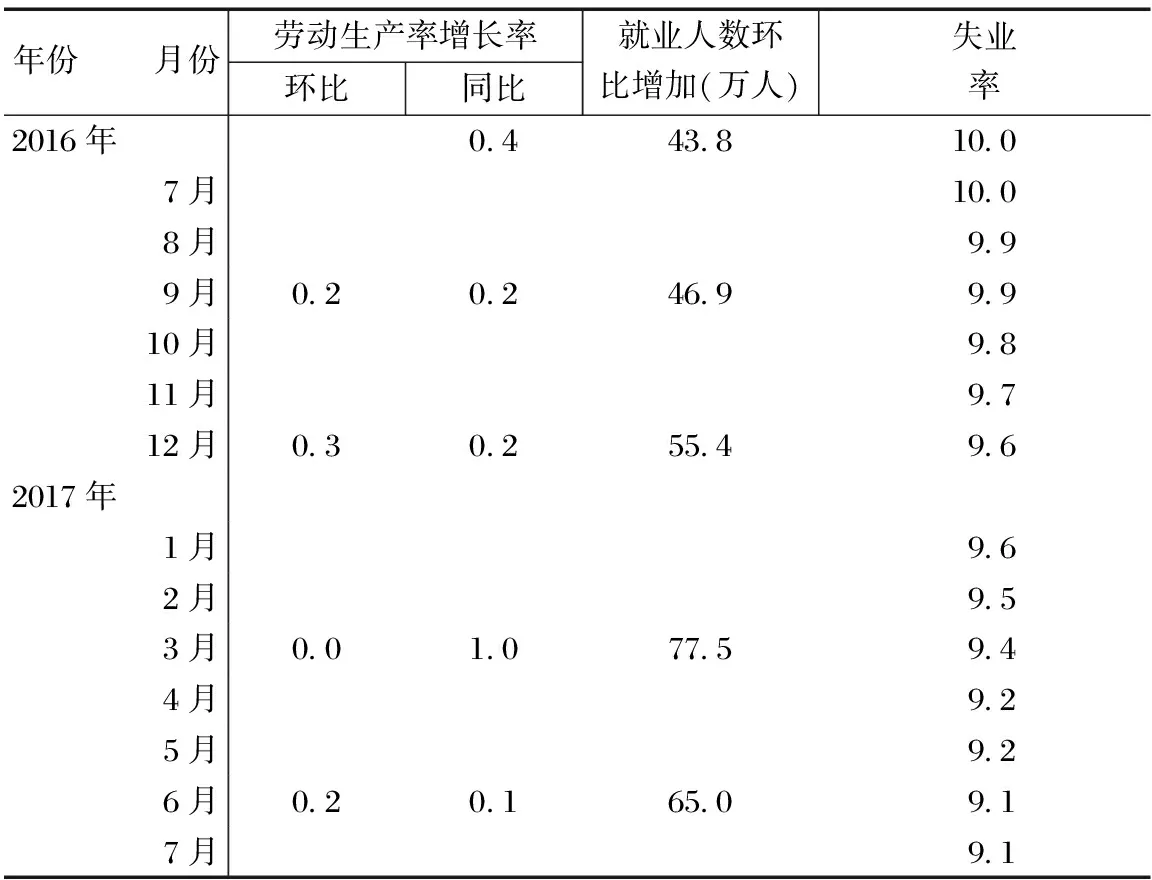
表15 勞動力市場 單位:%
注:除年度數據以外,勞動生產率增長率為該月份所在季度增長率;就業人數為該月份所在季度的環比變化。
資料來源:歐洲央行統計月報、歐盟統計局數據庫。
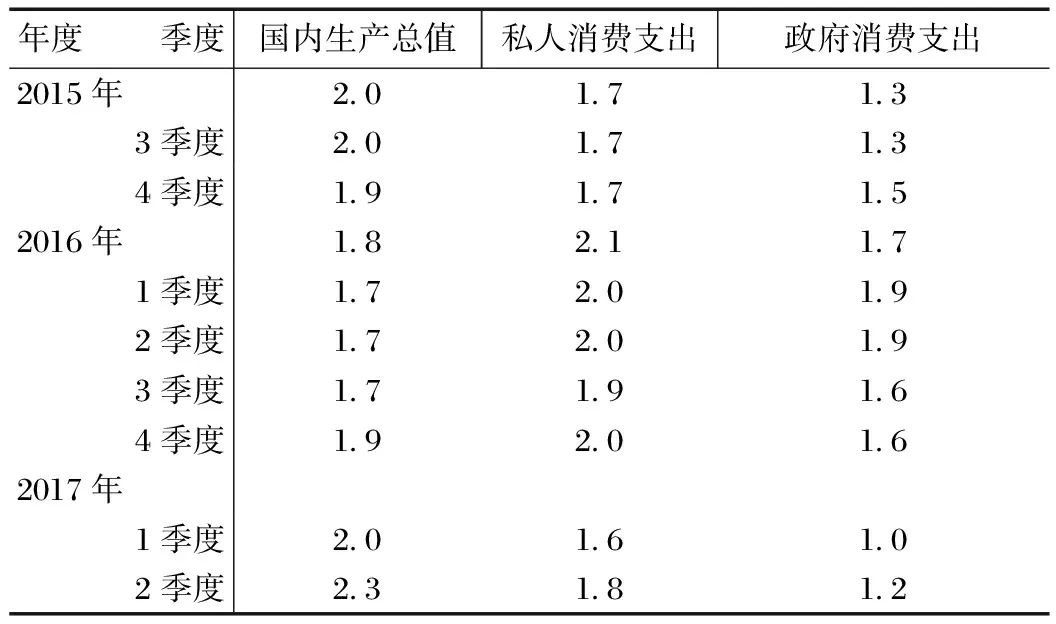
表16 國內生產總值及其構成增長率(同比) 單位:%
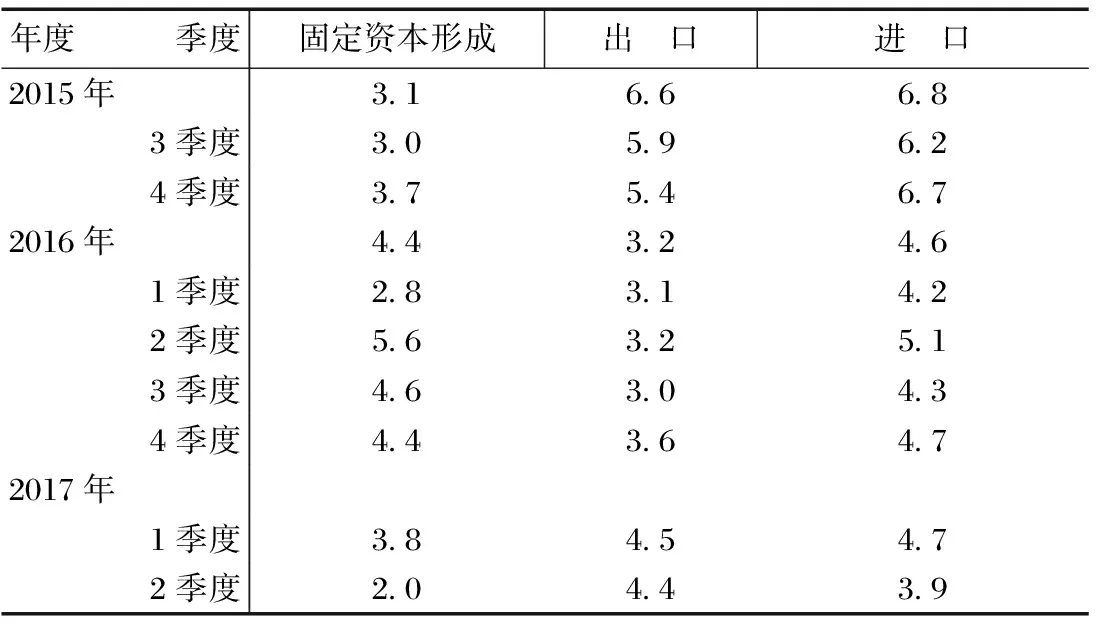
表17 國內生產總值及其構成增長率(同比) 單位:%
資料來源:歐盟統計局數據庫(表16、表17)。
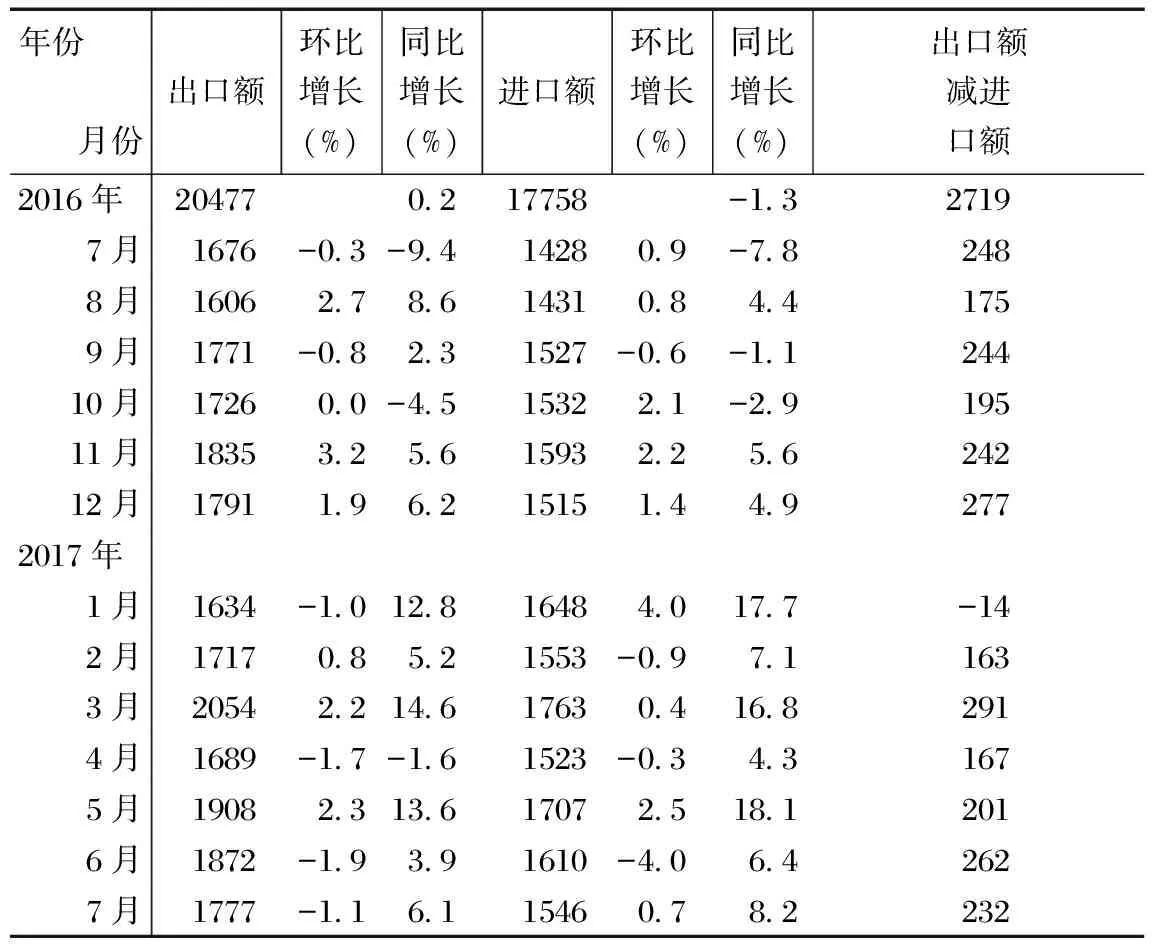
表18 進出口貿易 單位:億歐元
注:歐元區絕對數指歐元區現有范圍,即19個成員國。貿易額不包括歐元區各成員國相互之間的貿易額,為經季節調整后的數據。
資料來源:歐盟統計局數據庫。
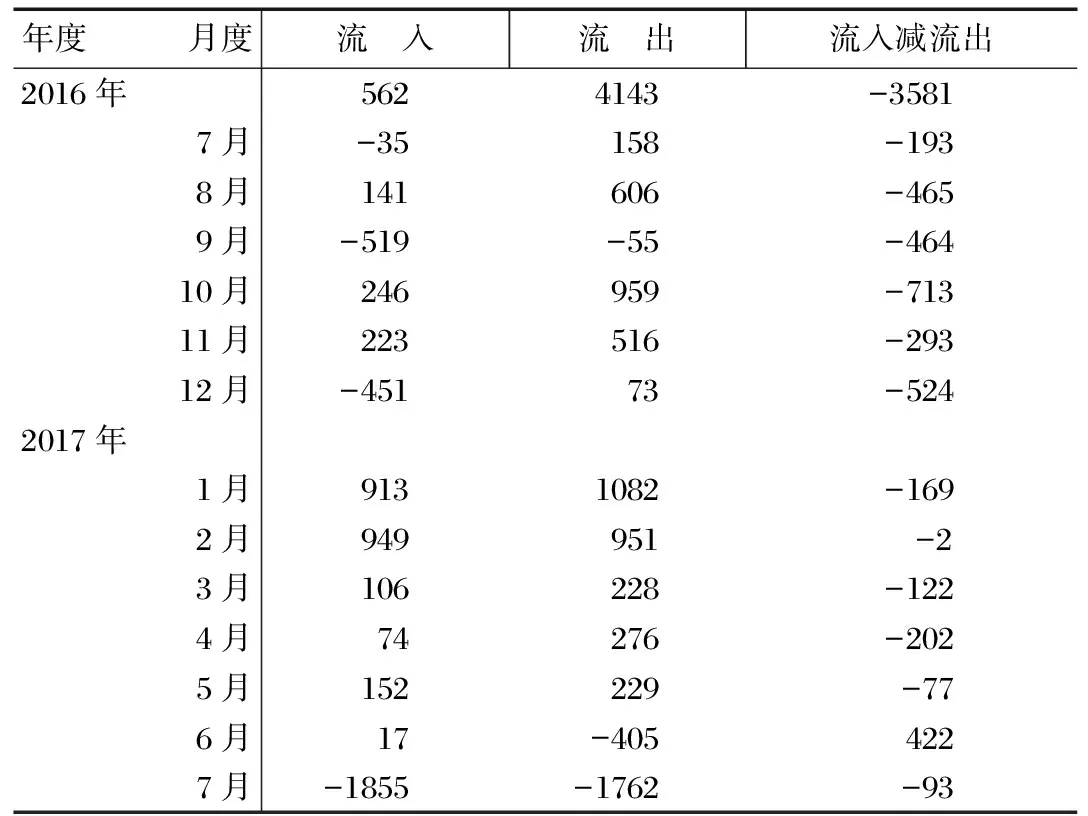
表19 外國直接投資 單位:億歐元
注:歐元區絕對數指歐元區現有范圍,即19個成員國。歐元區外國直接投資額不包括歐元區各成員國相互之間的直接投資額。
資料來源:歐洲央行統計月報。
四、日本經濟
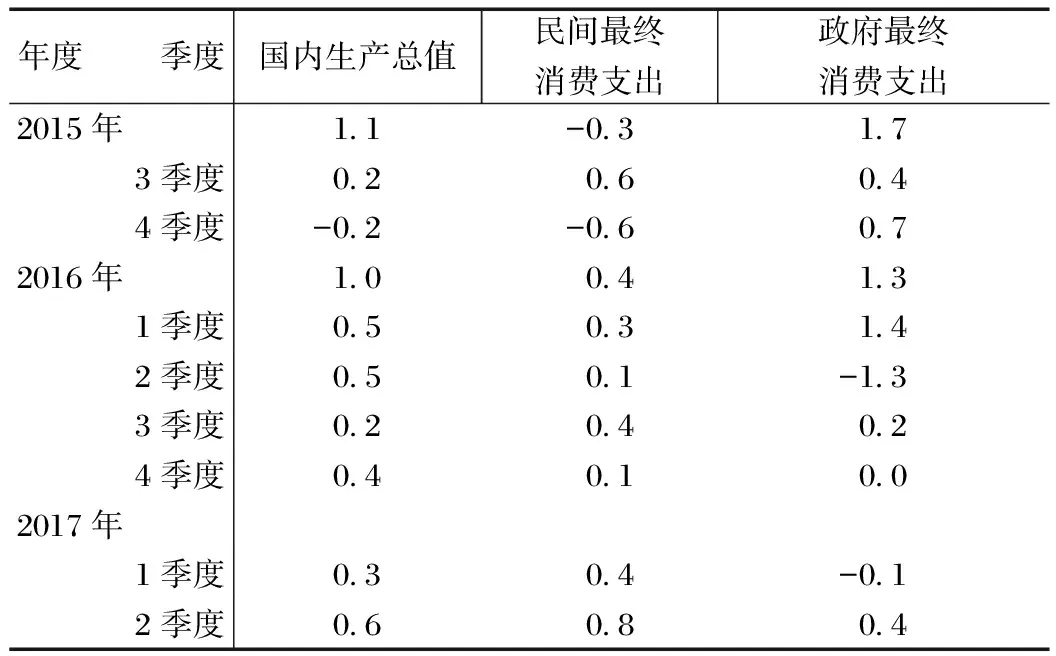
表20 國內生產總值及其構成增長率(環比) 單位:%
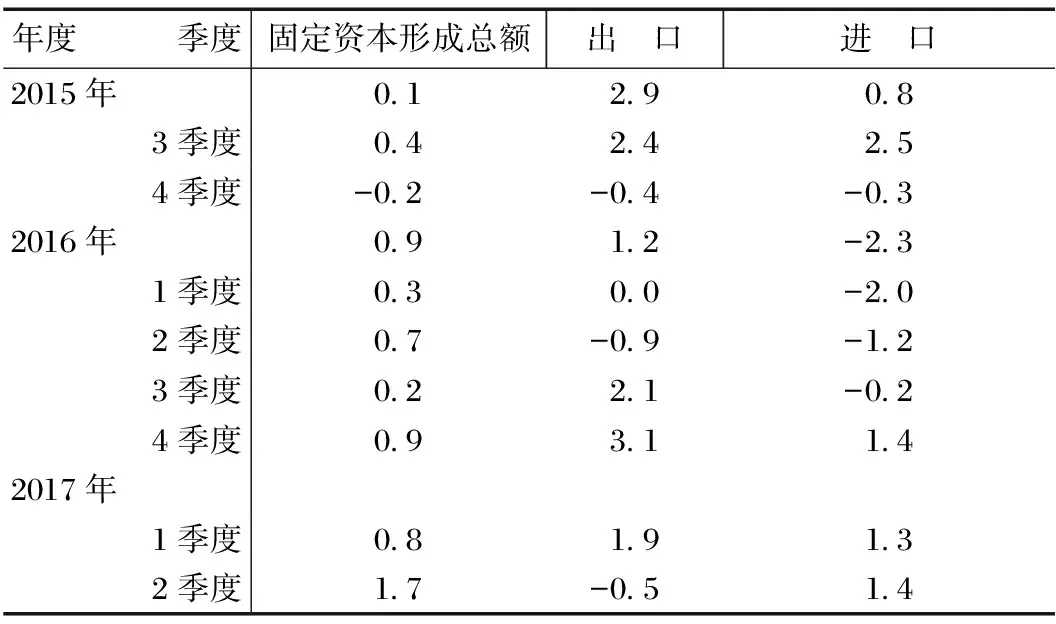
表21 國內生產總值及其構成增長率(環比) 單位:%
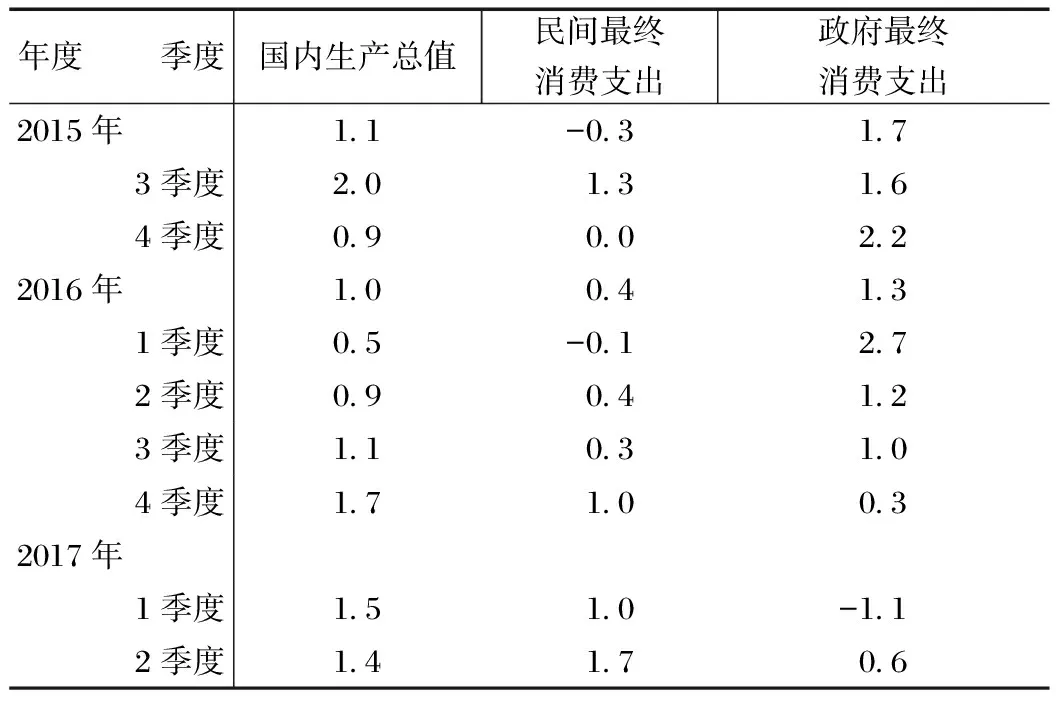
表22 國內生產總值及其構成增長率(同比) 單位:%

表23 國內生產總值及其構成增長率(同比) 單位:%
資料來源:日本內閣府(表20~表23)。
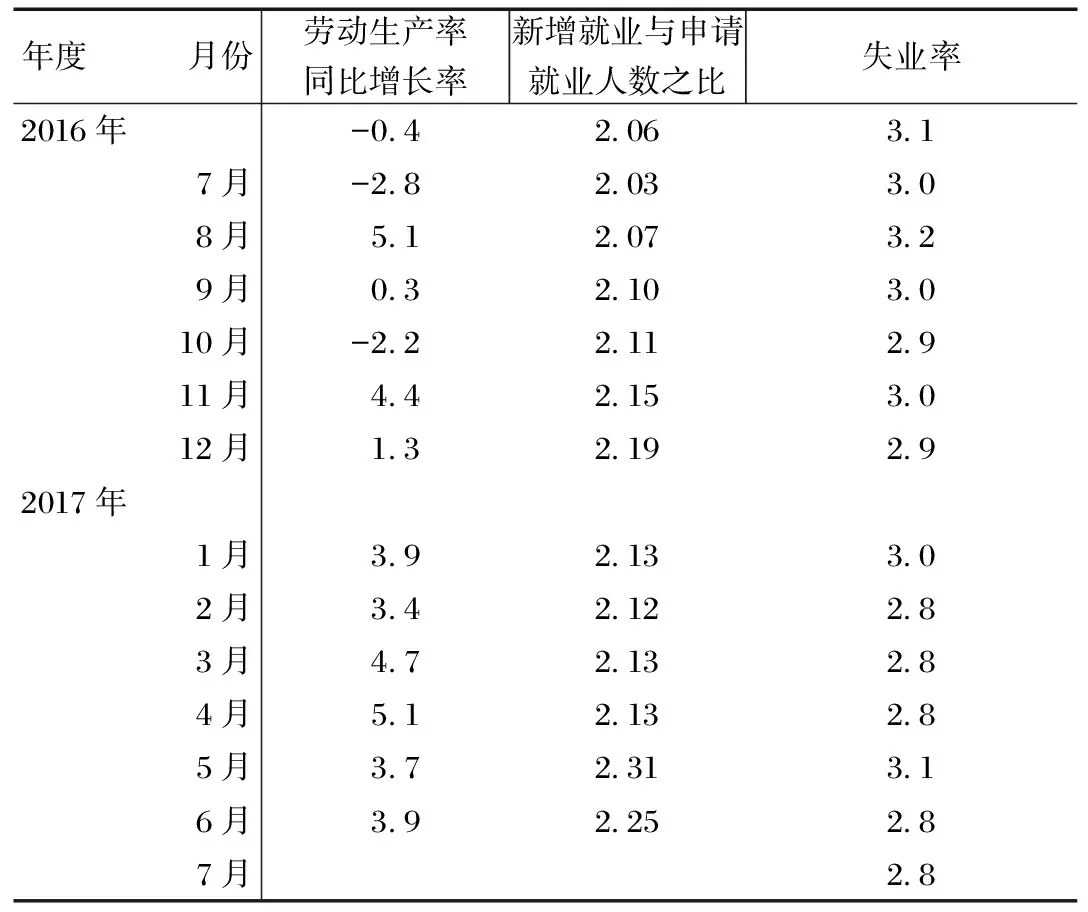
表24 勞動力市場 單位:%
資料來源:日本統計局和日本央行統計月報。
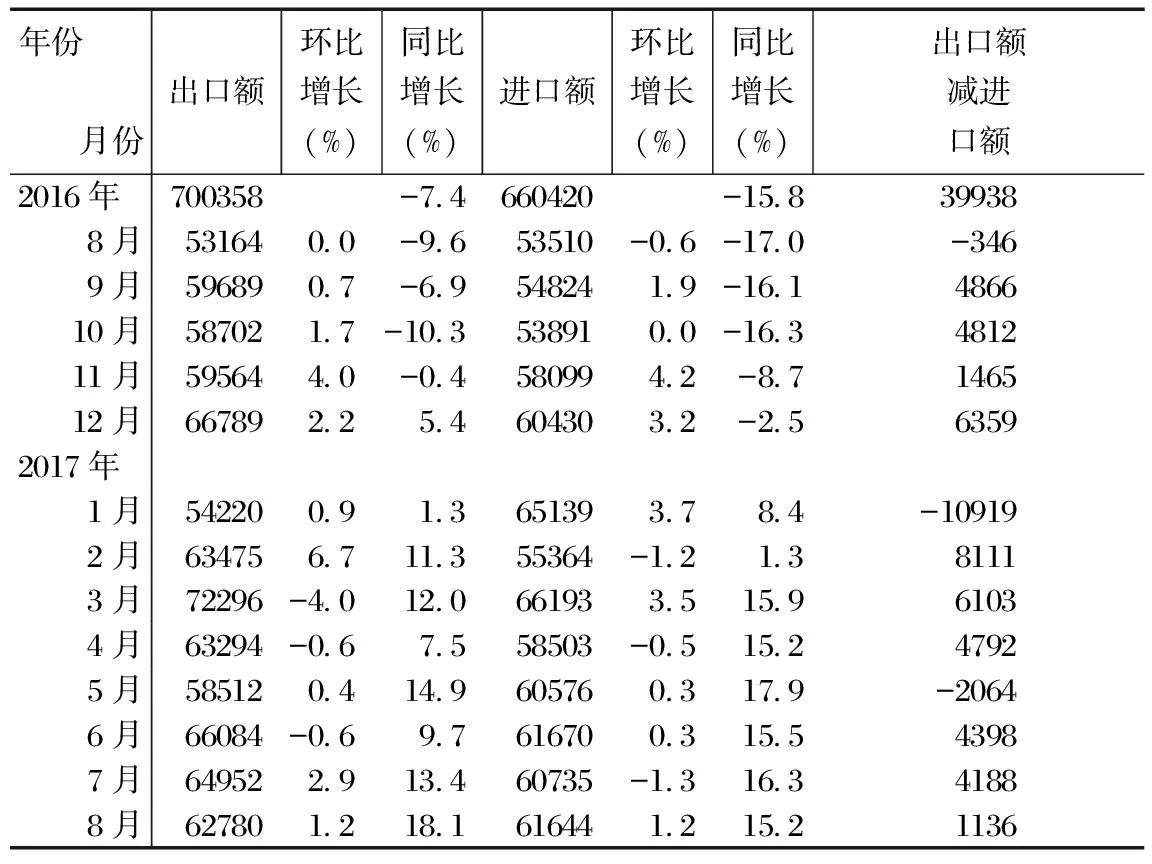
表25 進出口貿易 單位:億日元
注:月度貿易額為季節調整后數據。
資料來源:日本財務省。
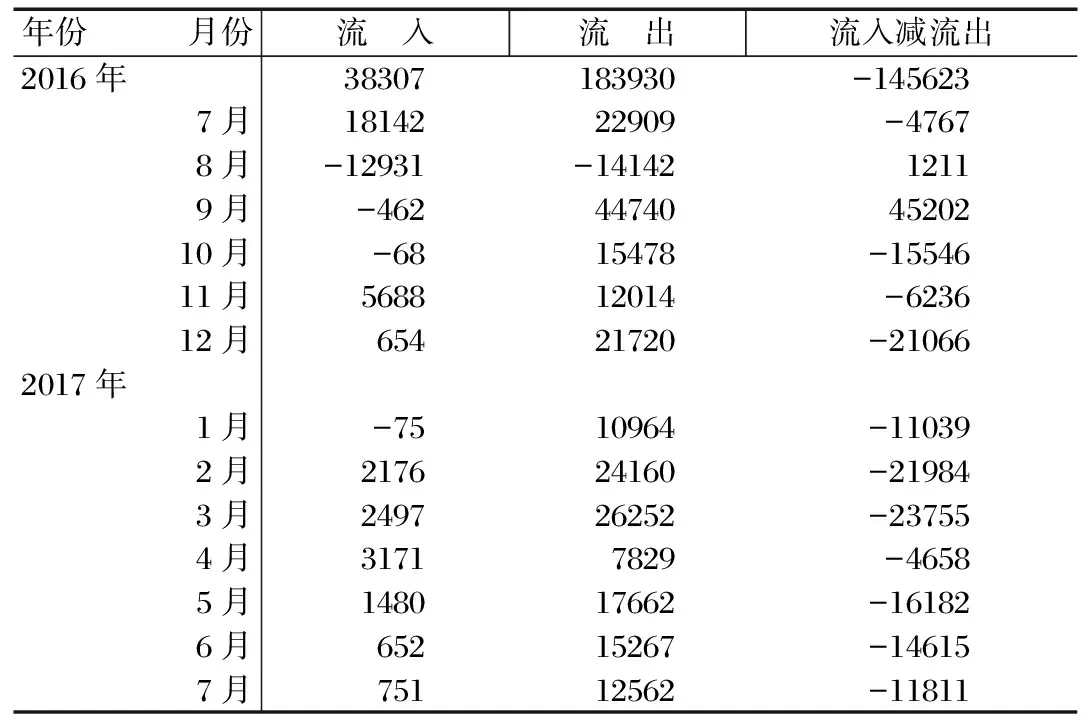
表26 外國直接投資 單位:億日元
資料來源:日本財務省。
五、其他主要國家和地區經濟
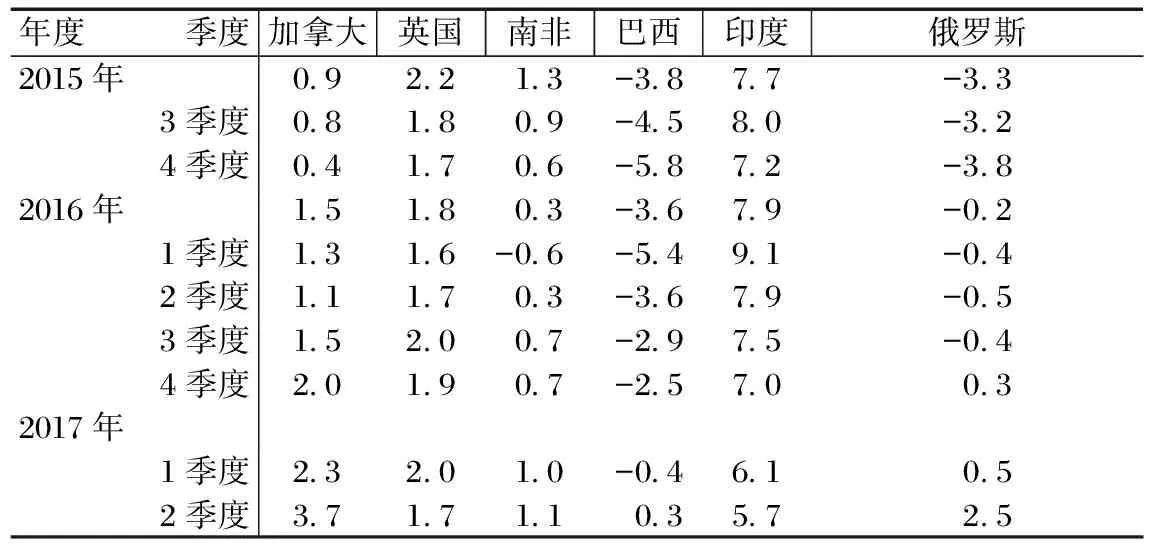
表27 國內生產總值增長率(同比) 單位:%
注:印度年度GDP增長率為財年增長率。
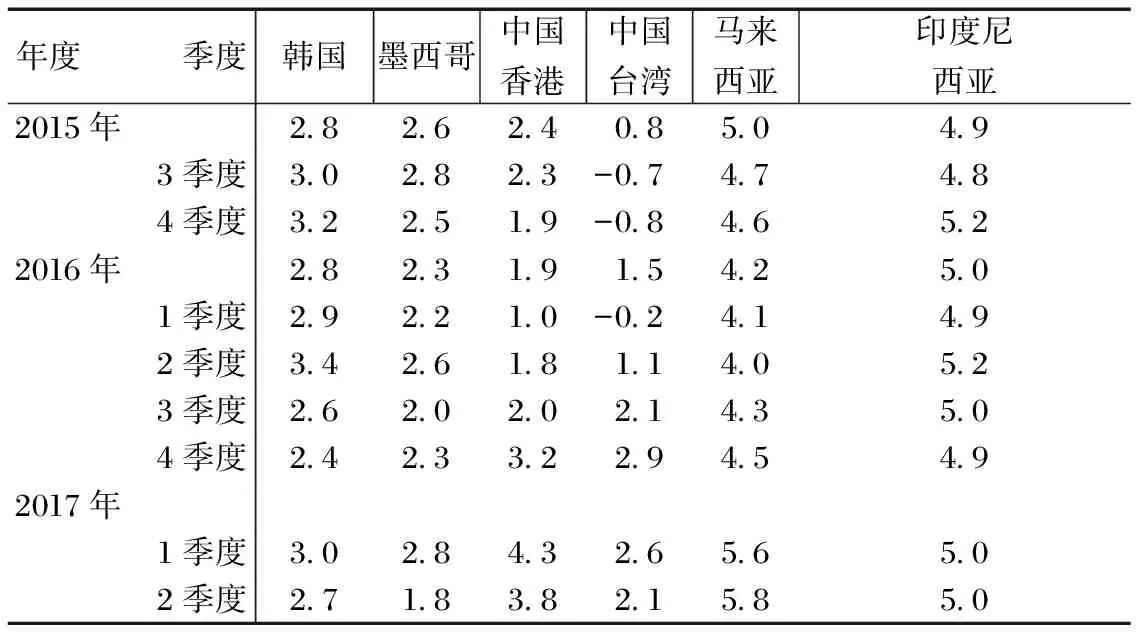
表28 國內生產總值增長率(同比) 單位:%
資料來源:各經濟體官方統計網站。

表29 勞動力市場失業率 單位:%
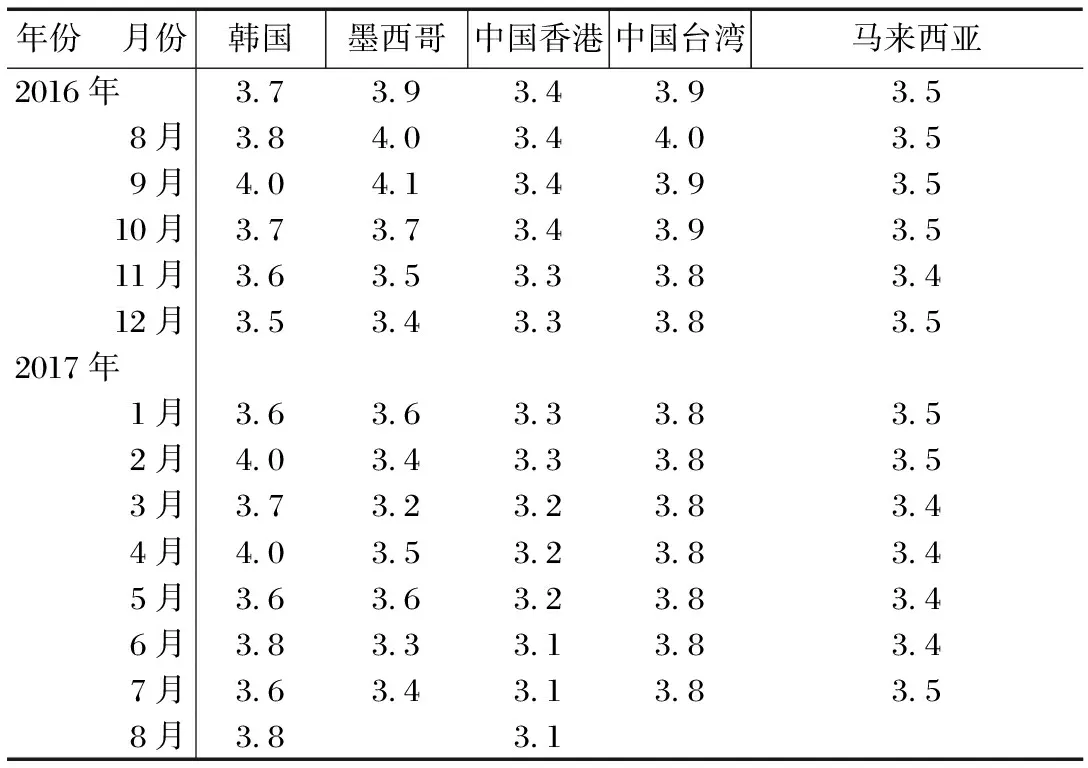
表30 勞動力市場失業率 單位:%
注:(1)英國和中國香港月度數據為截至當月的3個月移動平均失業率。(2)加拿大、英國、韓國和中國香港為經季節因素調整后的失業率。
資料來源:各經濟體官方統計網站。
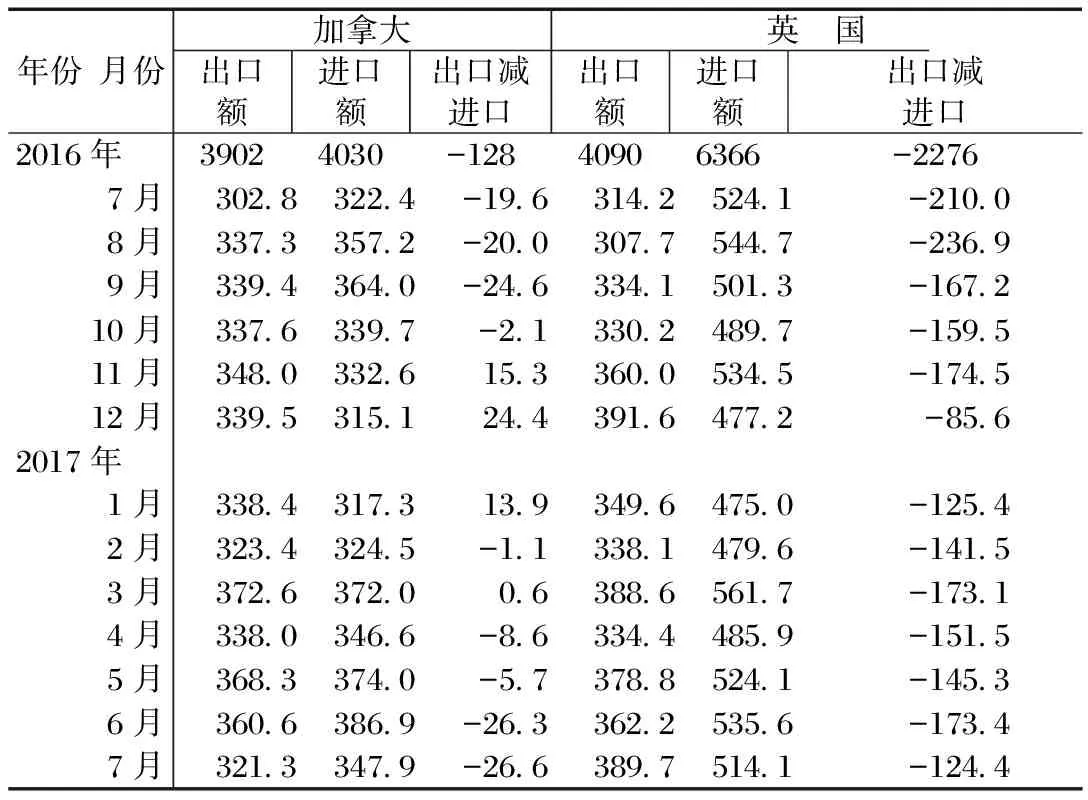
表31 進出口貿易 單位:億美元
注:加拿大和英國數據經過季節因素調整。
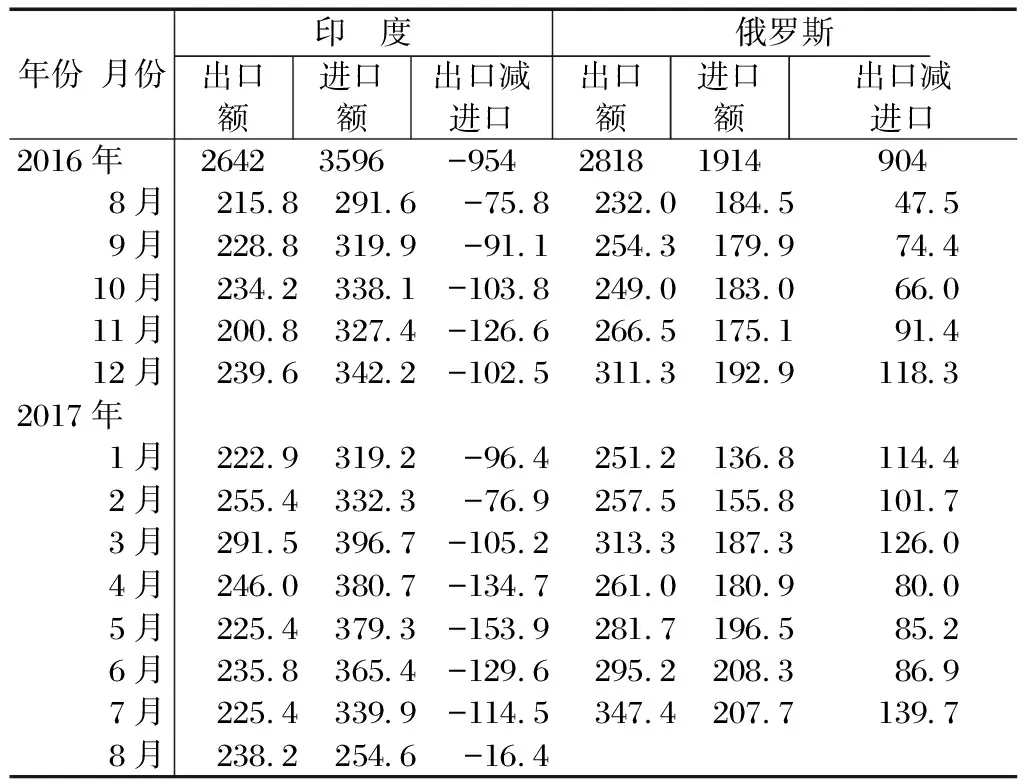
表33 進出口貿易 單位:億美元
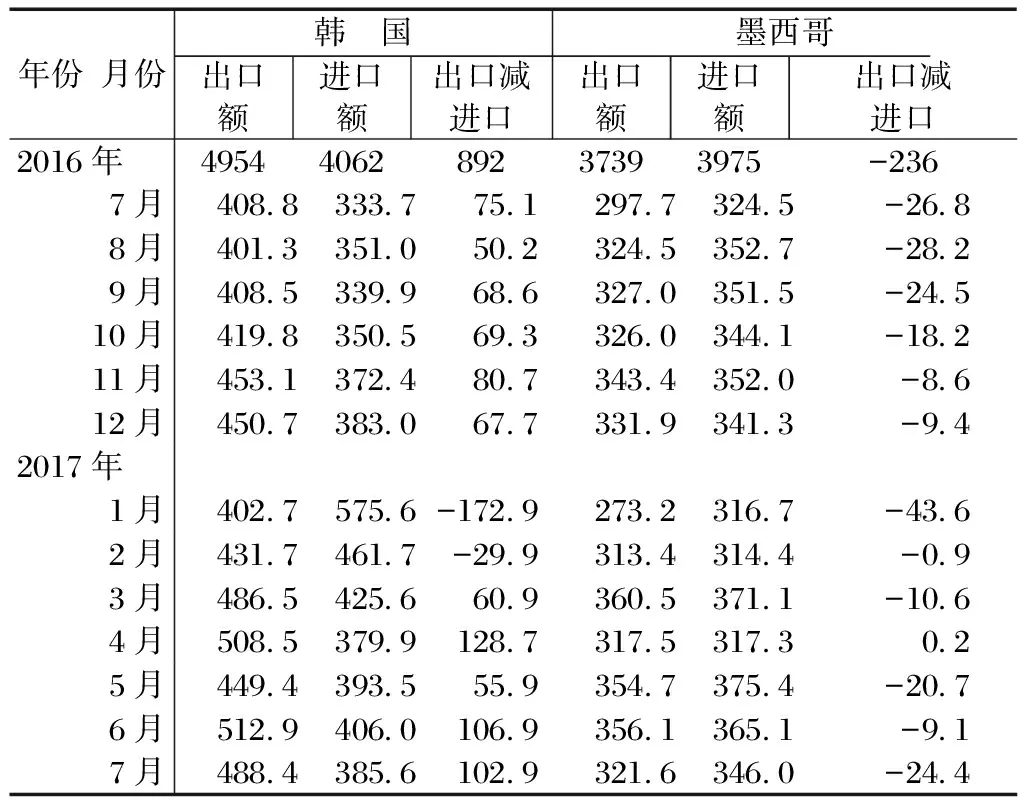
表34 進出口貿易 單位:億美元
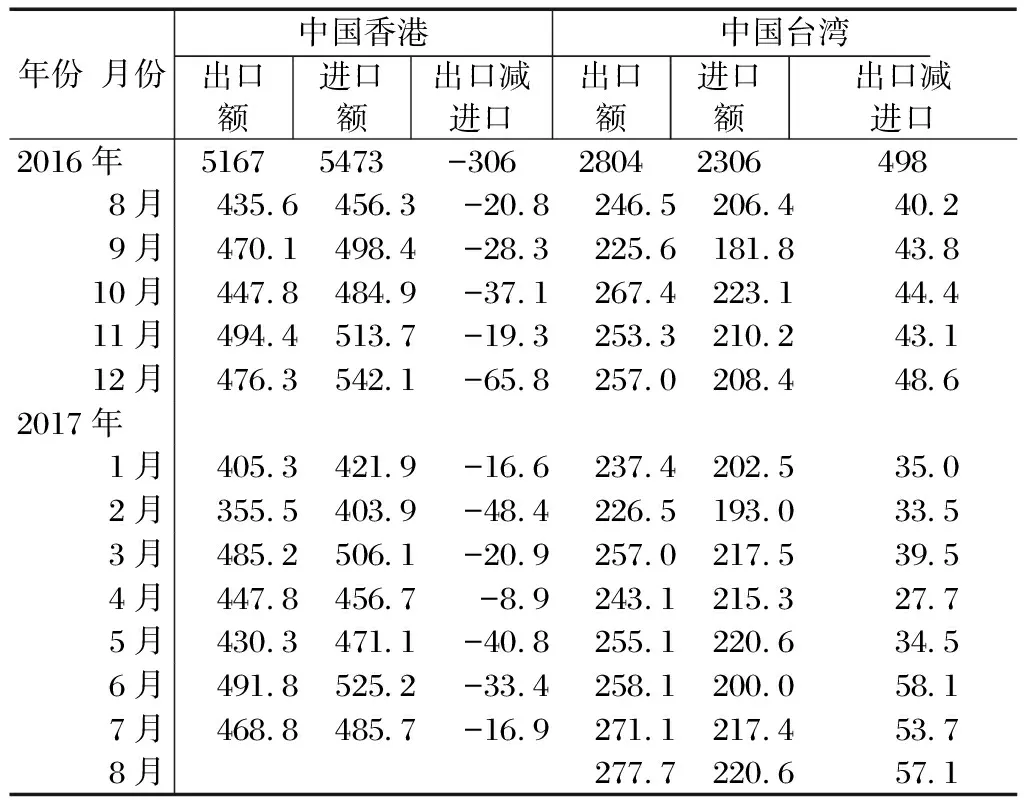
表35 進出口貿易 單位:億美元
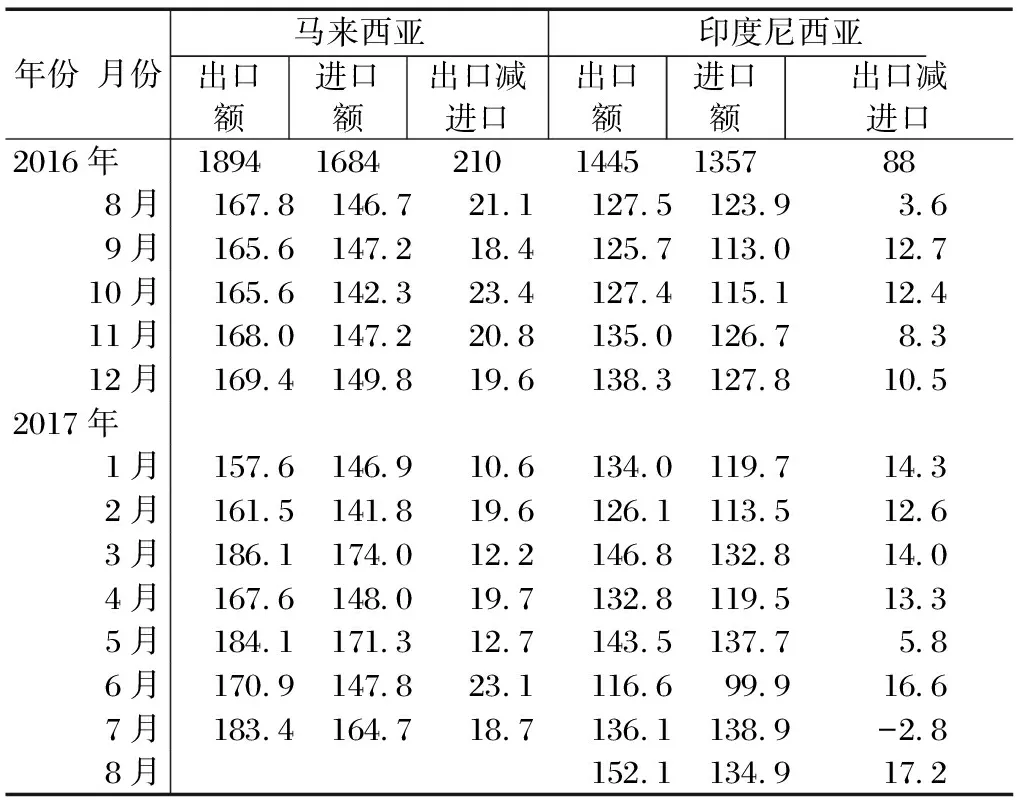
表36 進出口貿易 單位:億美元
資料來源:各經濟體官方統計網站(表27~表36)。
六、三大經濟體指標對比圖
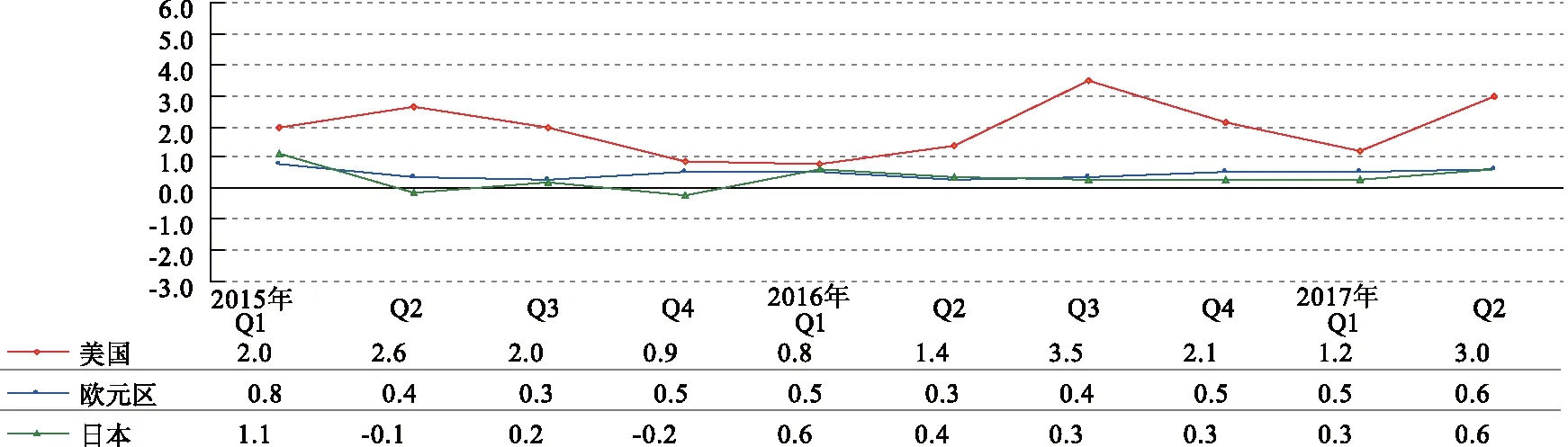
圖1 三大經濟體GDP環比增長率(%) 注:美國為環比折年率增長率。
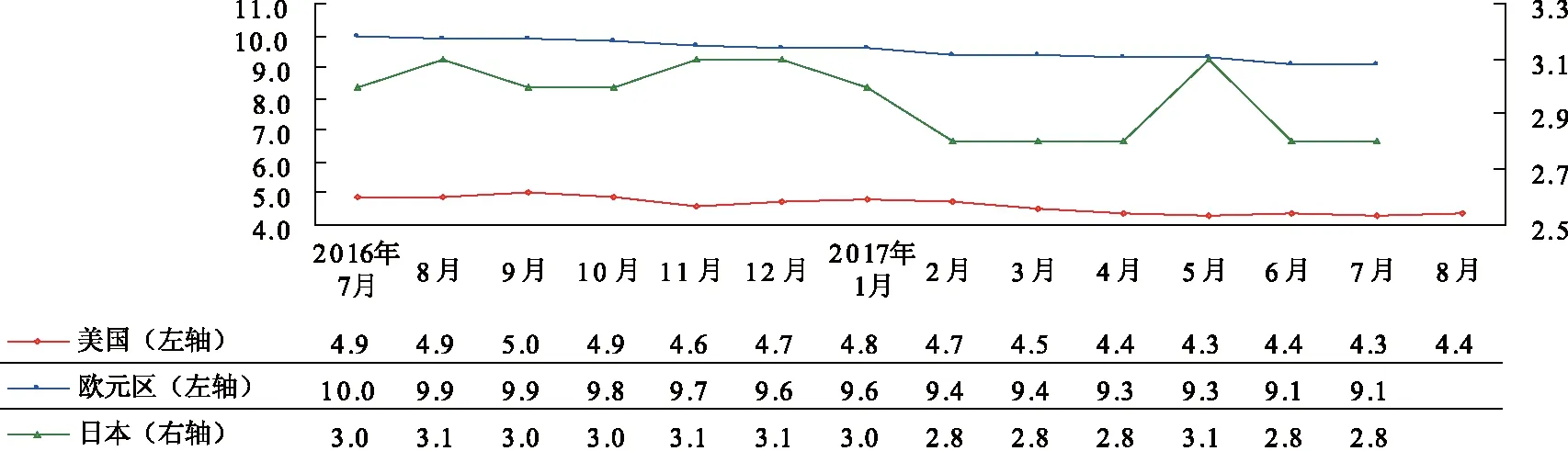
圖2 三大經濟體失業率變動(%)

圖3 三大經濟體出口額同比增長率(%)
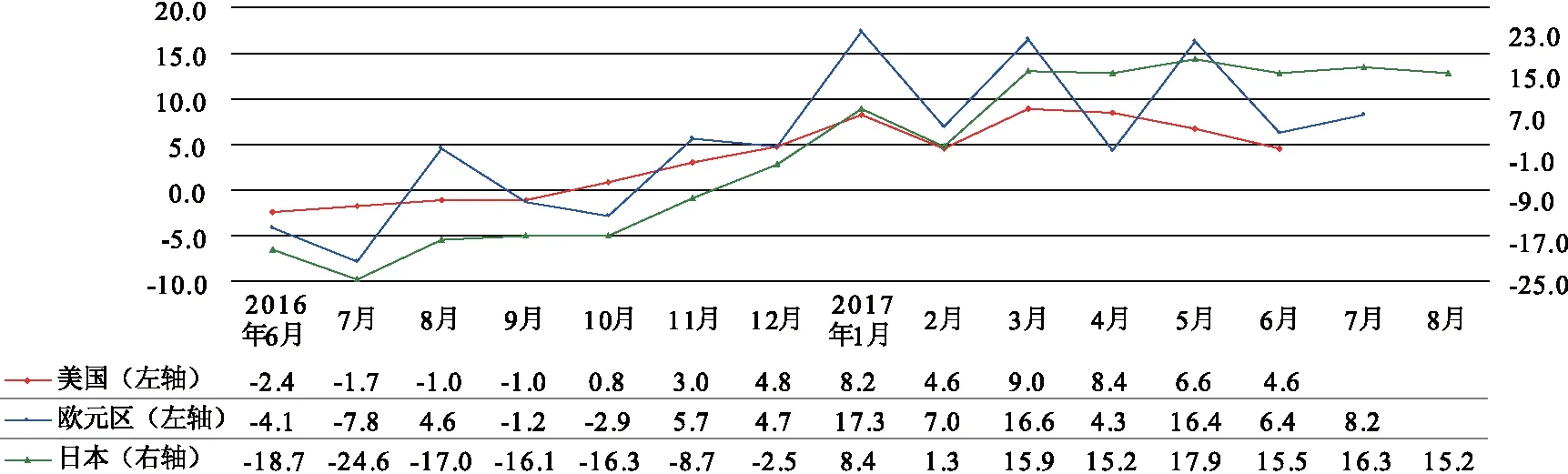
圖4 三大經濟體進口額同比增長率(%) 數據來源:各經濟體官方統計網站(圖1~圖4)。
責任編輯:陳璇璇
S
(1)Toconstructalong-termmechanisminwhichsupplystructureanddemandstructurearedynamicallyaccommodatingtoeachother
Han Yongwen
In theory, the supply side structural reform in the short term is to promote “three to drop, one to fall and one to fill”, reversing the problem on the surface where the supply structure cannot adapt to the demand structural requirements; in the long-term and fundamentally, it is to perfect mechanism system where market plays a decisive role in resource allocation, improve the total factor productivity, further strengthen total factor market, enhance the internal power of microcosmic body, really form a unified, open and competitive market, and establish a long-term mechanism for supply and demand which are dynamically adaptive, and structure changes of supply and demand which are adapting to each other.
(2)Tocarryoutthegreatcausesofmodernizationofreformandopeninguptotheend——Commemoratethe40thanniversaryofthereformandopeningup
Jia Kang
The reform and opening up will usher in the 40th anniversary. A comprehensive and profound understanding and continued substantive advances of reform and opening up concern the future of the country, the destiny of the nation and the well-being of the people. The reform and opening up has brought about great progress to China economy and society, which shows clearly, but not limited to, from the aspects of the total economy and per capita income, and is closely related to innovation and reconstruction in material, spiritual, political, cultural, ecological and other dimensions of civilization. China’s reform has entered the “deep water zone”, where the resistance is unprecedented, which requires us to further emancipate our minds, rush through the “Three Gorges of history” with a comprehensive reform, and meet the great rejuvenation of modernization.
(3)Thecrossroadsofglobal“broadmoney”and“tightmoney”
Gu Yuanyang
Since the second half of 2016, the sound of global monetary easing moving to the inflection point of gradual tightening has become lauder, the main reasons for which are the emergence of new factors for the global monetary policy shift, tightening convergence changes in global monetary policy differentiation, and the Fed’s acceleration of the pace for the monetary policy normalization. Because of their macroeconomic situations are less sound than that in the United States, the European Central Bank and the Bank of Japan did not follow the change of the Fed’s monetary policy to alter their quantitative easing monetary policy, but considering the loosing monetary policy has come to an end, they began to release the preliminary tightening signal. In 2017, caused by the increased factors for monetary policy tightening, the global monetary policy adjustments moved to the crossroads. However, the road for the global monetary easing to exit has never been flat, the global loosen monetary policy and low interest rate environment are difficult to fundamentally change, it is less likely to see the turning point of global re-inflation and monetary policy moving from loose to tight, thus causing a shortage of liquidity in the world.
(4)Sustainedeconomicrecoveryandweakexpansionbase——Analysisoftheworldeconomicsituationinthefirsthalfof2017
National Bureau of Statistics Interpretation Group
In the first half of 2017, the major economies recovered to varying degrees, the main economic areas continued to improve, and the world economy grew steadily with increased vitality, and overall maintained a sustained recovery trend. However, the unstable factors still exist, the foundation of recovery is not firm, and the external environment facing our country is still complicated. It is expected that the world economy will continue to recover in the second half of the year, but the pace will not be too fast. The external economic environment of our country is grim, so we should pay close attention to it and deal with it properly.
(5)TheenlightenmentofcurrencyinternationalizationexperienceforpromotingtheinternationalizationofRMBalongThe“BeltandRoad”
Meng Gang
The pound, the dollar, the yen and the euro are the world’s major international currencies. From the aspects of trade, investment, finance, government and others, studying the internationalization experience of the currencies above is significant. To promote the internationalization of the RMB during the “Belt and Road” construction, China should enhance the foundation for the domestic economy, while maintaining stability, China should jointly negotiate, construct and share with countries along the line, strengthen economic and financial cooperation, optimize the environment for investment and trade, and intensify the functions of RMB for denominated settlement, trading and reserve.
(6)ResearchonthesystemmechanismofpromotingecologicalcivilizationconstructioninChina
CCIEE Research Group
China is the first country to put forward the concept of “ecological civilization” at the United Nations’ conference, therefore, how to build ecological civilization well is a question worthy of in-depth study. From the basic theory of ecological civilization, This paper analyzes the present situation and experience of ecological environmental protection at home and abroad, put forward the general idea, goal and main task of ecological civilization construction in our country, on the basis of which it gives the major policy suggestions for the administration and supervision system, laws and regulations system, economic policy and market mechanism and so on.
(7)Stablerealestateprices,wealthexpectationsandeconomicgrowth
He Jingtong, Na Yi and Zhao Zimu
It is urgent and significant to curb the continued “overheat” of the real estate market and promote the stable and healthy development of the real estate market. However, the market effects of various regulatory policies in China are not satisfactory. We need to further analyze and recognize the support mechanism for prices behind the back, set out countermeasures starting from the root. The price formation mechanism based on the short-term “supply - demand” analysis seems logical, but ignores the important characteristics of the real estate market, that is, real estate is a special commodity with investment goods and consumer goods, so the market subjects are easy to form the expected bullish wealth. Therefore, how to correctly guide the real estate market is the key to stabilizing prices and inducing the property market moving to the stability at the moment. In the long term, we should construct stable legal system based on legal system as the core, with the precise regulation from the supply side to guide and stabilize expectations; in the short term, we should promote the reform of the system of land leasing in time, prevent local governments in the rounds of land transaction to push up the prices that increase the expected real estate wealth. Stable expectations will bring about stable prices, guide the flow of excessive capital in the housing market to other industries, which help to improve the efficiency of resource allocation, balance the differences in the industrial profit rates, promote the adjustment of industrial structure and technological innovation, and thus stimulate the endogenous power doe stable economic growth.
(8)TheforecastofthetotallaborsupplyandstructureofChinainthefuture
Tian Fan
Economic development cannot be separated from the support of the labor force, and the supply of labor force will directly affect the normal operation of a country’s economy. This article uses the population shift algorithm to predict the Chinese total working age population and age structure, and then using regression analysis it determines the correlation coefficients between labor supply and the working age population, which were used to predict the total labor supply, labor force supply structure, future labor force sex structure and quality structure; according to the empirical analysis the results of the study, it puts forward some policy enlightenments.
(9)Fromtheperspectivesofculturalideasandinstitutionalarrangementstofindout“shortslabs”andfillthem
Huang Yong, Fu Jinlong, Pan Yigang and Dong Bo
The “short slabs” is the prominent problem and contradiction affecting the overall development. Finding and filling “short slabs” are very important for realizing sustainable development. Against the development goals during the “13th Five-Year” period to build a comprehensive and high level well-off society, the “short slabs” in the development of Zhejiang province are mainly from the fields which are not meeting the high level requirements in accordance with the standards, not balanced in accordance with the requirement of equilibrium imbalance, and not adaptive in accordance with the increased advantages. Through comparative analyses, it has become clear that the short slabs in six aspects of the current development of Zhejiang in innovation, opening up, integrated transportation, urban integration, public services, ecological civilization and others are more prominent. This article attempts to analyze the reasons from the perspective of cultural ideas and institutional arrangements, and put forward the direction for innovating and filling the short slabs.
Editor:Huang Yongfu
歡迎訂閱《全球化》雜志
《全球化》雜志由中國國際經濟交流中心主管/主辦,是集研究性、學術性、政策性、應用性于一體,以國際經濟、宏觀經濟、企業國際化經營為主要內容的經濟類理論月刊(國內統一刊號:CN11-6008/F;國際標準刊號:ISSN2095-0675)。刊物按照曾培炎理事長的辦刊宗旨,依托“中國智庫”平臺優勢,秉承“同享人類智慧,共謀全球發展”的核心理念,本著兼容并蓄、百花齊放的原則,著力打造“全球經濟思想庫”,構建一個智庫交流的平臺,成為廣大讀者觀察國際問題的重要窗口和共享思想盛宴的便捷之門。刊物致力于探討全球化帶來的機遇與挑戰,積極反映國際社會特別是新興經濟體和廣大發展中國家的訴求,研究如何改善全球經濟治理,建立公正合理的國際經濟新秩序;對中國經濟社會發展的重大問題進行理論研究,關注宏觀經濟運行、產業發展、區域發展中的重點和難點問題,提高經濟形勢分析預測的科學性、及時性和權威性;積極推動中國經濟對外開放進程,關注中國企業國際化經營與發展中的趨勢與問題,為中國企業“走出去”提供政策和資訊服務,同時為跨國公司進入中國提供引領和支持。刊物力爭具有全球視野,服務宏觀決策,推動企業發展,集聚各類人才,成為政府、科研院所、企業從事國際經濟研究、把握中國經濟動向的重要平臺。
全國各地郵局均可訂閱,國內郵發代號:82-572;也可填好“征訂單回執”,直接匯款向我部訂閱。地址:北京市西城區永定門內大街5號232室《全球化》編輯部;郵編:100050;電話:010-83362183/83366113。
本刊定價:每期人民幣35元,美元20元,港幣50元,每月25日出版(國內免費郵寄)。

2018年《全球化》雜志(月刊)征訂單回執
猜你喜歡
今日農業(2022年14期)2022-09-15 01:44:56
民生周刊(2020年13期)2020-07-04 02:49:22
商周刊(2019年18期)2019-10-12 08:51:16
商周刊(2019年18期)2019-10-12 08:51:10
中國外匯(2019年23期)2019-05-25 07:06:20
華人時刊(2018年23期)2018-03-21 06:26:00
西部大開發(2017年7期)2017-06-26 03:14:00
中國工程咨詢(2017年5期)2017-01-25 15:22:24
大社會(2016年6期)2016-05-04 03:42:05
金色年華(2016年13期)2016-02-28 01:43:33