考納斯現代主義的建筑遺產及城市身份
2018-06-19 08:23:10瓦伊達斯皮特路利斯VaidasPetrulis
世界建筑 2018年6期
關鍵詞:建筑
瓦伊達斯·皮特路利斯/Vaidas Petrulis
黃華青 譯/Translated by HUANG Huaqing
2015年4月15日,布魯塞爾為“1919-1940年的考納斯”授予歐洲遺產標識,印證了這個立陶宛臨時首都在歐洲建筑史的重要地位。同年,考納斯獲頒聯合國教科文組織“設計創意之都”稱號,兩次世界大戰期間的建筑遺產也被視為考納斯獲得該稱號的重要砝碼。這些建筑遺產在考納斯成功申辦2022年“歐洲文化首都”的過程中亦被提及。為該事件策劃的文化日程,將包括一項名為“面向未來的現代主義”的項目,將戰間建筑遺產置于更廣闊的藝術、社會及文化背景中詮釋。2017年,考納斯現代主義建筑被列入聯合國教科文組織世界遺產預備目錄。顯然,現代主義建筑遺產已被推動并采納為這座城市特征的核心元素之一——它記載著20世紀上半葉的現代歐洲,以及當代城市身份建構過程中新涌現的、可持續的部分,是考納斯過去到未來的橋梁。有趣的是,將這部分建筑納入文化遺產的進程出乎意料地擁有一段很長的歷史。早在1972年,部分建筑就已被認定為地方性建筑紀念物,這也是現代建筑被納入文化遺產名錄的最早案例之一。
現代主義作為場所的城市性特征
在展開立陶宛現代主義圖景之前,有必要短暫回顧相關的政治背景。一戰結束后,立陶宛和其他波羅的海國家一起獲得獨立。然而不久后的1919年,古都維爾紐斯淪陷,立陶宛共和國政府不得不遷往考納斯——當時的第二大城市。這座曾經的沙俄軍事重鎮,直至1939年皆作為立陶宛的臨時首都。在這段短暫而高強度的時期,考納斯經歷了其歷史發展中最重要的階段。作為國家首都,考納斯掀起了一波建設熱潮,目的是建造一切必須的基礎設施:政府機構、博物館、教育機構(包括一座大學及其他研究機構和學校)、辦公樓、賓館、工業設施、住宅及其他城市基礎設施(供水系統、下水系統、新的交通系統、道路和公園)。多文化背景下,考納斯的建筑景觀因不同文化族群的建筑而日益豐富,如教堂、銀行和學校等,各具形式表達之特色(1937年城市人口的組成包括61%立陶宛人、25.5%猶太人、3.9%波蘭人、3.3%日耳曼人及3.3%俄羅斯人)。1938年,考納斯吸納了整個立陶宛城鎮建設投資的68%。城市建成區擴大了逾7倍(從1919年的5.57km2到1939年的39.40km2)。
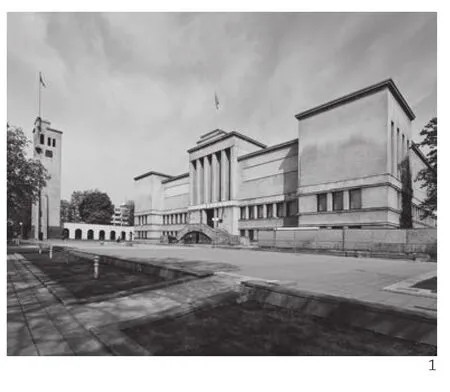
1維陶塔斯大帝軍事博物館,1936年建造,建筑師維拉蒂米拉斯·杜本涅奇斯,卡羅利斯·雷索那斯和卡茲米爾斯·克里斯茨卡迪斯/Vytautas the Great War Museum, architects Vladimiras Dubeneckis, Karolis Reisonas and Kazimieras Kri??iukaitis, built in 1936.(攝影/Photo: Gintaras ?esonis)
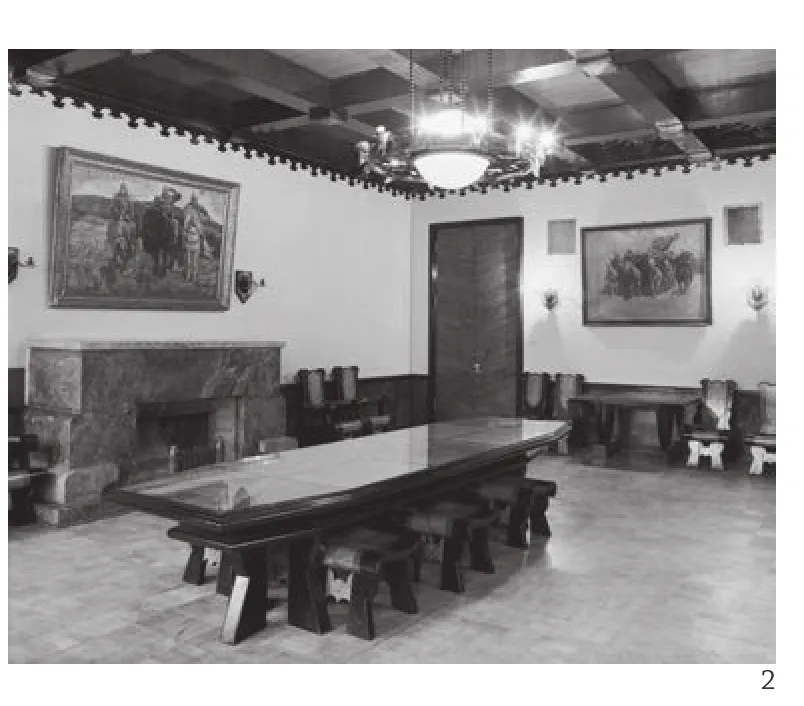
2考納斯駐軍官員俱樂部總部大樓,1937年建造,建筑師斯塔塞斯·庫都卡斯等/Officers Club Ramov?, built in 1937, architects Stasys Kudokas and others. (攝影/Photo:Romualdas Po?erskis)
今天的考納斯,依然保存著逾6000座兩次世界大戰期間建造的建筑。維陶塔斯大帝軍事博物館(圖1)、復活教堂、考納斯駐軍官員俱樂部總部大樓(圖2)、立陶宛銀行及其他一些標志性建筑,至今依然是城市景觀的主宰,塑造著考納斯的城市標志物之網。此外,臨時首都的記憶,亦根植于日常生活環境之中。仍在運行的贊利亞卡涅斯青丘纜車索道和阿勒索塔斯纜車索道(圖3)、公寓住宅 (圖4、5)、學校、工廠和其他建筑,共同編織起一副多元而豐富的城市骨架。獨一無二的地方精神不僅來源于建筑立面,亦包括建成環境中無數細小而原真的細節。在城市街道中漫步,細數數百扇木門,每一扇皆具有個性化的現代設計。室內裝飾著原創性的扶手和其他元素。因此,當我們談到考納斯這樣一座將現代主義內化為地方精神一部分的城市時,也有必要意識到,這是一個多層面的現象,不僅關乎那些標志性建筑,也是一種日常性的習慣。
On 15 April 2015, Brussels conferred the European Heritage Label on "1919-1940 Kaunas"as a testament to the importance of the provisional Lithuanian's capital's phenomenon in the building of Europe. That same year, Kaunas was designated a UNESCO Creative City of Design, with the Interwar heritage acknowledged as a principal criterion for the designation. The architectural legacy was also mentioned in Kaunas'successful bid to be named European Capital of Culture for 2022. The cultural agenda for that year will include a programme entitled'Modernism for the Future', interpreting the Interwar heritage within a broader artistic, social and cultural context. In 2017, Kaunas' modernist architecture was included in the tentative list of UNESCO world heritage sites. Clearly, the modernist heritage has been promoted and adopted as a central element of the city's character – a testament to the modern Europe of the first half of the twentieth century and an emerging and sustainable part of the city's identity, building a bridge from Kaunas' past to its future. It is interesting, that the process of acceptance of this legacy as a cultural heritage has a surprisingly long history. Some buildings were recognised as architectural monuments of local significance as early as 1972 which is one of the earliest inscriptions of modern architecture into cultural heritage list.
Modernism as an urban character of the place
On entering the scene of Lithuanian modernism,it is important to take a short glimpse on the political entourage. Just after the end of WWI,Lithuania, along with the other Baltic countries,gained independence. However, soon after this, in 1919, the historical capital, Vilnius was lost, and the government of the Republic of Lithuania had to move to Kaunas – the second largest city. Previously military town of Tsarist Russia became the temporary capital of the country until 1939. During a short but very intense period, Kaunas lived through the most important phase in its historical development. Its status as a capital city provoked a huge construction boom, aiming to create the entire necessary infrastructure: government institutions, museums,educational institutions (a university, academies and schools), business offices, hotels, industrial premises, housing, and the general infrastructure of the city (water supplies, the sewerage system, a new transport system, roads and parks). The architectural landscape of multicultural Kaunas was enriched by the buildings of various ethnic communities, such as churches, banks and schools, with distinctive forms of expression (in 1937 the population of the city was 61% Lithuanian, 25.5% Jewish, 3.9% Polish, 3.3%German, and 3.3% Russian). In 1938, it attracted 68%of all Lithuanian investment in the construction of towns and cities. The area of the city expanded more than seven times (from 5.57km2in 1919 to 39.40km2in 1939).
More than 6,000 buildings built during the interwar period are still standing in today's Kaunas.Vytautas the Great War Museum (Fig. 1), Resurrection Church, The Officers Club Ramov? (Fig. 2), the Bank of Lithuania and other iconic buildings have survived as the urban dominants and shape the network of urban landmarks of today’s Kaunas. However, reminiscences of the temporary capital are also embedded in the daily life environment. Still-functioning funicular railways in ?aliakalnis and Aleksotas (Fig. 3), residential houses(Fig. 4,5), schools, factories and other objects weave a diverse and manifold urban structure. The unique local spirit is created not only by the fa?ades but also by the small original details of the surroundings. Walking through the streets of the city, we can count hundreds of wooden doors, and each one has its individual modern design. The interiors are decorated with authentic handrails and other elements; therefore,when it comes to Kaunas as a city where modernism is an integral part of the local spirit, it is important to realise that this is a multifaceted phenomenon which is directly related not only to the monuments but also to daily routine.
In essence, the status of the "temporary capital"gave considerable political, cultural and economic impulse to the transformation of Kaunas. It was explicitly recognised by contemporaries who would boast that "no other capital in the Baltic states is so'capitally' prominent like Kaunas <...>." The Lithuanians longing for the old Vilnius haven't even noticed yet that they have already built a new Vilnius”[1]. In a few decades of independence, Kaunas acquired a whole constellation of interwar-period buildings and experienced a large-scale modernisation of the city.This brought Kaunas to a point in the late 1930s when it was already perceived as a city "erasing the traces of the style imposed by the Russians, discovering more and more unique features and acquiring the nature of a modern Western European city"[2].
Modernity as urban manifestation first of all is being defined by functional division of a city into zones, by groups of multi-storey houses, by the principles of free planning, and by certain formal features of architecture that are perhaps most notably expressed in Le Corbusier's five points of modern architecture. The key source of ideological inspiration is overall improvement of hygiene and management of social processes in the city. All of this comprised the common modernist framework, which could be expressed both through individual architectural experiments and larger urban formations depending on specific circumstances. Political aspirations of the new state of Lithuania to build as many "cheap,accurate, hygienic and fireproof dwellings"[3]as possible clearly reflect these tendencies of Modern Movement. However, the actual processes were somewhat different.
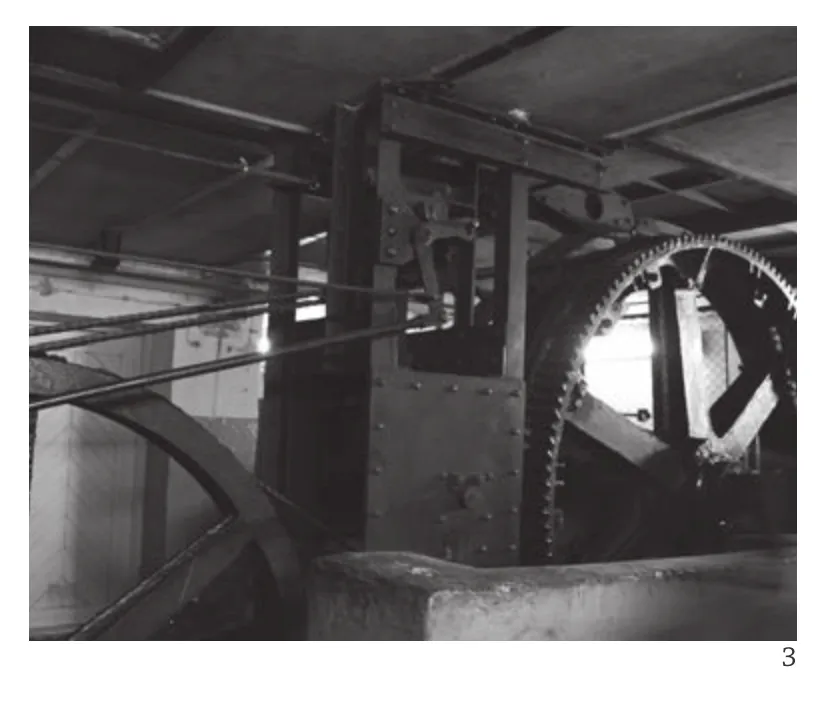
3仍在運營的贊利亞卡涅斯青丘纜車索道,1931年建造/Funicular of Green hill (?aliakalnis) still in operation, built in 1931. (攝影/Photo: Vaidas Petrulis)
Although a plan for urban development was drawn up in 1923 by Danish architect Peter Marius Fandsen and Lithuanian Antanas Jokimas (Fig.6), most of the construction was carried out not in separate, newly-designed quarters, but the buildings were embedded in the already existing urban structure. Despite a boom in construction,most city offices and residents remained in Tsaristera buildings, which were later renovated, expanded and increased in height. Therefore the life was buzzing in the streets of the constantly changing and modernising Tsarist city. In this way, the modernisation of the environment was characterised not by strict functional zones or dramatic urban redevelopment, but by the consistent urban development with a diverse building, where the aesthetics of the 1930s remain the most characteristic layer and the source of inspiration. Here the interwar architecture dominates not only physically, but also as the most important vector of urban development and the essential part of identity.
根本上說,“臨時首都”的地位賦予了考納斯城市轉型極大的政治、文化和經濟動力。同代人曾如此直言不諱地宣稱,“沒有其他任何波羅的海國家首都擁有考納斯這樣杰出的‘首都性’……那些渴望恢復老維爾紐斯的立陶宛人或許還未意識到,他們已然重建了一座新的維爾紐斯。”[1]在獨立后幾十年間,考納斯建起了一大批戰間建筑,經歷了大規模的城市現代化。在1930年代末,考納斯已發展至這樣一個節點,被認為是一座“抹除了俄國強加的風格、愈發獨具特色、擁有現代西歐城市特征”的城市[2]。
現代主義作為一種城市宣言,基本定義即表現為城市功能分區、多層住宅區、自由規劃原則、以及某些建筑形式上的特征——或許最顯而易見的標志就是勒·柯布西耶提出的新建筑五點。其意識形態上的重要源頭即城市衛生的整體改觀及社會進程的管理。這些理念構筑起現代主義的標準框架,不僅體現在個體建筑實驗中,也表現于特定條件下的大范圍城市建設。立陶宛這個新國家力圖建設盡可能多的“廉價、精準、衛生、防火的居所”[3]的政治目標,明確反映了現代主義運動的某些趨勢。然而,實際進程不盡如此。
1923年,丹麥建筑師彼得·馬里烏斯·范森和立陶宛建筑師安塔納斯·喬奇馬斯制定了城市發展規劃(圖6),但大部分建造并不是在另辟新建的街區、而是嵌入業已存在的城市結構之中。盡管經歷了建造熱潮,但城市中大部分辦公和居住功能依然沿用沙俄時期的建筑,這些建筑后來經歷了修復、擴建及加高。因此,在這座不斷變化及現代化中的沙俄城市的街道上,生活甚為繁忙。如此,城市環境的現代化并不表現為嚴謹的功能分區或激進的城市重建,而是多樣化的持續城市發展建設。其中,1930年代的審美觀持續作為最具特征的表現層次和靈感之源。戰間建筑不僅在物理環境中占據主導地位,也是城市發展及身份建構中最主要的部分。
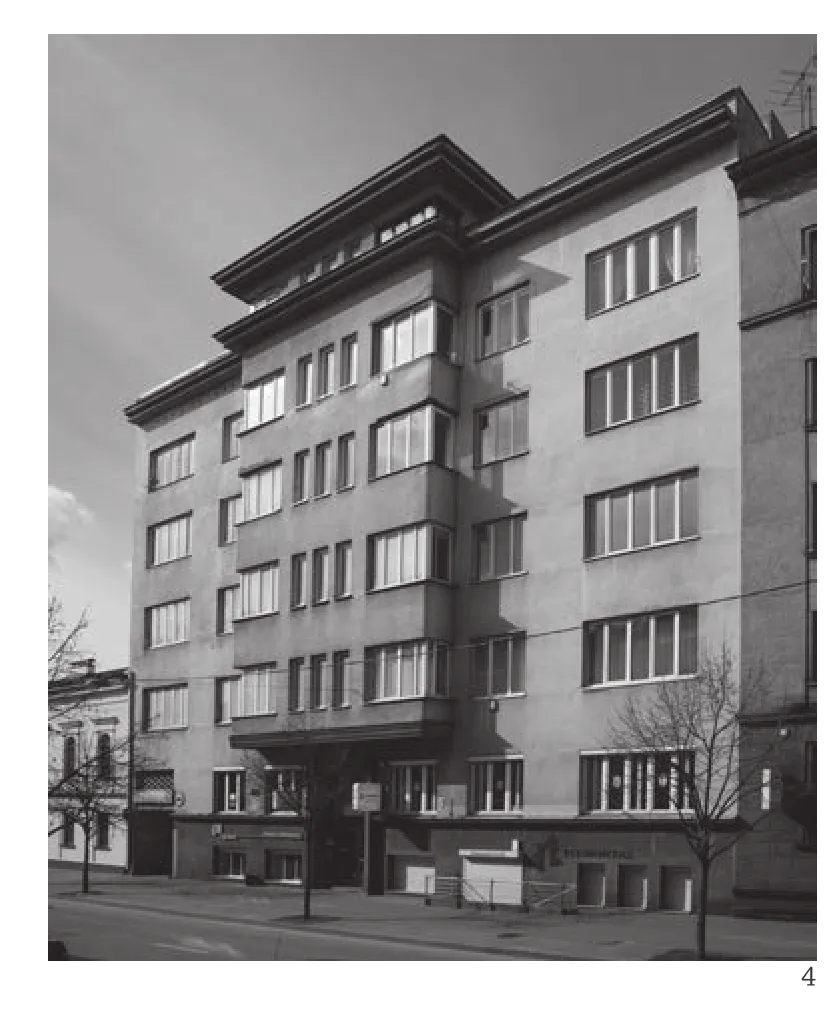
4凱米蘇奈家族建造的住宅,1931年建造,建筑師維陶塔斯·蘭德斯別爾基斯-雅姆卡里尼斯/House built by Chaimsunai family, built in 1931, architect Vytautas Landsbergis-?emkalnis. (攝影/Photo: Gintaras ?esonis)
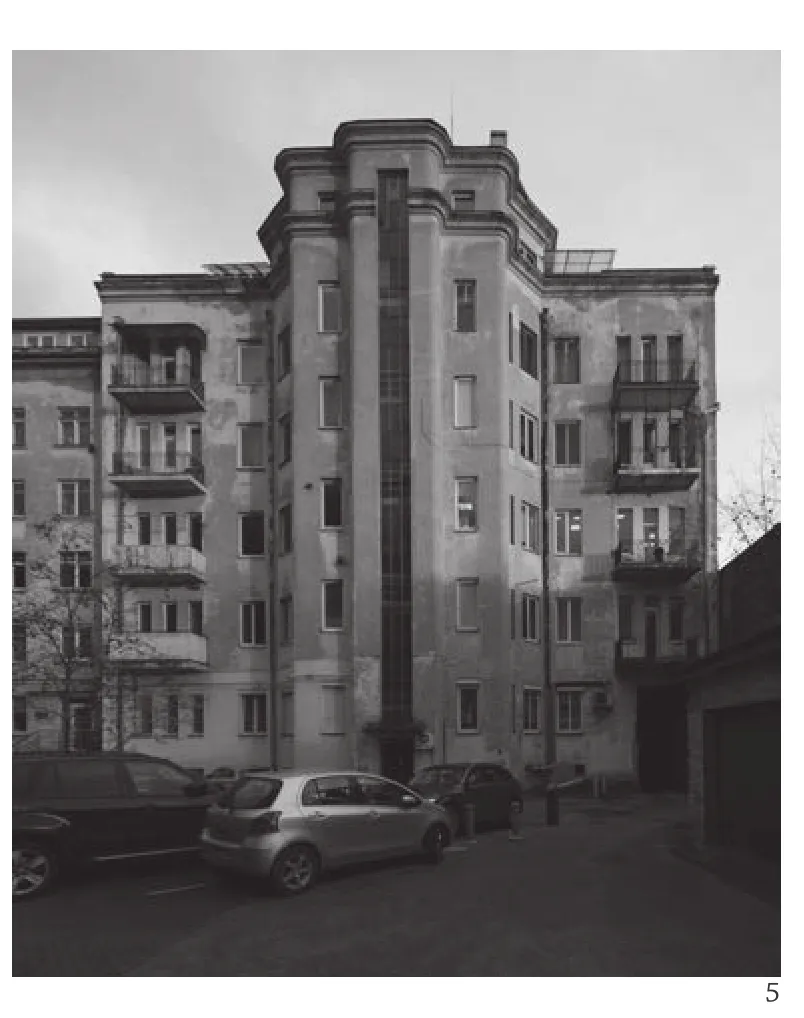
5凱米蘇奈家族建造的住宅背面,1931年建造,建筑師維陶塔斯·蘭德斯別爾基斯-雅姆卡里尼斯/Back fa?ade of the house built by Chaimsunai family, built in 1931, architect Vytautas Landsbergis-?emkalnis. (攝影/Photo: Gintaras ?esonis)
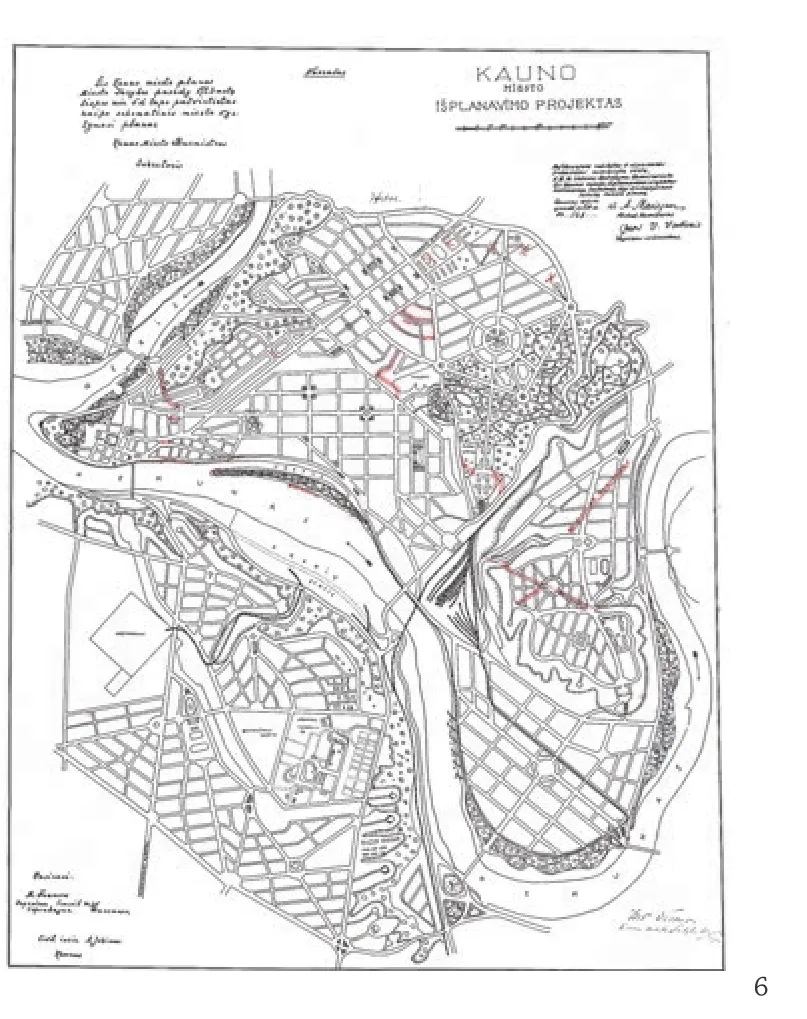
6丹麥建筑師彼得·馬里烏斯·范森和立陶宛建筑師安塔納斯·喬奇馬斯制定的考納斯城市發展規劃,1923年,部分實現/City development plan prepared for Kaunas by the Danish architect Peter Marius Frandsen and Lithuanian architect Antanas Jokimas.1923. Partly implemented.(圖片來源/Source: 立陶宛中央國家檔案館/Lithuanian Central State Archives)
以建筑建構國家身份
從今天的視角回顧20世紀建筑遺產的價值傳承,必須注意的是政治因素在其中發揮的作用——不僅體現在城市的直接物質變化,也影響著意識形態背景。在此語境下,最關鍵的一步就是試圖建構國家身份的建筑進程。對所謂“國家風格”的追尋,顯然與國家最重要的地緣政治目的之一相關——即強化它在文化領域的地位,由此建立一個強有力的民族國家。這一追求“國家風格”的目標可用當時立陶宛最著名的建筑師之一、也是該項目標的制定者卡羅利斯·雷索那斯的話來闡釋:“我們立陶宛人,必須發揮極高的創造力,使我國的建筑屹立于世界之林,以證明我們并非白白活著,并非白白占據這個星球的一部分。”[4]因此,建筑被賦予一項特殊使命——創建獨一無二的城市環境,不僅能代表民族國家身份,且彰顯出一種完全不同于沙俄傳統的建筑形象。
在建筑學領域,大部分“國家風格”的案例皆被視為某種意義上的歷史主義,即將傳統風格要素替代以裝飾性的民間藝術母題(圖7)。某些情況下,建筑師的訴求接近于當時典型見于北歐國家的地域主義。這一情境下,立陶宛的地方建筑傳統發揮著重要作用,提供了國家建筑身份的可能來源。“我們為何要訴諸國外案例?不如去探索薩莫吉希亞(立陶宛西北地區)的農場,在保持其風格的同時適應更先進、衛生的要求,這樣不是更好嗎?”[5]——當時其中一本最重要的城市建筑期刊如此發問。
保守民族主義與現代主義建筑的爭端往往是通過民間藝術傳統的裝飾元素來調解的。其中的決定性角色是民間藝術的研究者和支持者,他們確信“國家風格”最合適的基礎就是廣義上的民間藝術。這類觀點集中體現在一批文章中,強調一種立陶宛的獨特“藝術感”及裝飾化的趨向。正如立陶宛著名藝術家亞當馬斯·瓦爾納斯所宣稱的:“裝飾性木十字架在民間藝術中的使用,完全是一個立陶宛式現象。它在某種意義上就是我們國家的金字塔。”[6]談到這個,值得一提的是2011年聯合國教科文組織將“立陶宛十字架雕刻及其象征體系”納入人類口頭與非物質遺產名錄。
盡管在職業工匠體系中尋找立陶宛精神并不是一個普遍現象,但各種如今可與裝飾藝術運動相聯系的裝飾(不僅是“國家風格”),依然是整個獨立期間考納斯建筑的重要元素。即便在1940年代晚期,新一代建筑師費利克斯·比林斯基依然深信“裝飾的形式必須表達整座建筑的意義和使命。一個裝飾的特寫,就需傳達出這座建筑整體的功能。”[7]考納斯中央郵局就很好地體現了這一愿景,它將現代性與裝飾細節中的地方特征相結合(圖8、9)。窗框模仿了木雕風格,鋪地磚的設計采用了傳統織物紋樣,室內裝飾亦基于民間藝術設計,這一切則與條形長窗、平屋頂等現代主義的標志元素相結合。
現代主義運動的地方詮釋
Search for national identity in architecture
Looking back from today's perspective at the inheritance of this 20th century legacy, it is important to notice that political issues had an impact, not only on the direct physical changes of the city, but also on its ideological background. In this context, probably the most important development was of the architectural processes that indicated a search for a national identity. A search for a socalled "national style" was obviously interconnected with one of the most important geopolitical aims of the state – to strengthen its role in the cultural field in such a way as to construct a strong national state. Such an objective for the "national style" can be described in the words of Karolis Reisonas, one of the most famous Lithuanian architects of that time,who formulated the task: "we, Lithuanians, have to show high creativity, and to make our architecture interesting in a global scale; to prove that we live not in vain, not in vain occupy the part of the globe."[4]Therefore, architecture had a special mission –to create a distinctive urban environment which represented the national state and demonstrated an architectural expression which was completely dissimilar to that of the tsarist Russian legacy.
Most of the examples of a "national style" in professional architecture were treated as a kind of historicism in which traditional stylistic elements were replaced by the decorative motifs of folk art(Fig. 7). In some cases, architectural aspirations could be placed somewhere close to those of a kind of regionalism that was typical for Nordic countries of that time. In this context the local architectural traditions of Lithuanian regions played an important role, indicating possible sources for national architectural identity. "Why do we have to seek examples somewhere abroad? Isn’t it better to explore the Samogitian [north-western region of Lithuania]farmsteads instead, and to adapt them to new progressive and hygienic requirements, while preserving their style?"[5]– asks one of the most important journals on urban and architectural issues.
The dispute between conservative nationalism and modern architecture, were often complemented by rhetorics resembling folk traditions. The decisive role in this discussion was played out by folk art researchers and supporters, who had no doubt that the most excellent basis for a "national style" of architecture should be folk art, in a broad sense. Texts emphasising a special Lithuanian "art feeling" and an inclination toward ornamentation were the main foci of this point of view. As the famous Lithuanian artist Adomas Varnas claimed: "the decorative wooden cross, as it was used in our folk art, is an entirely Lithuanian phenomenon. It is a kind of pyramid of our own."[6]In this context, it would be interesting to remember that UNESCO proclaimed in 2011 that Cross Crafting and Symbolism in Lithuania as part of the oral and intangible heritage of humanity.
Although the attempts to search for the Lithuanian spirit in professional masonry construction are not a dominant phenomenon, various decorations(not only in the national-style) that can now be linked to Art Deco, remain an important piece of Kaunas'architecture during the entire period of independence.Even in the late 1930s, the new generation architect,Feliksas Bielinskis, was convinced that "the ornament must, in its form, interpret the meaning and designation of the entire building. Its thumbnail needs to express what is the function of the building in the whole picture"[7]. Kaunas central post office,could be a good illustration of such aspiration to integrate modernity and local character expressed in ornamentation (Fig. 8,9). Window frames imitating wooden carving, floor tiling designed like the ornament of traditional textiles and interior ornament based on folk art was combined with such expressive signs of modernism as wide strip windows and flat roof.
Local interpretations of Modern Movement
Keywords of modernism in Lithuanian architectural theory and practice become dominant in the 1930's, when the younger generation of Lithuanian architects began to return from their studies in European universities (Rome, Prague,Berlin etc.) and brought with them new ideas of how contemporary capital should look. Newspapers and journals began to explain the aesthetics of modernism, and local officials after their visits to Germany, England and Sweden, brought back descriptions of the construction of schools, social housing and other civic infrastructure. One of the first voices, that of Vladas ?vipas, a student of the Bauhaus in 1927 writes: "our cities have many historical documents that do not touch our minds anymore because they are past their time. Therefore,as a matter of course, architects who still design using historical styles, have to take responsibility for their preference. These houses are mummies, corpses which will stand publicly for centuries. "[8]
Such theoretical assumptions of the 1930s was transformed into world-renowned modernist aesthetics: the consonance of ribbon windows, flat roofs, geometric volumes and planes. The representative office of "Pienocentras" (a manufacturer of milk products, one of the richest companies in Lithuania at that time) – could be a good example of the emergence of modernist ideas in all areas. In the 1937 Paris International Exposition, which was dedicated to Art and Technology in modern life, building won a prize for its architectural design, and became one of the symbols of modern ideas in Lithuanian architecture of the time (Fig. 10). Another symbolical illustration of architectural processes is the Resurrection Church(Fig. 11,12). After long process of completion and public discussions Karolis Reisonas began to develop his grandiloquent building which was completed and started to serve as a church just in 2004. Rising above the slope horizon surrounding the city the church reminds the concept of Stadtkrone – the City Crown – formulated by the renowned German architect Bruno Taut.
Probably the most numerous part of the Kaunas school of modernism is private housing. Many important examples by such architects as Arnas Funkas (Fig. 13), Bronius Elsbergas (Fig. 14) Jokūbas Peras (Fig. 15), Jonas Kri??iukaitis and others are distinguished by original and expressive forms, which,without a doubt, represents the best achievements of Lithuanian interwar modernism. The modernisation of the housing environment was accompanied by a considerably broad theoretical discourse, with the principles of modern housing being discussed both in print and in the public at large, emphasising efficiency and rationalism. A new concept for housing was first presented in the Lithuanian press by Vladas ?vipas.His series of articles, begun in 1927, evolved into a separate publication based on the principles of the Bauhaus, published in 1933 under the title "Urban Residential Homes"[9].
However, when trying to define the characteristic of Kaunas modernism, one has to deal with a phomement much more diverse than simplicity of Modern Movement. One of the elements of the local spirit is the importance of tradition. Although new buildings often used innovative technologies,such as reinforced concrete or glass (Fig. 16), the modernist principles of existential minimalism and standardisation were not adopted in the architecture of Kaunas. Aspirations for modernisation in many cases have been overwhelmed by conservative thoughts. Classical architecture was not forgotten even when advanced technologies were used. For example, Landsbergis-?emkalnis, who designed the Palace of Physical Education (Fig. 18), wrote in 1932 that he sought "to combine two things and two forms into one building: the classics, the first great pioneer of physical culture (Greece), with our times"[10]. Such a monumental classical rhythm of modern forms describes many buildings of Kaunas built in the 1930s (Fig. 17).
現代主義的關鍵詞在1930年代立陶宛的建筑理論和實踐中占據主導,原因是年輕一代立陶宛建筑師在歐洲的大學(羅馬、布拉格、柏林等)學成歸國,帶回關于現代首都形象構設的全新理念。報紙和刊物爭相闡釋現代主義美學,地方官員在訪問德國、英格蘭、瑞典后,亦帶回關于學校、社會住宅及其他市政基礎設施建設的見聞。其中,最早發聲的是1927年一位包豪斯學生瓦拉達斯·斯法帕斯:“我們的城市中包含很多歷史信息,卻無法再觸碰我們的心靈,因為它們早已過時。因此,那些仍采取歷史風格做設計的建筑師理應為他們的品味負責。這些住宅就是歷史的干尸和尸體,竟要在公共眼前繼續矗立幾個世紀。”[8]
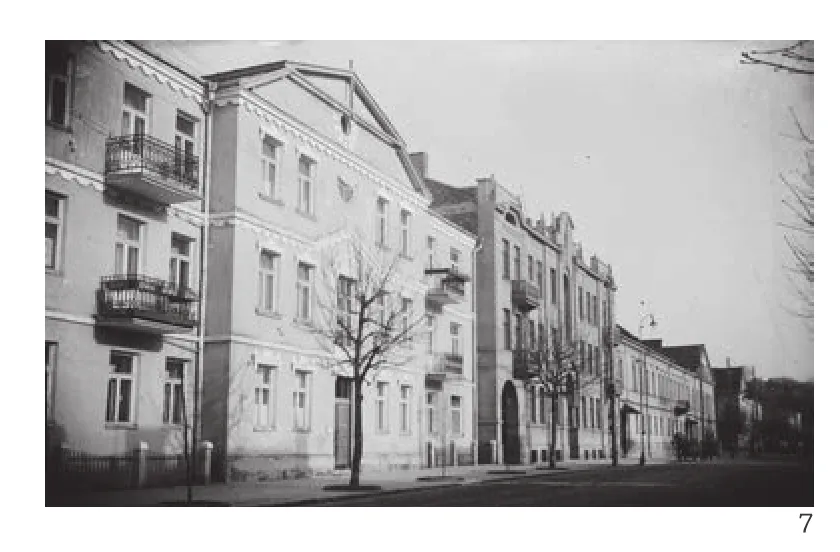
7Tulp?合作公寓樓,1926年建造,建筑師安塔納斯·馬茨賈卡斯/Tulp? Cooperative apartment building, built in 1926,architect Antanas Maciejauskas(圖片來源/Source: M. K. 茨瑞利翁尼斯國家藝術博物館檔案/M. K. ?iurlionis National Art Museum Archives)
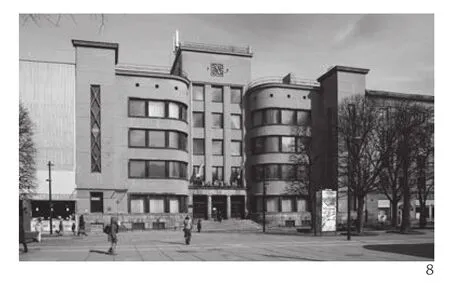
8考納斯中央郵局,1931年建造,建筑師菲利薩斯·維茨巴拉斯/Kaunas central post office, built in 1931, architect Feliksas Vizbaras. (攝影/Photo: Gintaras ?esonis)
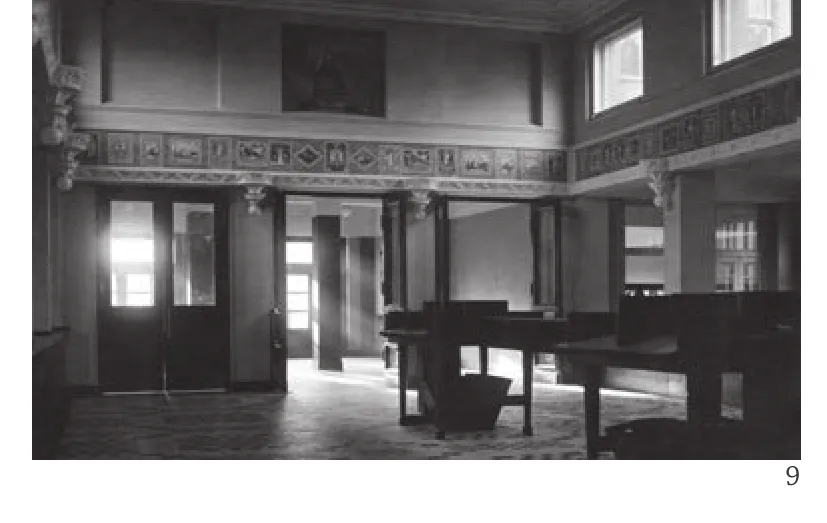
9考納斯中央郵局內景,1931年建造,建筑師菲利薩斯·維茨巴拉斯/Interior of Kaunas central post office, built in 1931,architect Feliksas Vizbaras. (圖片來源/Source: 安塔納斯·伯爾庫斯個人收藏/personal collection of Antanas Burkus)
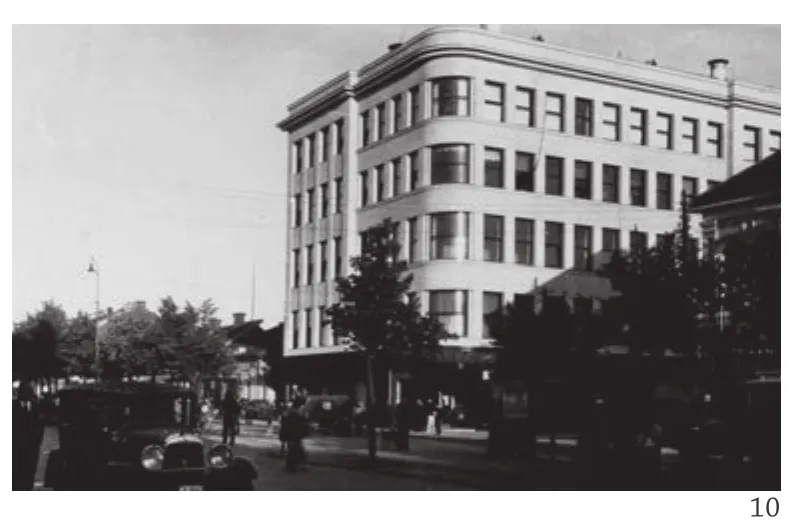
10"Pienocentras"公司辦公樓,1932年建造,建筑師維陶塔斯·蘭德斯別爾基斯-雅姆卡里尼斯/Office building of"Pienocentras" company, built in 1932, architect Vytautas Landsbergis-?emkalnis. (圖片來源/Source: 安塔納斯·伯爾庫斯個人收藏/personal collection of Antanas Burkus)
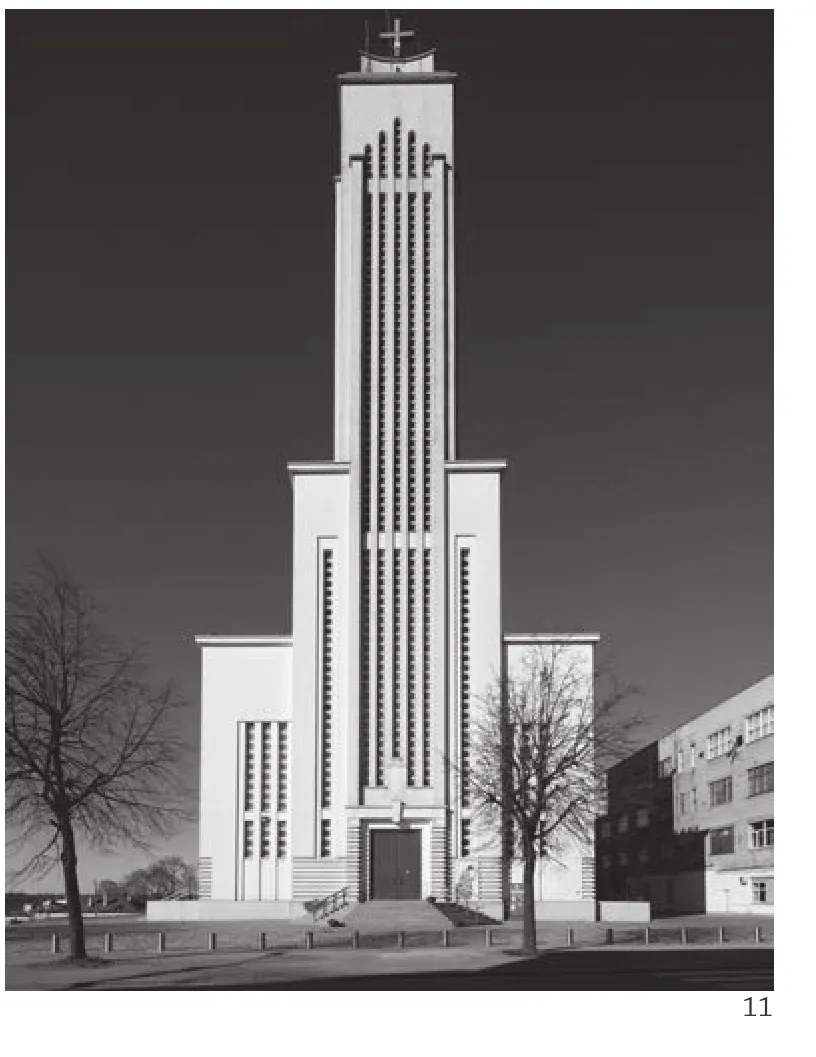
11復活教堂,1931年建造,建筑師卡羅利斯·雷索那斯/Resurrection Church, built from 1931, architect Karolis Reisonas. (攝影/Photo: Gintaras ?esonis)
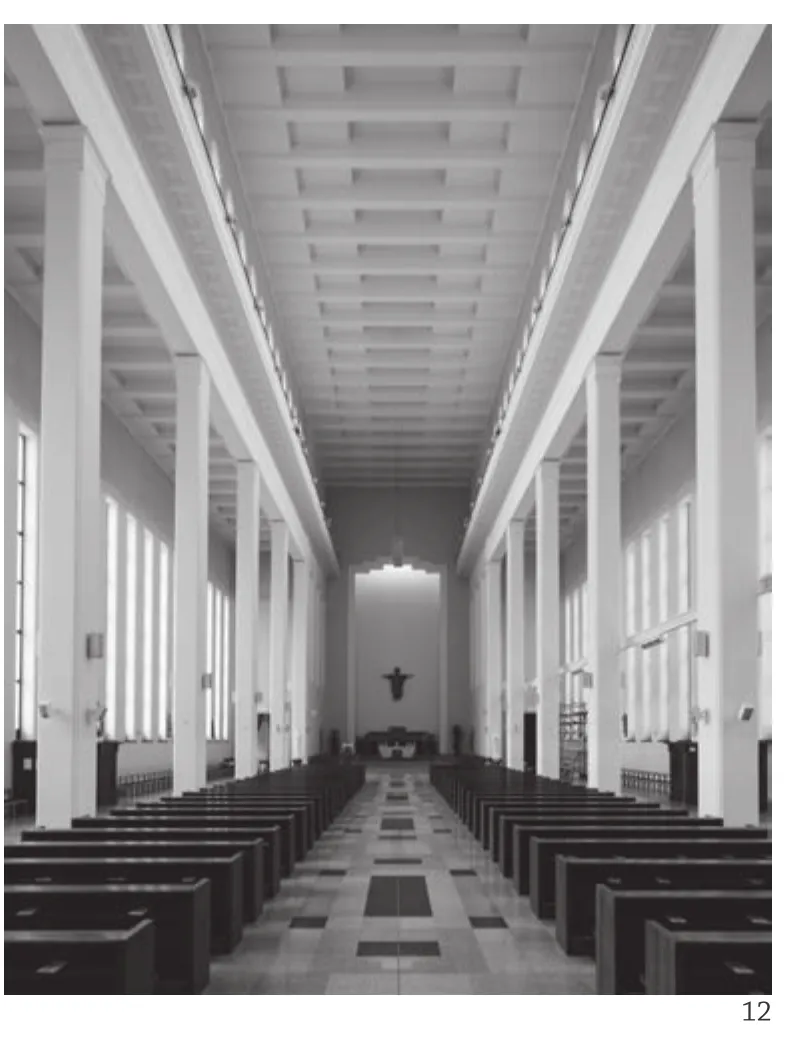
12復活教堂內景,1931年建造,建筑師卡羅利斯·雷索那斯/Resurrection Church, built from 1931, architect Karolis Reisonas. (攝影/Photo: Gintaras ?esonis)
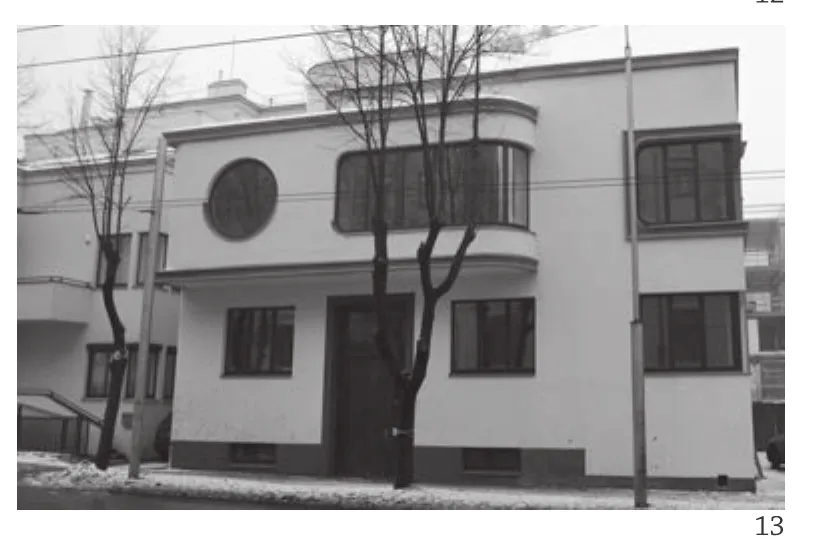
13伊利納艾家庭住宅,1934年建造,建筑師阿爾納斯·芬卡斯/House for Iljinai family, architect Arnas Funkas, built in 1934. (攝影/Photo: Vaidas Petrulis)
1930年代的理論預設后轉化為舉世聞名的現代主義美學體系:帶形窗、平屋頂、幾何體量和平面的交響。“Pienocentras”公司(奶制品生產企業,是當時立陶宛最富有的公司之一)代理辦公室是各地涌現的現代主義理念的一個典型代表。在1937年巴黎世博會——那屆獻給現代生活的藝術與技術的盛會上,這座建筑的設計斬獲大獎,也成為當時立陶宛建筑現代理念的象征(圖10)。這一建筑進程的另一標志物是復活教堂(圖11、12)。經過長時間的競賽和公共意見征詢,卡羅利斯·雷索那斯設計的這座宏偉建筑物直到2004年才建成并投入使用。這座教堂從城市郊區平緩的地平線上拔地而起,使人聯想到德國著名建筑師布魯諾·陶特提出的“城市皇冠”概念。
考納斯現代主義學派最高產的建筑類型應是私人住宅。由阿爾納斯·芬卡斯(圖13)、布羅尼烏斯·埃爾斯貝格斯(圖14)、喬庫巴斯 ·波拉斯(圖15)、喬納斯·克里斯茨卡迪斯等建筑師創作的一批重要作品的形式皆具獨創性、表現性,無疑代表了立陶宛戰間現代主義的最高成就。居住環境的現代化伴隨著相當廣泛的理論探討,強調效率和理性的現代住宅原則在理論界和公眾領域皆引發討論。住宅的新理念最早由瓦拉達斯·斯法帕斯刊載于立陶宛媒體。他從1927年開始連載的系列文章最后匯集為一本基于包豪斯原則的出版物,于1933年出版,題為《城市居住的家》[9]。
然而,當我們試圖定義考納斯現代主義的特征,面臨的現實遠比現代主義運動所倡導的簡約要多樣得多。地方精神中一個重要的元素是傳統。盡管新建筑往往采用增強混凝土或玻璃等新技術(圖16),但存在主義式的極少主義和標準化等現代建筑原則并未體現于考納斯的建筑中。在很多情況下,對現代化的渴求被保守思想所壓制。即便在先進技術被廣泛使用的年代,古典建筑仍未被遺忘。例如,體育教育館(圖18)的建筑師蘭德斯別爾基斯-雅姆卡里尼斯在1932年寫道,他試圖“將兩條頭緒、兩種形式融入一座建筑:古典——來自物理學先驅的時代(古希臘)——與當代。”[10]這種具有紀念性古典韻律的現代形式,是1930年代很多考納斯建筑的縮影(圖17)。
綜上所述,兩次世界大戰期間立陶宛、尤其是考納斯的建筑,展現出現代主義運動、“民族風格”詮釋及地方建筑品味的有趣融合。盡管考納斯建造的初衷是重現維爾紐斯這樣的歷史古都,但樂觀主義的居住者們創造出的卻是一座由高品質且耐用的建筑構成的切時、現代而風格多樣的城市。戰間建筑最重大的目標之一——創造一個原創性的立陶宛建筑模式——完全是通過建筑學層面的城市現代化、而非幼稚的民間藝術效仿來實現的。如今,我們不妨把該時期的建筑遺產理解為立陶宛現代主義學派。□
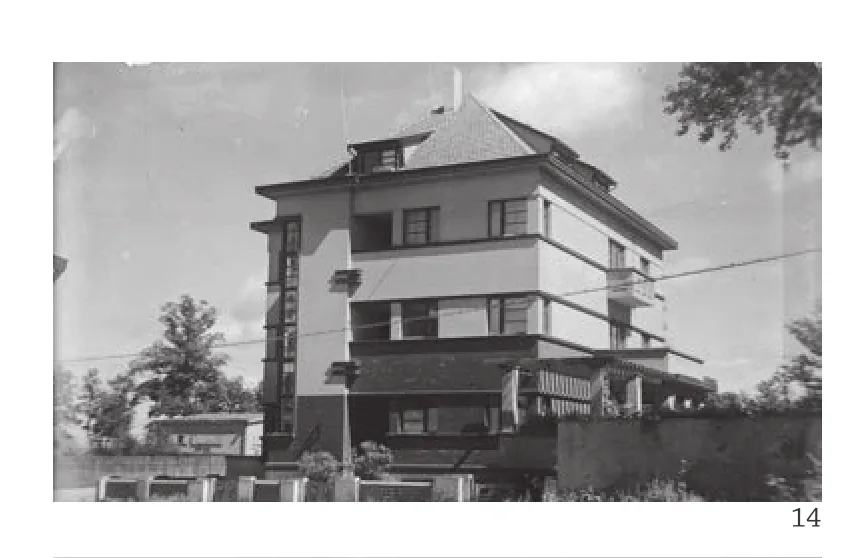
14波洛納艾和維索卡艾家庭住宅,1933年建造,建筑師布羅尼烏斯·埃爾斯貝格斯/House for Baronai and Visockiai families, architect Bronius Elsbergas, built in 1933. (圖片來源/Source: M. K. 茨瑞利翁尼斯國家藝術博物館檔案/M.K. ?iurlionis National Art Museum Archives)
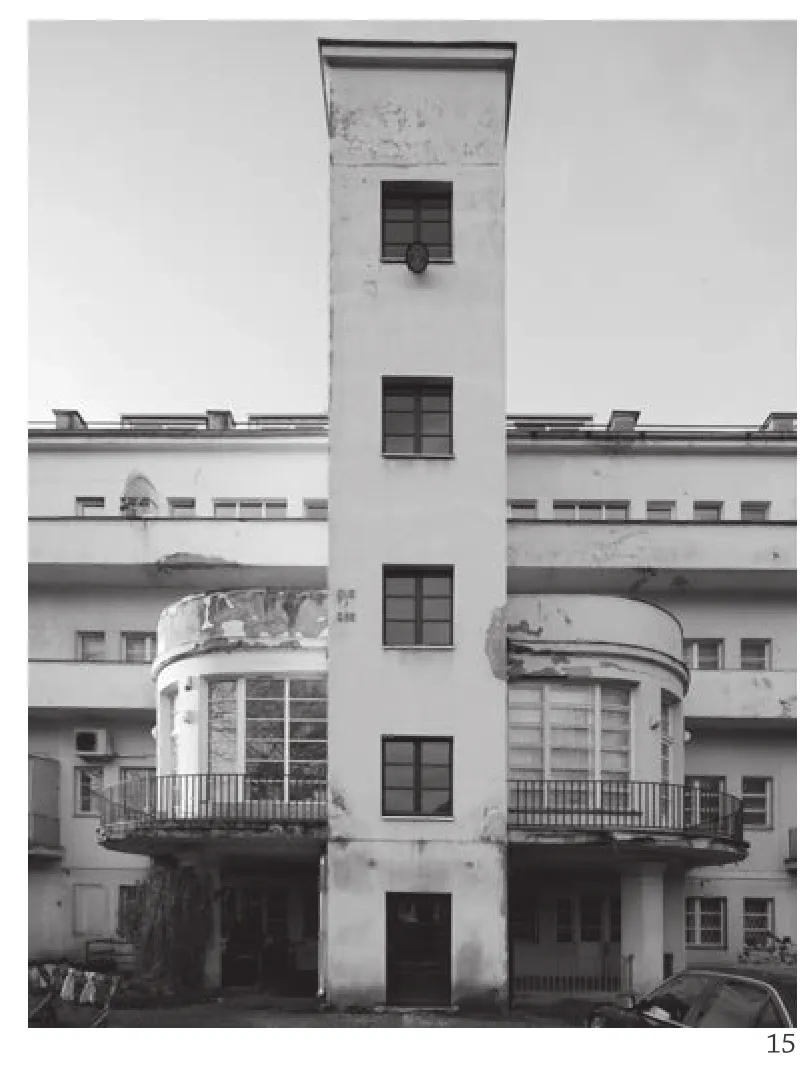
15波斯凡奇斯和科利薩斯家庭住宅,1958年建造,建筑師喬庫巴斯·波拉斯/House for Posvianskis and Klisas family,architect Jokūbas Peras, built in 1958. (攝影/Photo:Gintaras ?esonis)
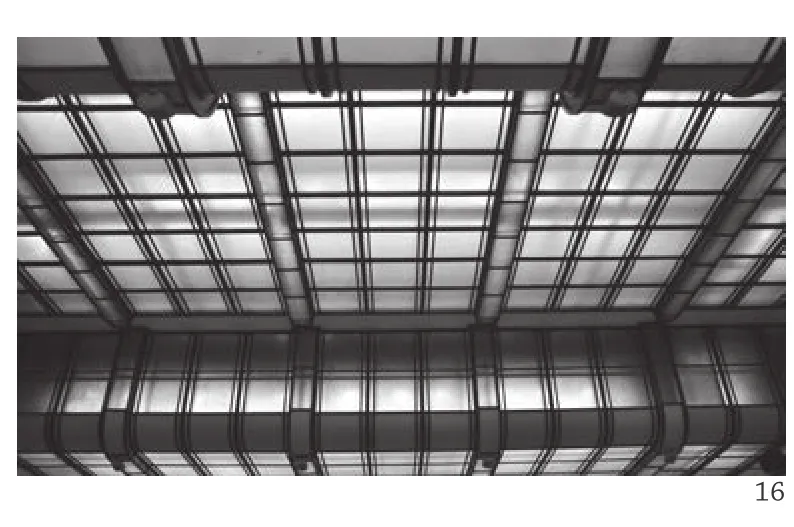
16國家儲蓄銀行(現考納斯市政局)的屋頂,1940年建造,建筑師阿爾納斯·芬卡斯/Ceiling in State Savings Bank(now Kaunas City Municipality), architect Arnas Funkas,built in 1940. (攝影/Photo: Vaidas Petrulis)
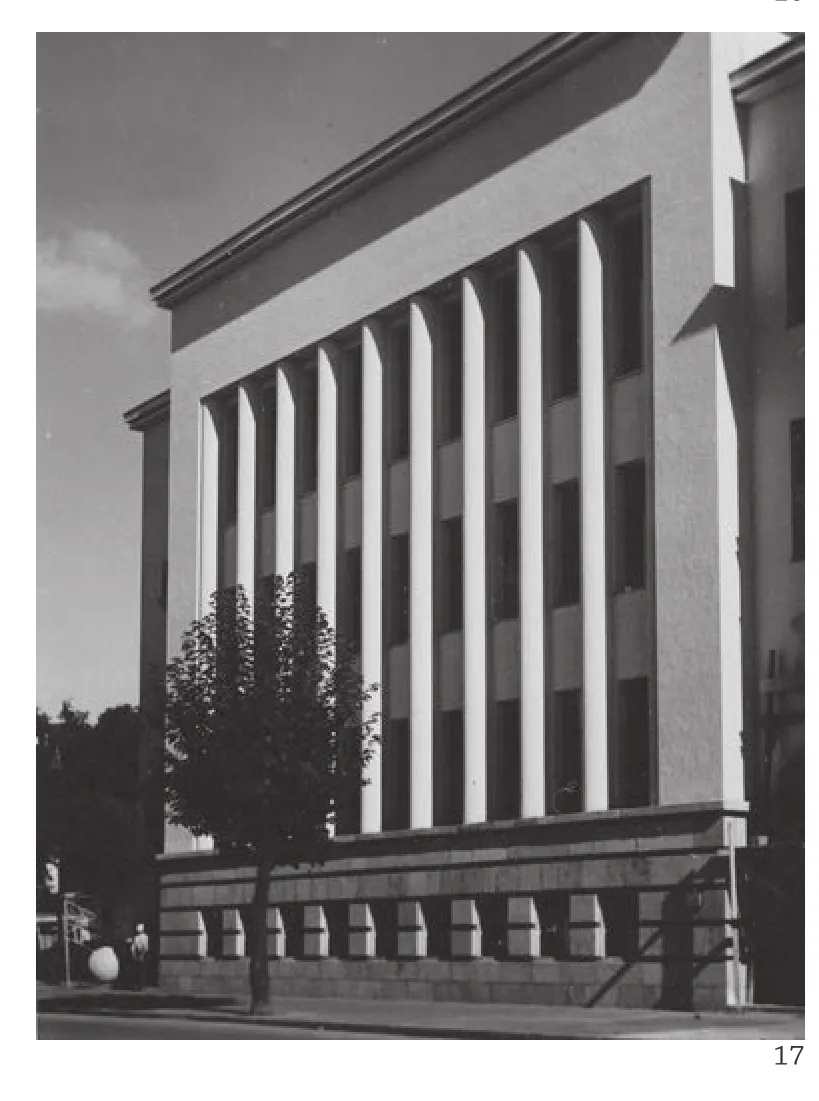
17工業貿易及手工業大廈,1938年建造,建筑師維陶塔斯·蘭德斯別爾基斯-雅姆卡里尼斯/Chamber of Commerce, Industry and Crafts, built in 1938, architect Vytautas Landsbergis-?emkalnis. (圖片來源/Source: M. K. 茨瑞利翁尼斯國家藝術博物館檔案/M. K. ?iurlionis National Art Museum Archives)
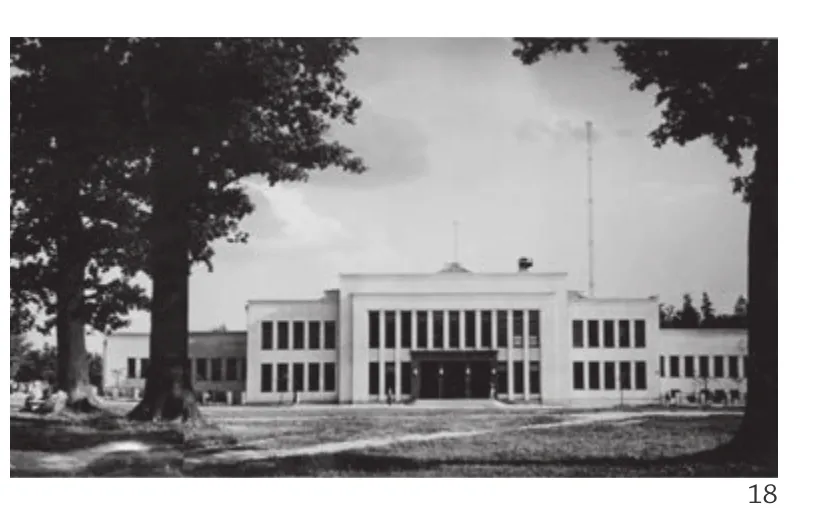
18體育教育館,1934年建造,建筑師維陶塔斯·蘭德斯別爾基斯-雅姆卡里尼斯/Palace of Physical Education, built in 1934, architect Vytautas Landsbergis-?emkalnis. (圖片來源/Source: 立陶宛中央國家檔案館攝影文件部/Lithuanian central state archive, photodocuments department)
To sum up, architecture of the interwar period in Lithuania, and especially in Kaunas exhibits an interesting mixture of the Modern Movement,interpretations of so-called "national style", and of local architectural taste. Although Kaunas was built with a hope of restoring the historic capital of Vilnius,the optimistic residents created a contemporary,modern and stylistically diverse city with durable buildings of high quality. One of the most important goals of the interwar architecture – to create an original formula of Lithuanian architecture was completely implemented through modernisation of the city instead of na?ve folk art imitations in professional architecture. Now we understand this legacy as a school of Lithuanian modernism. □
參考文獻/References
[1]Est? ?urnalista apie Kaun? [Estonian journalist on Kaunas]. Rytas, 7 February 1935:5.
[2]Kaunas i?augo ? modern? miest?. "Polska Zbrojna"atsiliepimas [Kaunas grew into modern city. Opinion by"Polska Zbrojna"], Lietuvos aidas, 22 March 1939:2.
[3]Lietuvos atstatymo komisariato aplinkra?tis [Circular of the Lithuanian Reconstruction Commissariat], 1923 m., LCVA, f. 377, ap. 8, b. 4:64.
[4]Karolis Reisonas, Naujos id?jos architektūroje [New ideas in architecture], Savivaldyb?, 1933, no. 9:35.
[5]Kaim? ir miesteli? pagra?inimas [The embellishment of villages and townships], Savivaldyb?, 1938, no. 4:98.[6]Adomas Varnas, Lietuvi? kry?iai [Lithuanian crosses],Baras, 1925, no. 5:81.
[7]Bielinskis, Feliksas. Architektūros esm? [On Essence of Architecture], Savivaldyb?, 1937, nr. 2:61–62[8]Vladas ?vipas, Architektūros reikalu [On matters of architecture], Kultūra, 1927, no. 7–8:334.
[9]Vladas ?vipas, Miesto gyvenamieji namai [Urban Residential Homes]. Kaunas, 1933.
[10]Landsbergis, Vytautas. Fizi?ko aukl?jimo rūmai [House of physical Education]. Fizi?kas aukl?jimas, 1931, nr. 2:109–115.
猜你喜歡
北方建筑(2021年6期)2021-12-31 03:03:54
文苑(2020年10期)2020-11-07 03:15:36
現代裝飾(2020年6期)2020-06-22 08:43:12
現代裝飾(2020年4期)2020-05-20 08:55:08
攝影之友(影像視覺)(2019年2期)2019-03-05 08:27:16
藝術家(2017年3期)2018-01-26 08:54:49
文學自由談(2016年3期)2016-06-15 13:01:16
福建農業科技(2016年10期)2016-03-07 09:46:49
少兒科學周刊·兒童版(2015年6期)2015-11-24 03:49:38
中國工程咨詢(2015年4期)2015-02-14 03:49:56