共生院,北京,中國
2018-10-27 05:19:46建筑設計標準營造
世界建筑 2018年10期
關鍵詞:功能模塊
建筑設計:標準營造
共生院是標準營造繼微胡同、微雜院之后,對北京舊城四合院有機更新改造新模式的進一步探索實踐。目的是探索在傳統胡同格局中公共與私人共同生活的可能性,并實驗在局限空間中滿足全部基礎設施需求,創造胡同小尺度舒適生活。
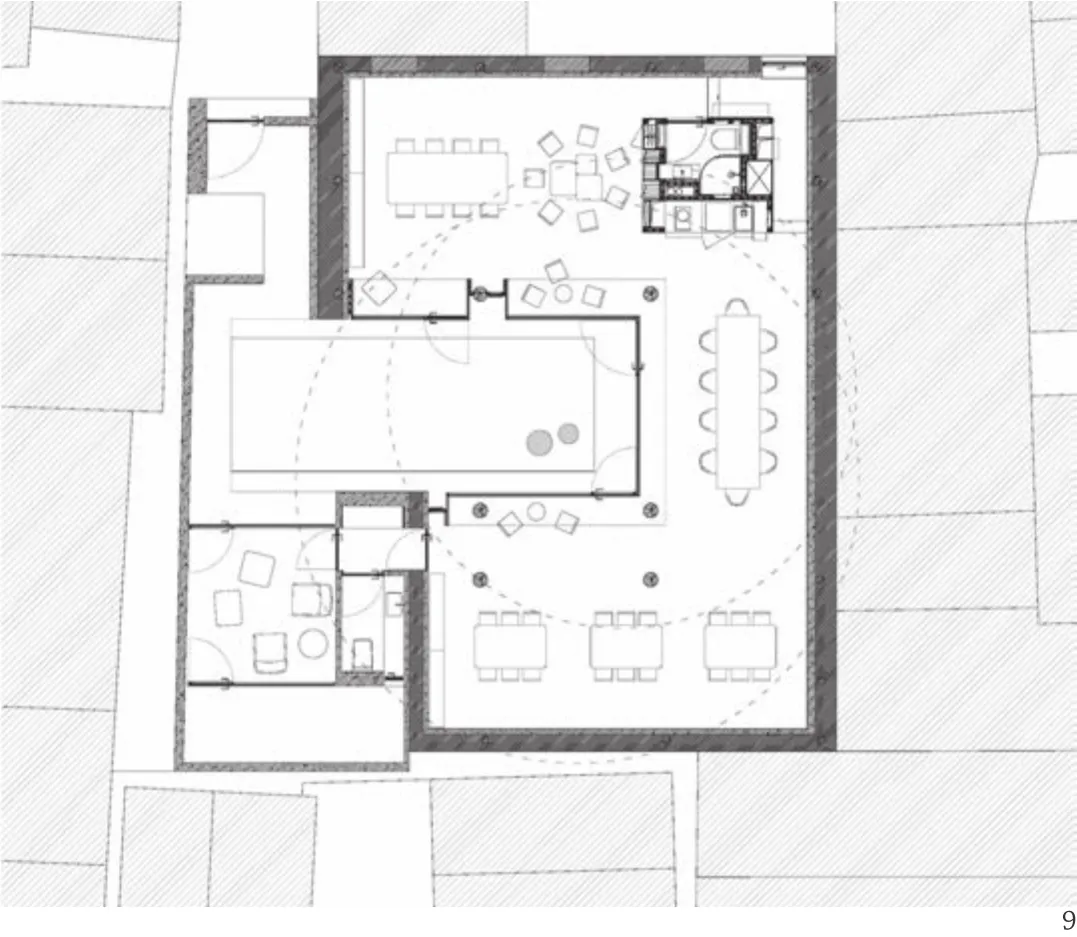
基地位于白塔寺歷史保護區內一處150m2的雜院。設計通過木屋架延伸連接,墻體整合強化等動作,用翻修取代重建,創造出3個不同尺度的豐富院落。共生院由一個只占據胡同一個開間模數的8m2大小包含日常生活所需一切基礎設施的插入式居住單元和一個完整連續的公共展覽空間組成,并在公共空間中置入一個4.5m2集廚房、洗衣、衛生間、儲物等一體化的功能模塊。私人居住與公共展覽環繞院子共生,創造多種生活方式共存的豐富狀態。
其中插入式居住單元和一體化功能模塊,結構獨立,其產品化、集約化的特點可在舊城改造中積極推廣,最大化地改善影響胡同生活最迫切的基礎設施問題。對于北京舊城保護片區中的更新改造具有普遍意義。□
Co-Living Courtyard further explores a sustainable renewal strategy for the historic fabric in old city Beijing, following the other two building experiments: Micro Hutong and Micro Yuan'er, also completed by ZAO/standardarchitecture. It aims to explore co-living possibilities between public and private in traditional courtyard structure, and challenge ways of infrastructure integration in limited space to create decent new hutong life.
Located in Baitasi historical area, the messy courtyard of 150m2is renovated into a co-existing space with three courtyards of various scales shared by two different properties. One is a minimum of 8 m2inserted by living units of only one bay for each, including all demands necessary for a person or couple to live in. The other relatively big and continues space is intended to be an exhibition open to the public. Furthermore, a service core of 4.5m2facilitated with kitchen, bathroom, laundry and storage is merged in the public space, providing amenities largely lacking in Hutongs.
Both the minimum inserted living unit and the service core are characterised by their possibilities of industrialisation like products. Once propagated throughout the old city, they may solve urgent infrastructure problems and dramatically improve the quality of life among hutong residents. □
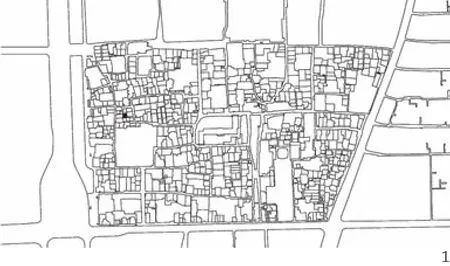
1 總規劃/Situation
2 庭院/Courtyard
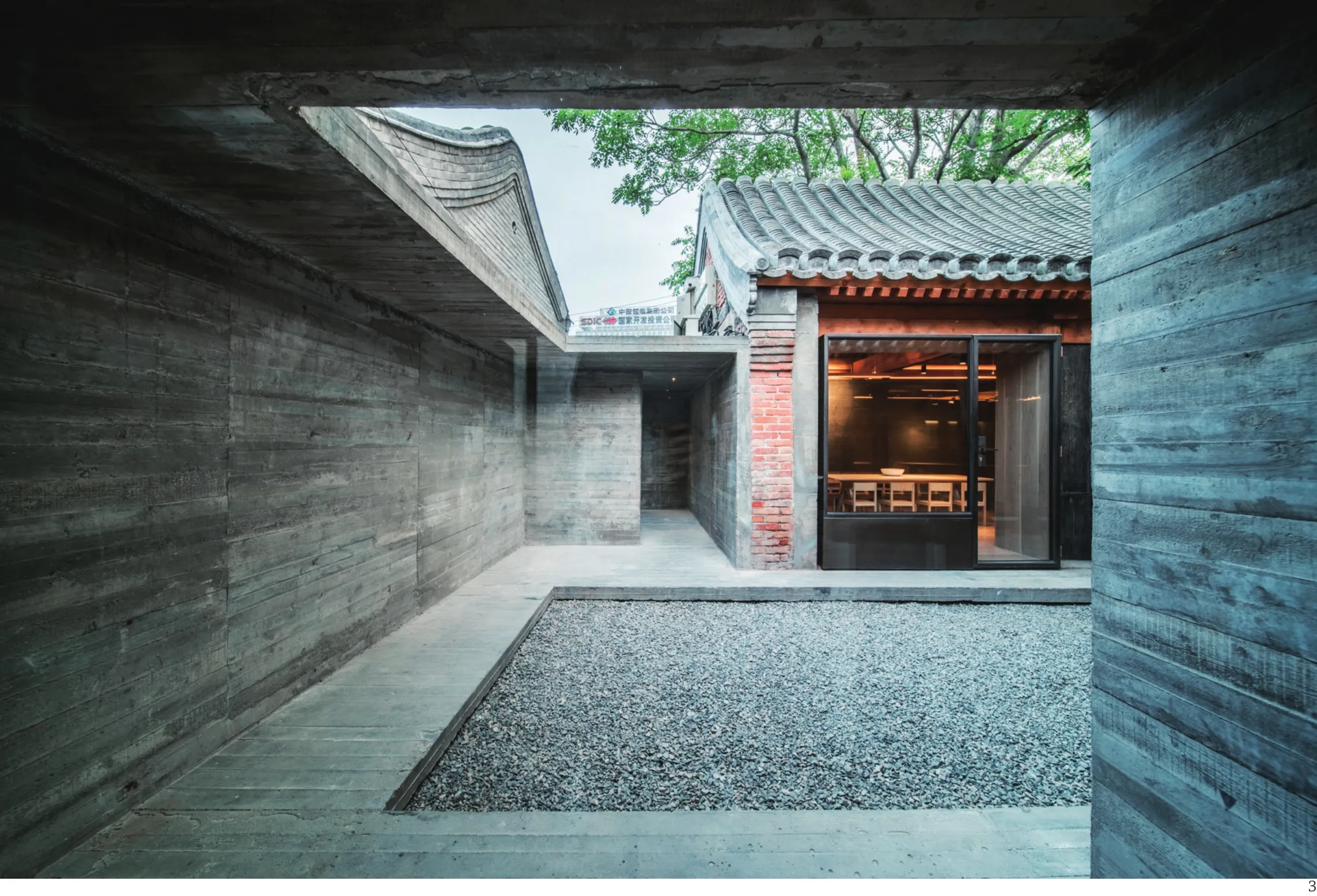
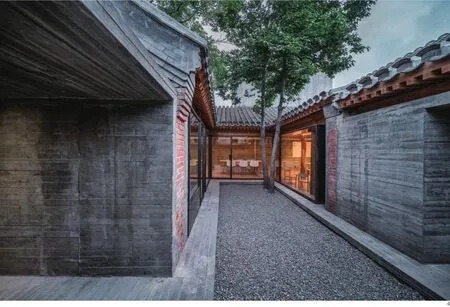
3.4 外景/Exterior views
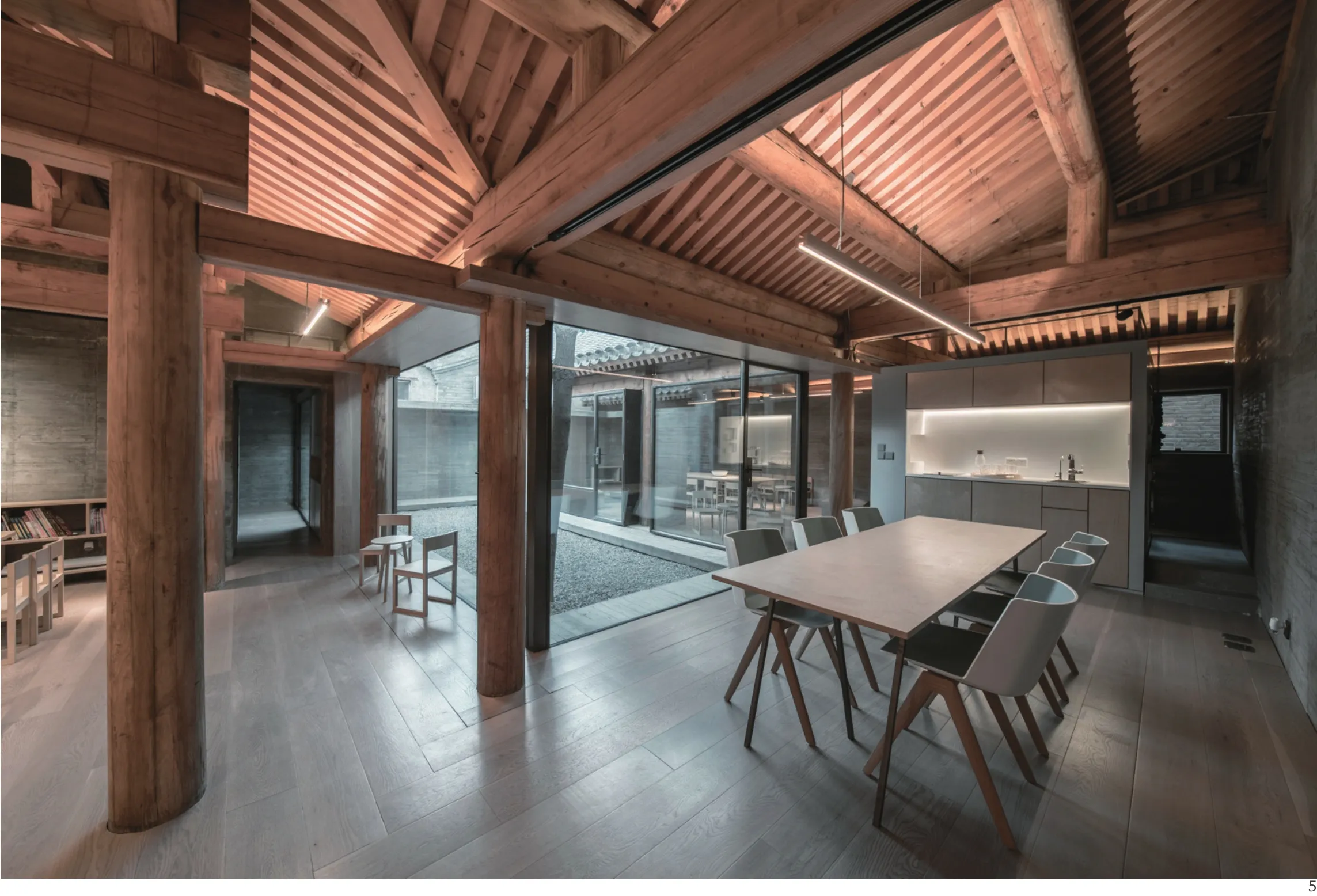
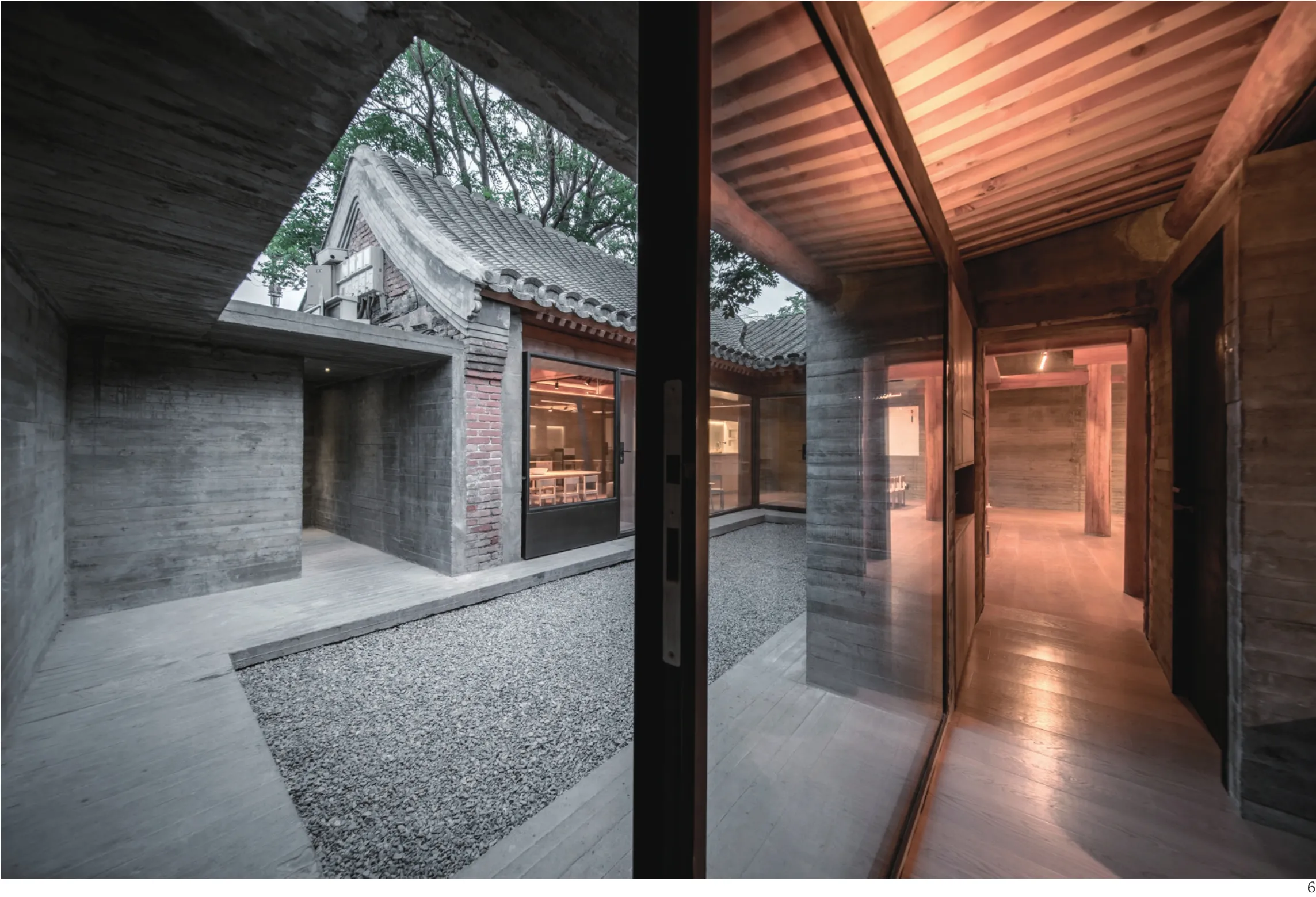
5.6 內景/Interior views
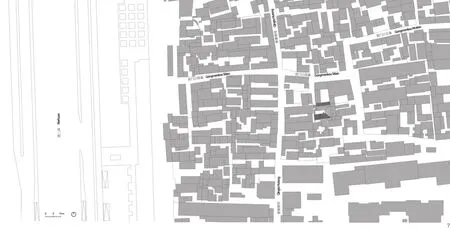

7 總平面/Site plan
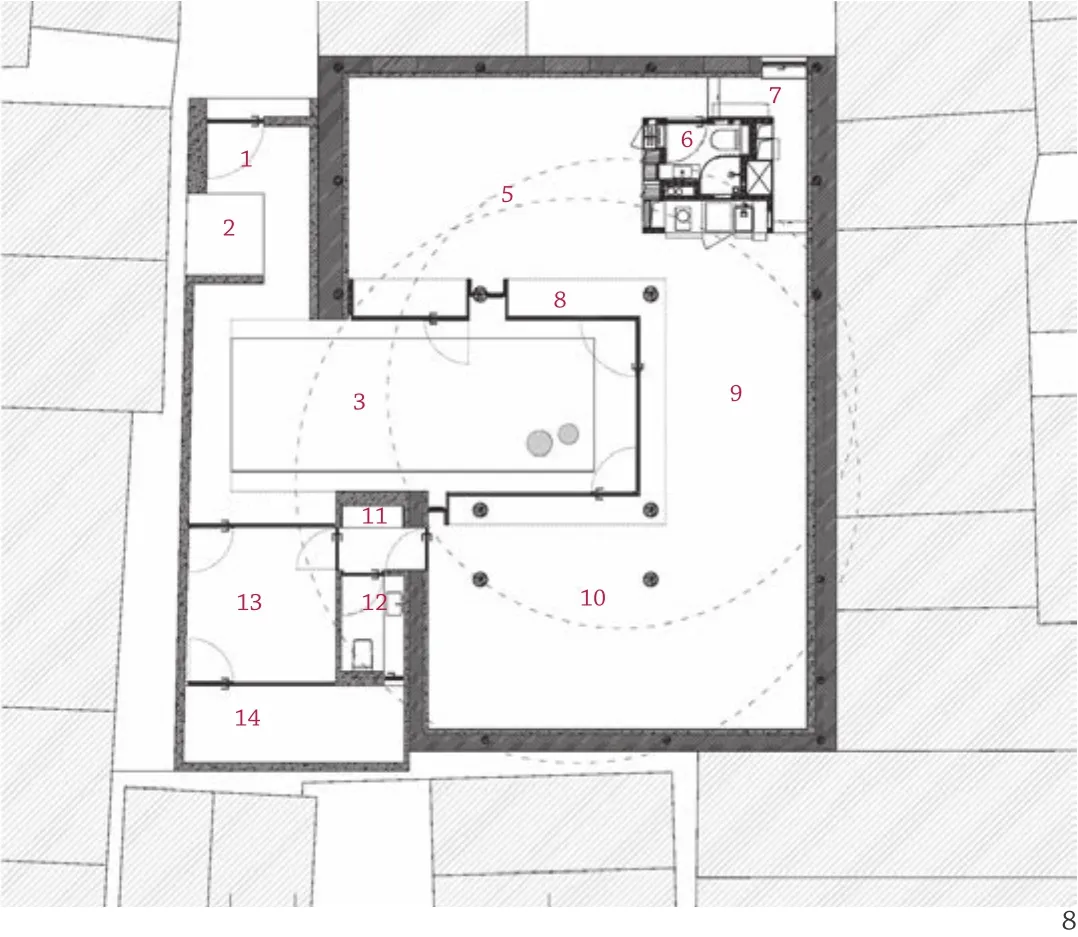
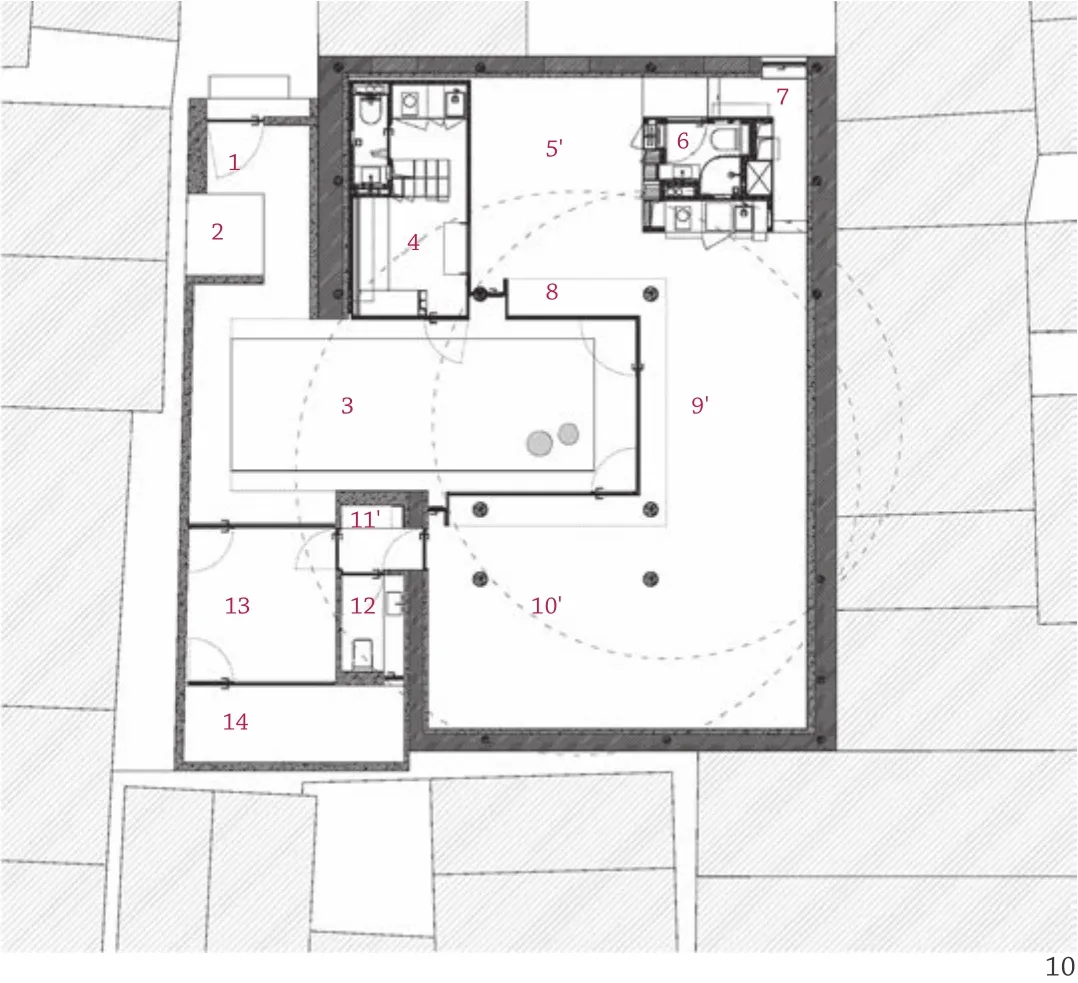
8.9 改造后平面/Plans after regeneration
10.11 插入式居住單元平面/Inserted unit plans
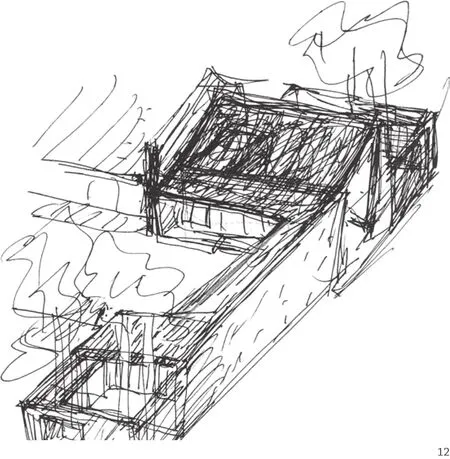
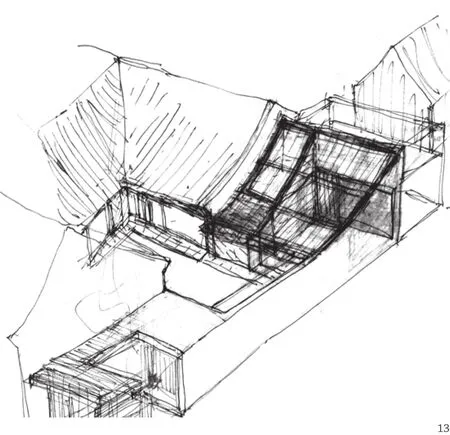
12.13 草圖/Drafts
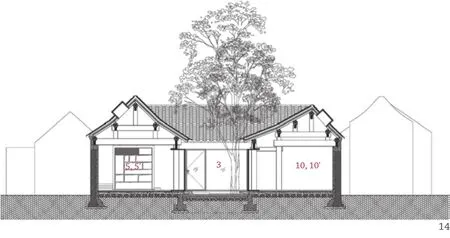
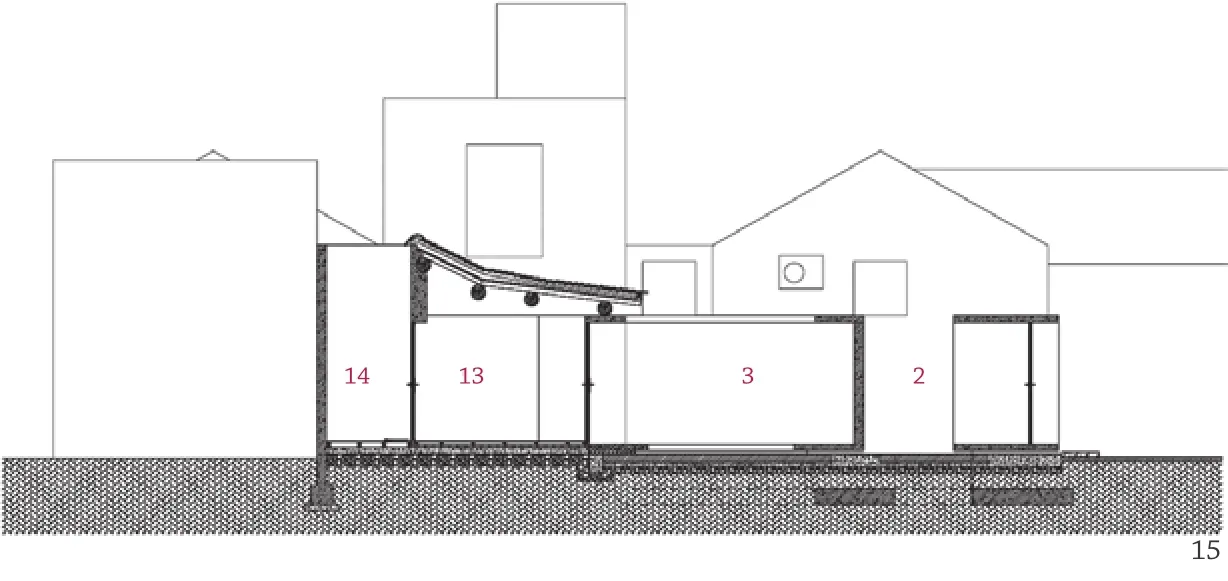
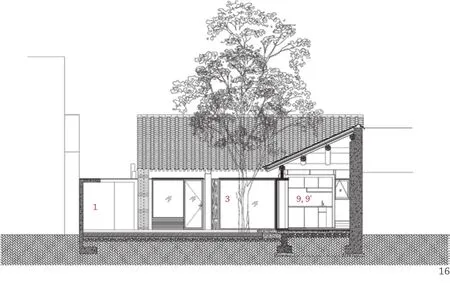
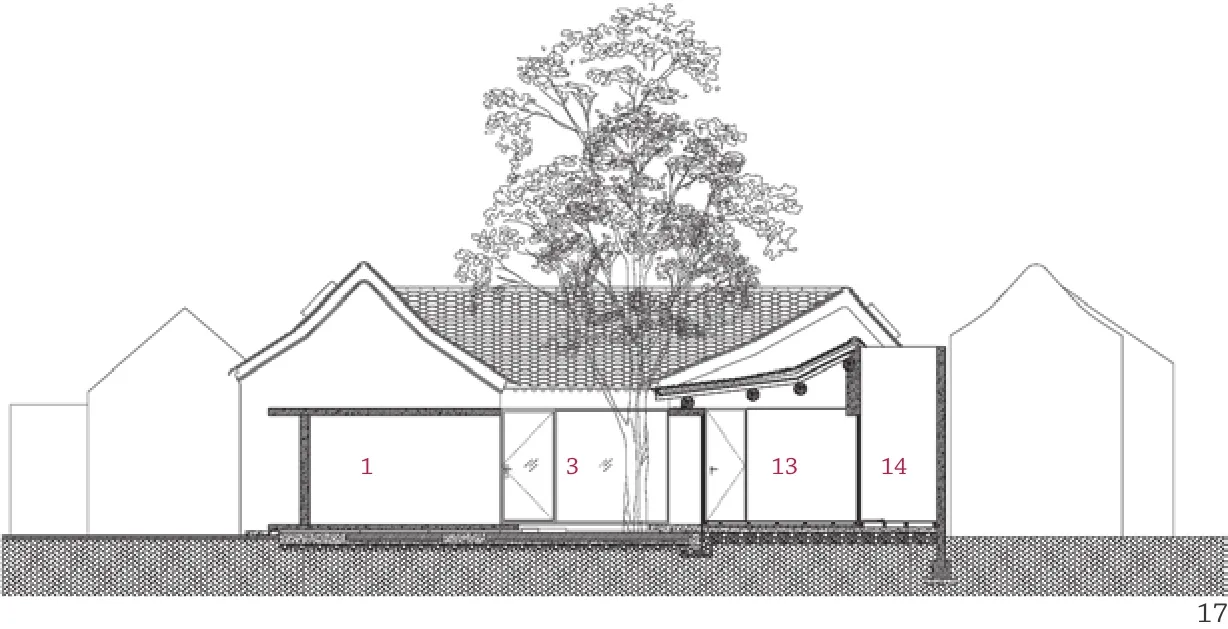
14-17 剖面/Sections
1-入口連廊/Porch
2-入口天井/Patio
3-庭院/Courtyard
4-插入起居單元/Inserted living unit
5-教室I/Classroom I
5'-臥室/Bedroom
6-功能模塊/Service core
7-走廊/Corridor
8-廊道/Corridor
9-入口門廳,工作臺/Entrance hall, working
9'-入口門廳,餐廳/Entrance hall, dining
10-教室II/Classroom II
10'-起居室/Living room
11-儲物架/Storage
11'-更衣室/Closet
12-衛生間/WC
13-茶室,會客廳/Tea house, lounge
14-后院天井/Patio
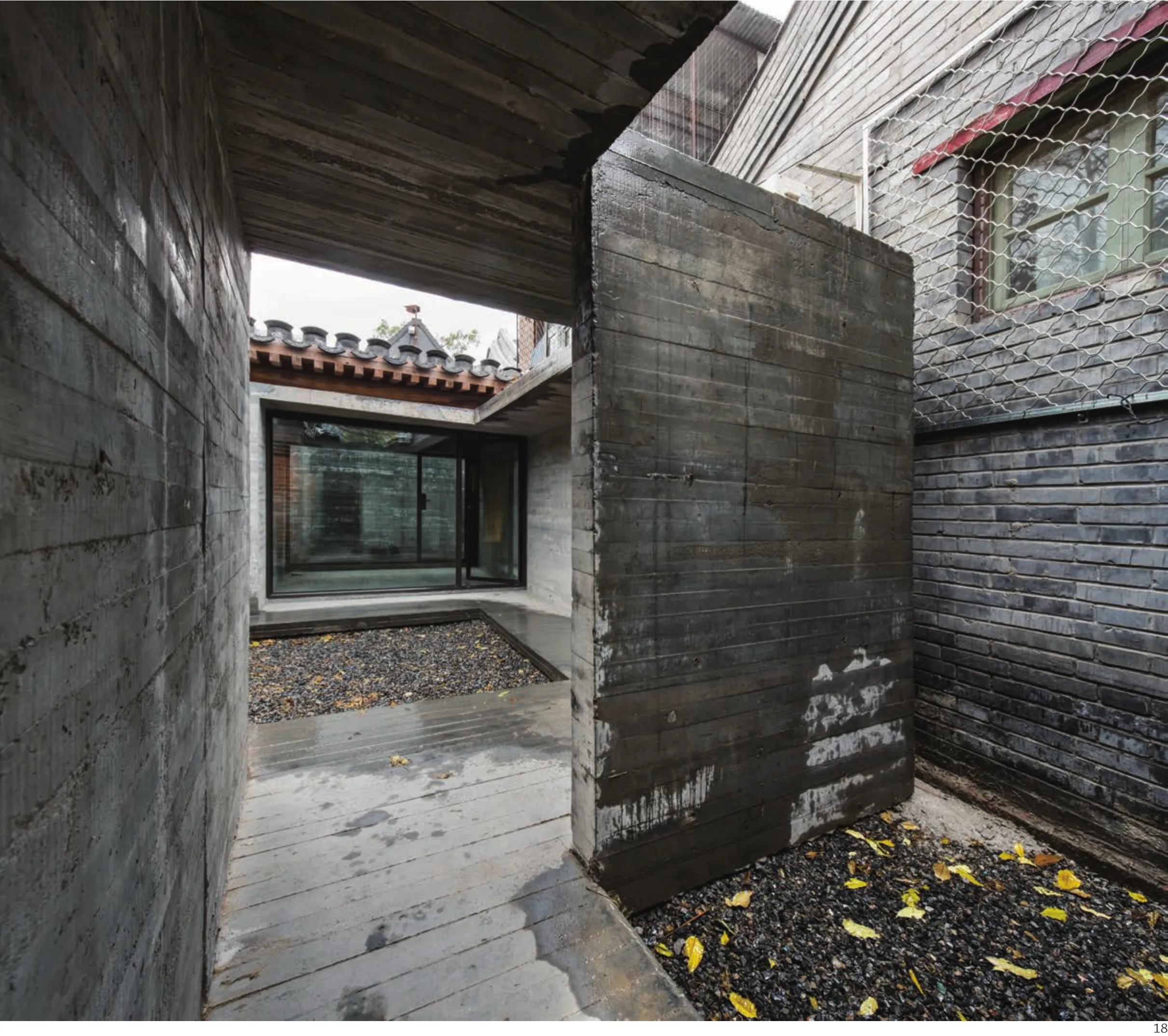
18 入口/Entrance
評論
張悅:“共生院”是標準營造繼“微胡同”“微雜院”之后關于北京老城的又一次探索,它除了繼續在微小尺度上進行空間形式探索之外,還更加深入地貼近了老城的生活與就業共生,也更加謙遜地應答了來自歷史保護和鄰里關系的苛刻制約。
在歷史環境中共生。北京老城被作為整體加以保護的共識正越來越強烈。據此,“共生院”在總平面設計上盡量保留原有院落格局,并通過西圍廊的補充和連續地臺的限定,使“合院”的原型性更加清晰;屋面與外立面也使用了與周邊環境相一致的色彩與質感,使得整個建筑和諧地融入老城肌理。在內檐墻設計中則拋棄了繁復的傳統木門窗做法,代之以最大的通透和極致的門窗框寬度控制,更加突顯出傳統空間的內向圍合意義。呈現出的兩堵僅有的原來的紅磚山墻,被結構加固的混凝土所凝固,時間和記憶仿佛也就此被凝固,它們并不張揚,但當被人發現時卻十分沉重。
在鄰里關系中共生。北京老城在近當代城市化的過程中人口激增,人居環境呈現出高密度、碎片化的特征。任何新的改造設計,都須在緊張的鄰里關系和空間對峙之中承受壓力。從“共生院”的各向剖面設計中,就可看出其與相鄰房屋在檐高、脊高、坡度、坡向、窗口位置等方面的艱難應答。從平面設計中也可以看出,在共墻或貼墻的情況下,設計盡量保留了原有墻體并從內側進行加固,或采取一定退讓的姿態,以減小和避免對物理上和心理上的鄰里邊界的擾動。因此,相比于通常的四合院標準圖集做法或者一些不管不顧的強勢介入而言,“共生院”這種對鄰里關系的應答充滿了生動性。
在設施改善中共生。北京老城基礎設施水平低下、特別是院內廚衛設施的缺失,是民生改善的最大挑戰之一。對此,“共生院”提出功能模塊的概念,很好地以模塊組合集成的方式來提高空間利用效率,以預制和裝配化的產品來降低成本和減小施工影響。其中,處于公共空間的模塊采取從中心面向四周使用的模式,很好地完成了對流動空間的轉向和分隔,以及對廁所私密性的保護;而在居住單元中的模塊,則采取了更節省空間的“把角”和“沿邊”模式,從而對更普遍意義上的老城狹小居室改造,形成示范和應用價值。
在價值激發中共生。北京老城胡同院落的物質環境內,所裝載的已不再是古代居民和他們灰色單一的居住方式。城市文明帶來了多彩的生活和旺盛的需求,能否提供有力的服務和就業支撐,已經成為老城能否實現自我造血、可持續發展的關鍵命題。“共生院”在傳統的合院軀殼中兼容了當代空間的流動性和開放性,并通過設計品質的提升、而非開發量的增長,向合院注入了更新、更高的價值。事實上,“共生院”在建成后被成功地作為一處兒童教育機構來運營,它原本因空間緊張而縮減的尺度,現在卻恰恰很好地親近了兒童;在磚瓦、落葉、碎石庭院圍合的天空下,中國人居的精神或許將被這些少年們所感知和傳承。
Comment
ZHANG Yue:"Co-living Courtyard" is another exploration into Beijing's old city after "Micro hutong" and "Micro Courtyard". Besides continuing the space form exploration on a micro scale, it also digs deeper into the co-living state of livelihood and work in the old city, and responds more modestly to strict constraints from historical protection and neighborhood relations.
Co-living in historical environment. The consensus of protecting the old city of Beijing as a whole is becoming stronger. Therefore, the "Co-living Courtyard" tries its best to retain the original pattern of courtyard in the overall layout design, and makes the prototype of the "courtyard" clearer through the addition of the western corridor and the limitation of the continuous platform; the color and texture used on the roof and facade are also consistent with those of the surrounding environment, so that the entire building could fit into the texture of the old city in harmony. In the design of the wall below inner eaves, the complicated traditional wooden doors and windows are abandoned, and in their stead the doors and windows of maximum transparency and strict frame width control are used, to further highlight the inward enclosing sense of the traditional space. The only two original red brick gables are anchored by the structural reinforced concrete, and time and memory seemed anchored too.
Co-living in neighbourhood relations. In the process of urbanisation during the modern and contemporary times, the population of the old city of Beijing has increased sharply, and the human settlements are characterised by high density and fragmentation. Any new renovation design must bear the pressure of tense neighbourhood relations and space confrontation. From the design of all the cross-sections of the "Co-living Courtyard", we can see the difficult responses to its neighbouring houses in terms of eaves height, ridge height, slope declivity, slope direction, window position and so on. It can also be seen from the plan design that,when the walls are mutually used or close to each other, the original walls are retained as much as possible and strengthened from the inside, or a certain concessive posture is adopted to reduce and avoid physical and psychological disturbance to the neighbourhood boundary. Therefore, compared with the usual standard design of courtyards or some careless forceful intervention, the response of the "Co-living Courtyard" to the neighbourhood relations is more lively.
Co-living in facility improvements. The low level of infrastructure in the old city of Beijing, especially the lack of kitchen and sanitary facilities in the courtyards, is one of the greatest challenges to the improvement of people's livelihood. In this regard,the "Co-living Courtyard" put forward the concept of functional modules, to well improve the effciency of space use with the composite integration of modules,to decrease costs and reduce construction impact with prefabricated and assembled products. Among them, the modules of public spaces adopt the mode of facing around from the centre, which perfectly deals with the turning and separation of the mobile space and the privacy of the toilet; while the modules in the residential units adopt the mode of "corner" and"edge" which can save more space, so as to present the demonstration and application value to the transformation of small rooms in old cities in a more universal sense.
Co-living in value stimulation. What the physical environment of the courtyards in the old city of Beijing holds is no longer the ancient residents and their grey onefold way of living.Urban civilisation has brought colorful lives and strong demands. Whether able to provide strong service and employment supports has become the key proposition for whether the old city can achieve self-regeneration and sustainable development.In the shell of the traditional courtyard, the "Coliving Courtyard" integrated the mobility and openness of contemporary space, and injects fresher and higher value into the courtyard through the improvement of design quality rather than the growth of development volume. In fact, the"Co-living Courtyard" was successfully operated as an educational institution for children after completion. Its original reduced scale due to space constraints is now coincidentally close to children;under the sky enclosed by brick, fallen leaves and rubble courtyards, the spirit of Chinese settlement may be perceived and transmitted by these youths.(Translated by CHEN Yuxiao)
猜你喜歡
青年時代(2016年31期)2017-01-20 00:08:39
中國廣播(2016年11期)2016-12-26 10:02:01
電子技術與軟件工程(2016年19期)2016-12-19 17:59:12
軟件導刊(2016年9期)2016-11-07 21:35:42
科技視界(2016年11期)2016-05-23 12:04:33
現代經濟信息(2016年7期)2016-05-19 12:36:23
新會計(2016年2期)2016-03-25 20:47:50
電腦知識與技術(2016年2期)2016-03-22 13:27:53
通信電源技術(2016年5期)2016-03-22 01:09:49
石油知識(2016年2期)2016-02-28 16:20:16