
澳洲國立美術館新入口和澳大利亞土著畫廊,堪培拉,澳大利亞
2018-12-20 07:36:46建筑設計PTW建筑事務所
世界建筑 2018年12期
建筑設計:PTW建筑事務所
Architects: PTW Architects

1 入口/Entrance
澳大利亞國立美術館是澳大利亞首都堪培拉最重要的美術館之一,建于1982年,因原建筑的展覽容量為1000件,已不能滿足美術館逐漸增加的藝術收藏的陳列需求。經當地議會委員會的批準,任命PTW建筑事務所與澳大利亞國家美術館密切合作,對原建筑進行了翻新工程,新增12個藝術展廳。2004年,整體方案投入實施,直至2010年春季竣工。
擴建部分與原有建筑緊密相連,雖繼承了原有建筑的材質色調和樣式特征, 但仍能清晰地被識別。首層入口翻新,全新的寄存處、前臺、書店,以及一個設施齊備、可容納320人的多功能室井然有序地呈現在觀眾面前。沿扶梯直上可通向展覽空間,12座展廳以不同的風格及規模展現了澳大利亞的原住民藝術。畫廊整體以自然采光為主,輔以不同層高的人工照明,以適應各種不同尺寸的藝術品展示需求。為保證空間布局清晰明朗,展廳在設計時對于一些特殊展品也會做出相應的調整。例如,人工照明需求較少的藝術作品最適合安排在較大的畫廊附近;易碎展品的陳列通常沿墻擺放或位于廊柱之間,等等。新建畫廊的流線由統一的縱向空間連接,在現有建筑的東西主軸上形成一條通道。
景觀設計上結合美國藝術家詹姆斯·特瑞爾的大型裝置雕塑作品“天際”,參觀者可以從多功能室和新建的入口前往欣賞。藍色調的選用意在營造身處海洋之感,藝術裝置與現代設計完美交織。在整個項目過程中,PTW與詹姆斯·特瑞爾合作使用三維模型來記錄和分析藝術裝置的結構,從而有效地幫助團隊提高可視化設計的精確度。□
項目信息/Credits and Data
客戶/Client: 澳洲國立美術館/National Gallery of Australia
景觀設計/Landscape Architect: McGregor Coxall
建筑面積/Gross Floor Area: Stage 1A: 5,336m2; Stage 1B: 4,391m2
建筑高度/Building Height: 30m
設計/竣工時間/Design/Completion: 2004/2010
攝影/Photos: John Gollings
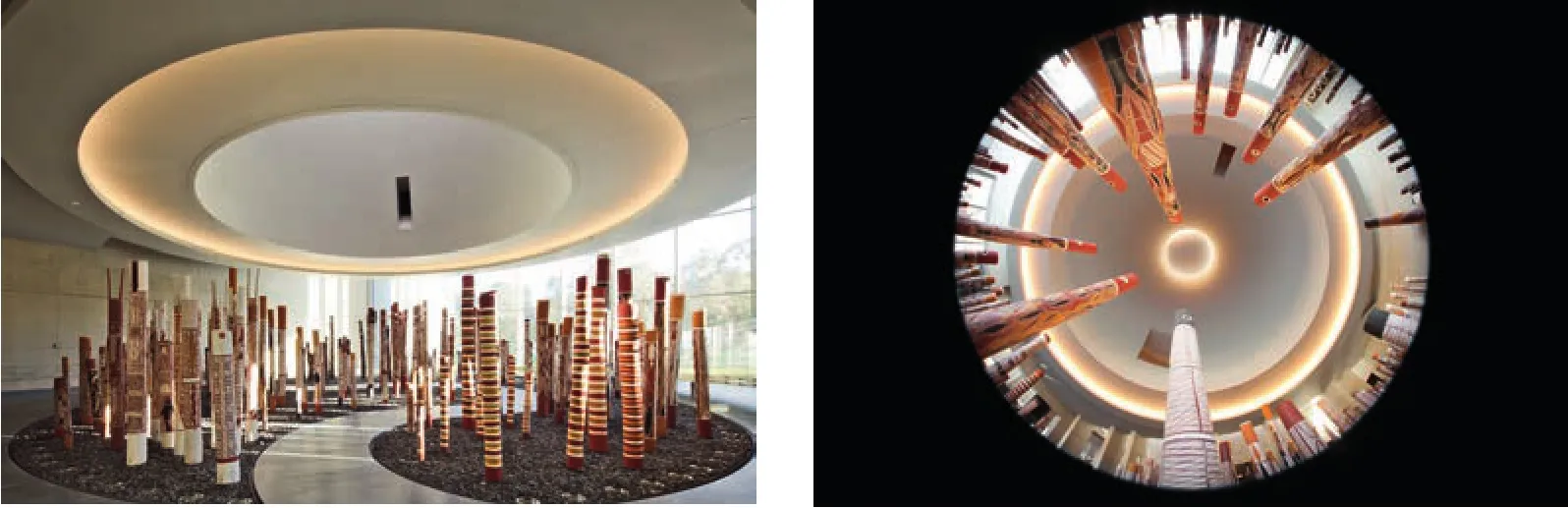
2.3 紀念館/The Aboriginal Memorial
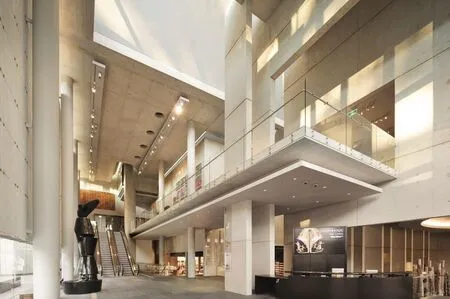
4 前廳/The new foyer

6 剖面/Section
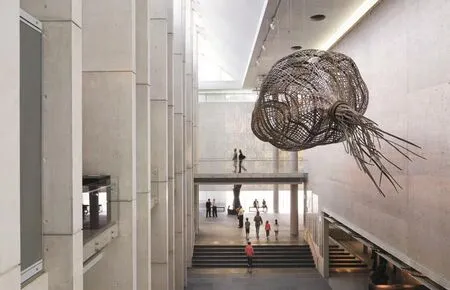
7 內景/Interior view
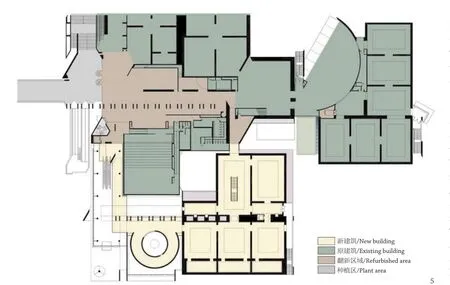
5 平面/Plan
The National Gallery of Australia – New Entry and Indigenous Australian Galleries is a major addition to the existing gallery in Australia's capital city, Canberra. The project provides a new identity for the institution without diminishing the character and integrity of the existing gallery building.
In 2004 then director Brian Kennedy appointed Peddle Thorp and Walker (PTW) to take over the commission, which was completed under the current directorship of Ron Radford in September 2003. PTW was set the task of resolving the ambiguities of the building's entry, plus an expanded public program of new galleries dedicated to the exhibition of the NGA's Aboriginal and Torres Strait Islander collection, new cloaking, reception and visitor facilities and a new function space for public programmes and events. Technical and support areas and new loading docks are provided on the lower level. Further compliance and refurbishment works in the original building have also been undertaken.
The new works incorporate a new entrance and associated facilities, 12 new galleries and a function room. It is of a monumental scale and designed to comfortably relate to the adjacent major institutional buildings of the area.
A new stair and lift provide access to this point from the existing underground car park, which is reserved for the public. Further parking for staff and visitors is provided by a temporary surface car park to the east of the building.
The new galleries are generally daylit with supplementary artificial lighting designed with a variety of ceiling heights to suit displays of art objects of diverse scale. Smaller artificially lit spaces are located adjacent to the larger galleries for art works on lower levels. Showcases for fragile objects are generally located within the depth of walls or between the paired columns of the "colonnade" element. The circulation of the new galleries is unified by an enfilade of uniform openings and form a circuit from the principal east-west axis of the existing building.
"Skyspace", a major work by an American artist, James Turrell, is located within these gardens and is accessed from the function room and new building entry. The extension draws on the materials palette and iconic forms of the original building; however, these colours and forms are articulated from the original structure and clearly identifiable as new work. The building is of a monumental scale and designed to comfortably relate to the adjacent major institutional buildings of the area. It is an important structure in the landscape of the Parliamentary Triangle and the Griffin city plan.□

8.9 展廳內景/Interior views

10 雕塑與景觀/Installation and landscape
評論
鄭時齡:位于堪培拉的澳大利亞國家級美術館的擴建工程發生于21世紀的第一個10年,伴隨著這座建筑的是一個重要的關于澳洲文化的轉型時期,即對當地土著傳統和藝術形式的開放性回溯。這種回溯不是先入為主的西方文化觀念的植入,而是經過一個多世紀的“現代化”之后,以低調而尊重的姿態,重新審視人類社會對廣袤的澳洲大地和自然生存條件的適應。國家級美術館的擴建從設計語言上回應了這樣一種文化思辨,PTW設計的擴建部分保留了原建筑既有的色調、材質、觸感,但在空間動線上依然顯示出這是一座屬于21世紀的文化設施,不同的展廳相互貫通,體驗流暢。從外立面、室內大廳到室外景觀,設計方案對澳洲土著文化給予了充分的敘事感。藝術品的陳列方式也結合了照明和展陳的新技術手段,豐富而精準。 特別值得一提的是在長達6年的設計建設歷程中,PTW事務所始終堅持與藝術家們充分溝通、共同協作,直至項目最終落成。
張路峰:老館并不算老,其實是一棟建于1980年代的現代建筑。新館擴建緊貼著老館的一翼,相當于給老館增加了一個新的入口,同時擴充完善了老館的功能。和老館一樣,新館同樣采用了現代建筑的語匯,在材質、色彩上與老館呼應,但又有所不同,空間構成運用虛實對比手法,比例尺度推敲得更精到。新館內部空間舒適自然,無論是公共交通空間還是展廳空間都有自然光的引入。入口一側外部景觀設計的主體是一個神秘的空間裝置,也可以理解為是拜天祭地的神廟,讓人沉浸其中冥想、深思。擴建后,新老館共同構成一個新的整體,同時又能讀出不同的時代印記,這應該是改擴建項目的通識性設計原則。
Comments
ZHENG Shiling: The extension of Australia National Gallery in Canberra took place in the first decade of the 21st century. This is an important transformation period of Australian culture that accompanies this architecture, which means an open retrospection of indigenous traditions and art forms. Such retrospection is not the implantation of preconceived western cultural concepts, but the re-examination of the adaptation of human society to the vast Australian land and natural living conditions with a low-key and respectful attitude after more than a century of "modernisation". The extension of the Australia National Gallery echoes such cultural speculation in terms of design language. The extension designed by PTW Architects retains the tone, material and tactile impression of the original building and cultural facility belonging to the 21st century in the aspect of the moving lines in the space. Different exhibition halls are connected with each other for a more seamless and convenient experience. In addition, the design scheme gives a full narration of the aboriginal culture of Australia with respect to the facade, the interior hall and the outdoor landscape. The display of artworks is also diversified and accurate, combining new technologies of lighting and display. It is particularly worth mentioning that PTW Architects has always insisted on full communication and cooperation with artists during the 6 years' design and construction period before the project is finally completed.
ZHANG Lufeng: The old building should not be perceived as "old". It is actually a modern design that dates back to the 1980s. The new extension adjoins the wing of the museum, creating a new entrance. It expands and perfects the function of the original building. In keeping with the original, the new building employs the "vocabulary" of modern architecture: it echoes the texture and colour of the original. However, the use of the virtual–real comparison method for spatial composition and the careful consideration of the ratio scale have distinguished the new building from the original.
The interior space of the expansion feels comfortable and natural. Regardless of the public circulation space or the exhibition space, the natural light can be seen in the space. At the side of the new building's entrance, a mysterious spatial installation serves as the focus of the outdoor landscape design. It can also act as a temple, allowing visitors to immerse themselves in meditation and contemplation.
The original building and its expansion have formed a new whole, while at the same time exhibiting the identifying marks of different architectural periods. This should be the general design philosophy of reconstruction and expansion projects. (Translated by Dandan Wang)

11“天際”,詹姆斯·特瑞爾設計/"Skyspace" by James Turrell
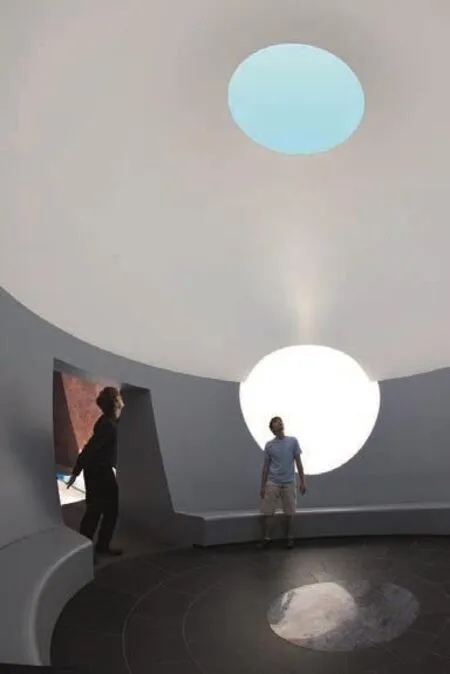
12 雕塑內部光影/Admitted daylight
猜你喜歡
北方建筑(2021年6期)2021-12-31 03:03:54
文苑(2020年10期)2020-11-07 03:15:36
現代裝飾(2020年7期)2020-07-27 01:27:42
現代裝飾(2020年6期)2020-06-22 08:43:12
現代裝飾(2020年4期)2020-05-20 08:55:08
流行色(2020年1期)2020-04-28 11:16:38
藝術啟蒙(2018年7期)2018-08-23 09:14:18
海峽姐妹(2017年7期)2017-07-31 19:08:17
Coco薇(2017年5期)2017-06-05 08:53:16
福建農業科技(2016年10期)2016-03-07 09:46:49
