確定河道內適宜生態流量的幾種水文學方法
2019-06-24 02:36:04葛金金彭文啟張汶海渠曉東
南水北調與水利科技 2019年2期
葛金金 彭文啟 張汶海 渠曉東
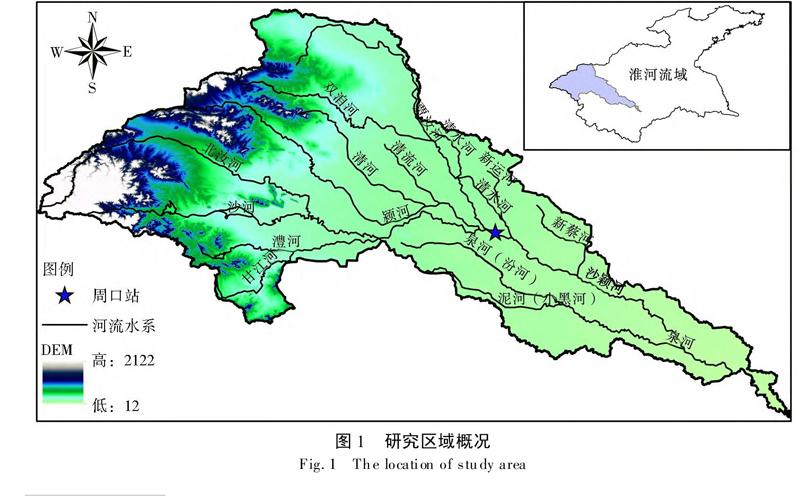


摘要:適宜生態流量是保障河流水生態系統健康的重要變量,合理評估適宜生態流量具有現實意義。以淮河流域典型河流沙潁河為研究對象,基于沙潁河周口水文站44年天然日流量數據,運用常用的5種水文學方法計算沙潁河的適宜生態流量,通過比較5種水文學方法在計算適宜生態流量方面的優劣發現:在水量需求方面,Q50_Q90法水量需求最大,Tennant法水量需求最小,Q50_Q90法會加重“三生”用水矛盾;在水文節律模擬方面,Tessman法、月流量變動法和Lyon法較Q50_Q90法和Tennant法有明顯優勢;在月流量滿足率方面,Tennant法和Lyon法滿足率最高,其中枯水期Lyon法滿足率最高。綜合考慮水量需求、水文節律和滿足率三方面因素,Lyon法在計算沙潁河這類季節性河流的適宜生態流量結果最為合理。
關鍵詞:日流量數據;生態流量;水文學法;需水量;滿足率
中圖分類號:X143文獻標志碼:A
Abstract:As the amount of ecological flow is one of the important factors in maintain aquatic ecosystem,the accurate estimation of it has important practical significances.The Shaying River,a typical river in the Huai River Basin,was used in this study.In order to explore the advantages and disadvantages of five commonly used hydrological methods,the ecological flow was estimated based on the 44-year natural daily streamflow data at Zhoukou hydrological station.The results showed that the Q50_Q90 method had the largest water demand and the Tennant method had the smallest.Q50_Q90 method would increase water pressure.Meanwhile,the simulation result of natural flow regime with different hydrological methods showed that the Tessman method,the Monthly Flow variation method and the Lyon method all had obvious advantages over the Q50_Q90 method and the Tennant method.It was found that the Tennant method and the Lyon method had the highest satisfaction rates than the other method,and the Lyon method had the highest satisfaction rates in dry hydrological years than other four methods.Therefore,the Lyon method was the most reasonable method to calculate the ecological flow in seasonal river,such as Shaying River.
Key words:daily streamflow;ecological flow;hydrological method;water demand;satisfaction rate
水資源是基礎性的自然資源,隨著經濟社會的高速發展,我國水資源開發利用率不斷提高,淮河流域甚至達到53.6%[1],遠遠超出了國際水資源開發利用率40%的警戒線[2]。直接導致部分河流枯水期干涸斷流、濕地萎縮和本地水生物種消失等一系列生態環境問題,嚴重制約了經濟社會的可持續發展[3]。合理確定生態流量是解決這一問題的關鍵[4-5]。自20世紀70年代,我國開始研究生態流量以來,生態流量研究已經取得了長足的發展[6]。洪水脈沖、河流連續體等理論的提出,河湖健康指標體系的發展,促進了我國生態流量研究由維持水量到保障過程的轉變[7],為維護我國的河湖生態系統健康發揮了重要作用。但是,縱觀我國的生態流量研究,研究方法機理不清,方法濫用的情況仍然存在,而江河湖泊確定的生態流量又多為最小生態流量,無法滿足水生態系統健康發展的內在需求。對適宜生態流量研究的忽視,嚴重阻礙了水生態系統修復的進程[8]。
在研究水生態系統修復過程中,河流生態學家發現,河流生態系統對水文節律的變化具有明顯的響應關系,獨特的水文節律特征形成了獨特的水生物種群分布[9],它被稱為塑造河流棲息地分布和特征的“主變量”[10]。因此,水文節律一直是研究人員合理確定生態流量的重要參考[11]。為確定生態流量,國內外學者提出了近百種計算方法,大體可以分為水文學法、水力學法、棲息地法和整體法四類[12-13],這四類方法各有優缺點。其中,水文學法是最早研究生態流量的方法,具有操作簡便,數據需求量少和成本較低等優點[14-15]。在大尺度確定生態流量方面,尤其基于全球尺度分析生態流量保障問題中,水文學法更是首選方法。同時,水文學法也是四類方法中唯一基于天然水文節律確定生態流量的方法,在水文節律模擬方面較其他三類方法有明顯優勢。
3.3 滿足率分析
將五種水文學方法計算的適宜生態流量結果與人為干擾后的實測流量狀況對比,5種方法的滿足率均不能達到100%。究其原因,一方面,5種方法的適宜生態流量計算結果為月均值,沒有考慮天然流量的實時波動特征;另一方面,由于人類取用水,實測流量會出現低于天然流量的狀況,而基于天然流量計算的適宜生態流量結果,滿足率會降低。5種水文方法的滿足率[HJ2.15mm]見表2,在5種方法中,Tennant法和Lyon法的滿足率明顯高于其他三種方法。在枯水年份,Lyon法的滿足率高于Tennant法。雖然枯水年來水量少,但是在枯水年份保障適宜生態流量卻更加重要。因為水生生物在枯水期對流量需求最為敏感,很多水生生物,如藻類、魚類均在枯水期物種大量減少或死亡。因此有必要適當提高枯水期適宜生態流量的滿足率[29-30]。
3.4 水文學方法比選
結合年需水量大小,水文節律模擬效果、滿足率高低這三個因素,可以發現Lyon法在年需水量、水文節律和滿足率方面均有極佳表現。建議在沙潁河段采用Lyon法計算適宜生態流量,雖然Tennant法的年需水量最小,滿足率最高,但是在五種方法中Tennant法在水文節律模擬方面效果最差。因此不推薦在沙潁河使用Tennant法。計算表明,適宜生態流量的滿足率易受到水文年的影響,豐水年滿足率高,枯水年滿足率低。因此,建議水資源管理單位適當放寬適宜生態流量在枯水年的評估要求,建立生態流量的枯水年、平水年和豐水年的分期考評制度。
4 結論
本文基于沙潁河長序列還原流量數據,對比分析了常用的五種計算生態流量的水文學方法優劣,得出如下結論。
(1)五種方法中,Q90_Q50需水量最大,保證率最低,同時Q90_Q50法還會出現生態流量大于個別天然月均流量的狀況,加重沙潁河本地“三生”用水矛盾。因此,Q90_Q50的計算結果不適用于沙潁河這種季節性河流。
(2)在水文節律模擬方面,Tessman法、月流量變動法和Lyon法在對天然水文節律效果最好,Tennant法效果最差,年內季節性變動劇烈的河流不建議使用Tennant法。
(3)綜合考慮需水量、水文節律演替、滿足率三方面因素,建議在沙潁河這類季節性河流中使用Lyon法計算適宜生態流量。
參考文獻(References):
[1] 趙家祥,朱梅,趙博.淮河中游枯水期水資源利用及缺水態勢研究[J].治淮,2016(3):8-10.(ZHAO J X,ZHU M,ZHAO B.Study on water resources utilization and water shortage situation in the middle of the Huai River in dry season[J].Control Huai River,2016(3):8-10.(in Chinese))DOI:10.3969/j.issn.1001-9243.2016.03.004.
[2] World Bank Group.World development indicators 2014[M].World Bank Publications,2014.DOI:10.1596/978-1-4648-0163-1.
[3] 陳毅,郭純青.北部灣經濟區河流環境流量計算[J].中國農村水利水電,2012(1):8-12.(CHEN Y,GUO C Q.The calculation of environment flow of the economic region in beibu gulf[J].China Rural Water and Hydropower,2012(1):8-12.(in Chinese))DOI:10.7666/dy2095590.
[4] SHENTON W,BOND N R,JIAN D L Y,et al.Putting the “Ecology” into environmental flows:ecological dynamics and demographic modelling[J].Environmental Management,2012,50(1):1-10.DOI:10.1007/s00 267-012-9864-z.
[5] PAHL-WOSTL C,ARTHINTON A,BOGARDI J,et al.Environmental flows and water governance:managing sustainable water uses[J].Current Opinion in Environmental Sustainability,2013,5(3-4):341-351.DOI:10.1016/j.cosust.2013.06.009.
[6] 董哲仁,張晶,趙進勇.環境流理論進展述評[J].水利學報,2017,48(6):670-677.(DONG Z R,ZHANG J,ZHAO J Y.Comments upon progress of environmental flows assessments[J].Journal of Hydraulic Engineering,2017,48(6):670-677.(in Chinese))DOI:10.13243/j.cnki.slxb.20161056.
[7] 陳昂,王鵬遠,吳淼,等.國外生態流量政策法規及啟示[J].華北水利水電大學學報(自然科學版),2017,38(5):49-53.(CHEN A,WANG P Y,WU M,et al.Ecological flow policies and regulation review and enlightenment[J].Journal of North China University of Water Resources and Electric Power,2017,38(5):49-53.(in Chinese))DOI:10.3969/j.issn.1002 -5634.2017.05.006.
[8] 陳昂,隋欣,廖文根,等.我國河流生態基流理論研究回顧[J].中國水利水電科學研究院學報,2016,14(6):401-411.(CHEN A,SUI X,LIAO W G,et al.Review study on instream ecological base flow in China[J].Journal of China Institute of Water Resources and Hydropower Research,2016,14(6):401-411.(in Chinese))DOI:10.13244/j.cnki.jiwhr.2016.06.001.
[9] SUEN J P.Potential impacts to freshwater ecosystems caused by flow regime alteration under changing climate conditions in Taiwan[J].Hydrology and Earth System Sciences Discussions,2008,5(6):115-128.DOI:10.5194/hessd-5-3005-2008.
[10] [ZK(#]POFF L R,ALLAN J D,BAIN M B,et al.The Natural Flow Regime[J].Bioscience,1997,47(11):769-784.DOI:10.2307/1313099.
[11] YANG H C,SUEN J P,CHOU S K.Estimating the ungauged natural flow regimes for environmental flow management[J].Water Resources Management,2016,30(13):1-14.DOI:10.1007/s11269-016-1437-0.
[12] THARME R.E.A global perspective on environmental flow assessment:emerging trends in the development and application of environmental flow methodologies for rivers[J].River Research and Applications,2003,19(5-6):397-441.DOI:10.1002/rra.736.
[13] 洪思揚,王紅瑞,朱中凡,等.基于棲息地指標法的生態流量研究[J].長江流域資源與環境,2018,27(1):168-175.(HONG S Y,WANG H R,ZHU Z F,et al.Research of ecologic flow based on habitat index method[J].Resources and Environment in the Yangtze Basin,2018,27(1):168-175.(in Chinese))DOI:10.11870/cjlyzyyhj201801019.
[14] KARIMI S S,ESLAMIAN S.Use of hydrological methods for assessment of environmental flow in a river reach[J].International Journal of Environmental Science & Technology,2012,9(3):549-558.DOI:0.1007/s 13762-012-0062-6.
[15] ABDI R,YASI M.Evaluation of environmental flow requirements using eco-hydrologic-hydraulic methods in perennial rivers[J].Water Science & Technology A Journal of the International Association on Water Pollution Research,2015,72(3):354-63.DOI:10.2166/wst.2015.200.
[16] CAISSIE J,CAISSIE D,JABI N.Hydrologically based environmental flow methods applied to rivers in the Maritime Provinces (Canada)[J].River Research & Applications,2015,31(6):651-662.DOI:10.1002/rra.2772.
[17] 于松延,徐宗學,武瑋.基于多種水文學方法估算渭河關中段生態基流[J].北京師范大學學報(自然科學版),2013,49(z1):175-179.(YU S Y,XU Z X,WU W.Ecological baseflow in the Guanzhong reach of the Wei River estimated by using different hydrological methods[J].Journal of Beijing Normal University,2013,49(z1):175-179.(in Chinese))DOI:10.1002/hyp.7944.
[18] 左其亭,羅增良,石永強,等.沙潁河流域主要參數與自然地理特征[J].水利水電技術,2016,47(12):66-72.(ZUO Q T,LUO Z L,SHI Y Q,et al.Main parameters and physiographic characteristics of Shayinghe River Basin[J].Water Resources and Hydropower Engineering,2016,47(12):66-72.(in Chinese)) DOI:10.13928/j.cnki.wrahe.2016.12.015.
[19] TENNANT D.L.Instream flow regimens for fish,wildlife,recreation and related environmental resources[J].Fisheries,1976,1(4):6-10.DOI:10.1577/1548-8446(1976)001<0006:ifrffw>2.0.co;2.
[20] SMAKHTIN V,REVENGA C,DOLL P.A.Pilot global assessment of environmental water requirements and scarcity[J].Water International,2004,29(3):307-317.DOI:10.1080/02508060408691785.
[21] PASTOR A V,LUDWIG F,BIEMANS H,et al.Accounting for environmental flow requirements in global water assessments[J].Hydrology and Earth System Sciences,18,12(2014-12-11),2014,18(12):14987-15032.DOI:10.5194/hess-18-5041-2014.
[22] OPDYKE D R,OBORNY E L,VAUGH S K,et al.Texas environmental flow standards and the hydrology-based environmental flow regime methodology[J].Hydrological Sciences Journal,2014,59(3-4):820-830.DOI:10.1080/02626667.2014.892600.
[23] GAUPP F,HALL J,DADON S.The role of storage capacity in coping with intra- and inter-annual water variability in large river basins[J].Environmental Research Letters,2015,10(12):125001-125012.DOI:10.1088/1748-9326/10/12/125001.
[24] SHADKAM S,LUDWIG F,VLIET M T H,et al.Preserving the world second largest hypersaline lake under future irrigation and climate change[J].Science of the Total Environment,2016,559:317-325.DOI:10.1016/j.scitotenv.2016.03.190.
[25] 張錦,徐琳瑜.基于河道徑流可變區間的河流水資源可開發利用率分析[J].水資源保護,2015(4):37-41.(ZHANG J,XU L Y.Analysis of exploitable rate of river water resource based on variable interval of river runoff[J].Water Resources Protection,2015(4):37-41.(in Chinese)) DOI:10.3880/ j.issn.1004 6933.2015.04.007.
[26] GE J,PENG W,HUANG W,et al.Quantitative assessment of flow regime alteration using a revised range of variability methods[J].Water,2018,10(5):597-608.DOI:10.3390/w10050597.
[27] SNELDER T H,J.BOOKER D.Nature flow regime classification are sensitive to definition procedures[J].River Research & Applications,2014,29(7):822-838.DOI:10.1002/rra.2581.
[28] WHEELER K,WENGER S J,FREEMAN M C.States and rates:Complementary approaches to developing flow-ecology relationships[J].Freshwater Biology,2017,8(14):1-11.DOI:10.1111/fwb.13001.
[29] JOWETT I G,RICHARDSON J,BONNETT M L.Relationship between flow regime and fish abundances in a gravel-bed river,New Zealand[J].Journal of Fish Biology,2010,66(5):1419-1436.DOI:10.1111/j.0022-1112.2005.00693.x.
[30] KLAAR M J,DUNBAR M J,WARREN M,et al.Developing hydroecological models to inform environmental flow standards:a case study from England[J].Wiley Interdisciplinary Reviews Water,2014,1(2):207-217.DOI:10.1002/wat2.1012.