句子邏輯關(guān)系在解題中的應(yīng)用
2019-10-28 02:05:41羅金華
廣東教育·高中 2019年10期
羅金華
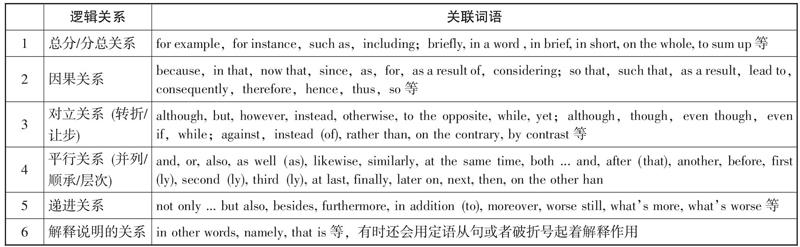
漢語(yǔ)重意合,英語(yǔ)重形合。英語(yǔ)的語(yǔ)篇非常追求邏輯的嚴(yán)謹(jǐn),而邏輯嚴(yán)謹(jǐn)?shù)倪_(dá)成主要通過使用眾多的連接詞來(lái)實(shí)現(xiàn)。當(dāng)然,也有很多時(shí)候沒有連接詞,是一種隱性的邏輯關(guān)系。英語(yǔ)中常見的邏輯關(guān)系有以下幾種:
一、邏輯關(guān)系在七選五解題中的應(yīng)用
以2019年全國(guó)Ⅰ卷七選五為例:
We all grew up hearing people tell us to“go out and get some fresh air.”??? 36???? According to recent studies, the answer is a big YES, if the air quality in your camping area is good.
37???? If the air youre breathing is clean—which it would be if youre away from the smog of cities—then the air is filled with life-giving, energizing oxygen. If you exercise out of doors, your body will learn to breathe more deeply, allowing even more oxygen to get to your muscles(肌肉)and your brain.
Recently, people have begun studying the connection between the natural world and healing(治愈).????? 38???? In these places patients can go to be near nature during their recovery. It turns out that just looking at green, growing things can reduce stress, lower blood pressure, and put people into a better mood (情緒). Greenery is good for us. Hospital patients who see tree branches out their window are likely to recover at a faster rate than patients who see buildings or sky instead.??? 39? ???It gives us a great feeling of peace.
40???? While the suns rays can age and harm our skin, they also give us beneficial Vitamin D. To make sure you get enough Vitamin D—but still protect your skin—put on sunscreen right as you head outside. It takes sunscreen about fifteen minutes to start working, and thats plenty of time for your skin to absorb a days worth of Vitamin D.
A. Fresh air cleans our lungs.
B. So what are you waiting for?
C. Being in nature refreshes us.
D. Another side benefit of getting fresh air is sunlight.
E. But is fresh air really as good for you as your mother always said?
F. Just as importantly, we tend to associate air with health care.
G. All across the country, recovery centers have begun building Healing Gardens.
分析:
36. 轉(zhuǎn)折呼應(yīng)關(guān)系。由answer可知選一般疑問句,故選E項(xiàng)才前后呼應(yīng);同時(shí),E項(xiàng)與空前句為轉(zhuǎn)折關(guān)系,前后通順。
37. 總分關(guān)系。空后句是講“如果你呼吸的空氣是清潔的”就會(huì)有什么好處,空白處應(yīng)是本段的總起句,與呼吸相關(guān),應(yīng)是“肺部”,故選A項(xiàng)。
38. 順承關(guān)系。空前句,即本段第一句提到研究人員在研究自然環(huán)境和疾病痊愈之間的關(guān)系,那么,接下來(lái)應(yīng)是在全國(guó)建立這種接近自然的康復(fù)中心。故選G項(xiàng),跟前句構(gòu)成一種順承關(guān)系。
39. 分總關(guān)系。從in these places起到本空前,作者描述了接近大自然的患者康復(fù)更快,再結(jié)合空后句“這給了我們平和寧?kù)o”, 可知此處應(yīng)為總結(jié)句,描述大自然的作用,故選C項(xiàng)“置身大自然使我們精神煥發(fā)”。
40. 總分關(guān)系。該空后一句提到,盡管太陽(yáng)光線會(huì)使人的皮膚老化、受損,但也能提供有益人體的維生素D。由此可知,本段應(yīng)該與太陽(yáng)光線有關(guān),空白處應(yīng)是本段的總起句,故選D項(xiàng)。同時(shí),“獲得新鮮氣的另一個(gè)(another)好處是陽(yáng)光”與前段主題“新鮮空氣清潔我們的肺”“自然世界有益于治愈疾病”是并列關(guān)系。
二、邏輯關(guān)系在完形填空解題中的應(yīng)用
以2019年全國(guó)Ⅰ卷完形填空前三段為例:
Every year about 40,000 people attempt to climb Kilimanjaro, the highest mountain in Africa. They???? 41???? with them lots of waste. The???? 42??? might damage the beauty of the place. The glaciers(冰川)are disappearing, changing the???? 43??? of Kilimanjaro.
41. A. keep???????? B. mix C. connect D. bring
42. A. stories?????? B. buildings C. crowds????? D. reporters
43. A. position????? B. age ????? C. face?????????? D. name
本段講每天都有大約4萬(wàn)人登山,他們帶來(lái)垃圾,破壞當(dāng)?shù)孛谰埃斐杀ㄏВ淖兤蛄︸R扎羅山的面貌。其中41、42空所在的句子構(gòu)成并列關(guān)系,43空所在的句子是前兩句的結(jié)果。故分別選D, C和C項(xiàng)。
Hearing these stories, Im????? 44????? about the place — other destinations are described as“purer”natural experiences.
44. A. silent B. skeptical C. serious D. crazy
本段中有個(gè)破折號(hào),此處起著解釋說明的作用。其他地方很純凈,而這里很臟,所以作者對(duì)此表示“懷疑”。故選B項(xiàng)。
However, I soon????? 45????? that much has changed since the days of disturbing reports of????? 46????? among tons of rubbish. I find a????? 47????? mountain, with toilets at camps and along the paths. The environmental challenges are????? 48????? but the efforts made by the Tanzania National Park Authority seem to be????? 49???? .
45. A. discover B. argue
C. decide D. advocate
46. A. equipment B. grass
C. camps D. stones
47. A. remote ? B. quiet
C. tall D. clean
48. A. new ? B. special
C. significant D. necessary
49. A. paying off B. spreading out
C. blowing up D. fading away
此段有個(gè)however表示轉(zhuǎn)折,所以講的是干凈的方面。句子之間是并列關(guān)系。環(huán)境改變,有座干凈的山,營(yíng)地和沿途有衛(wèi)生間,環(huán)境挑戰(zhàn)雖然巨大,但最終還是有成效。因此,答案分別為A,C,D,C和A。
綜上所述,句子關(guān)系對(duì)于高考解題起著重要的作用。考生平常練習(xí)時(shí),要注重培養(yǎng)句子關(guān)系意識(shí),分析句子之間的邏輯關(guān)系,高考便多了一個(gè)取勝的法寶。
責(zé)任編輯 蔣小青
猜你喜歡
小學(xué)生學(xué)習(xí)指導(dǎo)(低年級(jí))(2022年9期)2022-10-08 03:12:02
中學(xué)生數(shù)理化·中考版(2022年8期)2022-06-14 06:55:52
小學(xué)生學(xué)習(xí)指導(dǎo)(低年級(jí))(2021年4期)2021-07-21 01:59:26
中學(xué)數(shù)學(xué)雜志(2019年1期)2019-04-03 00:35:46
中學(xué)生數(shù)理化·中考版(2018年11期)2019-01-31 06:18:02
新東方英語(yǔ)·中學(xué)版(2017年9期)2017-09-25 20:25:46
中學(xué)生數(shù)理化·八年級(jí)數(shù)學(xué)人教版(2016年3期)2016-04-13 09:17:06
小學(xué)生導(dǎo)刊(低年級(jí))(2016年2期)2016-02-24 23:02:11
小天使·五年級(jí)語(yǔ)數(shù)英綜合(2014年5期)2014-06-25 05:22:42