生而不同:樟宜機場T4航站樓
——重新定義機場場所營造和旅客體驗
2020-07-14 12:16:48貝諾建筑設計公司
世界建筑 2020年6期
關鍵詞:設計
貝諾建筑設計公司

1
1 T4主入口設有紅毯式車行道/Red carpet type carriageway in front of T4 main entrance(攝影/Photo: Owen Raggett)
1 引言
新加坡樟宜機場T4 航站樓自2018 年投入使用以來,為現代機場環境樹立最新的全球標桿。
樟宜機場T4 航站樓秉持以人為本、科技創新的超前場所營造理念,以提供優質的旅客體驗聞名世界。航站樓將旅客的舒適性與便利性融入設計精髓,重新定義旅客與周圍環境的互動方式——廣泛采用視覺透明概念,運用自然采光,營造減壓的生態環境,引入創新的暢快通行(FAST)系統,以簡化旅客的值機、通關、到達和出發等手續辦理流程。T4 航站樓更首次嘗試穿行式零售體驗,匯集80 多家零售與餐飲店鋪以及300m 長的中央廣場。
航站樓由眾多建筑師、工程師與設計師聯合完成交付,其中貝諾負責項目的建筑和室內設計的概念設計。機場與外部城市環境之間的邊界亦由整個項目團隊共同協作進行重新構思設計的。樟宜機場T4 航站樓的設計以地道的新加坡風土人情為根基,與機場所處的這座花園城市形成無縫銜接,同時在各個結點引入與設計主題及當地文化相呼應的細膩元素,營造出無可比擬的身臨其境的歸屬感,成就這座“生而不同”的航站樓。
2 機場發展歷程
1970 年代中期,亞太地區航空旅客數量迅速增長。由于新加坡的巴耶利峇機場不堪負荷,且無擴張空間,因此為緩解緊張的航空運力壓力,一座新機場在新加坡東部應運而生。新機場選址于日本占領期間所建的空軍基地,從填海造地到竣工僅用6年時間,創下了歷史性的紀錄。1981 年7 月1 日上午7:10,從馬來西亞吉隆坡起飛的SQ 101 航班成為第一架降落在新跑道上的飛機。5 個月后,新加坡樟宜機場T1 航站樓正式向公眾開放,從而取代了巴耶利峇機場成為新加坡的主要國際機場。
樟宜機場從巴耶利峇機場的問題中總結經驗,自第一天起,便恪守效率與靈活性原則。T1 航站樓的設計并未單純側重于對整體機場的功能布局,而是旨在營造美觀大方的機場環境,在容納日益增加的客流量的同時確保積極的顧客體驗。這一卓有遠見的思路為樟宜機場的發展藍圖奠定了基調,也著實影響了后續所有擴建項目的設計理念。
T1 航站樓正式投入運營后,T2 航站樓的建設也拉開了帷幕。1990 年,嶄新的T2 航站樓投入運營后,樟宜機場的年旅客數量翻了一番,達到4400 萬人次。T2 航站樓面積比T1 大,服務功能相似,包括航班中轉、手續辦理、零售和餐飲等。與此同時,與T1 航站樓一樣,它也沿用了開放式空間、通透的玻璃材料運用和大規模綠植裝點等設計元素。
1990 年代中期,樟宜機場啟動了一項完善和改造計劃,對這兩座航站樓進行了大規模翻新擴建和結構加固。2002 年,樟宜機場捷運站投入使用,大大改善了機場與市區間交通的通達便捷性。
隨著旅客數量的持續增長,2006 年,樟宜機場集團(CAG)進軍低成本航空市場,新建投用了一座廉價航站樓。得益于這座廉價航站樓,樟宜機場進入了行業增長最快的業務領域,每年最多可接待700 萬名旅客。與此同時,另一座嶄新的T3 航站樓也于2008 年投入使用,至此,樟宜機場主要航站樓的年吞吐總量達到6600 萬人次。
到2013 年,經由樟宜機場的旅客數量達到每年5370 萬人次,而相比1981 年該機場的旅客數量僅為810 萬人次。這一急劇增長表明,亞太地區作為一個整體,已經成為現今世界上增長最快的航空市場之一。2004 年,亞太地區的航空客運量為2.55 億人次,約占全球市場份額的21%。而到了2014 年,這一數字已翻了兩番[1],專家表示,亞太地區未來20 年的新增客運量將占全球新增客運量的50%以上[2]。據國際航空運輸協會(IATA)預測,到2035 年,亞太地區每年新增客運量將達到18 億人次,整體市場規模達31 億人次[2]。
在快速意識到這一增長態勢之后,樟宜機場集團決定新建一座航站樓來取代其已有的廉價航站樓,擴大客運承載能力,同時滿足未來的旅客需求。
“我們看到,廉價航站樓的運營為航空公司帶來了兩位數的增長”,樟宜機場T4 航站樓項目管理辦公室副總裁Poh Li San 表示,“但很快航站樓的吞吐量已經滿負荷。我們知道我們真正需要的是一座大得多的航站樓。”[3]
就在此時,新加坡樟宜機場T4 航站樓的建造計劃也正在醞釀中。
3 客戶設計綱要與項目團隊
CAG 以嶄新航站樓取代廉價航站樓,希望將其打造成一座符合機場發展愿景與理念、面向未來的體驗勝地。與此同時,新加坡總理李顯龍公布了名為“星耀樟宜”的項目計劃,將打造一座連通機場主要航站樓的全新多層綜合體,以此更加吸引八方到訪新加坡的旅客、游客及觀光客們惠顧此地。
為實現對T4 航站樓的愿景期望,CAG 提供了一份富有挑戰性的設計任務書。在運營層面上,CAG 希望建成一座富有商業潛力的大型現代化航站樓,年均吞吐能力可達1600 萬人次,并能靈活應對不斷增長的客流量;而在體驗層面上,T4 航站樓需要具有鮮明個性,并且獨一無二。
CAG 認為,不同于冰冷乏味的傳統機場結構,嶄新的航站樓應當“活力雋永,妙趣橫生,精彩紛呈”。這一切的高品質追求源于樟宜的不變理念——提供熱情周到的服務、舒適貼心的感受和多姿多彩的體驗,最重要的是,創造令人愉悅的顧客體驗。樟宜機場T4 航站樓勢必將成為一座面向未來的“精品航站樓”。它必須將細膩的新加坡地方元素與技術創新相結合,打造出一座根植于新加坡文化的現代化高端航站樓。鑒于此,設計思路應當以“永恒經典”為基本框架,輔以“清晰和通透”“靈活性和適應性”等設計前提。
貝諾受邀參與方案競標,并提出一系列前沿設計方案,倡導以人為本的設計思路,以滿足CAG的運營、體驗及商業需求。本項目很大程度上取決于競標公司在商業零售、綜合體開發和以消費者為核心營造城市環境方面的豐富經驗。經過一番嚴格遴選,2012 年,樟宜機場委托貝諾承擔T4 航站樓建筑和室內設計方案設計工作。這一結果讓貝諾的每個人都為之歡欣鼓舞,充滿期待。
貝諾與SAA(負責建筑與合同管理)、Aecom(負責結構工程)、Beca(負責MEP 機電暖通和IT工程科技)、Ignesis(負責消防工程)、Lichtvision(負責照明設計)和ICN(負責景觀設計)聯合完成了這項宏大的工程。該項目匯集多方行業專家們的協同合作,凝聚各自領域豐富的專業知識及實戰經驗,秉承共同的目標與愿景,實現這一具有革命性的,屢獲殊榮的航站樓得以最終落地。
4 場所營造
CAG 認為T4 航站樓的關鍵設計目標之一是喚起一種身臨其境的歸屬感。因此,貝諾以當地的風土人情作為概念設計的核心。例如,在航站樓建筑中融入蘭花(新加坡國花)的設計元素,67個花瓣狀的天窗懸浮在中央廣場上,為航站樓增添了精美雅致的氣息。整座航站樓總建筑面積約225,000m2,地毯、接觸點和陳設上也零星散布著蘭花圖案裝飾,同時,大量運用生態元素,引入50多萬株室內綠植和樹木,將航站樓與新加坡郁郁蔥蔥的園林景觀融為一體。
在此基礎上,重點突出通透性,使旅客能夠將機場周圍環境盡收眼底,沉浸在清新的城市綠化中。貝諾新加坡工作室負責人特倫斯·西恩解釋道: “我們意在模糊機場與城市的邊界,建立并保持機場與新加坡城市風貌的長久視覺聯系。這一切旨在向來往旅客傳達深厚的獅城環境和文化底蘊。新加坡是一座花園城市,因此我們想讓T4 航站樓看起來更像一座自然生態展館。航站樓綠植林立,在這里,你或是在林蔭道下穿行,或是俯瞰生機勃勃的成排樹木,不管在哪一層,都不會缺少綠色,因為綠色是設計主色調,用以強化各個結點與‘花園’的聯系。這些生態元素不僅將新加坡蔥郁的城市景觀‘搬’進了航站樓,還有助于緩解壓力,提升幸福感。”
機場正逐步成為所服務城市的有機組成部分,T4 航站樓的這些建設內容與航空業的增長趨勢步調一致。這種趨勢促進了城市公共空間與航空建筑空間之間富有主題特征的相互作用,使機場和城市超越傳統關系,讓機場不僅是城市的交通運輸系統,而城市也不再只是機場的進場通道。這一趨勢最重要的促成原因在于,機場作為關鍵的公共接口,能夠顯著增強旅客對城市的認知,從而提升本土品牌價值、品牌信譽和品牌形象。另一座地區機場香港國際機場很快就把握到這一點。香港機場管理局行政總裁林天福表示:“香港國際機場是來港旅客的第一個也是最后一個接觸點,它體現了香港人的價值觀,機場的高效和活力是香港和港人的驕傲。”[4]

2
2 T4航站樓設計競賽第一階段設計方案/Concept design of T4 Competition Stage 1(圖片來源/Sources: Benoy Limited)
CAG 也有著同樣的敏銳度,自一開始便運用樟宜機場的品牌形象來反映和強化新加坡品牌的出眾
個性與優異品質。為了加深T4 航站樓與獅城的共生關系,貝諾在航站樓的建筑設計中糅合了多種文化元素。例如,T4 航站樓主要特色之一的傳統文化區,匯集了新加坡的老式傳統零售和餐飲店鋪,一排門頭設計具有本土娘惹文化建筑風格的商鋪在這里出售傳統美食、當地特產和商品。店鋪門頭及外立面裝飾生動講述了中國巴洛克風格和新加坡折衷主義建筑的演變歷程,與航站樓另一端的現代零售商店形成鮮明對比。店屋外還有2 塊10m 寬的數字屏幕,播放6 分鐘的音樂劇《娘惹之戀》,“讓游客得以一窺1930 年代新加坡的百姓生活”[5]。
如此一來,樟宜機場T4 航站樓為旅客提供了視覺和體驗的雙重享受,成就機場自身的獨特吸引力,與比鄰的“星耀樟宜”項目相映成趣。星耀樟宜由薩夫迪建筑事務所主創設計,貝諾負責室內設計、商業零售和航空設施規劃,該項目137,000m2的體量中不僅包含商業零售、餐飲和休閑空間,更設有一片生機勃勃的熱帶雨林、星空花園和全球最大的室內瀑布。T4 航站樓和星耀樟宜目前均處于行業發展的最前沿,從實用主義和功能主義轉向對空間美學的追求,為到訪的旅客和觀光客呈獻賞心悅目的體驗。
5 旅客體驗
過去,民航當局主要從運營的角度來看待機場資產的價值——旅客到達機場,上飛機,而后離開。旅客被“聚集”到一起,漠然地辦理值機手續并通過安檢,其舒適性或便捷性卻鮮少被考慮,更無從談及他們對空間與場所的體驗了。
然而,近年來,情況已有所不同。正如貝諾環球董事特雷弗·維維安所說:“從在機場航站樓內度過的時間來看,乘客開始變得越來越重要。事實上,如今奉行的是‘乘客至上’的理念。機場的功能不再單一,人們想要的更多,也期許更多,有時候,他們甚至都不需要離開機場,因為他們的需求都能得到十分有效的滿足。”
在所謂的“機場城市化進程”中,機場周邊的土地如今常被建設為酒店、寫字樓和商業零售中心,讓人們能夠無需前往城中心,就能會面、工作和購物。最符合人們期待的新機場以豐富的旅客體驗為出發點,提供一應俱全的零售、快閃、餐飲和休閑選擇,或是像樟宜機場T4 航站樓一般,充分運用藝術、設計和多媒體元素來營造視覺效果驚艷的內部環境,幫助分散旅客注意力以消磨時間。
確實,樟宜機場T4 航站樓是提升旅客體驗的一個縮影。CAG 自始至終都將到達機場的每一位來客視為尊貴的顧客和貴賓,將他們的舒適、放松和快樂視為重中之重。
“航站樓內的一切就是要營造出一種順暢愉快的乘客體驗,”維維安如此表示,“每當你預定好一趟航班,都會由此催生出一條應力線。當人們通過安檢,辦理登機時,這條應力線便會一路攀升。我們的設計旨在利用我們在零售、公共空間和人員流動方面的專業知識,讓乘客在出發前能夠更加悠閑地行進,從而壓低這條應力線。”

3
3 行李傳輸帶區域/Baggage claim hall(攝影/Photo: Jim Stephenson)
在樟宜機場T4 航站樓,這條應力線幾乎不存在。航站樓入口處設有紅毯式車行道,熱情歡迎到達樟宜機場的旅客。旅客進入主出發廳后在自助值機亭和自助行李托運處辦理自動值機及行李托運。不過,這并不是一堵冷冰冰、硬邦邦的科技墻。特倫斯·西恩解釋說:“在自助值機設備的設計中,我們確保這些關鍵點位擁有充足的空間和展示面。自助值機設備全都面朝旅客,呈柔軟的曲線構造,宛如一位熱情而親切的主人在等待你的到來。FAST系統的操作也非常簡單直觀,乘客只需掃描護照,打印登機牌,貼上行李牌就可以。即使是不熟悉科技應用的旅客也能夠輕松操作。FAST 可以幫助旅客快速通行,無需排隊或等待。”
通關同樣毫不費力。旅客只需在自助通關閘門掃描護照,通過面部和指紋識別確認身份就能快速順利通關。這確保旅客在樟宜機場T4 航站樓能夠享受快速、便捷而靈活的登機體驗。
旅客進入安檢區后有各類可以分散注意力的設施,幫助緩解旅客的壓力感。正如西恩所說: “為了緩解旅客在安檢時常會出現的無聊和焦慮感,我們引入了巨大的交互式LED 屏幕和顯示器——樟宜奇跡墻。這些趣味元素和美妙時刻,以及周圍的寬闊空間和自然光線,能夠幫助旅客真正放松下來。一切的出發點都是為了讓人們沉浸其中,感到舒適而平靜。讓旅客的手續辦理流程輕松有趣是一項重點內容。”
通過安檢后,旅客進入航站樓綠樹成蔭的零售通道,這里同樣充分運用了空間、燈光和綠植來優化旅客體驗。零售商店一路延伸至中央圓頂,與柔和的建筑邊界和曲線元素相擁交匯。這些優雅設計在不知不覺中產生引導作用,讓旅客在瀏覽、購物和漫步時慢慢地向前移動。
在航站樓的這一位置,開放式的透明美學設計理念令人驚艷,用來分隔陸側與空側的傳統墻體也被夢幻的玻璃海洋所掩蓋。整片場地視線明亮通透,旅客在通過該區域時從很遠處就能看見到達的親友。這也是為了安撫旅客,幫他們放松心情,不會因為看到心愛的人從狹窄擁擠的出境關卡離開而難過,也不會因為找不到路而焦慮。路標指示清晰直觀,而且設置得非常自然,以至于旅客有可能會忘記它們的存在。“人們就好像是毫不費力地游走通過了這棟建筑一樣。”西恩形容道。
6 非航空性活動及收入
T4 航站樓的非航空特色是其成功旅客體驗的基礎,同樣也是航站樓創收的關鍵要素。實際上,非航空性收入對于現代機場的財務可持續性至關重要。據2017 年國際機場理事會(ACI)的經濟報告顯示,全球機場收入中約有40%來自購物和餐飲等活動[6]。而ACI 于2019 年3 月發布的報告也再次確認了這些收入來源對于全球機場的重要意義。
樟宜機場T4 航站樓設有種類豐富的零售和餐飲店鋪。免稅區配備獨特的“零售娛樂”熱點,人們可以在這里小酌一杯雞尾酒或是威士忌,而綜合銷售點系統讓旅客可以在任一收銀臺為化妝品或酒類結賬。此外還匯聚有6 家雙層高端品牌店鋪,同時共計80 多家零售商店和餐廳可供選擇。
然而,樟宜機場對體驗式零售的追求有別于傳統慣例。財務目標和嚴格的規章制度迫使大多數機場將運營放在首位,但矛盾之處在于,這一傳統做法很可能使機場錯失商業利益最大化的良機。首先,我們知道,如果旅客因為排隊而被動集中,可能會妨礙零售活動。其次,更重要的是,以流程為中心的運營模式忽視了場所營造的重要性。如前所述,合理的場所營造能夠改善乘客體驗,從而對消費者行為產生積極影響,延長他們的停留時間并增加他們的消費支出。
英國《金融時報》在2018 年的一篇文章中援引DKMA 的一項研究稱:“如果旅客對機場感到滿意,他們會在機場多花10%的時間,在購物上多花一倍的時間,在零售和免稅商品上分別多消費7%和20%”[7]。此篇文章中還引用了Groupe ADP(巴黎戴高樂機場運營方)副首席執行官愛德華·阿克賴特的話:“對零售業而言,糟糕的旅客體驗才是更壞的結果。我們堅信,顧客體驗的改善有助于改善所有經濟模式。”
因為當旅客感到愉快和放松時,當他們被當作貴賓對待時,他們會更愿意逗留、瀏覽商品和消費(2018 年的一項零售研究表明,顧客停留時間每增加1%,銷售額就會增加1.3%[8])。這是設計美學、旅客體驗與商業運營的完美結合,呼應設計理念的核心,幫助樟宜機場T4 航站樓營造視覺上引人注目且商業上可持續的機場環境。這便是貝諾主張的“人性化機場”。
7 人性化機場
“人性化機場”的設計理念基于這樣一種信念——能夠滿足最終用戶需求的設計解決方案也能滿足客戶的需求。通過創建更具吸引力和想象力的機場環境,設計師不僅可以幫助客戶增加非航空性收入來源,還可以幫助他們實現遠超盈虧底線的永久性價值。
貝諾旨在通過“人性化機場”超越機場設計的界限,打造以乘客為核心、面向未來、盈利可期的機場設計方案。特雷弗·維維安稱:“貝諾在星耀樟宜和樟宜機場項目上取得的成功,更廣泛地展示了我們的項目實力和深度。我們在航空建筑領域擁有獨特優勢,通過巧妙的設計和與其他建筑事務所的配合,能夠把機場變成一個更加個性化、充滿樂趣和更具商業潛力的所在。我們以多元化的優質零售和餐飲體驗,對乘客需求作出直接回應。此外,我們還著力營造全方位的乘客體驗,充分考慮主要的換乘區域、交通流線和標識導識,希望能找到加強品牌宣傳和實現利益相關者商業價值的機會。”
“人性化機場”涵蓋一系列主要原則,例如商業總體規劃、航站樓設計和機場重新定位,以及許多微妙的細節之處,例如親近自然、身心健康和數字化關系。嚴謹的數據分析為該項目各個方面提供支持,可以深入了解旅客的人口特征和流動軌跡。貝諾團隊對旅客的登機手續辦理流程進行詳細評估,以確保其設計能夠符合旅客的個人情況、需求及期待,從而打造出像樟宜機場T4 航站樓一樣,能夠在多個層面上優化旅客體驗的解決方案。
8 環境標準及環保成效
樟宜機場T4 航站樓也是可持續機場設計的創新典范。CAG 在整個樟宜機場實施了一系列可持續發展計劃,包括水資源節約、廢物管理和減少碳排放。樟宜機場符合新加坡的綠色建筑標志標準要求,而T4 航站樓更取得了綠色建筑標志超金獎。
T4 航站樓采用高性能的建筑圍護結構,隨處可見的玻璃和天窗元素使光線能夠最大限度地透入,從而減少日間的人工照明需求。在低峰時段公共區域、洗手間、到達和出發通道的燈光會調暗,日落后使用LED 燈作為航站樓內部照明。這些舉措有助于減少能源耗費和運營成本支出,符合新加坡綠色建筑委員會的要求標準。
通過精密的能源管理系統,CAG 可以監測整個航站樓的能耗情況,并根據詳細的數據分析,確定T4 航站樓的能耗趨勢,以采取相應措施提高能源利用效率[9]。
水資源管理還包括對T4航站樓空調機組(AHU)冷凝水的回收利用。冷凝水被收集在儲水罐內后用于灌溉航站樓內的綠植和樹木[9]。同時,這些生態元素也有助于營造身臨其境的歸屬感和幸福感,對航站樓的長期可持續發展至關重要。此外,新型管件、泄露檢測和雨水收集系統也確保了整體用水效率。
9 技術創新
CAG 希望T4 航站樓能夠在不影響旅客體驗的前提下,采用最新的智能技術,以提高效能和服務表現。如前所述,借助暢快通行(FAST)系統技術,旅客可以順利完成自助值機、自助行李托運及自助通關,免去人工驗證,從而縮短排隊時間。出發離境時,自動登機門會通過面部識別復核旅客身份。
樟宜機場T4 航站樓還采用了先進的集中式安檢系統技術。此外,樟宜機場首次在T4 航站樓采用了100%計算機斷層掃描X 光機來掃描旅客的隨身行李。通過使用帶有自動威脅檢測功能的3D 包成像技術,乘客無需從包中取出筆記本電腦、平板電腦和其他電子設備,就可以通過安檢,提高了登機手續的辦理效率以及旅客的流動速度。
安檢過程中,托盤會自動回到掃描帶起始位置,從而讓安檢處工作人員有更多時間關注來往旅客。非干預式人體掃描儀可以精確定位金屬和非金屬物體,這意味著只有必要情況下才需要進行干預檢查。
創新和自動化技術在T4 航站樓內得到了重點推進,甚至航站樓的清潔和維護系統也在受益范圍內,這使得CAG 能夠更有針對性地利用該技術改進以人為本的服務,催生出色的運營成果。
10 持續改進及未來重點
盡管樟宜機場T4 航站樓自2018 年投入使用后已屢獲殊榮,但CAG 仍在不斷創新,不斷賦予優質服務以新的內涵。CAG 并未止步于既得榮譽,而是始終探尋如何從社會、經濟和環境的角度提升航站樓的運營表現,以及如何持續提供品質卓越的旅客體驗。正如西恩總結所說:“T4 航站樓項目的成功得益于客戶不斷進取的愿景和承諾。CAG 深知實體設計的重要性,同時也對細節和舒適度洞察犀利。在我看來,CAG 對細節有著近乎偏執的追求,總是力圖確保每一項最終特性都經過測試和驗證,以在最大限度上為最終用戶提供優質體驗。對我來說,這是CAG/樟宜機場T4航站樓服務理念和工作方式的最佳體現。他們將從航站樓一端到另一端的來往旅客視為真正的重要顧客,當作一切工作的核心。”
隨著CAG 著手實施樟宜國際機場T5 航站樓的發展計劃,這一工作方式將會是未來的成功基石。為進一步提升機場容量以應對預期的旅客數量增長,T5 航站樓將被建設成為全球最大的機場航站樓之一。該航站樓計劃于2030-2040 年間完工,預計耗資100 億美元,初始吞吐量為每年5000 萬名旅客。在如此大規模的項目中,CAG 將一如既往堅持以人為本。無論該項目的規模和雄心如何,無論預測客流量和容量如何,有一點是肯定的:展望未來,旅客體驗始終都是樟宜機場的“心臟”和“靈魂”所在。
1 Introduction
Since opening in 2018, Singapore Changi Airport Terminal 4 (T4) has set a new global benchmark for modern airport environments. In just two years, it has won a Prix Versailles and Singapore Good Design Mark, a Green Mark Gold Plus Award for environmental performance, Design of the Year at the 2018 President's Design Awards, and the Public Service Interior Award at the 2018 Asia Pacific Property Awards. It has also received multiple five-star ratings from Skytrax, while Changi Airport overall has been rated Skytrax World's Best Airport - one of the highest accolades in the industry - for seven years running.
Combining stellar place-making with a strong people focus and technological innovation, Changi T4 is renowned for providing a best-in-class passenger experience. With passenger comfort and convenience built into every aspect of the design, the terminal redefines the passenger's interaction with the surrounding environment. It uses extensive visual transparency and natural light, stress-reducing biophilia, and innovative Fast and Seamless Travel (FAST) initiatives to ease the passenger journey through check-in, immigration, arrival and departure. Changi T4 also comprises the airport's first-ever walkthrough retail experience, including over 80 retail stores and restaurants and a 300-metre central galleria.
The terminal was delivered by a consortium of architects, engineers and designers, with Benoy providing concept design architecture and interior design. Together, the project team worked to reimagine the boundaries between the airport and its city context. Reflecting the essence and iconography of Singapore in its design, Changi T4 provides a seamless connection with the surrounding Garden City, with thematic and cultural links at every juncture creating a sense of place that is second to none - in every respect, "a terminal like no other".
2 The Growth of an Airport
The mid-1970s was a period of increasing airpassenger demand in the Asia Pacific (APAC) region. With Singapore's Paya Lebar Airport struggling to cope with passenger numbers, and with no room for expansion, work began on a new airport on the eastern edge of the city. Located on the site of an existing airbase constructed during the Japanese occupation, the new airport was built in record time, with just six years between land reclamation and completion. At 7:10 am on 1 July 1981, flight SQ 101 from Kuala Lumpur, Malaysia, became the first plane to touch down on the new runway. Five months later, Singapore Changi Airport Terminal 1 (T1) officially opened to the public, replacing Paya Lebar as Singapore's main international airport.
With lessons learned from its predecessor's capacity issues, from day one Changi Airport embraced the principles of efficiency and flexibility. Eschewing the functional approach to airport design, Terminal 1 was conceived with the aim of creating an aesthetic airport environment which could not only flex to accommodate increasing footfall, but provide a positive customer experience as well. In this way, a visionary blueprint was set which would shape the design of all future expansion projects at Changi.
With T1 open for business, work began on Terminal 2 (T2). The new terminal opened in 1990, doubling Changi's passenger capacity to 44 million a year. Larger than T1, T2 provided similar services, including passenger transit and transactions, retail, food and beverage. It also followed T1's design template of open space, glass and greenery.
In the mid-1990s, the airport embarked on a programme of improvements and modifications, with extensive refurbishments and structural additions carried out at both terminals. Then, in 2002, the opening of Changi Airport MRT Station signif icantly improved transport access to and from the city.
As passenger numbers continued to rise, in 2006 Changi expanded into the low-cost airline market, opening its Budget Terminal. The Budget Terminal enabled Changi to tap into the industry's fastest-growing segment, with capacity to cater for up to seven million passengers a year. Meanwhile, another new terminal, Terminal 3 (T3) opened in 2008, taking the collective annual handling capacity of the airport's main terminals to 66 million.
By 2013, passenger numbers through Changi reached 53.7 million a year, compared to 8.1 million in 1981. This steep increase is ref lective of the APAC region as a whole, which today is one of the fastestgrowing aviation markets in the world. In 2004, the region accounted for just 255 million airline passengers, about 21% of the global market share. By 2014, numbers had more than quadrupled[1], with experts suggesting the region will account for more than half of new passenger traffic globally over the next two decades[2]. According to the International Air Transport Association (IATA), by 2035 an additional 1.8 billion annual passengers will be transported to, from and within Asia Pacif ic, creating an overall market size of 3.1 billion[2].
Quick to perceive this upward trajectory, Changi Airport Group (CAG) decided that another terminal was needed to replace its budget facility, thereby expanding capacity to meet future footfall and passenger demand.
"We were seeing double-digit growth from the airlines operating at the Budget Terminal," says Poh Li San, Vice President of Changi T4's Programme Management Office. "But this was eating up the terminal's capacity very quickly. We knew we really needed a much bigger terminal."[3]
The plan to build Singapore Changi Airport Terminal 4 was underway.
3 Client Brief and Project Team
By replacing the Budget Terminal with a new terminal building, CAG saw an opportunity to create a more experiential and future-focused facility that aligned with the airport's vision and ethos. At the same time, Singapore's Prime Minister, Lee Hsien Loong, unveiled plans to create a new, multilevel complex, named Project Jewel, to connect the airport's main terminals and provide a dazzling modern attraction for passengers, tourists and visitors.
To achieve their vision for T4, CAG delivered a challenging design brief. At an operational level, the client wanted a large-scale, commercially viable modern airport terminal, with capacity to handle up to 16 million passengers a year, and flexibility to cope with increased numbers over time. But it was at the experiential level that the client sought to distinguish T4 and create a wholly unique terminal building.
Keen to avoid the clinical greyness of typical airport structures, CAG wanted the new terminal to be "vibrant, fun and positively surprising". These qualities link with Changi's philosophy of providing hospitality, comfort and colour - and above all, a pleasurable customer experience. Changi T4 needed to be a "boutique terminal" that was "future-ready". It had to blend social nuance with technological innovation to provide a sophisticated modern terminal rooted in Singaporean culture. In this respect, a "timeless design" was essential, while "clarity and transparency" "flexibility and adaptability" were additional design prerequisites.
Invited to tender, Benoy responded with a series of cutting-edge proposals, promoting a peoplef irst approach designed to meet CAG's operational, experiential and commercial requirements. The work drew heavily on the firm's extensive experience in retail, mixed-use and consumer-centric urban environments. And following a rigorous selection process, in 2012 Benoy was appointed Concept Design Architect and Interior Designer for Changi T4. A result which was met with great excitement, anticipation and delight by everyone at Benoy.
Working as part of a project consortium, Benoy was engaged alongside SAA (architecture and contract administration), Aecom (structural engineering), Beca (MEP and IT), Ignesis (fire engineering), Lichtvision (lighting design), and ICN (landscape design). Together, the team provided a wealth of complementary expertise and experience; a multidisciplinary collaboration of industry leaders, whose vision and partnership would prove vital to delivering this revolutionary, award-winning terminal.
4 Placemaking
One of CAG's key design goals was for T4 to evoke a sense of place. In response, Benoy's concept design took its cues from the local and the vernacular. The orchid, for example, Singapore's national flower, is embedded in the terminal's architecture, with 67 petal-shaped skylights overhanging the central galleria. Multiple orchid motifs are also scattered across carpets, touchpoints and furniture throughout the 225,000m2building. Similarly, the terminal integrates Singapore's rich garden landscape, with extensive use of biophilia, including over 500,000 indoor plants and trees.
The use of transparency and openness was critical to these efforts, enabling passengers to maintain sight of the airport environs and feel connected to the city's urban greenery. As Terence Seah, Head of Benoy's Singapore Studio, explains: "Our aim was to blur the boundaries between the airport and its city context, reflecting, and maintaining constant visual contact with, the essence of Singapore. It is all about articulating an ingrained local context and culture. Singapore is the Garden City, so we wanted T4 to feel like a pavilion that intersects with nature. At different levels of the terminal, you are either surrounded by avenues of plants or looking down on treetops. Green is the dominant colour, reinforcing links to "the garden" at every juncture. And not only do these biophilic elements speak directly to Singapore's verdant cityscape, they also help to reduce stress and promote a sense of wellbeing."
These developments align with a growing trend in aviation, whereby airports are increasingly becoming an organic part of the cities they serve. It is a trend which promotes a thematic interplay between civic and aviation space, with connections being forged between airports and cities which go way beyond access routes and transport links. There are several reasons for this - but most importantly, as a key point of public interface, airports can significantly enhance the perception of place, helping to strengthen local brand values, credentials and identity. This is something another regional airport, Hong Kong International Airport (HKIA), has been quick to grasp: "As the first and last touch points for visitors to our city", says Airport Authority Hong Kong CEO Fred Lam, "HKIA is a ref lection of Hong Kong people's values, where the airport's efficiency and vibrancy is a great source of pride for Hong Kong and its people."[4]
From the outset, CAG was similarly astute in leveraging Changi's brand identity to both reinforce and reflect Singapore's character and qualities. Indeed, to deepen the symbiosis between T4 and its parent city, Benoy's designs infused multiple cultural elements into the terminal's architecture. For example, one of T4's key features is the Heritage Zone, which draws on Singapore's historical street retail and cuisine. In the Heritage Zone, shophouses replicating Peranakan architecture sell traditional food, local produce and merchandise. In sharp contrast to the modern retail stores at the other end of the terminal, the shophouse fa?ades tell the story of the evolution of Chinese Baroque and Singapore Eclectic architecture. Two 10-metre-wide digital screens also emerge from the shophouse fronts to play a six-minute musical, Peranakan Love Story, "giving travellers a glimpse of life in 1930s Singapore"[5].
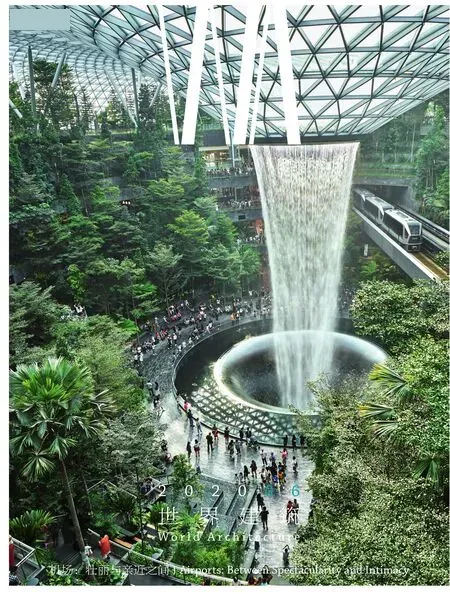
In this way, Changi T4, like its adjacent development, Jewel, provides a visual spectacle and experience through which the airport becomes a destination in its own right. Designed by Safdie Architects, with interior design, retail and aviation facility planning by Benoy, Jewel not only comprises 137,000m2of retail, F&B and leisure space, but also includes a live rain forest, canopy park, and the world's largest indoor waterfall. Delighting passengers and visitors alike, both T4 and Jewel currently stand at the forefront of industry efforts to shift from the utilitarian and the functional, to something more aesthetic and magical.
5 The Passenger Experience
In the past, aviation authorities viewed their airport assets from a primarily operational perspective. Passengers arrived, boarded planes, and departed. They were "processed" and "corralled" through check-in and security with little thought for their comfort or convenience - let alone their experience of space and place.
In recent years, however, things have changed. As Trevor Vivian, Benoy's Global Director, remarks: "The passenger has become increasingly important in terms of time spent in airport terminals. In fact, today the passenger is king. People have begun using facilities in different ways; they are wanting and expecting more, and in some cases, they don't even need to leave the airport, so effectively are their needs being met."
In what is termed the "urbanisation of the airport", surrounding land is now often developed to accommodate hotels, offices and retail hubs, enabling people to meet, conduct business or shop without having to travel into city centres. The best new airports are built around an expanded passenger experience that offers a great variety of retail, pop-up, F&B and leisure options - or, like Changi T4, visually stunning interiors that distract, beguile and entertain through art, design and multimedia.
Indeed, Changi T4 is the epitome of the enhanced passenger experience. From the outset, CAG bought into the idea of treating everyone who arrives at the airport as a valued customer and guest - a VIP, almost, whose comfort, relaxation and happiness are paramount.
"Within a terminal, it is all about creating a smooth and enjoyable passenger experience," reflects Trevor. "There is a stress line that starts when you book a flight. It goes up as people pass through security and check-in. Using our expertise in retail, public spaces and people movement, in our designs we aim to reduce that stress line by enabling passengers to move more leisurely towards their departure."
At Changi T4, that stress line is virtually nonexistent. Upon arrival, at the terminal's entrance, passengers receive a red carpet greeting andwelcome. They then enter the main departures area where they are met by the automated check-in and bag drop kiosks. However, this is not a cold, hard wall of technology, on the contrary - as Terence Seah explains: "In the design of the automated check-in facilities, we made sure the space and shape were adequate at those key points. The check-in counters orient towards the passenger. In structure they are curvy and soft; it is like a person, a genial host, receiving you when you arrive. And the FAST (fast and seamless travel) system is so intuitive and simple. Passengers just scan their passport, print their boarding pass, tag their bags, and off they go. It is totally non-scary, even for those passengers who are not comfortable with technology. And FAST means a smooth passenger flow, with no queuing or waiting around."
Immigration is similarly painless. At the automated immigration gate, passengers scan their passport and have their identity confirmed via facial and thumbprint recognition. This ensures speed, convenience and flexibility - hallmarks of the Changi T4 passenger experience.
As they move on to security, passengers are offered a multiplicity of distractions to prevent any feelings of stress, as Seah observes: "To counter the boredom and anxiety passengers often experience at security, we introduced huge interactive LED screens and displays - the Changi Wonder Wall. These diverting elements and moments, along with the surrounding space and light, help to relax passengers. It is all about making people feel comfortable, calm and engaged. Providing entertainment and diversion is a key part of the passenger journey."
From security, passengers move into the terminal's tree-lined retail spine, where the experience is again mediated through a generosity of space, light and greenery. Retail pods jut out into the central cavity, where the soft architectural edges and curves continue. These elegant features help to nudge the passenger on, enabling a gentle flow of people through the building as they browse, shop and stroll.
The aesthetic of openness and transparency really comes into play at this point, with the walls that traditionally separate landside and airside dissolved in a sea of glass and open space. Passengers passing through this zone can see relatives or arrivals from a distance, with clear lines of sight from one side to the other. The effect once again is to relax and reassure the passenger, with no straining to glimpse loved-ones through small exit points, and no wondering how to get from A to B to C. In fact, the wayf inding is so intuitive and seamless, passengers barely notice it - "they almost float through the building", says Seah.
6 Non-Aeronautical Activities and Revenues
While non-aeronautical features underpin the success of the passenger experience at T4, they are also integral to the terminal's revenue generation. Indeed, non-aeronautical revenues are vital to the financial sustainability of the modern airport. According to the 2017 Airports Council International (ACI) Economics Report, internationally about 40% of airport revenue comes from activities such as shopping, eating and drinking[6]. An ACI Report, released in March 2019, reconf irmed the importance of these income streams to airports around the world.
At C hang i T4, the oppor tunities for interaction with retail and F&B outlets are endless. A walkthrough duty-free zone features unique "retailtainment" hotspots, including an interactive cocktail bar and whiskey house. There is an integrated point-of-sale system where passengers can pay for cosmetics or alcohol at any cashier. There is also a cluster of six double-volume fa?ade shops boasting a range of high-end brands - in total, over 80 retail stores and restaurants to choose from.
However, the commitment to experiential retail at Changi is unique. For many airports, financial targets and stringent regulations make operations a priority. Paradoxically, this traditional approach may well prevent developers from maximising commercial opportunities. Firstly, we know that corralling people through multiple queuing systems can act as a disincentive to retail activity. Secondly, and more importantly, the operational model, with its focus on process, neglects the importance of placemaking. And as we have seen above, placemaking improves the passenger experience, which in turn positively inf luences consumer behaviour, leading to increased dwell time and spend.
In an article from 2018, the UK's Financial Times quotes research from DKMA which found that "satisf ied passengers are likely to spend 10% more time at [an] airport, twice as likely to shop and spend 7% and 20% more on retail and duty free respectively"[7]. The same article also cites Edward Arkwright, Deputy CEO of Groupe ADP (which runs Charles de Gaulle airport in Paris), who said: "The worse situation for retail is a worse passenger experience…Our conviction is, if we improve customer experience, we will improve all economic models."
Because when passengers are happy and relaxed, when they are treated like valued customers, they are more inclined to linger, browse and transact (according to a 2018 retail study, a 1% uplift in dwell time boosts sales by 1.3%[8]). It is the perfect marriage of aesthetics, experience and commerce. And it goes to the very heart of the design ethos which has helped Changi T4 lead the way in visually compelling and commercially sustainable airport environments. At Benoy, this ethos is known as "airports for people".
7 Airports for People
"Airports for people" is a design philosophy predicated on the belief that, by meeting the needs of the end-user, design solutions also meet the needs of the client. By creating more attractive and imaginative airport environments, not only can designers help clients increase non-aeronautical income streams, they can help them achieve lasting value that goes way beyond the bottom line. 4 蘭花元素用于天窗設計及FAST系統/Orchid element used in skylight design and FAST system(攝影/Photo: Owen Raggett)

4
Through "airports for people", Benoy aims to push the boundaries of airport design, creating airport solutions that are passenger-focused, futureproofed and profitable. As Trevor Vivian observes: "Our success with Jewel and Changi Airport more broadly demonstrates the strength and depth of our offer. Benoy is uniquely placed in the aviation sector to work alongside architects to make airport spaces more personal, pleasurable and commercially viable. By offering diversity and quality in retail and food, for example, we are responding directly to passenger demand. We are also creating a holistic passenger experience which considers key transition areas, circulation routes and wayf inding, looking foropportunities to strengthen brand representation and deliver commercial value to our stakeholders."
"Air por ts for people" encompasses a range of major disciplines, such as commercial masterplanning, terminal design and airport repositioning, alongside more nuanced specialisms such as biophilia, wellness and digital relationships. In all areas, this work is underpinned by rigorous data analysis which provides a deep understanding of passenger demographics and movements. At Benoy, the team conducts detailed reviews of the passenger journey to ensure designs are calibrated to passenger profiles, needs and expectations, providing solutions which, as at Changi T4, optimise the passenger experience on multiple levels.
8 Environmental Standards and Performance
Changi T4 has also pushed the boundaries of sustainable airport design. Across Changi Airport as a whole, CAG has implemented a range of sustainability initiatives, including water conservation, waste management and carbon emissions reduction. The airport aligns with Singapore's Green Mark standard, with T4 going one better to achieve Green Mark Gold Plus.
With a high-performing building envelope, T4's use of glass and skylights maximises daylight penetration, reducing the need for artif icial lighting by day. Dimmed lighting is used during low-peak periods in the common areas, washrooms, and arrival and departure corridors, while LEDs are deployed after sunset to illuminate the terminal's interior. These measures help to reduce energy usage and operational costs, in line with benchmarks agreed with the Singapore Green Building Council.
A sophisticated Energy Management System also allows CAG to monitor energy consumption in all areas. Via detailed data analytics, CAG identif ies consumption trends across T4, and implements corresponding measures to drive improvements in energy efficiency[9].
Water management, meanwhile, includes the recycling of condensate water from T4's air handling units (AHUs). This water is captured and collected in storage tanks, then used to irrigate the terminal's many indoor plants and trees[9]. In turn, these biophilic elements contribute to a sense of place and wellbeing, which are critical to the longterm sustainability of the terminal. Furthermore, innovative fittings, leak detection and rainwater harvesting ensure water efficiency throughout.
9 Technological Innovation
In the drive for efficiency and excellence, CAG wanted T4 to embrace the very latest smart technology without compromising the passenger experience. As seen earlier, the use of FAST system technology enables passengers to progress smoothly through automated check-in, bag-drop and immigration, removing the need for manual verification and reducing passenger queuing time. The seamless journey continues at departure, where an automated boarding gate cross-checks passengers' identity through facial recognition.
Changi T4 also employs cutting-edge centralised security system technology. It is the first of Changi's terminals to use 100% computed, tomographybased X-ray machines to scan carry-on luggage. And through the use of 3D bag imaging with auto-threat detection capabilities, passengers can pass through security without having to remove laptops, tablets and other electrical devices from their bags. Once again, this measure improves the efficiency and fluidity of passenger movement.
Also at security, automatic tray returns free up staff so they can devote their attention to the passengers passing through. Non-invasive body scanners also locate metallic and non-metallic objects with pinpoint accuracy, meaning that search interventions only occur when absolutely necessary.
Through this focus on innovation and automation - which extends even to the terminal's cleaning and maintenance systems - CAG has expertly leveraged technology to deliver peoplecentric improvements and outcomes.
10 Continuous Improvement & Future Focus
Despite the multiple awards bestowed upon Changi T4 since its launch in 2018, CAG has continued to innovate and push the boundaries of service excellence. Far from resting on its laurels, the group is forever looking at how it can enhance the terminal's performance, from a social, economic and environmental perspective, and how it can continue to deliver a world-class passenger experience. As Terence Seah concludes:
"The success of the T4 project consortium was underpinned by the progressive vision and commitment of the client. This is a client who understands the importance of physical design, but also has a sharp eye for detail and comfort. I would say CAG has an almost obsessive attention to detail, always looking to ensure that every last feature is tried and tested to deliver the best possible experience for the end-user. To me, that sums up the CAG/Changi T4 ethos and approach. It is all about the passenger, who from one end of the T4 journey to the other, is treated like a truly valued customer."
It is an approach which will likely pave way for future success, as CAG begins to implement plans for the development of Changi International Airport Terminal 5 (T5). Commissioned to further enhance the airport's capacity to meet anticipated future growth, T5 is set to be one of the world's biggest airport terminals. With completion scheduled for the 2030s, at an estimated cost of $10 billion, T5 will initially be able to handle up to 50 million passengers a year. But can CAG maintain their people-focus while building on this scale? Undoubtedly. Whatever the scope and ambition of the project, whatever the predicted footfall and volume, one thing is for sure: the passenger experience will remain the beating heart and soul of Changi Airport long into the future.
猜你喜歡
河北畫報(2020年8期)2020-10-27 02:54:06
現代裝飾(2020年7期)2020-07-27 01:27:42
流行色(2020年1期)2020-04-28 11:16:38
電子制作(2019年19期)2019-11-23 08:41:36
電子制作(2019年15期)2019-08-27 01:11:50
電子制作(2019年7期)2019-04-25 13:18:16
藝術啟蒙(2018年7期)2018-08-23 09:14:18
海峽姐妹(2017年7期)2017-07-31 19:08:17
Coco薇(2017年5期)2017-06-05 08:53:16
商周刊(2017年26期)2017-04-25 08:13:04