
七彩薩利納斯,加拉加斯,委內(nèi)瑞拉
2021-04-27 08:07:26建筑設(shè)計盧迪卡工作室PKMN建筑事務(wù)所
世界建筑 2021年4期
關(guān)鍵詞:設(shè)計
建筑設(shè)計:盧迪卡工作室,PKMN建筑事務(wù)所
社會背景
七彩薩利納斯所在的區(qū)域長期受到暴力影響,小型非法交易活動頻有發(fā)生。因此被列選為“生活與和平空間社區(qū)建設(shè)計劃”的5 個系列項目之一。
物理環(huán)境
就片區(qū)構(gòu)成而言,該地塊處于非常有利的位置,自然成為了公眾使用的焦點。但同時,由于未經(jīng)處理的水過濾容器等垃圾廢料長期違規(guī)堆積于此,這里又是一個無人看管且被忽視的空間。
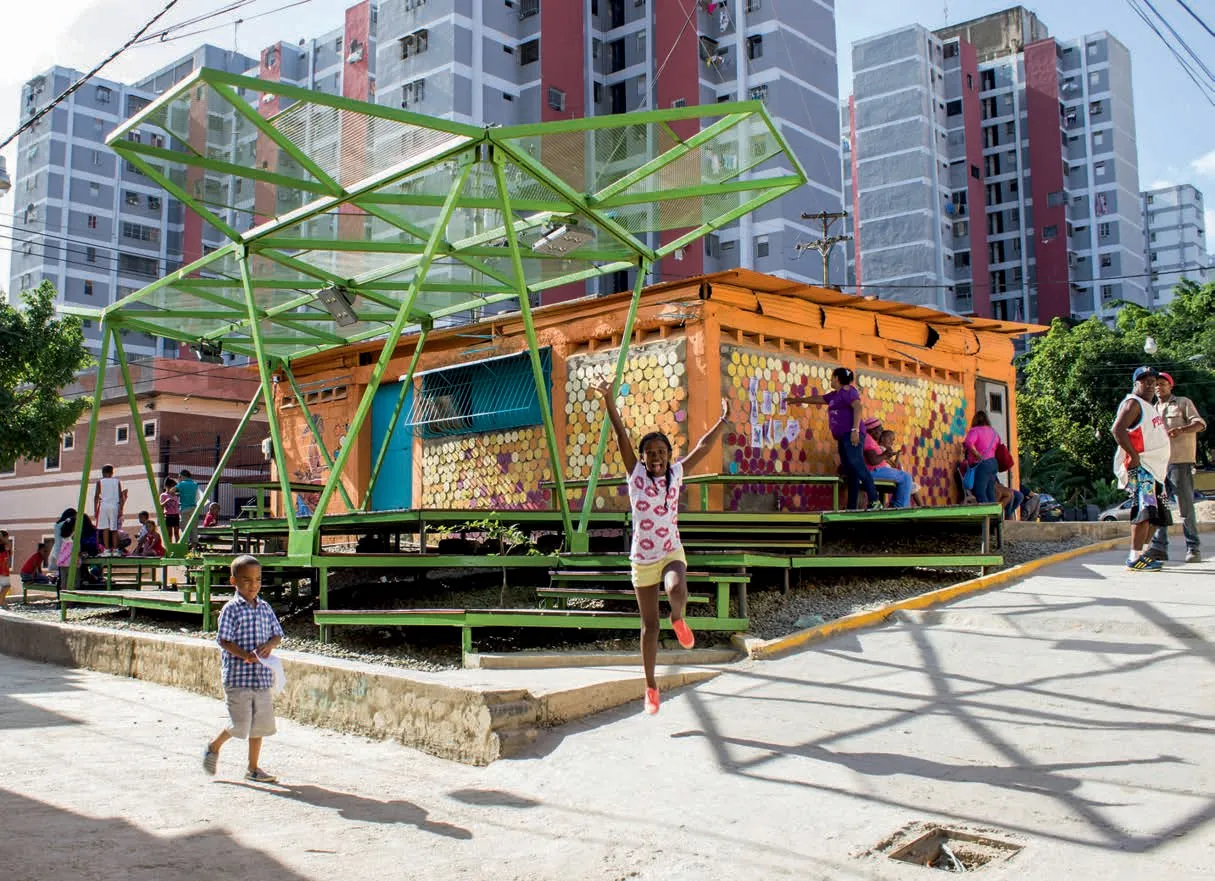
1 外景/Exterior view
參與式的設(shè)計策略與社群勞動力相結(jié)合,使得該項目不僅“為”社區(qū)建造,而且“由”社區(qū)建造。我們重新找回了建筑師作為勞動者的角色——另一位項目代理人,一個無差別卻能相互協(xié)調(diào)、不突出卻能融入過程的存在。
社區(qū)的訴求是營建一個有著明確定義的小型公共廣場,一個社區(qū)活動的集合地,一個任何人都可以坐下來聊天的公共空間,一個可以閑逛和玩耍的場所。使之不再是個垃圾場,且足夠開放,能促進(jìn)各種自發(fā)性使用。
我們設(shè)計了一個簡易的體系
三角形金屬框架適用于凹凸不平的斜坡和人工地形,同時也成為有助于藤蔓和植被生長的遮光層,是一個遮陽區(qū)域。項目設(shè)計了簡易的解決方案,當(dāng)?shù)貏趧诱呖梢詤⑴c建設(shè),且社區(qū)在沒有任何專業(yè)或外部代理方干預(yù)的情況下可自行對該系統(tǒng)進(jìn)行復(fù)制。體系和方法的構(gòu)建旨在讓同是勞動者的公民成為城市變革的主要推動者。□
(天妮 譯)
A Social Context
Pinto Salinas, a district greatly affected by violence and micro-trafficking, one of the five areas selected for carrying out the communitarian construction of spaces for life and peace.
A Physical Context
A plot in an excellent situation regarding the district's structure which should naturally become a remarkable condenser of public uses but that is, simultaneously, a neglected space due to water filtrations from illegal and unattended facilities and due to garbage piling up concerning damaged garbage containers.
A participatory design methodology is set along with a communitarian labour force, so that the project is not only built "for" the community but"by" the community as well.We reclaim the role of architects as workers, as simply another agent in the project, someone that is not distinguished but integrated, someone that doesn't excel but that is incorporated into the process.
The community claims for a small public square,a meeting point for communal assemblies, a public space where anyone can sit and have a chat, an agora to hang out and play around, sufficiently defined so that it doesn't become a dump anymore but open enough to allow all kinds of spontaneous uses.
A Simple System
A metallic triangular framework is used to build both an artificial topography easily adaptable to the uneven, sloping terrain and a light covering designed to be colonised by vine and vegetation to establish a shaded area.A simple design solution is set up as well as a way to allow local labour force construction and to allow the community to reproduce the system on their own without any specialised or external agent intervention.Both system and methodology are designed to empower citizen-worker as the main agent for urban change.□
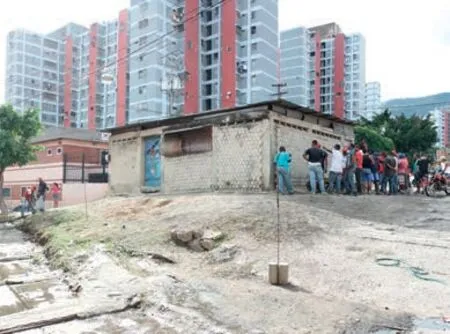
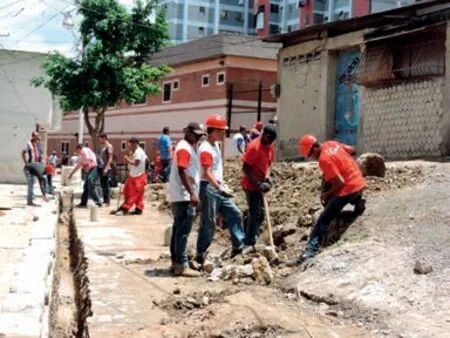
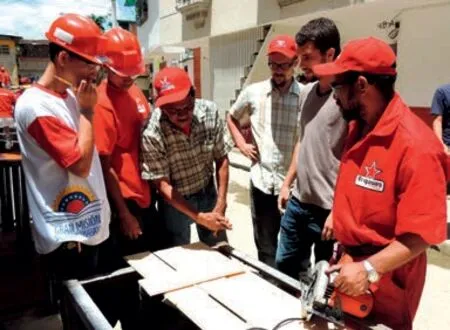


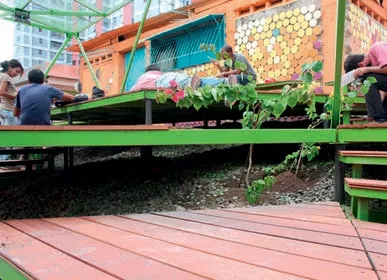
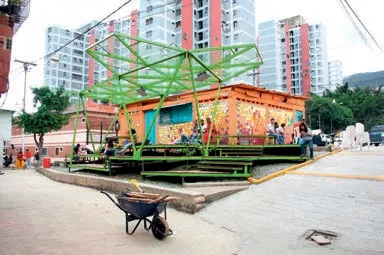

2-9 建造過程/Building process
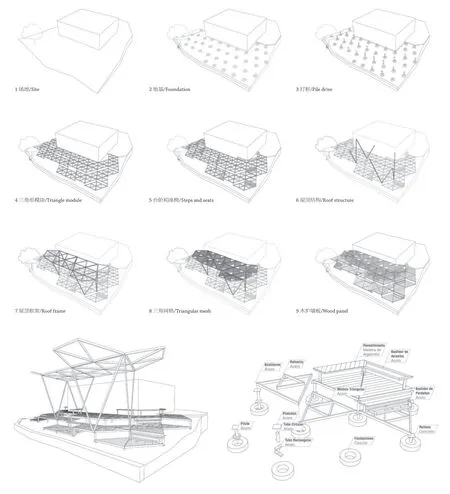
10 步驟示意/Step diagram

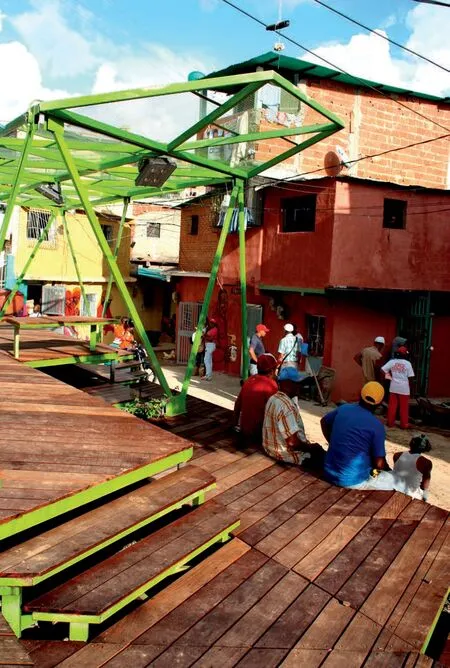
11-12 與環(huán)境的關(guān)系/Relationship with the environment
項目信息/Credits and Data
組織機構(gòu)/Organiser: 2014委內(nèi)瑞拉生活與和平空間組委會/Spaces of Life and Peace (Comisión Presidencial del Movimiento por la Paz y la Vida) Venezuela 2014
主管方/Director: PICO Estudio
所在社區(qū)/Community: Caracas, Distrito Capital La Florida
協(xié)調(diào)人/Coordinators: PICO (Adolfo Otero) and Abono Arquitectura (Marcos Colina)
設(shè)計團隊/Design Team: 盧迪卡工作室/Oficina Lúdica:Cesar Figueroa, Robert Montilla; PKMN建筑事務(wù)所/PKMN Architectures: Carmelo Rodriguez, David Perez
外部結(jié)構(gòu)在地開發(fā)商/Local Developer of External Structures: Asymetric (Camilo González)
特邀國際開發(fā)商/Invited International Developer: CAPA(Ariel Jacubovich and Martín Flugelman) from Argentina
設(shè)計時間/Design Period: 2014.07-08
圖片來源/Sources: PKMN建筑事務(wù)所/PKMN Architectures

13 外景/Exterior view
猜你喜歡
河北畫報(2020年8期)2020-10-27 02:54:06
現(xiàn)代裝飾(2020年7期)2020-07-27 01:27:42
流行色(2020年1期)2020-04-28 11:16:38
電子制作(2019年19期)2019-11-23 08:41:36
電子制作(2019年15期)2019-08-27 01:11:50
電子制作(2019年7期)2019-04-25 13:18:16
藝術(shù)啟蒙(2018年7期)2018-08-23 09:14:18
海峽姐妹(2017年7期)2017-07-31 19:08:17
Coco薇(2017年5期)2017-06-05 08:53:16
商周刊(2017年26期)2017-04-25 08:13:04
