
中國美術學院良渚校區,杭州,浙江,中國
2022-03-19 07:55:40非常建筑
世界建筑 2022年3期
非常建筑
新教育體系
中國美術學院良渚校區將容納4000名學生并建立起4個教研方向:發展跨學科創新人才,推動設計與信息經濟,融入人工智能技術,建立當代設計教育新標桿。在校園設計競賽階段,中國美術學院要求參與建筑師想象一個能夠幫助實現上述目標的教育體系。我們建議了一個有如下特征的教學框架:(1)手腦并用。每個學生,無論其未來發展方向,均需上有關制作的基礎課程,如繪畫、設計或建筑等。(2)高年級的課程以研究項目為主導,培養學生解決實際問題及跨學科團隊合作的技能。(3)取消“系”的設置,對知識進行整合。
Towards a New Mode of Education
A new campus of China Academy of Art(CAA) is located in Liangzhu, a district in the city of Hangzhou. At Liangzhu, this art based comprehensive university plans to have four academic divisions, which are College of Innovative Design, College of Art Management,College of Foundational Education, and College of Continuing Education, and will house 3000 full-time students and 1000 continuing education students. The four main objectives of this new campus include developing interdisciplinary innovative talents, promoting design and informational economy, integrating artificial intelligence technology and setting another benchmark for contemporary design education. At the stage of the campus design competition, CAA asked the participating architects to envision an educational system that would meet the missions above. We understood that choosing a major while entering college is no longer the best way for today's higher education and proposed a conceptual framework for learning that is defined by the following: (1) Use head and hands. Every student, regardless his/her discipline or concentration, has to take courses that engage making, from drawing/painting to design/architecture, as part of the foundations.(2) Classes as research projects for advanced level, which allows students to acquire skills to work as an interdisciplinary team and solve realworld problems. (3) Abolish the "departments"so that knowledge is integrated.
建筑育人
基于以上的研究,我們認為建筑可以也應該成為教育體系的一部分。什么樣的校園空間有利于動手和實驗并鼓勵學生之間在課內外互動與合作?盡管傳統教室仍然有其存在的必要性,主要的教學空間在良渚被重新定義為開放、延綿的工坊。在工坊中可以進行常規課程的教授,也可以是學生們或獨自閱讀寫畫或結伴搭建討論的場所。在工坊中,校園內所有的活動盡可一覽無余,學生一邊沉浸在自己的興趣中一邊也不難發現其他同學從事的種種創作。我們希望在這個校園環境中能夠模糊教導和學習、研究與實踐的界線。高聳的拱頂給工坊帶來充分的自然光,也給大型的建造及事件,如會議、戲劇/舞蹈演出,創造了條件。
居學
在良渚,學生就住在工坊之上。工坊、公共空間、宿舍自下而上的垂直布置把學生的生活和學習融為一體,體現了“校園即社區”的理念。宿舍被稱為“學舍”,因為其中設置了專門為學生自發組織“興趣社“的空間。興趣社是學生自學課程的一種形式。我們希望通過建筑向學生推介“生活即教育”的思想,這正是良渚校園規劃及工坊設計背后的核心理念。同時,從設計概念上,良渚校園也是開放的。目前,中國美術學院已經為良渚的新生們開設了一門課,在課上讓同學們想象利用校園空間的方式。
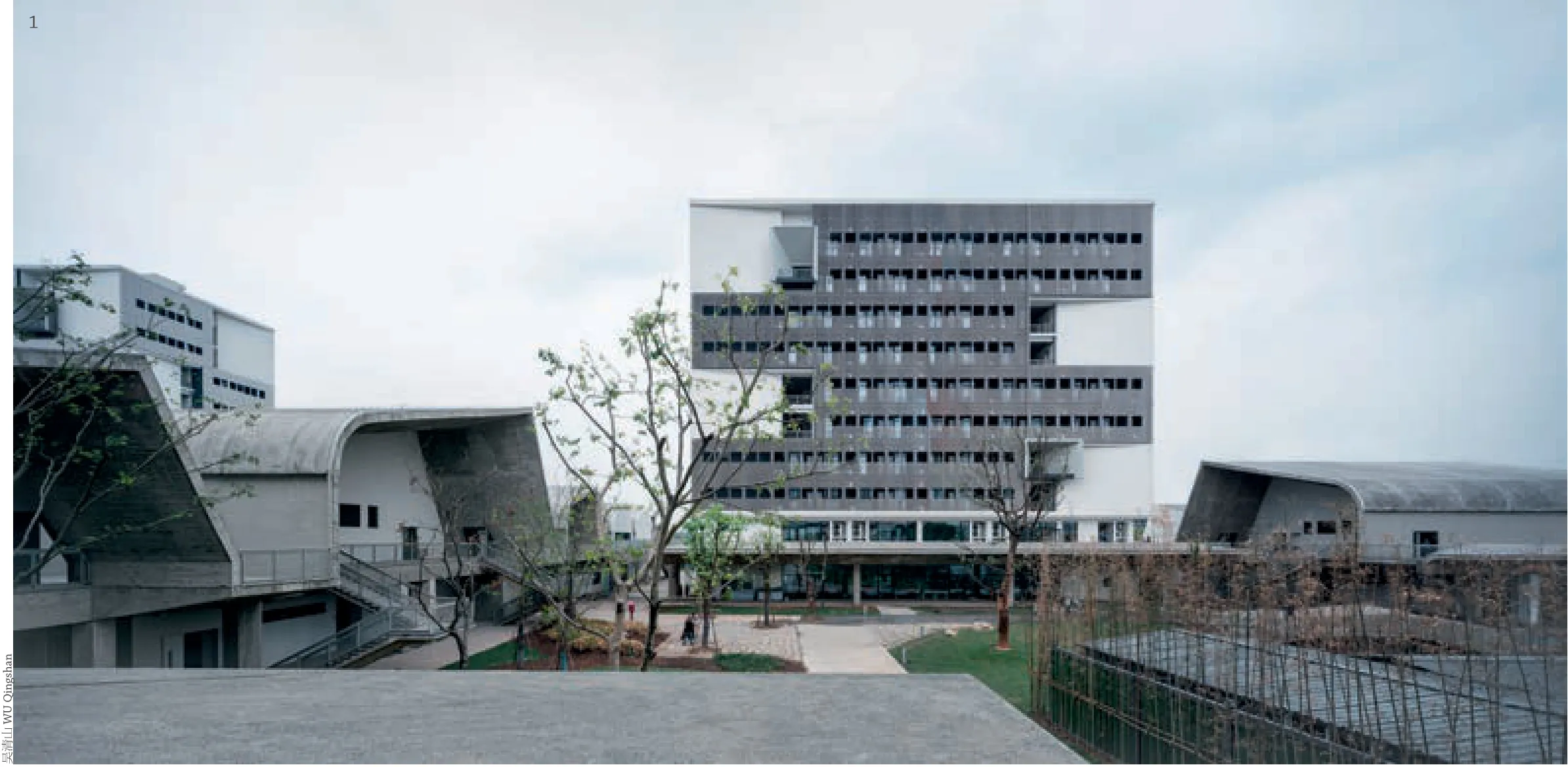
1 校園外景Exterior view
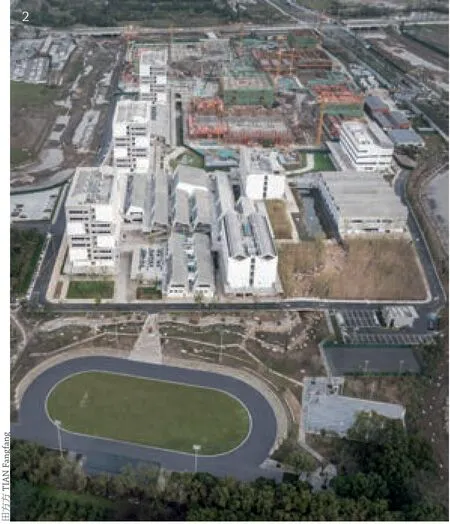
2 鳥瞰Aerial view
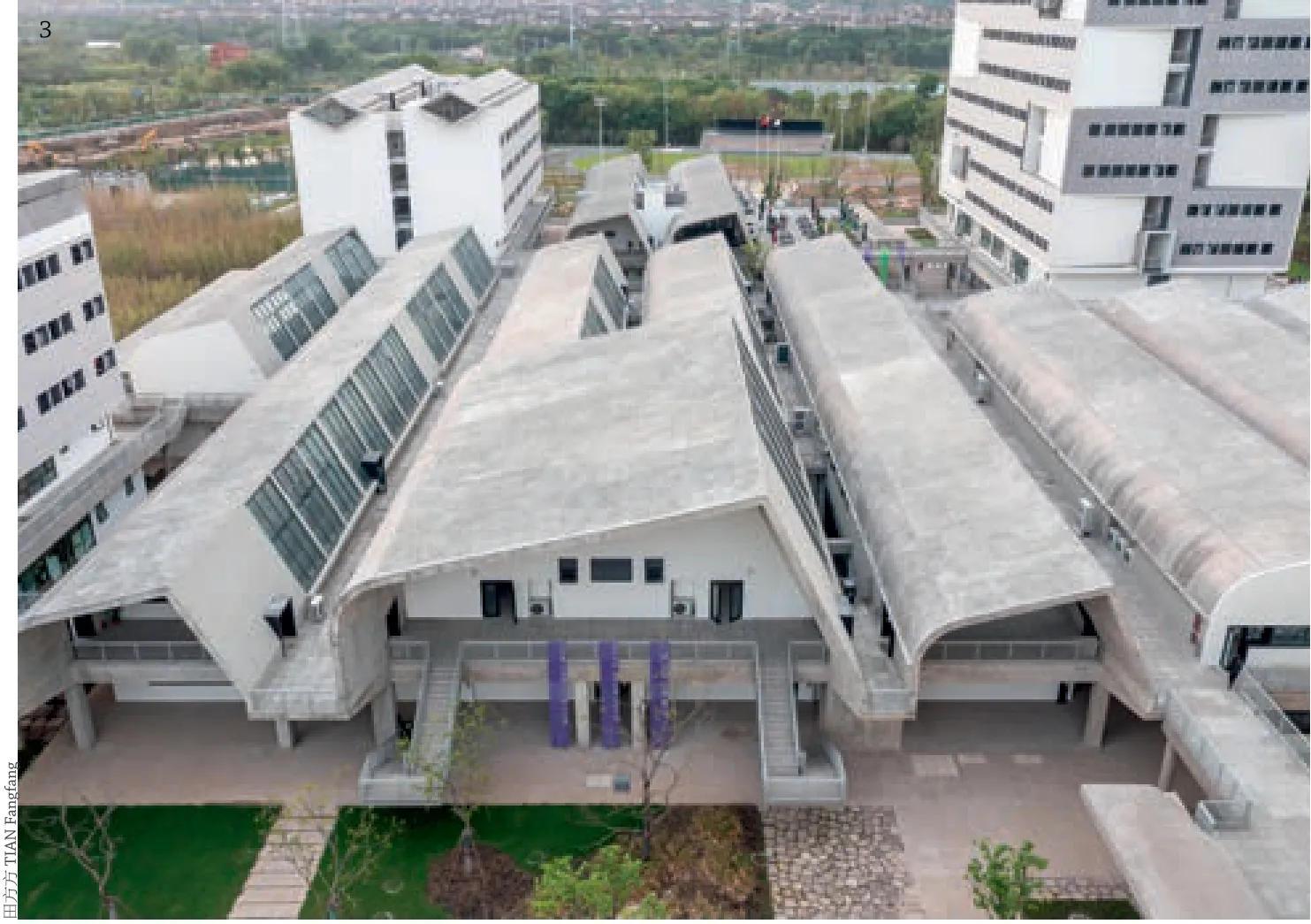
3 工坊Workshops
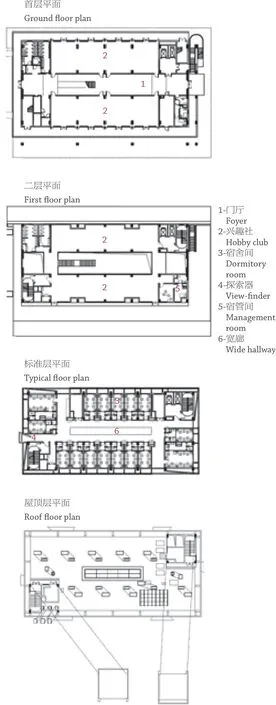
4 高層宿舍平面High-rise dormitory plans
獨棟校園
在良渚,不但沒有教學區與生活區之分,所有的建筑都用廊子相串連,形成了一個只有一棟建筑的校園。為了滿足學生們晾曬衣服的需要,同時又不影響混合使用校園對建筑外表統一的追求,我們在宿舍的陽臺外面設計了一個整體的格柵系統,達到即整潔又遮陽的目的。在多層宿舍的屋頂等多處,還設計了一系列名為“探索器”的半室外純建筑空間,以進一步豐富校園生活。
中國美術學院良渚校區分為兩個階段建造。一期已完工,于2021年9月投入使用。整個校園將于2023年建成。□
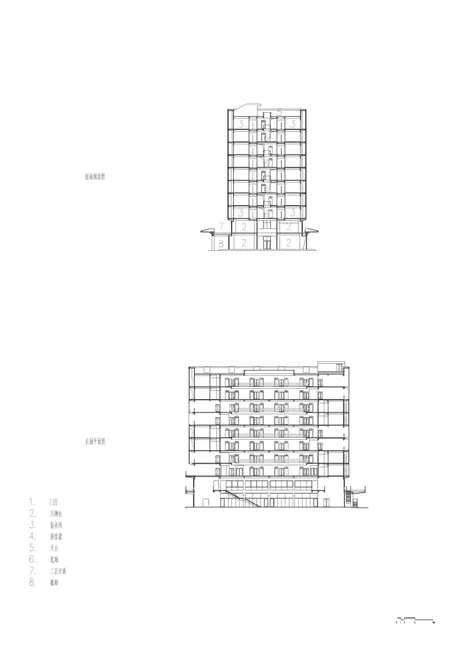
5 高層宿舍剖面High-rise dormitory section
Architecture that Teaches
Based on the research above, we believe that architecture can and should be part of the educational system. What kind of campus space may best to facilitate making and experimentation as well as to encourage students to interact with each other inside and outside the classroom to nurture collaboration?While traditional classrooms are still necessary,the main teaching-learning space at Liangzhu is redefined as an open, continuous studio,where classes can be held and students may read, write or draw alone, or build, discuss or debate together. In this space, all the activities on campus are visible, which means that a student can be constantly aware of what others are working on while pursuing his/her own interest. We hope to blur teaching and learning, research and practice in this particular school environment. Its vaulted studio spaces bring in ample natural light would allow largescale installations as well as events, such as conferences and drama/dance performances.
Learning and Living
At Liangzhu, students live right above the studios. The vertically sequenced system of dormitory, social space and studios creates an architecture that embodies the concept of"college as community" where students live and study under one roof. Within the dormitories,there are spaces provided to the students for themselves to organize "hobby clubs", which are a form of self-taught courses. We hope to convey to the students the notion of "living is learning", which makes up the core ideas of this campus design along with the studios. In many ways, CAA Liangzhu is an open project. The incoming students have been asked to imagine the ways they will engage the architectural spaces of this campus in a workshop to make the campus their home.
One Building
Since there are no separate zones for teaching facilities and living quarters typical of a college campus, all the buildings at Liangzhu are connected by covered walkways and conceptually woven into a single piece of architecture. Due to the habit of hanging laundry in the dormitory balconies, this mixed-use spatial organization calls for a tidier than usual appearance for the dormitories. A continuous metal louvre is thus devised on the building exteriors to screen off laundry as well as air conditioners while serving as sunshades. On the rooftops of the dormitories, we designed a series of semioutdoor spaces named "view-finders", which is aimed at further enriching the campus life of Liangzhu.
For the purpose of construction management,the CAA Liangzhu project was scheduled in two phases. The first phase was completed in July 2021, and classes began in September of the same year. The entire campus is due to open in 2023.□
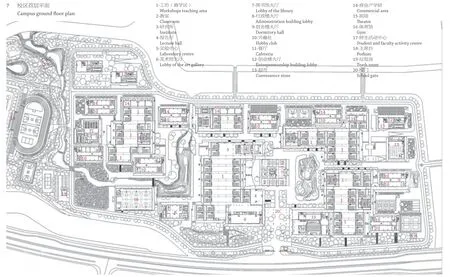
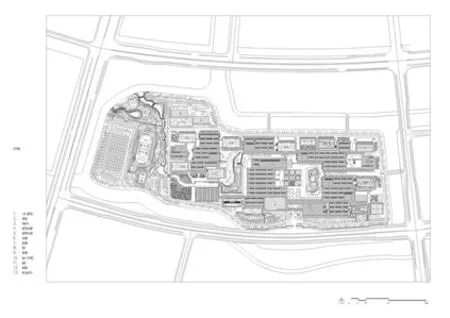
7 校區首層平面Campus ground floor plan
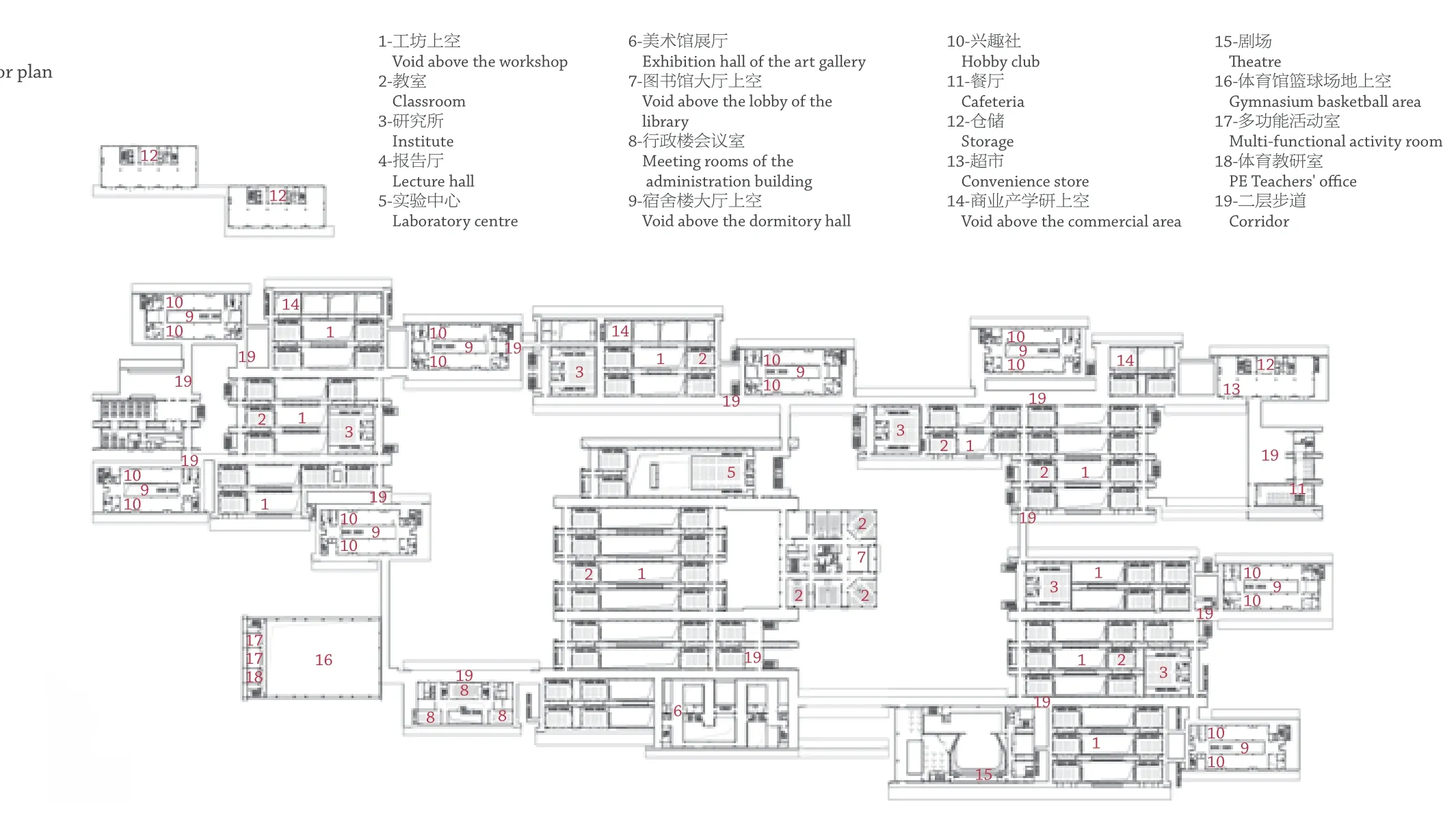
8 校區二層平面Campus first floor plan
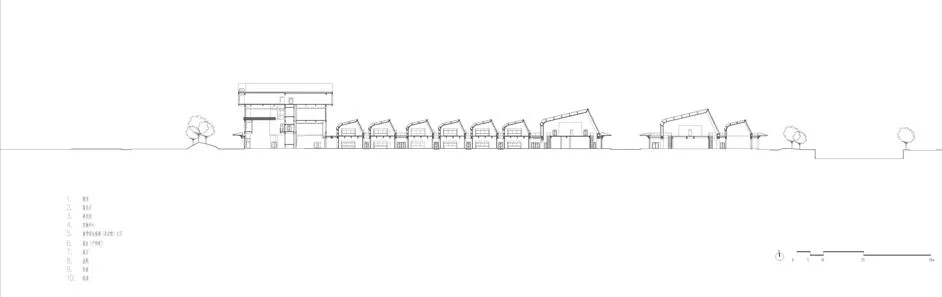
9 短軸剖面Campus cross section
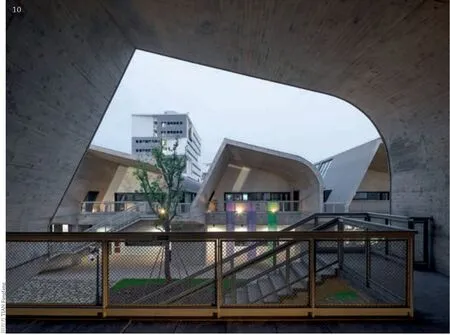
10 工坊拱頂下空間Space under cantilevered eaves of workshops
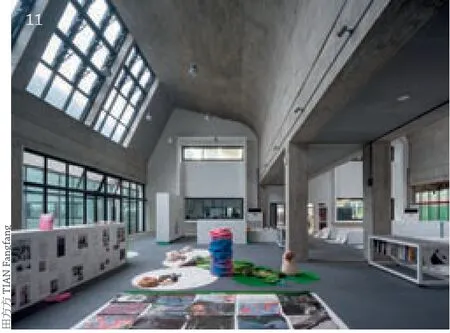
11 作為展覽空間使用時的工坊Workshop used for exhibition

13 工坊入口Workshop entrance
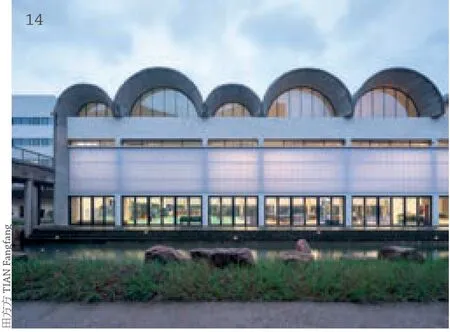
14 體育館Gym
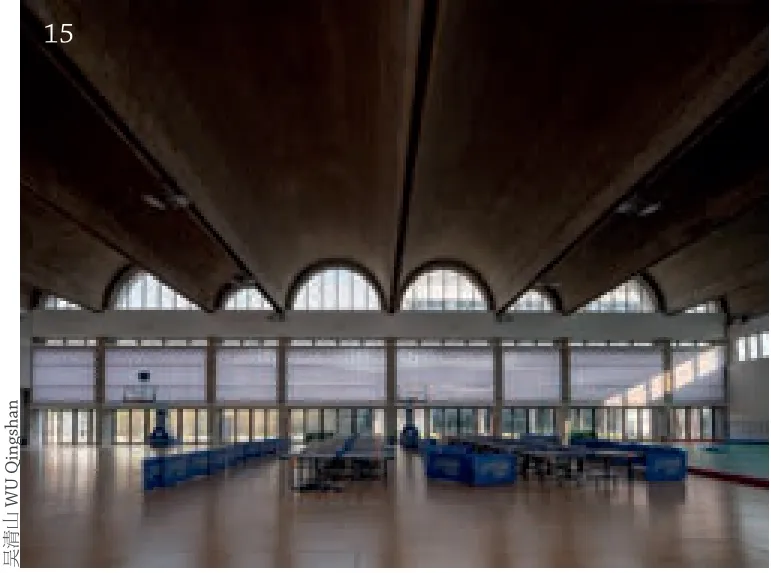
15 體育館內景Interior view of Gym
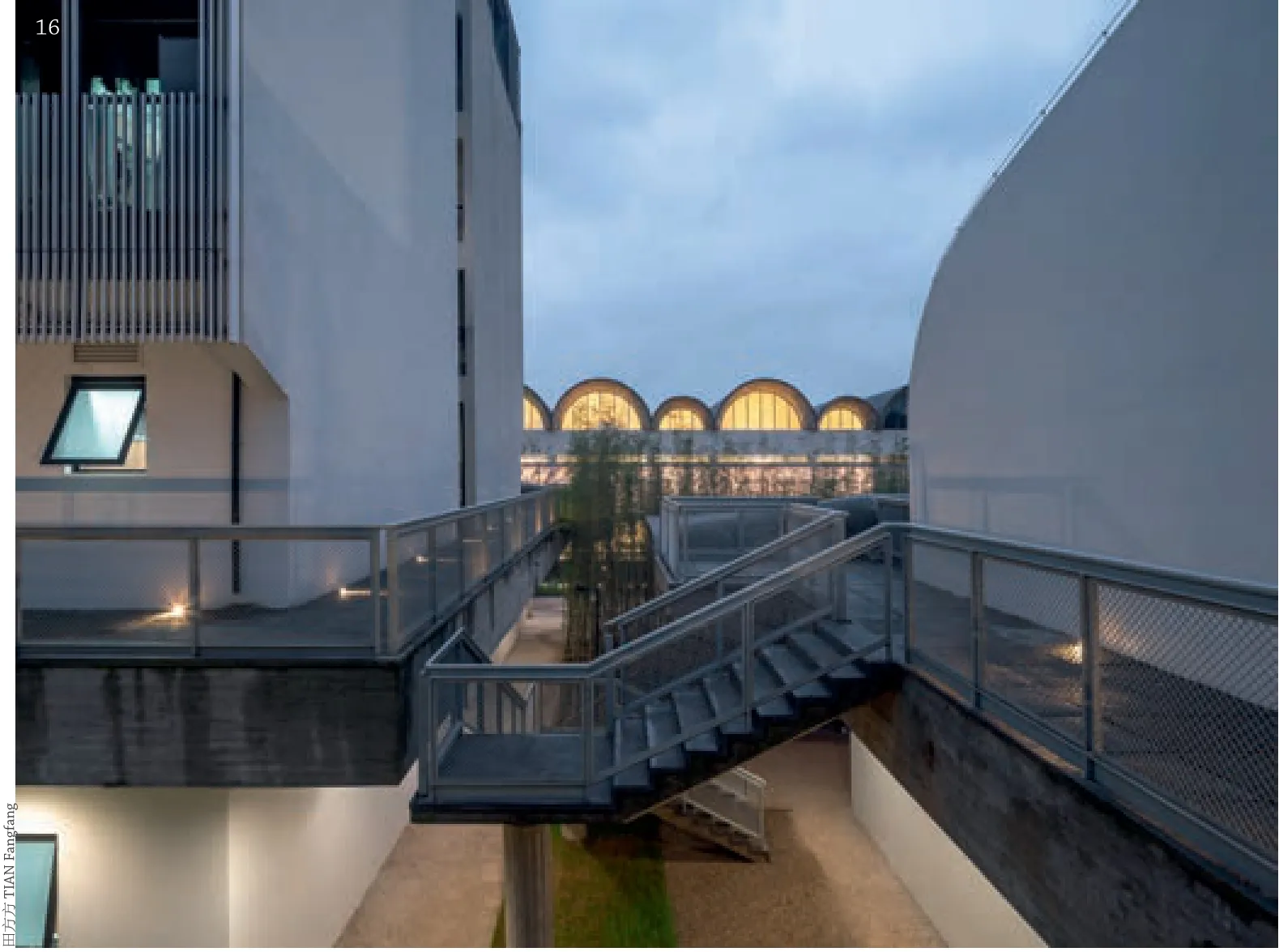
16 從宿舍與工坊間遠眺體育館View of gym from dorm and workshop

17-18 體育館剖面Gym sections
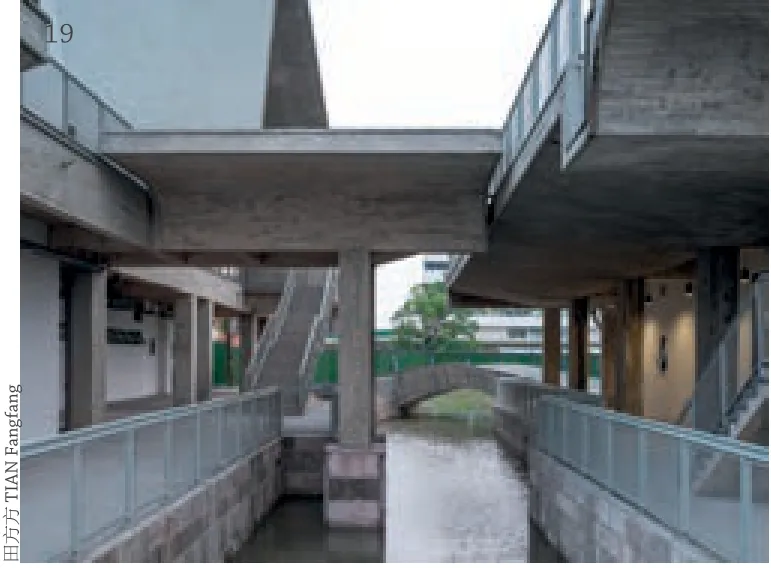
19 聯通自然河道的“劍池”Sword Pond connecting to river surrounding campus
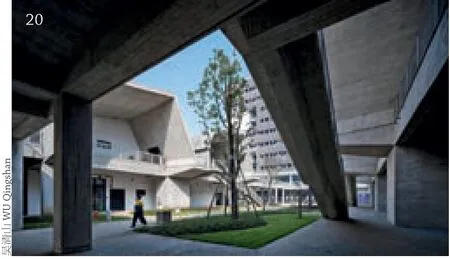
20 工坊與院子Courtyard between workshops
猜你喜歡
北方建筑(2021年6期)2021-12-31 03:03:54
小雪花·初中高分作文(2021年4期)2021-08-27 09:21:34
文苑(2020年10期)2020-11-07 03:15:36
現代裝飾(2020年6期)2020-06-22 08:43:12
小雪花·初中高分作文(2018年4期)2018-12-12 10:32:28
絲路藝術(2018年8期)2018-09-27 09:24:40
琴童(2017年3期)2017-04-05 14:49:04
小天使·二年級語數英綜合(2017年3期)2017-04-01 17:17:48
小雪花·初中高分作文(2016年2期)2016-05-30 16:36:19
少兒科學周刊·兒童版(2015年6期)2015-11-24 03:49:38
