Brief Introduction of Lathyrus Cultivation and Using in Turkey
2022-04-18 01:41:02ParisaPouraliKahrizMahsaPouraliKahrizSurendraBarpeteKhalidMahmoodKhawar
西北植物學(xué)報(bào) 2022年3期
Parisa Pourali Kahriz, Mahsa Pourali Kahriz, Surendra Barpete, Khalid Mahmood Khawar*
(1 Department of Field Crops, Faculty of Agriculture, Ankara University, Diskapi Ankara 06110, Turkey; 2 ICARDA-FLRP, Amlaha, Sehore, Madhya Pradesh 46613, India)
Abstract: It is well established that Lathyrus sativus has its center of origin in the Balkan Peninsula, from where it spread to the other parts of the world through infusion and naturalization. Turkey has 73 taxa in genus Lathyrus, (of which about 1/3rd are endemic) that grow all over the country but are more concentrated in Central Black Sea, South East, and Eastern Anatolia Regions. The current study describes the cultivation and consumption practices of Turkish people where it is not consumed on large scales and is confined to a few locations. The people in different countries of the world have different eating habits depending on their culture. However, most people use them to make soup, bread, or salty snacks using whole, split grains/or powder. The cultivation techniques of the grass pea vary from place to place. These include cultivation under rainfed conditions on marginal lands in Turkey to using Utera method of cultivation in China and some parts of India. Grass pea is a neglected crop and all research work is carried out on an individual basis without the involvement of large or mega projects. There is a need of chemical, phenotypic and molecular characterization with emphasis on conservation of local germplasm world over including Turkey with focus on breeding low β-ODAP cultivars suitable for human and animals consumption everywhere in the world including Turkey and China. It is concluded that the selection of low or no β-ODAP cultivars will help in the production of better cultivars that could be used for food, feed, and ornamental purposes.
Key words: grass pea;species in genus Lathyrus; endemism; threatened species; forage; breeding
The Balkan Peninsula is supposed to be the center of origin of grass pea. First archeological remains of theLathyrussativus(grass pea) have been reported from Ali Kosh (dated 9500-7600 BCE) area of Iran[1]. Other remains of the species are reported from Jarmo in Northern Iraq (dated 8000 BCE)[1-2]. Still, other remains of the species were reported from Tepe Sadz, (dated 7500-5700 BCE) in Iran[1]. About the same age (7000 BC) similar archeological remains ofL.cicerawere reported from Azmaska Moghila, Bulgaria[3], followed by the archeological finding ofL.sativusfrom Atranjikera, India (dated 2000-1500 BCE)[4]. These discoveries postulate gradual dissemination and diffusion of the plant from West Asia to South and South East Asia including China. However, Vavilov[5]defined two centers of origin of the species in genusLathyrusnamely Abyssinian (Ethiopian) Centre and the Central Asian Centre including Afghanistan, North West British India (Now Khyber Pakhtunkhwa Pakistan), Tajikistan, and the Western Tian-Shan mountain range (Kazakhstan, Kyrgyzstan, and Uzbekistan). Vavilov[5]indicated that smaller-seeded ecotypes were dominant in the south or southwest Asia. Furthermore, he found large-seeded or cultivated ecotypes in western Asia or the Mediterranean region.
However, the latest phytogeographical and archaeobotanical evidence disagree with the evidence and conclude that the original center ofLathyruslied in the Balkans in the early Neolithic period, 6000 BCE[6]or the (First) Agricultural Revolution, giving start to cultivation and domestication of economically important legumes. This also suggests possible diffusion and naturalization of the plant from the Balkans to the European countries, Africa, tropical countries, Americas and Australia.
1 Cultivation
Grass pea or mürdümük (Turkish vernacular name) is a collective name given to all species in the genusLathyrusfound in almost every region of Turkey[7]. Most of them are distributed and concentrated in the Central Black Sea region along with Eastern and Southeastern Anatolian ecogeographic Regions[8-9]. Turkey is known as the gene center of many genus of Fabaceae includingLathyrus[10]. Only common grass pea (LathyrussativusL.) vernacular yayigin mürdümük (Turkey), [or家山黧豆(Chinese), Indian pea, white pea or chickling vetch (English), lentille dEspagne (French), cicerchia (Italian), chícharo (Portuguese, Spanish),(Urdu)] and red pea or red vetchling (L.cicera) are cultivated on a very small scale in Turkey[11].
1.1 Cultivation in Turkey and some selected countries
Correct statistics about the area under grass pea cultivation is not available. However, it is well known that grass pea grows in Adyaman, Burdur, Bursa, ?ankr, Denizli,Kütahya, Malatya, Nevsehir, Samsun, Usak, Mugla provinces and surrounding areas under natural or cultivated conditions on limited scales for grain production to feed ruminants. Some reports suggest that Downy grass pea (L.hirsutus) was cultivated in Western and Central Anatolian regions before 1970[12]. Similarly, sweet pea (L.odoratus) was grown as an ornamental plant in Anatolia[13]. Grass pea is tolerant to drought and can grow with 200-400 mm per annum rainfall and about 10% relative humidity everywhere including northwestern China, with acceptable yield[14].
They are cultivated by broadcast method over earlier prepared seedbeds in September or October preferably after the first winter rains along with cereals (generally wheat) in Turkey. They are also sown as a spring crop in rotation with other crops like wheat and is either grazed or harvested manually in Turkey. The farmers do not irrigate, fertilize, and apply herbicides or pesticides to the crop[15-16].
Although six grass pea varieties have been developed and registered, their certified seeds are rarely available. Therefore, the farmers mainly depend on their own seeds harvested from previous years’ crops or borrow the seeds from their neighbors/relatives or purchase non-branded seeds from the local markets without any consideration of their quality.
Similarly, grass pea is cultivated on limited scales in the Sindh province of Pakistan that is largely used as feed[17]. There is limited research on grass pea the world over and is counted as an abandoned or ophan crop due to very limited research and most of the available germplasm in the gene banks are untouched[18]in India. Grass pea cultivation is not legal[19]in most of the Indian states excluding their use for feed and domestic consumption.
Contrarily, grass pea cultivation in South East Asia (China) is done through ‘utera’ method[18, 20]. The farmers broadcast grass pea seeds into cultivated rice crop fields. The seeds begin to grow after draining the water after harvest with sufficient water imbibition to germinate them. The farmers prefer the use of small-seeded varieties. They believe these seeds have a thick seed coat with potential resistance against water for a longer time under flooded water of rice and could germinate easily after drainage[20]. The farmers of southeast China also cultivate the grass pea under rain-fed conditions. The crops are grown on marginal lands with minimum or low inputs including soil nutrients in form of fertilizer. Utera is not practiced in any part of Turkey as rice cultivation is performed under restricted conditions by a license from the state[21].
1.2 β-ODAP contents
It was reported that the β-ODAP (β-Noxalyl-L-α, β-diaminopropionic acid) content of seeds should be less than<1.5 mg·g-1(0.15%) for safe consumption[22]. ICARDA Syria conducted a study to determine the β-ODAP contents of many lines belonging toL.sativus,L.ciceraandL.ochrusspecies (Table 1). The study determined the highest and the lowest β-ODAP contents inL.ochrusandL.ciceralines in the same sequence[23]. Aletoretal.[24]reported average β-ODAP content of 0.48% inL.sativus, 0.16% inL.ciceraand 0.57% inL.ochrus.
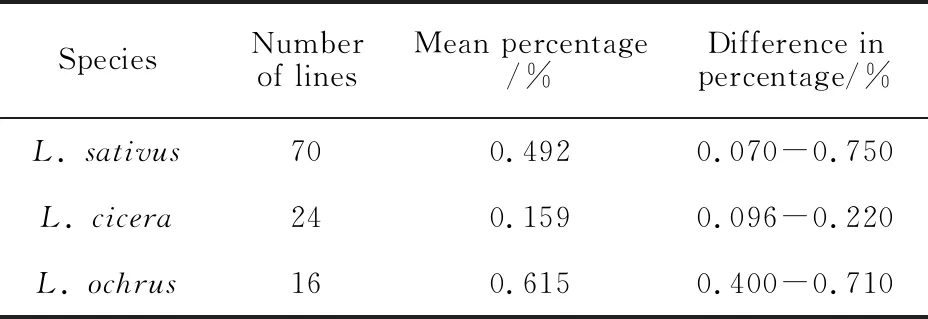
Table 1 β-ODAP contents determined in three Lathyrus species in a study in Hayda (Syria)[23]
2 Eating habits and pharmaceutical uses
Grass pea cultivation was carried out in the Western Black Sea (Zonguldak Beycuma) until the 1980s. Although the species is generally grown as a forage crop, its grains are rarely used as human food in Turkey.L.sativusis rarely used for human consumption as a pilaf, soup or snack made up of a mixture of chickpea and grass pea seeds in Turkey. The seeds are also soaked in water overnight followed by draining this water ensued by boiling them in fresh water. This process results in > 90% reduction in β-ODAP level in the seeds ending up with a negligible risk of lathyrism. Lathyrism has not been reported in any village where tender leaves and branches are used as salads or in cooked form[24-26].
Human consumption of grass pea is also reported in countries like India, Ethiopia, Bangladesh, Nepal, Northwest China, Italy, Spain, France, Afghanistan and some parts of Russia[1, 27-29]. People of Pakistan, Nepal, Bangladesh, India, and other south Asian countries like to make soup from boiled or split grains (called dal or dal shorba) or flour (besin). The kneaded flour mixture is also used to roast chicken, potato, fish or mixed vegetable fritters (called pakorhey)[30]. Bengali people from Bangladesh and East Bengal (India) make grass pea flour bread. Adulteration of chickpea flour with grass pea flour has also been reported in India. Nepali people use split grass pea soup with rice. The people of northern Ethiopia and Eritrea mix grass pea flour to make enjera (fermented pancake) after mixing it with wheat, tef, maize, sorghum, and barley[31]. The southeast Asian people also use newly germinated tender young leaves as a vegetable[30, 32]. The green pods and seeds are also cooked as green vegetables or are eaten as very popular snacks after boiling and salting.
Besides using grass pea as food and feed[33], the Chinese scientists have developed several medicinally important products using grass pea metabolite β-ODAP for using it as a hemostatic agent at the time of surgery[34], that is used for treatment of hemorrhage and thrombopoiesis[35-36]and avoid tooth wound bleeding[37].
3 Ornamental uses
There are 73 annual and perennial species and taxon in genusLathyrusthat grow and are found in Turkey as indicated in Table 2[38]. These grow like weeds and have potential applications in the ornamental or medicinal plants industry. Most of them are very similar in appearance and are pronounced by similar names or different names locally at their habitats, therefore, writing of their vernacular names was avoided in this paper to prevent confusion and complexity. Many of these show different levels of threat and endemism as indicated by the International Union for Conservation of Nature (IUCN).
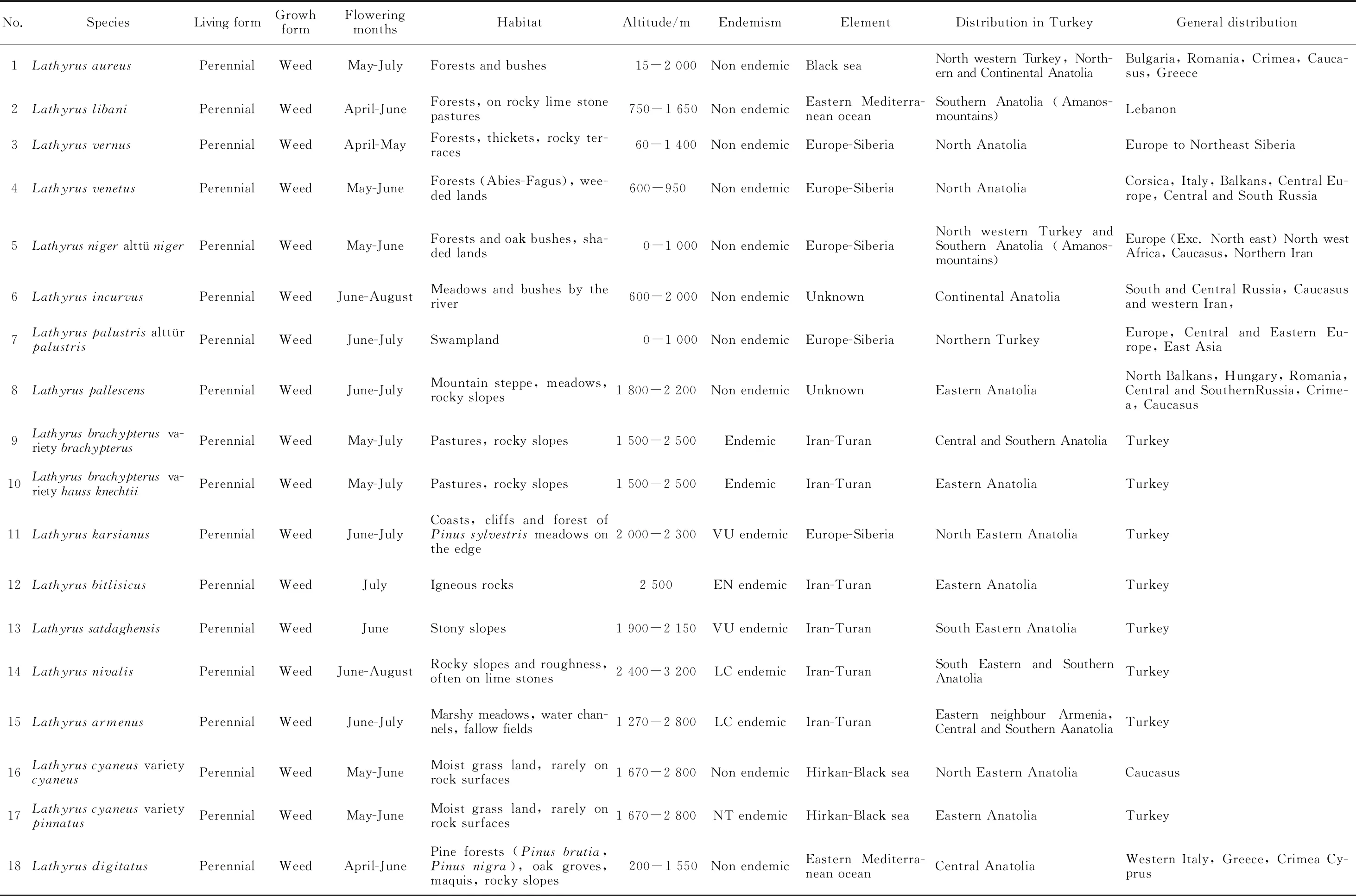
Table 2 Number of species and taxon in genus Lathyrus growing in Turkey along with their level of threat and endemism as per IUCN and other related details[38]
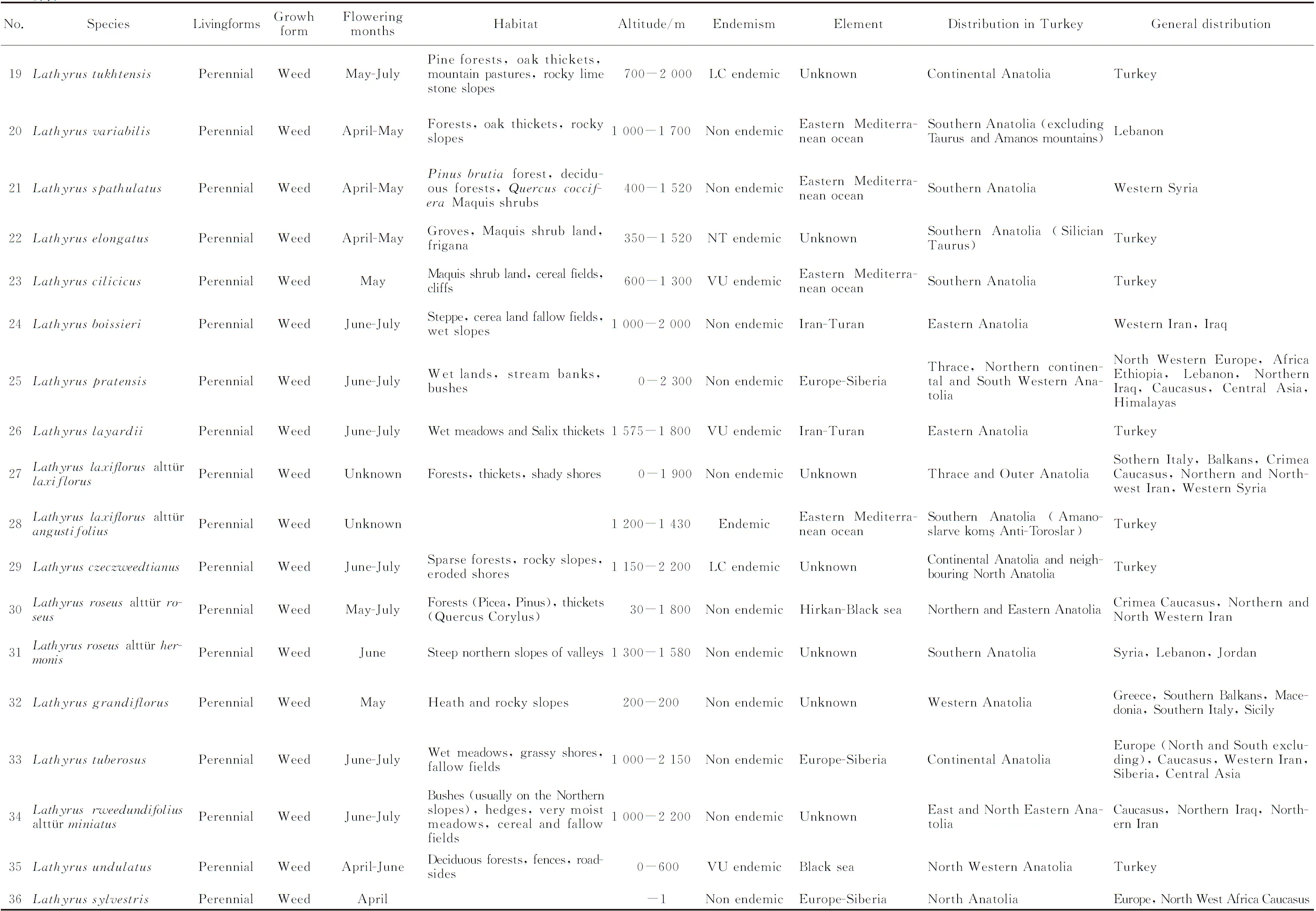
續(xù)表2 Continued Table 2
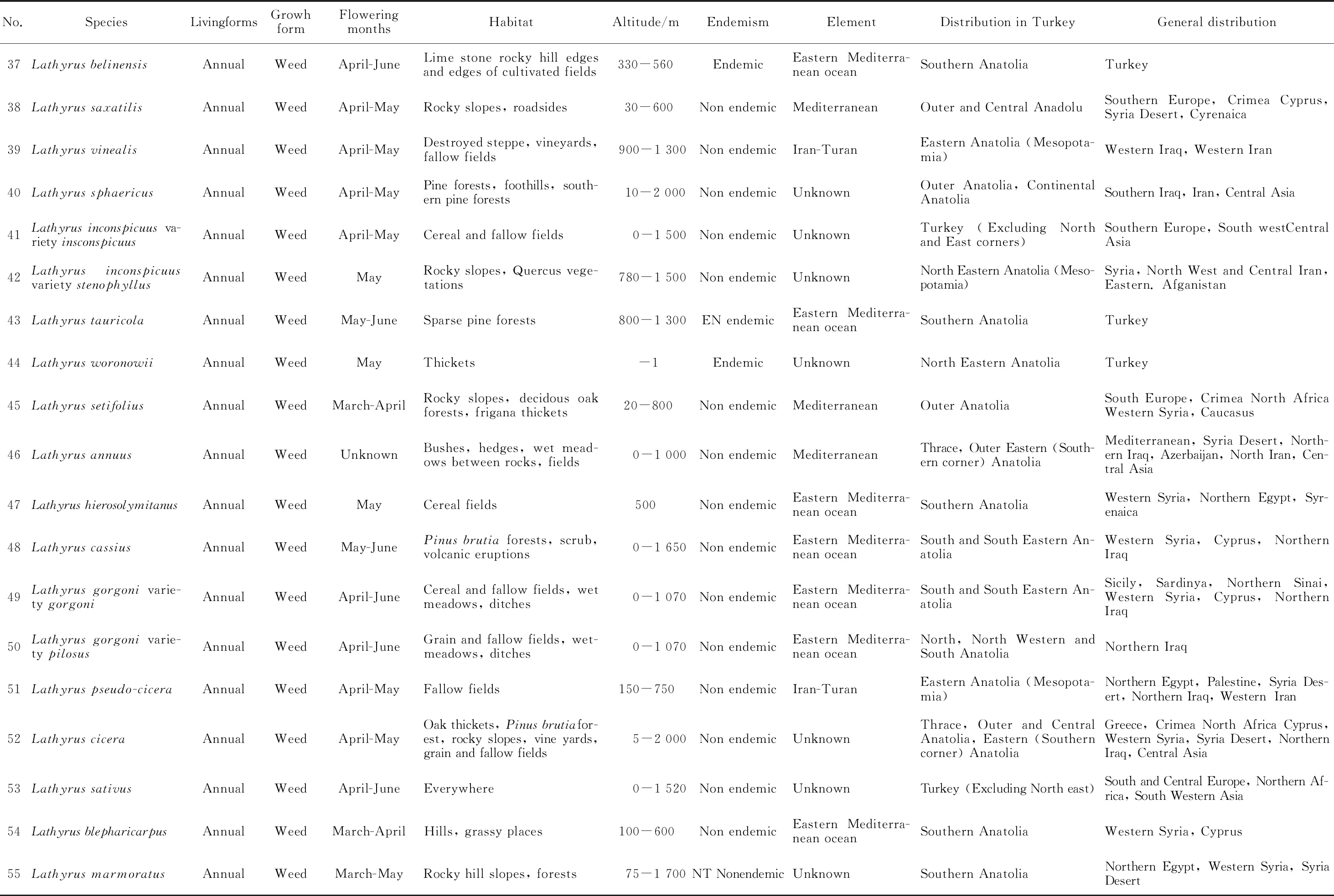
續(xù)表2 Continued Table 2
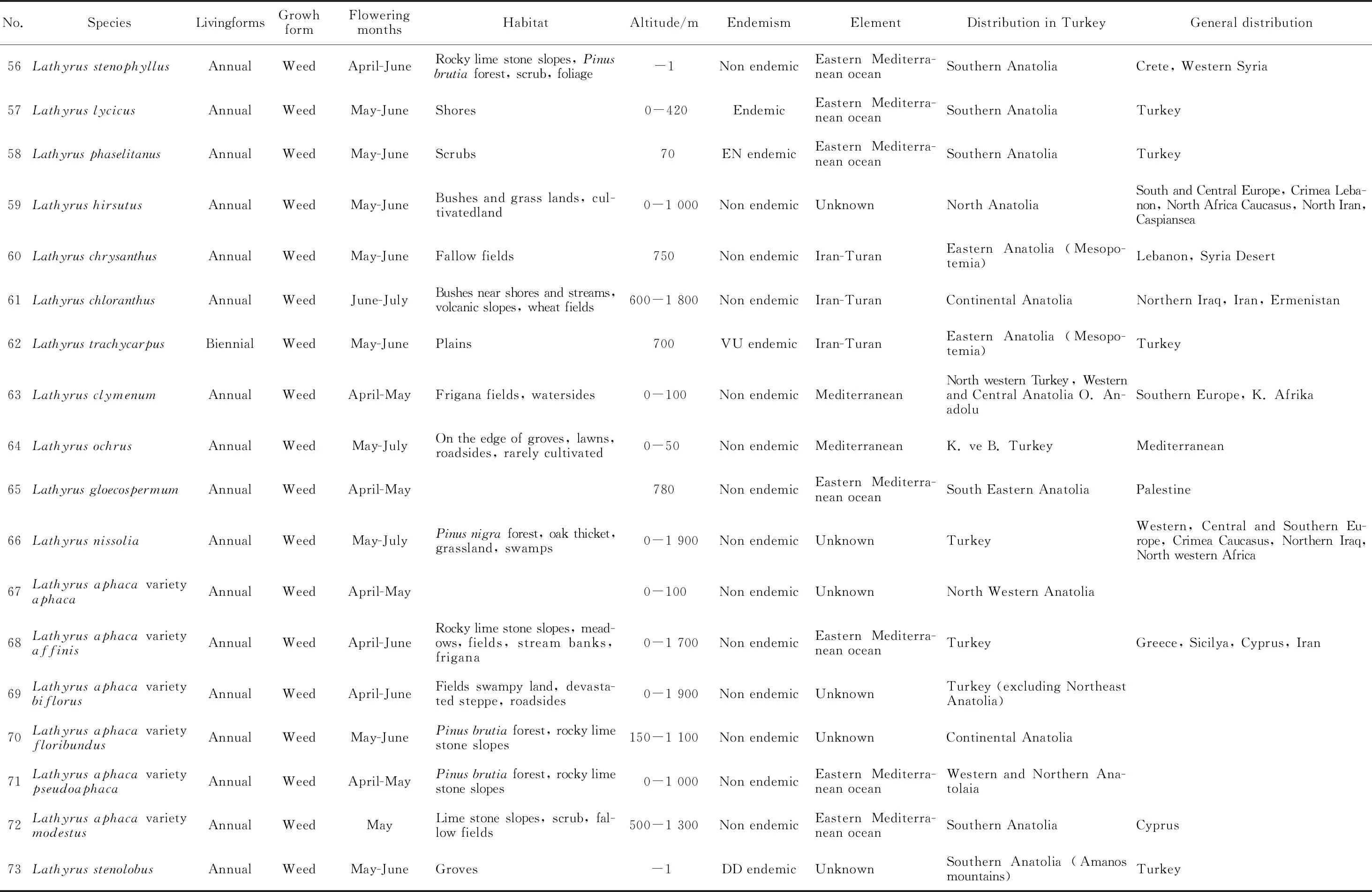
續(xù)表2 Continued Table 2
Although all grass pea is used as cut flowers, vase plants, garden and graveyards decoration in their natural habitats/areas by the amateur roadside vendors or local dealers in flowering plants, no statistics or study is available about their production and sale in a real sense.
There are reports from many European countries like Italy, France, Spain, Portugal, and United Kingdom, etc. about the use of manyLathyrusspecies likeL.belinensis,L.chloranthus,L.vernus,L.tingitanus,L.grandiflorus,L.latifolius,L.rotundifoliusandL.sativusas commercial cut flowers and garden plants[39-43].
4 Conservation of Lathyrus genetic resources
Grass pea is a neglected crop plant. Although, there are several works about the conservation of genetic resources abroad; there are no or negligible works towards safeguarding the localLathyrusspecies in Turkey underex-situconditions. Two national seed or gene banks are working in Turkey but they lack all collections of the seeds of the species in genusLathyrusgrown naturally in Turkey. Turkish researchers are working on an individual basis supported by the projects from Tubitak (Scientific and Technological Research Council of Turkey) or BAP (Directorates of the Scientific Research Projects) of the respective universities or the research organizations.
Only 82 of 160Lathyrusspecies in the world are (as mentioned in Annex 1 of the International Treaty on Plant Genetic Resources for Food and Agriculture) underex-situprotection[44]. There is a need to collect and characterizeLathyrusspecies spread over different regions in the World. Byex-situ(for instance, seed storage in gene banks) and in situ (i.e., within the natural habitats) methods[44-45]. The ICARDA (International Center for Agricultural Research in Dry Areas) has conserved about 3 600 accessions that represent 45 species in genusLathyrusfrom 40 countries[46]. Similarly, 2 720 accessions have also been conserved in the NBPGR (National Bureau of Plant Genetic Resources, New Delhi India)[47]. Please refer Patto Vaz and Rubiales[48]for more deails. All species ofLathyrusshould be considered for the conservation and genetic resources, but the collection and conservation studies on the agriculturally importantL.sativus,L.ciceraandL.ochrusspecies are more intense[47]. Among these materials, 1 627 of them belong toL.sativus, 183 of them belong toL.ciceraand 136 of them belong toL.ochrus.
ICARDA has 3 038Lathyruscollections of which 370 collections belong to Turkey; including 16, 52, and 3 collections belonging toL.sativus,L.ciceraandL.ochrusspecies. These species in genusLathyruswere mainly collected from the Central Anatolia, the Mediterranean and South East Anatolia regions[49].
5 Conclusion
The collection and protection ofLathyrusspecies are of great importance because of protein, carbohydrates, and mineral elements. There is a need to characterize theLathyrusspecies found in Turkey or elsewhere for chemical, phenotypic and molecular characteristics. This will facilitate the breeding of low or zero β-ODAP cultivars. Local populations of these species are concentrated in pockets spread over the map of Turkey. Detailed and complete information about yield, quality, and β-ODAP contents in these populations has yet to be determined. This could be done through a coordinated International or National Research program/consortium involving taxonomists, breeders, agronomists, molecular biologists, economists, experts in analytical chemistry, pharmacognosy, etc. A collective approach could facilitate in identifying and categorizing the species suitable for different ecologies and their safe use in agriculture, pharmaceutical industry, ornamental plants industry, and others. These species could be introduced as intercrops in wheat and other crops of local farming systems with tremendous advantages.