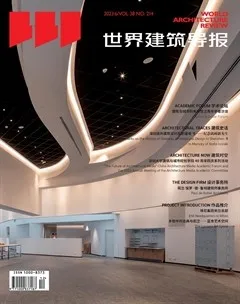
荷蘭保羅·德·魯特建筑師事務(wù)所
2023-03-21 16:56:15
世界建筑導(dǎo)報(bào) 2023年6期


我們?nèi)绾慰创澜?/p>
可持續(xù)發(fā)展始于1994年:真誠(chéng)地講,我們對(duì)未來很樂觀。這種樂觀主義是我們?cè)?994年成立時(shí)圍繞可持續(xù)創(chuàng)新理念創(chuàng)建公司的關(guān)鍵所在,也是我們構(gòu)建環(huán)保建筑、促進(jìn)生物多樣性、考慮建筑使用者健康和福祉的原因。本公司源于其同名創(chuàng)始人在1992年發(fā)表的博士論文《變色龍的皮膚》中提出的一種理念。這一理念的核心是:建筑物應(yīng)產(chǎn)生能量而非消耗能量。
關(guān)注人文因素:我們的建筑被設(shè)計(jì)成能量之源,兼?zhèn)浼夹g(shù)和人文考量。我們將身心健康、建筑激發(fā)創(chuàng)造力的能力以及日光優(yōu)化等可量化因素納入考慮范圍,由此產(chǎn)生創(chuàng)意,打造具有內(nèi)在靈活性的智能、可持續(xù)建筑,并使其適應(yīng)使用者不斷變化的需求。此外,這些建筑還具有一些重要特征,包括令人愉悅的室內(nèi)氛圍,促進(jìn)面對(duì)面互動(dòng)和共同的幸福感。
建筑是循環(huán)式設(shè)計(jì)的體現(xiàn):我們將建筑物視作材料庫(kù),其元素除了提供當(dāng)下效用外還有其他價(jià)值,也能構(gòu)成未來建筑結(jié)構(gòu)的建筑材料。可回收和生物材料比一次性材料更有價(jià)值,因?yàn)樗鼈儗?duì)環(huán)境的影響最小,在實(shí)現(xiàn)可持續(xù)性方面發(fā)揮著重要作用——產(chǎn)生的廢物越少越好。建筑材料的價(jià)值還在于其易回收性和再利用性。在此基礎(chǔ)上選擇建筑材料有利于全球向碳中和的目標(biāo)過渡。
建筑是能量之源:可持續(xù)設(shè)計(jì)刻在我們的基因中,體現(xiàn)在我們的建筑上。例如,外立面的設(shè)計(jì)旨在應(yīng)對(duì)不斷變化的環(huán)境,使建筑盡可能多地獲得和保存太陽(yáng)的能量。通過可持續(xù)的理念、系統(tǒng)和技術(shù),進(jìn)一步降低能耗。這三個(gè)元素賦予了我們建筑獨(dú)特、與眾不同和創(chuàng)新的品質(zhì),我們的每個(gè)建筑都能以一種既合乎邏輯又易于理解的方式利用當(dāng)?shù)氐臍夂驐l件和自然景觀。
創(chuàng)新:自1994年以來,我們一直致力于能源再生建筑的設(shè)計(jì),我們是可持續(xù)技術(shù)開發(fā)的先驅(qū)。通過將研究與建筑的3D建模和節(jié)能設(shè)計(jì)程序(如BIM和Sefaira)相結(jié)合,我們不斷提高建筑的效能,并擴(kuò)大“從搖籃到搖籃”設(shè)計(jì)理念的邊界。
生態(tài)學(xué):我們?cè)O(shè)計(jì)的核心是促進(jìn)建筑使用者與自然之間的聯(lián)系。例如,綠色屋頂和外立面有助于促進(jìn)生物多樣性,并構(gòu)成復(fù)雜節(jié)水系統(tǒng)的一部分,以適應(yīng)氣候變化的要求。我們的設(shè)計(jì)也是自然包容性方法的結(jié)果,通過室內(nèi)花園、綠色墻壁和前庭,實(shí)現(xiàn)室內(nèi)空間與室外空間的綠化無縫銜接。這顯然有利于環(huán)境,也有利于建筑物使用者的健康和福祉。
能衡量的可持續(xù)性:作為我們的建筑目標(biāo),我們希望通過衡量指標(biāo),來提高可持續(xù)性形象。為此,我們?cè)鴧⑴c制定建筑認(rèn)證方法。我們自己的建筑符合當(dāng)前最高的可持續(xù)標(biāo)準(zhǔn),通過BREEAM、LEED、GPR、GreenCalc+認(rèn)證,我們?cè)诤商m擁有最佳的環(huán)境責(zé)任記錄。
可持續(xù)之美:視覺吸引力和可持續(xù)性并不相互排斥。事實(shí)上,它們可以相輔相成。因此,我們堅(jiān)持以可持續(xù)的方式激勵(lì)創(chuàng)新和設(shè)計(jì),使可持續(xù)性的可見特征成為建筑吸引力的一部分。如果我們能讓可持續(xù)性在視覺上更具吸引力,那么我們就能鼓勵(lì)其他人這樣做,我們距離可持續(xù)發(fā)展的目標(biāo)就更近。
業(yè)務(wù)源于對(duì)美好的向往:我們的建筑公司獲得了B型共益企業(yè)認(rèn)證(Certified B Corporation?)。我們是一家跨國(guó)公司,希望讓社會(huì)更加美好。作為B型共益企業(yè),我們主張以可持續(xù)性和對(duì)社會(huì)負(fù)責(zé)的方式開展業(yè)務(wù)。因此,我們的作用是共同激勵(lì)世界其他地區(qū)做出積極的改變,實(shí)現(xiàn)可持續(xù)發(fā)展目標(biāo)。
我們的工作方式
我們鼓勵(lì)對(duì)話:在設(shè)計(jì)流程開始時(shí),為準(zhǔn)確了解客戶的真正需求,對(duì)話是必不可少的。我們認(rèn)真聆聽,將他們的愿望以及對(duì)客戶或組織的了解轉(zhuǎn)化為需求表。我們鼓勵(lì)就技術(shù)和財(cái)務(wù)進(jìn)行對(duì)話,我們特別關(guān)注設(shè)計(jì)如何給用戶帶來舒適感,這樣就可以與客戶建立基于靈感的工作關(guān)系,從而打造精心設(shè)計(jì)的建筑,滿足他們的需求。
由內(nèi)到外的設(shè)計(jì):我們的建筑旨在促進(jìn)人與人之間的聯(lián)系。我們關(guān)注人們?cè)诮ㄖ械母杏X,以及他們?cè)诮ㄖ械倪\(yùn)作方式。例如,辦公樓首先必須提供一個(gè)舒適的環(huán)境,在這個(gè)環(huán)境中,人們可以會(huì)面,并有效地工作和協(xié)作。同樣,房子應(yīng)帶來放松,提供家的感覺。只有在明確這些需求后,我們才會(huì)關(guān)注外在因素。
優(yōu)化可持續(xù)發(fā)展的各個(gè)方面:從頭腦風(fēng)暴到建筑,我們?cè)谡麄€(gè)過程中與客戶進(jìn)行溝通。這樣,我們就能夠清楚地鎖定目標(biāo),并在必要時(shí)進(jìn)行調(diào)整。得益于多年的經(jīng)驗(yàn),我們可以靈活地進(jìn)行設(shè)計(jì)。是否有更多員工在一個(gè)樓層工作?如果是,我們?cè)O(shè)計(jì)的解決方案將為他們提供有效工作所需的空間、光線和通風(fēng)。
我們明確地鎖定目標(biāo):我們通過使用內(nèi)部開發(fā)的評(píng)估模型“蜘蛛圖”,在設(shè)定的預(yù)算內(nèi)優(yōu)化設(shè)計(jì)的所有可持續(xù)方面。在基于效能的設(shè)計(jì)軟件方面的知識(shí)有助于我們實(shí)現(xiàn)這一點(diǎn)。我們的BIM專家可確保我們與所有相關(guān)方有效地合作。我們的挑戰(zhàn)是以同等資源實(shí)現(xiàn)更多的成果,這也是我們的長(zhǎng)處。我們也可以因此在可持續(xù)性方面獲益。
How we look at the world
Sustainable since 1994
We are genuinely optimistic about the future. This optimism is the reason we built this practice around the idea of innovative sustainability when we established it in 1994, and why our buildings are environmentally friendly, promote biodiversity and support the health and well-being of their occupants. The practice stems from a philosophy developed by its eponymous founder in his doctoral thesis, published in 1992 under the title “The Chameleon Skin”. The central plank of this philosophy was that buildings should generate energy rather than consume it.
Focus on the human factor
Our buildings are designed to be sources of energy not just in the technical sense, but also in human terms. We consider values such as mental and physical health and a buildings ability to stimulate creativity alongside quantifiable factors such as daylight optimization, and use the resulting ideas to produce intelligent sustainable buildings with an in-built degree of flexibility that makes them adaptable to the changing needs of their occupants. These buildings, furthermore, share certain important characteristics, among which is a pleasant indoor atmosphere in which there is a high degree of face-to-face interaction and a common feeling of well-being.
Buildings as embodiments of circular design
We view buildings as material banks composed of elements that remain valuable beyond the utility they provide in the present, and constitute the building material of future architectural structures. Recycled and biobased materials are much more valuable than single-use materials owing to their minimal environmental impact and the part they play in bringing about a sustainable world — the less waste the better. A building materials value also lies in the ease with which it can be salvaged and repurposed. Choosing building materials on these bases is crucial for the global transition to carbon neutrality.
The building as source of energy
Sustainable design is in our DNA, and this trait is manifested in our buildings. Facades, for instance, are designed to respond to shifting environmental conditions, enabling them to obtain and conserve as much solar energy as possible. Energy consumption is further reduced by means of sustainable ideas, systems and technologies. This triad lends our buildings unique, distinctive and innovative qualities, and each one capitalizes on local weather conditions and the natural landscape in a way that is both logical and explicable.
Innovation
We have been designing energy-generating buildings since 1994, and are pioneers in the development of sustainable technologies. By combining research with 3D modelling in construction and energy-efficient design programs such as BIM and Sefaira, we continue to improve the performance of our buildings and expand the frontier of cradle-to-cradle design in architecture
Ecology
At the core of each design is a desire to facilitate the connection between a buildings users and the rest of nature. For instance, green roofs and facades help promote biodiversity, and form part of a sophisticated system of water conservation that befits the demands of climate change. Our designs are also products of a nature-inclusive approach that seeks a seamless overlap between indoor and outdoor spaces with respect to greenery, achieved by means of indoor gardens, green walls and atria. This is obviously good for the environment, but also for the health and well-being of a buildings occupants.
Measurable sustainability
We seek to raise the profile of sustainability as an architectural goal by making it measurable. To this end, we are among the parties involved in the development of building certification methods. Our own buildings meet the highest current standards of sustainability, and we have the best record in the Netherlands on environmental responsibility as certified by BREEAM, LEED, GPR and GreenCalc+.
The beauty of sustainability
Visual appeal and sustainability are not mutually exclusive. In fact, they reinforce each other. This understanding is why our dedication to sustainability actually inspires us to innovate and design in a way that makes the visible features of sustainability part of our buildings appeal. The more visually appealing we make sustainability, the more we encourage others to do the same, and the closer we get to a sustainable world.
Business as a force for good
Our architectural firm is officially a Certified B Corporation?. We are affiliated with an international network of companies that want to make a difference in society. As a B Corp, our firm stands for a sustainable and socially responsible way of doing business. It is therefore our role to jointly motivate the rest of the world to make positive change and achieve the Sustainable Development Goals.
How we like to work
We engage in dialogue
At the start of the design process, dialogue is essential in order to find out exactly what clients really want. We listen carefully and translate their wishes and knowledge about themselves or their organization into a schedule of requirements. We like to engage in dialogue about the technical and financial aspects and we focus particularly on how the design can become a place where the user feels comfortable. This makes it possible to develop a working relationship with the client based on inspiration, resulting in a carefully-designed building, tailored to their needs.
We design from the inside out
Our architecture is all about connecting people. We are interested in how people wish to feel in the building and how they intend to operate within it. For example, an office building must first and foremost provide a comfortable environment in which people meet each other and can work and collaborate effectively. Equally, a house should be a place where you can relax and feel at home. Only when we have clearly identified these needs, do we focus on the outside.
We optimize aspects of sustainability
From brainstorming through to building, we consult with our client throughout the process. This enables us to keep a clear eye on our goals and adapt them where necessary. Thanks to our years of experience, we can be flexible in our approach to design. Will more staff be working on one of the floors? If so, we will devise a solution to provide the space, light and ventilation they need to perform their work effectively.
We keep a clear eye on our goals
Using the ‘spider diagram, an assessment model developed in-house, we optimize all sustainable aspects of a design within the set budget. Our knowledge of performance-based design software assists us in this. Our BIM specialists ensure that we can work as effectively as possible with all of the parties involved. Our challenge is to achieve more with the same resources and therein lies our strength. It allows us to reap the benefits in terms of sustainability.
猜你喜歡
建材發(fā)展導(dǎo)向(2022年4期)2022-03-16 06:11:46
北方建筑(2021年6期)2021-12-31 03:03:54
中老年保健(2021年12期)2021-08-24 03:30:40
中國(guó)傳媒大學(xué)學(xué)報(bào)(自然科學(xué)版)(2021年1期)2021-06-09 08:43:00
文苑(2020年10期)2020-11-07 03:15:36
現(xiàn)代裝飾(2020年6期)2020-06-22 08:43:12
中國(guó)生殖健康(2020年6期)2020-02-01 06:28:50
中國(guó)生殖健康(2019年11期)2019-01-07 01:28:02
消費(fèi)導(dǎo)刊(2017年20期)2018-01-03 06:26:34
少兒科學(xué)周刊·兒童版(2015年6期)2015-11-24 03:49:38