點狀熱干擾源誘導的準各向同性高溫超導股線失超特性
2024-02-05 09:33:06王起悅劉子秋孫梓源
電工技術學報 2024年2期
關鍵詞:模型
王起悅 劉子秋 孫梓源 楊 宇 皮 偉
點狀熱干擾源誘導的準各向同性高溫超導股線失超特性
王起悅1劉子秋2孫梓源1楊 宇1皮 偉1
(1. 華北電力大學新能源電力系統國家重點實驗室 北京 102206 2. 國網山東省電力公司濟南供電公司 濟南 250000)
第二代高溫超導帶材因其較高的臨界電流密度以及良好的機械特性,近年來在超導研究領域得到極大關注。由REBCO帶材組成的高溫超導導體在液氮溫度下的零電阻特性使其在超導輸電領域具有巨大的潛力。從安全角度看,高溫超導導體的失超保護研究是其獲得廣泛應用的一個關鍵。該文建立了準各向同性超導股線的三維失超仿真模型,耦合了電場、磁場和溫度場,模擬了不同運行電流以及不同點狀熱干擾能量下超導股線的失超行為,求解出股線的溫度、電流密度以及磁場分布,得到了準各向同性高溫超導股線的最小失超能(MQE)以及失超傳播速度(QPV),對超導裝置的失超保護具有重要意義。該文對準各向同性超導股線建立的三維失超模型,也可以應用到其他結構的高溫超導導體的失超研究中。
準各向同性超導股線 失超行為 最小失超能 失超傳播速度
0 引言
近年來,隨著超導電力技術的研究和發展[1-6],以REBCO為載流層的第二代高溫超導帶材[7]因其載流能力強、交流損耗低,在超導電力領域獲得了極大關注,被廣泛應用于超導電纜、超導限流器、超導變壓器等超導電力設備中。基于第二代高溫超導帶材的超導電纜導體,例如RACC(roebel assembled coated conductor)導體/電纜[8-10]、CORC(conductor on round core)導體/電纜[11-12],TSTC(twisted stacked-tapes cable)導體/電纜[13]以及準各向同性超導股線(Quasi-Isotropic Superconducting, Q-IS)導體/電纜[14]等被相繼提出,其中,Q-IS采用REBCO二代高溫超導帶材,在制作時將四股堆疊帶材(每股都是正方形截面)組裝起來,且每股堆疊帶材都相對于相鄰股旋轉90°,外覆金屬填充物和金屬包套,這種結構使Q-IS具有通流密度大、受外場影響小的優點,在超導電力應用中具有廣闊的前景。
高溫超導裝置在電網中運行時,易受到電力系統故障,如短路故障、電流不平衡的影響,嚴重時可能會使超導導體因大電流或機械應力而發生失超行為。詳細來講,故障處超導體會由超導態轉變為正常態,發生局部失超,電流從超導區域分流到金屬區域,由于高溫超導體的傳輸電流很高,此時在金屬區域產生大量焦耳熱,使得超導體溫度持續上升,當焦耳熱的積累量高于導體與液氮熱交換導出的熱量時,失超會繼續擴散,不僅有可能損壞高溫超導裝置,甚至影響整個電力系統的穩定運行,因此超導體的失超特性是目前超導裝置實用化過程中需要重點解決的關鍵技術之一。
目前單根超導帶材失超特性已被大量研究,例如,W. K. Chan等通過建立由多個高縱橫比薄層組成的數值混合電熱模型(2D-3D)來模擬超導帶材的失超行為[15-16],F. Roy等通過建立三維磁熱模型對不同基底的高溫超導帶材的失超特性進行了詳細的研究[17]。基于第二代高溫超導帶材的超導導體的失超特性也被研究,如Wang Yawei等建立了基于T-A的三維磁熱模型對CORC導體在不同接觸電阻下的失超特性進行了研究[18]。Kang Rui等建立了熱-電-力模型,得到了影響液氦溫度下TSTC導體的失超特性的因素[19]。
本文將通過建立三維電磁熱模型對液氮溫度下的準各向同性超導股線(Q-IS)的失超特性進行研究,得到準各向同性超導股線在自場下通以不同運行電流以及施加不同熱干擾的磁場、電流密度和溫度分布,進而計算出該股線的最小失超能[20]以及失超傳播速度。
1 準各向同性超導股線失超特性模型的建立
1.1 準各向同性超導股線結構
準各向同性超導股線結構如圖1所示,由超導線芯、鋁箔、鋁填充、銅包套構成,其中超導線芯是由四股超導帶材依次旋轉90°堆疊而成,超導線芯外側包裹鋁箔、鋁填充以及銅包套。

(a)準各向同性超導股線結構
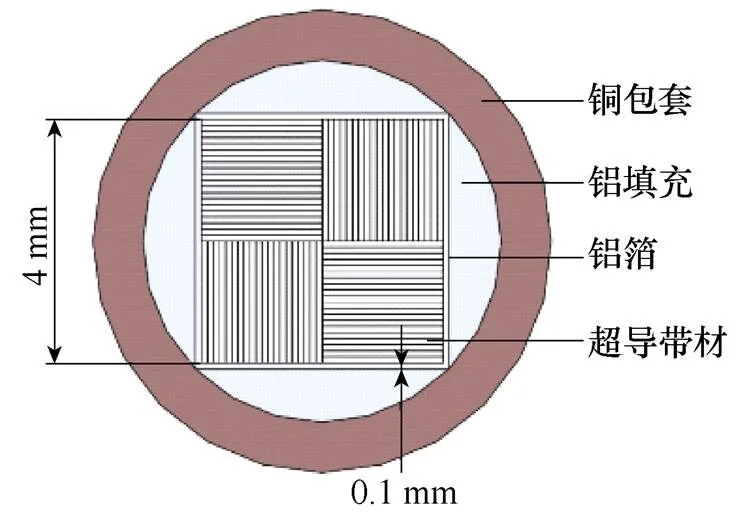
(b)股線橫截面圖
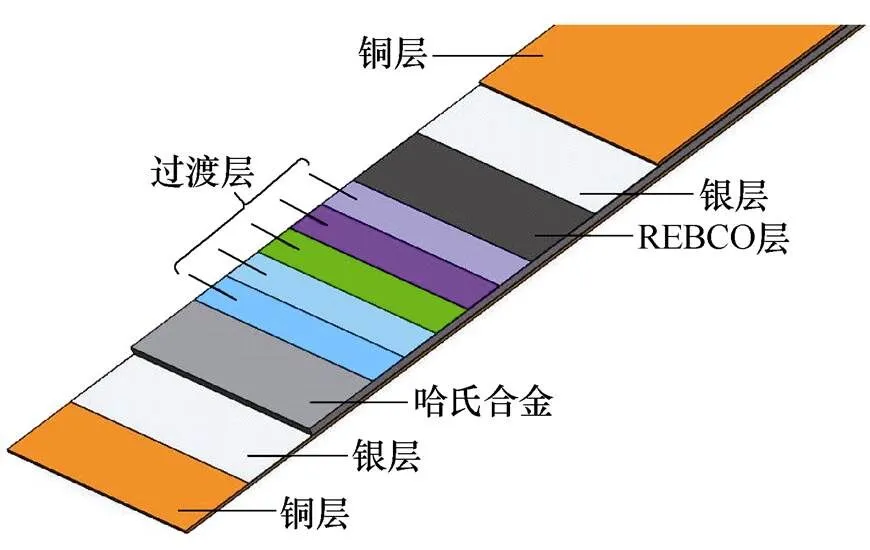
(c)超導帶材放大圖
圖1 準各向同性股線示意圖
Fig.1 Schematic diagram of the quasi-isotropic superconducting strand
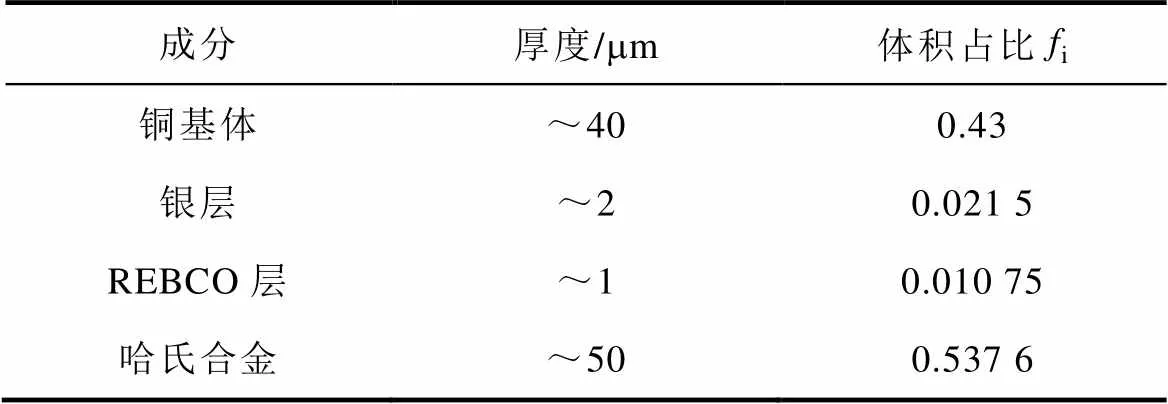
股線的主要參數見表1,REBCO超導帶材由上海超導有限公司提供,忽略過渡層的超導帶材主要尺寸見表2。
表1 股線的主要參數
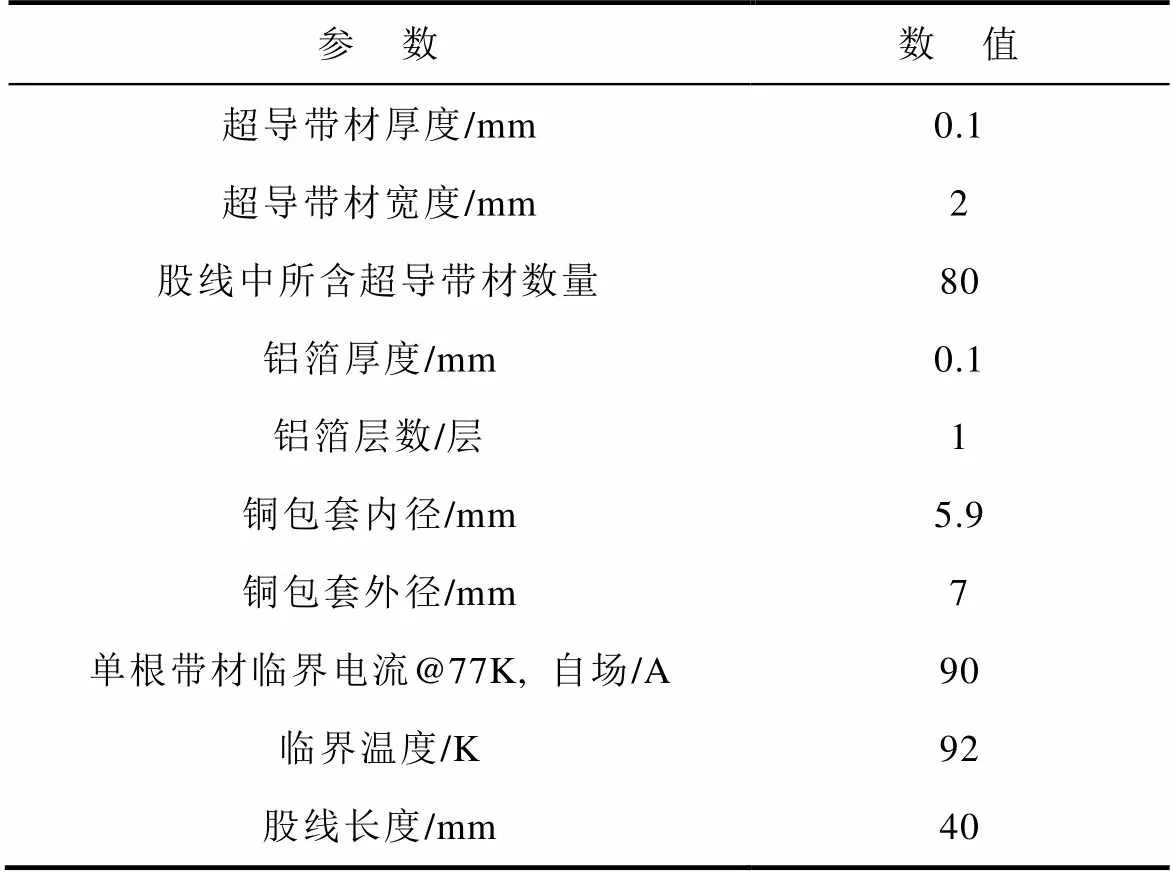
Tab.1 Main parameters of the cable
表2 超導帶材的主要尺寸
Tab.2 Main parameters of the tape
1.2 失超模型的建立
因股線具有對稱性,為減少計算量,根據對稱性僅對股線的一半(7 cm)進行仿真,將上述準各向同性股線在有限元分析軟件中建立幾何模型如圖2所示,尺寸見表1,其中股線外部表示液氮浴。對該幾何模型進行網格劃分,劃分結果如圖3所示。

圖2 準各向同性股線幾何模型的建立
為實現股線電磁場與溫度場的耦合,采用方法[21-22]求解股線的磁場,在有限元軟件中通過PDE模塊與固體傳熱模塊的耦合實現股線電磁熱模型的求解[23]。
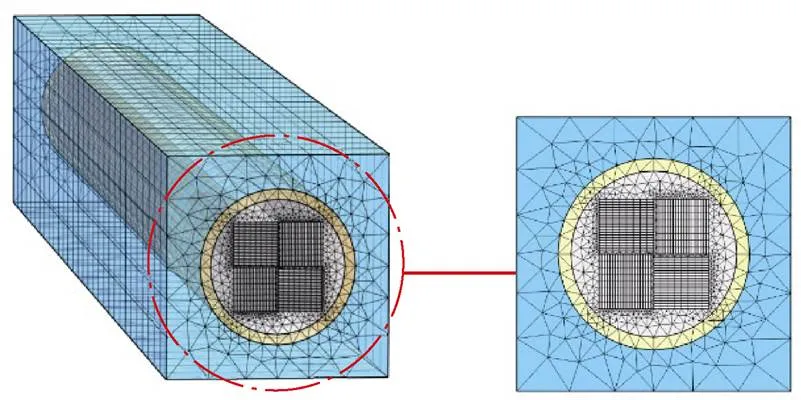
圖3 準各向同性股線幾何模型的網格劃分
1.2.1 電磁場仿真模塊的建立
基于法求解股線的磁場部分,自變量為磁場強度變量,其控制方程為

式中,0為真空中的磁導率;r為相對磁導率。
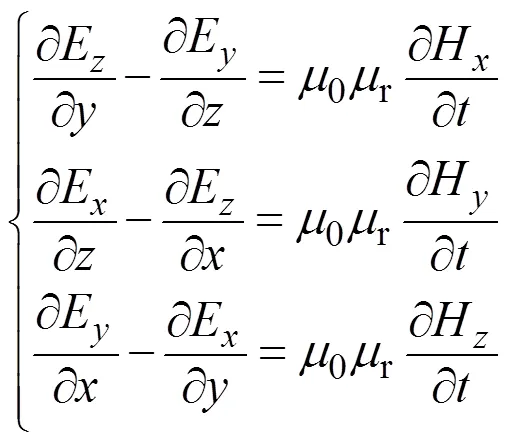
對于三維問題,上述控制方程可以寫為分量形式,即

第二代超導體的電阻率滿足-指數規律,即

式中,C0為臨界電場強度(10-4V/m);為反映曲線陡度的指數,在本模型中取值為21;C為臨界電流密度,其值的大小受磁場強度以及溫度的影響[24],即
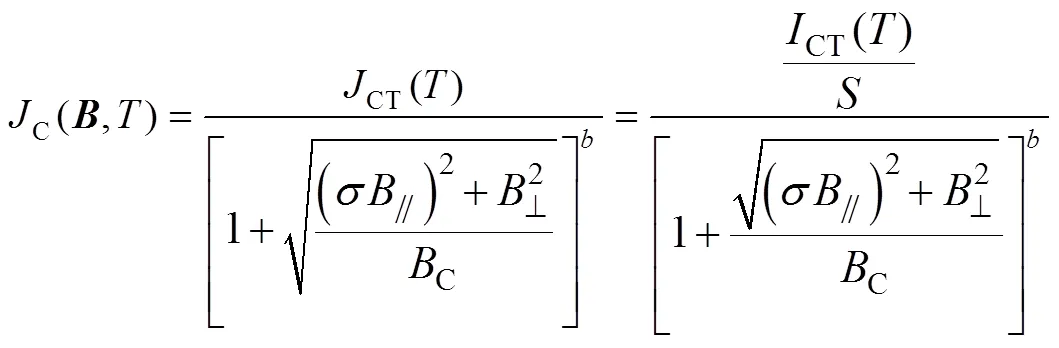
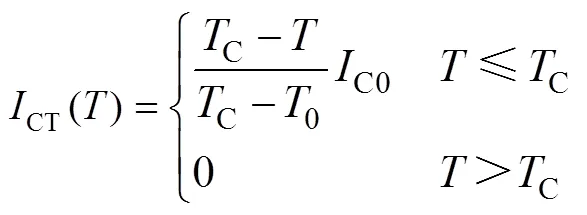
式中,C為臨界轉變溫度,本文取90 K;C0為80根單根超導帶材在自場下77 K時的臨界電流疊加值,即

式中,為超導帶材的根數(80);s77K為單根帶材在77 K溫度下的臨界電流(90 A)。
由于本文模擬股線在零場液氮冷卻條件下,因此本模型的磁場初始條件為

當準各向同性超導股線通電流時,對股線橫截面采用積分約束的方式施加電流,如式(9)所示。可通過有限元軟件中PDE模塊中的逐點約束實現此功能。

式中,0為準各向同性超導股線所通的運行電流。
1.2.2 傳熱模塊的建立
為了求解股線的溫度分布,需建立股線的傳熱模型。式(5)中的未知變量除了磁場強度還有溫度,通過傳熱模塊與磁場模塊的聯合求解即可得到股線的2個未知量:磁場強度與溫度。本文對超導帶材的熱力學參數采用均一化策略,以點熱源的形式添加熱脈沖,建立仿真模型。熱源的添加如圖4所示,熱源是=0截面處以中心點為圓點,熱脈沖周期為200 ms。
傳熱模塊的控制方程為

式中,為密度(kg/m3);和分別為比定壓熱容(J?kg-1?K-1)和熱導率(W?m-1?K-1);d和j分別為外加的熱脈沖(W/m3)以及單位體積的銅每秒產生的焦耳熱(W/m3)。

圖4 準各向同性超導股線的熱脈沖施加
由圖4可以看出,超導線芯的帶材可以分為兩部分:一部分是與平面平行的平行帶材,另一部分是與平面垂直的垂直帶材。由于超導帶材的熱導率為各向異性[25],股線超導線芯部分的熱導率可寫成矩陣形式為


式中,為單根超導帶材中不同材料的體積占比,見表2;k為超導帶材中不同材料的熱導率。
由于本文模擬的是股線在零場液氮冷卻條件下的失超特性,傳熱模塊初始條件可寫為
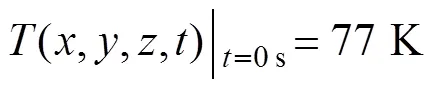
超導股線的長度為=140 mm,為減小計算量,仿真計算時僅需研究股線的一半(/2=70 mm),股線的中點位置為=0 mm,邊界條件為
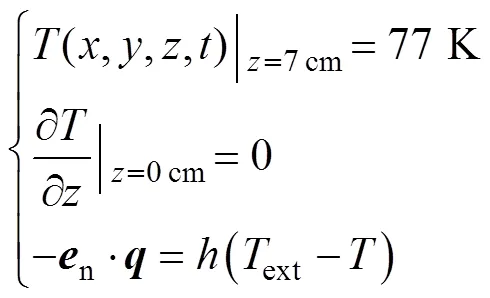
式中,n=[nxnynz]為垂直于銅包套外表面的單位法向量;為熱流密度(J×m-2×s-1);為液氮與銅的換熱系數[26](W?m-2?K-1);ext為液氮溫度(77 K)。
2 仿真結果與分析
2.1 準各向同性超導股線溫度分布、電流密度分布與磁場分布
本節利用上述失超模型研究了外界熱干擾下股線的失超特性。仿真過程中作了如下假設:
(1)股線各處的界面接觸熱阻(TCR)為0,即界面熱接觸為理想接觸。
(2)超導帶材溫度高于臨界溫度(90 K)時其電阻率視為銅的電阻率,且銅的電阻率隨溫度的變化而變化[27]。
(3)不考慮超導帶材終端接觸電阻對失超特性的影響。
仿真過程如下:首先,對準各向同性超導股線施加運行電流(100 ms后增加到3 000 A),經過一段時間待股線穩定后,在股線的中央以點熱源的方式施加一個熱脈沖。熱脈沖周期為200 ms,熱脈沖期間加熱功率恒定。
未施加熱干擾時,通過仿真得出該股線臨界電流為4 188 A,之后給股線施加3 000 A的運行電流,待其穩定后對股線進行分析,此時股線的磁場強度分布如圖5所示。
自場下對此超導股線施加熱脈沖,當干擾熱量為1.40 J/mm3時,所施加的熱干擾未達到最小失超能,股線發生失超恢復行為。準各向同性超導股線被施加熱干擾后5 s內的溫度分布(=0 mm,= 0 mm)如圖6所示,從圖中可以看出,隨著時間的增長,股線的失超區域逐步縮小直至整根股線恢復超導狀態。

圖5 準各向同性超導股線通流3 000 A的磁感應強度分布
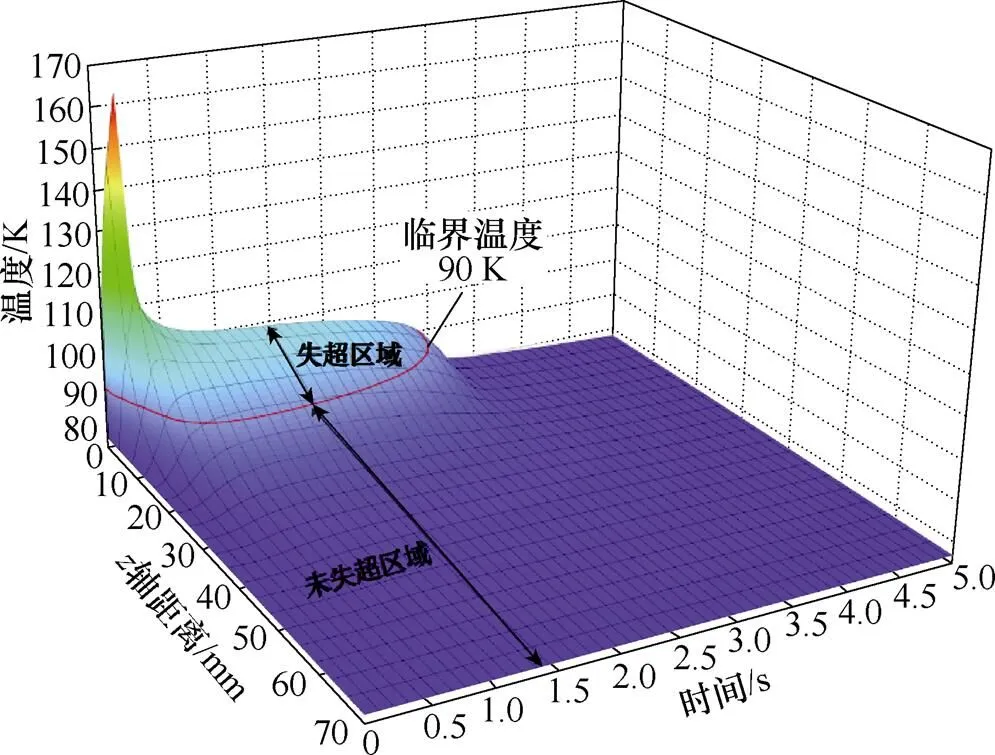
圖6 超導股線通流3 000 A施加1.40 J/mm3干擾熱量后5 s內的溫度分布
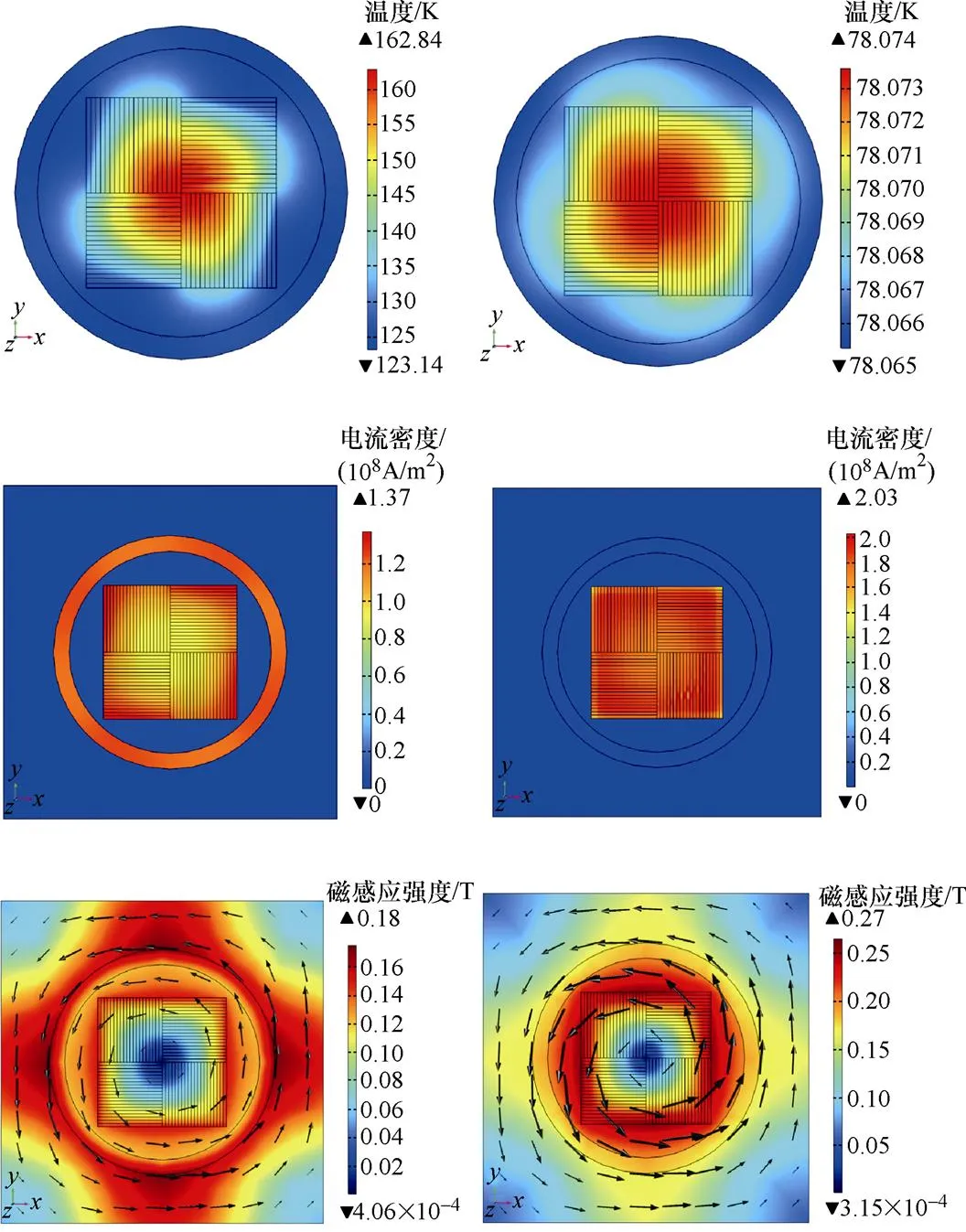
股線通3 000 A電流時在=0 mm處徑向的溫度、電流密度及磁場分布如圖7所示。從圖中可以看出,0.2 s時=0 mm處的股線溫度高于臨界溫度,超導股線發生失超,電流轉移到銅基底層和銅包套,磁場分布也相應發生變化。當=5 s時=0 mm處的股線發生失超恢復行為,溫度降低至臨界溫度以下,電流重新全部轉回超導層內。
逐步增加干擾熱量至1.48 J/mm3時,股線發生失超傳播行為,12 s內的溫度分布(=0 mm,= 0 mm)如圖8所示,失超區域隨著時間增大不斷擴散,故此時超導股線的最小失超能為1.48 J/mm3。
由于此時發生了失超傳播行為,需對除熱源施加位置=0 mm處以外其他位置的溫度、電流密度進行觀測,這里選擇股線模型的中點=35 mm處,以反映股線的失超傳播過程。股線通流3 000 A時在=35 mm處徑向的溫度、電流密度以及磁場分布如圖9所示。
從圖9中可以看出,0.2 s時股線=35 mm處還未發生失超,電流集中在超導層。當=10 s時,失超區域已從熱點所在區域擴散到=35 mm處,股線發生失超傳播行為。在此,記錄該處發生失超的開始時刻為=10 s,后續將以此為基礎計算股線失超傳播速度。
(a)=0.2 s (b)=5 s
圖7 施加1.40 J/mm3干擾熱量后超導股線=0 mm處徑向溫度、電流密度及磁場分布
Fig.7 The temperature field, current distribution and magnetic field of the quasi-isotropic strand under the heat energy of 1.40 J/mm3
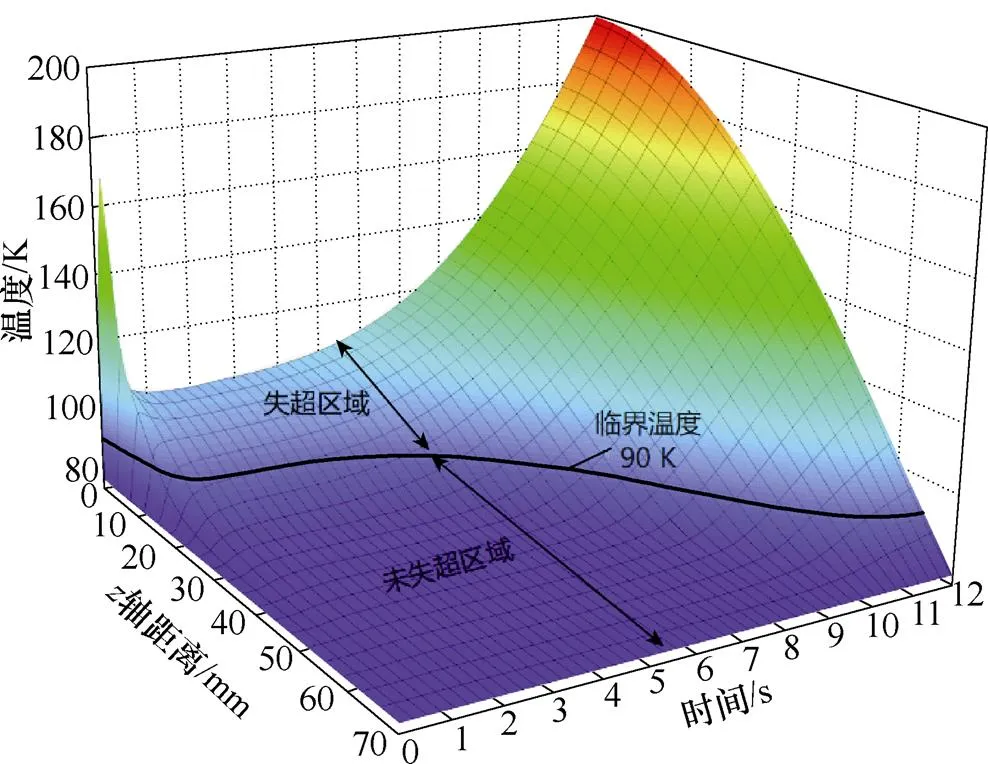
圖8 超導股線通流3 000 A施加1.48 J/mm3干擾熱量后12 s內的溫度分布
2.2 準各向同性超導股線的最小失超能與失超傳播速度
超導體在正常運行時,外界施加在超導體上的干擾熱量會誘發超導體失超,此時正常態下的超導帶電阻急劇增大,運行電流轉移到金屬基體中產生焦耳熱,如果這部分焦耳熱較小可以沿著超導股線進行熱擴散并通過液氮與銅包套的熱交換被直接導出,失超區域不會擴散。而當股線中焦耳熱的積累大于熱擴散散失的熱量時,熱量逐漸積累,進而導致相鄰的超導體溫度隨之升高而發生失超現象,失超區域擴大,超導股線出現失超傳播行為。

(a)=0.2 s (b)=10 s
圖9 施加1.48 J/mm3干擾熱量后超導股線=35 mm處徑向溫度、電流密度及磁場分布圖
Fig.9 The temperature field, current distribution and magnetic field of the quasi-isotropic strand under the heat energy of 1.48 J/mm3
由此可見,外界施加在超導體上的干擾熱量的大小會影響股線是否發生失超行為。能夠引起超導股線失超的最小干擾熱量即被定義為最小失超能(Minimum Quench Energy, MQE)。
本文所建立的失超模型中,外界所施加的干擾熱量d為
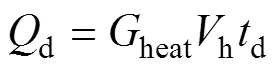
式中,heat為熱脈沖功率體密度(W×m-3);h為加熱區域(半徑為2 mm的球體)的體積;d為熱脈沖的持續時間(0.2 s)。
增大干擾熱量d的值直至超導股線失超,MQE可被表示為
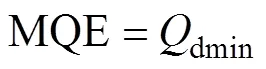
式中,dmin為誘發超導股線發生失超的最小干擾 熱量。
失超傳播速度(QPV)可表示為
式中,為股線軸上兩不同位置間的距離(cm);+1和分別為兩位置的溫度達到臨界溫度所需的時間。MQE與QPV隨運行電流的變化曲線如圖10所示。

圖10 股線MQE與QPV隨運行電流的變化曲線
由圖10可以看出,準各向同性超導股線在運行電流為2 600~3 400 A時其最小失超能由2.17 J/mm3降至1.04 J/mm3,失超傳播速度由0.61 cm/s增加到1.45 cm/s。股線的最小失超能隨運行電流的增大而減小,失超傳播速度隨運行電流的增大而增大。當運行電流為2 600 A時,即歸一化電流為0.59時,MQE可達到2.17 J/mm3,此時股線最高熱點溫度已達190 K,然而在實際應用中REBCO超導帶材臨界熱應力[28]所對應的溫度約為200 K[29],因此股線在低電流運行時盡管不易發生失超行為,一旦由于外界干擾發生失超傳播,過高的熱點溫度非常可能會損壞股線,同時低電流下股線的失超傳播速度極慢,不利于失超保護裝置的及時檢測,因此超導股線的運行電流大小極大地影響失超保護裝置參數的設置。為了減小股線的熱點溫度,可采取增加股線中銅的含量[30],利用其高熱導率,將熱量在股線徑向方向上及時將熱量傳導出去,然而銅含量的增加會減緩失超傳播速度,不利于失超檢測。另外,減小股線內部的界面熱接觸電阻也會降低熱點溫度,同增加股線中銅含量一樣,會減緩失超傳播速度[31]。
3 結論
本文對點狀熱干源擾誘導的準各向同性超導股線(Q-IS)的失超特性建立了三維電磁熱模型,仿真了股線的失超行為及恢復過程,得到了不同運行電流下的最小失超能與失超傳播速度,結論如下:
股線的最小失超能隨運行電流的增大而減小,失超傳播速度隨運行電流的增大而增大。銅包套的存在使得股線的熱穩定性有了顯著提高,銅包套通過及時分流避免超導體因熱點溫度過高而造成自身不可逆的損壞,矛盾的是,緩慢的失超傳播速度不利于對股線的失超檢測與失超保護,因此設計股線的銅包套尺寸時不僅要考慮降低超導體熱點的溫度,還要考慮其失超傳播速度不可過低,以避免超過失超保護裝置的失超檢測時間。
本文所建立的針對準各向同性超導股線考慮自場的三維磁熱失超模型可推廣應用到其他超導導體失超特性的研究中去。
[1] 黨衛軍, 孫奇珍, 薛藝為, 等. 施工缺陷對超導電纜中間接頭內電場分布的影響[J]. 江蘇電機工程, 2020, 39(5): 23-29.
Dang Weijun, Sun Qizhen, Xue Yiwei, et al. Influ- ence of construction defects on electric field distri- bution of superconducting cable intermediate joints[J]. Jiangsu Electrical Engineering, 2020, 39(5): 23-29.
[2] 李顯皓, 徐穎, 任麗, 等. 非均勻高溫超導帶材對CORC電纜失超特性的影響研究[J]. 電工技術學報, 2022, 37(19): 5044-5055.
Li Xianhao, Xu Ying, Ren Li, et al. Influence of non-uniform high temperature superconducting tapes on quench characteristics of CORC cable[J]. Transa- ctions of China Electrotechnical Society, 2022, 37(19): 5044-5055.
[3] 張國民, 陳建輝, 邱清泉, 等. 超導直流能源管道的研究進展[J]. 電工技術學報, 2021, 36(21): 4389- 4398, 4428.
Zhang Guomin, Chen Jianhui, Qiu Qingquan, et al. Research progress on the superconducting DC energy pipeline[J]. Transactions of China Electrotechnical Society, 2021, 36(21): 4389-4398, 4428.
[4] 祝乘風, 厲彥忠, 譚宏博, 等. 熱擾動沖擊下的高溫超導電纜失超恢復特性[J]. 電工技術學報, 2021, 36(18): 3884-3890.
Zhu Chengfeng, Li Yanzhong, Tan Hongbo, et al. Numerical analysis on the quench and recovery of the high temperature superconducting cable subjected to thermal disturbance[J]. Transactions of China Elec- trotechnical Society, 2021, 36(18): 3884-3890.
[5] 秦偉, 馬育華, 呂剛, 等. 一種可用于低真空管道的高溫超導無鐵心直線感應磁懸浮電機[J]. 電工技術學報, 2022, 37(16): 4038-4046.
Qin Wei, Ma Yuhua, Lü Gang, et al. Analyzing and designing a novel coreless linear induction maglev motor for low vacuum pipeline[J]. Transactions of China Electrotechnical Society, 2022, 37(16): 4038-4046.
[6] 龔珺, 諸嘉慧, 方進, 等. 電阻型高溫超導限流器暫態電阻特性分析[J]. 電工技術學報, 2018, 33(9): 2130-2138.
Gong Jun, Zhu Jiahui, Fang Jin, et al. Transient resistance analysis of resistive high temperature superconducting current limiter[J]. Transactions of China Electrotechnical Society, 2018, 33(9): 2130- 2138.
[7] 夏芳敏, 王醒東. 實用化高溫超導帶材的應用進展[J]. 新材料產業, 2014(4): 48-52.
Xia Fangmin, Wang Xingdong. Progress in the application of practical HTS tapes[J]. Advanced Materials Industry, 2014(4): 48-52.
[8] Fleiter J, Ballarino A, Bottura L, et al. Charac- terization of roebel cables for potential use in high-field magnets[J]. IEEE Transactions on Applied Superconductivity, 2015, 25(3): 1-4.
[9] Goldacker W, Grilli F, Pardo E, et al. Roebel cables from REBCO coated conductors: a one-century-old concept for the superconductivity of the future[J]. Superconductor Science and Technology, 2014, 27(9): 093001.
[10] Komeda T, Amemiya N, Tsukamoto T, et al. Experimental comparison of AC loss in REBCO roebel cables consisting of six strands and ten strands[J]. IEEE Transactions on Applied Super- conductivity, 2014, 24(3): 1-5.
[11] van der Laan D C. YBa2Cu3O7-coated conductor cabling for low ac-loss and high-field magnet applications[J]. Superconductor Science and Tech- nology, 2009, 22(6): 065013.
[12] van der Laan D C, Weiss J D, Noyes P, et al. Record current density of 344 A mm-24.2 K and 17 T in CORC?accelerator magnet cables[J]. Superconductor Science and Technology, 2016, 29(5): 055009.
[13] Takayasu M, Chiesa L, Bromberg L, et al. Cabling method for high current conductors made of HTS tapes[J]. IEEE Transactions on Applied Super- conductivity, 2011, 21(3): 2340-2344.
[14] Wang Yinshun, Baasansuren S, Xue Chi, et al. Development of a quasi-isotropic strand stacked by 2G wires[J]. IEEE Transactions on Applied Super- conductivity, 2016, 26(4): 1-6.
[15] Chan W K, Masson P J, Luongo C, et al. Three- dimensional micrometer-scale modeling of quenching in high-aspect-ratio YBa2Cu3O7-coated conductor tapes-part I: Model development and validation[J]. IEEE Transactions on Applied Superconductivity, 2010, 20(6): 2370-2380.
[16] Chan W K, Schwartz J. Three-dimensional micrometer- scale modeling of quenching in high-aspect-ratio YBa2Cu3O7-coated conductor tapes-part II: Influ- ence of geometric and material properties and impli- cations for conductor engineering and magnet design[J]. IEEE Transactions on Applied Super- conductivity, 2011, 21(6): 3628-3634.
[17] Roy F, Therasse M, Dutoit B, et al. Numerical studies of the quench propagation in coated conductors for fault current limiters[J]. IEEE Transactions on Applied Superconductivity, 2009, 19(3): 2496-2499.
[18] Wang Yawei, Zheng Jinxing, Zhu Zixuan, et al. Quench behavior of high-temperature superconductor (RE) Ba2Cu3OCORC cable[J]. Journal of Physics D: Applied Physics, 2019, 52(34): 345303.
[19] Kang Rui, Uglietti D, Wesche R, et al. Quench simulation of REBCO cable-in-conduit conductor with twisted stacked-tape cable[J]. IEEE Transactions on Applied Superconductivity, 2020, 30(1): 1-7.
[20] 林良真. 超導電性及其應用[M]. 北京: 北京工業大學出版社, 1998.
[21] Hong Z, Campbell A M, Coombs T A. Numerical solution of critical state in superconductivity by finite element software[J]. Superconductor Science and Technology, 2006, 19(12): 1246-1252.
[22] Brambilla R, Grilli F, Martini L. Development of an edge-element model for AC loss computation of high-temperature superconductors[J]. Superconductor Science and Technology, 2007, 20(1): 16-24.
[23] Ma Jun, Geng Jianzhao, Chan Wan kan, et al. A temperature-dependent multilayer model for direct current carrying HTS coated-conductors under per- pendicular AC magnetic fields[J]. Superconductor Science and Technology, 2020, 33(4): 045007.
[24] Grilli F, Sirois F, Zerme?o V M R, et al. Self- consistent modeling of thecof HTS devices: how accurate do models really need to be?[J]. IEEE Transa- ctions on Applied Superconductivity, 2014, 24(6): 1-8.
[25] Bagrets N, Goldacker W, Jung A, et al. Thermal properties of ReBCO copper stabilized supercon- ducting tapes[J]. IEEE Transactions on Applied Superconductivity, 2013, 23(3): 6600303.
[26] Li Tingting, Wang Yinshun, Shi Chenjie, et al. Thermal stability of a quasi-isotropic strand made from coated conductors[J]. IEEE Transactions on Applied Superconductivity, 2016, 26(4): 1-5.
[27] Casali M, Breschi M, Ribani P L. Two-dimensional anisotropic model of YBCO coated conductors[J]. IEEE Transactions on Applied Superconductivity, 2015, 25(1): 1-12.
[28] Duan Yujie, Gao Yuanwen. Delamination and current-carrying degradation behavior of epoxy- impregnated superconducting coil winding with 2G HTS tape caused by thermal stress[J]. AIP Advances, 2020, 10(2): 1-13.
[29] Marinucci C, Bottura L, Calvi M, et al. Quench analysis of a high-current forced-flow HTS conductor model for fusion magnets[J]. IEEE Transactions on Applied Superconductivity, 2011, 21(3): 2445-2448.
[30] Kang Rui, Uglietti D, Song Yuntao. To the opti- mization of quench performance for a large REBCO cable-in-conduit conductor[J]. IEEE Transactions on Applied Superconductivity, 2021, 31(2): 1-9.
[31] Kang Rui, Uglietti D, Wesche R, et al. Quench simulation of REBCO cable-in-conduit conductor with twisted stacked-tape cable[J]. IEEE Transactions on Applied Superconductivity, 2020, 30(1): 1-7.
Quench Characteristics of Quasi-Isotropic Superconducting Strand Triggered by Point Thermal Disturbance
12111
(1. The State Key Laboratory of Alternate Electrical Power System with Renewable Energy Sources North China Electric Power University Beijing 102206 China 2. State Grid Shandong Electric Power Company Jinan Power Supply Company Jinan 250000 China)
With the development of second-generation (2G) high-temperature superconductors (HTS) and the progress in cryogenic technology, 2G HTS has been widely applied in superconducting power technology due to its excellent mechanical properties, complete diamagnetism, and zero resistance characteristic at liquid nitrogen temperatures. However, the practical applications of HTS face a key issue: the quench behavior of HTS, mainly embodied in the minimum quench energy (MQE) and quench propagation velocity (QPV). This paper studies the quench characteristics of quasi-isotropic superconducting (Q-IS) strands when subjected to a point thermal disturbance and the influence of different operating currents for quench detection and protection of HTS devices in power systems.
Firstly, the structure and parameters of the superconducting strand used in the simulation model are described in detail, and the geometric model of a 140 mm long Q-IS strand immersed in liquid nitrogen is established. Considering the effect of the self-magnetic field, a 3D electric-magnetic-thermal simulation model is established to analyze the thermal stability of the strand using the finite element method (FEM). At the beginning of the simulation, the operating current is applied to the HTS strand until the strand operates stably. Then, a thermal pulse is added to the strand’s center to simulate a point thermal disturbance. The thermal disturbance power is constant during the 200 ms duration of the thermal disturbance application.
The thermal stability simulation results show that when the operating current is 3 000 A and the disturbance energy is 1.40 J/mm3, the strand exhibits an apparent quench recovery behavior, suggesting that 1.40 J/mm3does not reach the MQE of the strand. As the disturbance energy increases to 1.48 J/mm3, the quench region diffuses continuously over time, resulting in quench propagation with the strand. Under this operating current, the MQE of the superconducting strand is 1.48 J/mm3, and the QPV is 0.79 cm/s. Then, MQEs and QPVs under various operating currents are simulated by the same method. The MQE of the Q-IS strand decreases from 2.17 J/mm3to 1.04 J/mm3, and the QPV increases from 0.61 cm/s to 1.45 cm/s as the operating current increases from 2 600 A to 3 400 A.
It is also shown that the MQE of the Q-IS strand decreases and the QPV increases with the increase of operating current. The current sharing of the copper sheath can significantly improve the thermal stability of the Q-IS strand. However, it is essential to consider the size design of the copper sheath to ensure it is manageable, potentially causing a delay in quench detection by the protection device. The electric-magnetic-thermal simulation model established in this paper can also be extended to study the thermal stability of Q-IS strands in external fields and other superconducting strands.
Quasi-isotropic superconducting strand, quench behavior, minimum quench energy (MQE), quench propagation velocity (QPV)
TM26
10.19595/j.cnki.1000-6753.tces.221990
國家自然科學基金資助項目(52277025, 51877083)。
2022-10-18
2022-12-19
王起悅 女,1999年生,碩士研究生,研究方向為超導電力技術。E-mail: superyue990826@163.com
皮 偉 男,1979年生,副教授,研究方向為超導電力技術。E-mail: ppiiwei@ncepu.edu.cn(通信作者)
(編輯 郭麗軍)
猜你喜歡
童話王國·奇妙邏輯推理(2024年5期)2024-06-19 16:03:38
網絡安全與數據管理(2022年1期)2022-08-29 03:15:20
導航定位學報(2022年4期)2022-08-15 08:27:00
中學生數理化·中考版(2022年8期)2022-06-14 06:55:24
新世紀智能(數學備考)(2021年9期)2021-11-24 01:14:36
成都醫學院學報(2021年2期)2021-07-19 08:35:14
新世紀智能(數學備考)(2020年9期)2021-01-04 00:25:14
中學生數理化·七年級數學人教版(2020年10期)2020-11-26 08:24:50
數學物理學報(2020年2期)2020-06-02 11:29:24
光學精密工程(2016年6期)2016-11-07 09:07:19