依托“任務”,讓英語課堂與實際生活相連
2024-10-21 00:00:00陳莉
閱讀(教學研究) 2024年8期


【教學目標】
1.能初步感知be going to的用法,能理解并朗讀課文。
2.能夠初步了解電子郵件的格式。
3.能夠談論Anna一家是如何過中國新年的。
【重點難點】
1.能理解并朗讀課文。
2.能夠用學過的英語知識描述Anna一家是如何過中國新年的。
3.能通過學習,加深對我國傳統文化的理解,熱愛傳統文化,并懂得保護以及傳承中國傳統文化。
【教學過程】
Step 1. Pre-reading
1. Play a game: I say, you judge.
T: Please say “Yeah! Yeah! Yeah!”, if it is true. Please say“No.No.No.”, if it is false.
T: I teach Chinese.
S: No. No. No.
T: You have a computer in your home.
S: Yeah! Yeah! Yeah!
T: You can write emails.
S: Yeah! Yeah! Yeah!
2. Lead-in.
T: Look, this is an email. Whom is this email to? Who is this email from? What’s the subject of this email?
S: This email is to Su Hai. It is from Anna. It’s about Anna’s family’s plan for the Chinese New Year.
設計意圖:愛玩是小學生的天性,采用游戲方式導入新課,有助于激勵學生以最佳的狀態進入學習。在游戲中巧妙引出“email”,隨后引導學生觀察email的格式,迅速抓住關鍵信息,為進一步理解課文做好鋪墊。
3. Know about Chinese New Year.
T: Today, we’ll talk about Chinese New Year. Look at the calendar. Can you find Chinese New Year’s Day?
(呈現日歷幫學生厘清三個時間段:除夕、大年初一、大年初二。)
T: What do people usually do at Chinese New Year? Let’s enjoy some pictures about Chinese New Year.(呈現圖片,讓學生回答與春節有關的活動。)
S: Clean the house, buy new clothes, eat dumplings....
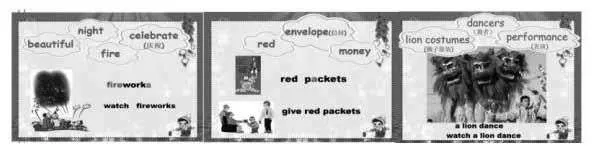
4. Guessing game: 根據所給的英文關鍵詞猜與春節相關的英文表達。
設計意圖:新課標指出,英語教學活動的內容和形式要貼近學生的生活實際,符合學生的認知水平和生活經驗。在圖片提示下,學生聯系已有的生活經驗描述春節日期與春節活動。在喚醒春節的有關記憶之后,再以學生喜聞樂見的猜謎形式,讓他們根據相關英文表達猜單詞或詞組,并學習與春節活動相關的三個短語,為下一步語篇學習奠定基礎。
Step 2. While-reading
1. Watch and tick.
T: What are Anna and her family going to do at Chinese New Year? Please watch the cartoon and tick the pictures.
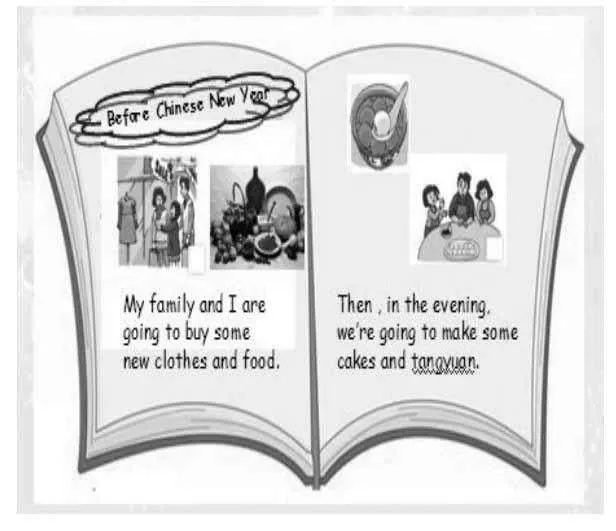
2. Read the picture book.
T: Read the picture book Page 2-3, underline the key words about the activities.
T: What are Anna and her family going to do before Chinese New Year?
(引導生總結學習、閱讀段落的方法:讀——圈畫——說)
設計意圖:教師引導學生學習故事的第一部分,了解春節前夕人們的活動,并進行學習方法的總結與指導,為后面學生小組合作學習其他段落做好示范。授之以魚不如授之以漁,適時的學法指導讓學生習得一種方法,形成一種能力,為未來學習作好儲備。
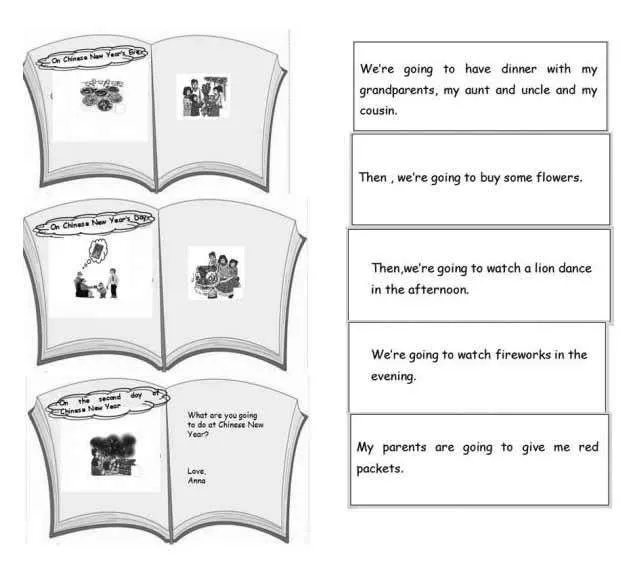
3. Complete the picture book.
T: What are they going to do on other days? Read the short passages carefully. Then place them under the right pictures in the picture book.
(制作繪本:同桌合作,通過看圖、閱讀文字,理解課文內容,并將文字貼在合適的位置,使圖文匹配,使繪本完整。)
T: What are they going to do?
S: They are going to ....
(學生自行組織語言并回答。)
設計意圖:將傳統的語篇學習模式改成“Make picture books” 的任務型活動,能夠激發學生的閱讀興趣,促進其合作意識,培養其自主學習能力。引導學生運用學習第一段落時總結的學習方法“讀——圈畫——說”,進行自主實踐,體驗學有所得的成就感。
Step 3. Post-reading
1. Retell the story.
2. Think and compare.
T: Excellent. Boys and girls, do you buy new clothes before Chinese New Year?
S: Yes, we do.
T: Do you make cakes and tangyuan before Chinese New Year?
S: No, we make dumplings and baozi.
T: Do you find any differences between Hong Kong and our city? Discuss with your partner.
(學生討論并匯報兩地春節習俗的異同。)
3. Talk about your plan for Chinese New Year.
T: Just now we talked about Anna’s plan for Chinese New Year. How about yours? What are you going to do during this Chinese New Year?
S: I’m going to ....
設計意圖:根據學生的生活經驗和已有的知識背景,將自己的新年活動與Anna在香港過新年的活動進行比較,了解不同地區的文化差異。在自然、真實的交流中完成理解語言、運用語言的整體目標。同時引導落實本課的情感目標,加深對中國傳統文化的理解,鼓勵學生熱愛傳統文化,并懂得保護、傳承中國傳統文化。接著,引導學生談論自己今年的春節計劃,以教材為語用平臺,使學生將英語學習與自己的生活相聯系,關聯前后知識,形成學以致用的好習慣,努力實現“用英語”的美好愿景,讓英語學習從知識的拓展向課堂學習的生活化發生轉變。
(作者單位:江蘇省揚中市實驗小學)