China and europe: a mutual study
2012-04-29 00:44:03ByHUJIANGYUN
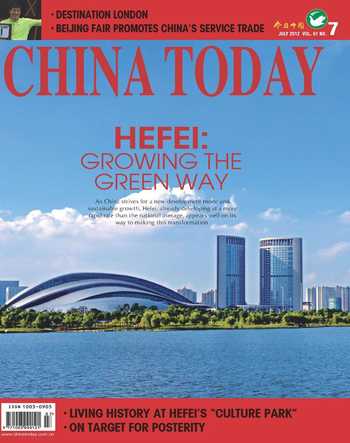
CHINA TODAY 2012年7期
By HU JIANGYUN

ITS been 20 years since China set about con- structing a socialist market economic system. During these two decades, China stood strong through the Asian financial crisis. It has also weathered the global financial crisis, which shows China has developed strong capabilities in macroeconomic regulation and control.
Since the turn of the century, many economists overseas have defined Chinas development path as the “China Model.”In reality, there is no such fixed model for Chinas economic or social development.
Speaking of economic systems, America and most European countries have had market econo- mies for centuries. Europe, the cradle of economic thought, boasts a great variety of classical and modern economic theorists. Adam Smith, Alfred Marshall and John Maynard Keynes were all great economic thinkers and have loyal followers to this day.
In a sense, European countries are Chinas predecessors in economic thought and policy. Chinas ability to withstand the global financial crisis proves that after hard learning and practice, it is now a student that can outperform its economic mentors.
China has taken up the mantle of Keynesian, demand-side economics. It recognizes the efficacy of market forces, but that when these forces overheat (or “underheat,” in the case of a slump), the government should step in to stabilize output.
In this model, which has proved itself over and over again, the roles of government and the market are distinct. The market is an invisible hand, while the governments hand should been visible and come into play when markets fail to operate well. Europe seems to have forgotten the basics. As demand has fallen there, the Keynesian prescription is simple: raise government spending. EU bureaucrats have done the opposite.
China implemented Keynesian policies when facing the Asian financial crisis and the global financial crisis. Expansionary fiscal policies included galvanizing domestic demand, issuing more government bonds, increasing investment on infrastructure and ratcheting up bank lending. China also went some way to stabilizing its export markets by simplifying trading procedures, setting up a“green channel” for export enterprises, raising the rebate rate on exports and strengthening export insurance. Also, with selective tax cuts and simplified measures, enterprises saved customs clearance and other costs. Measures were also taken to lower logistic expenses to boost trade in agricultural products.
The crisis also precipitated new incentives for product development and innovation on the mainland as export markets shrunk. High tech and branding have become new foci for exports since the crisis began.
In an era of economic unrest across large swathes of the world, China has stressed intensifying reforms to ensure the wellbeing of its people above all else. These reforms have taken a variety of forms.
Mechanisms to encourage competition and a system of public hearings for price setting have been introduced in some monopoly industries. Reforms in nationally vital sectors have been enacted, including in energy, telecommunications and railways. For instance, petrol pricing is carefully monitored and adjusted to better reflect rises and falls in the global market.
To directly benefit the peoples wellbeing, minimum wages have been raised, social security benefits increased and more housing projects for medium and lower-income families are underway.
Confronted by the recent global financial crisis, European governments were paralyzed by bureaucracy and unable to implement basic economic policies. They failed to enhance the mobility of capital and take the measures required by the economic realities of the time.
Europe has experience in economics. It invented it. It should have been able to come up with effective solutions to the financial crisis, but it couldnt. Its highly inefficient decision-making process hindered any constructive efforts, and this made the crisis worse. Europe needs to fix its politics so its economy can prosper.
The exchanges between China and Europe in history greatly boosted technology and innovation on both sides of Eurasia. In this relationship, China was first the master and Europe the student; China used to lead the world in science and technology, and was a center of learning.
The Industrial Revolution in Europe, starting in the mid-18th century, drastically changed Europes fate. It was a tectonic shift in the regions technical prowess, economic growth and social development. China was left behind, and since then has been striving to learn from, and catch up to, Europeans. Its now strange to watch the master abandoning his teachings.
Even before the global financial crisis broke out, China had been focusing on developing a scientific model for economic development to fit its own circumstances. Part of this would be restructuring its economy toward higher-end production and service provision, and encouraging innovation. These will remain imperatives after the current slump.
More and more Chinese enterprises have been applying for international patents in recent years. Multinationals such as Huawei and ZTE represent a new generation of Chinese enterprises that are globally competitive in technologies and innovation. But China in general still lags far behind Europe in terms of patents. Taken as a benchmark of creativity and innovation, patent application figures tell us China still has a long way to go before it catches up to Europe.
At least in economic policy China seems to be doing well – its recovery from the global financial crisis highly regarded in the meeting halls in Brussels. But there have been some negative aspects to this recovery-through-stimulus: commodity prices stand at comparatively high levels, and localized debt crises, such as that in Wenzhou last year, are a concern. In the long run, domestic approaches to R&D as well as incentive mechanisms for independent innovation need to be improved.
Mutual study and more exchanges could benefit both China and Europe. China should look to Europe for tips on innovation and technology, while Europe should take note of Chinas adherence to proven economic principles. Its time to do away with the master-student mentality. Both sides can, and should, learn from each other.