英式幽默與美式幽默:差異何在?
2012-04-29 21:03:53
英語學習 2012年6期
Humour is a phenomenon which is influenced by culture. It can be difficult to determine what aspects define a certain sense of humour. A nations wit is linked to the historical development of the country. How funny somebody finds a certain incident depends on many factors including age, personal experience, level of education and geographical location.1 Therefore humour is something which is not always transferable2 in another country.
What somebody from one area may find hilarious may not be amusing at all to somebody from another location.3 Whether or not someone gets a joke is determined by their interpretation, filtered by the cultural context.4
What about when both countries speak the same mother tongue? Does that mean that they will then share the same sense of humour, or can differences still occur? Lets take the example of Britain and America. Not only do Americans and British spell the word “humour” differently, most claim that American humor and British humour are quite different in nature. Time and time again, people say that Brits5 and Americans dont“get” each others sense of humour. To what extent is this true, if at all?
Theres a received wisdom in the U.K. that Americans dont get irony.6 It is often believed to be one of the most common differences between the British and American sense of humour. This is of course not true. One of the major differences seems to be how often both nations use irony. Brits use irony on a daily basis7. We use it as liberally as prepositions in every day speech.8 We tease our friends. We use sarcasm as a shield and a weapon.9 We avoid sincerity until its absolutely necessary. We mercilessly take the piss out of10 people we like or dislike basically. And ourselves. This is very important. Our brashness and swagger is laden with equal portions of self-deprecation.11 This is our license to hand it out.
But it is not the foundation of American humour. I think Americans understand British irony (most of the time anyway!); what they dont understand is the need to use it so frequently. When Americans use irony they tend to state that they were “only kidding”.12 They feel the need to make a joke more obvious than Brits do, maybe this stems from13 a fear of offending people.
The American sense of humour is generally more slapstick14 than that in Britain. I think this arises from15 a cultural difference between the two. Their jokes are more obvious and forward, a bit like Americans themselves. British jokes, on the other hand, tend to be more subtle but with a dark or sarcastic undertone.16 There is usually a hidden meaning. This may stem from the fact that British culture is more reserved17 than American culture.
Americans say, “Have a nice day” whether they mean it or not. Brits are terrified to say this. We tell ourselves its because we dont want to sound insincere, but I think it might be for the opposite reason. We dont want to celebrate anything too soon. Failure and disappointment lurk around every corner.18 This is due to our upbringing. Americans are brought up to believe they can be the next president of the United States. Brits are told, “It wont happen for you.”
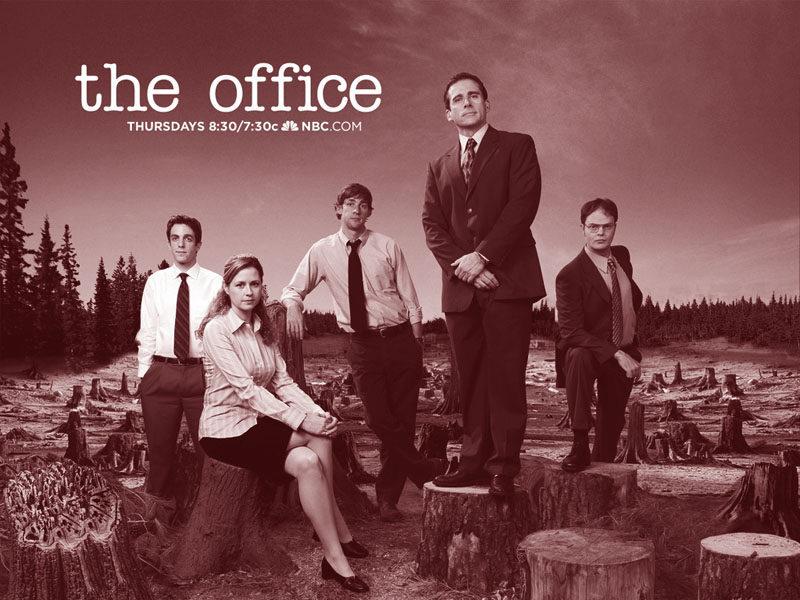
Yet certain American comedies have gained huge success in Britain and vice versa19. Therefore, although there are differences between both comic styles, there is still an appreciation and understanding of the other sense of humour. Both the British and America versions of the comedy The Office20 are hugely successful on both sides of the Atlantic. Both shows have their own cultural differences, yet they portray a lifestyle which both Americans and Brits alike can relate to.21 Although both nations have subtle differences in their wit, they can both appreciate the others sense of humour.
1. 一個人發現某件事的可笑程度要依賴很多因素而定:年齡、個人經歷、受教育程度以及地理位置。
2. transferable: 可轉移的。
3. hilarious: 極可笑的,令人捧腹的;amusing: 有趣的,好笑的。
4. get: 〈口〉懂,理解;filter: 過濾。
5. Brit: 英國人。
6. received: 普遍承認的;irony: 諷刺,反諷。
7. on a daily basis: 每天。
8.我們在日常對話中大量地使用反諷,就如同使用介詞一樣頻繁。liberally:大量地,豐富地;prepositions: 介詞。
9. 我們把嘲諷當作盾牌和武器。
10. take the piss out of: 取笑,嘲弄。
11. 我們的自以為是與得意忘形其實也滿載著同等程度的自嘲。swagger: 得意忘形,妄自尊大;self-deprecation: 自嘲,自貶。
12. 當美國人使用反諷時,他們往往只是在“開玩笑”而已。
13. stem from: 基于,由……造成。
14. slapstick: 充滿胡鬧的。
15. arise from: 起源于,由……產生。
16.另一方面,英式幽默往往會更加微妙,但卻帶有一種陰郁隱晦或嘲弄挖苦的意味。undertone:(言行的)含意,意味。
17. reserved: 拘謹的,內向的。
18. 挫敗與失望潛伏于各個角落。
19. vice versa: 反之亦然。
20. The Office: 《辦公室》,美國的一部喜劇片,該片根據大受歡迎的英國BBC同名喜劇改編,記錄了一群辦公室白領的日常生活。
21. relate to: 發生共鳴,認同。