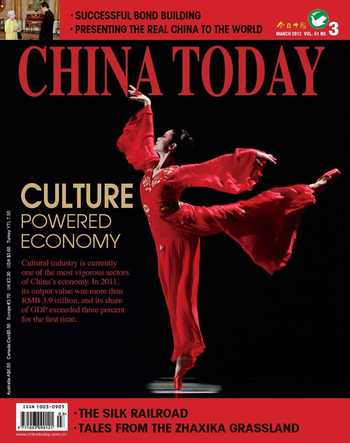
Culture-Powered economy
2012-04-29 00:44:03
CHINA TODAY 2012年3期
CULTURAL industry is currently one of the most vigorous sectors of Chinas economy. In 2011, its output value was more than RMB 3.9 trillion, and its share of GDP exceeded three percent for the first time. In late 2011, the 17th Central Committee of the CPC approved plans to accelerate reforms in Chinas cultural industry and promote its growth. The decision reflects todays ever-changing world, which, along with the trend toward multipolarity, economic globalization, and advanced science and technologies, is deeply influenced by the communication and integration of cultures.
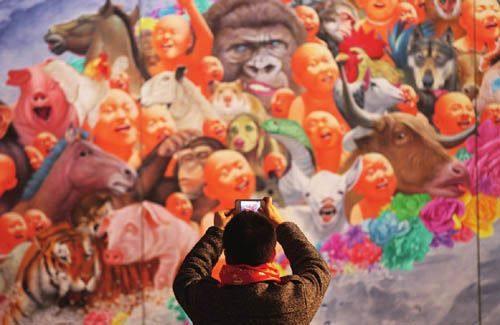
Rising star in Chinas Economy
“Culture is playing an increasingly significant role in the development of society and economy,” says Xu Gongcheng, an associate professor of philosophy of Xiamen University.“Only when culture surpasses physical and financial capital can the economy be promoted to a higher level of development,” he adds.Xu believes that a developing country like China can gain a strong footing in the international arena by forming a cultural edge compatible with its social and economic development, and that in order to achieve this, more reforms are needed. It has been recognized globally that cultural industry, with its small impact on the environment and strong incentives for scientific and technological innovations, is a healthy and potent source of economic growth.
Over the past decade, many policy changes facilitating the growth of cultural industries have been brought about, starting in 2003 with the reform of the administration of the cultural sector. By distinguishing non-profit cultural programs from commercial cultural industry, the institutional barrier for cultural industry development was removed. In 2009, the Plan to Promote the Cultural Industry was released, making cultural industrys development part of strategic state policy. Finally, at its sixth plenary session in October last year, the 17th CPC Central Committee approved the decision to deepen the reform of Chinas cultural system to boost socialist culture.
In recent years, cultural industry has been experiencing a period of prosperity, with its added value growing an average of over 23 percent every year. As a share of the economy, cultural industry made up 2.78 percent of Chinas GDP, with the share in Beijing a healthy 12.6 percent. Culture Minister Cai Wu expects output of the cultural industry to account for five percent of Chinas GDP in 2016, thus realizing the goal of building cultural industry into a pillar of the national economy.
However, this figure is still far below the shares that cultural industry enjoys in the American and Japanese economies. “In the U.S., cultural industry output takes up nearly one third of the countrys GDP. In some countries, the value of a specific area of cultural industry, like South Koreas computer games, Japanese animation and U.S. films, surpasses that of the iron and steel sector,” Fan Zhou, director of R&D Center of Cultural& Creative Industry, Communication University of China, points out. “China still has a long way to go.”
Liu Binjie, minister of General Administration of Press and Publication, indicates that culture has become a highly contended field in the world economy, and there is a sense of urgency in the need to enhance Chinese cultures international influence.
Cai Wu says China will be promoting cultural industry to a new level of growth and that it is important in the drive of Chinas economic restructuring and the transformation of its development pattern. To achieve this goal, efforts have to be made to modernize cultural industry, foster multiple forms of ownership of cultural establishments while retaining the predominance of public ownership, encourage innovation and expand consumption. The government has introduced a number of supporting policies with these guidelines in mind.
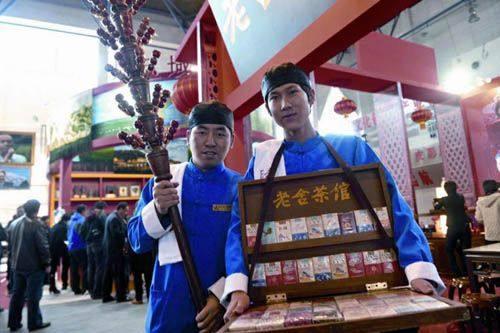
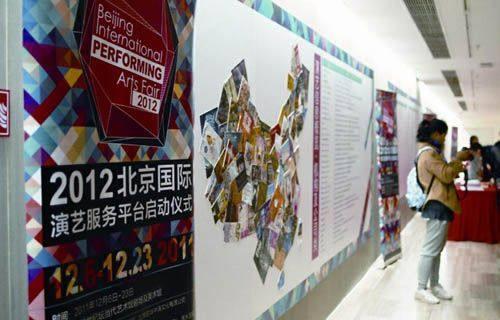
Favorable Policies Take a supporting Role
“Cultural industry relies on creativity and innovation, which call for tolerance and support of the government,” says Xia Xunge, a researcher at the Center for Research of Private Enterprises. “Favorable policies and a positive attitude from the government unleash new energy in businesses. Without them, culture-related companies would become overcautious, dampening innovation and hampering the development of the entire industry.”
In recent years, the Ministry of Culture has been focusing on facilitating investment and funding for cultural industry. In a bid to expand direct finance towards cultural businesses and carry out continuous and effective financial innovation, in 2010, the Ministry of Culture, the Bank of China and six other authorities jointly released a document outlining measures of financial support for the nations cultural industry. The State Administration of Taxation has also promised to introduce more tax incentives to cultural industry, subscribing favorable rates for emerging cultural sectors such as animation and digital television.
More investment has been attracted to a diverse range of cultural businesses, which are growing in numbers. Though at the time only 24 culture-related businesses had been listed on the A-share market in China, at the end of August 2011, 42 such businesses were awaiting the results of the China Securities Regulatory Commissions evaluation of their applications for launch onto the stock market, while another 120 businesses were already in the process of IPO.
In the meantime, the central government has been planning the first legislation in Chinese history for one specific industry. The Film Industry Promotion Law, a draft of which was released in December 2011, will legislate on funding and taxation in order to stimulate the film industry.
The Ministry of Culture will also carry out region-specific measures to achieve a more efficient distribution of cultural industry resources across the country. In eastern regions anima- tion, artistic creation, exhibition and online cultural products will be the focal points of local cultural industry growth, while in central and western provinces, efforts will be made to stimulate ethnic artistic performances, tourism, arts and crafts and folk holidays and festivals. Infrastructure to house influential cultural and creative industries will also be built in city clusters, creating local networks to support the growth of centers of specific industries.
With such attention from governments at various levels, cultural industry is finding itself in increasingly favorable conditions and has become one of the healthiest sectors in Chinas economy. According to Mei Song, director of Beijing Cultural and Creative Industry Promotion Center, the capital city alone now has more than 50,000 culture-oriented companies. With further policies and strong financial support, cultural industry is expected to find itself taking a more prominent place on Chinas economic stage.