
ON THE CHARACTER
2014-02-25 06:25:10
漢語(yǔ)世界 2014年3期
ON THE CHARACTER
Speak Up!
大膽說(shuō)出來(lái),才算是真正的“知道分子”
China's authorities despise outspoken public intellectuals; they tend to get them a bit hot under the collar; whether it's an economist advocating policy reform, a high-prof i le lawyer striving to help the disadvantaged, or a grassroots scholar lecturing off i cials about rural problems, all are seen as troublemakers. Our ancient ancestors would be turning in their graves at this state of affairs, as the original meaning for the word relating to “intellect” or “to know”, 知 (zhī), implies outspokenness.
A compound of two pictographic characters are combined to suggest 知—an arrow on the left and a mouth on the right, meaning “objects from the mouth that are faster than arrows”. The riddle-like combination suggests a logic that is both intuitive and ancient: when one understands the world, one speaks out. 知識(shí) (zhīshi), probably the most common noun consisting of the character being “knowledge”. To further ref l ect the importance of speech in people'sunderstanding of the world, 識(shí) also possesses a radical 讠, meaning“talk”. The radical on its right represents a weapon, suggesting that such speech is often sharp.
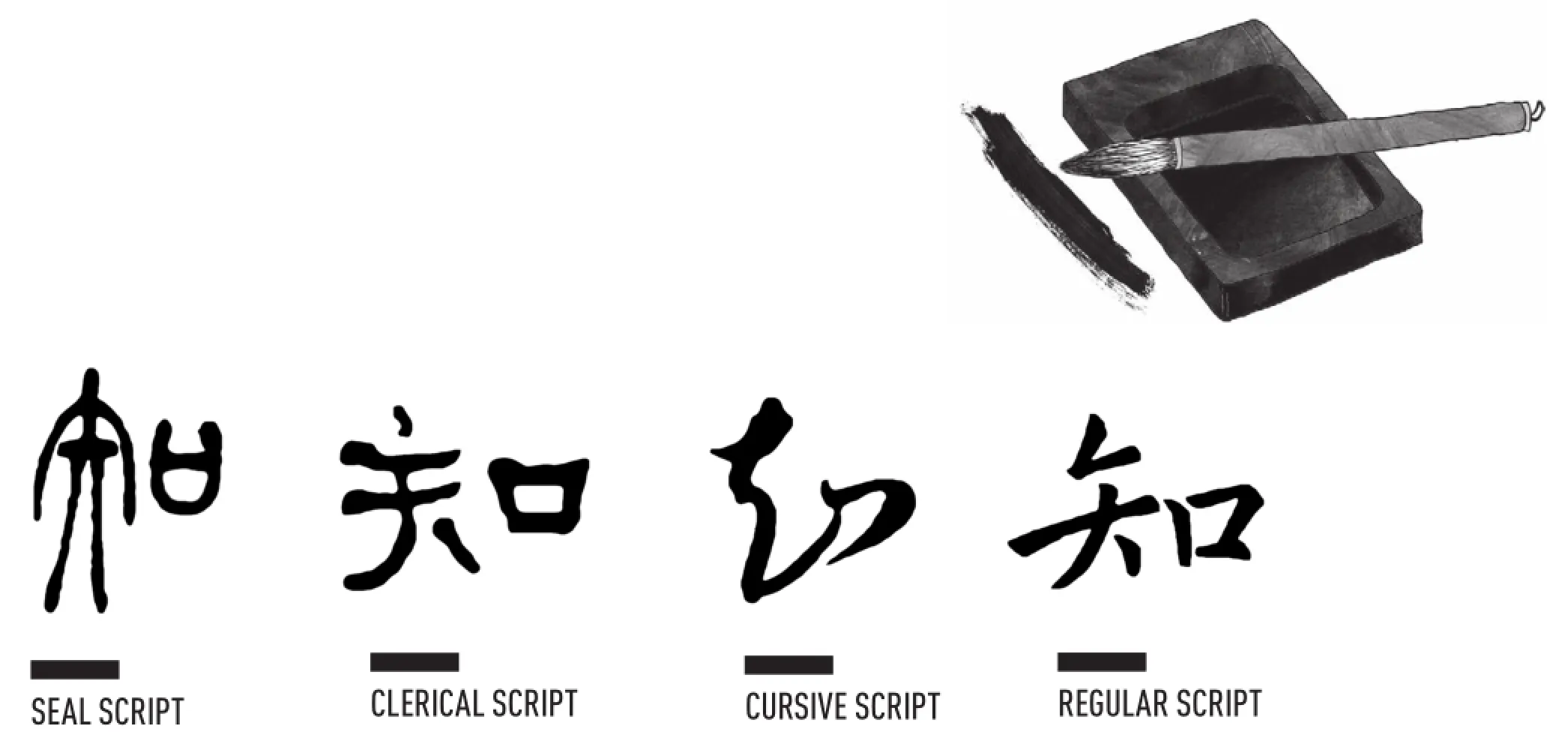
There are many cases where 知means “knowledge”. The absence of knowledge naturally means ignorance, or 無(wú)知 (wúzhī). The desire to pursue knowledge is 求知 (qiúzhī). Intellectuals are 知識(shí)分子 (zhīshi fènzǐ), or literally “members of knowledge”. Intellectual property is 知識(shí)產(chǎn)權(quán) (zhīshi chǎnquán), or“property rights over knowledge”.
However, the original and most widely used meaning of 知 is still “to know”, as exemplif i ed by the famous idiom from Sun Tzu's Art of War (《孫子兵法》Sūnzǐ Bīngfǎ): 知彼知己,百戰(zhàn)不殆。(Zhī bǐ zhī jǐ, bǎi zhàn bú dài. Know yourself and know your enemy, and you will never be defeated.) On the battlef i eld, letting your enemy get inside your head can be dangerous, but in daily life, those who know you best are likely your closest friends, giving rise to the word 知己 (zhījǐ), which by itself means bosom buddies.
Along the same lines, 故知 (gùzhī, the old known) means old friends. There's also true friends who share deep mental connections, or 知音(zhīyīn), which literally translates as“know the tune”, a term coined by the legendary friendship between musician Bo Ya (伯牙) and woodsman Zhong Ziqi (鐘子期) during the Spring and Autumn Period (770 BCE-476 BCE). Despite their different social status, Zhong was the only one who truly understood Bo's music, so they became close friends. After Zhong's death, Bo smashed his zither and refused to play music again, believing no one would ever be able to truly appreciate it.
In modern Chinese, 知 means 知道 (zhīdào, to know, to understand) in most cases, such as in 知曉 (zhīxiǎo, to know, to be aware), 知悉 (zhīxī, to know, to be informed of), and 知情(zhīqíng, to know the fact of a case or details of an incident). The core meaning of 知 remained unchanged over the years and is manifested in the series of words it helps to constitute:知名 (zhīmíng) means well-known; consciousness is 知覺 (zhījué), literally“the known senses”; a notice is 須知(xūzhī), literally “must-known”; and通知 (tōngzhī), literally “to let people know”. Traditionally, 50 is an age that people believe they are experienced enough to know their own destiny, therefore the term 知命 (zhīmìng, to know one's destiny) is used to represent the age 50.
According to philosopher Mencius, who always thought the best of mankind, conscience is what everyone intuitively knows at heart, regarding right and wrong, or 良知 (liángzhī, literarily “good knowledge”). But, those who are skeptical and regard people as complicated and diff i cult to understand might quote the old folk saying: 畫虎畫皮難畫骨, 知人知面不知心。(Huà hǔ huà pí nán huà gǔ, zhī rén zhī miàn bù zhī xīn. Painting a tiger's skin is easy, but not so with the bones. You may know a person's face but not their heart.) In learning, one must always be aware of half-baked truths, giving rise to the saying: 一知半解不如一無(wú)所知。(Yì zhī bàn jiě bùrú yì wú suǒ zhī. Having incomplete knowledge is worse than knowing nothing at all.)
However, when you are well informed on a subject, or even an intellectual yourself, it's best to 知無(wú)不言,言無(wú)不盡 (zhī wú bù yán, yán wú bú jìn, say all that you know and tell it without reserve). As to certain authorities, they could perhaps use some ref l ection, even people from centuries ago knew the principle of言之者無(wú)罪,聞之者足以戒 (yán zhī zhě wú zuì, wén zhī zhě zú yǐ jiè, blame not the speaker, but be warned by his words). - HUANG WEIJIA (黃偉嘉) AND LIU JUE (劉玨)
