
RMB Internationalization:New Bright Spot in World Economy
2014-09-27 21:36:17
CHINA TODAY 2014年5期
THE widening usage of Chinas currency, the RMB, in international trade and investment has strengthened the countrys trade ties with the rest of the world and actively promoted the growth of the global economy. China has also taken the RMBs internationalization as an opportunity to promote its exchange rate reform and to open up the countrys capital account.
A Rising International Currency
The RMB is beginning to internationalize under unique historical conditions. Roberto Rigobon, professor of International Macroeconomics at MITs Sloan School of Management, identifies six preconditions which are key for a countrys currency to acquire worldwide reputation and international convertibility. These factors include a decent economic scale, stable macroeconomic policies, an open capital account, a flexible exchange rate regime, a mature capital market and positive network externalities. In at least three of these areas – capital account, exchange rate regime and capital market, Rigobon says, the RMB is not yet ready to develop into a world currency.
As a major trading country, China followed the convention of paying US dollars in international trade. How- ever, with the sudden financial collapse of 2008 the dollars liquidity shrank, weakening cross-border trade. As a result, in July 2009, Chinas State Council announced a pilot program for crossborder trading in RMB. It began in four cities, and was quickly expanded to 20 provinces/autonomous regions and municipalities. In January 2011, China announced that its qualified enterprises and banks could settle their overseas direct investment in RMB, a scheme that was later extended to include all importers and exporters.
The RMB has been increasingly favored in trade with foreign countries and is now the second-most used currency in overseas transactions. By 2013, total cross-border trade settled in yuan hit RMB 5.16 trillion, up 61 percent from the previous year. In the current account, which reflects the national net income, the proportion of RMBdominated imports and exports went from 5.5 percent in 2011 to 11.7 percent in 2013. In the capital account, which reflects ownership of investments, in 2013 RMB-denominated direct investments in China increased by about 60 percent year-on-year while Chinas outbound RMB-denominated investments increased by 130 percent. That means that the RMB has found increased ac-ceptance by overseas clients.
Over 222 countries and regions now use the RMB in collection and payments. The products covered now include bank assets, liabilities and intermediate business such as deposits, loans, insurance, clearing, fund transactions, wealth management and bonds underwriting.
The rise of cross-border RMB settlements has boosted the currencys international status. According to the Bank for International Settlements (BIS), the RMB is now one of the 10 most traded currencies. It climbed from the 17th in global foreign exchange market turnover in 2010 to ninth in 2013, with average daily turnover increasing 2.5 times.
According to the latest statistics from the Society for Worldwide Interbank Financial Telecommunication (SWIFT), by the end of 2013 the RMB accounted for 1.13 percent of international payments, almost twice the level at the begining of the year. Meanwhile, China has strengthened its monetary cooperation with the rest of the world. It has signed currency swap agreements with 23 countries and regions, with the total value exceeding RMB 2.5 trillion. Several countries in Southeast Asia, Eastern Europe and Africa have taken or considered taking RMB as their official reserve currency.
Developing Offshore Market
RMB internationalization cant be achieved without the support of offshore markets, which have historically played a key role in the creation of new world currencies. These can be distinguished into two parallel markets: the cisborder offshore market and the overseas offshore market. When, for example, a U.S. dollar offshore market was formed in London, the U.S. also promoted the development of a cisborder offshore market – International Banking Facility(IBF).
For RMB, there will also be cisborder and overseas offshore markets. One of the goals of establishing China (Shanghai) Pilot Free Trade Zone is to promote the formation and development of a cisborder offshore RMB market. However, since the RMB is not completely convertible under the capital account, it is necessary to establish the first offshore RMB market in Hong Kong.
In 2004 the RMB entered circulation in Hong Kong. After a pilot program the RMB has been increasingly used in trade settlements between Chinas mainland and Hong Kong. In February, 2010, the Hong Kong Monetary Authority adjusted policy to loosen control over the RMB. In July of the same year, the Peoples Bank of China and the Bank of China(Hong Kong) Limited signed a settlement agreement on the clearing of RMB business in Hong Kong, again expanding the scale of offshore RMB business. Thereafter the offshore RMB market in Hong Kong has entered a period of rapid growth.
By the end of 2013, RMB deposits in Hong Kong reached RMB 86.05 billion, accounting for over half of the currencys overseas stock. Meanwhile, the emergence of RMB loan, bond and derivatives markets have further boosted the construction of the offshore RMB market in Hong Kong. In addition, international financial centers such as Singapore, Lon- don, Paris and Frankfurt also make their due contributions to the development of offshore RMB markets. From a longterm perspective, more offshore RMB markets can be expected in major global financial centers.
Further Opening up Capital Account
A more open capital account is also a precondition for further internationalization. Among the 43 capital trading categories classified by the IMF, China has 12 of full convertibility and 16 partially liberalized. However, capital controls still exist in some key areas. The rise of overseas RMB stock boosts the demand for RMB investment products; however, the variety and scale of RMB investment products in offshore markets are limited. Therefore there is a pressing need to open up paths for overseas RMB to flow back into the domestic financial market.
In the past few years, China has made many successful experiments in opening up capital accounts. For example, foreign investors can invest in the Chinese stock market through the Qualified Foreign Institutional Investors (QFII) and RMB Qualified Foreign Institutional Investors (RQFII) schemes. Three types of financial institutions from the mainland are allowed to invest in Chinas interbank bond market. Cross-border loans are available to enterprises in Qianhai, a financial pilot zone in Shenzhen, and China (Shanghai) Pilot Free Trade Zone.
If capital accounts are not opened up, the RMB that flowed outwards through trade will not be able to flow back smoothly. In the long-term, this will inhibit spending RMB in cross-border trade settlement.
The general guideline of opening up Chinas capital accounts is that longterm capital flows should precede shortterm capital flows; direct investment should precede indirect; and inflows should precede outflows. Efforts will be enhanced to promote necessary re- forms to commercial loans and securities transactions, including bonds and stocks. The goal is to reach full capital account convertibility in three to five years.
As the second largest economy in the world, China boasts a huge financial market with great potential and room for development. The opening up of capital accounts is conducive to the development of its stock, bond, derivative and foreign exchange markets.
Marketization of RMB Exchange Rate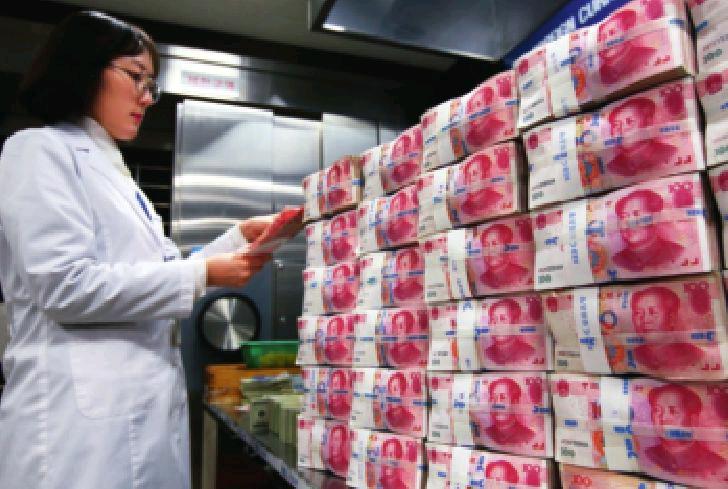
It has been a point of debate in academic circles which should come first – the marketization of RMB exchange and interest rates or opening up the capital account. The mainstream viewpoint holds that opening up capital account first will lead to high flows of arbitragemotivated capital over short periods, hindering financial stability and national security. Therefore, starting from July 21, 2005, China began to reform the exchange rate regime to raise the marketization level of RMB exchange rates.
The reform includes two aspects: first, the formation of the central parity rate. Since January 4, 2006, the China Foreign Exchange Trade System(CFETS) makes enquiry to market makers before opening the interbank foreign exchange market each business day. It then calculates the central parity rate of the RMB against the U.S. dollar based on a weighted average of all the prices market makers intend to offer. The weight is decided by the CFETS based on the indices such as volume of transaction in the interbank foreign exchange market and quoted prices.
The second reform expands the float range of the RMB exchange rate, from 0.3 percent in the beginning of the reform to the current two percent.
Since the outbreak of the global financial crisis in 2008, developed countries have adopted quantitative easing policies and emerging economies have adopted currency devaluation approaches to expand exports. China instead has steadily promoted reforms on the marketization of the RMB exchange rate.
Currently the RMBs real effective exchange rate has appreciated by 35 percent compared with that in 2005. Chinas current account surplus has fallen from about 10 percent in 2007 to 2.1 percent in 2013, which is below the internationally recognized alarm level of four percent. On its path to balancing its international payments, China has made its own contribution to the development of international trade and the recovery of the world economy.
- CHINA TODAY的其它文章
- Chinese Enterprises Plow Ahead in Africa’s Farm Machinery Market
- Waste Recycling the Green Way
- The Return of the King?
- A Specific Dream in a Diversified World
- On the 35th Anniversary of China-U.S. Diplomatic Relations
- The Iceland-China Free Trade Agreement: A Milestone for Strengthening Good Relations Between Iceland and China