
To Live–Modern Chinese Performance Art in Berlin
2014-09-27 10:39:16BySUSANNEBUSCHMANN
CHINA TODAY 2014年5期
By+SUSANNE+BUSCHMANN
CHINESE performance art in Berlin? Un- til now most people would assume that the Peking Opera had come to town. Far from it! It was the National Theatre of China traveling to Berlin for the first time to perform a dramatic adaptation of To Live, Yu Huas famous novel.
Modern performance art from China is still mostly unknown in Germany. With the first stop of the National Theatre of China ensemble, Berliners experienced a rare treat. Expectations were high.
Fans of Chinese literature are already familiar with the original novel, whose German edition was published in 2003. Since then many of Yus other works have also been translated into German.
The novel was also adapted into a film by Chinese director Zhang Yimou, which was awarded three prizes at the Cannes International Film Festival in 1994.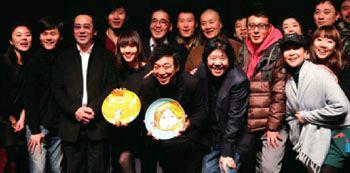
The stage drama was presented for the first time to the German public by Meng Jinghui, one of Chinas most celebrated directors. Meng is known as a pioneer of avant-garde and experimental theater, and well-known for his creative and expressive style. Performances under his direction bear a uniquely comedic, critical and vivid signature. Mengs artistic influence is credited with invigorating Chinese drama and giving it a completely new appearance. Meng also has a soft spot for the German theater, having brought to stage Goethes Faust and Brechts Dreigroschenoper, to the artistic style of Rainer Werner Fassbinder.
Given Germanys long tradition and a wellearned reputation for avant-garde theater, it is no surprise that Meng chose Berlin as the first stop for his global tour.
The choice of the well established Deutsches Theater as the venue was also symbolic. A number of internationally celebrated directors, playwrights and actors have brought their productions to its stage since 1883.
Struggle to Live
The audience at the premiere night experienced a splendid performance of modern Chinese theater. Wolfgang T., a spectator from Halle, expressed what many felt this evening: “Im really glad to have seen this play today. This trip to Berlin was more than worthwhile. This was world theater at its best. Bertolt Brecht would have been delighted!”
Mr. Jiang from Beijing said after the performance: “The play vividly portrays Chinas dynamic history and the crushing burdens on Chinese people in the past. My wife and I were deeply moved.”
The play focused on a series of meaningful core scenes of the plot of the original novel: Xu Fugui, protagonist and son of a landowner, gambles away his family estate and risks the entire existence of his family. In complete poverty, Fugui is abandoned by his wife and little daughter, although both return to him later.
Fugui is conscripted by the Republican army and sent into the fight against Communist troops. He is captured, but eventually returns to his hometown.
Back home Fugui suffers further misfortunes, set against the backdrop of the most tumultuous decades of recent Chinese history. Fugui and his family experience the great tragedies of modern China.
During the steel-melting campaign in the 1950s, which was expected to boost Chinas industrial strength, Fuguis family – as everyone else at that time – is forced to give away even their last cooking pot. And, as if not enough, later on his son suddenly dies during a blood donation for a “higher ranking person.” It is more than an accident – the medical staff are unskilled and uncompassionate towards the lives in their trust.
In these tragic circumstances, Fugui loses first his son, then his wife, daughter and finally his beloved grandson. Misfortune seems to follow him like a dark shadow, although, in some rare moments, fortune smiles on him.
The last days of his life Fugui spends alone with an old stoic ox, in which he recognizes himself. “I named him Fugui after me, because we look alike,”he says. In the end, the protagonists will to live is the only thing that no one is able to take away from him.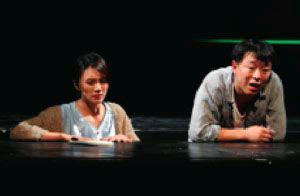
Yu Hua and Meng Jinghui tell a touching parable of the capacity of suffering and the power of resistance of everyday Chinese people.
In a very natural but compelling way, the drama shows the differences between men and women in how they bear the grim burdens of that period of Chinese history. In face of misfortunes men drink, shout, and revolt. Women suffer too, but stoically, in silence.
Consequently, the audience remains stock-still when Fuguis wife finally screams her anguish out to the world.
Without doubt the ironic hand of author Yu Hua is evident in every moment of Fuguis story. Beyond the novel and continuing it, the play lays bare the folly and absurdity of human actions. Fugui escapes a landlords death because he had gambled away his riches; Chunsheng, the bookmaker who won Fuguis land, is shot in his place.
A Long but Captivating Performance
The play lasted three hours without intermission. This imposed a real challenge to German audiences, who expect to refresh their minds and bodies during the intermission so they can enjoy the second part with renewed attention. However, this cherished habit was forgotten; there wasnt even time to think about a break during the captivating performance. The play was intense from beginning to end.
Language barriers didnt pose major problems, thanks to precise German subtitles projected at the side of the stage. The actors used language, high physical commitment and dance pantomime, accompanied by a sophisticated stage with multimedia installations, which helped convey meaning.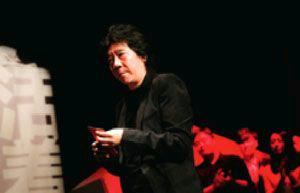
As an experienced dramatist Meng Jinghui knows how to keep audiences surprised, aroused and entertained. They can also expect amusing, odd elements on stage. From this perspective the performance was well worth the ticket price. Scenes like the appearance of the cultural revolutionary propaganda squad, which was exaggerated to the point of being grotesque, or the humorous dialogue with Fuguis future son-in-law “Wryneck” were entertaining highlights.
Several scenes deeply moved the audience. The sons death and Fuguis shocking, devastated outburst marked an emotional climax to the play.
Huang Bo, who played the leading man Fugui, stood on stage for three long hours almost without break. During this time he deployed the whole arsenal of stagecraft. He mimed the young landlord obsessed with gambling as well as the completely destitute day laborer; he expressed grief, hope, joy, despair and resignation to fate.
Sometimes his character seemed like a wise guy or a merry prankster. Again and again Huang expressed his characters indomitable will to live. Especially astonishing was the intensive physical commitment required, which Huang handled effortlessly.
But Huangs brilliant performance also depended on the complimentary performance of actress Yuan Quan, playing Fuguis wife. Yuans restrained and sensitive acting style complemented Huangs powerful performance. In the end, all performers did impressive work and made the play a huge success.
Appeal across Borders
In To Live Berlin experienced world class the- ater, but with markedly Chinese characteristics. Breaking with many theatrical conventions, under Mengs direction the Chinese performers explored new avenues of expression.
“Some scenes in the play deeply touched me,”Norbert S. from Berlin said after the performance. Karin M. from Frankfurt/Oder added: “It was a poetic performance. What moved me in particular was that the message reaches far beyond national borders.”
Volker R., who came from Nauen to see the play, said: “The drama was characterized by touching moments and unbearable tragedy. It tests how much strength a man – in this case a Chinese man– is able to find to endure profound suffering without losing the courage to face the rest of his life.”
A couple from Berlin said: “The play had an extraordinary density. It had moments of contemplation as well as bizarre irony.”
After an unforgettable night of theater, the audience, evenly divided between Chinese and Europeans, enthusiastically greeted the performance with hearty applause and loud “bravos”and “haos.” To Live was a theatrical event which will surely be remembered in the German capital and beyond it.
- CHINA TODAY的其它文章
- Chinese Enterprises Plow Ahead in Africa’s Farm Machinery Market
- Waste Recycling the Green Way
- The Return of the King?
- A Specific Dream in a Diversified World
- On the 35th Anniversary of China-U.S. Diplomatic Relations
- The Iceland-China Free Trade Agreement: A Milestone for Strengthening Good Relations Between Iceland and China