Early Rural Development Experiments
2014-11-24 21:20:32
China Pictorial 2014年9期
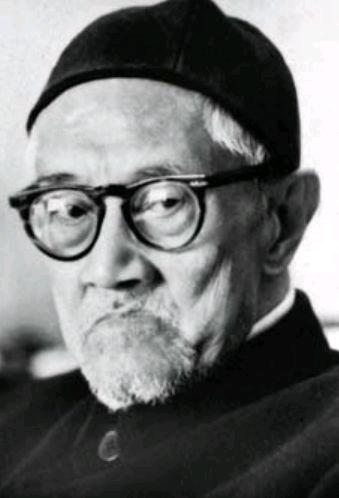
In the 1920s and 30s, a major countryside construction movement swept across China. At the time, Chinese intellectuals founded hundreds of organizations to promote the development of rural areas. Of them, the most representative were Yan Yangchu (1893-1990), a Ph.D. from Yale University, famous public educator and expert in countryside construction, and Liang Shuming(1893-1988), a prestigious thinker of contemporary China.
In 1926, Yan Yangchu led a team to settle in a village in Dingxian County, Hebei Province, along with his family. With the purpose of “relieving laborers pain and exploring their power,” he and his team began to engage in educating rural residents, so as to accelerate the development of the countryside. The members of his team either held graduate degrees from U.S. universities or served as presidents and professors at Chinese colleges and universities. Their work in countryside construction attracted considerable attention, and was dubbed the “doctors going to the countryside”movement.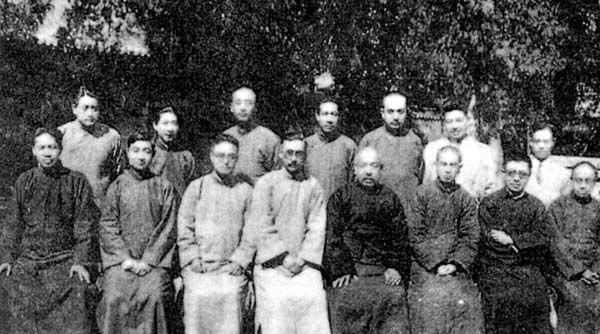
In the eyes of Yan Yangchu, the majority of Chinese farmers were “undereducated, poor, weak, and selfish,” so he called for a triumvirate integrating school, society, and family education and suggested the nations countryside promote four kinds of education: cultural and art education to eliminate illiteracy, livelihood education to dispel poverty, health education to shake off weakness, and civic education to remove selfishness, so as to achieve progress in politics, economics, culture, self-defense, hygiene, and ethics. His team made Dingxian a “laboratory” for their social experiments. They established schools and organized cultural and art activities to improve the educational level of local farmers.
They conducted agricultural research, built experimental farms, and introduced hybrid crops to increase agricultural outputs. They spread health and hygiene knowledge and created the rural threetier medical care system to help farmers improve their health. They also promoted civic education to cultivate farmers public consciousness and teamwork spirit.
From 1929 to 1931, nearly 100 intellectuals followed Yan Yangchu to settle in Dingxian County and devote themselves to construction of the countryside. According to some historians, the movement marked a turning point for Chinese intellectuals – instead of seeking positions in government or merely talking theory, they began to dedicate themselves to practice.
Unfortunately, when Japan invaded China in 1937, Yan Yangchu was forced to retreat southward, so the educational experiment in Dingxian County came to an end. In 1940, he established the China Countryside Development College in Beibei District of Chongqing and continued his countryside experiment.
Yan Yangchus biggest breakthrough was integrating education and countryside development. His experiment in Dingxian County brought very encouraging results. According to a survey conducted by Hebei Province in the 1980s, Dingxian County had already eliminated illiteracy and smallpox before 1937. Today, Hebei residents still benefit from better bred pigs, white poplars, and apple trees that were introduced during that period.
Yan Yangchus countryside experiment aimed to build a modern self-governing system based on education in rural areas. However, Liang Shumings countryside experiment in Zouping County, Shandong Province, emphasized cultural innovation. Yans experiment aimed to achieve political, cultural, and social revival based on village governance, while Liangs experiment was more like an exploration of cultural autonomy by intellectuals.
Liang Shuming believed that Chinese society was “based on villages and with the countryside as its heart.” For this reason, he concluded that the future of China would depend on the development of the countryside. From 1936 to 1940, he wrote several essays to elaborate his thoughts on countryside development, including Generals Ideas of Countryside Construction, Theories of Countryside Construction, and Response to Criticism of Countryside Construction. He called for reviving rural areas through creating new culture, restructuring villages into unions or organizations integrating politics, education, livelihood, and health functions, developing agriculture so as to stimulate the development of industry, and building an ideal, new society based on the self-consciousness of farmers and the participation of intellectuals.
In March 1931, Liang Shuming founded Shandong Institute of Countryside Construction in Zouping County. He consecutively served as director of the institutes research department and president. In addition to lecturing on countryside development, he also conducted countryside construction experiments in Zouping and other counties. Before engaging in countryside development in Shandong, Liang promoted “township governance” in Guangdong Province and “village governance” in Henan Province. His institutes experiments included integrating politics and education by establishing township and village schools, promoting social reforms such as curbing smoking, banning gambling, eliminating foot binding, establishing rural cooperatives, and strengthening village self-defense to maintain social stability. Through those moves, Liang aimed to combine public education and social reform.
Liang Shuming attributed Chinas problems to its cultural recession, so he advocated social reform by reviving Confucian culture. In his countryside construction practices, he promoted the integration of politics and education in rural areas, so as to cultivate leaders from farmers and inject philosophy into his education programs. He aimed to flavor the countryside with political principles and ethical rules, and his ideals were imbued with strong Confucian themes.
Both Yan and Liang made great contributions to educating rural residents, developing the rural economy, training agricultural professionals, spreading agricultural technology, and reforming social morality in rural areas. Even today, their theories and practices in countryside construction remain valuable spiritual legacy for Chinas modernization. But, some scholars still argue whether their countryside development mode ignored inevitable self-transformation of rural areas.