
Lacquer Seed Oil and the Food Culture of the Lisu
2015-05-30 02:24:54GaoZhiyingShaLina
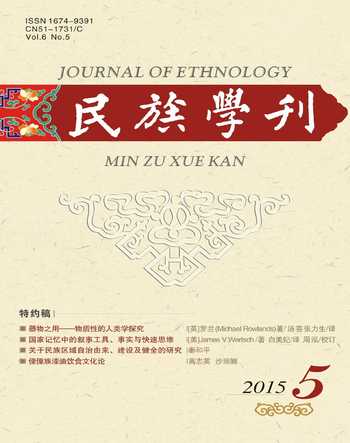
民族學刊 2015年5期
Gao Zhiying Sha Lina
(Southwest Frontier Research Center ,Yunnan University,Kunming,650091,Yunnan,China)
JOURNAL OF ETHNOLOGY, VOL.6,NO.5,54-63,2015(CN51-1731/C,in Chinese)
DOI:10.3969/j.issn.1674-9391.2015.05.07
Abstract:
Because they practice a ritual of “climbing a mountain of swords and plunging into a sea of flames”,the Lisu are referred to as an ethnic group who “climb up a mountain of swords and plunge into a sea of flames” by the outside world.However,if seen from their dietary characteristics,it would also be true to call them “an ethnic group who eats lacquer seed oil”.Lacquer seed oil is also referred to as “lacquer tree fat”.It is a kind of pure and natural plant oil which is always found in the Lisus diet.In the Lisu language,it is called as “zhiche”.For a long time, lacquer seed oil has been the primary cooking oil for the Lisu,who live next to the Langcang and Jinsha Rivers,as well as for their neighboring ethnic groups,such as the Nu,and the Dulong.Even though nowadays their communication with the outside world has increased,and the kinds of cooking oil have also diversified, the Lisu who live in the “Three Parallel Rivers Area” still favor using lacquer seed oil,and it cannot be absent from their daily diet or during festival celebrations.Even those Lisu people who have migrated to Mytchina in northern Burma,where their daily production and living conditions have undergone great changes when compared with those in their ancestral ?land,they still have a special preference for lacquer seed oil.They regard lacquer seed oil given to them by their relatives from Nujiang as one of the best gifts.It could be said that the dietary culture developed from lacquer seed oil has become an important traditional cultural trait ?of the Lisu,and also an important cultural ?symbol for the Lisu.
1.Lacquer Seed Oil and the Lisu
The Lisu is a transnational ethnic group.The Lisu in China are scattered in “the three rivers” area(Nu River,Jinsha River and Langchang River).The majority of Lisu live in Nujiang Lisu Autonomous Prefecture.The second largest concentration ?of Lisu is in Weixi county of Diqing prefecture; As for foreign countries,Burma is their major area of distribution,and they are mostly concentrated ?in the north of Burma.The primary habitation areas of the Lisu,who are called the “children of the three rivers”,are high mountains and deep forests,and places with a wet climate,and plentiful sunshine.All of these conditions are good for growing lacquer trees.
Because they have lived in lacquer tree growing areas and have used the lacquer tree for a long period,the Lisu have accumulated a set of rich local knowledge related to the lacquer tree.The Lisu people divide the tree into “male trees”and “female trees”.The male lacquer tree is called “Yipuzi” in the Lisu language,and it does not produce seeds; the female tree is called “Yimazi” in the Lisu language,and it produces seeds.The Lisu traditionally plant lacquer trees.February and March is the time for planting,however,the survival rate is highest if the trees are planted in March.
The Lisu personify lacquer trees,and believe that they are “born”.This clearly shows the Lisu peoples love for the lacquer tree.In the past,the Lisu who lived alongside the Nu River produced lacquer seed oil by themselves.In the 1980s,serious environmental destruction led to the exhaustion of this resource,and some families had to purchase lacquer seed oil. Henceforth,the trade in lacquer seed oil started.
Lacquer seeds mature in October and November of each year.Thus,this is also a good season for picking lacquer seeds.Picking lacquer seeds requires some skill.Usually, the men climb the trees to pick the seeds,and the women stand below the tree,passing tools to the men and taking the seeds from the mens hands.The next day,the women dry the seeds in the sun,and keep them in the storage area of the house.When November and December arrive,it is time to press the lacquer seeds to make oil.Normally,after they complete the work of picking lacquer seeds,they will tap the raw lacquer.The way of cutting the tree to tap the raw lacquer is to cut a long and thin strip from which the raw lacquer flows into a wooden barrel or bamboo tube.The Lisu use raw lacquer to paint wooden bowls,rice cabinets,bureaus,tables,desks,and coffins,etc.Its function is to prevent worms,increase the brightness of the objects,and also prolong their lifespan.Bai,Naxi,Tibetan,and Pumi carpenters who live around the Lisu use a lot of raw lacquer produced by the Lisu.Therefore,the raw lacquer has developed an economically mutual complementary ?relationship between the Lisu and their neighbors.
For thousands of years,the Lisu planted lacquer trees,collected the seeds,pressed ?the seed to make oil,and ate a diet ?which relied upon lacquer seed oil.Lacquer seed oil has become deeply fused with their daily life.Nowadays,many young people among the Lisu have left their homeland to make a living in the eastern coastal areas.Although they left their homeland,they still cannot separate themselves from lacquer seed oil.They always bring plenty of lacquer seed oil with them.When they cook chicken with lacquer seed oil,they always invite their fellow villagers or friends from the outside to share the food together.They say that this is “the taste of the homeland!” It is chicken cooked with lacquer seed oil that connects the Lisu in “the others area” with their homeland.When they go back to their homeland the following year,a chicken cooked with lacquer seed oil is a prerequisite dish for their first meal.These migrant Lisu unconsciously have become transmitters of their Lisu culture —through their dietary culture,they have let the outside world understand Lisu culture —“an ethnic people who eat lacquer seed oil”.Hence,their ethnic confidence is promoted,and their social network is also expanded.The Lisu in Nujiang also do not forget to bring some lacquer seed oil as gifts when they go to Burma to visit their relatives.Because Burma does not produce lacquer seed oil,the Lisu in Burma only can acquire lacquer seed oil through visiting relatives or by going directly to Nujiang and Weixi to buy the oil.Only through this way,has their habit of eating lacquer seed oil been preserved.Hence,lacquer seed oil has become very expensive in Burma.In short,to the Lisu,lacquer seed oil is not only a necessary component of their diet,but it is also an important part of Lisu traditional culture.Lacquer seed oil,as a kind of dietary culture,is also an important gift for exchange among the Lisu.It is a cultural symbol accumulated and inherited in the process of the Lisus communication.
2.The Technology of Making Lacquer Seed Oil
Concerning the technology of make lacquer seed oil,there are both traditional and modern ways.The traditional way is the earliest “local way” used by the Lisu to make lacquer seed oil.It is labor intensive and takes a lot of time and energy.Therefore,only people in a few remote mountainous areas now continue to produce lacquer seed oil in this way.The modern way of making lacquer seed oil depends on an oil pressing machine.This is the most popular way at present.Nowadays,more and more Lisu people bring the dried seeds directly to the market or factory for processing—this is not only convenient and fast,but also the capacity of the oil press is twice that of the traditional way.The difference between the two techniques is this: lacquer seed oil produced through the traditional method is more“ pure”—the taste is much better than the oil made using modern technology.This might be related to the production techniques.
3.Eating Lacquer Seed Oil
All parts of lacquer tree are useful.Its raw lacquer can be used to paint woodenware; its seeds
can be used to make oil; and its fresh leaves can become a delicious dish.Every July and August,the lacquer tree is full of green seeds.In this season,some people pick the fresh shoots from the male tree and cook it as a vegetable.However,not many people eat lacquer shoots; ?the most important food for them is the oil.The Lisu often enjoy lacquer seed oil with meat,or with chicken or with eggs.In addition,lacquer seed oil is also taken as a kind of medicine and used together with wormwood,ginger,and so forth. The popular foods cooked with lacquer seed oil include chicken with lacquer seed oil,sweet water with lacquer seed oil,tea with lacquer seed oil,wormwood boiled with lacquer seed oil,porridge with lacquer seed oil,etc.
As the best cooking oil of the Lisu,lacquer seed oil is used to cook lamb,beef,pork,fish,etc.It could be said that in the Lisus diet,lacquer seed oil is not only a kind of cooking oil,but also a special feature of the Lisu diet.
4.The Cultural Function of Lacquer ?Seed Oil
As discussed above,Lisu food cooked with lacquer seed oil is plentiful.However,they all have following common characteristics: it is used as cooking oil; it is normally used to make soup,sometimes also used to fry food(such as a fried ?egg or pancake,etc.); and,it plays a role of dietary therapy.
1)It reflects the living wisdom of the Lisu and their brave spirit.
In history,the Lisu who live in the “three parallel river” area have accumulated experience with regard to growing lacquer trees,eating lacquer oil,and have created innovative ?and various kinds of food using lacquer oil.The oil not only satisfied the requirements of cooking oil,but it also became ?a function of dietary therapy.Because the lacquer tree can provoke an allergic reaction, eating its oil is not possible for other ethnic people.However,in the eyes of the Lisu people,the lacquer tree is full of “treasure”— its shoots can be used as a vegetable; its seeds can produce oil; its raw lacquer can be taken as natural oil paint; and its branches can be made into farming tools and furniture,etc.The fire place of the Lisu will not burn lacquer wood,because burning it can easily result in a fire disaster.All of this local knowledge has been accumulated from ?the daily life of the Lisu,and is a reflection of the living wisdom and brave spirit of the Lisu.
2)Lacquer Seed Oil reflects the hospitality of the Lisu
Generally,to those Britain missionaries who entered the Lisu area during the early years of the 20th century,the Lisu were an ethnic group who loved peace,and loved to make friends.There is an old saying that says “drink this cup of wine,then,we become friends!”The Lisus “tongxinjiu”or“wine for connecting hearts” is well-known.However,their hospitality is normally expressed with receiving guests with lacquer oil chicken and “xiala”.They use this to express their hospitality,wisdom and bravery.
3)An inheritance of traditional moral and religious concepts.
The planting and usage of lacquer trees by the Lisu reflects the Lisus understanding of nature,and their concept of a harmonious relationship with the nature.In the Lisus concept,nature(i.e.the lacquer tree)is equal to human beings,because the tree has an aspect of “human nature”(the lacquer tree is divided into male and female).The taboo of the Lisu when they make and eat lacquer seed oil chicken,and the custom of “chicken divination” reflects the Lisus religious concept—through divination using a chicken to predict what will happen in the future.This reflects that primitive religious concepts have deeply merged with the local peoples way of thinking, and influence their daily life and religious behavior.An ordinary lacquer seed oil chicken not only describes the Lisus dietary scenery,but also represents the Lisus moral and religious concepts in their daily life.The lacquer seed oil chicken is very popular among the Lisu,and they still kept the cultural customs of chicken divination.This is an inheritance of the Lisus primitive religious beliefs.Moreover,the rule of food allocation while eating the chicken,and use the lacquer seed oil chicken to receive the guests and so forth, are also an inheritance of traditional culture.
4)Lacquer Seed Oil and Social Communication Network Building among the Lisu
During the process of growing lacquer trees,picking seeds,producing oil,collecting raw lacquer,cooking and eating a diet based on lacquer seed oil,the Lisu are building and solidifying ?their communication with family members,relatives,neighbors and the outside world.Speaking from an internal perspective, lacquer seed oil is “the taste of the homeland”—it is a symbolic material representing ethnic identity and cohesion; it even becomes a gift floating across time and space.Speaking from an external perspective,the Lisu have built up a connection with other neighboring ethnic groups,such as the Nu,Dulong,Han,Bai,Tibetan and Naxi, through selling lacquer seed oil and raw lacquer.There is a mutual influence on the cultural aspect,and,thus,a dietary cultural circle of “eating lacquer seed oil chicken” has been formed within the multi-ethnic areas where the Lisu are the majority.
In conclusion,the lacquer seed oil diet has a close relationship with the Lisus living surroundings.The lacquer seed oil dietary culture accumulated from the complicated process of planting the trees to eating lacquer seed oil is not only a representation of the Lisus living wisdom and brave spirit,but it also reflects their ethnic hospitality.Meanwhile,it is also an inheritance of traditional moral and religious concepts,and plays the function of solidifying and building trans-family clan,trans-regional,transnational,trans-ethnic social networks.Hence,the lacquer seed oil food which can be used as food and medicine is an important part of the Lisus dietary culture,and is also a significant cultural symbol of the group.
Key Words: ? Lisu ethnic group; lacquer seed oil cultural circle; social cultural function
References:
Fan Yongyong.qishu zaipei yu shouhuo jiagong.(Lacquer Cultivating and Processing ),In zhongguo tu techan(Local Specialty of China), 1999(1).
Gao Zhiying.yunnan xiangtu wenhua xilie congshu·nujiang(Series of Yunnan Folk Culture·Nujiang),Kunming:Yunnan jiaoyu chubanshe,2003.
He Meng. wanli qiankun—diqing zangzu muwan wenhua yanjiu(Culture inside the Bowl—A Research on Wooden Bowls of the Tibetan in Diqing),Yunnan University,Doctoral dissertation,2015.
Li Min,Wang Hongyun,Duan An.gaoli gongshan lisuzu yaoshi liangyong zhiwu chutan(An Exploration on the Plants Used as Food and Medicine by the Lisu in Gaoligong Mountain), In Chinese Medicine in Yunnan,2013,Vol.34(1):p.55.
lisuzu,shang daoshan xiahuohai de minzu(Lisu,An Ethnic Group who “Climb Up a Mountain of Swords and Plunge into A Sea of Flames”)[DB/OL],(2015-09-15),(2015-8-24),http://www.yn21st.com/show.php?contentid=15963.
F.O.Fraser.Hand Book of the Lisu(YawYin)Language, p.iv ,Rangoon Superintedent,Government Printing,Burma,1922.
Wang Hongyun.qila(you)de chengfen jiqi zonghe liyong jiazhi(The Ingredients of Lacquer Oil and Its Value in Use ), In zhongguo minzu minjian yiyao(Chinese National Folk Medicine),2013(8).
- 民族學刊的其它文章
- The Priest and the King in Hierarchy: on Louis Dumont餾
- Understanding the Origin,Founding and Characteristics of Ethnic Regional Autonomy
- The End of Zhang Zhung Kingdom in the Northwestern Areaof the Qinghai—Tibet High Plateau and Its Continuation in the Southeastern Area
- Narrative Tools,Truth,and Fast Thinking in National Memory:A Mnemonic Standoff between Russia and the West over Ukraine
- What Do Artifacts Do?
- 心理量表在民族高校大學生