
Finance Going Green
2015-08-17 17:19:00byWangFang
China Pictorial 2015年8期
by+Wang+Fang
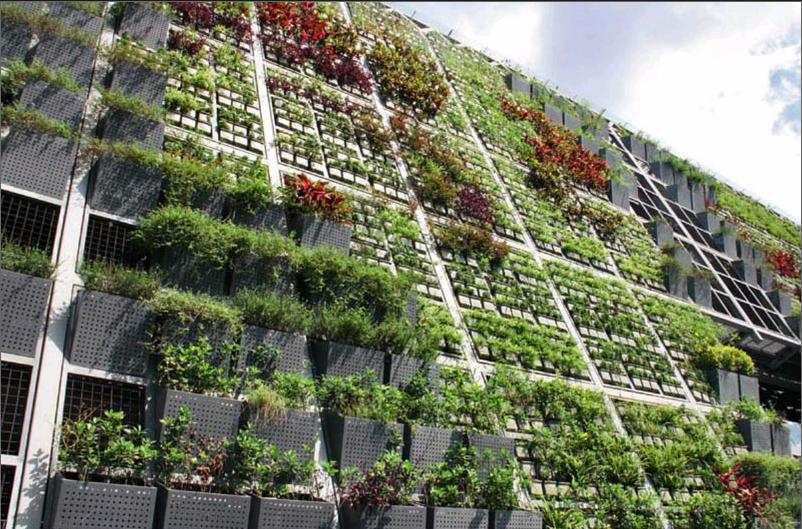
Green finance was the focus at the Third Shenzhen International Low-Carbon City Forum on June 18, 2015. As the increasingly volatile global climate is making a greater influence on the environment supporting life on earth and peoples daily lives, the Chinese government proposed to promote ecological advancement in its report at the Eighteenth National Congress of the Communist Party of China (CPC) in 2012, signifying that China will pay greater attention to the protection of its eco-environment from a national strategic level.
On May 5, 2015, the CPC Central Committee and the State Council jointly issued Opinions on Accelerating the Ecological Advancement, clearly advocating the policy of developing the country in a green, cyclic and low-carbon way. However, the policy can hardly be carried out without support from finance.
Young and Green
Globally, green finance isnt new, but in China, it is still young.
“Green finance primarily refers to banking that supports energy conservation and emission reduction as well as environmental protection as a major part of its business strategy under an effective promotion mechanism for green loans and a complete system for the administration of environment and risks,” explains Lin Boqiang, director of the China Energy and Economic Research Center under Xiamen University.“Compared to traditional finance, the green variety places greater value on the living environmental benefits of mankind, attaching greater importance to the protection of the eco-environment when investing and financing, and emphasizing the development of green industries.”
At present, green finance in China mainly refers to green loans, green securities and green insurance. The greatest concern should focus on banking and credit operations in particular.
Domestically, according to public data released by the Statistics Department of the China Banking Regulatory Commission, in 2013, green loans of leading banking institutions topped 5.72 trillion yuan, accounting for 7.96 percent of the annual total, 71.9 trillion yuan. In the first half of 2014, that figure hit 5.2 trillion yuan, accounting for 6.7 percent of the years total, 77.6 trillion yuan.
Internationally, as early as 1974, Germany established the worlds first policy bank focused on environmental protection, Ecobank, specializing in concessional loans for environmental programs rejected by ordinary banks.
In 2002, International Finance Corporation and Algemene Bank Nederland, both under World Bank, released the “Equator Principles (EPs),” optional voluntary criteria and risk management framework adopted by financial institutions to determine, assess and manage environmental and social risk in projects, thus giving birth to a new standard for financing international programs.
Financial institutions that adopted EPs became known as “Equator Banks.”Only one such bank can be found in China, Industrial Bank, illuminating the fact that the country remains in an early stage of development in green finance.
Green Finance Needs
Today as the planet is plagued by the growing pressure to reduce emissions, many countries, including China, are endeavoring to develop a green, low-carbon economy.
“China is facing a stiff challenge,” declares Sean Kidnie, CEO of Climate Bonds Initiative. He asserts that although the challenge is born of pollution of the air, water, and soil as well as demands for capital for green urbanization, it is still a child of the macro-economy.
Data also shows that the green economy can hardly grow without massive funding.
According to statistics from Chinas 2013 climate financing report, 2 trillion yuan is needed annually for China to reach the goal of 40-45 percent of unit carbon intensity reduction by the end of 2020 as defined at the Copenhagen Conference.
As illustrated by Ma Zhong, president of the College of the Environment under Renmin University of China, at the forum, Chinas green financing capital includes mainly financial fund and financial capital. By 2020, the country needs at least 20 trillion yuan and at most 26 trillion yuan in green financing capital.
“Such capital will be used in the following sectors: energy departments, infrastructure, environmental restoration, industrial pollution control, and energy resources conservation,” Ma explains.
Perfecting the System
Only financial innovation can break the capital bottleneck hindering ecological protection. The question is how to best utilize the wheels of the government and market to drive a new round of sustainable growth for green finance.
“Chinas environmental protection is plagued by plentiful straits, including insufficient financial support,” illustrates An Guojun, associate researcher from the Financial Research Institute under the Chinese Academy of Social Sciences. “We aim to solve the problems effectively by establishing a green financial system to inject sustainable power into the environmental protection industry.”
Ma points out that fiscal funds and capital constitute an aggregate supply feeding green finance in China, heavily reliant on financial input from the government. “Fiscal funds play navigator, accelerating diversified finance, guiding the entry of social capital, and establishing various forms to yield and manage capital and stock equity, including Public-private Partnerships (PPP) which is extremely popular. All these can be integrated dynamically through the intervention of financial funds to intensify an effective capital supply for green finance.”
Europe, with Norway as the pioneer, has already accumulated rich experience in promoting a green economy by virtue of green finance.
In 2009, for example, the Norwegian government allocated 1 percent of its capital to green sustainable development, making Norway the worlds first owner of a sovereign wealth fund to support environmental protection.
“Decades have passed since developed countries began making arrangements in their systems to address green finance,”continues An Guojun. “Such systems help introduce social capital into the development of the green industry, including environmental protection, energy conservation, clean energy, and transportation, with assistance from financial services such as loans, sector funds, issuance of green bonds and stocks, and insurance. China is accelerating its pace of establishing and perfecting its regulation index system for green finance.”
When it comes to green bonds, Peoples Bank of China (PBC), the central bank of the country, has completed its “guidelines for bonds for green finance.” Consultation is ongoing within the system of the PBC. As planned, two to four considerably big green bonds will be released by state-owned banks in September 2015.
