The Intellectual Property Court Edges Its Way Forward
2015-08-26 23:24:20ByJINSHANMING
CHINA TODAY 2015年7期
By+JIN+SHANMING
INTELLECTUAL property is highly valued the world over, including in China. The Decision on Some Major Issues Concerning Comprehensively Deepening Reform, released in November 2013 at the Third Plenary Session of the 18th Communist Party of China (CPC) Central Committee, said explicitly: “We will strengthen the application and protection of intellectual property rights (IPR), improve the technological innovation incentive mechanism, and explore ways to set up IPR courts.” On August 31, 2014, the National Peoples Congress, Chinas top legislature, voted to establish IPR courts in Beijing, Shanghai, and Guangzhou. They soon came into being, constituting a milestone in Chinas IPR protection.
Call of the Times
IPR is crucial to stimulating and motivating innovation, investment, and fair competition. Therefore, China has been paying increasing attention to legal IPR protection.
More than 20 years after the first IPR trials were held in China, the need for a special court to handle them has become prominent. Efforts to work out an IPR national strategy commenced in 2005. Three years later, the Outline of the National Intellectual Property Strategy was released, raising the goal of establishing IPR courts of appeals. In November 2013, the Decision on Some Major Issues Concerning Comprehensively Deepening Reform referred to IPR courts in the context of “accelerating the improvement of the modern market system.” On June 6, 2014 the Central Leading Group for Deepening Overall Reform preliminarily approved the plan of establishing the IPR court and putting it through a test run in certain areas.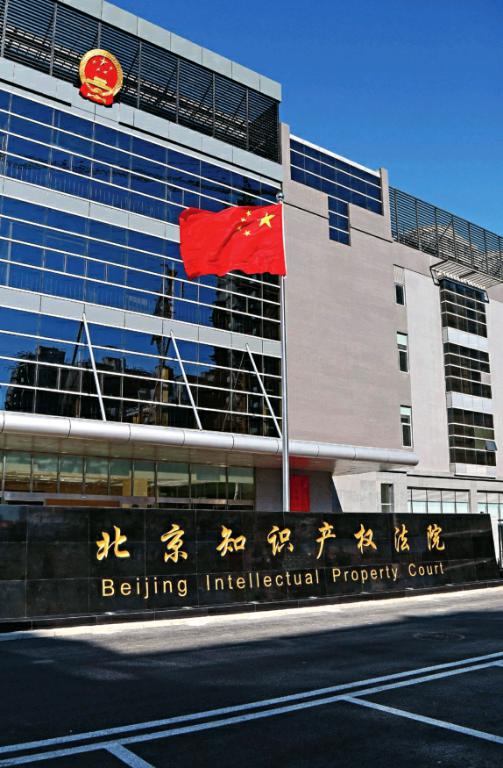
The initiation of IPR courts signifies institutional reform of IPR litigation, a crucial step towards fostering China as an innovative country. The Fourth Plenary Session of the 18th Central Committee of the CPC, convened last October, vowed to advance rule of law comprehensively, and accelerate systematic and institutional reforms in all aspects of society, the judicial field in particular. Establishing IPR courts is a nod to this decision.
Configuration and Operation
Last November, Beijing became the first city in the country to open an IPR court. Shanghai and Guangzhou were on its heels. Among other reform measures, such as separating administrative and judicial work and a streamlined structure, the courts give overarching power to the trial judge in the case he/she handles, set up a new technical investigation section comprised of technical investigators, and canvass the qualifications of judge candidates in particular fields through a judge selection panel.endprint
Other than procedures stipulated by law that mandate reporting to and approval by the court president or chief judge of a tribunal, the ruling of an IPR case rests with the collegial panel. In this way, the trial judges are given full power in handling cases, and hence take full accountability for them. The collegial panel is the only party that has the authority to rule on cases. The president of the court or chief judge of a tribunal can participate in the discussion, but only in his/her capacity as a legal expert, not as a decision-making power. This is a fundamental change to the previous judicial operation.
Whats more, the president of an IPR court or chief judge of a tribunal is first and foremost a judge, so he/ she is obliged to hear cases personally instead of being preoccupied with administration work. Take the Beijing IPR court as an example: During the six months from its founding in mid November 2014 to April 2015, its president and two vice presidents heard a total of 68 cases, and four tribunal chief judges took up 120 cases, a conspicuous breakaway from the reality in most courts prior to the recent judicial reform.
The advent of the IPR court is indisputably a milestone in Chinas legal IPR protection, and has a profound effect on all related institutions. As Zhou Qiang, president of the Supreme Peoples Court of China, sees it, the IPR court is a key component of the countrys endeavor to comprehensively deepen judicial reforms. It offers a platform to explore a range of reform initiatives. Such practices as converging criminal, civil, and administrative cases concerning IPR into one judicial authority, alternative dispute resolutions, coordination of cases that are both civil and administrative, and offering precedent guidance to IPR cases, could all raise new issues, which have to be seriously and rationally addressed.
The particular nature of IPR actions raises new demands for judicial proceedings. The establishment of the IPR court can, therefore, contribute to the forma- tion and development of an IPR litigation system. This will offer experience and reference for Chinas reform of its trial mechanism and the judiciary system at large.
Follow the Trend and Meet the Challenges
The establishment of the IPR court fits into the bigger picture of Chinese society and economy, as the country faces the paramount task of better IPR protection and accelerating the construction of a market economy system based on honesty and credibility. This necessitates harsher punishment for IPR violations.endprint
The establishment of the IPR court is meaningful in the sense that it will facilitate the creation of uniformed standards in handling IPR disputes and facilitating innovations in legal IPR protection. Despite some glitches in the early stages, the prospects are bright.
As the knowledge economy grows, such issues as trademarks and patents have become more prominent in economic activities, leading to increasing disputes over them. It is estimated that the Beijing IPR court receives 12,000 to 15,000 cases per year, which means its 25 judges each handle almost 500 cases annually, an overwhelming number.
Quantity is not the sole problem. With IPR cases now more complicated and multifarious in the Internet era, the judges have to strike a tricky balance between public well-being, technological development, and the interests of stake holders.
Deciding IPR cases requires profound expertise in both legal science and specific technological fields, which are equally important for a fair ruling. This is why the IPR court has created the position of technological investigator for tech-intensive cases, such as those concerning patents, new floral species or designs of intricate circuitry and computer software. The current design of this position, however, has room for improvement. For instance, there are only five technological investigators at the Beijing IPR court, leaving many technological realms uncovered. This is one of the many problems demanding the courts attention and awaiting its solutions. But they should not discourage China from boldly experimenting and innovating in this regard.
A major reform to Chinese courts and the IPR judicial system, establishing the IPR court is part of a systematic undertaking. The IPR courts in Beijing, Shanghai, and Guangzhou are the first step towards completing this system. The journey ahead is long and tough.endprint