Winning Together
2015-10-09 17:40:33
China Pictorial 2015年9期
Avoiding the “Thucydides Trap”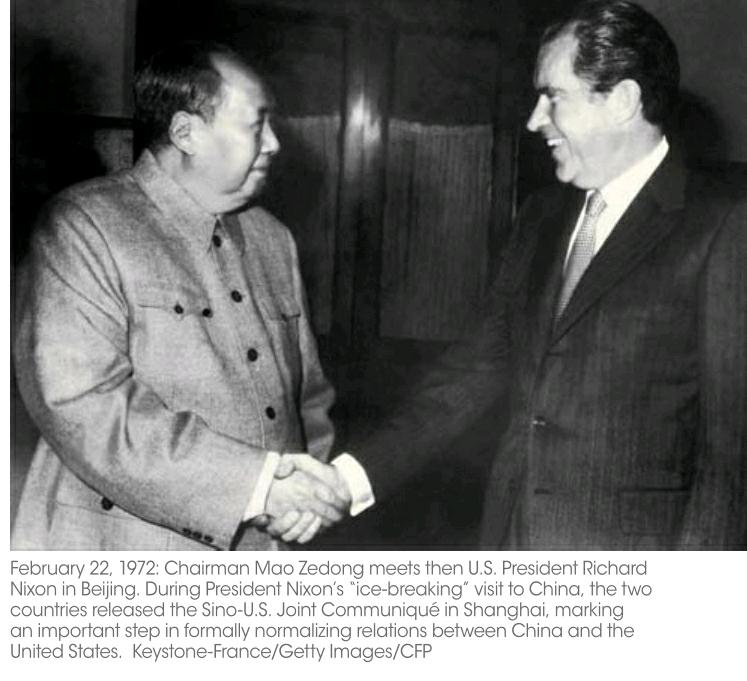
In recent years, both China and the United States have seen a twisting, complicated relationship alongside the shrinking difference in their respective economic clout. Friction has been especially apparent in the military sector, and the bilateral relationship has been plagued by suspicion and doubt due to insufficient mutual trust.
Kurt M. Campbell, former Assistant Secretary of State for East Asian and Pacific Affairs, pointed out that both countries have encountered difficulties in building mutual military trust because China wants the U.S. military out of Asia. Better communication can only enhance future development of the SinoAmerican relationship and demonstrate how important mutual trust is.
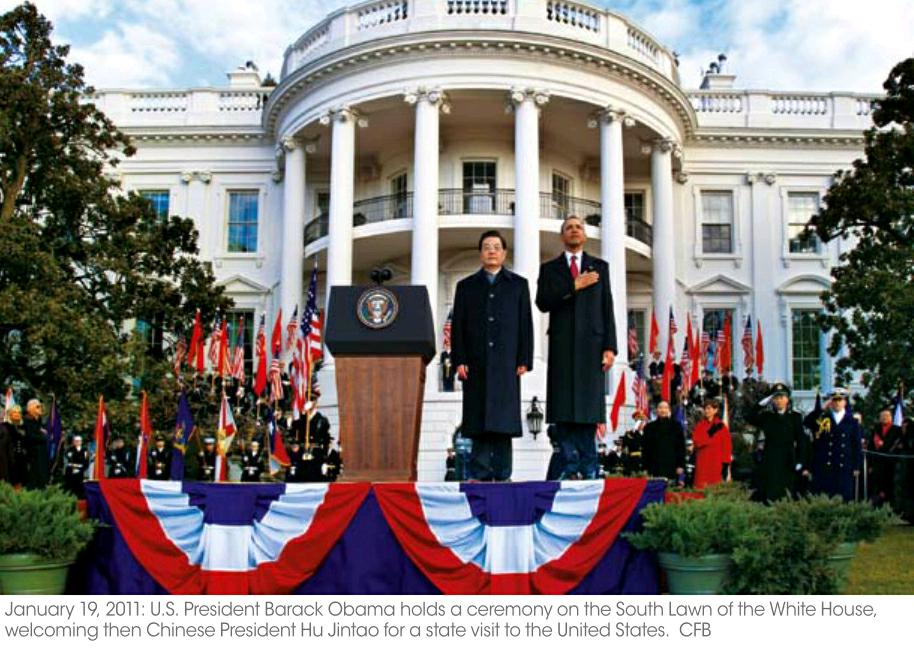
In fact, intensified mutual trust between China and the United States represents a key building block in the construction of the new type of relationship between great powers as well as a stepping stone to avoid the “Thucydides trap,” where a rising power causes fear in an established power which escalates towards war.
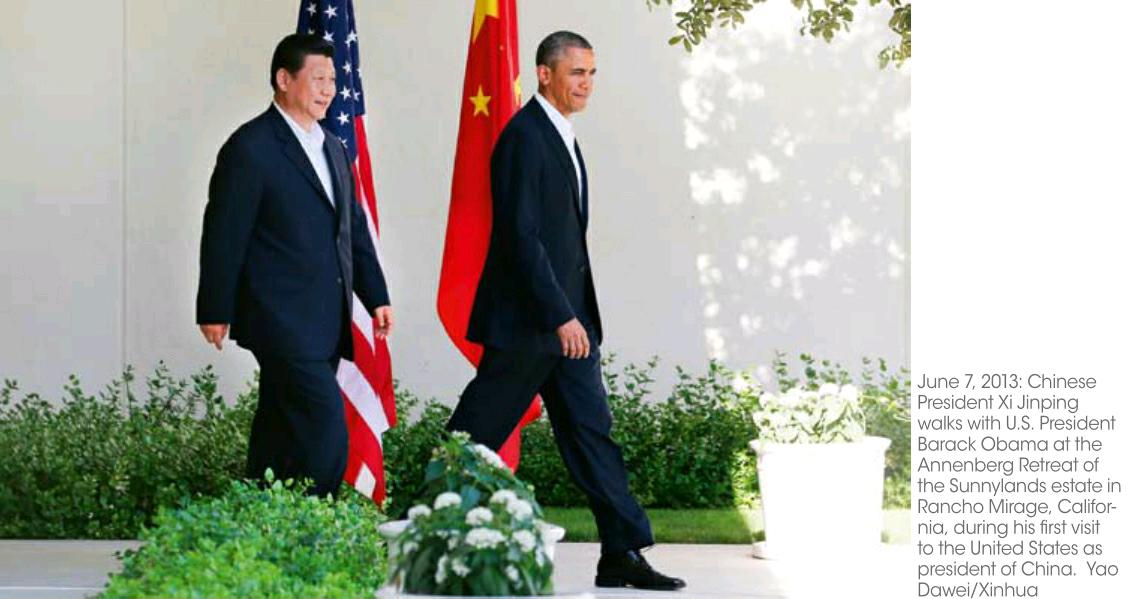
During his visit to the United States in 2013, President Xi Jinping reached preliminary consensus with President Obama to build a new model of major power relationship between China and the United States.
Still, the Sino-U.S. relationship faces many complicated issues, either non-conventional security issues such as internet security and terrorism or regional hot spot issues like the DPRK nuclear issue and disputes in the South China Sea and the Diaoyu Islands, which all affect the pulse of the relationship while hastening its transformation. President Xi chose a crucial moment for his visit to draw a blueprint for future development of the relationship.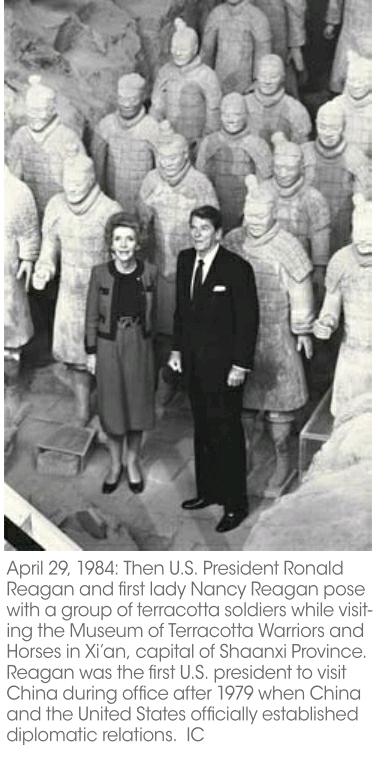
It goes without saying that the United States is the largest developed country on the planet, and China is the largest developing country. Both countries share numerous growing, crisscrossing interests on global issues such as climate change, energy and food safety, and public health security – issues that can more effectively be tackled together.
The new model of relationship between great powers should be based on “common security” rather than “equilibrium alliance.”It should not simply seek a balance of power with counterbalance and safety through allied confrontation. Rather, a new trail for cooperative security should be blazed with consideration of common security between the big powers.
Building a new relationship between big powers is the natural outcome of the reality of the current development of the Sino-U.S. relations. However, the mission involves a long march of unceasing exploration. As President Xi illustrates, “Building such a model is an unprecedented effort that will greatly inspire future generations. There arent any past experiences and models for us to copy. Encountering difficulties and setbacks is completely normal. There is nothing to be afraid of if problems arise. The point is that we should address the problems hand-in-hand rather than being driven by them.”
Strategic Mutual Trust & Cooperation
President Xi visited the United States at a special moment when the United Nations celebrated the 70th anniversary of its founding. The moment was tremendously significant to reflect on the post-war international order, and a key time for China and the United States to join hands to promote world peace and stability on the basis of strategic mutual trust.
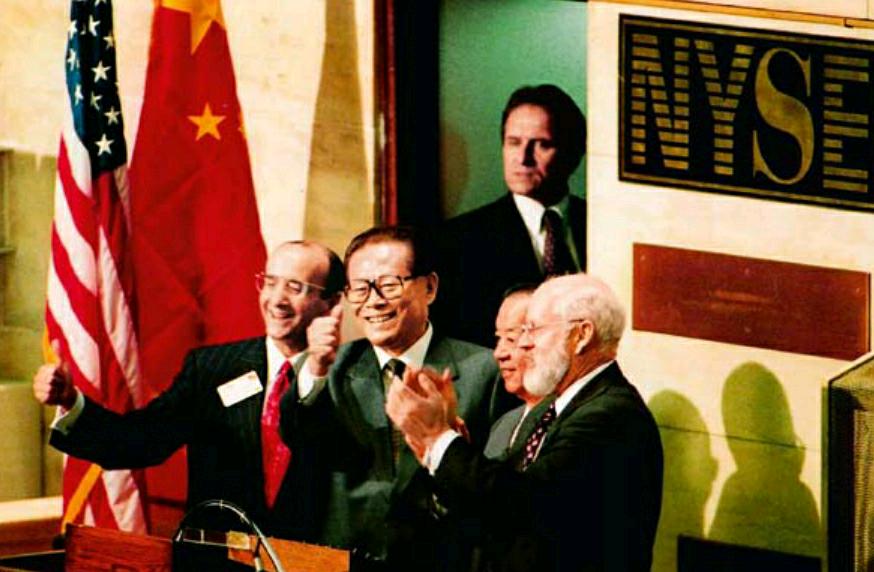
The new type of major power relationship should be built on the cornerstone of economic mutual benefits. Great powers should learn to avoid the “zero-sum game” in favor of “mutual benefits and win-win results.” Today, as the world witnesses growing economic globalization and regional integration, interests of major countries are no longer unique. The best way to achieve mutual benefits and win-win results is constant acceleration of economic cooperation between the two, which expands common interests of both.
Over the last few years, China and the United States have achieved remarkable results in economic cooperation. Since 2008, for instance, when financial crisis swept around the globe, their bilateral value of trade rocketed from US$333.7 billion to 590.6 billion in 2014. Whats more, the two countries have begun collaborating in many fields such as energy and science and technology.
What has happened shows that maintaining long-term dialogue while accelerating pragmatic cooperation between China and the United States not only benefits the Chinese and American people, but also promotes global peace and development.
However, as China grows stronger economically and upgrades its industrial structure, the economic relationship between China and the United States has become more political. The latter has increased trade protectionism, creating a stiff challenge for stable development of the Sino-U.S. relationship.
As Cui Tiankai, Chinese ambassador to the United States, opined, “Economics and trade have been the ‘ballast along the sail of the Sino-U.S. relationship. However, no matter how close this relation gets, conflict can never be completely avoided. The best path forward is to enhance mutual trust and broaden cooperation. For both countries, no common development can be achieved without broad vision as boundless as the Pacific.”
People-to-People Communication
In recent years, both countries have seen great progress in cultural and educational exchange: More than 240 pairs of friendly provinces and states and sister cities have been established. To count, nearly 200,000 Chinese students are studying in the United States, while over 20,000 American students are studying in China. Every day, both countries welcome at least 10,000 visitors from the other, and every year, there are more than 4 million visits between the two countries. Since 2009, the two countries have held six sessions of High-Level Consultation on People-to-People Exchange, and a related mechanism has been established.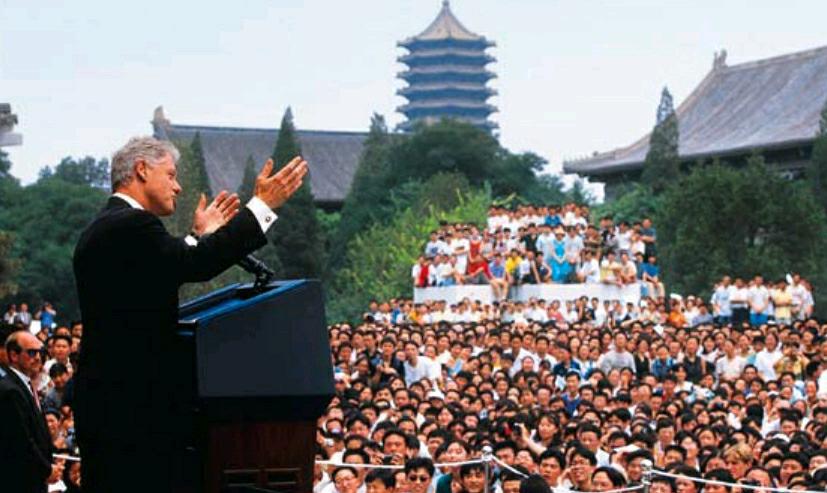
During the six sessions, both China and the United States shared hundreds of academic achievements brought about by cooperation between institutions of higher learning as well as communication among young people.
In 2015, Tsinghua University and Black Stone Group jointly launched the Schwarzman scholars program, which grants scholarships to 200 mostly-American students annually to study in China, in hopes of fostering better understanding of Chinese society and culture. The program aims to help students build a broad international vision so that they can contribute more to the United States as well as helping the world understand China.
Cultural communication between the two countries is happening every moment, in every place, imperceptibly. On July 28, 2015, for example, the New York Mets Baseball Club presented“An Evening of Chinese Culture” at Citi Field, gifting attendees an evening of Chinese elements to complement the American national pastime. Zhang Qiyue, consul general of China in New York, was honored to throw out the first pitch of the game between the Mets and the Los Angles Dodgers.
Regardless of the differences in history and culture that have led to friction and divergences during people-to-people exchange, mainstream people from both China and the United States agree that enhancing communication is key for the development of bilateral relations. Culture can be more powerful than politics. Only by building mutual respect for cultural diversity can the two countries move ahead in their constructive international cooperation in a comprehensive way.

As Kevin OBrien, a political professor from the University of California Berkeley, explains, when the Chinese learn Plato and Aristotle, it doesnt mean a Chinese defeat. Conversely, Western scholars dont surrender by embracing Chinese language, Chinese history and studies of Confucian tradition. Rather, the possibility and ultimate establishment of such creative competition will afford space for China and the United States to engage in deeper dialogue.
The construction of such a new type of major power relationship has not yet had a chance to reach overdrive due to various disagreements from both countries. Such roadblocks require special strategic patience from decision makers and common, persistent efforts from top to bottom.
The purpose of President Xis visit to the United States is to further accelerate the gradual development of a new relationship between great powers, which will not promote common development without vision, strategy and inclusiveness.