
THE POWER OFPAIN AND SORROW
2016-01-10 12:15:40劉玨
漢語世界(The World of Chinese) 2016年3期
劉玨
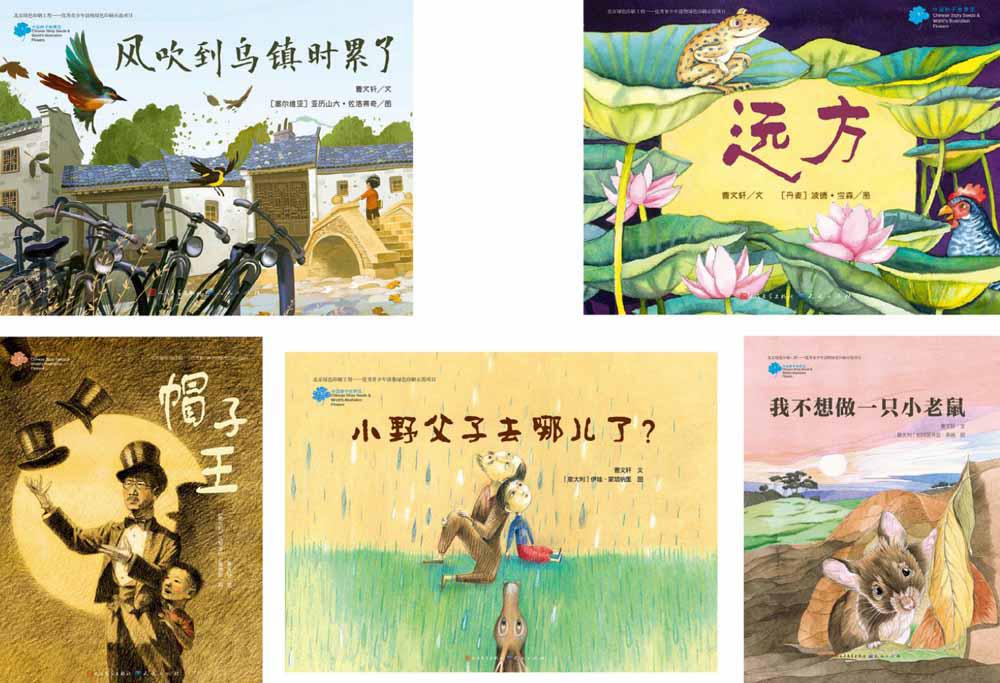
An interview with Cao Wenxuan, the first Chinese author to win the Hans Christian Andersen Award for childrens literature
苦難的力量:對話第一位獲得國際安徒生獎的中國作家曹文軒
Cao Wenxuan is the winner of the 2016 Hans Christian Andersen Award, the highest international prize for childrens literature, along with German illustrator Rotraut Susanne Berner. Cao, a 63-year-old Peking University literary professor, is a household name in childrens books, winning most of the top prizes available in this genre and having published more than 20 novels since the 1980s. His renowned novel The Straw House, published in 1997, is required reading for secondary school students, while his 2015 novel, Fire Mark, sold 100,000 copies in a single month. Caos novels have also been translated into over 50 languages and Bronze and Sunflower is one of the most popular overseas. Cao grew up in rural northern Jiangsu Province, with the hardship of his early years forming the inspiration for much of his work. Caos stories are noted for their realism, often tinted with sorrow and themes of coming-of-age, coping with loss, and the impact of war on children. Patricia Aldana, jury president of the International Board on Books for Young People explained their decision for the award: “The unanimous choice of the jury, Cao writes beautifully about the complex lives of children facing great challenges.”
What does it mean to you personally to be the first Chinese writer to win the Hans Christian Andersen Award? What do you think its impact will be on the larger Chinese literary scene?
I wasnt particularly excited when I learned about it. To me personally, my win confirmed an assessment I made years ago. I made the claim that the best Chinese childrens literature is up to the highest international standard, but no one believed me back then. With this award, many will recognize and agree with my assessment. For many years, Chinese literature has been underrated and undervalued by our own critics, so Ive stated on a number of occasions that we owe our thanks to Mo Yan. With him winning the Nobel Prize for literature, the voices questioning the quality of Chinese literature dimmed. I believe that with increased communication with the world, there will be more Chinese authors winning international awards, that Chinese literary voices and their influence will become stronger.
It seems that Bronze and Sunflower is the most popular novel of yours for foreign audiences so far. Much of this depicts the Cultural Revolution and the heartwarming relationship between two children during this time. Could you tell us a little bit about your inspiration for this story?
More than a decade ago, a friend told me of her childhood experiences: her father took up labor in a school for cadres. She went to visit him. There was nothing to do in the school, so she went to play with the village kids on the other side of the river. I knew a great deal about schools for cadres since my hometown also held one. So, a story began to appear in my head, it was more like a picture: a city girl came all the way from a far away metropolis to a simple village. She made an acquaintance with this farm boy. Then another day, the phrase “Bronze and Sunflower” suddenly came to me and it hit me that the story had matured and now had a “soul”. The boy would be “Bronze” and the girl would be “Sunflower”. City girl Sunflower came to the village and became close friends with the village boy Bronze. Then a vast sunflower field spread before my eyes and the girls father appeared. Hes an artist, a sculptor; all his life he has been making sunflowers with bronze. The rest of the story just flowed naturally.
By comparison, your recent series Legends of the Dawang Tome is more of a teen adventure fantasy that takes on a darker tone, quite a shift from your past work. Why the change?
Legends of the Dawang Tome is a fantasy series I spent a lot of effort on. At the time, Harry Potter and other fantasy fiction stories from abroad were very popular in China. Fantasy also became a hot genre for local writers. But most of their works were wild imaginings involving magic and other common fantasy elements in the West; in essence, they were all imitations of Harry Potter and other Western works. What they lacked was not imagination, but the life experience and knowledge to support it. So, they ended up with hollow imagination and poor quality. When I was writing the Legends of the DawangTome, my goal was for it to be literary first, then fantasy. A good fantasy work does not just require imagination but also a great plot, intriguing characters, food for thought, and reflections on humanism. Legends of the Dawang Tome is a fable of human intelligence and their ultimate fate. I long to create a narrative thats grand in scale and depicts spectacular scenes. War and Peace, along with Quiet Flows the Don are some of my references. I carefully read and contemplated scenes of war, cruelty, and bloodshed, hoping to benefit my own writing.
Some foreign reviewers mention the question of a recommended age range; at times, there are graphic descriptions of violence and suffering, as well as sophisticated vocabulary, which are probably suited for older children. This has also been mentioned as a common problem for bringing Chinese childrens literature to the West. Whats your assessment of this opinion?
Chinese vocabulary-wise, my work is suitable for children above the third grade, but one third of my readers are actually adults. Ive always thought of myself as an atypical childrens literature writer. I do not write entirely to cater to readers. I view children as equals instead of looking down them in terms of writing. Writing from a childs point of view to reveal some of the common problems faced by all people and all the world through their stories is my focus. Top childrens literature, such as The Little Prince and Charlottes Web, is suitable for all ages, and I want my work to be that way.
Pain and suffering are a common theme of many of your stories. Why do you think its important for children to read about this?
Many outstanding childrens stories by Hans Christian Anderson we are familiar with, such as The Little Mermaid, The Little Match Girl, and The Wild Swans, are all about pain and suffering. Their tone is sorrow instead of joy. Our country has gone through great suffering, and on reflection, these sufferings are memories we have to keep and pass on. Parents these days seem to be eager to block all the pain and sorrow from their children, as if they should only experience joy. Once, a parent asked me to put down few words for her child. She said: “Mr. Cao, I already have the sentence for you, please write, ‘I wish you to grow up in happiness.” I asked her, “Is a life with only happiness is a healthy life?” How can a child turn out to be a complete person if the only emotion they experience is joy? I dont mean we should actually put our children through pain and suffering, rather, add to their life experience and give them a rich arrangement of emotions through reading and help them really grow.
You have said that the setting of your stories is in China, but the stories are universal. Can you elaborate?
Love, friendship, growth, human nature, human existence, and the ultimate goal of mankind, these have been the universal themes of literature and philosophy throughout world history. My stories take on a Chinese background, such as in The Straw House (the story of the growing pains of Sangsang, a boy, through six years of primary school) and Bronze and Sunflower. Although these stories can only happen in China, children in any culture can understand and relate to the childhood, love, friendship, and growth in these stories. Take Fire Mark as another example, which happens in China, but its theme of human nature amid war is universal.
Many of your works have been translated into other languages. Whats it like to experience working with translators and illustrators around the world?
I was pleasantly surprised by their deep understanding of my work. My translators are either foreign experts on China or Chinese translators overseas. They did such great work bringing my stories to the world as they originally are. Working with foreign illustrators is also a great experience. They did a fantastic job in interpreting the Chinese elements in my story. Italian illustrator Eva Montanari surprised me the most in our picture book Where Did Xiaoye and His Father Go. She added her own interpretation. Its a story about a child who lost his mother. He and his father lived in poverty and they had to borrow wheat. In depicting their journey back, Ms. Montanari drew the moon hanging in the sky as the face of the boys mother. Its such a nice complementary detail.
Could you tell us about your childhood? What did you read as a child?
I grew up in a northern Jiangsu village. My entire childhood was filled with poverty and hunger. My mother used to stir-fry grass for food. In winter, we slept on beds with no mattress, wearing thin cotton coats. The old cotton wool would escape from the thin fabric from time to time. I was a naughty boy, like Sangsang in The Straw House. Many of his adventures were from my own experience. My father was a primary school master, so I had access to many books in the school library. There werent many books back then, let alone childrens books, so I had to read writers like Lu Xun, Karl Marx, and Friedrich Engels.
What are you working on currently?
I am working on a novel about the left-behind children of migrant workers. I already have interesting scenes in my mind. Theres a boy and a girl. They are brother and sister. And theres a goose. They have a grandma suffering from Alzheimers who gets lost. The brother and sister set out to find her taking the goose with them. They have to sell the goose and at one point the girl gets lost…I am going to finish the story this summer break. I think its an interesting one.
 漢語世界(The World of Chinese)2016年3期
- 漢語世界(The World of Chinese)的其它文章
- 酷漫
- You’ve got questions, she’s got answers
- NERD NEWS
- 約
- DECODING A SPY SAVANT
- The Rice Killer