Wearing History
2016-01-10 13:16:28孫佳慧
漢語世界(The World of Chinese) 2016年6期
孫佳慧
Paving a path for traditional clothing in modern-day China
服章之美:對話善智服飾創始人善智居士
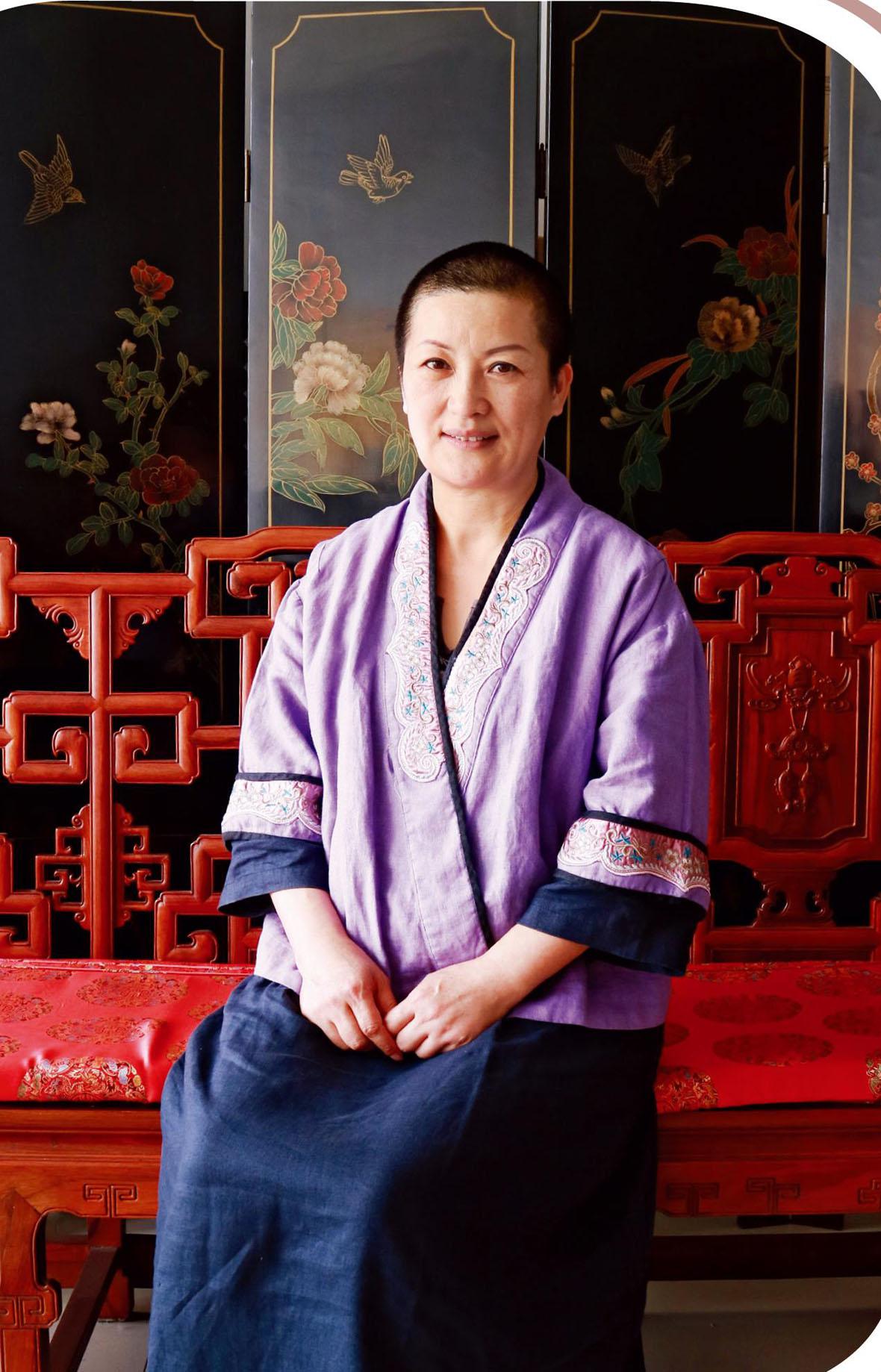
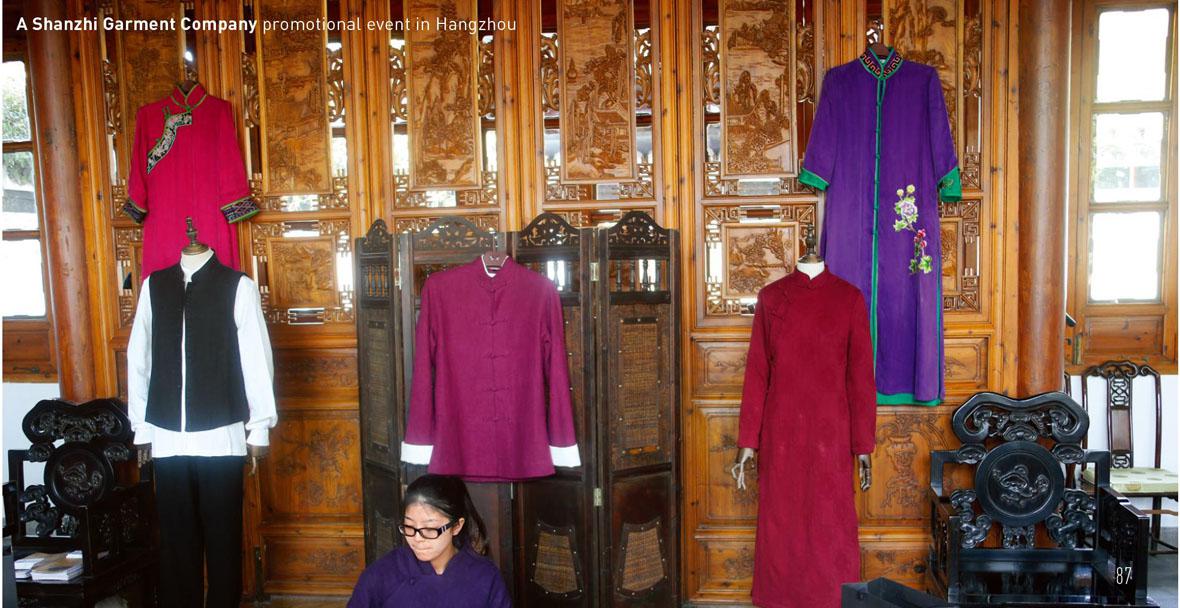
Chen Chaohong, better known by her Dharma name Shanzhi, is the founder of the Shanzhi Garment Company (善智服飾) and a devoted Buddhist. She is focused on the concept of traditional Chinese clothing and fashion, having provided unique designs for many of the worlds movers and shakers, including Jack Ma, founder of the e-commerce giant Alibaba Group, and United Nations Secretary-General Ban Ki-moon. She defines herself as an inheritor of traditional culture and has devoted herself to promoting traditional Chinese fashion.
How did you become interested in fashion?
I was influenced by my grandmother, who was a famous tailor in Taizhou, Zhejiang Province. Even now I can still remember her embroidering beautiful patterns, stitch by stitch. She was so beautiful, and so were the clothes she was making. But when I was in university, I didnt study fashion. I majored in finance and economics. Before I graduated, my two brothers came to Hangzhou and started their clothing business. Because of my interest in fashion, I joined them after I graduated. That was around 1990. We didnt do the design, just purchased clothes from Hong Kong and then sold them at Hangzhou Tower. That was the start of my career.
Why did you decide to focus on traditional Chinese clothing?
I didnt actually turn to traditional fashion until 2012. Before that our business focused on contemporary clothes. In 2006, after my second child was born, I decided to stop working and went to study Buddhism. At that time, I thought I would never go back to fashion. But while I was studying Buddhism, I made some new friends, including entrepreneurs and teachers from art colleges who were very interested in traditional Chinese clothing. When they learned that I was in the clothing business, they asked me to make some monastic gowns for them. I agreed. They liked my clothes and I felt that my zeal for clothing was reignited. So I opened a small workshop near the Lingyin Temple where I could make clothes and drink tea with my friends. During that time, I also met many monks and nuns, whose monastic robes in the traditional style grew on me more and more.
How did your workshop develop into such a big business?
At first, it was just for fun. I didnt treat it as a business. Then one day a friend came to me and invited me to an expo in Xiamen, which was about Buddhism. Our booth was very large, so I needed to prepare a lot of pieces in a short amount of time. With the help of an experienced pattern designer, I finished 60 garments in time and took them to the expo. To my surprise, my clothes attracted a lot of attention in that exhibition. We received many orders, [totaling] over 200,000 RMB, a great success. We took all those orders, and our business was started.
Is there any difference between the traditional clothing we know today and what people actually wore?
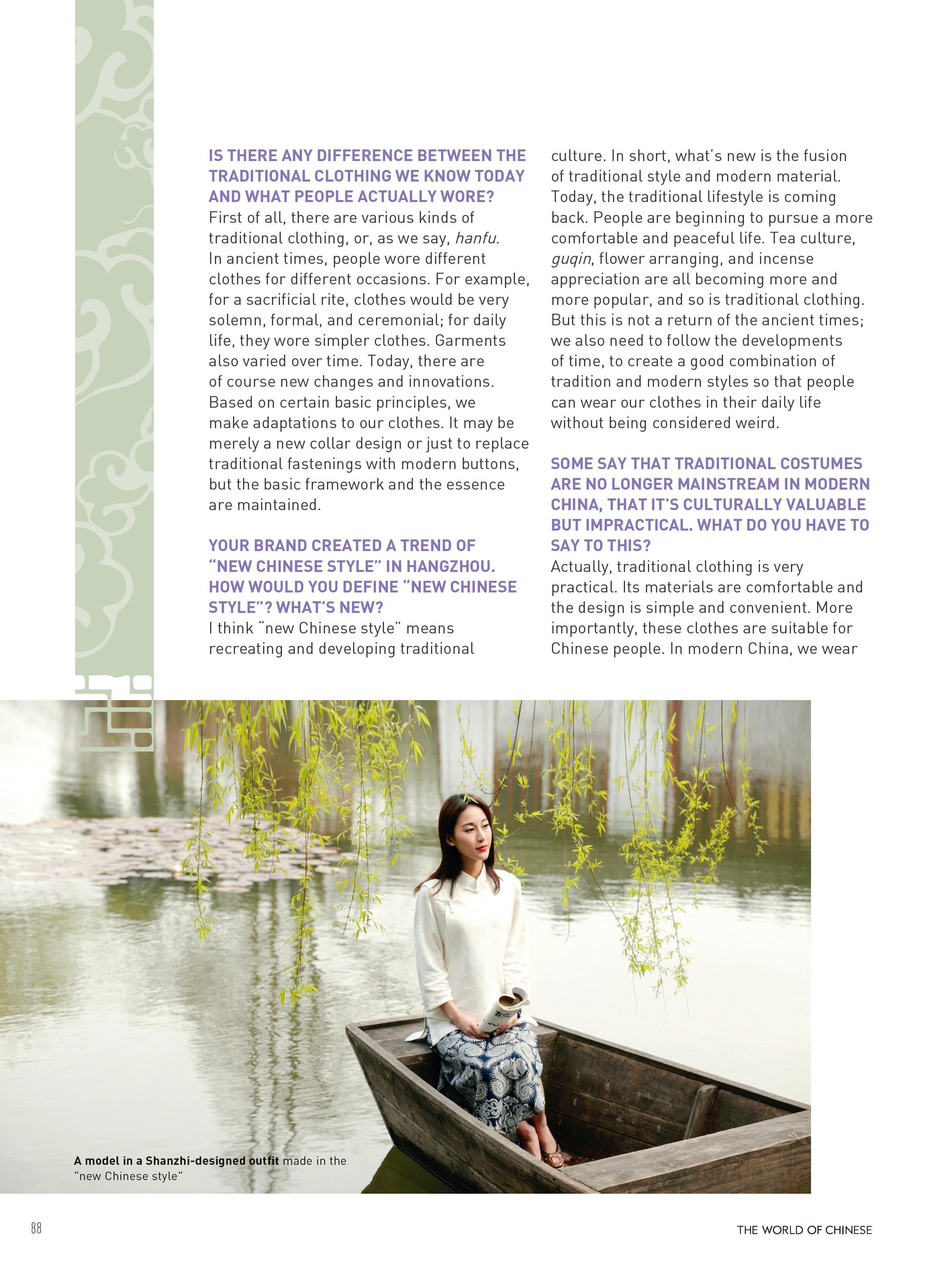
First of all, there are various kinds of traditional clothing, or, as we say, hanfu. In ancient times, people wore different clothes for different occasions. For example, for a sacrificial rite, clothes would be very solemn, formal, and ceremonial; for daily life, they wore simpler clothes. Garments also varied over time. Today, there are of course new changes and innovations. Based on certain basic principles, we make adaptations to our clothes. It may be merely a new collar design or just to replace traditional fastenings with modern buttons, but the basic framework and the essence are maintained.
Your brand created a trend of “new Chinese style” in Hangzhou. How would you define “new Chinese style”? Whats new?
I think “new Chinese style” means recreating and developing traditional culture. In short, whats new is the fusion of traditional style and modern material. Today, the traditional lifestyle is coming back. People are beginning to pursue a more comfortable and peaceful life. Tea culture, guqin, flower arranging, and incense appreciation are all becoming more and more popular, and so is traditional clothing. But this is not a return of the ancient times; we also need to follow the developments of time, to create a good combination of tradition and modern styles so that people can wear our clothes in their daily life without being considered weird.
Some say that traditional costumes are no longer mainstream in modern China, that its culturally valuable but impractical. What do you have to say to this?
Actually, traditional clothing is very practical. Its materials are comfortable and the design is simple and convenient. More importantly, these clothes are suitable for Chinese people. In modern China, we wear Western suits far more than our own traditional clothes, but you can tell that when Chinese people put on our own garments, we look different.
How do you balance tradition and fashion? Is there any conflict?
Some people say that traditional clothing must have strict standards, that only the clothes that are identical to ancient versions are traditional garments. But, personally, I think we need to keep pace with the trends of times. We can change, develop, and recreate. Tradition and trends can be balanced and combined. For example, we can wear adapted traditional clothes in our daily life and wear those formal, standard fashions for solemn occasions.
Your brand has provided clothes for many celebrities. Of those works, which is your favorite?
We have provided clothes for Jack Ma. That was a very simple garment, simple but elegant. Just as we say, rich men wear simple clothes. And Ban Ki-moon, Secretary-General of the United Nations, has also worn our clothes. I am very glad that our clothes can attract these celebrities because their influence can help us promote our traditional garments.
Whats the most difficult part of your industry?
I dont think there is anything particularly difficult. I enjoy it. I am happier than when I was doing trendy clothes, because at least I dont have to think about catching up with the new trends every day. My career is what I love, what I have passion for, though it is a lot of work.
How do you define yourself professionally?
A fashion designer? An entrepreneur?
I like to call myself a “purveyor of traditional culture”. In fact, I dont do all this for the money. I dont pay much attention to the marketing and dont care about how much profit I can make. I just feel that our traditional culture needs to be carried forward. I hope that more and more people can wear our traditional clothes and display our national character.
What are your goals for the future?
I hope that traditional Chinese clothing can spread throughout the world, become international, and that Chinese people can comfortably wear these clothes on different occasions. I think thats a form of self-confidence in our culture.