Culinary Incursion
2016-01-10 12:21:02
漢語世界(The World of Chinese) 2016年5期
Authentic Chinese flavors find a home overseas
漂洋過海的中國美食
The media and anthropologists have known for some time that the prestige and price point of food from North Americas immigrant cultures is linked with the economic power of the home country. A combination of the quality of ingredients, the immigrant groups habits, and price range are all on the menu, along with a solid sprinkling of pure cultural bias. These are what assign French food to white-tabled restaurants and Mexican fare to food trucks.
As Chinas economy grows and Chinese dishes such as steamed buns and pancakes begin to appear in bistros and gastropubs of eastern American cities, a recent headline in The Atlantic?recently felt confident enough to predict, “The Future is Expensive Chinese Food”.
If that is true, the future arrived 30 years ago in the Canadian Pacific coast city of Vancouver, and it has been changing faster than anyone can keep up.
“Excluding the cost of wine, Chinese food is some of the most expensive food in Vancouver,” Lee Man, food writer and judge of Vancouvers Chinese Restaurant Awards, told TWOC. “Its a really unique city in that way, and the word that really describes Vancouvers Chinese dining scene is that its deep; you can find any regional cuisine, and different price ranges, and Chinese restaurants not just in Chinatown but all over the city.”
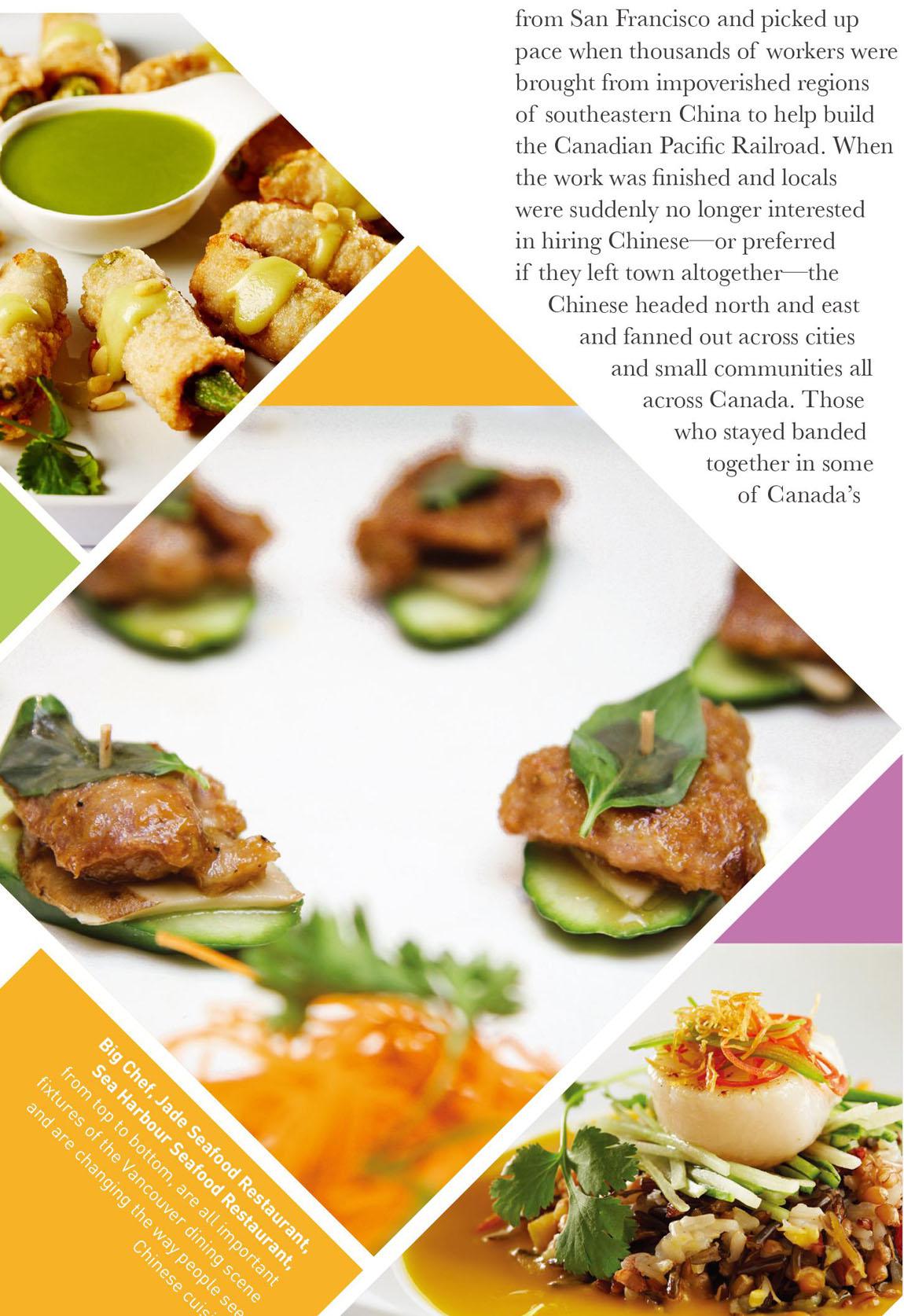
Long branded as Canadas “Pacific Gateway”, Chinese immigration to the Vancouver region began with gold miners from San Francisco and picked up pace when thousands of workers were brought from impoverished regions of southeastern China to help build the Canadian Pacific Railroad. When the work was finished and locals were suddenly no longer interested in hiring Chinese—or preferred if they left town altogether—the Chinese headed north and east and fanned out across cities and small communities all across Canada. Those who stayed banded together in some of Canadas first Chinatowns. Faced with nativist laws that barred them from most sectors of employment, restaurants were one of the only economic prospects open to these early migrants.
The foods they created reflected these harsh conditions and experiences of marginality. In Lily Chos Eating Chinese, the two dishes emblematic of early and “inauthentic” Chinese dishes, goo lo yok?(sweet-and-sour pork, a homophone of “white mans meat”) and chop suey, were said to have been invented in the railroad camps and defined by limitations in available ingredients and willing palates. The vinegar and bone were left out of traditional Cantonese sweet-and-sour pork in favor of batter-coated sweetness, while the name “chop suey” literally referred to mixing together whatever ingredients one could find in the kitchen.
Over time, these dishes acquired a life of their own. They influenced the taste of further imported or invented dishes in migrant restaurants. They have also become a style of comfort food, the Friday night take-out ritual, and (as for the restaurant itself) a watering hole for the larger community, where migrant and Canadian experiences intersect during pub-crawl nights and hockey games.
These stories are familiar ones, repeated in cities and towns across Canada as well as the United States. Late 20th-century Vancouver, however, saw a pattern in immigration that was decidedly unique. The 1984 Sino-British Joint Declaration, which determined that Hong Kong would become a Special Administrative Region of the PRC in 1997, drove many of the wealthy in Hong Kong to remove themselves and their assets out of the territory before the handover. Vancouver was their major destination due to weather, relative proximity to Asia, and Canadian immigration policies that rewarded those with high education and funds to start businesses.
An estimated 167,000 Hong Kong immigrants settled in Canada between 1988 and 1991, and on the whole, around 30,000 immigrants were said to have settled each year in the decade until the handover. Compared to the pioneers of the early century, these migrants were backed by sheer numbers and wealth, as well as business connections and better communication with their homeland. These were all the necessary ingredients for a food revolution.
Morning Tea to Shanghainese
In Richmond, British Columbia, a suburb of Vancouver where it is estimated that 49 percent of the population are ethnically Chinese, the phrase “going to eat breakfast” is often heard at 10 a.m. and almost certainly refers to dining out. As in Guangzhou and Hong Kong, breakfast takes place at Cantonese “morning tea” restaurants (many of which become seafood restaurants in the evening) and consists of a leisurely hour at the booth-style table with the blinds drawn, catching up on gossip and news amidst dim sum dishes and cups of tea.
To Man, Hong Kong immigration in the 80s and 90s was the significant turning point in the history of Chinese cuisine in Vancouver. “When I was growing up, all Chinese restaurants were in Chinatown,” Man said. Prejudice from landlords and neighbors, as well as general poverty, made Chinatown the de facto hub of the community. “All of a sudden, when a lot of Hong Kong people came, you could have Chinese restaurants in the ‘good parts of the city.”
As before, economic power brought with it the power to dictate the taste of food, only the trend was the reverse of 100 years before. According to Man, Hong Kong immigrants brought “a level of expertise that just didnt exist in Vancouver at the time. There were experienced restaurateurs from Hong Kong, and also people who were just used to dining out, every day, so cooks had to cook at a high caliber,” he said. “Supply was there, and demand was there, and that raised the bar very quickly.”
In this era, how restaurants overcame rather than adjusted themselves to the limits of their new environment became the measure of their caliber. This manifested in a focus on investing in developing authentic flavors and keeping up with dining trends from the homeland. “At the peak of Hong Kong immigration, there was a bit more emphasis on refinement,” said Stephen Wong, a former touring chef and cookbook writer from the Vancouver area. “These were high-end restaurants and the chefs sought fresh, local ingredients—they were cooking with Dungeness crab, for example, before any Western chefs were doing so.”
Notably, refinement not only had to do with the food, but the environment and service. “The sensations were a little different and the service was definitely different,” Wong added. “For example, the whole pretension of changing plates that was influencing Hong Kong at the time was seen here; instead of everything going on the table, the dish is brought to the table, displayed to you, and then put to the side.”
The sheer numbers and spending power of Hong Kong immigrants soon translated into demand not only for their home cuisines, but also for diversity and innovation in the citys Chinese food offerings. This was instrumental in paving the way for other Chinese culinary styles to enter the city. One of the oldest Shanghainese restaurants still operating in Vancouver, the Shanghai Wonderful Restaurant, began under Hong Kongese management in 1996 and was taken over by one of its employees, Franklin Pan, in 1998.
Pan and his wife immigrated to Vancouver in 1996 with the hope of seeking work in the technology sector. Because jobs were scarce in their own field, they, like generations of immigrants before them, tried to find work in restaurants for the time being. “But at that time, unlike now, to work in any Chinese restaurant in Vancouver you had to speak Cantonese,” Pan recalled. “There was a Hong Kong businessman of Shanghai origin who wanted to open a new Shanghai-style restaurant, and we went to him. He asked, ‘Do you speak Cantonese? We had to say no, but he reluctantly took us on.”
According to Pan, when the restaurant started, they primarily served Cantonese customers. In this transitional phase of the Vancouver market, almost as it was for the earliest immigrants, an older and established group of consumers once again were making slight modifications to new food styles being introduced.
“Early on, the customers who left the mainland before 1949, who were originally from Shanghai...created the market for the food,” Pan said. “Later, when [my family] took over, we introduced some more elements directly from Shanghai. Compared to the Shanghainese cuisine that was here before, it was more up to date, closer to what can be found on the mainland. Of course, the traditional elements of Shanghai cuisine have been preserved.”
Pan estimates that around 60 percent of his current customers are Cantonese speakers, and he also gets business from new immigrants and Chinese visitors staying in nearby hotels. These days, however, a “mid-price” restaurant like his is becoming increasingly hard to run in Vancouver, which is now undergoing a dizzying transformation in both the diversity of cuisines offered and the economic background.
The Mainland Main Course
With a culture that places food at the center of social and business interaction, it probably surprises no one that the English word “restaurant” could be translated from several different Chinese words, each with a different connotation for their price range, amenities, and social function. The common translation of 餐廳?(c`nt~ng), or 餐館(c`ngu2n), connotes a mom-and-pop establishment, probably rather small, serving ordinary meals mostly for those who didnt want to cook at home or for simple gatherings between friends.
酒家?(ji^ji`), or 酒樓?(ji^l5u), on the other hand, refers to a type of restaurant whose main draw tends more, for lack of a better term, to be for “conspicuous consumption”. That is, they are types of places that have multiple floors, teams of hosts and hostesses, glittery décor, and, most importantly, private banquet rooms. They are places where you treat your business clients and friends, with the emphasis on making the experience a real treat.
New mainland restaurants that have opened up in Vancouver in the past two to three years are much in line with the concept of the?jiulou, or as food critics would call it, “fine dining”. As Chinas economy has grown, creating not only an expanding middle class but also millionaires, Vancouver, under Canadian immigration policies that still favored wealthy investors, has once again become a favorite destination for the transnational elite. Clean air, natural scenery, safe food, and good education are the main selling points of the region. Once arrived, they start businesses, invest in local enterprises or homes, take seemingly constant vacations (while doing actual business back in China), and start influencing dining culture in their own way.
At establishments like Vancouvers Peninsula Restaurant (established 2013) and Fortune Terrace (2016, calledjiujiain Chinese), banquet halls occupy one-third to half of the available seating in the restaurant, and there are no kitschy dragon motifs or fortune cookies in sight. Instead, the décor is consists of familiar mainland features like chandeliers and shiny drapes, though with more wood panelling. On a regular evening, you might find a local Chinese-run company hosting a staff banquet or courting new business partners in the private rooms, or a table of Chinese businessmen toasting another day at the golf course.
Prices reflect the new clientele. At Richmond Sea Harbour Restaurant, located inside Richmonds River Rock Casino, appetizers cost around 18 USD on average. At Changan, which is not a seafood restaurant and might be expected to save on ingredient costs, the conservative estimate according to Zomato.com for average price per person is still 50 USD, on par with or more some fine French and Japanese restaurants in the city. A “fine dining” category has been included on lists of local restaurant awards, such as by Vancouver Magazine, since at least 2007.
Its important to note, however, that these glitzy newcomers are not isolated from established dining trends and businesses from the Hong Kong years; in 2014, for instance, a mainland investor who also owned a golf course bought Richmonds Sun Sui Wah Seafood Restaurant, one of the old-school Cantonese establishments from the early 90s, from the Cantonese family that owned it. In addition to its regular services—the current manager is adamant that the menu has not been changed—the restaurant is now offered as a package deal with the golf course, so that tour groups and other golf players can patronize both establishments on the same itinerary.
Along with a bigger consumer market comes with high standards for the authenticity, quality, and innovativeness in the product—according to Wong, Changans Shaanxi-style cuisine, and new restaurants specializing in Sichuanese and Hunanese fare are cooking at a level of specialization and unseen in any other North American city.
Man refers to this phenomenon as “confidence”. “These new batch of restaurants, this new wave of immigrants from the mainland, have a swagger, have ambition,” he said. “This new wave of Chinese energy from the mainland is about celebration and bigness: big rooms, crazy prices, beautifully renovated, beautiful clay pots imported from China. They are who they are and they dont have to dumb it down to please anybody.”
China responds
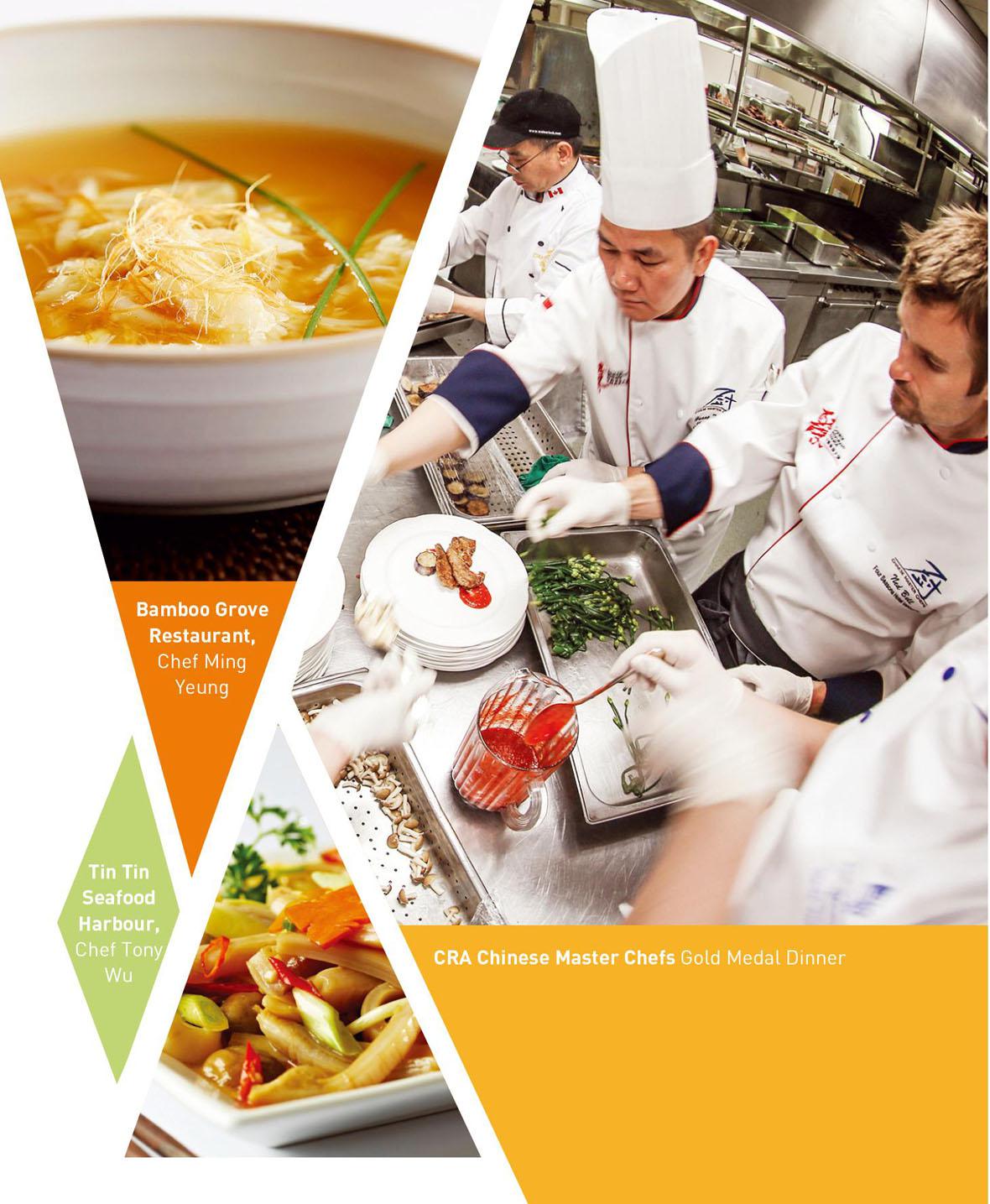
The growing Vancouver market for authenticity and “newness” in Chinese food is starting to reverberate back in China, with mainland corporations and even the government taking note of opportunities for investment and exchange. Sea Harbours founder, Chef Tony Hes story began with immigration to Canada in 1996. After studying under famous chefs, becoming a member of Frances prestigious Cha?ne des R?tisseurs, starting Sea Harbour (then in Vancouver) and two other locations in the US, He returned to his hometown of Zhongshan, Guangdong in the mid-2000s to operate another restaurant and invest in the local food and beverage industry. His hometown restaurant was then chosen as a training center for the chefs of Diaoyutai State Guesthouse, the abode of visiting foreign dignitaries to Beijing.
Chongqings Liuyishou Hotpot, a national chain of hotpot restaurants with locations in 31 Chinese provinces, also chose the Vancouver area for its first location in Canada in 2014. According to Hellen Ran, Liuyishous North American general manager, it simply made business sense to start with Vancouver. “Our [Richmond] customers are 90 percent Chinese (華人, Chinese heritage), and our tagline is ‘bringing you the flavors of home,” Ran said. “Our global expansion targets cities with significant Chinese populations, because our goal is to bring the taste of home to as many Chinese consumers as possible.”
To do so, Liuyishou imports peppercorns and other spices directly from Chongqing into Vancouver, stored in a warehouse behind their local corporate office. It is a level of investment that reflects the robustness of the market and the confidence that Chinese dining cultures have accrued in the last 30 years.
“Vancouver is not on a city where lots of Chinese people live, but also where they have significance; they have power to decide what they eat, they have lots of options to choose from, and so we have to be excellent,” Ran said. “The location [in Richmond] is doing well, there are long lines every day, so Id say its a good return on our investment. If customers come up to me and say, ‘Ive really tasted the flavors of home at Liuyishou, then all the costs and effort we put into it is worth it.”
Of course, the robustness of the Vancouver Chinese dining market does not mean that challenges dont exist. Pan, for instance, notes that the increasing affluence of Chinese immigrants means that there might be fewer and fewer immigrants willing to work in the restaurants. “The kitchen staff, the dishwashers who work in Vancouver, tend to be in their 40s and 50s,” he said. “As a family-run business, its a challenge for me to pay enough to attract younger or new people to work here, and these corporate, high-end restaurants from the mainland might also have trouble hiring as the city becomes settled by the more affluent.”
Wong also worries that the corporatization of Chinese food and current immigration patterns, in which Chinese investment might come to Canada while the individual stays and works in China, has led to a decline in the innovativeness and quality of Chinese cuisines available. But with a cuisine that has always adapted to circumstance, positive or negative, throughout the last 100 years, its hard for anyone to tell what new tricks it has up its sleeve.
“Vancouvers market is just strange,” Pan said. “Unlike absolutely anywhere else, youre more successful when you specialize in a specific region and type—because you specialize, maybe. With more even people coming from China, provided Chinas economy continues to grow, its going to get more competitive; I dont even know how its going to look in five years.”