CRADLE OF TOFU BY DAVID dawson
2016-01-10 10:54:52
漢語世界(The World of Chinese) 2016年4期
A journey to the fabled origins of bean curd
舌尖上的淮南, 傳說中的中國豆腐之鄉
With the possible exceptions of rice and dumplings, few foods seem as intrinsically tied to Chinese culture as tofu. But despite its widespread popularity throughout China and vegetarians everywhere, the origins of this food remain shrouded in mysteries of Chinese kings obsessed with finding an elixir for immortality.
Huainan isnt much of a second-tier city; whilst it has pleasant central avenues lined with trees, there isnt much ?that couldnt be found in any other central Chinese city of similar size. Located in the northeast of Anhui Province, it can be reached via fast train and isnt too far from Nanjing.
Huainan itself, however, isnt the destination; it is the geography park of Bagongshan (八公山, Eight Gentlemen Mountain) that holds the keys to the history of tofu.
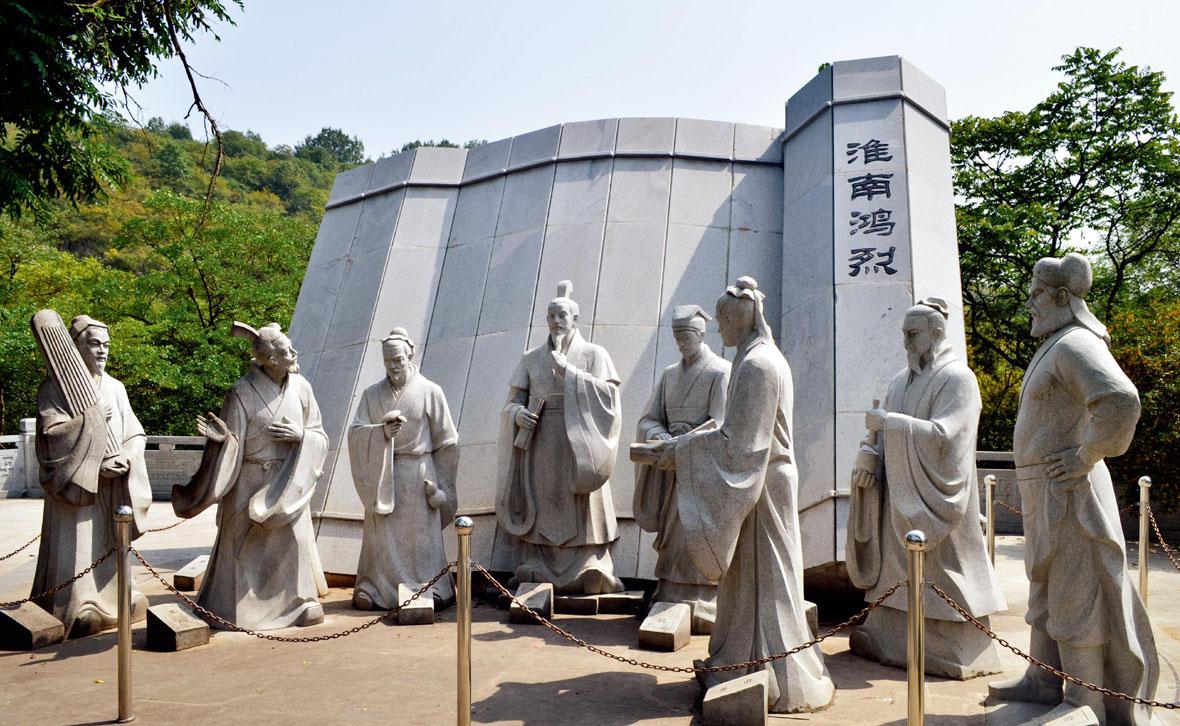
The park is named after the eight super-friends of the Han Dynasty (206 BCE – 220 CE) prince Liu An (劉安), and the location is dotted with statues of these buddies, the “Eight immortals of Huainan” (淮南八仙). Seeing as how theyre all dead, we can assume they werent actually immortal—other Chinese figures with “immortal” status were often deified as part of a religion, but that is not the case for these mere mortals, for whom the term “immortal” was a metaphorical reference to their talent.
Together this league of extraordinary gentlemen wrote the “Huainanzi” which became an influential work of Daoist philosophy and included a fair amount of mathematics to boot. In addition to mathematics, they also dabbled in alchemy in an attempt to create an elixir of eternal life, though this was something of a frequent hobby for Chinese emperors. Qin Shi Huang (246 BCE – 221 BCE), indisputably the Rolls Royce of conquering warlord Chinese emperors, was one of a number of emperors who eagerly listened to court alchemists who told him what he wanted to hear—that immortality was possible. Alas, as one story goes, in Qin Shi Huangs case it led him to consume copious quantities of mercury, resulting in his death at just 49 years of age after surviving two known assassination attempts. He wasnt the first, nor was he the last, Chinese emperor to die in this futile pursuit.
A trip to Bagongshan
So, what does Eight Gentlemen Mountain have for visitors?
Getting to the park is tough. From Huainans train stations visitors will need to get a cab, with the fare expected to reach up to 100 RMB depending on which station visitors are coming from. Once there, things arent necessarily much easier. Chinese visitors often tour the park by car though the north gate at the end of a winding road, and it has plenty of parking for those wanting to go on foot. Foreign tourists are more likely to get dropped off and wander around on foot; though foreigners are enough of a rarity here to earn plenty of stares. Just outside the north gate, in warmer months it is common to find a small market of sorts. The powerful stench of stinky tofu permeates the air and a wide variety of foods are on offer, a stones throw from dancing grannies and less-than-breathtaking albeit expansive views of the adjacent canyon.
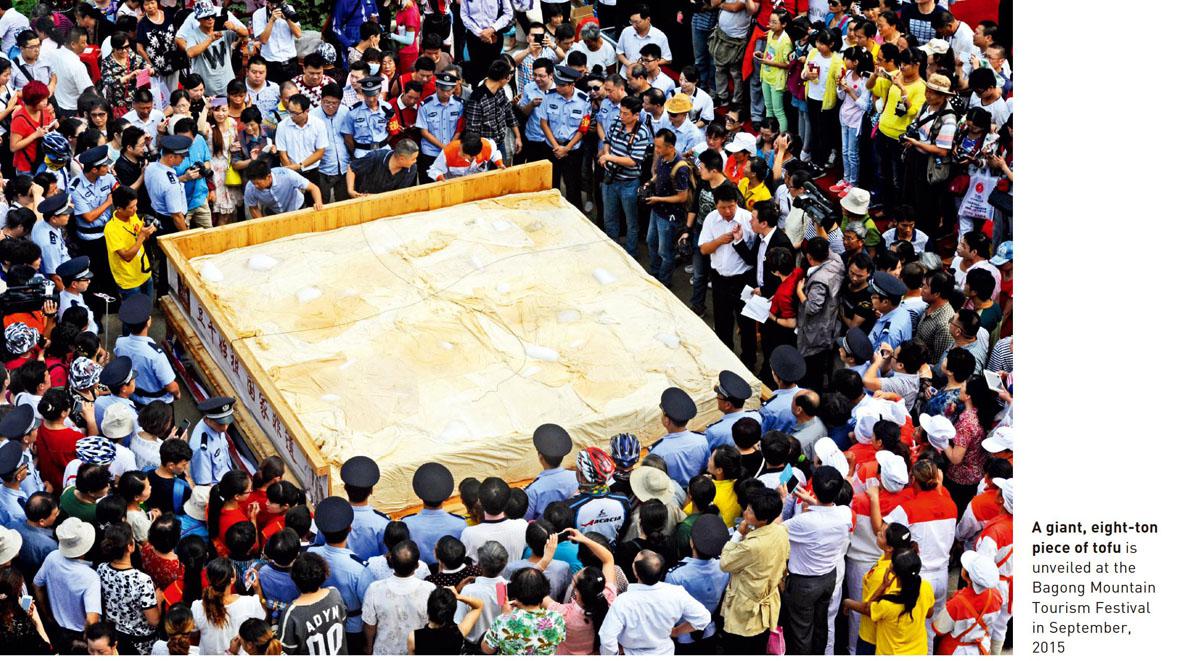
From time to time Bagongshan does pull out all the stops though, so if you can time your visit for one of the tofu festivals, youll find a lot more going on. In the most recent “Bagong Mountain Tourism Festival” (in September of 2015), revelers roamed the streets pelting each other with tofu in what was labeled a “Tofu-throwing competition”. And proving that sometimes its quantity, not quality, that matters, cooks created a giant wad of tofu—at 3.6 meters long, 3.6 meters wide, and 40 centimeters high, it weighed eight tons and required 50 workers to make.
Once inside, aside from key map locations, the signage is often pretty poor, with only vague indications as to which of the many, many sites visitors are actually approaching. Pay close attention to those maps, ideally taking some pictures. because you will find yourself referring back to them when you are uncertain as to whether you have taken any wrong turns on the many sign-less winding roads. Packing food is a wise idea, though for the less-prepared traveler there are occasional wooden huts with shopkeepers selling the basic road-sustenance expected at such places. Once inside the park, dont expect many (if any) chances to actually eat fresh tofu.
Maps of the park show that there is a particularly dense collection of sites at the “Huainan Sub-Cultural Park” though there is no sign telling visitors that they have actually arrived at this area. Look for the statue of the Eight Gentlemen (and Liu An) pontificating. Down a few stone steps and beyond the proverbial garden path, youll find a series of statues and carvings on stone blocks that show the tofu-making process. There arent any plaques or guides offering any information on the process, so basically one has to guess. While these may shed some light on the tofu-making process, for an actual in-depth look at the history (as is the case with many historical sites, it is explained as indisputable fact rather than as a narrative affected by the vagaries of history), head over to the Palace of the King of Huainan. There, in black stone tablets dotted around the temple, those who can read Chinese can see tales of Liu An and his eight gentlemen friends, including some details on the creation of tofu.
Prince Liu An is said to have come up with soy milk when his sick mother was unable to bite down on soybeans, so he ground it up into paste thus creating a precursor to tofu. The tale is written down in a number of sources, most notably in the work of famed scholar and all-round genius Li Shizhen during the Ming Dynasty (1368–1644), in what may well be the most comprehensive traditional Chinese medicine book, the?Bencao Gangmu, or Materia Medica.
However, its worth keeping in mind that royalty often gets the credit for the inventions of any given era, seeing as how theyre the ones in charge. Its worth noting that this legend is disputed by plenty of critics, not the least of which are the dastardly killjoys at the Japan Tofu Association who point out that while China is acknowledged as probably where tofu originated, the simple process of grinding up soybeans is likely to have happened in a number of places across China by various hungry people. Or, it might have been imported from Mongolians or East Indians who were more familiar with the curdling process, having used it with milk products. The word used for tofu in English, “tofu”, is believed to have come from Japan, rather than China, its use largely driven by popularization from Western voices much more intimate with Japanese culture rather than the Chinese word, doufu (豆腐). Certainly, “bean curd” hardly seemed like an attractive option at the time.
Besides, the?Bencao Gangmu?was written over a thousand years after Liu An died and even if he was drawing upon other historical documents, those most likely came at least several centuries after his death—so you may want to take descriptions of his discoveries with a grain of salt.
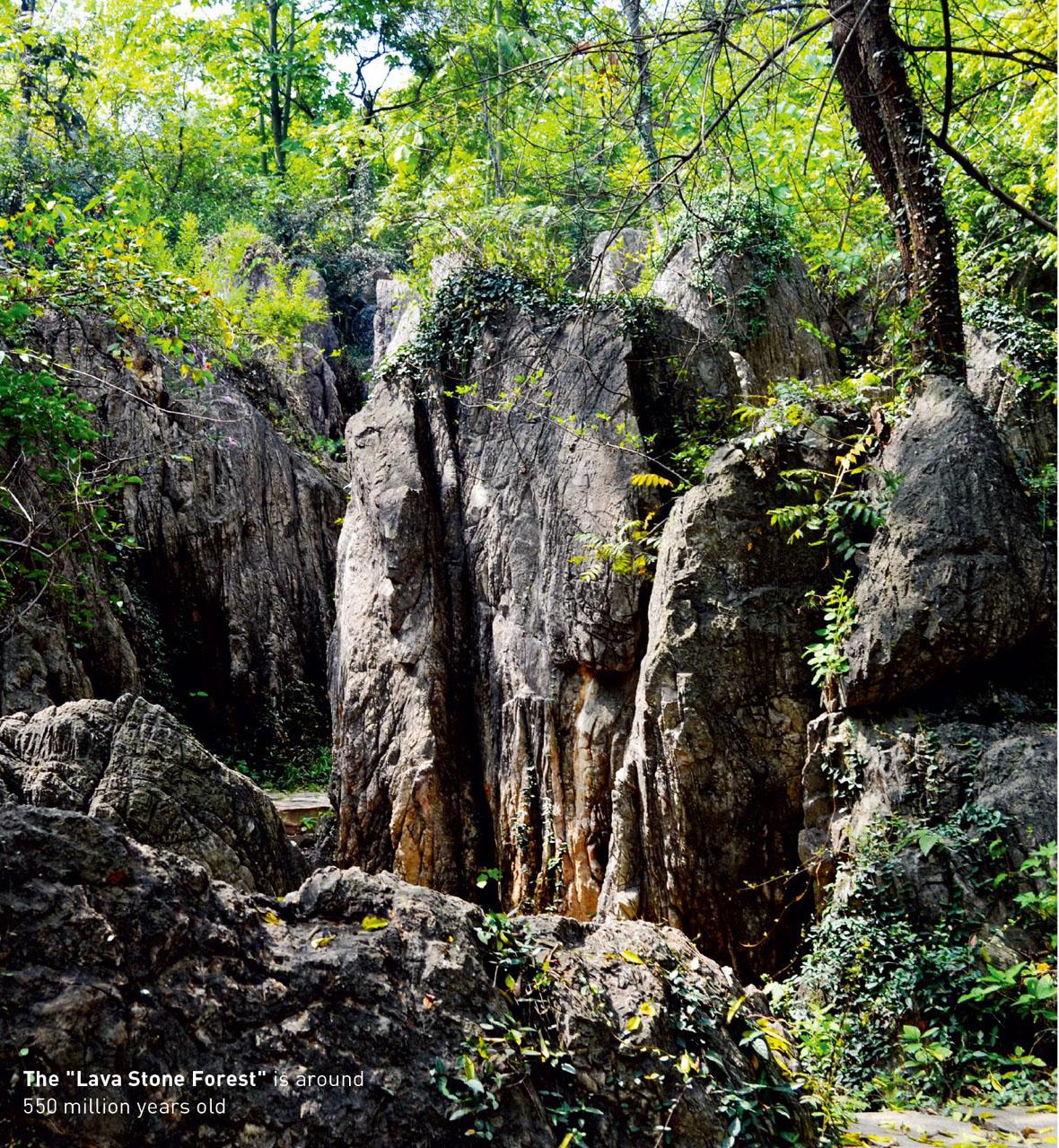
In order to get to the Palace of the King of Huainan, most visitors will pass by the “Lava Stone Forest”, arguably the most interesting natural feature the park has to offer. This “forest” is a two square-kilometer patch of limestone pillars believed to be around 550 to 600 million years old, some reaching up to three meters in height. The forest is believed to have been created due to tectonic stress, and this kind of geological formation is relatively rare in northern China.
Whilst Baidu maps does indicate that there is a museum dedicated to the tofu industry a few kilometers from Bagongshan which can be reached via black taxi (it is wise to arrange transport away from Bagongshan before you arrive—the taxi that takes you there is likely to be amenable to receiving another fare for picking you up) the facility itself seems to be in a near-defunct industrial park and the dusty windows and brittle padlocked door indicate that it hasnt seen use in quite some time.
Tofu taste test
Some online research reveals that one of the top, if not the top, tofu restaurant in Huainan is “Huaishang Doufu”, meaning “Riverside Tofu Place”. The location of this particular store at Guoqing East Road and Shuichang Road was notable for not being beside any river at all, so one assumes a certain amount of poetic license has been taken with the name. It is far from both Bagongshan and the central area of Huainan so be prepared for a wait and dont be surprised to find yourself driving through nondescript semi-urban, semi-rural areas of half-constructed buildings and empty plots.
The restaurant is something of a history lesson in itself, with a section behind the foyer dedicated to crafting tofu. There, in front of counters where chefs prepare steaming pots of what one presumes is tofu, visitors can see a number of stone and bamboo implements that were once used to create large quantities of tofu. Waitresses in ornate red dresses guide patrons to their tables and the menu is full of, you guessed it, tofu.
Tofu and fish, tofu and meat, tofu and vegetables, you name it. It is common for diners to order a bowl of tofu, and the waitress will pour out what appears to be hot milk. Within five minutes, the milk congeals into a harder tofu substance, ready for eating. The taste by itself is bland, though additional sauces and herbs are provided to spice things up a little.
Easily the most attention-grabbing dish on the impressively expansive menu, visually at least, is a representation of the iconic Yingkesong pine tree, from Anhuis much more famous tourist destination, the Yellow Mountain. What at first glance could be mistaken for the white of the plate, behind the broccoli leaves and mushroom trunk, is in fact an unusual, slightly salty mélange of fish and tofu with a faintly rubbery texture.
While the food is good, its not all that different to the fancier restaurants that can be found in more cosmopolitan parts of the country. Indeed, while the history of Liu An and the Eight Gentlemen may be of interest to those with a particular interest in tofu or Han Dynasty history, Huainan as a tourist destination is unlikely to be much of a draw, particularly when it is compared against its far more stunning Anhui counterpart, the Yellow Mountain.
Still, for travelers looking for something off the beaten track, Bagongshan certainly provides fodder (and more importantly tofu) for anecdotes.