
Lu Jia:Promoting Classical Music in China
2016-05-28 13:45:53byLaurentHou
China Pictorial 2016年4期
by+Laurent+Hou
On March 20, the China National Centre for the Performing Arts Orchestra (NCPA Orchestra) performed Tapiola and Symphony Opus 5 by Sibelius, as well as the Piano Concerto of Schumann. The performance was recorded for a DVD. Lu Jia is the opera director of NCPA, principal conductor of NCPA Orchestra, musical director and chief conductor of the Macao Orchestra, and artistic director of Spains Santa Cruz de Tenerife Symphony Orchestra. Lu is an extremely gifted Chinese conductor who received international exposure and recognition very early in his career. He has conducted two thousand concerts and operas in Europe and the Americas, and has cooperated with more than a hundred opera houses and orchestras, garnering numerous awards, especially in Italy.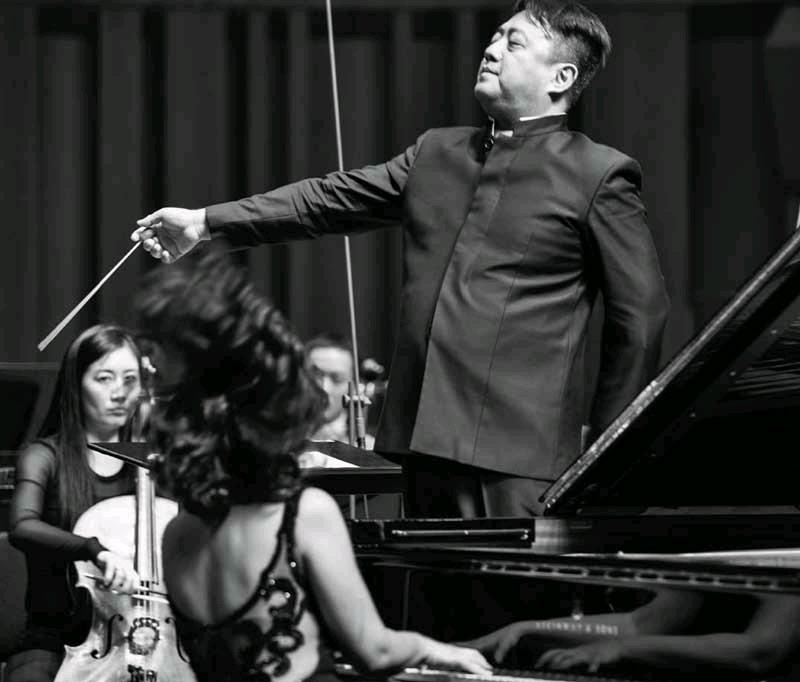
China Pictorial: You have a very unique conducting style. Could describe your method for conducting?
Lu Jia: Conducting is a special profession and an art. Just leading the musicians is not enough. The conductor must also serve as an artistic advisor. For me, it is really important to study the score. Its not the conductors role to create anything. I believe one should respect the score. However, bringing out the real spirit captured in all the notes means changing things too, or at least interpreting them in a certain way. A conductor has to use imagination, color, and really enhance the structure of the composition with passion and love.
Consider these two starkly contrasting examples: Ravel and Schumann. Ravel was extremely aware of conducting so its fairly easy to conduct his music: One can simply follow his instructions 80 percent of the time. But Schumann needs major interpretation. When you look at his music, it is“comme-ci comme ca” (Fluent in English, Spanish, Italian and German, Lu frequently employs French terms.), but the energy, fantasy and passion are amazing. Conducting Schumann requires a lot of work because he doesnt care about the conductor. I interpret his music a lot but I try not to betray it: I think my work is to read between the lines to understand Schumanns original message and intent, and then adapt my conducting accordingly. If I conduct Schumann the same way I conduct Ravel, Schumanns music would be lost!
CP: Apart from the piano concerto of Schumann, the two other pieces you played were both from Sibelius. Why did you choose Sibelius?
Lu: We made that choice because I think he is probably the most important Scandinavian composer. I am saying “Scandinavian”, but I should emphasize that he is Finnish. I spent six years in Sweden, and to me the Scandinavian countries are totally different. Finland is pretty unique. Sibelius achieved a lot with his orchestrations and managed to inject new colors. His lines are interesting and I am very fond of his harmony changes: They are not quick, very individual, and happen between the beat, creating a surprise element. The way the strings and the brass combine is also amazing. I particularly like his Tapiola, which I think is underrated. I believe Sibelius is a very influential composer that may receive even more recognition in the future.

CP: Sibelius and even the Schumann piano concerto arent exactly mainstream classical music choices in China. Was this a conscious choice?
Lu: Yes, for sure. I believe this is top shelf music. A repertoire like this is not often played in China, but I think this is the duty of NCPA exactly: We are bound to introduce the best music to China, especially when people dont know much about it. Carmen and La Traviata always sell out. I love them too, but diversifying classical music in China is particularly important to me. I think of NCPA as an art institution, so it is normal for its decisions to be made not solely on economic considerations. Our orchestra is very special and includes foreign musicians from the Czech Republic, Spain and South Korea. We are looking for more talented people to play some special instruments and will hold auditions in Berlin and Budapest in October.
CP: Since you are seeking new musicians, could you tell us about the qualities you like in a musician? What do you try to avoid?
Lu: Technique is not a problem for me. It is easy to find good technicians in China. Technique is the first threshold, but not the thing that makes the difference. For me, a good musician in an orchestra needs to excel at playing with other musicians. I am also convinced that someones cultural background and sensitivity are extremely important, as well as true passion for music, of course. Technique is important before the age of 15. Then, culture and sensitivity become more important. Musicians cannot think of music as a job. Of course, you have families of musicians, in Europe, America and China. I too come from this kind of family: My father was a conductor, my mother a soprano. But apart from kids born into such a family, most often, kids learn music in Europe because they are interested in it. In China, parents often compel their kids to play to help them get into a better school or university. This can lead to frustration and playing without passion. As Confucius says in Analects, one must learn to do things well but must also love and enjoy it.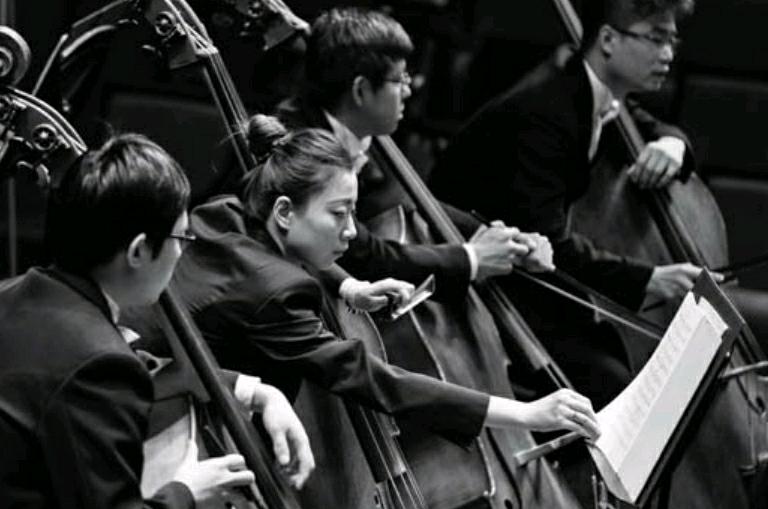
CP: For Schumann, you worked with Georgian pianist Khatia Buniatishvili. How was that?
Lu: The NCPA Orchestra aims to work with the best foreign talents whether musicians, singers or conductors. For instance, Valery Gergiev will be featured too. Khatia Buniatishvili is very young, very talented and very pretty. She has a very special color in her music. Her phrasing is also very good, and she knows how to conduct dialogue with other instruments such as the cello or clarinet. So it was a very good experience for me and for the orchestra.
CP: Could you please tell us a bit about your vision for NCPAs orchestra?
Lu: The NCPA Orchestra has great energy. It takes a lot of love to play good music – a lot of passion. This is a very young orchestra. Most musicians are just 30. Over the past six years, the orchestra started from zero and reached this level. In ten years, when the musicians are turning 40, the orchestra will reach its pinnacle and great things will be achieved.
