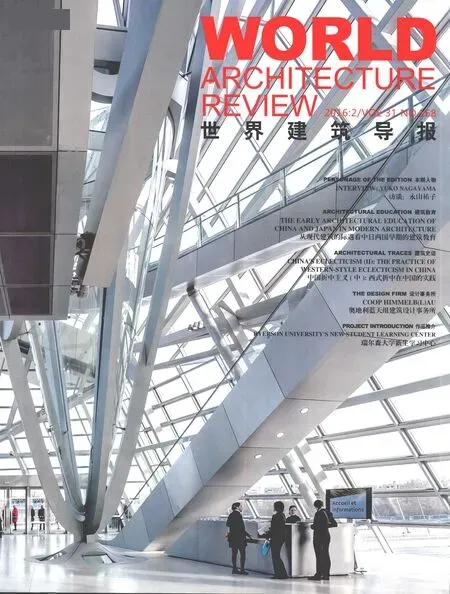
音樂之家:奧爾堡創意中心
2016-11-02 07:07:56丹麥奧爾堡20082014
世界建筑導報 2016年2期
丹麥奧爾堡 (2008-2014)
音樂之家:奧爾堡創意中心
丹麥奧爾堡 (2008-2014)
業主:北日德蘭音樂之家基金會
規劃設計:藍天組建筑設計事務所
設計主持:沃爾夫?狄?普瑞克斯
項目合作:Michael Volk
設計建筑師:Luzie Giencke
項目建筑師:Marcelo Bernardi, Pete Rose
助理項目建筑師:Benjamin Schmidt
室內設計:Eva Wolf, Ivana Jug, Ariane Marx
設計競賽:2003年,一等獎
凈建筑面積:17 637平方米
總建筑面積:20 257平方米
音樂廳:1 298個座位
圖片:Duccio Malagamba
制圖:藍天組
Client: North Jutland House of Music Foundation, Aalborg, Denmark Planning: COOP HIMMELB(L)AU, Wolf D. Prix & Partner ZT GmbH Design Principal/CEO: Wolf D. Prix
Project Partner: Michael Volk
人大代表是人大工作的主體,是做好人大工作的主力軍。章丘區人大常委會通過多種形式,提高代表履職能力,拓寬代表履職渠道,積極推動各級人大代表依法履職。今年以來,共邀請132名代表參加人大組織的視察、調研、執法檢查、旁聽法庭庭審以及列席常委會會議等活動。先后組織省、市、區、鎮四級人大代表116人次集中視察“雙拆雙改”、“四大提升工程”和“五大片區”建設、鄉村振興戰略實施、民生事業發展情況。區人大常委會積極組織代表視察監督,既推動了政府各項重點工作的開展,也向代表展示了全區經濟社會建設發展成果,并通過代表向廣大選民現身說法,集聚起了推動發展的正能量。
Design Architect: Luzie Giencke
Project Architects: Marcelo Bernardi, Pete Rose
Jr. Project Architect: Benjamin Schmidt
Design Architects Interior: Eva Wolf, Ivana Jug, Ariane Marx
Competition (1st place): 2003
Net floor area: 17 637 m2
Concert hall: 1 298 Seats
Images: ? Duccio Malagamba
Plans: ? COOP HIMMELB(L)AU
多功能綜合體將學院和音樂廳合二為一
丹麥奧爾堡“音樂之家”被藍天組設計成一個融學院和音樂廳為一體的建筑:開放式的結構促進了聽眾和藝術家、學生和教師之間的交流。藍天組設計總監及首席執行官沃爾夫?狄?普瑞克斯說:“建筑的設計理念可以通過其外形解讀出來,音樂學院擁抱著音樂廳”。
最核心的音樂廳可以容納1300人,U型的排練室和培訓室環繞著音樂廳。一個寬敞的休息室連接著各個區域,其多層觀景窗延伸至毗連的一個文化區和峽灣。休息室下方還有三個大小不一的廳堂:私人廳、韻律廳和古典廳。透過多層觀景窗,學生和參觀者可從休息室和排練室眺望到音樂廳的內部,體驗各種音樂盛事。
內部禮堂的流暢、曲線形式與音樂廳本身嚴謹的立方體形成鮮明對比。樂池的座位和弧形的陽臺確保向觀眾提供最佳的視聽效果。這個極其復雜的聲學方案是與奧雅納公司的Tateo Nakajima共同設計的。墻上的無定型石膏和高度可調節的頂棚懸吊都經過了聲學專家的精確計算,以保證最佳的聆聽體驗。
休息室是一個供學生、藝術家、教師和游客聚會的場所,有五層樓高,配有觀景陽臺和大型窗戶,供人們欣賞峽灣風景。這是一個動感十足的地方,可舉辦一系列豐富的活動。
The multifunctional complex combines school and concert hall
The "House of Music" in Aalborg, Denmark, was designed by the Viennese architectural studio Coop Himmelb(l)au as a combined school and concert hall: its open structure promotes the exchange between the audience and artists, and the students and teachers. "The idea behind the building can already be read from the outer shape. The school embraces the concert hall," explained Wolf D. Prix, design principal and CEO of Coop Himmelb(l)au.
U-shaped rehearsal and training rooms are arranged around the core of the ensemble, a concert hall for about 1,300 visitors. A generous foyer connects these spaces and opens out with a multi-storey window area onto an adjacent cultural space and a fjord. Under the foyer, three more rooms of various sizes complement the space: the intimate hall, the rhythmic hall, and the classic hall. Through multiple observation windows, students and visitors can look into the concert hall from the foyer and the practice rooms and experience the musical events, including concerts and rehearsals.
The flowing shapes and curves of the auditorium inside stand in contrast to the strict, cubic outer shape. The seats in the orchestra and curved balconies are arranged in such a way that offers the best possible acoustics and views of the stage. The highly complex acoustic concept was developed in collaboration with Tateo Nakajima at Arup. The design of the amorphous plaster structures on the walls and the heightadjustable ceiling suspensions, based on the exact calculations of the specialist in acoustics, ensures for the optimal listening experience.
The foyer serves as a meeting place for students, artists, teachers, and visitors. Five stories high with stairs, observation balconies, and large windows with views of the fjord, it is a lively, dynamic space that can be used for a wide variety of activities.
House of Music
Aalborg, Denmark (2008-2014)


猜你喜歡
小天使·一年級語數英綜合(2020年3期)2020-12-16 02:56:12
現代裝飾(2020年7期)2020-07-27 01:27:42
流行色(2020年1期)2020-04-28 11:16:38
藝術啟蒙(2018年7期)2018-08-23 09:14:18
藝術啟蒙(2018年7期)2018-08-23 09:14:16
兒童繪本(2017年24期)2018-01-07 15:51:37
海峽姐妹(2017年7期)2017-07-31 19:08:17
Coco薇(2017年5期)2017-06-05 08:53:16
東方藝術·大家(2016年6期)2016-09-05 07:30:56
數位時尚·環球生活(2009年8期)2009-11-19 09:16:12