
Does a monsoon circulation exist in the upper troposphere over the central and eastern tropical Pacifc?
2016-11-23 05:57:02LOUPnXingLIJinPingFENGJunZHAOSenndLIYnJie
LOU Pn-Xing, LI Jin-Ping, FENG Jun, ZHAO Sennd LI Yn-Jie
aState Key Laboratory of Numerical Modeling for Atmospheric Sciences and Geophysical Fluid Dynamics (LASG), Institute of Atmospheric Physics, Chinese Academy of Sciences, Beijing, China;bCollege of Global Change and Earth System Science (GCESS), Beijing Normal University,Beijing, China;cJoint Center for Global Change Studies, Beijing, China
Does a monsoon circulation exist in the upper troposphere over the central and eastern tropical Pacifc?
LOU Pan-Xinga, LI Jian-Pingb,c, FENG Juanb,c, ZHAO Senaand LI Yan-Jiea
aState Key Laboratory of Numerical Modeling for Atmospheric Sciences and Geophysical Fluid Dynamics (LASG), Institute of Atmospheric Physics, Chinese Academy of Sciences, Beijing, China;bCollege of Global Change and Earth System Science (GCESS), Beijing Normal University,Beijing, China;cJoint Center for Global Change Studies, Beijing, China
Considering the central and eastern tropical Pacifc (CETP) has important climate impacts, and its seasonal variability is also thought to be important, the authors used the monsoon investigation method named ‘dynamical normalized seasonality', which can precisely describe the wind vector direction over time, to analyze the upper-tropospheric circulation over the region. The authors discovered that there is a clear reversal of seasonal changes between winter and summer wind,just like the classic monsoon. Accordingly, the authors propose the new concept of the uppertroposphere monsoon over the CETP. The results extend the classical lower-troposphere monsoon region into the upper troposphere.
ARTICLE HISTORY
Revised 14 June 2016
Accepted 16 June 2016
Dynamical normalized seasonality; tropical Pacifc;seasonal variability; uppertroposphere monsoon
考慮到赤道中東太平洋地區(CETP)具有重要的氣候影響,以及顯著的季節性變率,本文利用可精確描述風向變化的動態標準化季節變率(DNS)方法,分析了該區域上對流層大氣環流。結果發現該區域大氣環流在冬季和夏季之間存在著類似于經典季風的、明顯的季節性反轉現象。以此為基礎本文提出了赤道中東太平洋上對流層季風的概念,將傳統的低對流層季風區擴展到了上對流。
1. Introduction
With its signifcant seasonal variability (Zeng and Zhang 1998; Venkat and James 2003; Li and Zeng 2005) and considerable global climate impact (Li and Zeng 2003;An et al. 2015), the monsoon is one of the main systems of atmospheric circulation. Diferent defnitions of monsoon regions and monsoon indexes have been proposed(Wang, Wu, and Lau 2001; Li and Zeng 2002; Wang et al. 2008; Yoshida and Yamazaki 2010), such as the East Asian summer monsoon, Australian monsoon, and Asian summer monsoon (Li and Zeng 2000; Wang, Wu, and Lau 2001;Zeng and Li 2002; Feng, Li, and Li 2010).
Using the ‘dynamical normalized seasonality' (DNS)method, Li and Zeng (2000, 2003, 2005) proposed a generalized monsoon system, and then devised the creative concept of the global monsoon (Li and Zeng 2003), which regards the geographically scattered surface monsoon regions as a whole monsoon system and unifes them as one theoretical model. As a result, they showed that the global monsoon could be geographically divided into the tropical monsoon, subtropical monsoon, and temperate—frigid monsoon (Li and Zeng 2003, 2005). Furthermore,they pointed out that in the upper troposphere over the central and eastern tropical Pacifc (CETP), there is a signifcant DNS index maximum value distribution, indicating that it may be a monsoon region. Indeed, the tropical Pacifc has always been considered to have a predominant infuence on global climate (Cane and Clement 1999; Lea,Park, and Spero 2000; Pierrehumbert 2000; Zhan and Li 2008; Li 2009; Xiao, Li, and Zhao 2012; Zhao, Li, and Zhang 2012; Zhan, Wang, and Wen 2013; Li et al. 2015; Sun, Li,and Ding 2015). Therefore, in this study, we investigated the signals of monsoonal circulation in the CETP, with the expectation to provide a useful supplement to existing monsoon research. In doing so, given that the upper troposphere over the CETP is regarded as a non-traditional monsoon region, we also benefted from the methods and theories of previous research on the South American monsoon (Zhou and Lau 1998) and Southwest Australian monsoon (Feng, Li, and Li 2010).
2. Methodology and data
2.1. Methodology
A monsoon region can be identifed by the wind vector direction, measured by the angle in degrees, varying greatly between winter and summer. Taking the East Asian monsoon as an example, the prevailing wind is northwesterly and northeasterly in winter (Chen, Zhu, and Luo 1991;Ding 1994; Huang, Zhou, and Chen 2003; Jhun and Lee 2004), and then turns southeasterly in summer (Lau and Yang 1997; Wang, Wu, and Lau 2001; Ding and Chan 2005). If the angle between the winter and summer wind vector exceeds the critical value of 90° (Webster et al. 1998; Li and Zeng 2000), then the region can be regarded as a monsoon region.
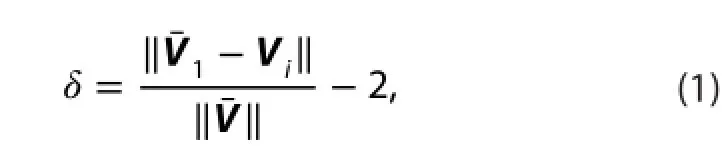
The above concept underpins the DNS method proposed by Li and Zeng (2000, 2002), in which the DNS index is calculated as follows: whereis the climatological wind feld in winter (sometimes taken as the wind in January);Viis the climatological wind feld in summer (sometimes taken as the wind in July); andVˉis the mean of winter (or January) and summer(or July) climatological wind vectors at the same point. The constant 2 on the right-hand side of the formula is the determinant criterion. It can be derived that the critical value ofis exactly equal to 2 when the angle between two diferent vectors is 90° (Li and Zeng 2000). Equation (1) describes that if the angle varies less than the critical 90°, the value of δ is negative; otherwise,if it exceeds 90°, then the value ofδis positive. The value of δ increases as the angle becomes larger at the same location (Li and Zeng 2000).
The norm‖A‖is defned as follows:
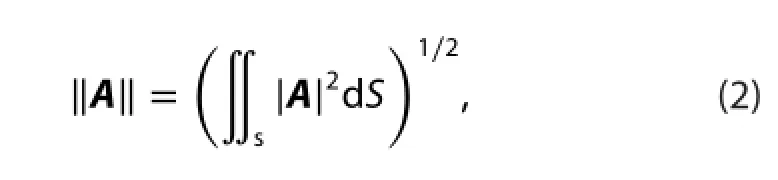
where S represents the selected study area, and it can be calculated at a point(i,j)as follows:

where φjand ΔS are the latitude at point(i,j)and the area element respectively.
Additionally, with the defnition of the norm‖A‖, a rigorous mathematical proof can be concluded that the DNS index is actually independent of the φj, because the formula of the DNS index separately contains the same operational factor in the numerator and denominator centered above and below the division line.
2.2. Data
Global monthly NCEP-2 and four-time daily NCEP-1 atmospheric wind field data were obtained from the NCEP—NCAR reanalysis data-set (Kalnay et al. 1996;Kanamitsu et al. 2002), with a horizontal resolution of 2.5° × 2.5° and 17 pressure levels from 1000 to 10 hPa. The pentad results in the study were derived from these daily data. The global monthly wind data were from ERA-Interim (Simmons et al. 2007; Dee et al. 2011), with a 1.5° × 1.5° horizontal resolution and 37 pressure levels from 1000 to 1 hPa.

Figure 2.Horizontal circulation at 300 hPa: (a) climatology; (b) winter; (c) summer.
3. Results
It can be seen that, in the vertical direction (Figure 1(a) and(b)), there is a DNS index maximum area greater than the critical constant of 2 extending from the lower and middle troposphere up to the upper troposphere over the CETP;its core area is between 150 and 400 hPa. The solid blue and red lines delineate the boundaries of the maximum area, which respectively denote the westerly isotachs at 0 m s-1in winter and easterly isotachs at 0 m s-1in summer.
The DNS index maximum area right above the tropical Pacifc (Figure 1(a) and (b)) stretches down and integrates as one at about 15°N, with the part stretching upward located over the subtropical monsoon. This indicates that this maximum area over the tropical Pacifc has the same intrinsic properties as the low-level subtropical monsoons,such as the North American monsoon.
Besides, the DNS index maximum area tends to extend to the Northern Hemisphere above 500 hPa. It can be seen that the horizontal distribution (Figure 1(c)—(f)) of the DNS index maximum area (7.5°S—30°N, 85°—180°W) at specifed pressure levels (200, 300 hPa) in the upper troposphere also leans into the Northern Hemisphere; and,at the same time, it presents a dual core in the east and west area, with the east core area being more signifcant.
According to the defnition of a monsoon area (Section 2.1), the DNS index maximum area means that the magnitude of the variation in the prevailing wind direction reaches at least 90°, implying that the area over the CETP may be a monsoon region. Given this strong possibility from the results presented in Figure 1, we next analyze in more depth how the wind vector feld varies in the CETP between winter and summer.
Considering the infuence of the tropical Pacifc, we select the specifc domain of (7.5°S—22.5°N, 85°—175°W) as our study region. Hereafter, the CETP refers to this selected region. Figure 2 shows the features of the horizontal circulation in winter and summer (300-hPa NCEP-2 data are used as an example; the 200-hPa NCEP-2 and ERA-Interim results were similar). Generally, the prevailing wind direction changes from west in winter to east in summer, andthe reversal characteristics of the horizontal circulation are basically homogeneous.
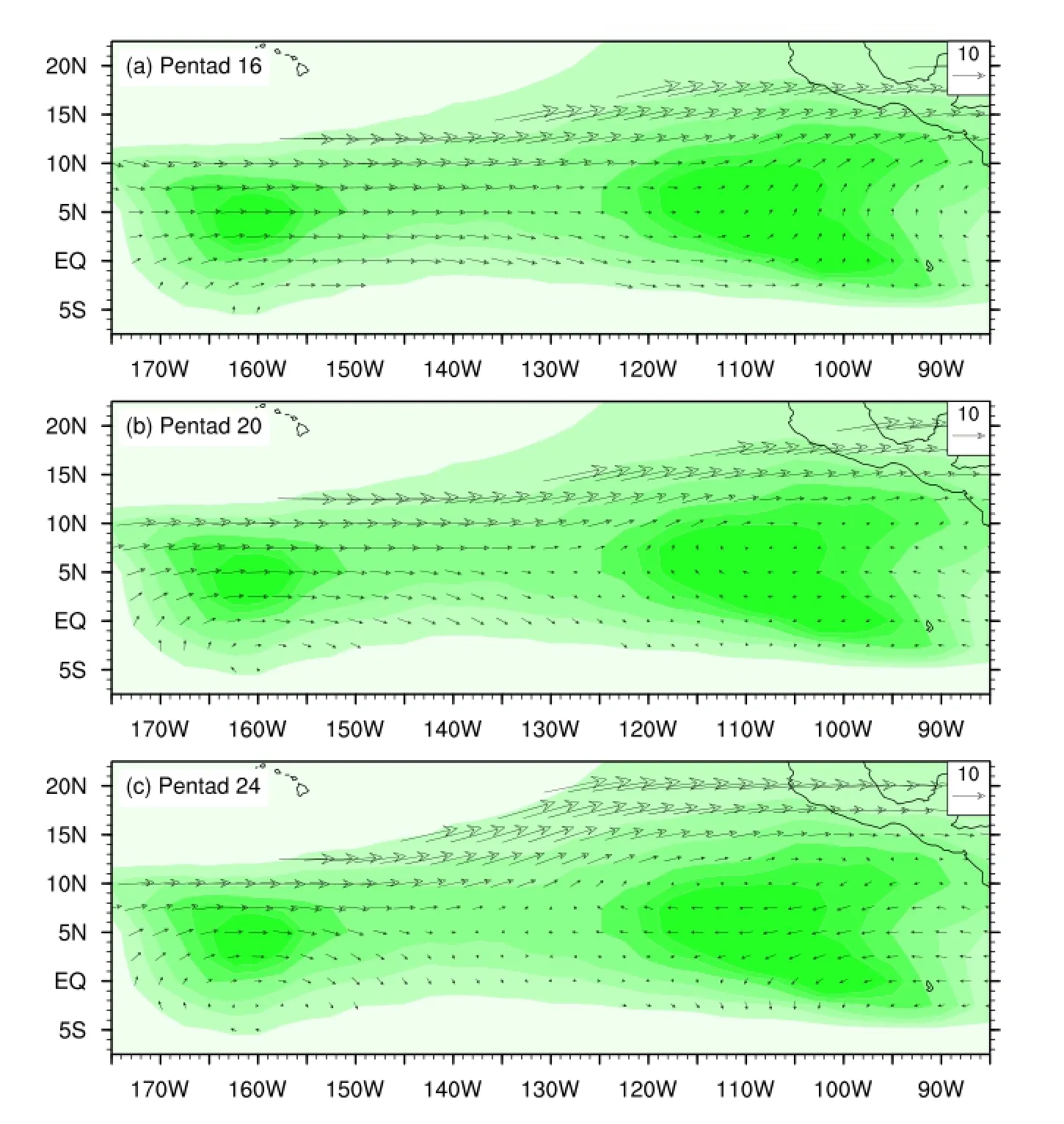
Figure 3.Horizontal circulation at 300 hPa in diferent pentads.
However, a number of regional characteristics are apparent (Figure 2(b) and (c)), such as the seasonal variation of the circulation is diferent between the east(95°—125°W) and west CETP (150°—170°W); the east CETP wind in summer varies much more compared to the west. At the same time, the circulation in summer varies lightly irregularly from about 10°—15°N to the north edge, in particular the marginal circulation variation is not quite so homogeneous because the wind in summer is relatively weak compared to the climatological wind.
To verify the above results, Figures 3 and 4 show the evolution of the horizontal circulation between winter and summer. Still taking 300 hPa as the example, we can see that the wind frstly begins to change from pentad 16 (late March; Figure 3(a)) in the east CETP (95°—125°W), and then the dominant westerly wind begins to decay and turn into weak easterly wind between pentad 20 (early April; Figure 3(b)) and pentad 24 (early May; Figure 3(c)). Furthermore,the wind evolutionary process mainly fnishes by pentad 28 (early June; Figure 4(a)) in the east; whereas, at the same time (pentads 24—28), the dominant westerly wind in the west CETP (150°—170°W) begins to decay and turn easterly. Basically, it turns into a weak easterly in pentad 32 (mid-June; Figure 4(b)), and by pentad 36 (early July; Figure 4(c))the evolutionary process has completely fnished across the whole region.
Extending the rough depiction of the evolution shown in Figures 3 and 4. Figure 5 illustrates the process in more detail, over the whole region, and identifes the precise time that the evolutionary process completed. The results clearly show that the seasonal transition frst begins in the east ECTP, and then spreads to the north and west.
In some areas, the wind direction may change earlier or later (Figure 5), but it always reaches or exceeds 90°. So, generally speaking, the dominant westerly wind in winter turns easterly in summer, and this process clearly demonstrates that the circulation reverses in summer (or July) compared to winter (or January). The results confrm the existence of an upper-troposphere monsoon over the CETP.
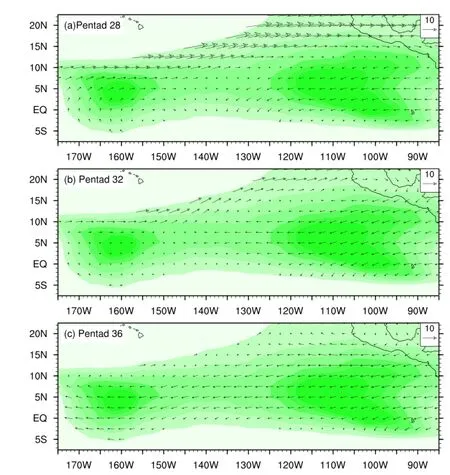
Figure 4.Horizontal circulation at 300 hPa in diferent pentads.
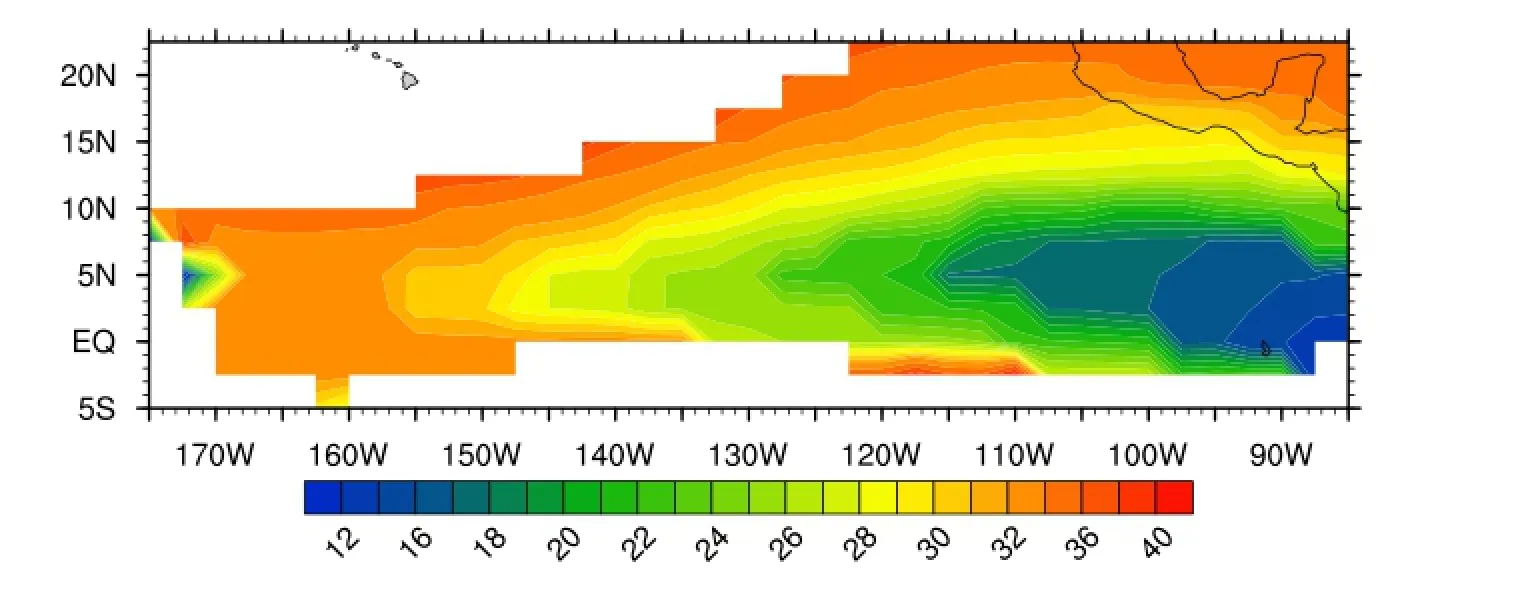
Figure 5.The precise completion time of the transition (exceeding the critical value of 2) of the horizontal circulation from winter to summer at 300 hPa.
4. Discussion and conclusion
This study demonstrates the existence of an upper-troposphere monsoon circulation over the CETP in accordance with the defnition of the DNS index, in which the dominant wind direction changes completely from winter to summer. Also shown is that the wind changes in diferent parts (between the east and west) of the monsoon region with time do not take place at exactly the same pace.
Previous studies state that the monsoons or monsoon regions always involve precipitation; for instance, the East Asian summer monsoon (Wu, Zhou, and Li 2009; Wu et al. 2009; Wang et al. 2008; Li et al. 2011), or other monsoon systems in the lower troposphere (Zhao et al. 2008; Shi, Li,and Wilson 2014). However, since the upper-troposphere monsoon over the CETP is a non-classical monsoon region,there is something unique causing the monsoon circulation to appear entirely in the upper troposphere. So,when it comes to the relationship between the summer monsoon and precipitation, it is less related to this case,meaning we mainly focus on analyzing the circulation character itself.
We studied the seasonal variation of the circulation changing over time, then verifed it with the above results,and ultimately confrm the existence of the upper-troposphere monsoon over the CETP. The results expand the traditional monsoon distribution area from the lower troposphere to the upper troposphere.
Disclosure statement
No potential confict of interest was reported by the authors.
Funding
This work was jointly supported by the National Natural Science Foundation of China Projects (41530424) and SOA Program on Global Change and Air-Sea Interactions (GASI-IPOVAI-03).
References
An, Z. S., G. X. Wu, J. P. Li, Y. B. Sun, Y. M. Liu, W. J. Zhou, Y. J. Cai,et al. 2015. “Global Monsoon Dynamics and Climate Change.”Annual Review of Earth and Planetary Sciences 43 (1): 29—77. doi:10.1146/annurev-earth-060313-054623.
Cane, M., and A. C. Clement. 1999. “A Role for the Tropical Pacifc Coupled Ocean-Atmosphere System on Milankovitch and Millennial Timescales. Part II: Global Impacts.” In Mechanisms of Global Climate Change at Millennial Time Scales, edited by P. U. Clark, R. S. Webb and L. D. Keigwin, 373—383. Washington, D.C: American Geophysical Union. doi:10.1029/ GM112p0373.
Chen, L. X., Q. G. Zhu, and H. B. Luo. 1991. East Asian Monsoon. [In Chinese]. Beijing: China Meteorological Press.
Dee, D. P., S. M. Uppala, A. J. Simmons, P. Berrisford, P. Poli,S. Kobayashi, U. Andrae, et al. 2011. “The ERA-Interim Reanalysis: Confguration and Performance of the Data Assimilation System.” Quarterly Journal of the Royal Meteorological Society 137 (656): 553—597. doi:10.1002/qj.828. Ding, Y. H. 1994. Monsoon over China. Dordrecht, Boston,London: Kluwer Academic Publishers
Ding, Y. H., and J. C. L. Chan. 2005. “The East Asian Summer Monsoon: An Overview.” Meteorology and Atmospheric Physics 89 (1—4): 117—142. doi:10.1007/s00703-005-0125-z.
Feng, J., J. P. Li, and Y. Li. 2010. “A Monsoon-like Southwest Australian Circulation and Its Relation with Rainfall in Southwest Western Australia.” Journal of Climate 23 (6): 1334—1353. doi:10.1175/2009JCLI2837.1.
Huang, R. H., L. T. Zhou, and W. Chen. 2003. “The Progresses of Recent Studies on the Variabilities of the East Asian Monsoon and Their Causes.” Advances in Atmospheric Sciences 20 (1): 55—69. doi:10.1007/BF03342050.
Jhun, J.-G., and E.-J. Lee. 2004. “A New East Asian Winter Monsoon Index and Associated Characteristics of the Winter Monsoon.”Journal of Climate 17 (4): 711—726. doi:10.1175/1520-0442(2004)017<0711:ANEAWM>2.0.CO;2.
Kalnay, E., M. Kanamitsu, R. Kistler, W. Collins, D. Deaven, L. Gandin,M. Iredell, et al. 1996. “The NCEP/NCAR 40-Year Reanalysis Project.” Bulletin of the American Meteorological Society 77 (3): 437—471. doi:10.1175/1520-0477(1996)077<0437:TNYRP>2. 0.CO;2.
Kanamitsu, M., W. Ebisuzaki, J. Woollen, S.-K. Yang, J. J. Hnilo,M. Fiorino, and G. L. Potter. 2002. “NCEP-DOE AMIP-IIReanalysis (R-2).” Bulletin of the American Meteorological Society 83 (11): 1631—1643.
Lau, K.-M., and S. Yang. 1997. “Climatology and Interannual Variability of the Southeast Asian Summer Monsoon.”Advances in Atmospheric Sciences 14 (2): 141—162. doi:10.1007/ s00376-997-0016-y.
Lea, D. W., D. K. Park, and H. J. Spero. 2000. “Climate Impact of Late Quaternary Equatorial Pacifc Sea Surface Temperature Variations.” Science 289 (5485): 1719—1724. doi:10.1126/ science.289.5485.1719.
Li, Y., J. P. Li, W. J. Zhang, X. Zhao, F. Xie, and F. Zheng. 2015.“Ocean Dynamical Processes Associated with the Tropical Pacifc Cold Tongue Mode.” Journal of Geophysical Research 120 (9): 6419—6435. doi:10.1002/2015JC010814.
Li, J. P. 2009. “Tropical Pacifc and Its Global Impacts.” Theoretical and Applied Climatology 97 (1): 1—2. doi:10.1007/s00704-009-0132-y.
Li, J. P., Z. W. Wu, Z. H. Jiang, and J. H. He. 2011.“Can Global Warming Strengthen the East Asian Summer Monsoon?” Journal of Climate 23 (24): 6696—6705. doi:10.1175/2010JCLI3434.1.
Li, J. P., and Q. C. Zeng. 2000. “Signifcance of the Normalized Seasonality of Wind Field and Its Rationality for Characterizing the Monsoon.” Science in China Series D: Earth Sciences 43 (6): 646—653.
Li, J. P., and Q. C. Zeng. 2002. “A Unifed Monsoon Index.”Geophysical Research Letters 29 (8): 115-1—115-4. doi:10.102 9/2001GL013874.
Li, J. P., and Q. C. Zeng. 2003. “A New Monsoon Index and the Geographical Distribution of the Global Monsoons.” Advances in Atmospheric Sciences 20 (2): 299—302. doi:10.1007/s00376-003-0016-5.
Li, J. P., and Q. C. Zeng. 2005. “A New Monsoon Index, Its Interannual Variability and Relation with Monsoon Precipitation.” [In Chinese.] Climatic and Environmental Research 10 (3): 351—365.
Pierrehumbert, R. 2000. “Climate Change and the Tropical Pacifc: The Sleeping Dragon Wakes.” Proceedings of the National Academy of Sciences 97 (4): 1355—1358. doi:10.1073/ pnas.97.4.1355.
Shi, F., J. P. Li, and R. Wilson. 2014. “A Tree-ring Reconstruction of the South Asian Summer Monsoon Index over the past Millennium.” Scientific Reports. 4: 6739. doi:10.1038/ srep06739.
Simmons, A., S. Uppala, D. Dee, and S. Kobayashi. 2007. “ERAInterim: New ECMWF Reanalysis Products from 1989 Onwards.” ECMWF Newsletter 110 (110): 25—35.
Sun, C., J. P. Li, and R. Q. Ding. 2015. “Strengthening Relationship between ENSO and Western Russian Summer Surface Temperature.” Geophysical Research Letters. 43 (2): 843—851. doi:10.1002/2015GL067503.
Venkat, K., and L. K. James. 2003. “The Indian Monsoon and Its Relation to Global Climate Variability.” In Global Climate: Current Research and Uncertainties in the Climate System,edited by X. Rodó and F. A. Comín, 186—236. Berlin Heidelberg: Springer.
Wang, B., R. G. Wu, and K.-M. Lau. 2001. “Interannual Variability of the Asian Summer Monsoon: Contrasts between the Indian and the Western North Pacifc—East Asian Monsoons*.” Journal of Climate 14 (20): 4073—4090. doi:10.1175/1520-0442(2001)014<4073:IVOTAS>2.0.CO;2.
Wang, B., Z. W. Wu, J. P. Li, J. Liu, C.-P. Chang, Y. H. Ding, and G. X. Wu. 2008. “How to Measure the Strength of the East Asian Summer Monsoon.” Journal of Climate 21 (17): 4449—4463. doi:10.1175/2008JCLI2183.1.
Webster, P. J., V. O. Magana, T. N. Palmer, J. Shukla, R. A. Tomas,M. Yanai, and T. Yasunari. 1998. “Monsoons: Processes,Predictability, and the Prospects for Prediction.” Journal of Geophysical Research: Oceans 103 (C7): 14451—14510. doi:10.1029/97JC02719.
Wu, Z. W., B. Wang, J. P. Li, and F. F. Jin. 2009. “An Empirical Seasonal Prediction Model of the East Asian Summer Monsoon Using ENSO and NAO.” Journal of Geophysical Research 114 (D18): 1—13 doi:10.1029/2009JD011733.
Wu, B., T. J. Zhou, and T. Li. 2009. “Seasonally Evolving Dominant Interannual Variability Modes of East Asian Climate.” Journal of Climate 22 (11): 2992—3005. doi:10.1175/2008JCLI2710.1.
Xiao, D., J. Li, and P. Zhao. 2012. “Four-dimensional Structures and Physical Process of the Decadal Abrupt Changes of the Northern Extratropical Ocean—Atmosphere System in the 1980s.” International Journal of Climatology 32 (7): 983—994. doi:10.1002/joc.2326.
Yoshida, K., and K. Yamazaki. 2010. “Role of Vertical Eddy Heat Flux in the Response of Tropical Tropopause Temperature to Changes in Tropical Sea Surface Temperature.” Journal of Geophysical Research. 115 (D1). doi:10.1029/2009JD012783.
Zeng, Q. C., and J. P. Li. 2002. “Interaction between Northern and Southern Hemispheric Atmospheres and the Essence of Monsoon.” Chinese Journal of Atmospheric Sciences 26 (3): 207—226.
Zeng, Q. C., and B. L. Zhang. 1998. “On the Seasonal Variation of Atmospheric General Circulation and the Monsoon.” [In Chniese.] Chinese Journal of Atmospheric Sciences 22 (6): 806—813. doi:10.3878/j.issn.1006-9895.1998.06.01.
Zhan, R. F., and J. P. Li. 2008. “Infuence of Atmospheric Heat Sources over the Tibetan Plateau and the Tropical Western North Pacifc on the Inter-Decadal Variations of the Stratosphere-Troposphere Exchange of Water Vapor.”Science in China Series D: Earth Sciences 51 (8): 1179—1193. doi:10.1007/s11430-008-0082-8.
Zhan, R. F., Y. Q. Wang, and M. Wen. 2013. “The SST Gradient between the Southwestern Pacifc and the Western Pacifc Warm Pool: A New Factor Controlling the Northwestern Pacifc Tropical Cyclone Genesis Frequency.” Journal of Climate 26 (7). doi:10.1175/JCLI-D-12-00798.1.
Zhao, P., J. M. Chen, D. Xiao, S. Nan, Y. Zou, and B. T. Zhou. 2008.“Summer Asian-Pacic Oscillation and Its Relationship with Atmospheric Circulation and Monsoon Rainfall.” Journal of Meteorological Research 22 (4): 455—471.
Zhao, X., J. P. Li, and W. J. Zhang. 2012. “Summer Persistence Barrier of Sea Surface Temperature Anomalies in the Central Western North Pacifc.” Advances in Atmospheric Sciences 29(6): 1159—1173. doi:10.1007/s00376-012-1253-2.
Zhou, J. Y., and K.-M. Lau. 1998. “Does a Monsoon Climate Exist over South America?” Journal of Climate 11 (5): 1020—1040. doi:10.1175/1520-0442(1998)011<1020:DAMCEO>2 .0.CO;2.
標準化動態季節變率(DNS); 熱帶太平洋; 季節變率; 上對流層季風
31 May 2016
CONTACT LI Jian-Ping ljp@bnu.edu.cn
? 2016 The Author(s). Published by Informa UK Limited, trading as Taylor & Francis Group.
This is an Open Access article distributed under the terms of the Creative Commons Attribution License (http://creativecommons.org/licenses/by/4.0/), which permits unrestricted use, distribution, and reproduction in any medium, provided the original work is properly cited.
猜你喜歡
軍事文摘(2023年10期)2023-06-09 09:15:06
口腔護理用品工業(2021年4期)2021-11-02 08:22:56
空間科學學報(2021年4期)2021-08-30 08:31:18
機械工業標準化與質量(2018年5期)2018-05-30 09:48:17
中國公路(2017年9期)2017-07-25 13:26:38
河北書畫研究(2016年2期)2016-08-24 02:14:50
新農業(2016年18期)2016-08-16 03:28:27
質量與標準化(2015年7期)2015-07-12 12:21:02
汽車維修與保養(2015年8期)2015-04-17 03:32:51
中國質量與標準導報(2014年9期)2014-02-28 22:25:45
 Atmospheric and Oceanic Science Letters2016年6期
- Atmospheric and Oceanic Science Letters的其它文章
- The warmest year 2015 in the instrumental record and its comparison with year 1998
- Wind rotation characteristics of the upper tropospheric monsoon over the central and eastern tropical Pacific
- Spatiotemporal characteristics of the sea level anomaly in the Kuroshio Extension using a self-organizing map
- The impacts of different surface boundary conditions for sea surface salinity on simulation in an OGCM
- Is the interdecadal circumglobal teleconnection pattern excited by the Atlantic multidecadal Oscillation?
- Model analysis of secondary organic aerosol over China with a regional air quality modeling system (RAMS-CMAQ)