
Er3+/Yb3+共摻雜La2TiO5熒光粉體的制備及上下轉換熒光性質
2016-12-01 01:32:03劉宣文齊建全郭瑞劉芳辰劉廣張曉雷張楊東北大學材料冶金學院沈陽0004東北大學秦皇島分校資源材料學院秦皇島066004
無機化學學報 2016年1期
劉宣文 齊建全 郭瑞*, 劉芳辰 劉廣 張曉雷 張楊(東北大學材料冶金學院,沈陽0004)(東北大學秦皇島分校資源材料學院,秦皇島066004)
Er3+/Yb3+共摻雜La2TiO5熒光粉體的制備及上下轉換熒光性質
劉宣文1,2齊建全1,2郭瑞*,1,2劉芳辰1,2劉廣1,2張曉雷1,2張楊1,2
(1東北大學材料冶金學院,沈陽110004)
(2東北大學秦皇島分校資源材料學院,秦皇島066004)
使用溶膠-凝膠法制備了Er3+單摻及Er3+/Yb3+共摻La2TiO5熒光粉體樣品。經過1 100℃下3 h的煅燒,得到了較好的微晶。X射線粉末衍射測試表明樣品中不含雜質相。掃描電鏡觀察表明樣品顆粒范圍為100~300 nm。紫外激發光譜中,在250~320 nm范圍內出現Er離子和臨近配位氧離子之間強烈的電荷轉移躍遷峰,在350~500 nm出現Er離子f-f躍遷尖銳的吸收峰。在378 nm激發下,Er離子發射強烈的特征綠光(546 nm,4S3/2-4I15/2),當Er離子物質的量分數達到1%,發射峰強度達到最大。在980 nm激發下的上轉換光譜中,Yb離子的共摻雜有效的敏化上轉換發光強度。詳細討論了樣品的上下轉換發光機理及相應能量傳遞過程。同時測試了樣品的熒光衰減和量子產率。
鉺;鐿;鈦酸鑭;上/下轉換;熒光
0 Introduction
In recent years,energy transfer up-conversion(UC) and down-conversion(DC)researches have become hot topics in the material luminescence study[1-8],and attracted more and more attention due to their potential applications in the fields of optical communication,electronic display systems,temperature sensors and UC laser[3,6-8].Owing to the abundant energy levels and narrow emission spectra lines,rare earth(RE)ions play a great role in the energy transfer UC/DC[1,6]process.Among all the rare earth ions,Er3+can emit characteristic green light originating from2H11/2-4I15/2,4S3/2-4I15/2transitions,meanwhile,its energy levels are placed homogeneously in the energy space in different hosts,and the lifetimes of some energy levels are long enough,thus Er3+is competent for UC/ DC luminescence center.However,the absorption cross sections of Er3+at output wavelength of commercial LDs(typical one is around 980 nm)is small,so Yb3+ion is often adopted as sensitizing center to improve the UC luminescence properties of Er3+doped materials[9-16].In recent years,most studies on Er3+/Yb3+co-doped systems have focused on exploring the UC mechanisms and developing novel hosts[17-19].
Many RE-doped titanate hosts have been studied, such as MgTiO3,La2Ti2O7,SrTiO3and so on[20],except the La2TiO5with pyrochlore structure.However,in our early investigations,La2TiO5is proved to be a lowphonon host for many doping rare earth ions,which act as optical centers that convert the energy from absorbed UV and IR photons into visible light.In up/ down-conversion process,the low phonon energy and high chemical stability are the critical factors for a preeminent host.Low phonon energy can prevent the non-radiative energy loss,which due to multi-phonon relaxation of exited rare earth dopants,and enhance the energy transfer efficiency[21-22].As a new host material,La2TiO5also has high chemical stability.In this research,the mechanism of UC/DC luminescence of the Er3+doped and Er3+/Yb3+co-doped samples are investigated through the excitation/emission spectra, dependence of emission intensity on Er3+concentration, dependence of UC emission intensity on the pump power,the sensitization effect of Yb3+,the luminescence decay curve and quantum yield.To our best knowledge,it is the first report on the UC/DC luminescence of Er3+ion in La2TiO5host.
1 Experimental
1.1Synthesis
All the samples were prepared by sol-gel method. All reactants used in the synthesis were of analytical reagent grade.In a typical experiment,Er3+doped and Er3+/Yb3+co-doped La2TiO5phosphors were prepared using lanthanum acetate[La(CH3COO)3],tetrabutyl titanate[Ti(OC4H9)4],erbium nitrate hexahydrate [Er(NO3)3·6H2O]and ytterbium nitrate hexahydrate [Yb(NO3)3·6H2O]as starting reagents.The Er(NO3)3· 6H2O,Yb(NO3)3·6H2O and La(CH3COO)3in stoichiometric propertions were dissolved into 30 mL distilled water,then 5 mL nitric acid was added to the above solution under vigorous stirring,which marked as solution-A.A certain amount of Ti(OC4H9)4and 30 mL ethanol were uniformly mixed,which marked as solution-B.Solution-A was added to solution-B under stirring and then the pH value of the mixed solution was adjusted to about 3 by the addition of an appropriate amount of nitric acid.After stirring for 2 h,transparent sol was obtained.Subsequently,the sol was dried at 80℃for 2 h until it was transformed into xero-gel.Er3+doped and Er3+/Yb3+co-doped La2TiO5samples were obtained by further sintering at 1 100℃for 3 h in air.
1.2Instrum ents and measurement
X-ray diffraction pattern was obtained for the powder specimen on DX2500 diffractometer using a graphite monochromator Cu Kα radiation(40 kV,λ= 0.154 06 nm).The scanning rate was 0.04°·min-1with 2θ in the range of 10°to 70°.The powder morphology was characterized by a zeiss supra 55 scanning electron microscope(SEM).The photolumine-scence excitation and emission spectra were recorded on F-7000FL spectroflurophotometer with spectral slit width of 5 nm in range 220~800 nm.A 980 nm laser were used as a source of NIR excitation measurements.Allmeasurements were made at room temperature.The lifetime and quantum efficiency were recorded using an Edinburgh instruments FLS920P.The quantum efficiency was measured by a 2 Port 150 mm BaSO4 coated integrating sphere which fits directly into the sample chamber.
2 Results and discussion
2.1Structure and m orphology characterization
The XRD patterns for all the samples were measured to identify the crystal structure of the samples obtained from the sol-gel method.It was found that the profiles of the XRD patterns are the same.The top part in Fig.1 shows the XRD pattern for 1%Er3+/10%Yb3+(molar fraction)co-doped La2TiO5phosphor as representative.All diffraction peaks are found in good agreements with PDF#75-2394 card shown in the bottom part of Fig.1.No any extra diffraction peaks belonging to other compounds in addition to La2TiO5are found.It indicates that the Er3+doped and Er3+/Yb3+co-doped La2TiO5phosphors can be achieved via the simple sol-gel method and the Er3+and Yb3+doping at present level did not cause observable change in the host structure.Fig.2 illustrates the SEM image of the La2TiO5phosphor codoped with 1%Er3+and 10%Yb3+(molar fraction). The SEM image reveals that the average grain size of the phosphor particles is in the range of 100~300 nm. The shape of the particle is cubic,and some particles are agglomerated together due to partial melting of samples during annealing process.
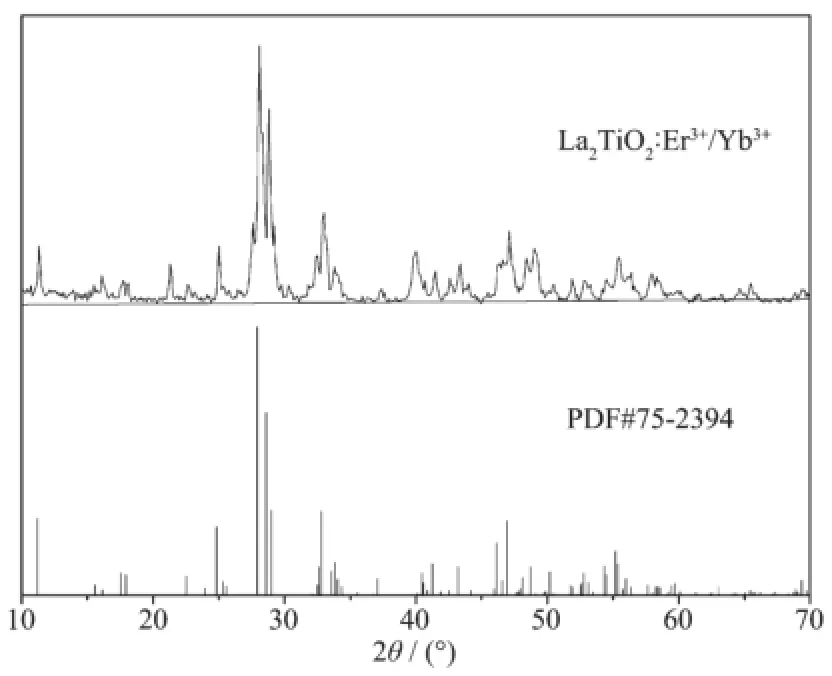
Fig.1 XRD patterns of 1%Er3+/10%Yb3+co-doped La2TiO5phosphors(top)and the pattern plotted by using the data reported in PDF#75-2394 card(bottom)
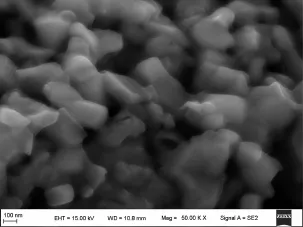
Fig.2 SEM image of 1%Er3+/10%Yb3+co-doped La2TiO5phosphor
2.2DC/UC lum inescence and mechanisms
Fig.3 shows the excitation spectra of 1%Er3+(molar fraction)doped La2TiO5by monitoring 546 nm. Six excitation bands are observed at 217,272,378, 408,453 and 490 nm.In which,the first two broad excitation bands originate from the charge transitions of O-Ti and O-Er and the later four narrow bands are observed due to the f-f transitions from ground state4I15/2to excited states4G11/2(380 nm),2H9/2(410 nm),4F3/2(456 nm)and4F7/2(490 nm),respectively.The intense CT bands indicate there are strong interaction existing between the doping Er3+ions and the host. Among all the excitation bands,the band at 378 nm shows the highest intensity.Thereby,the DC emission spectra were recorded at 378 nm.
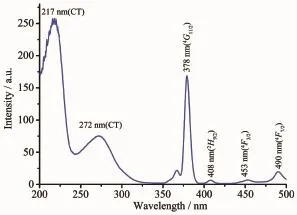
Fig.3 Excitation spectra of La2TiO5∶1%Er3+at λem=546 nm
It is well known that the doping concentration of luminescent center is an important factor affecting theluminescent properties of the phosphors.In order to analyse the concentration quenching behavior of La2TiO5∶Er3+phosphors,the emission spectra of La2TiO5∶Er3+with(0.5%~7%molar fraction)Er3+ion is measured and shown in Fig.4.Two main emissions at 524(2H11/2-4I15/2) and 546 nm(4S3/2-4I15/2)and one extremely weak emission band at 660~680 nm(4F9/2-4I15/2)are observed.The dependence of emission intensity(546 nm)as a function of the Er3+doping concentration(0.5%~7% molar fraction)is shown in inset of Fig.4.The emission peak position is almost the same for the different concentration of Er3+in the samples indicating that the coordination surroundings of the doping Er3+ions is independent for this concentration range. It can also be seen that,with the increase of Er3+concentration up to 1%molar fraction,the relative emission intensity goes on increasing and above the concentration the intensity begins to decrease.This decrease in emission intensity may be caused by the concentration quenching or multi-phonon relaxation after cross relaxation(CR)of Er3+ion.
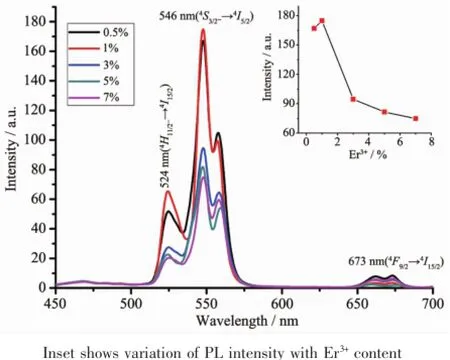
Fig.4 Emission spectra of La2TiO5∶x Er3+(x=0.5%~7%)at λex=378 nm
While taking into the concentration quenching of Er3+ion,it means there exists the energy transfer between Er3+ions when the R(Er-Er)in the La2TiO5host is shorter than the critical transfer distance(Rc). Blasse has suggested that the Rccan be calculated using the formula 1[30]:

Where,V is the volume of the unit cell,Xcis the critical concentration of Er3+ion,and N is the number of formula units per unit cell.In La2TiO5host,V is 0.249 3 nm3and N is 2.So Rcis obtained to be about 0.31 nm.As the calculated Rcis shorter than 0.5 nm, it implies energy exchange interaction is the major mechanism responsible for concentration quenching of La2TiO5∶Er3+.
Because the absorption cross sections of Er3+at output wavelength of commercial LDs(laser diode, typical one is about 980 nm)is small,thus Yb3+is often co-doped in phosphors as sensitizing center to improve the UC luminescence properties of Er3+.The emission intensity at 546 nm reaches its maximum with 1%molar fraction concentration of Er3+,so the samples with various Yb3+and fixed Er3+concentration were prepared.UC fluorescence emission spectra of La2TiO5∶Er3+/Yb3+under the excitation of 980 nm at same condition are shown in Fig.5.The strong green emissions(524,546 nm)and red emission(673 nm) are observed in the Er3+/Yb3+co-doped samples and the red emission is significantly stronger than the counterpart of Er3+doped samples.It can also be observed that the green and red emissions of Er3+/Yb3+co-doped samples can be adjusted by changing Yb3+concentration.The variation of UC intensity as afunction of Yb3+concentration is shown in top right inset of Fig.5.The UC emission intensity decreases with the increase in the content of Yb3+,which indicates that the energy transfer from Yb3+to Er3+keeps going down due to the Yb3+concentration quenching.The UC luminescence intensities(I)of the green and red emissions of La2TiO5∶Er3+/Yb3+were measured as a function of the pump power(P), respectively.In Fig.6,the slopes of the curves ln(I) versus the ln(P)were fitted to be 2.12 and 2.15, respectively,both close to 2.The results mean that there is a two-photon process for the UC excitation.
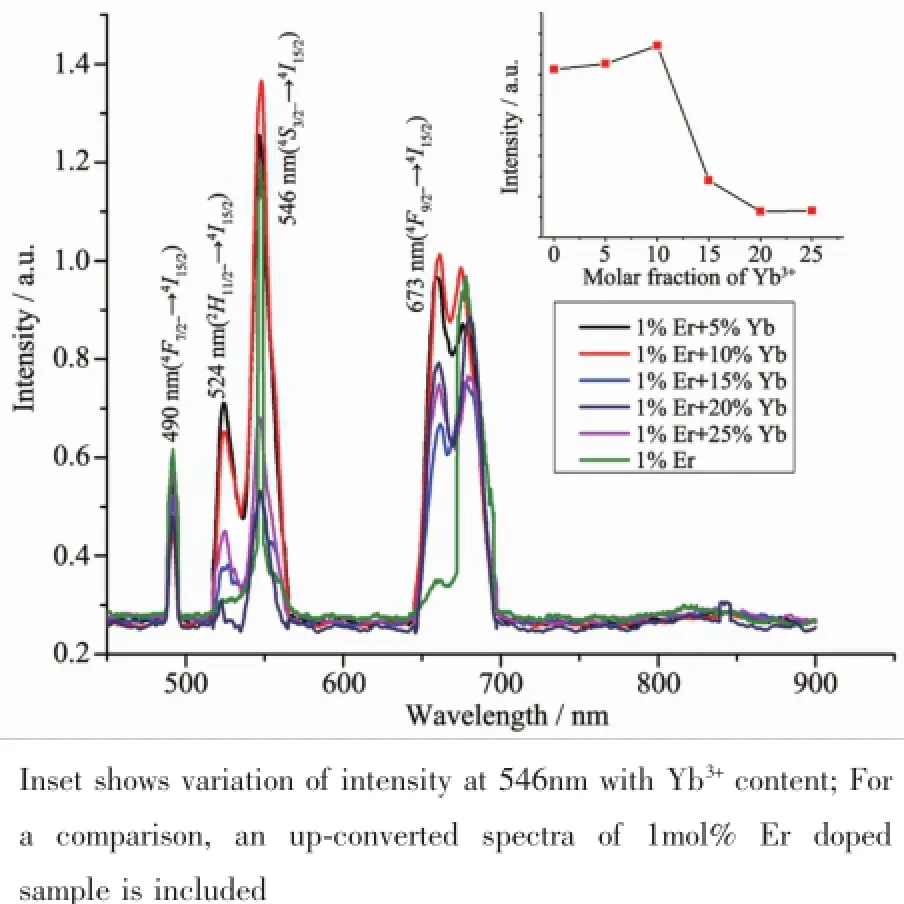
Fig.5 UC em ission spectra under 980 nm excitation of La2TiO5phosphors doped with fixed concentration of Er3+and various Yb3+concentration
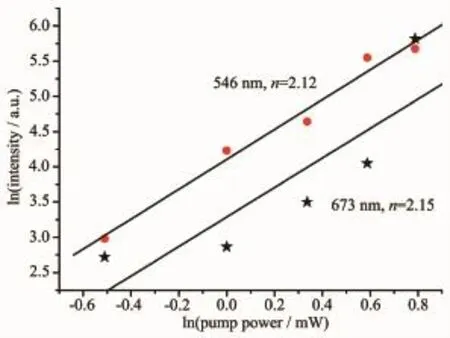
Fig.6 ln-ln plots of the UC emission intensity at 546 nm versus the pump-power of La2TiO5∶1%Er3+/ 10%Yb3+
The schematic energy level diagrams of Er3+,Yb3+and the different excitation routes for UC and DC are shown in Fig.7[7,23-25].When the samples of La2TiO5∶Er3+are excited at 378 nm,the luminescent level2H11/2and4S3/2are populated via multi-phonon nonradiative transitions(NRT)from upper levels and then the radiant transitions from2H11/2and4S3/2to the ground state produce the green emissions at 524 and 546 nm, respectively.While during the UC process,the Er3+ion in the ground state absorbs one 980 nm photon (GSA)and is initially excited to4I11/2level.And then the excited Er3+absorbs another photon to be excited to4F7/2level,which is an excited-state absorption(ESA) process.Subsequently,the emission from4F7/2level to the ground state is observed at 490 nm and luminescent levels2H11/2and4S3/2are populated by nonradiative transition from4F7/2,resulting the strong green emissions observed in UC spectra.The possible cross relaxation process CR1,CR2 and CR3 are shown in Fig.7 as reported in references[7,26-29]. Thereby,the luminescent level4F9/2can be populated by nonradia-tive transition from2H11/2and4S3/2or by CR2 route.And the red emission from4F9/2to the ground state is enhanced via CR2 in UC process.Yb3+ion is chosen as the sensitizer to enhance the photon absorption property at 980 nm of La2TiO5∶Er3+/Yb3+phosphor.In this case,the Er3+is mainly excited from the ground state to the4I11/2level via energy transfer (ET1).Then the upper level4F7/2is populated via another energy transfer(ET2)process resulting the emission at 490 nm obviously observed and the populations of2H11/2and4S3/2by multi-phonon nonradiative from4F7/2level,which increases the green emission intensity at 524 and 546 nm.For the red emission,besides the nonradiative relaxation from4F7/2,2H11/2and4S3/2,the4F9/2can be populated by the cross relaxation route from4I9/2level and energy transfer(ET3)process of4I13/2-4F9/2,rather than the CR2 process,which enhances the red emission at 673 nm comparing to the counterpart of La2TiO5∶Er3+as shown in Fig.7.
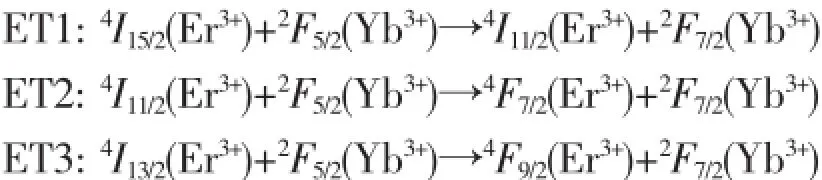
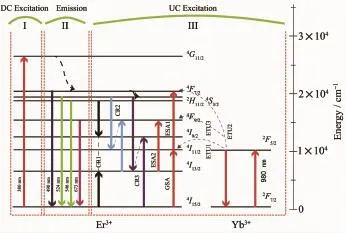
Fig.7 Schematic energy level diagrams of the Er3+,Yb3+and the proposed UC/DC mechanisms
The kinetic decay curves of the level4S3/2was measured.Fig.8 shows the decay time profile of 1% molar fraction Er3+doped La2TiO5phosphor.The monitoring wavelength is at 546 nm with a 378 nmexcitation.The decay curve can be well fitted by a biexponential equation as
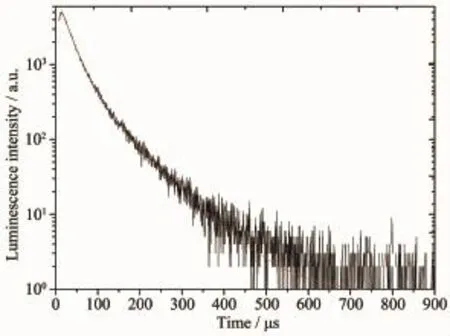
Fig.8 Decay curve of 1%Er3+doped La2TiO5phosphor observed at 546 nm,excited at 378 nm

where I(t)is the luminescence intensity,t is the time after excitation,and τ is the decay time constant. A and B are coefficient constant.The fitting results are showed in Table 1.The lifetime values are found to be 26.05 and 79.32 μs for level4S3/2.Based on this, the average lifetime can be calculated using equation

In present case,the bi-exponential fitting implies the existence of multi-phonon nonradiative transitions from4S3/2,which is in agreement with the energy transfer process in schematic energy level diagrams[31-32]. The increase of initial stage of decay curve indicates the population process of4S3/2level from upper energy levels.The quantum yield was measured with a value of about 41%.These results may be important for the fabrication of high-resolution optical detectors,solar cells and high-definition luminescent displays.

Table 1 Fitting results of fluorescent decay curve for 1mol%Er3+doped La2TiO5
3 Conclusions
Phosphors of La2TiO5∶Er3+/Yb3+were synthesized via sol-gel method followed by thermal annealing at 1 100℃and the X-ray diffraction pattern of pure La2TiO5,Er3+doped and Er3+/Yb3+co-doped La2TiO5samples showed good agreement with the PDF#75-2394 card.All samples exhibit interesting characteristic green and red emissions.The Yb3+sensitizes effectively the UC luminescence properties of Er3+in La2TiO5host.The strongest emission intensity at 546 nm is observed in 1%Er3+doped and 1%Er3+/10%Yb3+codoped phosphors.The mechanisms of energy absorption,energy transfer,electron transition and nonradiative relaxation are discussed in details to explain the UC and DC emission spectra of the phosphors.The studies of decay curve indicate the existence of multiphonon nonradiative transitions from4S3/2level.The quantum yield is about 41%.
Acknow ledgment:This work was supported by Fundamental Research Foundation of Central Universities (Grant N142304007)and Basic Key Program of Applied Basic Research of Science and Technology Commission Foundation of Hebei Province in China(Grant No.15961005D and Grant No. 14961108D).
[1]Lin H,Yan X H,Wang X F.Mater.Sci.Eng.B,2011,176: 1537-1540
[2]ZHANG Qing-Bin(張慶彬),CHENG Cheng(程成).Chinese J.Inorg.Chem.(無機化學學報),2015,31:81-86
[3]Liu X W,Guo R,Liu H,et al.RSC Adv.,2015,5:15059-15068
[4]Fan B,Chlique C,Conanec O M,et al.J.Phys.Chem.C, 2012,116:11652-11657
[5]Lin H,Chen D Q,Yu Y L,et al.Opt.Lett.,2011,36:876-878
[6]Lin H,Yan X H,Wang X F.Mater.Sci.Eng.B,2011,176: 1537-1540
[7]Yang Y M,Liu L L,Cai S Z,et al.J.Lumin.,2014,146:284-287
[8]Xiao S,Yang X,Ding J W.Appl.Phys.B,2010,99:769-773
[9]Li J J,Sun J S,Liu J T,et al.Mater.Res.Bull.,2013,48: 2159-2165
[10]Schietinger S,Aichele T,Wang H Q,et al.Nano Lett., 2010,10:134-138
[11]SHAO Li-Ming(邵黎明),JING Xi-Ping(荊西平).Chinese J.Inorg.Chem.(無機化學學報),2014,30:2295-2300
[12]Sunil S K,Kaushal K,Rai S B.Sens.Actuators A,2009, 149:16-20
[13]FAN Le-Qing(范樂慶),LI Zhao-Lei(李兆磊),HUANG Yun-Fang(黃昀昉),et al.Chinese J.Inorg.Chem.(無機化學學報),2015,31:147-152
[14]Wang G F,Qin W P,Wang L L,et al.J.Rare Earths,2009, 27:394-397
[15]Chen Z S,Gong W P,Chen T F,et al.Mater.Lett.,2012, 68:137-139
[16]Wang X J,Lei M K,Yang T,et al.Opt.Mater.,2004,26: 253-259
[17]Tian Y,Hua R,Yu J,et al.Mater.Chem.Phys.,2012,133: 617-620
[18]Wang R,Zhou D,Yang Z,et al.J.Non-Cryst.Solids,2011, 357:2413-2416
[19]Dhlam ini M S,Mhlongo G H,Swart H C,et al.J.Lum in., 2011,131:790-794
[20]Zhang S,Liang H B,Liu C M.J.Phys.Chem.C,2013,117: 2216-2221
[21]Deng K,Wei X,Wang X,et al.Appl.Phys.B,2011,102: 555-558
[22]Xia Z G,Luo Y,Guan M,et al.Opt.Express,2012,20: A722-728
[23]Vetrone F,Boyer J C,Capobianco J A,et al.J.Phys.Chem. B,2002,106:5622-5628
[24]Gao F,Wu G,Zhou H,et al.J.Appl.Phys.,2009,106: 126104-126111
[25]Chen X Q,Li Y L,Kong F,et al.J.A lloys Compd.,2012, 541:505-509
[26]Auzel F,Chen Y.J.Lumin.,1995,65:45-56
[27]Ajroud M,Haouari M,Ben O H,et al.Phys.Status Solidi A,2005,202:316-329
[28]Lakshminarayana G,Qiu J,Brik M G,et al.J.Phys.:Condens. Mater.,2008,20:375101-375108
[29]Xu C F,Yang L W,Han H L,et al.Opt.Mater.,2010,32: 1188-1192
[30]Blasse G.Philips Res.Rep.,1969,24:131-144
[31]Victory D C,Rajmuhon S N.Spectrochim.Acta Part A, 2015,146:331-341
[32]Stouwdam J W,Van V F.Nano Lett.,2002,2:733-739
Synthesis and up/down Conversion Lum inescence Properties of Er3+/Yb3+Co-doped La2TiO5Phosphor
LIU Xuan-Wen1,2QI Jian-Quan1,2GUO Rui*,1,2LIU Fang-Chen1,2LIU Guang1,2ZHANG Xiao-Lei1,2ZHANG Yang1,2
(1School of Materials and Metallurgy,Northeastern University,Shenyang 110004,China)
(2School of Resources and Materials,Qinhuangdao branch,Northeastern University,Qinhuangdao,Hebei 066004,China)
Er3+doped and Er3+/Yb3+co-doped La2TiO5phosphors were synthesized by using sol-gel reactions.Good crystallinity was achieved after annealing the samples at 1 100℃for 3 h in air.X-ray powder diffraction results revealed the formation of desired La2TiO5host with pyrochlore structure.The UV excitation spectra of the samples consist of two regions in which the broad band at 250~320 nm originates from the charge-transition(CT) band between Er3+ion and the nearest neighboring O2-ions and the sharp lines at 350~500 nm correspond to the f-f transition of Er3+ion.Er3+ion in La2TiO5emits intense characteristic green light(546 nm,4S3/2-4I15/2)under the excitation at 378 nm and the emission intensity reaches the maximum at Er3+concentration of 1%(molar fraction).In the NIR-excited(980 nm)up-converted spectra,Yb3+ion as an efficient sensitizer enhanced the emission intensities of Er3+ion in comparison with those in La2TiO5∶Er3+phosphors.The luminescence decay curve and quantum yield were also measured and discussed in details.
erbium;ytterbium;La2TiO5;up/down-conversion;luminescence
O614.344;O614.346
A
1001-4861(2016)01-0049-07
10.11862/CJIC.2016.022
2015-06-17。收修改稿日期:2015-10-21。
中央高校基本科研業務費(No.N142304007)、河北省基礎研究計劃重點基礎研究基金(No.15961005D,No.14961108D)資助項目。
*通信聯系人。E-mail:guorui791129@126.com
