
Efficacy of atypical antipsychotics in the management of acute agitation and aggression in hospitalized patients with schizophrenia or bipolar disorder: results from a systematic review
2016-12-09 09:29:49XinYUChristophCORRELLYuTaoXIANGYifengXUJizhongHUANGFudeYANGGangWANGTianmeiSIJohnKANEPrakashMASAND
上海精神醫學 2016年5期
Xin YU*, Christoph U. CORRELL, Yu-Tao XIANG, Yifeng XU, Jizhong HUANG, Fude YANG, Gang WANG, Tianmei SI, John M. KANE, Prakash MASAND
?Systematic review and meta-analysis?
Efficacy of atypical antipsychotics in the management of acute agitation and aggression in hospitalized patients with schizophrenia or bipolar disorder: results from a systematic review
Xin YU1,2*, Christoph U. CORRELL3,4,5, Yu-Tao XIANG6, Yifeng XU7, Jizhong HUANG7, Fude YANG8, Gang WANG9,10, Tianmei SI1,2, John M. KANE3,4,5, Prakash MASAND11
Schizophrenia; Bipolar disorder; Antipsychotic; Aggression; Agitation
1. Introduction
Bipolar disorder and schizophrenia are relatively common psychiatric disorders that are predicted to affect approximately 1–2% and 1% of the population,respectively[1,2]. Although the symptoms of these two disorders can vary dramatically, acute agitation and aggression are relatively common among patients with either condition. The purpose of this review is to outline the diagnosis, clinical assessment, and treatment of hospitalized schizophrenia and bipolar disorder patients with acute agitation or aggression, and to present the latest evidence describing the use of atypical antipsychotics in these patient populations.
Several major English databases (MEDLINE, EMBASE,and the Cochrane Central Register of Controlled Trials)were searched up to March 2016 using the following key words: (“schizophrenia” OR “bipolar disorder”)AND (“agitation” OR “aggression” OR “hostility”) AND(“antipsychotic” OR “atypical antipsychotic”). The abstracts of all records were scanned for relevance,and full-text of all potentially relevant articles was evaluated for inclusion. The reference lists of all full-text publications were searched for additional studies. Only English language articles were included.
2. Prevalence and correlates of agitation, aggression,violence and hostility in patients with bipolar disorder or schizophrenia
Agitation
Agitation, or “psychomotor agitation”, is a poorlydefined psychomotor activity accompanying physical or mental unease. It often occurs in patients with psychoses, including schizophrenia, and in acutely exacerbated bipolar disorder[3,4], often marking the beginning of a behavioral emergency, i.e., a situation with the potential to rapidly escalate. Thus, agitation can lead to, but is characterized separate from, physical aggression[5]. Agitation is characterized by the following hallmarks: motor restlessness, increased responsiveness to stimuli, irritability and excitement, excitement,restlessness, anxiety, psychic and motor tension, as well as excessive, inappropriate, and purposeless verbal and/or motor activity[3].
Aggression and violence
Aggression is a significant public health problem, and a number of studies have suggested that patients with schizophrenia and bipolar disorder have an increased risk of violent behavior compared with most other psychiatric patients[6,7]. There are two general subtypes of aggression: instrumental aggression, which is goal-directed and generally controlled, and reactive aggression, which involves an emotional reaction to a perceived threat or frustration, which is the most prevalent form[8,9].
A number of studies have assessed the prevalence of aggression in patients with schizophrenia, and it is generally more common in the inpatient setting than in the general population. Zhou et al. performed a metaanalysis of 19 studies comprising 3941 hospitalized schizophrenia patients in China[10], and revealed that the prevalence of aggressive behavior was 15.3–53.2%, with a pooled prevalence of 35.4% (95% conf i dence interval[CI], 29.7–41.4%). Consistent with this, a systematic literature review of Chinese inpatients revealed a high prevalence of aggression in individuals with schizophrenia (mean, 28.0%; range, 9.1–49.6%)[11]. In contrast, the pooled prevalence of aggressive behavior reported from most Western countries is approximately 3–15%[12]. However, differences need to be interpreted with caution, since until 2012 there was no national Mental Health Law in China[13]and >80% of psychiatric patients were admitted involuntarily[14].
A recent systematic review and meta-analysis performed in non-hospitalized patients investigated the association between schizophrenia (and other psychoses) and violence[15]. In 20 studies reporting on a total of 18,423 patients there was a significant increase in violence in individuals with schizophrenia compared with the general population: 10% of patients with psychotic disorders including schizophrenia behaved aggressively, compared with only 2% of the general population (odds ratio [OR], 2.1; 95% CI, 1.7–2.7, and OR, 8.9; 95% CI, 5.4–14.7 with and without substance abuse as a comorbidity, respectively). In addition, the risk of committing homicide was 20-fold higher in patients with psychotic disorders[15].
There are also clear links between bipolar disorder and aggression, even for patients in remission[6,16-18].Corrigan and Watson assessed the prevalence of aggression in individuals with bipolar disorder and no psychiatric disorder using household interviews, and reported a lifetime prevalence of 12.2% and 1.9%,respectively; the corresponding numbers for “last year” aggression were 16.0% and 2.0%, respectively[19].Furthermore, Látalová performed a review of studies published between 1966 and 2008, and indicated that according to the National Epidemiologic Survey on Alcohol and Related Conditions (NESARC) conducted in 2001–2002, the prevalence of aggression was 0.7% in control subjects compared with 25.3% in patients with bipolar I disorder; again, these effects were exacerbated by the presence of comorbidities[20]. Nevertheless,the authors cautioned that the true prevalence of aggression in individuals with bipolar disorder is difficult to ascertain because it is commonly only one of many items that contributes to scales or subscales.
Finally, potential predictors of aggression or violence in the psychotic or manic patient include the following: past aggressive or violent behavior, criminal history of violence, violent victimization or childhood sexual abuse, comorbid personality or conduct disorder,abuse of alcohol and illicit drugs, economic deprivation,severe irritability, delusional ideas (e.g. delusional jealousy), and hallucinations, including voices inciting or commanding violent acts[21-23].
Agitation and Hostility
Hostility is a behavioral trait as opposed to an independent acute state; it is defined as a hostile,threatening, or unfriendly attitude or state. Although the prevalence of these behaviors is generally not investigated individually, patients with both schizophrenia and bipolar disorder tend to exhibit more hostile behavior than control patients, and this is thought to contribute to their poor social functioning[24].
Assessment of acute agitation and aggression in bipolar disorder or schizophrenia
Several scales have been used in studies for the assessment of acute agitation and aggression in schizophrenia and bipolar disorder. These include the Positive and Negative Syndrome Scale (PANSS)[25]excited component subscale (PANSS-EC), which consists of the following fi ve items: excitement, hostility,tension, uncooperativeness, and poor impulse control.Furthermore, the Modified Overt Aggression Severity Scale (MOAS)[26], and the Overt Agitation Severity Scale (OASS)[27]have also been used. Another scale used for this purpose is the simple, single-item, 7-point Behavioral Activity Rating Scale (BARS)[28]that ranges from 7, “violent, requires restraint” to 1, “difficult or unable to rouse”
Guidelines for the treatment of acute agitation and aggression in bipolar disorder or schizophrenia
Symptoms such as acute agitation and aggression require rapid interventions to prevent harm to the patient or their caregivers, other patients, staff members, or the general public. Therefore, a number of treatment guidelines have been published for patients with bipolar disorder or schizophrenia.
In general, treatment guidelines for agitation and aggression recommend using purposeful behavioral and environmental de-escalation strategies before using other, more restrictive or invasive strategies[5,29,30].Further, guidelines recommend using pharmacologic interventions targeting the underlying disorder or the acute agitation or aggression to avoid the need for more coercive methods, such as seclusion or physical restraints that can lead to injuries to patients or restraining staff members[31-34]. Electroconvulsive treatment (ECT) is generally only recommended as treatment for the refractory underlying psychotic or mood disorder that has not responded to first line pharmacologic interventions, but not as treatment primarily targeting agitation or aggression acutely, as consent procedures are unlikely to be successful in such situations and as the alliance and future treatment adherence may be compromised by such invasive fi rstline treatment[35].
For example, for patients with schizophrenia the American Psychiatric Association (APA) recommends the use of an antipsychotic, which should be determined based on the patient’s previous experience with side effects, the degree of symptom response, and preferred route of administration, together with an adjunctive benzodiazepine to manage acute agitation, anxiety,and catatonia as needed (http://psychiatryonline.org/pb/assets/raw/sitewide/practice_guidelines/guidelines/schizophrenia.pdf). A beta-blocker or mood stabilizer could also be considered in individuals with persistent aggression (although the data for these types of treatments are much less fi rm). The suggested antipsychotics include short-acting intramuscular ziprasidone, olanzapine, or haloperidol, as well as oral olanzapine or risperidone. Similar to the APA,the schizophrenia Patient Outcomes Research Team(PORT) recommends that patients with acute agitation be treated using an oral or intramuscular (IM) atypical antipsychotic such as olanzapine, ziprasidone, or aripiprazole, either as a monotherapy or with an adjunctive fast-acting benzodiazepine[36].
In patients with bipolar disorder and acute agitation or aggression, the APA recommends an antipsychotic together with lithium or valproate for a mixed manic episode, or any of these agents as a monotherapy for less severe episodes. A benzodiazepine may also be required to treat agitation. Alternative treatments could include the addition of carbamazepine or oxcarbazepine with or without an antipsychotic. Treatment-resistant patients could benef i t from ECT (http://psychiatryonline.org/pb/assets/raw/sitewide/practice_guidelines/guidelines/bipolar.pdf).
In 2013, the Canadian Network for Mood and Anxiety Treatments (CANMAT) released the fourth edition of their recommendations for the management of patients with bipolar disorder37. Similar to the APA guidelines, lithium, valproate, and a number of atypical antipsychotics are recommended as fi rst-line therapies for acute mania. Other recommended fi rst-line options include adjunctive asenapine, as well as monotherapy with extended-release paliperidone, extended-release divalproex, and asenapine[37].
In 2015, the second edition of Chinese guideline for schizophrenia recommended similar strategies as recommended in the APA guidelines for the treatment of acute agitation and aggression. After the necessary psychiatric assessment, the first-line therapies are intramuscular injection antipsychotic agents,such as ziprasidone or haloperidol, or oral atypical antipsychotics combined with a benzodiazepine. If first-line therapies do not work, then clozapine or an antipsychotic combined with a mood stabilizer are recommended. When second-line therapies fail, then modif i ed ECT should be considered[38].
Notably, although guidelines recommend the use of ECT only for treatment-resistant patients (http://psychiatryonline.org/pb/assets/raw/sitewide/practice_guidelines/guidelines/bipolar.pdf,[38-41]), in China modified ECT is not utilized infrequently as a fastacting, first-line treatment strategy for agitated and aggressive patients with schizophrenia and bipolar disorder. A recently completed meta-analysis of 11 Chinese randomized controlled trials (RCTs) pooled data from fi ve ECT monotherapy trials (n=340) and six trials that used ECT adjunctively with newly started antipsychotic treatment (n=408) and reported on the efficacy of modif i ed ECT for agitation and aggression in schizophrenia. The results indicated that in the studies lasting on average 3.2(2.5) weeks (range, 1-8 weeks;median, 2 weeks), ECT monotherapy was superior to antipsychotic monotherapy regarding the PANSS total score as well as the PANSS-EC subscore[42]. However, ECT monotherapy was associated with significantly more headache and urinary incontinence than antipsychotic monotherapy. Similarly, ECT-antipsychotic co-initiation treatment was more efficacious than antipsychotic monotherapy regarding PANSS total score and the PANSS-EC subscore reduction, but was also associated with significantly more headache and memory impairment[42].
2.2 Pharmacologic treatment of agitation and aggression in patients with schizophrenia and bipolar disorder
Based on the current treatment guidelines, one central the aim of this review was to assess the current use of antipsychotics for the treatment of schizophrenia and bipolar disorder patients with acute agitation and aggression. Relevant studies were identified using the following search terms conducting an electronic search in PubMed on February 1st, 2016: (agitation OR agitated OR aggression OR aggressive OR hostile OR hostility OR violent OR violence) AND (schizophr* OR psychosis OR psychot* OR psychos* OR mania OR manic OR bipolar)AND (antipsychotic* OR neuroleptic). The studies included were limited to English language, human studies, and to mostly placebo-controlled RCTs or metaanalyses. Because several excellent reviews are available that discuss the history of these agents in detail[43-47]we focused mostly on recent developments in the fi eld.
2.3 Antipsychotics
One of the main treatments for acute agitation and aggression in patients with schizophrenia and bipolar disorder assessed in placebo-controlled RCTs are antipsychotics. They can be divided into two classes: typical (or first-generation), and atypical (or second-generation) drugs. Both typical and atypical antipsychotics are believed to work by reducing dopamine receptor signaling in the brain. However,atypical antipsychotics can also inhibit serotonin (5-HT, and particularly 5-HT2A) signaling, as well as to variable degrees adrenergic, cholinergic, and histamine receptors. One of the main differences between typical and atypical antipsychotics is their associated side-effects[48]. Generally, atypical antipsychotics are associated with a significantly reduced risk of extrapyramidal symptoms (EPS), such as akathisia,Parkinsonism, and dystonia[49]. However, some atypical agents have a higher risk of causing significant weight gain and metabolic side effects[50].
2.4 Atypical antipsychotics
Aripiprazole
Aripiprazole is an atypical antipsychotic with an indication for the treatment of acutely agitated patients with bipolar disorder or schizophrenia in its IM formulation[51]. It is thought to function at least in part by exhibiting partial agonist activity at 5-HT1Aand dopamine D2receptors, as well as antagonist activity at 5-HT2Areceptors[52]. The mean half-life of IM and oral aripiprazole is 75 hours, and peak concentrations are observed within 1–3 hours and 3–5 hours,respectively[52].
A post-hoc analysis of pooled data from four placebo-controlled RCTs was performed to assess the effectiveness of 10, 15, 20, or 30 mg/day oral aripiprazole to reduce agitation in 1187 schizophrenia patients with higher and lower levels of agitation[53].Comparison of clinical global impression – improvement(CGI-I), PANSS total, and PANSS-EC scores between aripiprazole and placebo-treated patients revealed that aripiprazole reduced agitation significantly, particularly in those with higher levels of pre-treatment agitation.Comparable observations were made in a post-hoc analysis of two 3-week randomized placebo-controlled trials comparing the efficacy of oral aripiprazole and placebo in bipolar I disorder patients with acute mania[54,55].
Several studies compared the effects of IM aripiprazole with the typical antipsychotic haloperidol in patients with schizophrenia-spectrum disorders[56-58].In a randomized, double-blind, placebo-controlled trial, 448 hospitalized patients with schizoaffective disorder or schizophrenia were treated with placebo,6.5 mg IM haloperidol, or 9.75 mg IM aripiprazole for a mean 1.92, 1.43, and 1.54 doses, respectively, and the mean change in PANSS-EC score between baseline and 2 hours was assessed. Aripiprazole IM improved acute agitation significantly compared with placebo,but there was no significant difference in the efficacy of IM aripiprazole and IM haloperidol. Although IM aripiprazole was associated with adverse events, such as nausea, insomnia, dizziness, and headache, EPS were more common in the IM haloperidol vs. IM aripiprazole group[58]. The same authors compared the efficacy of transitioning from IM to oral aripiprazole or haloperidol over a 24-hour period in a sub-population analysis of a randomized, double-blind study in 325 schizophrenia patients with aggression. The patients received 1–3 IM doses of 9.75 mg aripiprazole, 6.5 mg haloperidol, or placebo at hours 0, 2, and 4 hours (as necessary), before transitioning to oral therapy. Although the efficacy of both treatment regimens was similar, as determined using PANSS-EC scores, IM haloperidol was associated with significantly more EPS (0%, 1.6%, and 16.5%with IM aripiprazole, placebo, and IM haloperidol,respectively)[56]. In a multicenter, randomized, doubleblind, placebo-controlled study, 357 patients with schizophrenia or schizophreniform disorders were treated with 1, 5.25, 9.75, or 15 mg IM aripiprazole,6.5 mg IM haloperidol or placebo, and agitation was assessed using the change in PANSS-EC score between baseline and 2 hours after dosing. Agitation was reduced by 9.75 mg IM aripiprazole compared with placebo within 45 min, whereas IM haloperidol did not separate from placebo until 105 minutes[57].
Similar observations as in schizophrenia were made with IM aripiprazole in patients with bipolar disorder.For example, Zimbroff et al. performed a multicenter randomized, double-blind study in 301 patients with bipolar I disorder experiencing manic or mixed episodes of acute agitation[54]. Patients were treated with 2 mg IM lorazepam, placebo, 9.75 mg IM aripiprazole, or 15 mg IM aripiprazole, and the symptoms of agitation were assessed by comparing PANSS-EC scores at baseline and 2 hours after treatment. Both doses of aripiprazole and lorazepam reduced agitation significantly, but there were no differences among treatment groups. The authors noted that the safety prof i le of IM aripiprazole was similar to that of the oral formulation, and that the low incidence of over-sedation in the patients receiving 9.75 mg/dose was encouraging[54].
Asenapine
Asenapine is a tetracyclic atypical antipsychotic drug that received approval from the United States Food and Drug Administration (FDA) in 2009 for the acute treatment of schizophrenia and manic or mixed episodes associated with bipolar I disorder in adults.Unlike other atypical antipsychotics, asenapine is administered sublingually, since the bioavailability after oral administration is only 2%[59]. It has no IM formulation and its sublingual half-life is approximately 24 hours; maximum plasma levels are reached in 30–90 minutes. Similar to many atypical antipsychotics,asenapine has high affinity for a number of receptors in the brain. Specifically, it exhibits antagonist activity at D2, D3, and D4dopaminergic receptors, 5-HT2A, 5-HT2B,5-HT2C, 5-HT6, and 5-HT7serotonin receptors, and α1A and α2 adrenergic receptors; it has a particularly high affinity for 5-HT2A[60].
Asenapine appears to reduce agitation effectively in patients with a variety of different diagnoses[61].However, we were unable to identify any studies meeting our search criteria that specifically assessed the effects of asenapine in schizophrenia or bipolar disorder patients with acute agitation and aggression.Nevertheless, a number of studies have assessed the efficacy of asenapine in patients with schizophrenia and bipolar disorder. Overall, the current data suggest that asenapine is effective for the long- and shortterm management of these patients, and that it exhibits comparable efficacy to many other atypical antipsychotics[62-67]. Few adverse events have been reported with asenapine: studies suggest that it has a relatively neutral metabolic prof i le, and also a relatively low propensity to elevate prolactin levels and cause weight gain[62].
Brexpiprazole
Brexpiprazole is a new atypical antipsychotic that received approval for the treatment of bipolar disorder,schizophrenia and major depressive disorder (as an adjunct with antidepressants) from the FDA in July 2015. Brexpiprazole is thought to exert its effects by acting both as a partial agonist of serotonin 5-HT1Aand dopamine D2receptors and an antagonist of serotonin 5-HT2Aand noradrenaline α1Band α2Creceptors, all with similar potency. The intrinsic activity of brexpiprazole at D2receptors is lower than that of aripiprazole. It is currently only available as an oral formulation; it has a mean half-life of 2–3 days, and peak plasma concentrations are observed after 4 hours[68]. In a pooled analysis of two large phase 3 trials, both the 2 mg and 4 mg doses of brexpiprazole improved the PANSS-EC score significantly more than placebo[69].
Cariprazine
Cariprazine is a new atypical antipsychotic drug that received approval for the treatment of bipolar disorder and schizophrenia from the FDA in September 2015.Unlike most antipsychotics, the main mechanism of action of cariprazine is thought to be partial agonistic effects at both the D2and D3receptors[70]. The functional intrinsic activity of cariprazine at D2receptors may be somewhat similar to that of aripiprazole. It is currently only available as an oral formulation and has a mean half-life of 2–5 days[71], and peak plasma concentrations are observed after 1.1–3.6 hours[72].
In a post-hoc analysis of three studies, Citrome et al. reported that oral cariprazine reduced the PANSS hostility score significantly in patients with schizophrenia compared with placebo[73]. Similarly, Vieta et al.performed a post-hoc analysis of pooled data from three phase II and III clinical trials[74-76]to assess the effects of 3–12 mg/day oral cariprazine on the symptoms of 1037 patients with bipolar mania in an intent-totreat population[77]. The endpoints of the analysis were change in Young mania rating scale (YMRS) score from baseline to the end of the study. Cariprazine improved all 11 items of the YMRS significantly compared with control, and cariprazine-treated patients experienced no or only very mild symptoms after treatment, although akathisia and EPS were observed.
Clozapine
Clozapine is an atypical antipsychotic that exerts its effects by antagonizing dopamine D2and serotonin 5-HT2Aas well as histamine H1receptors, although multiple other receptor systems are also involved with unclear relevance for the enhanced clinical efficacy of clozapine[52]. The half-life and peak plasma concentration of oral clozapine were reported to be 9.1–17.4 h and 1.1–3.6 h, respectively[78]. Clozapine has not been studied as an IM formulation. In a mirror-image study, 137 aggressive patients with schizophrenia or schizoaffective disorder were treated with 200–625 mg/day oral clozapine or an alternative treatment, and the frequency of aggression was assessed by counting the number of times seclusion or restraints had to be used to calm the patient. Over the 12-month duration of the study, oral clozapine reduced the use of both restraints(0.34 (0.47) vs. 0.08 (0.23), Z = –2.27, p=0.032) and seclusion (0.44 (0.46) vs. 0.16 (0.32), Z = –3.91, p<0.001)significantly compared with the same patients in the pre-clozapine period[79]. The authors did not comment on any adverse events that were observed.
A number of studies have also been performed to compare oral clozapine with other oral antipsychotics(e.g., [80, 81]). For example, Volavka et al.[80]performed a randomized double-blind trial that consisted of a 6-week escalation and fi xed-dose period and a 6-week variable dose period. The 157 hospitalized treatmentresistant patients with schizophrenia or schizoaffective disorder received oral doses of clozapine, olanzapine, or haloperidol that were escalated to the target levels (500,20, and 20 mg/day, respectively), and then fi xed. In the second period of the study, the dose varied within a predefined range (clozapine, 200–800 g/day; olanzapine,10–35 mg/day; haloperidol, 10–30 mg/day; risperidone,4–16 mg/day) as needed. The MOAS was used to rate aggressive symptoms. Clozapine was the most effective drug in patients with the strongest symptoms of aggression, whereas olanzapine and risperidone were more effective when symptoms were milder[80].Haloperidol was the least effective agent when all drugs were used at the same effective dose. Although the authors reported measuring adverse events, they did not comment on the incidence of any specific side effects. Similar observations were made in a subsequent randomized, double-blind, parallel-group trial of 110 inpatients with schizophrenia or schizoaffective disorder,where oral clozapine was more effective than oral olanzapine and haloperidol at reducing the MOAS score.However, there were no differences in PANSS total or subscale scores between groups[81].
Olanzapine
Olanzapine has been used for the treatment of both bipolar disorder and schizophrenia patients with acute agitation for a number of years. It functions in part by antagonizing 5-HT1A, 5-HT3, 5-HT6, and 5-HT7receptors, as well as functioning as an inverse agonist at 5-HT2Band 5-HT2Creceptors[82]. The half-life of oral and IM olanzapine is 30–38 hours and 34–34 hours,respectively, with peak plasma concentrations observed after 3–6 hours and 15–30 minutes, respectively[83].
The multicenter, randomized active-controlled,parallel-group open-label European First-Episode Schizophrenia Trial (EUFEST) of orally administered antipsychotics assessed the ability of 5–20 mg/day olanzapine and four other antipsychotics (1–4 mg/day haloperidol, 200–800 mg/day amisulpride,40–160 mg/day ziprasidone, and 200–750 mg/day quetiapine) to reduce hostility in 498 patients with fi rst-episode schizophrenia, schizoaffective disorder, or schizophreniform disorder[84,85]. Analysis of PANSS-EC scores demonstrated that olanzapine was significantly superior to haloperidol, quetiapine, and amisulpride at reducing hostility after 1 and 3 months. In contrast,a prospective, randomized, rater-blinded, controlled design within a naturalistic treatment regimen revealed that there were no differences in the effectiveness of 10 mg haloperidol, 15 mg olanzapine, and 2 mg risperidone(all oral) in the rapid tranquilization of severely agitated patients with schizophrenia-related disorders within 2 hours, as determined using PANSS psychotic agitation subscale (PANSS-PAC) scores[86]. No significant motorrelated side effects were reported, but the authors did not comment on the presence of any other adverse events.
A randomized controlled trial performed in 90 hospitalized Japanese patients with acute psychotic aggression compared the effectiveness of IM olanzapine(10 mg) with placebo. Patients were followed for 24 hours after dosing, and drug efficacy was assessed using the mean change in PANSS-EC score[87]. Data revealed that olanzapine improved the PANSS-ES score significantly compared with placebo, and that it was well-tolerated[87]. Importantly, other studies have shown that only a single dose of olanzapine is often required to control symptoms of acute agitation in patients with bipolar disorder or schizophrenia[83].
Several other studies have been performed to compare the efficacy of IM olanzapine with other agents(81, 88). For example, Breier et al. compared the effects of 1–3 doses of IM olanzapine (2.5, 5.0, 7.5, or 10.0 mg),haloperidol (7.5 mg), and placebo in 270 hospitalized schizophrenia patients with acute agitation, and then measured PANSS-EC score at baseline and 2-hours after treatment. Both antipsychotics reduced PANSS-EC score significantly and there were no efficacy differences between olanzapine and haloperidol; the effects of olanzapine were dose-dependent[88]. The main adverse event associated with olanzapine was hypotension,which occurred at a similar rate in haloperidol-treated patients. Dystonia was observed in 5% of individuals treated with haloperidol, but none of those who received olanzapine.
In a prospective, observational study, IM olanzapine was compared with IM formulations of the typical antipsychotics haloperidol and zuclopenthixol in 2011 schizophrenia or acute mania inpatients. Individuals treated first with IM olanzapine exhibited significantly greater decreases in PANSS-EC and CGI – severity (CGI-S)scores after 24 hours, 72 hours, and 7 days[89], but there was no difference after 2 hours (81). Patients treated with IM olanzapine also experienced fewer EPS than those treated with IM typical antipsychotics. Similar observations were made in a subsequent randomized,double-blind, parallel-group study, where olanzapine was more effective than haloperidol at reducing the MOAS score in 100 inpatients with schizoaffective disorder. However, there was no difference in total or subscale PANSS scores between groups[81].Unfortunately, the authors of this study did not describe whether the drugs were administered IM or orally.
Quetiapine
Quetiapine is an atypical antipsychotic that was first approved by the FDA for schizophrenia in 1997. It only exists in oral formulation and has a half-life of approximately 7 hours, and peak plasma concentrations are observed around 90 minutes. It functions by inhibiting a number of receptors in the brain, including α1 and α2 adrenergic, histamine H1, D1and D2dopamine, and 5-HT1Aand 5-HT2serotonin receptors(www.rxlist.com).
Data from 257 acutely agitated patients with schizophrenia in a multicenter, randomized, doubleblind, placebo-controlled, parallel-group trial were reanalyzed to compare the ability of oral quetiapine and haloperidol to reduce the symptoms of agitation. The patients received placebo, 12 mg/day oral haloperidol,or 75, 150, 300, 600, or 750 mg/day oral quetiapine for 6 weeks; doses were titrated over the first 2 weeks, and were then fixed. Patient agitation was determined by measuring Brief Psychiatric Rating Scale(BPRS) scores at baseline and at weeks 1–6[90]. The resulting analysis revealed that quetiapine reduced BPRS scores significantly compared with both placebo and haloperidol. As discussed above, quetiapine also reduced hostility in patients with first-episode schizophrenia in the EUFEST trial, although olanzapine was more effective[84].
To assess the efficacy of quetiapine in bipolar disorder patients with acute mania, McIntyre et al.analyzed the combined data from four randomized,double-blind, placebo-controlled trials assessing oral quetiapine alone or in combination with lithium or divalproex[91]. The main outcomes of interest were changes in YMRS and PANSS scores. Quetiapine improved acute mania significantly, including aggression(as determined using PANSS-supplemental aggression risk [SAR] scores), either when given as monotherapy or combination therapy.
Ziprasidone
Ziprasidone is an atypical antipsychotic agent that was approved by the FDA in 2001 for schizophrenia, and in 2004 for bipolar disorder[92]. It was fi rst used orally, and subsequently intramuscularly (IM) for the treatment of agitated psychosis[92]. It functions by exhibiting agonist activity at 5-HT1Areceptors, inverse agonist activity at 5-HT2Areceptors, and antagonist activity at 5-HT1Dand 5-HT2Creceptors[92,93]. A number of studies have conf i rmed that ziprasidone is a safe and effective treatment for agitation in patients with schizophrenia.The half-life of ziprasidone is 2.2–3.4 and 3.8 hours when given IM and orally, respectively, with peak plasma concentrations observed in 30–45 minutes and 8 hours, respectively[83]. The recommended dose of ziprasidone is 10–20 mg IM, up to 40 mg daily IM, and 80–160 mg orally given in divided doses[83].
One of the first studies assessing the efficacy of IM ziprasidone compared doses of 2 and 10 mg in 117 acutely agitated psychotic patients. The results of the 24-hour, fixed-dose, double blind study revealed that 10 mg ziprasidone reduced agitation rapidly,within 2 hours of the first dose, in more than half of the patients[94]. There were no cases of dystonia, but one patient that received the 10 mg dose experienced akathisia. In a similar study, Daniel et al. assessed the efficacy of 2 and 20 mg IM ziprasidone for the shortterm, acute management of 79 acutely agitated patients with psychosis in a prospective, randomized, doubleblind study[95]. The 20 mg dose reduced BARS scores significantly compared with 2 mg within 30 min of dosing. The improvements increased until 2 hours, and were maintained until at least 4 hours after dosing. Both doses were well-tolerated and reduced the symptoms significantly, and no cases of excessive sedation, EPS,akathisia, dystonia, or respiratory depression were reported.
Several large Chinese studies compared the efficacy of ziprasidone with other treatments for acute agitation and aggression. In a randomized, rater-blinded, openlabel study, 376 Chinese patients with schizophrenia were treated with IM ziprasidone (10–20 mg/dose and a maximum of 40 mg/day) or haloperidol (5 mg every 4–8 hours and a maximum of 20 mg/day) for 6 weeks, and hostility was assessed using BPRS scores. Ziprasidone exhibited a favorable tolerability and a numerically improved efficacy prof i le compared with haloperidol[96].Similar observations were made in a randomized, raterblinded, open-label study of patients with schizophrenia in which 572 patients were treated with sequential IM and oral ziprasidone or haloperidol, and the BPRS was used to assess hostility over a 6-week period[97].The results revealed that ziprasidone exhibited potent anti-hostility effects that were statistically superior to haloperidol.
Similar to most atypical antipsychotics, ziprasidone is associated with a low frequency of EPS. The common side effects of ziprasidone include akathisia, dyspepsia,constipation, nausea, dizziness, abdominal pain, and somnolence[98,99]. Other side effects include prolonging the QTc interval, although the increase of the IM formulation might not be more than that caused by other agents, such as IM haloperidol[100,101]. Moreover,in a very large 1-year study of over 18,000 patients randomized to oral ziprasidone or oral olanzapine,no differences in all-cause mortality or cardiacrelated complications were observed [102]. Importantly,ziprasidone exhibits favorable tolerability profiles compared with some other atypical antipsychotics,particularly because it is generally associated with only minimal weight gain and has a favorable metabolic profile (glycemic control, cholesterol, and triglycerides)[103].
3. Conclusions
The successful development and increased characterization of IM atypical antipsychotics, together with the introduction and FDA-approval of several novel agents, such as asenapine, brexpiprazole, and cariprazine that are currently only available as oral formulations, has increased the treatment options available for schizophrenia and bipolar disorder patients with frequently observed acute agitation and aggression.
In particular, the availability of several atypical antipsychotics as short-acting IM formulations(aripiprazole, olanzapine, ziprasidone) allow clinicians to initiate acute medications targeting acute agitation and aggression that can be continued safely as oral medications in patients requiring and responding to the acute short-acting IM treatment.
When non-pharmacologic de-escalation strategies fail, the early, appropriate use of IM antipsychotics can be instrumental to avoid further escalation to violence and dangerous situations. IM antipsychotics with or without adjunctive IM benzodiazepine use can help provide rapid and effective symptom relief, aiming to calm and not over-sedate the patient in order to allow a clinical history to be obtained. Moreover, IM antipsychotic use can help avert the use of coercive methods, such as seclusion, restraints, or even acute modified ECT. This approach can avoid compromising the development of a sufficient therapeutic alliance,which is crucial for the ongoing evaluation of the cause of agitation and aggression, and also subsequently increases the chances of treatment adherence during the maintenance treatment phase, which is highly important for treatment success[104]. It is hoped that the treatment armamentarium will be enriched by additional short-acting IM antipsychotic management options in the future.
Funding
No funding was received for this manuscript.
Acknowledgement
We thank Laura Cobb for her editorial assistance.
Conflict of interest statement
The authors report no conflict of interest in conducting this study and preparing the manuscript.
Authors’ contribution
Dr. Yu has been a consultant and/advisor to or has received honoraria from: Pf i zer, Lundbeck, Xian Janssen,Eli Lilly, Sumitomo, Abbot, Eisai and Novartis.
Dr. Correll has been a consultant and/or advisor to or has received honoraria from: Alkermes, Forum, Gerson Lehrman Group, IntraCellular Therapies, Janssen/J&J, Lundbeck, Medavante, Medscape, Otsuka, Pfizer,ProPhase, Sunovion, Supernus, Takeda, and Teva.He has provided expert testimony for Bristol-Myers Squibb, Janssen, and Otsuka. He served on a Data Safety Monitoring Board for Lundbeck and Pf i zer. He received grant support from Takeda.
Dr. Xiang declares no conflicts of interest. Dr. Yifeng Xu has been a consultant and/or advisor to or has received honoraria from: Xian Janssen, Pfizer, GSK, Eli Lilly, and Otsuka.
Dr. Jizhog Huang: . has been a consultant and/or advisor to or has received honoraria from: Xian Janssen, Pf i zer,GSK, Eli Lilly, Lundbeck, Sumitomo and Sanof i.
Dr. Fude Yang has been a consultant and/or advisor to or has received honoraria from: Pfizer, Lundbeck, Xian Janssen, Eli Lilly, Sumitomo, Abbot, Eisai and Novartis.
Dr. Gang Wang: has been a consultant and/or advisor to or has received honoraria from: Pfizer, Lundbeck, Xian Janssen, Eli Lilly, Sumitomo and Abbot.
Dr. Tianmei S has been a consultant and/or advisor to or has received honoraria from: Xian Janssen, Pfizer,Lundbeck and Otsuka. She received grant support from Xian Janssen, Lundbeck, Pf i zer and Otsuka. .
Dr. Kane has been a consultant and/or advisor to or has received honoraria from: Alkermes, Forum, IntraCellular Therapies, Janssen/J&J, Lundbeck, Medavante,Meiji, Medscape, Otsuka, Sunovion, and Teva. He is a shareholder in LB Pharmacueticals, MedAvante and The Vanguard Research Group.
Dr. Masand has been a consultant for Allergan,Lundbeck, Merck, Otsuka, Pf i zer, Sunovion, and Takeda.He has served as a member of the speaker’s bureau for Allergan, Glaxo Smith Kline, Lundbeck, Merck,Otsuka, Pf i zer, Sunovion, and Takeda. He received grant support from Allergan, Lundbeck, Merck. He has stock ownership of Global Medical Education.
1. Clemente AS, Diniz BS, Nicolato R, Kapczinski FP, Soares JC,Firmo JO, et al. Bipolar disorder prevalence: a systematic review and meta-analysis of the literature. Revista Brasileira de Psiquiatria. 2015; 37(2): 155-161. doi: http://dx.doi.org/10.1590/1516-4446-2012-1693
2. American Psychiatric Association. Diagnostic and Statistical Manual of Mental Disorders: DSM-IV. 4th ed. American Psychiatric Association; 1994
3. Mohr P, Pecenak J, Svestka J, Swingler D, Treuer T.Treatment of acute agitation in psychotic disorders. Neuro endocrinology letters. 2005; 26(4): 327-335
4. Citrome L. Current Treatments of Agitation And Aggression.Medscape Portals Inc; 2002
5. Hankin CS, Bronstone A, Koran LM. Agitation in the inpatient psychiatric setting: a review of clinical presentation, burden,and treatment. J Psychiatr Pract. 2011; 17(3): 170-185. doi:http://dx.doi.org/10.1097/01.pra.0000398410.21374.7d
6. Volavka J. Violence in schizophrenia and bipolar disorder.Psychiatr Danub. 2012; 25(1): 24-33
7. Dack C, Ross J, Papadopoulos C, Stewart D, Bowers L. A review and meta-analysis of the patient factors associated with psychiatric in-patient aggression. Acta psychiatr Scand.2013; 127(4): 255-268. doi: http://dx.doi.org/10.1111/acps.12053
8. Huband N, Ferriter M, Nathan R, Jones H. Antiepileptics for aggression and associated impulsivity. Cochrane Database Syst Rev. 2010; 2: Cd003499. doi: http://dx.doi.org/10.1002/14651858.CD003499.pub3
9. Nelson RJ, Trainor BC. Neural mechanisms of aggression.Nat Rev Neurosci. 2007; 8(7): 536-546. doi: http://dx.doi.org/10.1038/nrn2174
10. Zhou JS, Zhong BL, Xiang YT, Chen Q, Cao XL, Correll CU, et al. Prevalence of aggression in hospitalized patients with schizophrenia in China: A meta-analysis. Asia-Pac psychiatry.2015; 8(1): 60-69 doi: http://dx.doi.org/10.1111/appy.12209
11. Chen Q, Zhou J. [Aggression of Chinese inpatients with schizophrenia: a systematic literature review]. Zhong Nan Da Xue Xue Bao (Yi Xue Ban). 2012; 37(7): 752-756. Chinese
12. Cornaggia CM, Beghi M, Pavone F, Barale F. Aggression in psychiatry wards: a systematic review. Psychiatry Res.2011; 189(1): 10-20. doi: http://dx.doi.org/10.1016/j.psychres.2010.12.024
13. Xiang YT, Yu X, Sartorius N, Ungvari GS, Chiu HF. Mental health in China: challenges and progress. Lancet. 2012;380(9855): 1715-1716. doi: http://dx.doi.org/10.1016/S0140-6736(11)60893-3
14. Pan Z, Xie NA, Zhang Z. [A survey on psychiatric hospital admission and relative factors in China]. Lin Chuang Jing Shen Yi Xue Za Zhi. 2003; 13(5): 270-272. Chinese. doi: http://dx.chinadoi.cn/10.3969/j.issn.1005-3220.2003.05.007
15. Fazel S, Gulati G, Linsell L, Geddes JR, Grann M.Schizophrenia and violence: systematic review and metaanalysis. PLoS Med. 2009; 6(8): e1000120. doi: http://dx.doi.org/10.1371/journal.pmed.1000120
16. Johnson SL, Carver CS. Emotion-relevant impulsivity predicts sustained anger and aggression after remission in bipolar I disorder. J Affect Disord. 2016; 189: 169-175. doi: http://dx.doi.org/10.1016/j.jad.2015.07.050
17. Ballester J, Goldstein T, Goldstein B, Obreja M, Axelson D,Monk K, et al. Is bipolar disorder specifically associated with aggression? Bipolar Disord. 2012; 14(3): 283-290. doi: http://dx.doi.org/10.1111/j.1399-5618.2012.01006.x
18. Ballester J, Goldstein B, Goldstein TR, Yu H, Axelson D, Monk K, et al. Prospective longitudinal course of aggression among adults with bipolar disorder. Bipolar Disord. 2014; 16(3):262-269. doi: http://dx.doi.org/10.1111/bdi.12168
19. Corrigan PW, Watson AC. Findings from the National Comorbidity Survey on the frequency of violent behavior in individuals with psychiatric disorders. Psychiatry Res. 136(2): 153-162. doi: http://dx.doi.org/10.1016/j.psychres.2005.06.005
20. Latalova K. Bipolar disorder and aggression. Int J Clin Pract.2009; 63(6): 889-899. doi: http://dx.doi.org/10.1111/j.1742-1241.2009.02001.x
21. Swanson J, Swartz M, Estroff S, Borum R, Wagner R, Hiday V.Psychiatric impairment, social contact, and violent behavior:evidence from a study of outpatient-committed persons with severe mental disorder. Soc Psychiatry Psychiatr Epidemiol.1998; 33 (Suppl 1): S86-94
22. Citrome L, Volavka J. The psychopharmacology of violence:making sensible decisions. CNS Spectrums. 2014; 19(5): 411-418. doi: http://dx.doi.org/10.1017/s1092852914000054
23. Soyka M, Schmidt P. Prevalence of delusional jealousy in psychiatric disorders. J Forensic Sci. 2011; 56(2): 450-452.doi: http://dx.doi.org/10.1111/j.1556-4029.2010.01664.x
24. Lahera G, Herrera S, Reinares M, Benito A, Rullas M,Gonzalez-Cases J, et al. Hostile attributions in bipolar disorder and schizophrenia contribute to poor social functioning. Acta Psychiatr Scand. 2015; 131(6): 472-482.doi: http://dx.doi.org/10.1111/acps.12399
25. Kay SR, Fiszbein A, Opler LA. The positive and negative syndrome scale (PANSS) for schizophrenia. Schizophre Bull.1987; 13(2): 261-276
26. Alderman N, Knight C, Morgan C. Use of a modif i ed version of the Overt Aggression Scale in the measurement and assessment of aggressive behaviours following brain injury.Brain Inj. 1997; 11(7): 503-523
27. Yudofsky SC, Kopecky HJ, Kunik M, Silver JM, Endicott J. The Overt Agitation Severity Scale for the objective rating of agitation. J Neuropsychiatry Clin Neurosci. 1997; 9(4): 541-548. doi: http://dx.doi.org/10.1176/jnp.9.4.541
28. Swift RH, Harrigan EP, Cappelleri JC, Kramer D, Chandler LP.Validation of the behavioural activity rating scale (BARS): a novel measure of activity in agitated patients. J Psychiatr Res. 2002; 36(2): 87-95. http://dx.doi.org/10.1016/S0022-3956(01)00052-8
29. Marco CA, Vaughan J. Emergency management of agitation in schizophrenia. Am J Emerg Med. 2005; 23(6): 767-776.doi: http://dx.doi.org/10.1016/j.ajem.2005.02.050
30. Canas F. Management of agitation in the acute psychotic patient--efficacy without excessive sedation. Eur Neuropsychopharmacol. 2007; 17 (Suppl 2): S108-114. doi:http://dx.doi.org/10.1016/j.euroneuro.2007.02.004
31. Mohr WK, Mahon MM, Noone MJ. A restraint on restraints:the need to reconsider the use of restrictive interventions.Arch Psychiatr Nurs. 1998; 12(2): 95-106. doi: http://dx.doi.org/10.1016/S0883-9417(98)80059-9
32. Grigg M. Eliminating seclusion and restraint in Australia. Int J Ment Health Nurs. 2006; 15(4): 224-225. doi: http://dx.doi.org/10.1111/j.1447-0349.2006.00427.x
33. Oberleitner LL. Aversiveness of traditional psychiatric patient restriction. Arch Psychiatr Nurs. 2000; 14(2): 93-97
34. De Hert M, Einfinger G, Scherpenberg E, Wampers M,Peuskens J. The prevention of deep venous thrombosis in physically restrained patients with schizophrenia. Int J Clin Pract. 2010; 64(8): 1109-1115. doi: http://dx.doi.org/10.1111/j.1742-1241.2010.02380.x
35. Wang W, Pu C, Jiang J, Cao X, Wang J, Zhao M, et al.Efficacy and safety of treating patients with refractory schizophrenia with antipsychotic medication and adjunctive electroconvulsive therapy: a systematic review and metaanalysis. Shanghai Arch Psychiatry. 2015; 27(4): 206-219.doi: http://dx.doi.org/10.11919/j.issn.1002-0829.215093
36. Buchanan RW, Kreyenbuhl J, Kelly DL, Noel JM, Boggs DL, Fischer BA, et al. The 2009 schizophrenia PORT psychopharmacological treatment recommendations and summary statements. Schizophr Bull. 2010; 36(1): 71-93. doi:http://dx.doi.org/10.1093/schbul/sbp116
37. Yatham LN, Kennedy SH, Parikh SV, Schaffer A, Beaulieu S, Alda M, et al. Canadian Network for Mood and Anxiety Treatments (CANMAT) and International Society for Bipolar Disorders (ISBD) collaborative update of CANMAT guidelines for the management of patients with bipolar disorder:update 2013. Bipolar Disord. 2013; 15: 1-44. doi: http://dx.doi.org/10.1111/bdi.12025
38. Sagud M. Treatment-resistant schizophrenia: challenges and implications for clinical practice. Psychiatr Danub. 2015;27(3): 319-326
39. Miyamoto S, Jarskog LF, Fleischhacker WW. Schizophrenia:when clozapine fails. Curr Opin Psychiatry. 2015;28(3): 243-248. doi: http://dx.doi.org/10.1097/YCO.0000000000000159
40. Lally J, Tully J, Robertson D, Stubbs B, Gaughran F, MacCabe JH. Augmentation of clozapine with electroconvulsive therapy in treatment resistant schizophrenia: A systematic review and meta-analysis. Schizophre Res.2016; 171(1-3): 215-224. doi: http://dx.doi.org/10.1016/j.schres.2016.01.024
41. Kartalci S, Karabulut AB, Erbay LG, Acar C. Effects of electroconvulsive therapy on some inflammatory factors in patients with treatment-resistant schizophrenia. J ECT.2016; 32(3): 174-179. doi: http://dx.doi.org/10.1097/yct.0000000000000303
42. Zheng W, Guo T, Ungvari GS, Chiu HF, Xiang YX, Liu ZR, et al. ECT for agitation in schizophrenia: meta-analysis of randomized controlled trials. J ECT. 2016; In press
43. Frogley C, Taylor D, Dickens G, Picchioni M. A systematic review of the evidence of clozapine’s anti-aggressive effects. International Journal of Neuropsychopharmacology.2012; 15(9): 1351-1371. doi: http://dx.doi.org/10.1017/S146114571100201X
44. Caine ED. Clinical perspectives on atypical antipsychotics for treatment of agitation. J Clin Psychiatry. 2006; 67 (Suppl 10):22-31
45. Goedhard LE, Stolker JJ, Heerdink ER, Nijman HL, Olivier B, Egberts TC. Pharmacotherapy for the treatment of aggressive behavior in general adult psychiatry: A systematic review. J Clin Psychiatry. 2006; 67(7): 1013-1024
46. Brieden T, Ujeyl M, Naber D. Psychopharmacological treatment of aggression in schizophrenic patients.Pharmacopsychiatry. 2002; 35(3): 83-89. doi: http://dx.doi.org/10.1055/s-2002-31523
47. Victoroff J, Coburn K, Reeve A, Sampson S, Shillcutt S.Pharmacological management of persistent hostility and aggression in persons with schizophrenia spectrum disorders: A systematic review. J Neuropsychiatry Clin Neurosci. 2014; 26(4): 283-312. doi: http://dx.doi.org/10.1176/appi.neuropsych.13110335
48. Kane JM, Correll CU. Past and present progress in the pharmacologic treatment of schizophrenia. J Clin Psychiatry.2010; 71(9): 1115-1124. doi: http://dx.doi.org/10.4088/JCP.10r06264yel
49. Correll CU. Balancing efficacy and safety in treatment with antipsychotics. CNS Spectr. 2007; 12(10 Suppl 17): 12-20, 35 50. De Hert M, Detraux J, van Winkel R, Yu W, Correll CU.Metabolic and cardiovascular adverse effects associated with antipsychotic drugs. Nat Rev Endocrinol. 2012; 8(2):114-126. doi: http://dx.doi.org/10.1038/nrendo.2011.156
51. Fagiolini A, De Filippis S, Azzarelli O, Boidi G, Padovan Lang A, Rocchetti G, et al. Intramuscular aripiprazole for the treatment of agitation in schizophrenia and bipolar disorder:from clinical research to clinical practice. J Psychopathology.2013; 19: 34-41
52. Currier GW, Citrome LL, Zimbroff DL, Oren D, Manos G,McQuade R, et al. Intramuscular aripiprazole in the control of agitation. J Psychiatr Pract. 2007; 13(3): 159-169
53. Marder SR, West B, Lau GS, Pultz JA, Pikalov A, Marcus RN, et al. Aripiprazole effects in patients with acute schizophrenia experiencing higher or lower agitation: a post hoc analysis of 4 randomized, placebo-controlled clinical trials. J Clin Psychiatry. 2007; 68(5): 662-668
54. Zimbroff DL, Marcus RN, Manos G, Stock E, McQuade RD,Auby P, et al. Management of acute agitation in patients with bipolar disorder: Efficacy and safety of intramuscular aripiprazole. J Clin Psychopharmacol. 2007; 27(2): 171-176.doi: http://dx.doi.org/10.1097/JCP.0b13e318033bd5e
55. Sachs GS, Gaulin BD, Gutierrez-Esteinou R, McQuade RD,Pikalov A, Pultz JA, et al. Antimanic response to aripiprazole in bipolar I disorder patients is independent of the agitation level at baseline. J Clin Psychiatry. 2007; 68(9): 1377-1383
56. Andrezina R, Marcus RN, Oren DA, Manos G, Stock E,Carson WH, et al. Intramuscular aripiprazole or haloperidol and transition to oral therapy in patients with agitation associated with schizophrenia: sub-analysis of a doubleblind study. Curr Med Res Opin. 2006; 22(11): 2209-2219.doi: http://dx.doi.org/10.1185/030079906x148445
57. Tran-Johnson TK, Sack DA, Marcus RN, Auby P, McQuade RD,Oren DA. Efficacy and safety of intramuscular aripiprazole in patients with acute agitation: a randomized, double-blind,placebo-controlled trial. J Clin Psychiatry. 2007; 68(1): 111-119
58. Andrezina R, Josiassen RC, Marcus RN, Oren DA, Manos G, Stock E, et al. Intramuscular aripiprazole for the treatment of acute agitation in patients with schizophrenia or schizoaffective disorder: A double-blind, placebocontrolled comparison with intramuscular haloperidol.Psychopharmacology (Berl). 2006; 188(3): 281-292. doi:http://dx.doi.org/10.1007/s00213-006-0541-x
59. Scheidemantel T, Korobkova I, Rej S, Sajatovic M. Asenapine for bipolar disorder. Neuropsychiatr Dis Treat. 2015; 11:3007-3017. doi: http://dx.doi.org/10.2147/ndt.s78043
60. Balaraman R, Gandhi H. Asenapine, a new sublingual atypical antipsychotic. J Pharmacol Pharmacother. 2010; 1(1): 60-61.doi: http://dx.doi.org/10.4103/0976-500x.64538
61. Pratts M, Citrome L, Grant W, Leso L, Opler LA. A singledose, randomized, double-blind, placebo-controlled trial of sublingual asenapine for acute agitation. Acta Psychiatr Scand. 2014; 130(1): 61-68. doi: http://dx.doi.org/10.1111/acps.12262
62. Bishara D, Taylor D. Asenapine monotherapy in the acute treatment of both schizophrenia and bipolar I disorder.Neuropsychiatr Dis Treat. 2009; 5: 483-490
63. Cazorla P, Zhao J, Mackle M, Szegedi A. Asenapine effects on individual Young Mania Rating Scale items in bipolar disorder patients with acute manic or mixed episodes: a pooled analysis. Neuropsychiatr Dis Treat. 2013; 9: 409-413.doi: http://dx.doi.org/10.2147/ndt.s38390
64. Cortese L, Bressan RA, Castle DJ, Mosolov SN. Management of schizophrenia: clinical experience with asenapine. J Psychopharmacol. 2013; 27(4 Suppl): 14-22. doi: http://dx.doi.org/10.1177/1359786813482533
65. Hay A, Byers A, Sereno M, Basra MK, Dutta S. Asenapine versus placebo for schizophrenia. Cochrane Database Syst Rev. 2015; 11: Cd011458. doi: http://dx.doi.org/10.1002/14651858.CD011458.pub2
66. Szegedi A, Verweij P, van Duijnhoven W, Mackle M, Cazorla P,Fennema H. Meta-analyses of the efficacy of asenapine for acute schizophrenia: comparisons with placebo and other antipsychotics. J Clin Psychiatry. 2012; 73(12): 1533-1540.doi: http://dx.doi.org/10.4088/JCP.11r07596
67. Young AH, Altamura AC, Gonzalez-Pinto AM, Millet B,Wiedemann K. Use of asenapine in clinical practice for the management of bipolar mania. J Psychopharmacol.2013; 27(4 Suppl): 3-13. doi: http://dx.doi.org/10.1177/1359786813482534
68. Maeda K, Sugino H, Akazawa H, Amada N, Shimada J,Futamura T, et al. Brexpiprazole I: in vitro and in vivo characterization of a novel serotonin-dopamine activity modulator. J Pharmacol Exp Ther. 2014; 350(3): 589-604.doi: http://dx.doi.org/10.1124/jpet.114.213793
69. Correll CU, Skuban A, Hobart M, Ouyang J, Weiller E, Weiss C, et al. Efficacy of brexpiprazole in patients with acute schizophrenia: Review of three randomized, double-blind,placebo-controlled studies. Schizophre Res. 2016. doi: http://dx.doi.org/10.1016/j.schres.2016.04.012
70. Agai-Csongor E, Domany G, Nogradi K, Galambos J, Vago I, Keseru GM, et al. Discovery of cariprazine (RGH-188): a novel antipsychotic acting on dopamine D3/D2 receptors.Bioorg Med Chem Lett. 2012; 22(10): 3437-3440. doi: http://dx.doi.org/10.1016/j.bmcl.2012.03.104
71. Citrome L. Cariprazine: chemistry, pharmacodynamics,pharmacokinetics, and metabolism, clinical efficacy, safety,and tolerability. Expert Opin Drug Metab Toxicol. 2013; 9(2):193-206. doi: http://dx.doi.org/10.1517/17425255.2013.75 9211
72. Mauri MC, Paletta S, Maffini M, Colasanti A, Dragogna F, Di Pace C, et al. Clinical pharmacology of atypical antipsychotics: an update. EXCLI J. 2014; 13: 1163-1191
73. Citrome L, Durgam S, Lu K, Ferguson P, Laszlovszky I.The effect of cariprazine on hostility associated with schizophrenia: post hoc analyses from 3 randomized controlled trials. J Clin Psychiatry. 2016; 77(1): 109-115. doi:http://dx.doi.org/10.4088/JCP.15m10192
74. Calabrese JR, Keck PE, Jr., Starace A, Lu K, Ruth A, Laszlovszky I, et al. Efficacy and safety of low- and high-dose cariprazine in acute and mixed mania associated with bipolar I disorder:a double-blind, placebo-controlled study. J Clin Psychiatry.2015; 76(3): 284-292. doi: http://dx.doi.org/10.4088/JCP.14m09081
75. Durgam S, Starace A, Li D, Migliore R, Ruth A, Nemeth G, et al. The efficacy and tolerability of cariprazine in acute mania associated with bipolar I disorder: a phase II trial. Bipolar Disord. 2015; 17(1): 63-75. doi: http://dx.doi.org/10.1111/bdi.12238
76. Sachs GS, Greenberg WM, Starace A, Lu K, Ruth A,Laszlovszky I, et al. Cariprazine in the treatment of acute mania in bipolar I disorder: a double-blind, placebocontrolled, phase III trial. J Affect Disord. 2015; 174: 296-302.doi: http://dx.doi.org/10.1016/j.jad.2014.11.018
77. Vieta E, Durgam S, Lu K, Ruth A, Debelle M, Zukin S. Effect of cariprazine across the symptoms of mania in bipolar I disorder: Analyses of pooled data from phase II/III trials.Eur Neuropsychopharmacol. 2015; 25(11): 1882-1891. doi:http://dx.doi.org/10.1016/j.euroneuro.2015.08.020
78. Jann MW, Grimsley SR, Gray EC, Chang WH.Pharmacokinetics and pharmacodynamics of clozapine. Clin Pharmacokinet. 1993; 24(2): 161-176. doi: http://dx.doi.org/10.2165/00003088-199324020-00005
79. Chengappa KN, Vasile J, Levine J, Ulrich R, Baker R, Gopalani A, et al. Clozapine: its impact on aggressive behavior among patients in a state psychiatric hospital. Schizophre Res.2002; 53(1-2): 1-6. doi: http://dx.doi.org/10.1016/S0920-9964(00)00175-4
80. Volavka J, Czobor P, Nolan K, Sheitman B, Lindenmayer JP, Citrome L, et al. Overt aggression and psychotic symptoms in patients with schizophrenia treated with clozapine, olanzapine, risperidone, or haloperidol. J Clin Psychopharmacol. 2004; 24(2): 225-228
81. Krakowski MI, Czobor P, Citrome L, Bark N, Cooper TB.Atypical antipsychotic agents in the treatment of violent patients with schizophrenia and schizoaffective disorder.Arch Gen Psychiatry. 2006; 63(6): 622-629. doi: http://dx.doi.org/10.1001/archpsyc.63.6.622
82. Brunton L, Chabner B, Knollman B. Goodman and Gilman’s The Pharmacological Basis of Therapeutics. 12 ed. New York:McGraw-Hill Professional; 2010
83. Citrome L. Atypical antipsychotics for acute agitation. New intramuscular options offer advantages. Postgrad Med.2002; 112(6): 85-88, 94-86
84. Volavka J, Czobor P, Derks EM, Bitter I, Libiger J, Kahn RS,et al. Efficacy of antipsychotic drugs against hostility in the European First-Episode Schizophrenia Trial (EUFEST).J Clin Psychiatry. 2011; 72(7): 955-961. doi: http://dx.doi.org/10.4088/JCP.10m06529
85. Fleischhacker WW, Keet IP, Kahn RS. The European First Episode Schizophrenia Trial (EUFEST): rationale and design of the trial. Schizophre Res. 2005; 78(2-3): 147-156. doi: http://dx.doi.org/10.1016/j.schres.2005.06.004
86. Walther S, Moggi F, Horn H, Moskvitin K, Abderhalden C,Maier N, et al. Rapid tranquilization of severely agitated patients with schizophrenia spectrum disorders: a naturalistic, rater-blinded, randomized, controlled study with oral haloperidol, risperidone, and olanzapine. J Clin Psychopharmacol. 2014; 34(1): 124-128. doi: http://dx.doi.org/10.1097/jcp.0000000000000050
87. Katagiri H, Fujikoshi S, Suzuki T, Fujita K, Sugiyama N,Takahashi M, et al. A randomized, double-blind, placebocontrolled study of rapid-acting intramuscular olanzapine in Japanese patients for schizophrenia with acute agitation. BMC Psychiatry. 2013; 13: 20. doi: http://dx.doi.org/10.1186/1471-244x-13-20
88. Breier A, Meehan K, Birkett M, David S, Ferchland I, Sutton V, et al. A double-blind, placebo-controlled dose-response comparison of intramuscular olanzapine and haloperidol in the treatment of acute agitation in schizophrenia. Arch Gen Psychiatry. 2002; 59(5): 441-448
89. Castle DJ, Udristoiu T, Kim CY, Sarosi A, Pidrman V, Omar AN, et al. Intramuscular olanzapine versus short-acting typical intramuscular antipsychotics: comparison of reallife effectiveness in the treatment of agitation. World J Biol Psychiatry. 2009; 10(1): 43-53. doi: http://dx.doi.org/10.1080/15622970802688051
90. Chengappa KN, Goldstein JM, Greenwood M, John V,Levine J. A post hoc analysis of the impact on hostility and agitation of quetiapine and haloperidol among patients with schizophrenia. Clin Ther. 2003; 25(2): 530-541. doi: http://dx.doi.org/10.1016/S0149-2918(03)80094-2
91. McIntyre RS, Konarski JZ, Jones M, Paulsson B. Quetiapine in the treatment of acute bipolar mania: efficacy across a broad range of symptoms. J Affect Disord. 2007; 100 (Suppl 1): S5-14. doi: http://dx.doi.org/10.1016/j.jad.2007.02.007
92. Masand PS, Nemeroff CB, Lieberman JA, Weiden PJ, Harvey PD, Newcomer JW, et al. From clinical research to clinical practice: a 4-year review of ziprasidone. Primary Psychiatry.2005; 12(12 suppl 11): 1-16
93. DeLeon A, Patel NC, Crismon ML. Aripiprazole: a comprehensive review of its pharmacology, clinical efficacy,and tolerability. Clin Ther. 2004; 26(5): 649-666. doi: http://dx.doi.org/10.1016/S0149-2918(04)90066-5
94. Lesem MD, Zajecka JM, Swift RH, Reeves KR, Harrigan EP.Intramuscular ziprasidone, 2 mg versus 10 mg, in the shortterm management of agitated psychotic patients. J Clin Psychiatry. 2001; 62(1): 12-18
95. Daniel DG, Potkin SG, Reeves KR, Swift RH, Harrigan EP.Intramuscular (IM) ziprasidone 20 mg is effective in reducing acute agitation associated with psychosis: a double-blind,randomized trial. Psychopharmacol. 2001; 155(2): 128-134
96. Zhang H, Wang G, Zhao J, Xie S, Xu X, Shi J, et al.Intramuscular ziprasidone versus haloperidol for managing agitation in Chinese patients with schizophrenia. J Clin Psychopharmacol. 2013; 33(2): 178-185. doi: http://dx.doi.org/10.1097/JCP.0b013e3182839612
97. Citrome L, Volavka J, Czobor P, Brook S, Loebel A, Mandel FS.Efficacy of ziprasidone against hostility in schizophrenia: Post hoc analysis of randomized, open-label study data. J Clin Psychiatry. 2006; 67(4): 638-642
98. Keck P, Jr., Buffenstein A, Ferguson J, Feighner J, Jaffe W, Harrigan EP, et al. Ziprasidone 40 and 120 mg/day in the acute exacerbation of schizophrenia and schizoaffective disorder: a 4-week placebo-controlled trial.Psychopharmacol. 1998; 140(2): 173-184
99. Daniel DG, Zimbroff DL, Potkin SG, Reeves KR, Harrigan EP, Lakshminarayanan M. Ziprasidone 80 mg/day and 160 mg/day in the acute exacerbation of schizophrenia and schizoaffective disorder: a 6-week placebo-controlled trial.Ziprasidone Study Group. Neuropsychopharmacology. 1999;20(5): 491-505. doi: http://dx.doi.org/10.1016/s0893-133x(98)00090-6
100. Li XB, Tang YL, Zheng W, Wang CY, de Leon J. QT interval prolongation associated with intramuscular ziprasidone in Chinese patients: A case report and a comprehensive literature review with meta-analysis. Case Rep Psychiatry. 2014; 2014: 489493. doi: http://dx.doi.org/10.1155/2014/489493
101. Miceli JJ, Tensfeldt TG, Shiovitz T, Anziano RJ, O’Gorman C,Harrigan RH. Effects of high-dose ziprasidone and haloperidol on the QTc interval after intramuscular administration: a randomized, single-blind, parallel-group study in patients with schizophrenia or schizoaffective disorder. Clin Ther.2010; 32(3): 472-491. doi: http://dx.doi.org/10.1016/j.clinthera.2010.03.003
102. Strom BL, Eng SM, Faich G, Reynolds RF, D’Agostino RB,Ruskin J, et al. Comparative mortality associated with ziprasidone and olanzapine in real-world use among 18,154 patients with schizophrenia: The Ziprasidone Observational Study of Cardiac Outcomes (ZODIAC). A J P.2011; 168(2): 193-201. doi: http://dx.doi.org/10.1176/appi.ajp.2010.08040484
103. Pappadopulos E, Newcomer JW, Kolluri S. Changes in weight,plasma lipids, and glucose in adults treated with ziprasidone:a comprehensive analysis of pfizer-initiated clinical trials. J Clin Psychiatry. 2012; 73(6): e742-748. doi: http://dx.doi.org/10.4088/JCP.10r06802
104. Kane JM, Kishimoto T, Correll CU. Non-adherence to medication in patients with psychotic disorders:epidemiology, contributing factors and management strategies. World Psychiatry. 2013; 12(3): 216-226. doi:http://dx.doi.org/10.1002/wps.20060

Professor Xin Yu obtained a bachelor’s degree from Beijing Medical University in 1988 and a MD degree from Peking University in 2000. He has started to work in the Peking University Institute of Mental Health since 1988. He is a professor in the Research Unit of Clinical Psychiatry. He is also the immediate past president of Chinese Society of Psychiatry. His research interest is geriatric psychiatry.
非典型抗精神病藥物治療住院精神分裂癥或雙相障礙患者急性激越和敵對的療效:一項系統綜述的結果
于欣,CORRELL CU,項玉濤,徐一峰,黃繼忠,楊甫德,王剛,司天梅,KANE JM,MASAND P
精神分裂癥;雙相障礙;抗精神病藥物;敵對;激越
Acute agitation and aggression are common symptoms in patients with bipolar disorder and schizophrenia. In this review, we discuss the prevalence, clinical assessment strategies, treatment options,and current Western and Chinese guidelines for the management of acute agitation and aggression in patients with bipolar disorder or schizophrenia. Among available approaches, we discuss in detail recent evidence supporting the use of intramuscular (IM) antipsychotics and some recently approved oral atypical antipsychotics for the management of acute aggression and agitation in hospitalized patients with bipolar disorder or schizophrenia presenting with acute agitation or aggression, highlighting some differences between individual antipsychotic agents.
[Shanghai Arch Psychiatry. 2016; 28(5): 241-252.
http://dx.doi.org/10.11919/j.issn.1002-0829.216072]
1Peking University Institute of Mental Health (the sixth hospital), Huayuanbeilu 51#, Haidian District, Beijing, 100191, China
2National Clinical Research Center for Mental Disorders & the Key Laboratory of Mental Health, Ministry of Health (Peking University), Beijing, China.
3The Zucker Hillside Hospital, Department of Psychiatry, Northwell Health, 75-59 263rd St, Glen Oaks, NY 11004, USA
4Hofstra Northwell School of Medicine, 500 Hofstra University, Hempstead, NY 11549 USA
5The Feinstein Institute for Medical Research, 350 Community Dr, Manhasset, NY 11030, USA
6Unit of Psychiatry, Faculty of Health Sciences, University of Macau, E12 Avenida da Universidade, Taipa, Macao SAR, China
7Shanghai Mental Health Center, Shanghai Jiao Tong University School of Medicine, 600 Wan Ping Nan Road, Shanghai 200030, China
8Beijing Huilongguan Hospital
9Key Laboratory of Mental Disorders, Beijing Anding Hospital, Capital Medical University, Beijing, China;
10Center of Depression, Beijing Institute for Brain Disorders & China Clinical Research Center for Mental Disorders, Beijing, China;
11Duke-NUS Medical School, Academic Medicine Education Institute, Singapore
*correspondence: Dr. Xin Yu. Mailing address: Clinical Psychiatry and Institute of Mental Health, Peking University 51 North Huayuan RD , Haidian District,Beijing, China. Postcode: 100191. E-Mail: yuxin@bjmu.edu.cn
概述:急性激越和敵對是雙相障礙和精神分裂癥患者的常見癥狀。本綜述中,我們討論在雙相障礙或精神分裂癥患者中上述癥狀的發生率、臨床評估策略、治療方案以及目前國內外針對這些癥狀的治療指南。在現有的方法中,有使用肌肉注射的抗精神病藥物和最近獲得批準的口服非典型抗精神病藥物治療雙相障礙或精神分裂癥住院患者的急性激越和敵對,我們詳細討論了支持這些方法的最新證據,并強調各個抗精神病藥物之間的一些差異。
猜你喜歡
初中生學習指導·提升版(2023年8期)2023-09-12 10:26:19
保健醫苑(2022年1期)2022-08-30 08:39:40
中華養生保健(2020年3期)2020-11-16 00:53:14
家庭醫學(下半月)(2020年2期)2020-05-11 02:07:18
基層中醫藥(2020年10期)2020-02-13 15:45:52
獸醫導刊(2016年6期)2016-05-17 03:50:35
中國衛生標準管理(2015年18期)2016-01-20 09:27:01
中國衛生標準管理(2015年6期)2016-01-14 05:17:11
中國衛生標準管理(2015年2期)2016-01-14 03:41:33
湖南中醫藥大學學報(2015年3期)2016-01-06 01:34:04
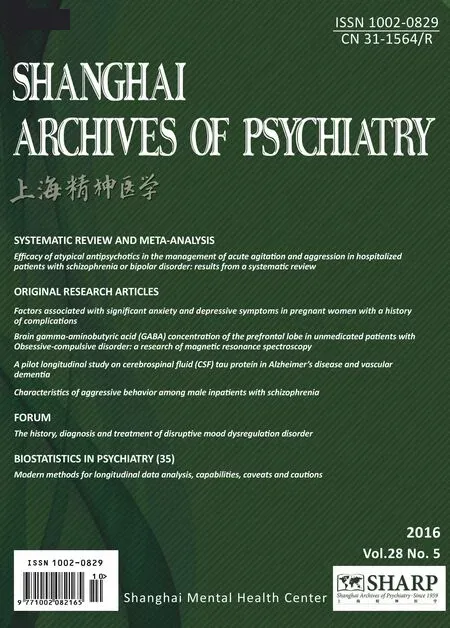
- 上海精神醫學的其它文章
- Modern methods for longitudinal data analysis, capabilities,caveats and cautions
- The history, diagnosis and treatment of disruptive mood dysregulation disorder
- Characteristics of aggressive behavior among male inpatients with schizophrenia
- A pilot longitudinal study on cerebrospinal fluid (CSF) tau protein in Alzheimer’s disease and vascular dementia
- Brain gamma-aminobutyric acid (GABA) concentration of the prefrontal lobe in unmedicated patients with Obsessivecompulsive disorder: a research of magnetic resonance spectroscopy
- Factors associated with significant anxiety and depressive symptoms in pregnant women with a history of complications