Trade Protectionism Should Not Be Advocated
2017-01-16 13:16:14BystaffreporterLU
CHINA TODAY 2017年1期
By+staff+reporter+LU+RUCAI
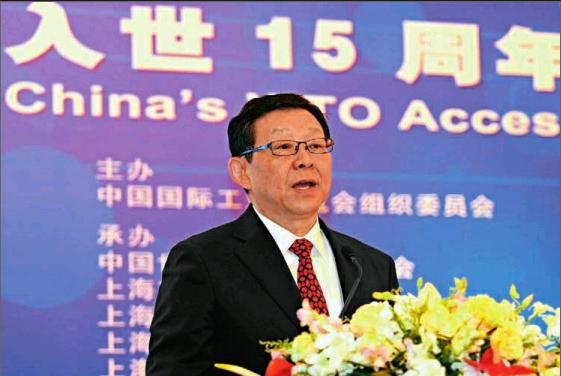
DECEMBER 11, 2016 marked the 15th anniversary of Chinas accession to the World Trade Organization (WTO). It was also the expiration date, according to Article 15 of the Protocol on the Accession of the Peoples Republic of China, of the surrogate or analogue country approach WTO member countries use to calculate anti-dumping measures against Chinese exports. All WTO members committed to abide by this expiration 15 years ago.
However, on October 19, 2016, the European Commission presented its long awaited proposal regarding a new methodology for anti-dumping investigations. Linked to elimination of the existing list of non-market economy countries, modernization of trade remedy legislation, and new anti-dumping and anti-subsidy investigation models, the new approach makes market distortion the precondition for anti-dumping comparisons and the premise on which to adopt the informants cost and price. This is determined by the extent of government policy influence, state-owned enterprise distribution, and the level of independence of financing institutions. Countervailing measure to any alleged government subsidies may then be adopted.
“Although not explicitly, several price distortion conditions are clearly directed against China,” Vice President of the China Society for WTO Studies Xue Rongjiu said. On November 9, the European Commission submitted to the European Parliament and Council of the European Union the formal proposal to amend its antidumping legal system.
“Since joining the WTO China has always abided by its rules, to the benefit of both the country and the world,” Xue said. It is his hope that the WTO member states that followed the analogue country method towards China will terminate such approach according to the schedule specified in Article 15. Trade between them and China may otherwise be affected.
Obeying the Rules
Fifteen years after rejoining GATT and engaging in WTO negotiations, on December 11, 2000, China became the 143rd member of the WTO. During negotiations, China accepted around 30 multilateral rules, and also four special rules, namely, the minimum transition period review, the China-specific safeguard provision, the special textile safeguard, and the Non-market economy provision in anti-dumping, or Article 15 as mentioned above.
With respect to the minimum transition period review, China was reviewed not only by every member but also subject to special annual investigations on the countrys trade policy annually, which has been expired in 2011.
As to the China-specific safeguard provisions, these stipulated that should certain Chinese exports have an impact on the industry of other members, these members could adopt measures to limit Chinas exports. This provision expired in 2012.
The special textile safeguard provisions refer to the Multi-Fiber Arrangement (MFA) whereby developed countries restricted developing countries in the 1970s. It was phased out in 2005. However, China, as a large textile trading country, was forced to abide by the MFA until 2008.
According to Xue, when the fourth specific clause was about to fall due, the European Commission proposed market distortion as a substitute for the non-market economy approach with the specific intent of extending that of the surrogate country. Terminating the surrogate price clause according to the specified date is the imperative international obligation of every WTO members.
Opening up beyond Promise
In complying with, performing, applying, and maintaining WTO rules, China has become a responsible WTO member. During the past 15 years, China has abided by the WTOs general rules with regard to reduced tariffs, relaxed market access to service trade, and strengthened intellectual property protection, all of which have shown tangible achievements.
“In order to conform to WTO rules, China modified a great many domestic laws and regulations, including more than 2,000 articles of central governments ministries and commissions, and as many as 90,000 local government articles,” Xue said.
China has gradually lowered its tariffs since 2002. According to the Ministry of Commerce, the country has kept to its promise regarding tax abatement on all products since 2010, average tariff having been reduced from 15.3 percent to 9.8 percent, and to 9.3 percent at the end of 2015. “Although higher than that of developed countries, it is lower than that levied by developing countries,” Xue said.
China, both on and ahead of schedule, has kept to its service trade promises, such as in banking, securities, and insurance. “Other WTO members undoubtedly hope that China will open its service trade further,” Xue said.“In fact, the extent of Chinas opening of its service trade approaches that of developed countries, having exceeded the range China originally promised.”
Moreover, Chinas intellectual property protection has been reinforced. “Both the WTO Director-General and its members highly commended China as exemplary in this respect,” Xue said.
Win-win Choice
“That China has changed radically since joining the WTO is known to all,” Xue said. Chinas economic and trade environment has improved enormously. China has, therefore, intensified awareness of international rules and established open, transparent, and fair international economic and trade legislation and a market economic system based on WTO rules. It has thus hastened the pace of state-owned enterprise reform, invigorated private enterprises, and attracted foreign investment to China. The country has consequently become the worlds second largest economy and largest trading state.
Since joining the WTO, the Chinese government and enterprises have significantly strengthened their capability to apply legal rules and defense. “When involved in lawsuits in the past, we lacked translators, lawyer, or professionals,” Xue said. “But now China owns a large number of professionals, which has greatly enhanced the countrys capability as regards applying legal defense and rules.”
Xue quoted figures that underline Chinas fruitful industrial achievements since entering the WTO. Among worlds top 500 industrial products, the outputs of 220 varieties from China rank a global first. Besides, Chinas emerging industries have mushroomed, and high and new technological industries such as high-speed rail, aerospace, and computers, as well as mega structures, have forged ahead. China has become a core WTO member, whose industrial rules are acknowledged in the international community.
China has moreover actively contributed Chinese wisdom to global economic governance, notably by proposing the Belt and Road Initiative, establishing the Asian Infrastructure Investment Bank and BRICS New Development Bank, and hosting the G20 Summit. “Obeying WTO rules brings benefits to both China and other members. China hence cherishes such rules,” Xue said.
Xue also expressed concern about anti-globalization.“The anti-globalization trend goes against world economic development. Reverting to trade protectionism and creating trade barriers will be to the detriment of the world division of labor and global value chain,” Xue said. “China advocates free trade to prevent the spread of trade protectionism worldwide. For China, reform and opening-up will continue to deepen, and the country will intensify its exchange and cooperation with other states, which will benefit both China and other WTO members.”
If the U.S and the EU plan to prolong Article 15 by passing domestic legislation, China could, according to WTO rules, accordingly amend its laws as counter measures. “However, this would inflict harm on both sides,”Xue said.
On December 12, 2016, the spokesperson for the Chinese Ministry of Commerce stated that China had launched dispute settlement procedures at the WTO by requesting consultations with the U.S. and the EU regarding the surrogate country approach.
As the EU is Chinas major trade partner, Xue said, it is Chinas hope that the EU will take the lead in acknowledging and abiding by the expiration of the clause, thereby setting an example to other WTO members.