埃伯費爾德戶外游泳池奧地利萊布靈
2017-09-07 03:47:36PaulOtt
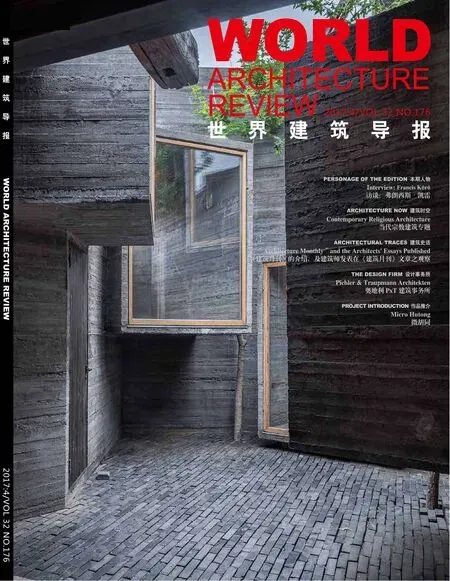
世界建筑導報 2017年4期
埃伯費爾德戶外游泳池奧地利萊布靈
業主:Christine und Bertrand Conrad-Eybesfeld
日期:設計啟動:2003年/施工:2005年/
竣工:2009年
結構設計:Manfred Petschnigg, Graz
景觀設計:West 8, Rotterdam
照明設計:Klaus Pokorny, Wien
攝影:Paul Ott
埃伯費爾德城堡的原始規劃是借助一道裸露的混凝土環路形成一個洼地并與周邊景觀有機融合起來。根據設計這個環路形成的洼地里面是生活及其他功能設施和一個室內游泳池。
這一項目后來分為兩個單獨的項目:一座位于城堡底層的生活景觀區和位于原先的城堡外墻外靠近公園里的角塔附近的游泳池區域:里面是鋪有聚酯地毯的游泳池。
游泳池和入口處——加上日光浴區、操場,有座位的斜坡和陽臺在這里形成草坪上一個整體建筑的不同區域,所有區域都鋪上聚酯或聚氨酯地毯。建筑從一樓草坪上展開,一樓下面是一個懸臂式混凝土結構,下面便是更衣室和淋浴房。游泳池的入口和設有座位的斜坡起伏有致,給人們提供了舒適的座椅和可供躺臥的凹孔。
Client: Christine und Bertrand Conrad-Eybesfeld
Year: Start of Design: 2003 / Start of Construction: 2005 /
Completion: 2009
Structural Design: Manfred Petschnigg, Graz
Landscape Design: West 8, Rotterdam
Lighting Design: Klaus Pokorny, Wien
Photograph: Paul Ott
The original plan for Eybesfeld Castle was to provide a new base and an integration into the landscape by a surrounding loop in exposed concrete. This loop should comprise living, secondary functions as well as an indoor swimming pool.
This project was split up later on in two single projects: a living landscape on the ground floor of the castle and a pool area located outside of the former castle wall near the corner tower in the park: a spread out blanket in polyester.
Pool, entry- and sunbathing areas, playground, seat ramp and sun deck are interpreted as zones of one single body lying in the lawn, coated homogeneously with polyester or polyurethane respectively. Below ground level where this figure folds up from the lawn emerge changing cubicles and a shower room arranged as a mere glass structure underneath the cantilevering concrete structure. The surfaces of the pool entry and the seat ramp have an undulating shape in such a way as to achieve anatomically formed seat and lying hollows.


總平面圖 site plan

西南立面圖 south-west elevation

東北立面圖 north-east elevation


業主:BELIG Beteiligungs- und Liegenschafts GmbH
日期:設計啟動:2006年/施工:2008年/
竣工:2009年
面積:總建筑面積:4 404.78/
可用建筑面積:3 096.93平方米
攝影:Paul Ott
該項目是對整個建筑綜合體的全新改建。
因為對現有建筑進行改造是一項大工程,但無法提供按當代需求管理學校所需的設施,所以保留和改造部分現有建筑綜合體的另一項方案被否決。
此外,設計過程中還發現根據復合體的實際規模的比例來看,整合現有綜合體的設想實際上幾乎無法實現。
功能解決方案:
馬廄布置在中央庭院周圍。這樣不僅可以縮短道路,還可以保證從庭院各點都可以看到全景。這樣的布局保證了員工日常工作的效率,連續的蓋頂方便在惡劣天氣條件下前往綜合體內的任何地方。馬廄與周圍其他設施直接相連,周圍是開放空間,空氣通暢,陽光充足,方便動物與外部空間保持親密聯系。
服務設施在西北角上,保護綜合體不受來自 Stremtalstra?e 的不利因素的干擾,
而教學設施布置在綜合體的一端,因為這是外人訪問學校時來的最多的地方。騎術練習廳也設在這里。
建筑解決方案:
三個不同的構造層面實際上是相連的,各個構造層都可用各自所用的材料描述: 1、地面上的構造層采用混凝土;2、墻體采用輕質木結構框架或木桿結構;3、屋頂采用承重木結構,上面有大面積的綠色植被。
解決方案的經濟可行性:
根據上述施工方法,為每個建筑位置選擇最合適的經過優化的施工方法:使用混凝土和木材,根據所在位置選用最適合的材料。
生態和能源可持續性解決方案:
所用的大部分建筑材料可以回收利用,并可以最經濟的方式充分利用資源生產。
綠色屋頂有助于緩解夏季屋頂熱能對屋頂的影響。雨水進入獨立的公用排水管。施工過程中挖出的土方將用于周圍地形的改造。
建筑設計方法:
馬廄像手指一樣向四周延伸。綜合體看起來更像是一個建筑群,而不像傳統的方方正正的農場或城堡。如果把這些建筑物看作是周圍景觀的組成部分,好像是從周圍草地上折疊起來的一塊,屋頂看起來像一塊塊高高升起的青草坪。整個建筑是一個結構松散的農業建筑,不是一個緊湊的工業綜合體。
Client: BELIG Beteiligungs- und Liegenschafts GmbH
Year: Start of design: 2013 / Start of construction: 2014 /
Completion: 2015
Areas: Gross floor area: 4,404.78 m2 /
Usable floor area: 3,096.93 m2
Photos: Paul Ott
This project is based on a complete new construction of the entire complex.
The alternative proposal to retain and adapt parts of the existing complex was rejected, as renovating the existing buildings, while a major undertaking, would still not provide the facilities required to run the school in a way that meets contemporary demands.
In addition during the course of the design work it was revealed that the dimensions of the complex imply an entirely different scale that would make a successful integration of parts of the existing complex practically impossible.
The solution in terms of function:
The stables are laid out around a central courtyard. On the one hand this ensures short routes and a clear overview from every point in the yard. This layout allows the staff to carry out their daily work with maximum efficiency. A continuous canopy roof provides protection from the weather in accessing all parts of the complex. The stables intervene radically in the surroundings and are surrounded by open spaces, air and sunlight. This establishes an adequate relationship to outdoor space for the animals.
The services wing that provides a termination to the northwest that offers protection from the elements
Coming from Stremtalstra?e the teaching wing forms the start of the complex. As it is the part of school that is most often visited by the general public the riding hall is also located here.
The solution in terms of construction:
In principle three different tectonic levels are articulated, each of which is expressed by means of its respective materials: 1. Those parts that rest on the ground are made of concrete; 2. The rising walls are built in lightweight timber frame or timber rod construction; 3. The roofs are load bearing wooden structures and covered with extensive green planting.
Economy of the solution:
In accordance with the approach to construction outlined above, the most suitable construction method was chosen for each architectural position and optimised: concrete and wood: each material is used where it works best.
Sustainability of the solution in ecological and energy terms:
Most of the building materials used can be recycled and are produced in a way that makes economic use of resources..
The green roofs help buffer the impact of summer heat on the roofs. The rainwater feeds into the public separate drainage pipe. The earth excavated in the course of the building work will be used for modelling the surrounding terrain.
Architectural design approach:
The stables extend like fingers into the surrounding landscape. The complex looks more like a cluster than a traditional four-square farm or a bastion. The buildings, consciously interpreted as part of the landscape, are folded out of the surrounding meadows, their roofs look like elevated grass scars. The entire development is a loosely scatted agricultural enterprise, not a compact industrial complex.
Eybesfeld Outdoor Swimming Pool Lebring, Austria
居興農業學校奧地利居興
Güssing Agriculture School Güssing, Austria


總平面圖 site plan

立面圖 elevations

猜你喜歡
北方建筑(2021年6期)2021-12-31 03:03:54
閱讀與作文(英語初中版)(2021年8期)2021-09-13 02:16:29
建材發展導向(2021年9期)2021-07-16 07:11:36
文苑(2020年10期)2020-11-07 03:15:36
現代裝飾(2020年6期)2020-06-22 08:43:12
中國房地產業(2016年2期)2016-03-01 01:25:48
河南電力(2016年5期)2016-02-06 02:11:34
數字通信世界(2015年10期)2015-12-21 12:22:54
少兒科學周刊·兒童版(2015年6期)2015-11-24 03:49:38
西安建筑科技大學學報(自然科學版)(2014年2期)2014-11-12 13:04:54