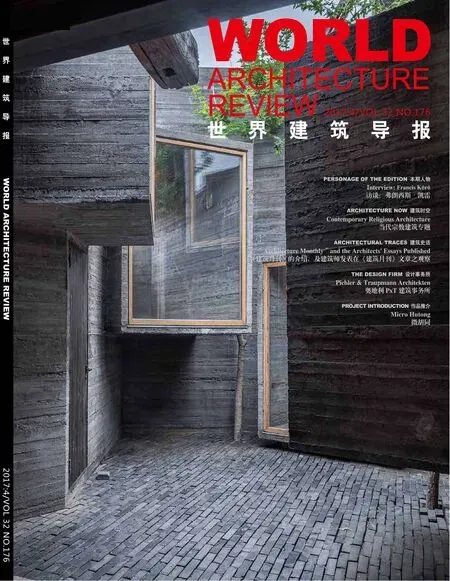
葡萄藤旅館奧地利Deutsch-Schützen
2017-09-07 03:47:36LisaRastl
世界建筑導(dǎo)報 2017年4期
葡萄藤旅館奧地利Deutsch-Schützen
Wohnen am Ratschen Deutsch-Schützen, Austria
業(yè)主:Ratschens Wohnothek GmbH & Co KG
細部設(shè)計/結(jié)構(gòu)設(shè)計:Woschitz 工程公司
日期:設(shè)計啟動:2010年 / 施工:2011年6月/
竣工:2011年8月
面積:可用建筑面積:234.30平方米/
占地面積:345.84平方米
攝影:Lisa Rastl
PxT建筑事務(wù)所以其適應(yīng)景觀需求的特色和以細膩敏感的手法處理各項工程具體的情況聞名,但也以其高度的創(chuàng)新性和從當代視角出發(fā)完成不尋常的建筑任務(wù)聞名。為了實現(xiàn)上述目的,項目開發(fā)時經(jīng)常會加入一些特殊因素,因為其目的是實現(xiàn)設(shè)計對象的簡單、真實和引人遐想的特征與高品質(zhì)的建筑氛圍相結(jié)合的設(shè)計初衷。
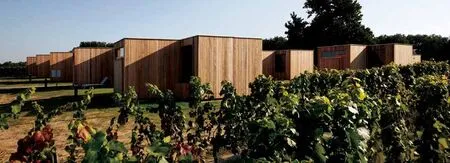
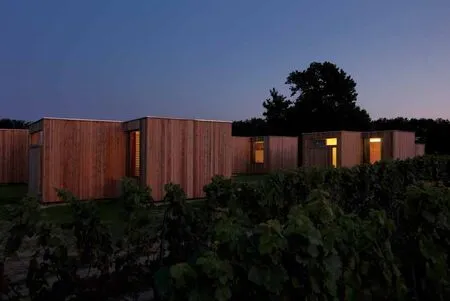
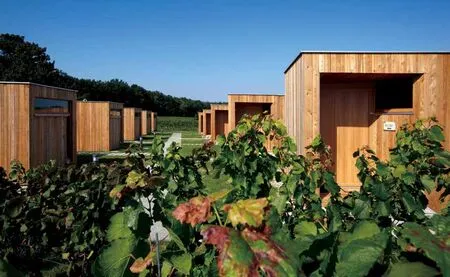
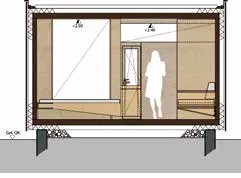
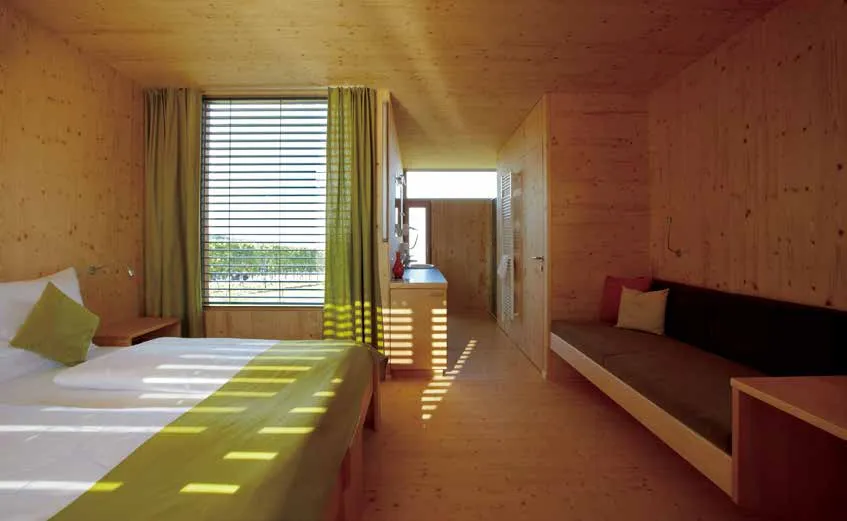
在旅游行業(yè),住在提供葡萄藤掩映下的臥室是一種獨特的體驗。傍晚你在從兼作接待前臺和早餐室的餐廳用餐后回到一間葡萄藤掩映下的獨立臥室,會非常愜意。這間酒店提供十間臥室,每間都有兩張床,還額外配有一張沙發(fā)。
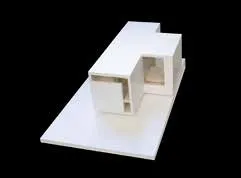
獨立臥室的居住體驗的亮點在于以葡萄藤文化為特色的景觀要素。房間的墻上是葡萄藤,墻與墻之間也是葡萄藤,葡萄藤成了酒店客房不可或缺的要素,各種功能設(shè)施都在葡萄藤掩映之下。您可以說是睡在葡萄藤之間,葡萄藤映在窗戶上,看起來要破門而入。
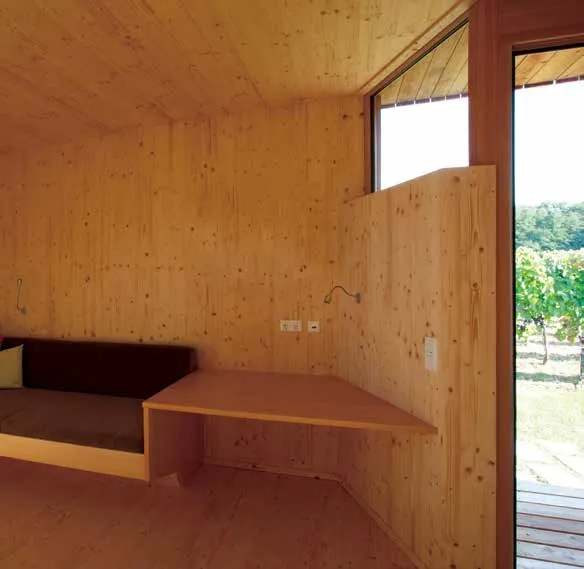
材料的選擇也表達了這種設(shè)計理念的力量。室內(nèi)和室外都全部采用純天然可再生木材裝修,用不同的表面漆處理,形成各中不同的風格。整個建筑反映了設(shè)計師整合利用可再生能源的能源觀念。
Client: Ratschens Wohnothek GmbH & Co KG
Detailed Design / Structural Design: Woschitz Engineering ZT GmbH, Eisenstadt
Year: Start of Design: 2010 / Start of Construction: 06. 2011 /
Completion: 08. 2011
Usable Floor Area: 234.30 m2
Built Area: 345.84 m2
Photos: Lisa Rastl / Copyright by Pichler & Traupmann Architekten
The work of PICHLER & TRAUPMANN ARCHITEKTEN is known for its dialogue with the landscape and sensitive handling of each project’s particular context, but also for a high level of innovation and the contemporary interpretation of unusual building commission. In this case the project development involved a number of special factors, as the aim was to combine the simple, authentic and meditative qualities of the place with a high quality ambiance.
In the area of tourism distributing the bedrooms of a facility that offers overnight accommodation amongst the vineyards is an unusual approach. From the restaurant, where the reception and breakfast room are also located, you can retire at the end of an enjoyable evening to one of the freestanding bedrooms amidst the vines. Ten units, each with two beds and an additional couch, are provided for guests.
The free-standing residential elements are oriented on the culture of the rows of vines and are derived from this landscape element. The long side walls of the rooms take up the lines of the rows of vines and the distance between them, making them into built elements between which the various functions are placed. One sleeps between the rows of vines, so to speak, and they are reflected in the large windows and appear to continue into the rooms.
The language of the materials also expresses the strength of this design concept. Inside and in the outdoor area wood is used throughout as a naturally renewable building material, in different surface finishes and with different characters. The building’s energy concept incorporates renewable energy.

猜你喜歡
現(xiàn)代裝飾(2021年6期)2021-12-31 05:27:54
北方建筑(2021年6期)2021-12-31 03:03:54
小學科學(學生版)(2020年12期)2021-01-08 09:28:10
文苑(2020年10期)2020-11-07 03:15:36
現(xiàn)代裝飾(2020年6期)2020-06-22 08:43:12
少年漫畫(藝術(shù)創(chuàng)想)(2020年12期)2020-06-09 05:50:08
藝術(shù)啟蒙(2018年7期)2018-08-23 09:14:18
海峽姐妹(2017年7期)2017-07-31 19:08:17
Coco薇(2017年5期)2017-06-05 08:53:16
少兒科學周刊·兒童版(2015年6期)2015-11-24 03:49:38