
APSIM玉米模型中輻射估算的誤差傳輸*
2017-10-13 00:49:24毛洋洋1趙艷霞2祎2胡正華3亮1
中國農業氣象 2017年10期
毛洋洋1,趙艷霞2**,張 祎2,胡正華3,魏 亮1
?
APSIM玉米模型中輻射估算的誤差傳輸
毛洋洋,趙艷霞,張 祎,胡正華,魏 亮
(1.河南省氣象培訓中心,鄭州 450003;2.中國氣象科學研究院,北京 100081;3.南京信息工程大學氣象災害預報預警與評估協同創新中心/耶魯大學-南京信息工程大學大氣環境中心,南京 210044)
以華北地區3個典型站點(山東省莒縣站、河南省鄭州和南陽站)為研究對象,分析計算玉米生長期間Angstrom-Prescott模型、Ogelman模型、Bahel模型、日照百分率和氣溫日較差綜合模型(簡稱綜合模型)和劉可群等太陽總輻射估算模型的相對誤差,分別將該5個模型估算結果和太陽輻射實測值(依次命名為模擬方案1-5和模擬方案0)輸入APSIM玉米模型,計算各模型驅動APSIM玉米模型模擬產量的相對誤差,分析由于太陽輻射估算誤差對模型產量模擬結果造成的誤差傳輸。結果表明,5個日太陽輻射模型在生長期內的平均估算誤差(ε)在莒縣站以A-P模型最小,在鄭州和南陽站點以綜合模型最小;各輻射估算模型對APSIM模型的產量模擬結果均有明顯影響,綜合模型模擬結果最好,其驅動APSIM模擬的玉米產量誤差最小;5個輻射模型估算誤差對APSIM模型模擬玉米產量的誤差均有放大效應,Angstrom-Prescott模型、Ogelman模型、Bahel模型、綜合模型和劉可群等模型輻射誤差分別以2.23、2.28、1.63、1.85、1.90倍傳輸到APSIM玉米模型模擬的產量誤差,可見,一定要重視輻射模型的選取和輻射模型經驗系數的確定;評價5個輻射模型的誤差傳輸到產量的誤差,要綜合考慮輻射模型本身的誤差和輻射誤差傳輸到產量誤差中放大的效應兩方面的影響,綜合模型傳輸到產量的誤差最小。因此,在華北地區無太陽總輻射實測值的地區使用APSIM模型時,本研究推薦輻射方案4即綜合模型為首選模型。
太陽輻射模型;作物模型;模擬誤差;誤差傳輸;華北地區
太陽總輻射是作物模型必要的輸入參數。然而,由于太陽輻射實測儀的成本高,校正、維護復雜等原因,國內外太陽輻射觀測數據嚴重匱乏,因此,利用已有氣象數據估算太陽輻射是輻射參數獲得的重要途徑。國內外學者提出了多種利用常規氣象要素如日照時數、溫度、云量、濕度、降水等估算太陽輻射的模型。目前普遍應用的是日照百分率模型,其中最常用的是Angstrom-Prescott模型(簡稱A-P模型)。Yang等發現Ogelman模型估算太陽總輻射的效果優于A-P等傳統方法。Almorox等比較了4種日照百分率模型,發現Bahel模型優于A-P模型和Ogelman模型。此外,Chen等發現日照百分率和氣溫日較差綜合模型取得了比經典的A-P模型和Bahel模型更高的精度。劉可群等利用日照百分率、降水量和大氣可降水量、溫度日較差等因子,建立了有日照和無日照條件下的太陽總輻射模型。毛洋洋等研究也發現,Angstrom-Prescott模型、Ogelman模型、Bahel模型、綜合模型和劉可群等模型估算華北地區太陽輻射均可以使用,但綜合模型精度最高。
作物模型是揭示栽培管理技術對作物產量影響的重要工具,在沒有太陽輻射實測值的地區適用作物模型,其必要的太陽總輻射參數主要是通過輻射模型估算而來,而目前輻射模型眾多,不同的輻射模型有不同的地區適用性,并且誤差水平也有所不同,前人的研究中大部分選取的是A-P模型。不同輻射模型驅動作物模型輻射估算誤差在作物模型中是如何傳輸的,輻射模型的估算誤差給作物模型模擬效果帶來怎樣的影響,目前鮮有研究報道。
APSIM (Agricultural Production Systems Simulator,農業生產系統模擬模型)是能夠模擬農業系統各主要組分的機理模型,模型以“日”為時間步長,可以模擬不同氣候、土壤和管理措施等因子對作物或作物系統的影響,已廣泛用于農作系統管理、氣候變化影響評估、氣候預報的價值評估以及氣候風險管理等方面。目前已在一些國家和地區得到了廣泛驗證和應用,并在世界各地農業生產中發揮著積極作用。相比DSSAT和WOFOST模型,中國引入APSIM模型較晚,對APSIM模型主要開展了模型比較、適用性驗證以及初步的應用。
為了研究不同輻射估算模型對作物模型模擬效果的可能影響,本文以APSIM模型模擬華北地區玉米產量為例,分析計算玉米生長期內Angstrom-Prescott模型、Ogelman模型、Bahel模型、綜合模型和劉可群等太陽總輻射模型相對實際觀測值的相對誤差,分別將該5個模型模擬結果和太陽輻射實測值(共6種模擬方案)輸入APSIM模型,計算各模型驅動APSIM模型模擬玉米產量的相對誤差,分析由于太陽輻射估算誤差對模型產量模擬結果造成的誤差傳輸,探討不同輻射模型對APSIM模型模擬玉米產量誤差的效應(是否存在誤差放大效應)。一方面,為APSIM模型在華北地區應用選擇合適的輻射模型提供依據,另一方面,根據是否存在誤差放大效應,給作物模型使用者對模型內輻射模型的合理選擇提供科學依據。
1 材料與方法
1.1 數據來源
本研究數據來自同時具有太陽輻射數據和氣象數據以及玉米作物數據的山東省莒縣站(2001-2014年)、河南省鄭州(2001-2014年)和南陽站(2001-2012年),臺站基本信息如表1。其中,氣象數據包括逐日最高氣溫、最低氣溫、降水量及輻射模型所需要逐日日照時數、最高氣溫、最低氣溫、降水量、水汽壓,作物數據包括玉米的播種日期、播種密度、播種深度、行距、施肥和灌溉措施、生育期(出苗期、開花期和成熟期)和產量,作物模型需要的土壤數據包括分層土壤容重、飽和含水量、田間持水量、凋萎系數等。氣象和輻射數據取自中國氣象科學數據共享服務網,玉米的生育期、產量和土壤數據均來自當地農業氣象實驗站的實測數據。

表1 臺站基本信息
1.2 作物模型模擬方案
作物模型及版本為APSIM 6.1。模擬方案共6個:方案0輸入APSIM模型的逐日太陽總輻射參數為實測值,方案1-5輸入APSIM模型的逐日太陽總輻射分別由Angstrom-Prescott模型、Ogelman模型、Bahel模型、綜合模型和劉可群等太陽總輻射模型依據氣象數據估算得到,其它氣象、土壤等參數,6個方案均相同,為當地實測值。6個輻射方案分別為
方案0:逐日太陽總輻射參數為實測值
方案1:Angstrom-Prescott(A-P)模型
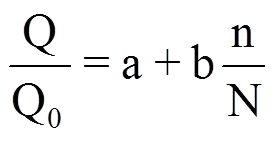
式中,系數a=0.161,b=0.614,數據來自文獻[40]。
方案2:Ogelman模型

式中,系數a=0.1404,b=0.6126,c=0.0351,數據來自文獻[41]。
方案3:Bahel模型

式中,系數a=0.17,b=0.93,c=-1.08,d=0.73,數據來自文獻[11]。
方案4:綜合模型

式中,系數a=0.04,b=0.48,c=0.83,d=0.11,數據來自文獻[11]。
方案5:劉可群等模型
當天記錄的日照時數大于0時,為有日照;等于0則為無日照。
有日照條件時

無日照條件時
-(6)
式中,a=0.464,a=-0.003,a=0.221,b=0.071,b=0.015,數據來自文獻[13]。
所有模型中,Q為到達地表的太陽總輻射(MJ·m·d),Q為天文輻射(MJ·m·d),N為理想日照時數或最大可照時數(h),n為日照時數(h),T為日最高氣溫(℃),Tm為日最低氣溫(℃),W為大氣可降水量(mm),P為日降水量(mm),Abs為大氣降水與可降水量影響因子。
1.3 誤差估算
(1)生長期內輻射值估算誤差(ε)

(2)輻射誤差傳輸到產量的誤差(ΔC)
方案1-5輻射誤差傳輸到產量的誤差(ΔC)的計算方法:以方案0為標準,方案1-5的產量誤差(C)依次減去方案0(C)的產量誤差。

(9)
(10)
式中,Y為產量的實測值(t·hm),Y為模擬方案i模擬的產量值(t·hm,i=1、2、3、4、5),Y為模擬方案0(逐日太陽總輻射參數為實測值)模擬的產量值(t·hm)。
1.4 作物參數調試
鑒于各地不同年份播種的玉米品種并不完全一致,根據當地玉米的播種日期、生育期(出苗期、開花期和成熟期)和產量實測值,在同一站點不同年份相差并不大,用奇數年作為調參組,偶數年作為驗證組,采用“試錯法”對每個站點各確定一套品種參數,結果見表2。調參組資料年份分別為:莒縣和鄭州站(2001、2003、2005、2007、2009、2011年)、南陽站(2001、2003、2007、2011年);驗證組資料:莒縣和鄭州站(2002、2004、2006、2008、2010、2012年)、南陽站(2002、2006、2010、2012年)。

表2 各站APSIM模型中玉米主要參數調試結果
2 結果與分析
2.1 實測逐日太陽總輻射驅動下APSIM模擬玉米產量結果誤差分析
用模擬方案0(實測太陽總輻射驅動下)模擬莒縣和鄭州站(2002、2004、2006、2008、2010、2012、2013、2014年)以及南陽站(2002、2006、2010、2012年)的玉米產量相對誤差,結果如圖1所示。由圖可見,莒縣站在2002和2004年為正,說明產量模擬值高于實測值,其余年均為負,模擬值高于實測值。相對誤差(C)在-19.64%~6.20%,除2013、2014年較大,其它年份其絕對值均小于10.70%,平均誤差為8.68%;鄭州站相對誤差在-13.55%~8.26%,平均誤差為5.91%,僅2010年較大;南陽站相對誤差在-1.25%~8.81%,其絕對值均小于10%,平均誤差為5.16%。可見用實測的逐日太陽總輻射驅動APSIM玉米模型模擬產量的效果較好。
2.2 生長期內5個日太陽總輻射模型的誤差分析
5個日太陽輻射在生長期內的估算誤差(ε)如圖2所示,由圖可以看出,5個輻射模型的相對誤差整體上均為負值,可見5個輻射模型在生長期間估算值整體上是偏小的。從ε的絕對值來看,莒縣站,2002年Bahel模型最小,2010年綜合模型最小,其余年份均為A-P模型最小;鄭州站,2002、2012和2013年A-P模型最小,其余年份均是綜合模型最小;南陽站,2002和2010年綜合模型最小,2006年Ogelman模型最小,2012年A-P模型最小。A-P模型、Ogelman模型、Bahel模型、綜合模型、劉可群等模型的ε在莒縣站的范圍依次為-6.56%~4.41%、-9.65%~2.48%、-8.70%~-0.04%、-6.89%~1.15%、-11.89%~2.66%,平均誤差依次為2.99%、4.93%、4.22%、3.11%、6.43%,平均而言A-P模型誤差最小;鄭州站各模型的ε范圍依次為-12.06%~0.30%、-15.46%~-2.21%、-13.05%~-3.12%、-10.25%~-1.83%、-14.92%~-6.03%,平均誤差依次為6.96%、9.96%、8.77%、6.53%、10.36%,綜合模型誤差最小;南陽站各模型的ε范圍依次為-10.08%~4.83%、-13.13%~1.72%、-12.17%~2.05%、-9.93%~3.15%、-14.70%~-1.82%,平均誤差依次為6.32%、7.86%、7.14%、5.10%、9.26%,綜合模型誤差最小。可見5個模型在莒縣的模擬太陽總輻射值相對誤差整體上小于在鄭州和南陽站。
2.3 估算太陽總輻射驅動下APSIM模擬結果誤差分析
用模擬方案1-5(5個不同太陽總輻射模型的驅動下)模擬3個站點歷年的產量,由表3、4、5可見,各站不同模擬方案(選用不同太陽輻射模型)模擬的產量誤差(C)以及由于輻射誤差傳輸到產量的誤差(ΔC)的情況均不相同,即使是同一站點,每年的情況也不完全相同。表3顯示,在莒縣站2002和2004年,5個方案模擬產量誤差(C)多為正值,說明模擬產量大于實測產量,其余年份C均為負值,模擬產量小于實測產量,C的范圍為-27.91%~8.62%,在2004年誤差較小,2014年誤差較大,在同一年不同模擬方案模擬產量誤差不同,最高相差13.59個百分點;C的絕對值,在2002和2004年模擬方案5最小,2010年模擬方案1最小,2012年模擬方案3最小,其余年均是模擬方案4最小;與模擬方案0(太陽總輻射實測值驅動APSIM)模擬產量的誤差對比發現,除2004年及2002、2010、2012年中個別模擬方案,其余年份5個模擬方案的產量誤差均大于模擬方案0的產量誤差,說明輻射的估算誤差進一步傳輸到了產量,輻射的誤差傳輸到產量的誤差(ΔC)有正有負,其范圍在-22.09%~4.88%,ΔC的絕對值,在2002和2010年以模擬方案2最小,2012年以模擬方案1最小,其余年份均為模擬方案4最小。各年各方案產量模擬誤差和傳輸誤差大小不同,相對來看,方案4輻射的誤差傳輸到產量的誤差較小。
表4顯示,鄭州站在8個典型年中,5種輻射估算模型造成的模擬產量誤差(C)均為負值,范圍在-47.86%~-3.60%,2010年誤差最大,2014年誤差最小,同一年中各方案模擬產量結果存在很大差異,最高可相差22.50個百分點,其中各年均顯示方案4的誤差最小;在不同年份5個模擬方案模擬的產量均小于模擬方案0(實測輻射驅動下)模擬的產量,并且5個模擬方案產量的誤差均比模擬方案0的產量誤差大,說明輻射的估算誤差進一步傳輸到了產量。輻射的誤差傳輸到產量的誤差(ΔC)均為負值,從數值上看,各方案模擬傳輸結果存在很大差異,同一年中最高可相差22.50個百分點,多數年份表現為方案4輻射的誤差傳輸到產量的誤差較小。
表5顯示,南陽站在4個典型年,C的范圍為-35.86%~7.79%,5個模擬方案均表現為2012年較大,在同一年最高可相差17.07個百分點;C的絕對值,在2006年模擬方案2最小,2010年模擬方案1最小,其余年份均表現為模擬方案4最小;ΔC的絕對值,在2006年以模擬方案2最小,其余年份均為模擬方案4最小,多數年份表現為方案4輻射的誤差傳輸到產量的誤差較小。
2.4 估算太陽總輻射驅動APSIM模型時誤差傳輸分析
5個太陽總輻射模型在生長期估算誤差(ε)在莒縣、鄭州、南陽的范圍依次為-11.89%~4.41%、-15.46%~0.30%、-14.70%~4.83%,5個太陽總輻射模型驅動APSIM玉米模型中估算誤差傳輸到產量的誤差(ΔC)在莒縣、鄭州、南陽依次為-22.09%~4.88%、-56.61%~1.07%、-44.65%~9.09%。為探討不同輻射模型誤差對APSIM模型模擬玉米產量誤差的效應,對不同模擬方案的輻射誤差與和它傳輸到產量的誤差進行分析,發現兩者顯著性相關(圖3)。統計結果表明,5個輻射模型驅動APSIM模型時輻射誤差傳輸到產量誤差均有放大效應,在莒縣、鄭州、南陽3個站點,A-P模型驅動APSIM模型時輻射誤差傳輸到產量的誤差(ΔC)分別把輻射誤差(ε)放大了1.49、2.61、2.60倍,平均為2.23倍;Ogelman模型分別放大了1.83、2.62、2.74倍,平均為2.28倍;Bahel模型分別放大了1.02、1.86、2.00倍,平均為1.63倍;綜合模型分別放大了1.12、2.10、2.32倍,平均為1.85倍;劉可群等模型分別放大了1.41、1.99、2.30倍,平均為1.90倍。總的來看,放大倍數大小依次為Ogelman模型>A-P模型>劉可群等模型>綜合模型>Bahel模型。5個模型均在莒縣站放大倍數最小,這與5個模型均在莒縣站模擬太陽總輻射誤差最小有關。

表3 莒縣站模擬產量誤差(Ci)和輻射誤差傳輸到產量的誤差(ΔCi)

表4 鄭州站模擬產量誤差(Ci)和輻射誤差傳輸到產量的誤差(ΔCi)

表5 南陽站模擬產量誤差(Ci)和輻射誤差傳輸到產量的誤差(ΔCi)
3 結論與討論
在華北平原地區,通過太陽總輻射實測值、Angstrom-Prescott模型、Ogelman模型、Bahel模型、綜合模型和劉可群等模型估算值6種方法得到的太陽總輻射值(6種模擬方案)驅動APSIM模型模擬玉米產量,探討不同輻射模型的誤差在APSIM模型中的傳輸,由于生育期主要受積溫控制,輻射模型的誤差并不影響生育期,故本研究僅討論在產量誤差中的傳輸。結果表明,實測的逐日太陽總輻射驅動APSIM玉米模型模擬產量的效果較好,說明經調參驗證過的APSIM模型可以較準確模擬玉米產量。5個日太陽輻射模型在生長期內的估算誤差(ε)范圍為-15.46%~4.83%,與劉可群等研究輻射模型估算誤差的絕對值相差不大,5個日太陽輻射模型的ε均在莒縣站整體上小于在鄭州和南陽站,平均而言在莒縣站A-P模型最小,在鄭州和南陽站點,綜合模型最小。
模擬方案1-5(5個太陽總輻射模型驅動下)模擬的產量誤差(C)在不同站點、同一站點不同年份有所不同,整體上,模擬方案4即APSIM模擬玉米產量誤差最小,其輻射誤差傳輸到產量的誤差也最小。因此,在華北地區輻射方案4即綜合模型是APSIM模型輻射值估算的首選模型。而目前APSIM模型使用者輻射參數的估算大多數選用的是A-P模型,如戴彤等。
本研究發現,5個輻射模型驅動APSIM模型時輻射誤差傳輸到產量的誤差均具有放大作用,在3個站點平均放大倍數為1.63~2.74倍,其中Ogelman模型>A-P模型>劉可群等模型>綜合模型>Bahel模型,雖然Bahel模型的輻射誤差傳輸到產量誤差放大的倍數最小,但是由于Bahel模型估算的輻射誤差較大,與前面得到的綜合模型的輻射誤差傳輸到產量誤差最小并不矛盾。可見輻射誤差對APSIM模型模擬玉米產量的效果影響較大,因此,在沒有輻射實測值的地區使用作物模型,要想得到較精確的作物產量模擬結果,一定要重視輻射估算模型的選取,不僅需要選擇適合當地的估算效果最好的輻射模型,還要使用估算站點或附近站點的實測數據擬合得到適合當地的輻射估算模型的系數,如有可能,還可考慮在不同季節或月份擬合不同的系數。此外,也要注意選擇輻射誤差傳輸到產量誤差放大作用較小的模型。
由于本研究使用的5個輻射模型的參數直接取自文獻,雖然均適于華北地區,但因其參數不是用統一年限和站點的數據擬合得到,可能會對研究結果產生偏差。模擬方案1-5模擬的產量整體上偏低,這主要是輻射模型估算的輻射值偏低造成的;輻射模型估算的輻射值偏低的原因是該研究中輻射模型中的參數直接選用了前人擬合的適用于整個華北地區的系數,這些系數用在單一站點時可能不夠精確。另外,毛飛等發現,A-P模型的系數具有明顯的時空變化,而選用的輻射模型的系數則未更新,也有可能導致輻射值偏低。
[1]李秉柏,馬新明,徐立華.棉花干物質積累的模擬模型與檢驗[J].中國農業氣象,1998,19(2):20-24.
Li B B,Ma X M,Xu L H.Simulation model and validation of dry matter accumulation of cotton[J].Chinese Journal of Agrometeorology,1998,19(2):20-24.(in Chinese)
[2]何洪林,于貴瑞,牛棟.復雜地形條件下的太陽資源輻射計算方法研究[J].資源科學,2003,25(1):78-85.
He H L,Yu G R,Niu D.Method of global solar radiation calculation on complex territories[J].Resources Science,2003, 25(1):78-85.(in Chinese)
[3]Almorox J,Hontoria C.Global solar radiation estimation using sunshine duration in Spain[J].Energy Conversion and Management,2004,45(9-10):1529-1535.
[4]Hunt L A,Kuchar L,Swanton C J.Estimation of solar radiation for use in crop modeling[J].Agricultural and Forest Meteorology, 1998,91(3-4):293-300.
[5]Podesta G P,Nunez L,Villanueva C A,et al.Estimating daily solar radiation in the Argentine Pampas[J].Agricultural and Forest Meteorology,2004,123(1-2):41-53.
[6]劉建棟,于強,金之慶,等.冬小麥葉片光合作用農業氣象數學模型研究[J].中國農業氣象,2003,24(1):22- 25.
Liu J D,Yu Q,Jin Z Q,et al.Study on an agrometeorological model to simulate the leaf photosynthesis of winter wheat in Huanghuaihai Region[J].Chinese Journal of Agrometeorology, 2003,24(1):22-25.(in Chinese)
[7]Hoogenboom G.Contribution of agrometeorology to the simulation of crop production and its applications[J]. Agricultural and Forest Meteorology,2000, 103(1-2):137-157.
[8]Prescott J A.Evaporation from a water surface in relation to solar radiation[J].Transactions of the Royal Society of South Australia,1940,64(1940):114-118.
[9]Yang K,Koike T,Ye B S.Improving estimation of hourly,daily, and monthly solar radiation by importing global data sets[J]. Agricultural and Forest Meteorology,2006,137(1): 43-55.
[10]Almorox J Y,Hontoria C.Global solar radiation estimation using sunshine duration in Spain[J].Energy Conversion and Management,2004,45(9):1529-1535.
[11]Chen R S,Ersi K,Yang J P,et al.Validation of five global radiation models with measured daily data in China[J].Energy Conversion and Management,2004,45(11-12):1759-1769.
[12]劉可群,陳正洪,梁益同,等.日太陽總輻射推算模型[J].中國農業氣象,2008,29(1):16-19.
Liu K Q,Chen Z H,Liang Y T,et al.Calculation model for daily global solar radiation[J].Chinese Journal of Agrometeorology, 2008,29(1):16-19.(in Chinese)
[13]毛洋洋,趙艷霞,張祎,等.五個常見日太陽總輻射模型在華北地區的有效性驗證及分析[J].中國農業氣象,2016,37(5): 520-530.
Mao Y Y,Zhao Y X,Zhang Y,et al.Validation and analysis of five general daily solar radiation estimation models used in Northern China[J].Chinese Journal of Agrometeorology, 2016,37(5):520-530.(in Chinese)
[14]戴明宏,陶洪斌,廖樹華,等.基于CERES-Maize模型的華北平原玉米生產潛力的估算與分析[J].農業工程學報,2008, (4):30-36.
Dai M H,Tao H B,Liao S H,et al.Estimation and analysis of maize potential productivity based on CERES- Maize model in the North China Plain[J].Transactions of the CSAE,2008, (4):30-36.(in Chinese)
[15]劉偉昌,張雪芬,余衛東,等.水稻高溫熱害風險評估方法研究[J].氣象與環境科學,2009,(1):33-38.
Liu W C,Zhang X F,Yu W D,et al.Assessment method study on high temperature damage to rick[J].Meteorological and Environmental Sciences,2009,(1):33-38.
[16]陳思寧,趙艷霞,申雙和.基于集合卡爾曼濾波的PyWOFOST模型在東北玉米估產中的適用性驗證[J].中國農業氣象, 2012,33(2):245-253.
Chen S N,Zhao Y X,Shen S H.Applicability of Py WOFOST model based on ensemble kalmanfilter in simulating maize yield in Northeast China[J].Chinese Journal of Agrometeorology, 2012,33(2):245-253.(in Chinese)
[17]欒慶祖,葉彩華,莫志鴻,等.基于WOFOST模型的玉米干旱損失評估:以北京為例[J].中國農業氣象,2014,35(3):311-316.
Luan Q Z,Ye C H,Mo Z H,et al.Maize yield loss assessment for drought based on WOFOST model:a case study in Beijing[J].Chinese Journal of Agrometeorology,2014,35(3): 311-316.
[18]Chen C,Wang E,Yu Q.Modelling the effects of climate variability and water management on crop water productivity and water balance in the North China Plain[J].Agricultural Water Management,2010,97(8):1175-1184.
[19]Chen C,Baethgen W E,Wang E,et al.Characterizing spatial and temporal variability of crop yield caused by climate and irrigation in the North China Plain[J].Theoretical and Applied Climatology,2011,106(3-4):365-381.
[20]Xiao D,Tao F.Contributions of cultivars, management and climate change to winter wheat yield in the North China Plain in the past three decades[J].European Journal of Agronomy,2014,52:112-122.
[21]王娜,王靖,馮利平,等.華北平原冬小麥-夏玉米輪作區采用“兩晚”技術的產量效應模擬分析[J].中國農業氣象,2015, 36(5):611-618.
Wang N,Wang J,Feng L P,et al.Modeling the impact of “double-delay” technology on yield of wheat-maize cropping system in the North China Plain[J].Chinese Journal of Agrometeorology,2015,36(5):611-618.(in Chinese)
[22] Asseng S,Van Keulen H,Stol W.Performance and application of the APSIM N-wheat model in the Netherlands[J]. European Journal of Agronomy,2000,12(1):37-54.
[23] Wang E,Robertson M J,Hammer G L,et al.Development of a generic crop model template in the cropping system model APSIM[J].European Journal of Agronomy,2002,18(1):121-140.
[24] McCown R L,Hammer G L,Hargreaves J N G,et al.APSIM:a novel software system for model development, model testing and simulation in agricultural systems research[J]. Agricultural Systems,1996,50(3):255-271.
[25] Keating B A,Carberry P S,Hammer G L,et al.An overview of APSIM,a model designed for farming systems simulation [J].European Journal of Agronomy,2003,18(3/4):267-288.
[26] Wang E,Robertson M J,Hammer G L,et al.Development of a generic crop model template in the cropping system model APSIM[J].European Journal of Agronomy,2002,18(1/2): 121-140.
[27]Asseng S,Anderson G C,Dunin F X,et al.Use of the APSIM wheat model to predict yield,drainage,and NO-leaching for a deep sand[J].Crop and Pasture Science,1997,49(3):363-378.
[28]Asseng S,Fillery I R P,Dunin F X,et al.Potential deep drainage under wheat crops in a Mediterranean climate I:temporal and spatial variability[J].Crop and Pasture Science,2001,52(1):45-56.
[29]Wu D,Yu Q,Lu C,et al.Quantifying production potentials of winter wheat in the North China Plain[J].European Journal of Agronomy,2006,24(3):226-235.
[30]Wang E,Cresswell H,Paydar Z,et al.Opportunities for manipulating catchment water balance by changing vegetation type on a topographic sequence:a simulation study[J]. Hydrological Processes,2008,22(6):736 -749.
[31]Robertson M J,Carberry P S,Huth N I,et al.Simulation of growth and development of diverse legume species in APSIM[J].Crop and Pasture Science,2002,53(4):429-446.
[32]Bassu S,Asseng S,Motzo R,et al.Optimising sowing date of durum wheat in a variable mediterranean environment[J]. Field Crops Research,2009,111(1):109-118.
[33]劉志娟,王曉光,王靜,等.APSIM玉米模型在東北地區的適應性[J].作物學報,2012,38(4):740-746.
Liu Z J,Wang X J,Wang J,et al.Adaptability of APSIM Maize Model in Northeast China[J].Acta Agronomica Sinica, 2012,38(4):740-746.(in Chinese)
[34]Li K,Yang X,Liu Z,et al.Low yield gap of winter wheat in the North China Plain[J].European Journal of Agronomy, 2014,59:1-12.
[35]Anderson W,Johansen C,Siddique K H M.Addressing the yield gap in rainfed crops:a review[J].Agronomy for Sustainable Development,2016,36(1):1-13.
[36]王琳,鄭有飛,于強,等.APSIM模型對華北平原小麥-玉米連作系統的適用性[J].應用生態學報,2007,(11):2480-2486.
Wang L,Zheng Y F,Yu Q,et al.Applicability of agricultural production systems simulator (APSIM) in simulating the production and water use of wheat-maize continuous cropping system in North China Plain[J].Chinese Journal of Applied Ecology,2007,(11):2480-2486.(in Chinese)
[37]陳超,于強,王恩利,等.華北平原作物水分生產力區域分異規律模擬[J].資源科學,2009,31(9):1477-1485.
Chen C,Yu Q,Wang E L,et al.Modeling the spatial distribution of crop water productivity in the North China Plain[J].Resources Science,2009,31(9):1477-1485.(in Chinese)
[38]Chen C,Wang E,Yu Q.Modelling the effects of climate variability and water management on crop water productivity and water balance in the North China Plain[J].Agricultural Water Management,2010,97(8):1175-1184.
[39]談美秀,王靖,余衛東,等.基于統計和過程模型的河南省夏玉米最適播種期時空分布特征[J].應用生態學報,2015, 26(12):3670-3678.
Tan M X,Wang J,Yu W D,et al.Temporal and spatial variation of the optimal sowing dates of summer maize based on both statistical and processes models in Henan Province,China[J].Chinese Journal of Applied Ecology,2015, 26(12):3670-3678.(in Chinese)
[40]Wang C L,Yue T X.Solar radiation climatology calculation in China[J].Journal of Resources and Ecology,2014,5(2): 132-138.
[41]Zhou J,Wang Y Z,Yang G.General formula for estimation of monthly average daily global solar radiation in China[J]. Energy Conversion and Management,2005,46(2):257-268.
[42]Allen R G,Pereira L S,Raes D,et al.Crop evapotranspiration [M].FAO Irrigation and Drainage,1998:56.
[43]魏合理,徐青山,張天舒.用GMS-5氣象衛星遙測地面太陽總輻射[J].遙感學報,2003,7(6):466-471.
Wei H L,Xu Q S,Zhang T S.Observation of solar irradiance at the surface from GMS-5[J].Journal of Remote Sensing, 2003,7(6):466-471.(in Chinese)
[44]童成立,張文菊,湯陽,等.逐日太陽輻射的模擬計算[J].中國農業氣象,2005,26(3):165-169.
Tong C L,Zhang W J,Tang Y,et al.Estimation of daily solar radiation in China[J].Chinese Journal of Agrometeorology, 2005,26(3):165-169.(in Chinese)
[45]戴彤,王靖,赫迪,等.1961-2010年氣候變化對西南冬小麥潛在和雨養產量影響的模擬分析[J].中國生態農業學報, 2016,(3):293-305.
Dai T,Wang J,He D,et al.Impact simulation of climate change on potential and rainfed yields of winter wheat in Southwest China from 1961 to 2010[J].Chinese Journal of Eco-Agriculture,2016,(3):293-305.(in Chinese)
[46]張延,任小川,趙英,等.未來氣候變化對關中地區冬小麥耗水和產量的影響模擬[J].干旱地區農業研究,2016,(1): 220-228.
Zhang Y,Ren X C,Zhao Y,et al.Impact and simulation of climate change on water consumption and yield of winter- wheat in Guanzhong Region[J].Agricultural Research in the Arid Areas,2016,(1):220-228.(in Chinese)
[47]毛飛,趙玉金,孫涵,等.1961-2010年中國Angstrom-Prescott系數時空變化特征[J].氣象與環境科學, 2016,(1):43-51.
Mao F,Zhao Y J,Sun H,et al.Spatial and temporal change characteristics of Angstrom-Prescott coefficients in China in 1961-2010[J].Meteorological and Environmental Science, 2016,(1):43-51.(in Chinese)
Errors Transmission of Radiation Estimation in APSIM Maize Model
MAO Yang-yang, ZHAO Yan-xia, ZHANG Yi, HU Zheng-hua, WEI Liang
(1.Meterological Training Center in He'nan Province, Zhengzhou 450003, China; 2.Chinese Academy of Meteorological Sciences, Beijing 100081; 3.Collaborative Innovation Center on Forecast Meteorological Disaster Warning and Assessment, Nanjing University of Information Science & Technology/Yale-NUIST Center on Atmospheric Environment, Nanjing 210044)
Taking three typical maize land sites in North China (Juxian station in Shandong province, Zhengzhou and Nanyang stations in Henan province) as the research objects, the effects of radiation models on crop yield simulation were investigated. Five radiation models, including the Angstrom-Prescott (A-P) model, Ogelman model, the Bahel model, the comprehensive model of sunshine duration and diurnal temperature range model (referred to as the comprehensive model), and Liu’s model (followed by simulation scheme 1-5) , were used to simulate the total solar radiation and validated against measurement (simulation scheme 0). The radiation results of the five models were further utilized to drive APSIM model to simulate the maize yield. The results showed that the estimated errors(ε)of A-P model was the smallest in the Juxian station, and that of the comprehensive model was the smallest in Zhengzhou and Nanyang stations. Different radiation estimation models had significantly different effects on yield simulation results of APSIM model, scheme 4 rendered the best result. The radiation errors brought by the five radiation models had enlarged the final results of maize yield simulated by APSIM model. The propagation error transferred to APSIM maize model simulation yield was 2.23, 2.28, 1.63, 1.85, 1.90 for the A-P model, the Ogelman model, the Bahel model, the comprehensive model, and the Liu’s model, respectively. It is obvious that the selection of the radiation model and the empirical coefficient of the radiation model should be taken into full consideration; with regard to the errors of crop yield simulation caused by radiation models two factors should be taken into account: the errors of the five radiation models and these errors transmitted to the crop model with augmentation. Generally speaking, Scheme 4 has the smallest error compared with other schemes. Therefore it was recommended to use scheme 4 to drive APSIM model in the absence of field measured radiation.
Solar radiation model; Crop model; Simulation errors; Errors transmission; Northern China Plain
10.3969/j.issn.1000-6362.2017.10.002
毛洋洋,趙艷霞,張祎,等.APSIM玉米模型中輻射估算的誤差傳輸[J].中國農業氣象,2017,38(10):632-643
2017-02-23
。E-mail:zyx@camscma.cn
國家自然科學基金(41505097);公益性行業(氣象)科研專項(GYHY201406026)
毛洋洋(1988-),女,碩士,主要研究方向為作物模型。E-mail:1306772090@qq.com
猜你喜歡
童話王國·奇妙邏輯推理(2024年5期)2024-06-19 16:03:38
礦山安全信息(2022年40期)2022-04-07 02:16:52
今日農業(2021年14期)2021-11-25 23:57:29
石油與天然氣地質(2021年1期)2021-02-22 14:14:44
中學生數理化·七年級數學人教版(2020年10期)2020-11-26 08:24:50
今日農業(2020年20期)2020-11-26 06:09:10
數學物理學報(2020年2期)2020-06-02 11:29:24
中國果業信息(2019年10期)2019-11-13 01:21:34
聚氯乙烯(2018年9期)2018-02-18 01:11:34
光學精密工程(2016年6期)2016-11-07 09:07:19
