
Near-infrared reflectance spectroscopy reveals wide variation in major components of sesame seeds from Africa and Asia
2018-04-12 03:33:59KomiviDossXinWeiMrmeNingPnLiuYnxinZhngLinhiWngBoshouLioNdigCissXiurongZhngDigDiouf
The Crop Journal 2018年2期
Komivi Doss*,Xin Wei,Mrème Ning,Pn Liu,Ynxin Zhng,Linhi Wng,Boshou Lio,Ndig Cissé,Xiurong Zhng,Dig Diouf**
a Oil Crops Research Institute of the Chinese Academy of Agricultural Sciences,Key Laboratory of Biology and Genetic Improvement of Oil Crops,Ministry of Agriculture,Wuhan 430062,Hubei,China
b Centre d'Etudes Régional pour l'Amélioration de l'Adaptation à la Sécheresse(CERAAS),BP 3320 Route de Khombole,Thiès,Sénégal
c Laboratoire Campus de Biotechnologies Végétales,Département de Biologie Végétale,Faculté des Sciences et Techniques,Université Cheikh Anta Diop,BP 5005 Dakar-Fann,Dakar 107000,Sénégal
1.Introduction
Sesame(Sesamum indicum L.)is an ancient crop,considered as the “queen of the oilseeds”because of its oil's high stability and nutritional quality.It is a traditional and highly valued health food in Asia and Africa,which account for 96%of the world sesame seed production[1].
Sesame is grown mainly for its seeds,which have one of the highestoilcontents among majoroilseed crops[2].Itis also rich in proteins,carbohydrates,vitamins,polyunsaturated fatty acids,lignans(sesamin and sesamolin),tocopherol,phytosterols,phytates,and other micronutrients[3].Sesame seed is thus a reservoir of nutritional components with numerous beneficial effects in humans,including antioxidant,antiaging,antihypertensive,anticancer,cholesterol-lowering,and antimutagenic properties[4].
According to Chen et al.[5],demands for and world trade in sesame seeds have increased rapidly during the last two decades.
Screening sesame germplasm for important nutritional attributes is ofprime importance in breeding programs having the aim of developing superior-quality genotypes matching the objectives of downstream uses.There are large germplasm resources of sesame thatcould provide a broad genetic foundation forbreeding towards high nutritional value[6].Oil-quality studies of cultivated sesame germplasm have focused mainly on restricted geographicalareas and failed to revealthe extentofnaturalvariation in this species;in particular,research on African germplasm has been neglected[3,7–9].In a study of African and Asian sesame germplasm,Dossa et al.[1]found abundant genetic diversity within these materials,which were expected to harbor rich variation for seed components after having grown for thousands of years under a range of ecological conditions.To date,the seed composition of large samples of sesame from these continents has not been characterized.Such data for West African sesame are scarce and analyzing sesame samples from this origin could shed more light on the nutritional potential of these materials.
This study aimed to characterize variation in sesame seed nutritional components in samples from Asia and Africa.
2.Materials and methods
2.1.Plant material
A total of 139 samples of cultivated sesame,encompassing landraces and elite modern cultivars grown in 28 countries including 14 in Africa and 14 in Asia were used(Table S1).Most of the African samples were collected in 2015 and 2016 by the first author.The remaining samples were obtained from a large collection of sesame samples preserved at the China National Gene Bank,Oil Crops Research Institute,Chinese Academy of Agricultural Sciences.
2.2.Near-infrared reflectance spectrophotometry (NIRS)scanning
Because of the limited quantity of seeds collected,NIRS scanning approach was adopted.The accuracy of NIRS for assaying sesame seed composition was previously demonstrated using various samples[10,11].All mature and well-rounded seeds were separated into two categories according to seed coat color:light(white,brown,and lightbrown)and dark(gray and black).Foreach category of samples,approximately 3 g of seed was used for oil content,protein,oleic acid (C18:1),and linoleic acid (C18:2)quantification using a FOSS NIRSystems model 5000 near-infrared reflectance spectrometer(Foss NIRSystems Inc.,Hillerod,Denmark)according to the manufacturer's instructions.Different calibration models for dark(black,brown+black)and light(white,light white,brown,and light brown)seeds were installed in the NIR analyzer.The construction of these models was based on 290 other samples from Asia and Africa(unpublished data).Two of the calibration models including those of oil and protein contents were previously described by Liu et al.[12].
Samples were irradiated with near infrared monochromatic light and the reflectance spectrum(log101/R)was recorded from 1100 to 2500 nm at a wavelength interval of 2 nm.Room temperature was maintained at 25°C to avoid temperature influence on the NIRS results.Each sample was run in duplicate and if the difference between the two values was>2,the analysis was repeated.
2.3.Validation by chemical methods
To cross-validate the results of NIRS scanning,the 70 samples with sufficient seeds were subjected to chemical determination.Approximately 10 g of cleaned seed samples were manually ground to fine powderwith liquid nitrogen.Seed oilwas estimated by the conventional Soxhlet method using petroleum ether as extraction solvent[13].Total protein content was determined by the Kjeldahl method according to AOAC[14].Determination of oleic and linoleic acids was performed following Stefanoudaki et al.[15].Each sample was tested in triplicate.
2.4.Data analysis
Minitab software was employed for correlation tests between the chemical and NIRS results.Principal component analysis and agglomerative hierarchical clustering were performed using the software package XLSTAT Version 2016.03.31939 and the dissimilarity matrix obtained was used to construct a tree by the unweighted pair-group method with arithmetic mean(UPGMA)in MEGA 6.06[16].
3.Results and discussion
3.1.Broad variation of seed components between samples
The four traits displayed broad variation(Fig.S1).Oilcontent varied from 40.8%to 60.3%with a mean of 53.0%.This result is similar to that of Wei et al.[2]who reported variation of 40.8%–61.9%in worldwide sesame samples based on wet chemical determination.Protein contentranged from 15.5%to 25.5%with a mean of 20.4%.Linoleic acid,ranging from 31.8%to 52.4%(46.0%)was more abundant than oleic acid(31.8%–50.6%,38.1%mean),in agreement with the finding of Ahmad et al.[17].Together,these unsaturated fatty acids constitute the major fatty acids in sesame oil(84.0%)as previously reported[2].

Fig.1–Relationships between NIRS and chemical determination values for protein content(a),oil content(b),oleic acid content(c),linoleic acid content(d).
Comparison of the NIRS and wet chemical results showed strong correlation between all of the assayed seed components:r=0.96 for oil content,r=0.91 for protein content,r=0.97 for oleic acid content,and r=0.87 for linoleic acid content(Fig.1).These results highlight the effectiveness of NIRS in detecting sesame seed components in a non-destructive way in large samples with limited quantities of seed[10,11].
Quantitative measurements of the seed components varied between samples and continents.Samples from Africa showed the highest contents of oil(53.2%)and linoleic acid(46.6%)whereas Asian samples had the highest oleic(38.7%)contents.The previously poorly characterized West African materials showed generally high seed oil contents.The sample with the highest oil content(WA9,60.3%)originated in Mali,West Africa.The mean protein content and linoleic acid content of West African materials were also slightly higher than the means of the entire collection.These results suggest that selection and breeding in West Africa have substantially improved the seed components of local sesame cultivars that may command high market values.
3.2.Relationships among seed components,seed coat color and sesame genotypes
Oleic acid content was negatively correlated with linoleic acid content(Table 1,Fig.2-a).This inverse relationship is explained by the fact that oleic acid is the biosynthetic precursor of linoleic acid [18].The weak and negative correlation between oil and protein contents suggests that breeding sesame simultaneously for high oil and protein contents would be difficult[2].
In agreement with several previous reports[8,19,20],the light-seeded samples of our germplasm displayed the highest nutritional quality,in being richer in linoleic acid,oil,and protein than the dark-seeded samples(Fig.S2).
The dendrogram shows two groups of samples based on their seed compositions(Fig.2-b).There is no obvious correspondence between the clustering patterns and the origins of the samples or their seed coat colors.The contribution matrix of each group to the seed components(Table 2)indicates that the 50 samples in group 1(colored green)are suitable for breeding simultaneously for high linoleic acid and protein contents,whereas the second and major group encompasses 89 samples enriched in high oil and oleic acid contents.Our results suggest that sesame breeding by traditional and modern methods in Africa and Asia have been concentrated mainly on improvement for seed oil content and the correlated linoleic acid content.Future breeding programs could rely on the clusters of samples identified in this study and release varieties with superior quality according to the demands of sesame seed markets.
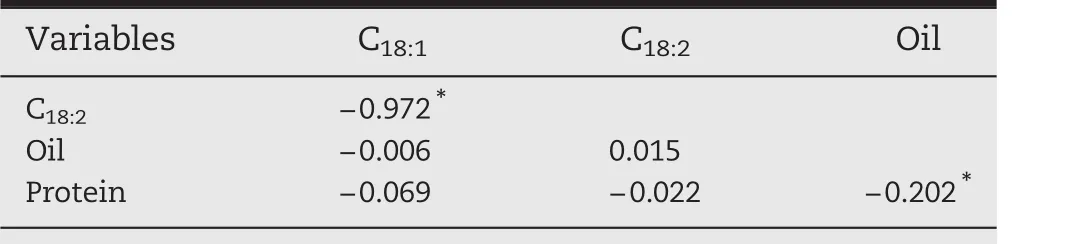
Table 1–Pearson correlation(r)between the sesame seed components analyzed in this study.

Fig.2–(a)Loading plot obtained from principal component analysis of seed component contents.Percentages in brackets correspond to the explained variances of corresponding components.(b)UPGMA tree based on dissimilarities between 139 samples grouped into two groups(G1 and G2,colored green and red,respectively).

Table 2–Contribution of the sesame seed components to the two groups of samples.
4.Conclusions
To our knowledge,this is the first report of a seed quality analysis of a large and geographically diverse sesame sample including West African sesame germplasm.This study revealed that sesame samples harbor exploitable levels of seed quality traits;in particular,the hitherto uncharacterized West African cultivars are highly enriched in seed components that may increase their market value.Sample clusters did notcorrespond with the origins or the seed coat colors,but were associated with the seed compositions that could be exploited to increase specific nutritional contents in sesame seed.As the demand for sesame seed and oil is increasing,the results of this study will assist in breeding superior lines to meet this demand.
Supplementary data for this article can be found online at https://doi.org/10.1016/j.cj.2017.10.003.
We are grateful to colleagues who helped in sesame seed collection in Africa.This work was financially supported by the National Key Technology R&D Program of China(during the 12th Five-Year Plan Period)(2013BAD01B03-08)and Agricultural Science and Technology Innovation Project of Chinese Academy of Agricultural Sciences(CAAS-ASTIP-2013-OCRI).Komivi Dossa thanks the African-German Network of Excellence in Science(AGNES)for granting a Mobility Grant in 2016;the Grant was generously sponsored by German Federal Ministry of Education and Research and supported by the Alexander von Humboldt Foundation.He also thanks the Chinese Scholarship Council(2015GXY934)for a fellowship.
[1]K.Dossa,X.Wei,Y.Zhang,D.Fonceka,Y.Wenjuan,D.Diouf,N.Cisse,B.Liao,X.Zhang,Analysis of genetic diversity and population structure of sesame samples from Africa and Asia as major centers of its cultivation,Genes 7(2016)14.
[2]X.Wei,K.Liu,Y.Zhang,Q.Feng,L.Wang,Y.Zhao,D.Li,Q.Zhao,X.Zhu,X.Zhu,W.Li,D.Fan,Y.Gao,Y.Lu,X.Zhang,X.Tang,C.Zhou,C.Zhu,L.Liu,R.Zhong,Q.Tian,Z.Wen,Q.Weng,B.Han,X.Huang,X.Zhang,Genetic discovery for oil production and quality in sesame,Nat.Commun.6(2015)8609.
[3]N.Pathak,A.K.Rai,S.Saha,S.Walia,S.K.Sen,K.V.Bhat,Quantitative dissection of antioxidative bioactive components in cultivated and wild sesame germplasm reveals potentially exploitable wide genetic variability,J.Crop.Sci.Biotechnol.17(2014)127–139.
[4]K.R.Anilakumar,A.Pal,F.Khanum,A.S.Bawas,Nutritional,medicinal and industrial uses of sesame(Sesamum indicum L.)seeds,Agric.Conspec.Sci.75(2010)159–168.
[5]P.Chen,K.Chien,T.Su,C.Chang,T.Liu,H.Cheng,C.Tsai,Dietary sesame reduces serum cholesterol and enhances antioxidant capacity in hypercholesterolemia,Nutr.Res.25(2005)559–567.
[6]K.Dossa,D.Diouf,L.Wang,X.Wei,Y.Zhang,M.Niang,D.Fonceka,J.Yu,M.A.Mmadi,L.W.Yehouessi,B.Liao,X.Zhang,N.Cisse,The emerging oilseed crop Sesamum indicum enters the “Omics”era,Front.Plant Sci.8(2017)1154.
[7]N.Rangkadilok,N.Pholphana,C.Mahidol,W.Wongyai,K.Saengsooksree,S.Nookabkaew,J.Satayavivad,Variation of sesamin,sesamolin and tocopherols in sesame(Sesamum indicum L.)seeds and oil products in Thailand,J.Am.Oil Chem.Soc.122(2010)724–730.
[8]L.Wang,Y.Zhang,P.Li,X.Wang,W.Zhang,W.Wei,X.Zhang,HPLC analysis of seed sesamin and sesamolin variation in a sesame germplasm collection in China,J.Am.Oil Chem.Soc.89(2012)1011–1020.
[9]B.Spandana,R.B.N.Prasad,C.H.Sarika,G.Anuradha,N.Sivaraj,S.Sivaramakrishnan,Variation in seed oil content and fatty acid composition in sesame(Sesamum indicum),Indian J.Agric.Sci.83(2013)1402–1405.
[10]T.Sato,A.A.Maw,M.Katsuta,NIR reflectance spectroscopic analysis of the FA composition in sesame(Sesamum indicum L.)seeds,J.Am.Oil Chem.Soc.80(2003)1157–1162.
[11]Y.Liu,H.Mei,Z.Du,K.Wu,H.Zhang,Y.Zheng,Nondestructive estimation of fat constituents of sesame(Sesamum indicum L.)seeds by near-infrared reflectance spectroscopy,J.Am.Oil Chem.Soc.92(2015)1035–1041.
[12]P.Liu,Y.Zhang,D.Li,L.Wang,Y.Gao,R.Zhou,X.Zhang,X.Wei,Establishment of near infrared reflectance spectroscopy model for sesame oil and protein content detection and variation analysis of the core collection of sesame(Sesamum indicum L.),Chin.J.Oil Crop Sci.38(2016)722–729(in Chinese with English abstract).
[13]S.C.Hiremath,C.G.Patil,K.B.Patil,M.H.Nagasampige,Genetic diversity of seed lipid content and fatty acid composition in some species of Sesamum L.(Pedaliaceae),Afr.J.Biotechnol.6(2007)539–543.
[14]W.Horwitz,Official Methods of Analysis of the Association of Official Analytical Chemists,17th ed.Association of Official Analytical Chemists,Washington,D.C.,USA,2000.
[15]E.Stefanoudaki,F.Kotsifaki,A.Koutsaftakis,Classification of virgin olive oils of the two major cretan cultivars based on their fatty acid composition,J.Am.Oil Chem.Soc.76(1999)623–626.
[16]K.Tamura,G.Stecher,D.Peterson,A.Filipski,S.Kumar,MEGA6:molecular evolutionary genetics analysis version 6.0,Mol.Biol.Evol.30(2013)2725–2729.
[17]N.Ahmad,F.Anwar,Z.Mahmood,S.A.Shahid,I.Shakir,S.Latif,Variation of physico-chemical attributes of seed oil between two developing cultivars of sesame grown under similar agroclimatic conditions in Pakistan,Asian J.Chem.26(2014)4319–4322.
[18]C.Yuan,K.Bloch,Conversion of oleic acid to linoleic acid,J.Biol.Chem.236(1961)1277–1279.
[19]P.J.Kanu,Biochemical analysis of black and white sesame seeds from China,Am.J.Biochem.Mol.Biol.1(2011)145–157.
[20]H.Zhang,H.Miao,L.Wei,C.Li,R.Zhao,C.Wang,Genetic analysis and QTL mapping of seed coat color in sesame(Sesamum indicum L.),PLoS One 8(2013),e63898.
- The Crop Journal的其它文章
- Genetic diversity assessment of a set of introduced mung bean accessions(Vigna radiata L.)
- Alternate phenotype–genotype selection for developing superior high-yielding irrigated rice lines
- F unction of the auxin-responsive gene TaSAUR75 under salt and drought stress
- Development and validation of simple sequence repeat markers from Arachis hypogaea transcript sequences
- Soybean hairy roots produced in vitro by Agrobacterium rhizogenes-mediated transformation
- Elevated temperature intensity, timing, and duration of exposure affect soybean internode elongation, mainstem node number, and pod number per plant